
Reviewed · ANNAPURNA BASE CAMP TREKS
From Pokhara: 10-Day Poon Hill and Annapurna Base Camp Trek
The mountains make you earn every view. This 10-day trek links Poon Hill sunrise with Annapurna Base Camp, taking you through Gurung villages, stone stairways, rhododendron forests, and high valleys beneath Annapurna I and Machhapuchhre. I like the unhurried pace, with most days taking roughly three to six hours of walking, and I like that the route finishes at Jhinu Danda’s natural hot springs.
The guides are another strong point. Biru, Arjun, and Bikram are praised for patience, safety, route knowledge, and adjusting the pace when needed. The main drawback is simple: this is still a serious mountain walk, with long climbs, steep descents, basic guesthouse accommodation, and changing weather. September can bring several rainy days, and high-altitude extras such as hot showers, Wi-Fi, charging, and heater use can cost more.
In This Review
- Key points before you book
- What the $310 price really covers
- Day 1: Pokhara to Nayapul and Tikhedhunga
- Day 2: The Ulleri steps and Ghorepani
- Day 3: Poon Hill sunrise and Tadapani forests
- Day 4: Tadapani, Gurjung, and Chhomrong
- Day 5: Chhomrong to Bamboo
- Day 6: Bamboo to Deurali at 3,230 meters
- Day 7: Deurali to Annapurna Base Camp
- Day 8: Sunrise at base camp and the long return
- Day 9: Bamboo to Jhinu Danda and the hot springs
- Day 10: Jhinu Danda to Nayapul and Pokhara
- Guides, pace, and private-group value
- Weather, fitness, and what to pack
- Should you book this Poon Hill and ABC trek?
- FAQ
- How long is the Poon Hill and Annapurna Base Camp trek?
- What is the highest point on the route?
- Is food included in the price?
- What languages can the guide speak?
- What should I bring?
- Can I cancel for a full refund?
Key points before you book
- Poon Hill and Annapurna Base Camp in one route: You get a famous sunrise viewpoint early in the trek, then continue into the Annapurna Sanctuary.
- A private 10-day schedule: The pace can be adjusted, making this a better fit for steady hikers than a rushed short itinerary.
- The Ulleri stair climb is the first big test: Expect a steep ascent on stone steps before Ghorepani.
- A true high point at 4,130 meters: Annapurna Base Camp brings you close to Annapurna I, Machhapuchhre, Hiunchuli, and other major peaks.
- Jhinu Danda adds a welcome finish: The natural hot springs are a useful reward after several days of downhill walking.
- Bring extra cash for mountain comforts: Food is separate, and charging, Wi-Fi, hot showers, and heaters may cost more at higher elevations.
What the $310 price really covers
At $310 per person, this trek offers solid value if you want a private guided route rather than arranging each part yourself. The price includes pickup and drop-off within the Lakeside area of Pokhara, the private car transfer between Pokhara and Nayapul, a professional English-speaking guide, trekking permits and official documents, guesthouse accommodation, an emergency first-aid kit, and the Poon Hill entrance fee.
That package removes several jobs that can be tiresome in the mountains. Your guide handles the route, guesthouse arrangements, and daily plan, while you focus on walking. The private format also matters if you are a slow hiker or want the day adjusted around your energy.
Food and drinks are not included. You should also budget for travel insurance, emergency rescue coverage, and optional gratuities. One practical note from the route: high-altitude costs rise. Plan on at least $30 to $40 per day if you want extras such as a heater, Wi-Fi, battery charging, and hot showers.
The strongest value here is time. Ten days gives you room to enjoy the route instead of racing from Pokhara to base camp and back. The itinerary still has demanding days, but it avoids making every walking day a test of endurance.
More Annapurna Base Camp Treks:
- Pokhara: 7 Day Annapurna Base Camp Trek
★ 4.9 · 38 reviews - Annapurna Base Camp Heli Tour
★ 5.0 · 7 reviews - Pkr/Kathmandu: 5-Day Annapurna Base Camp & Hot spring Trek
★ 5.0 · 6 reviews
Day 1: Pokhara to Nayapul and Tikhedhunga
The morning begins with a private car ride from Pokhara to Nayapul, taking about one and a half hours. This transfer is included, and a private car is useful because it gets you to the trail without the extra waiting and crowding that can come with shared transport.
From Nayapul, the trail follows the Modi Khola and passes small villages and terraced fields. This first day is a gentle introduction to rural Nepal, with cultivated hillsides and settlements replacing Pokhara’s lakeside streets.
The overnight stop is Tikhedhunga at 1,577 meters. The walking is manageable compared with the days ahead, but do not treat it as a throwaway stage. Use it to check your footwear, settle your pack, and learn how your body responds to the steady rhythm of mountain walking.
Day 2: The Ulleri steps and Ghorepani
Day two brings the route’s first major challenge. From Tikhedhunga, you climb the steep stone steps toward Ulleri, then continue through rhododendron forests and villages to Ghorepani at 2,874 meters.
This is the day when a slow, patient pace pays off. One participant who preferred walking slowly felt comfortable because the guide did not rush. That is worth noting if you are fit enough for the route but do not enjoy being pushed from behind.
The forests are especially appealing in spring, when rhododendrons add color to the route. The itinerary also refers to marigold-filled areas, giving the walk a pleasing mix of wild and cultivated scenery. At Ghorepani, you can look toward the Annapurna and Dhaulagiri ranges, though cloud cover can affect the view.
Ghorepani is also where you should prepare for an early start the next morning. Keep warm layers and a headlamp or phone light ready if you have one, although the supplied information does not confirm equipment rental or lighting arrangements.
Day 3: Poon Hill sunrise and Tadapani forests
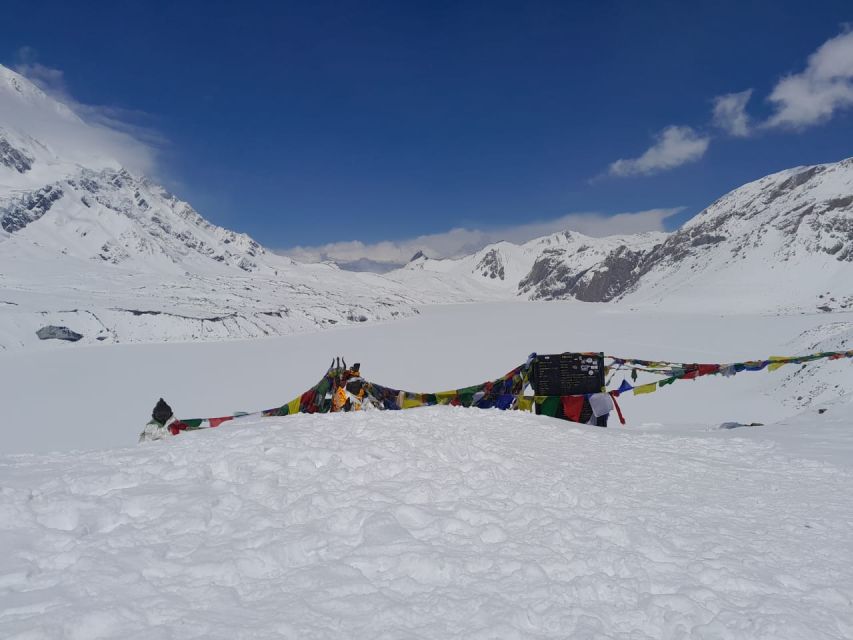
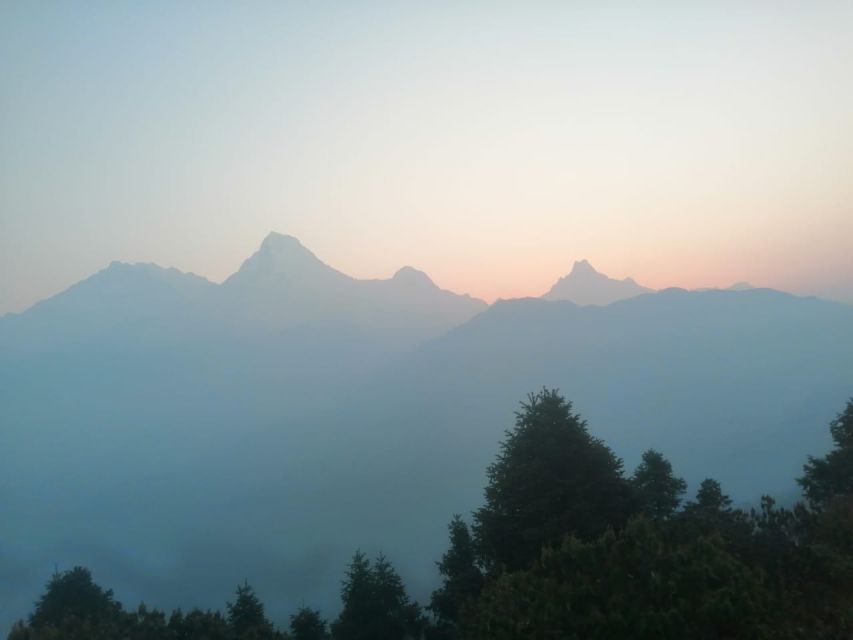
The early hike to Poon Hill at 3,210 meters is the first major payoff. You climb before sunrise for wide views of the Annapurna and Dhaulagiri ranges. The cold and early alarm are part of the deal, but the viewpoint gives you a powerful look across snow-covered peaks as the light changes.
After returning to Ghorepani for breakfast, you continue through forests and rhododendron-filled valleys toward Tadapani at 2,630 meters. This makes for a full day because the sunrise walk is added to the regular route, so pacing matters.
Poon Hill is a good example of why this itinerary works well. You see a famous Himalayan viewpoint without making it the entire trek. After the sunrise, you keep walking into quieter forest country rather than simply returning to Pokhara.
More Ghorepani and Poon Hill Treks:
- Pokhara: 2 & 3 Days Ghorepani Poon Hill Private Guided Trek
★ 4.9 · 27 reviews - Pokhara: 2-Day Short & Sweet Ghorepani Poon Hill Guided Trek
★ 5.0 · 6 reviews - Pokhara: 7-Day Annapurna Base Camp Via PoonHill & Hot Spring
★ 5.0 · 6 reviews - Pokhara: 3-Day Ghorepani, Poon Hill and Ghandruk Guided Trek
★ 4.4 · 4 reviews
Day 4: Tadapani, Gurjung, and Chhomrong
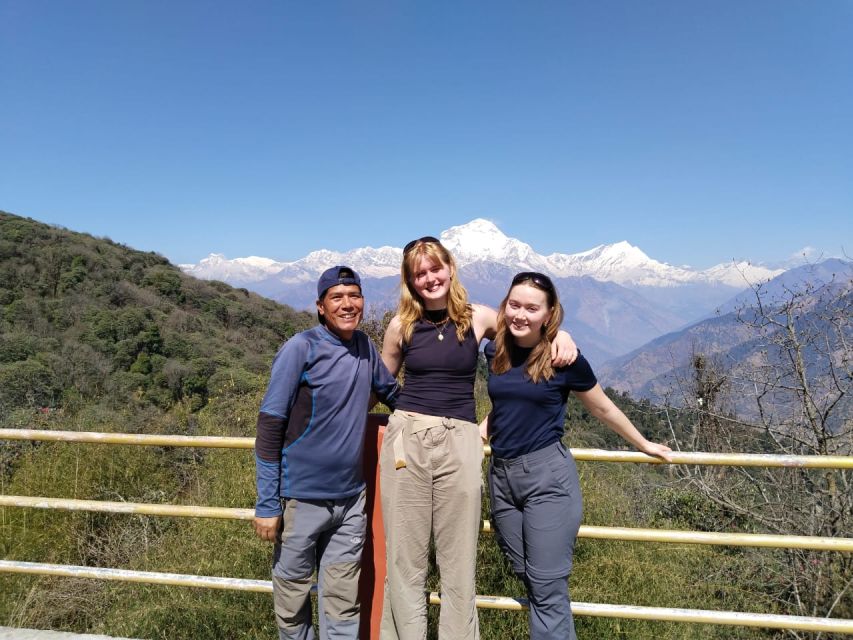
The trail descends through thick forest from Tadapani, passes Gurjung village, drops to the Kimrong Khola, and then climbs again to Chhomrong at 2,170 meters. The repeated pattern of descending and climbing is typical of the Annapurna route. Mountain distance is not the whole story. Elevation changes are what your legs notice.
Chhomrong is a large Gurung village with views toward Annapurna South and Machhapuchhre, also called Fishtail. It is an important point on the route because the walking shifts from the Poon Hill section into the approach to the Annapurna Sanctuary.
Your guide should explain the next day’s plan and help you judge your pace. The guides on this trek have received strong praise for doing exactly that. Bikram was particularly appreciated for explaining local people and the natural surroundings, while Biru was praised for patient support and careful organization.
Day 5: Chhomrong to Bamboo
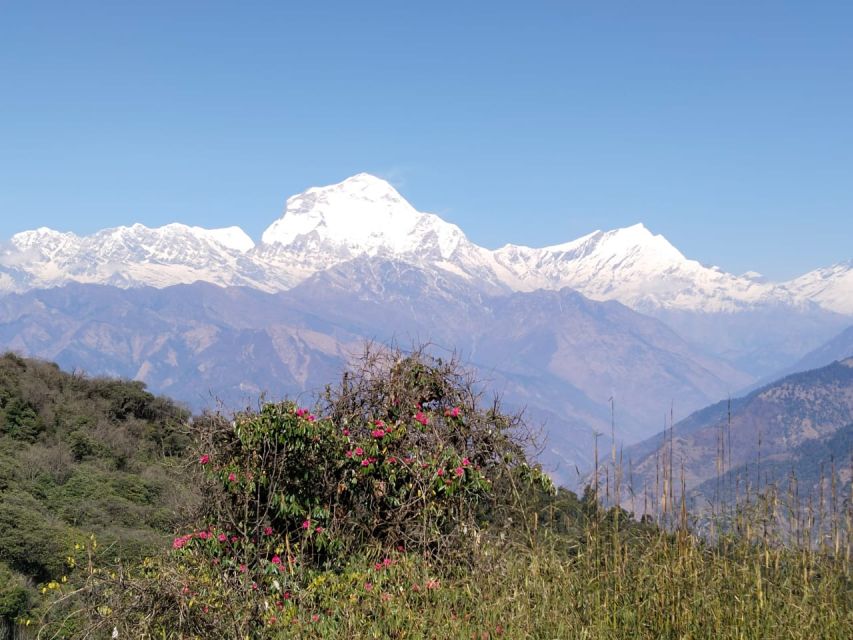
From Chhomrong, you descend to the Chhomrong Khola and cross a suspension bridge. Then comes a climb to Sinuwa, followed by a walk through bamboo and rhododendron forest to Bamboo at 2,310 meters.
This day is a useful reminder that descending does not always mean easy. The trail drops sharply in places, then climbs again. Trekking poles would be sensible, although they are not included in the stated package.
Bamboo is a practical overnight stop rather than a grand viewpoint. The reward is the forest itself and the sense that you are moving farther into the mountain valley. Accommodation is in guesthouses, so expect a basic trekking setup rather than hotel comforts.
Day 6: Bamboo to Deurali at 3,230 meters
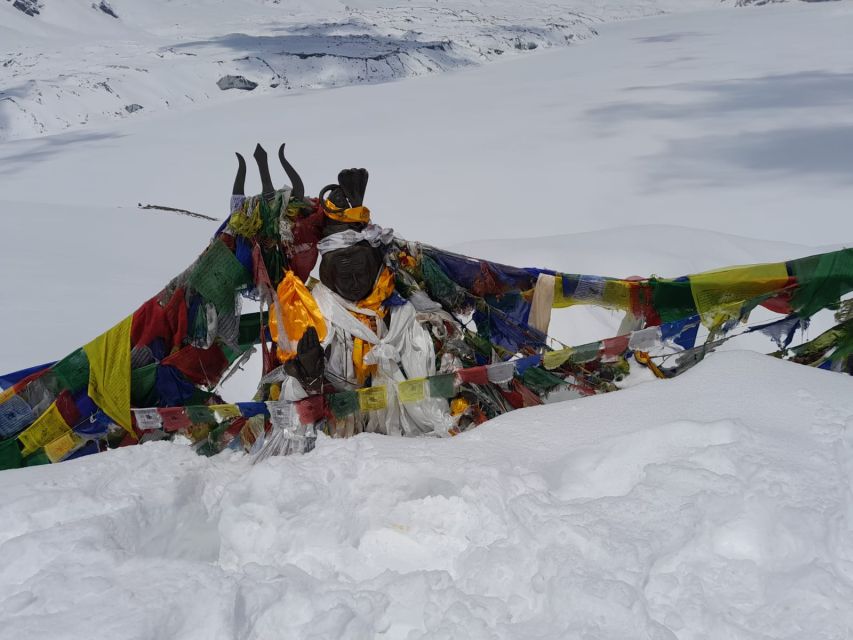
The route continues through bamboo forest and the Modi Khola valley. You pass the Himalayan Hotel and Hinku Cave before climbing steadily to Deurali at 3,230 meters.
This is where altitude deserves more attention. The increase from Bamboo to Deurali is significant, and the next day takes you above 4,000 meters. Walk slowly, drink regularly, and tell your guide about headaches, unusual tiredness, nausea, or other symptoms.
The value of a private group becomes clearer here. Arjun adjusted one trek when a participant had difficulty with altitude, extending the journey by three days rather than forcing the original timetable. That does not guarantee a medical solution, but it shows why a flexible guide can make a major difference.
Day 7: Deurali to Annapurna Base Camp
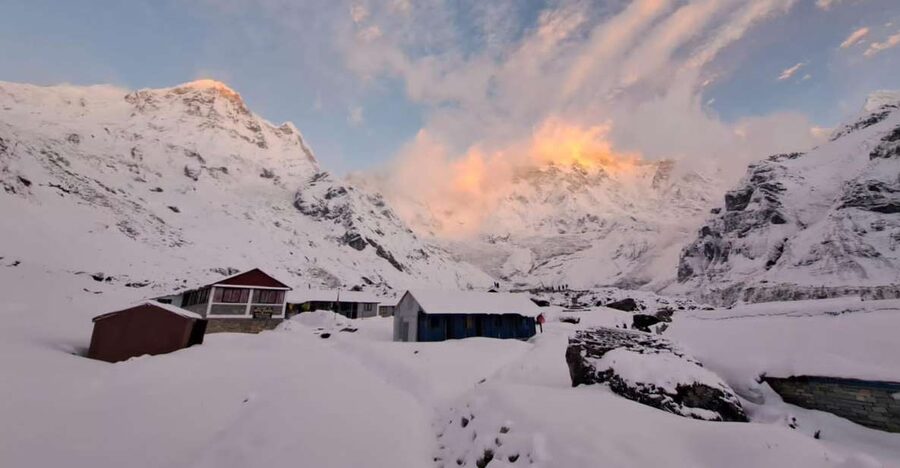
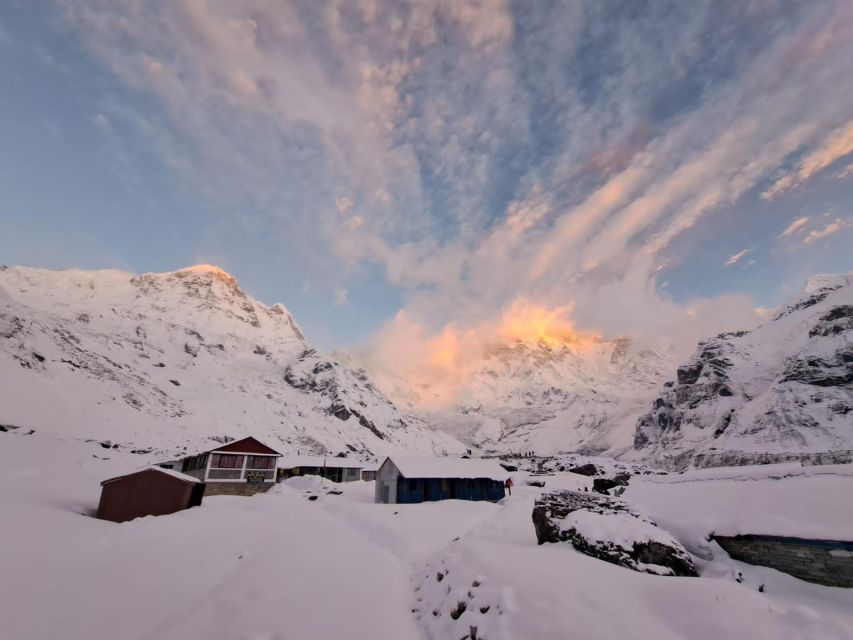
This is the central day of the trek. From Deurali, you follow a narrow valley that opens into the Annapurna Sanctuary. The scenery becomes more dramatic as the route reaches Machhapuchhre Base Camp at 3,700 meters, then continues to Annapurna Base Camp at 4,130 meters.
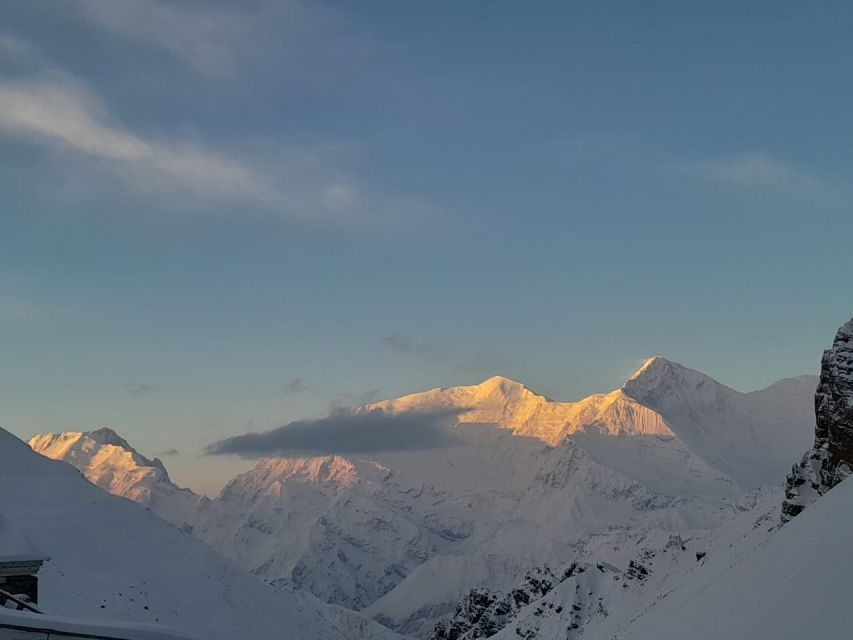
At base camp, the peaks surround you. Annapurna I rises to 8,091 meters, while Machhapuchhre reaches 6,993 meters and Hiunchuli 6,441 meters. The wider mountain view includes Annapurna II, III, and IV, Dhaulagiri, and Nilgiri.
Do not expect perfect visibility every day. In September, several days of rain and cloud reduced the mountain views for one trek, with only brief openings in the weather. A good guide can point out peaks when they appear, but no operator can order clear skies.
The overnight stay at base camp is the emotional high point. It is also the coldest and highest night, and comfort will be basic. Pack warm clothing, keep your water bottle close, and remember that hot showers, Wi-Fi, charging, and heaters may cost extra at altitude.
Day 8: Sunrise at base camp and the long return
An early start lets you see sunrise over the mountains before beginning the descent. The light at Annapurna Base Camp is a fitting second sunrise experience after Poon Hill, but the morning is not only for photographs. Starting early gives you more time for the long return to Bamboo.
You retrace the route through Deurali and continue downhill to Bamboo. Descending can feel easier for your lungs, but it can be hard on knees and ankles. Take short steps and avoid turning the downhill into a race.
The return route also lets you see details missed on the way up. You may notice the changing forest, river valley, and small shelters more clearly when you are no longer thinking about reaching base camp.
Day 9: Bamboo to Jhinu Danda and the hot springs
The path continues down through the forest toward Chhomrong, where you stop for lunch. Then you descend farther to Jhinu Danda at 1,780 meters.
The natural hot springs are the day’s reward. After a week of stairs, uneven trails, and altitude, soaking your muscles in warm water can feel wonderfully practical rather than merely scenic. This is one reason I prefer the full route over ending early by jeep at Jhinu Danda.
You should still pace the descent. The trail may be lower, but tired legs do not become fresh simply because the air is warmer. Jhinu Danda is a relaxed final night before the road transfer back to Pokhara.
Day 10: Jhinu Danda to Nayapul and Pokhara
The final walking section takes you from Jhinu Danda to Nayapul. From there, the private car returns you to Pokhara and the trek ends.
This final day is short in spirit, but it closes the route neatly. You have moved from terraced farmland to forests, from villages to the high sanctuary, then back down through the same connected valley system.
Pickup and drop-off are included within the Lakeside area of Pokhara. Confirm your exact pickup point when booking, especially if your accommodation is outside that zone.
Guides, pace, and private-group value
The guide is one of the most important parts of this experience. The strongest praise goes to Biru, Arjun, and Bikram for patience, safety, clear planning, and adapting the walking speed.
That matters because the route is not a fixed exercise schedule. Some days take three hours, while others may take six or more depending on pace and conditions. One guide adjusted a trek for altitude concerns, and another made a slow hiker feel comfortable rather than hurried.
The activity is described as a private group, with guides available in Nepali, English, and Hindi. Porter support is not listed in the inclusions, so you should ask directly what baggage service is available before booking. One trek included a porter carrying a 20-kilogram backpack, but that should not be assumed as part of every booking.
Weather, fitness, and what to pack
Spring, from March to May, and autumn, from September to November, are given as the best seasons for steadier weather and clearer views. Even then, mountain conditions can change quickly. September may bring prolonged rain and cloud, while clear windows can appear without warning.
You need comfortable shoes, a passport or ID card, a passport-sized photo, and travel insurance. The operator also advises against plastic bottles, so bring a reusable water container or confirm the available refill arrangements.
This trek is not suitable for pregnant women or wheelchair users. It is best for people who can handle repeated uphill and downhill walking and who accept that guesthouse life is basic.
The route is not presented as a technical climb, but altitude makes it serious. Travel insurance should include trekking and emergency rescue. Rescue is not included in the price, and any emergency coverage is your responsibility.
Should you book this Poon Hill and ABC trek?
Book it if you want a private, guided route that combines two of Nepal’s best-known mountain experiences without cramming everything into a few days. The itinerary gives you villages, forests, terraced fields, Poon Hill sunrise, Annapurna Base Camp, and Jhinu Danda’s hot springs in one ten-day journey.
I would choose it especially if you value a patient guide and flexible pace. Biru, Arjun, and Bikram have earned strong praise for making hikers feel safe and supported, including people who walk slowly or struggle with altitude.
Think twice if you need hotel-level comfort, guaranteed mountain views, included meals, or a short and easy walk. The $310 price is attractive because it covers the guide, permits, accommodation, transfers, and private format, but food and mountain extras add to the daily cost.
For a prepared hiker who wants the full route, this is a good-value Annapurna experience. Bring patience, warm layers, insurance, and enough cash for the hills. The mountains will handle the rest.
FAQ
How long is the Poon Hill and Annapurna Base Camp trek?
The trek lasts 10 days, beginning with pickup in Pokhara and ending with the return drive from Nayapul to Pokhara.
What is the highest point on the route?
Annapurna Base Camp is the highest overnight destination, at 4,130 meters. Poon Hill reaches 3,210 meters, and Machhapuchhre Base Camp is at 3,700 meters.
Is food included in the price?
No. Food and drinks are available for purchase but are not included in the $310 price.
What languages can the guide speak?
Guides are available in Nepali, English, and Hindi.
What should I bring?
Bring a passport or ID card, comfortable shoes, travel insurance, and a passport-sized photo. Warm clothing and extra cash are also sensible for changing mountain conditions and optional services.
Can I cancel for a full refund?
You can cancel up to 24 hours in advance for a full refund. The activity also offers reserve-now-and-pay-later booking.
More Treks and Hikes
- Pokhara: 1-Day Scenic Australian Camp & Dhampus Guided Hike
★ 4.9 · 24 reviews - From Pokhara: Day Hiking Australian Camp & Dhampus
★ 5.0 · 17 reviews - Pokhara: 4-Day Mesmerizing Mardi Himal Guided Trek
★ 4.8 · 9 reviews - Pokhara: Amazing 7-Day ABC Trek with Natural Hot Spring
★ 5.0 · 5 reviews
Just added around Annapurna Region
- Pokhara: Annapurna Foothills Private Day Hike with Transfers★ 5.0 · 3 reviews
- Pokhara: Poon Hill Trek★ 5.0 · 3 reviews
- From Pokhara: Annapurna View Day Hike★ 5.0 · 3 reviews
- Pokhara: 5-Day Annapurna Base Camp Trek with Hot Spring★ 5.0 · 3 reviews
- Annapurna Circuit Trekking 13 Days★ 4.5 · 3 reviews
- Pokhara: 3 days Trek to Poon hill★ 5.0 · 3 reviews
- Pokhara: 3- days Poon Hill Trek★ 5.0 · 3 reviews
- Pokhara: 3-Day Ghorepani, Poon Hill and Ghandruk Guided Trek★ 4.4 · 4 reviews
Annapurna Base Camp Treks, compared.



Kathmandu to Annapurna Base Camp (ABC) 5-Day Trek
Read our review →

Browse the lists this tour appears in