
Reviewed · ANNAPURNA BASE CAMP TREKS
Pokhara: 5-Day Annapurna Base Camp Trek with Hot Spring
The mountains make five days feel short. This trek pairs Annapurna Base Camp with a soak at Jhinu Dada Hot Springs, and I like the private format, included permits, and useful trekking gear. The main concern is pace: four long hiking days, a 4,130-meter overnight, and a fast descent make this a demanding schedule.
I also like that you can choose a lower-priced option and buy meals along the route, or select an all-inclusive package with breakfast, lunch, and dinner. Guides such as Jeet and Kaji have earned strong praise for careful support, but winter or early-season conditions can bring snow, ice, poor weather, and even avalanche crossings. If you prefer time for rest and views, seven days would be kinder than five.
In This Review
- Key points to know before booking
- Why this trek works for a short Nepal visit
- Day 1: Pokhara to Sinuwa by road and trail
- Day 2: Seven hours through forest to Deurali
- Day 3: The climb to Annapurna Base Camp at 4,130 meters
- Day 4: An eight-hour descent to Lower Sinuwa
- Day 5: Hot springs, then back to Lakeside Pokhara
- What the $150 price really covers
- Guide quality matters more than fancy extras
- What to pack for comfort and safety
- Who should choose five days, and who should choose seven
- Booking details worth checking first
- Should you book this Annapurna Base Camp trek?
- FAQ
- How long is the Annapurna Base Camp trek from Pokhara?
- What is the highest point reached on the trek?
- Are meals included?
- Is a porter included?
- Does the trek include permits and a guide?
- Is the hot spring visit included?
Key points to know before booking
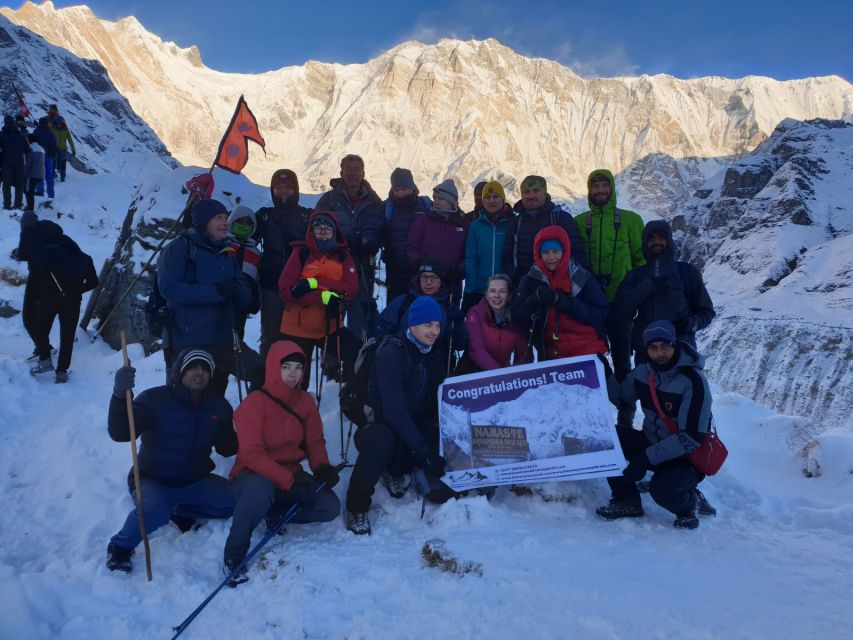
- Annapurna Base Camp at 4,130 meters: The trek reaches a high mountain bowl surrounded by peaks, glaciers, and steep walls.
- A private five-day schedule: You travel with your own group and an English, Hindi, or Nepali-speaking guide.
- Jhinu Dada Hot Springs: The final hiking day includes a natural hot spring stop before the drive back to Pokhara.
- Meals are package-dependent: The standard option lets you buy food along the way, while the full package includes three meals each day.
- Porters cost extra: Your luggage can be stored, and trekking equipment is supplied, but porter service must be arranged separately.
- Season matters: Snow and ice can make this short itinerary tiring and risky, especially outside the main trekking season.
Why this trek works for a short Nepal visit
This five-day route gives you a direct taste of the Annapurna region without requiring a long stay in the mountains. From Pokhara, you move quickly into villages, forests, high valleys, and the base camp itself. The scenery changes often, which helps keep the route interesting even when your legs begin to complain.
I particularly like the combination of physical challenge and comfort. You sleep in private accommodation during the trek, carry or use supplied trekking gear, and finish with hot springs instead of simply walking back to the road. That final soak is not a small extra. After several hours on steep trails, warm water can feel like a well-earned reward.
The schedule is still tight. You spend only one night at Annapurna Base Camp before descending for eight hours the next day. You will see the high point, but you will not have much spare time to wait for perfect weather or linger over every mountain view.
The private group format helps here. Your guide can keep an eye on your pace and rest needs more closely than on a large mixed group. Jeet was praised for being attentive, respectful, funny, and clear in his explanations. Kaji also received strong praise for helping with difficult snow and avalanche conditions. A good guide matters greatly on a route where the weather can change the day’s plan.
More Annapurna Base Camp Treks:
- Pokhara: 7 Day Annapurna Base Camp Trek
★ 4.9 · 38 reviews - Annapurna Base Camp Heli Tour
★ 5.0 · 7 reviews - From Pokhara: 10-Day Poon Hill and Annapurna Base Camp Trek
★ 5.0 · 7 reviews
Day 1: Pokhara to Sinuwa by road and trail
Your morning begins with pickup from a hotel in Lakeside Pokhara. The first section is by Jeep, taking about three hours to reach Samrung, followed by roughly four hours of trekking to Sinuwa at 2,200 meters.
The drive is part of the experience rather than a simple transfer. You follow a scenic route with views of the Seti River, mountains, and green paddy fields. It also gives you an early look at rural Nepal, with villages and local life replacing Pokhara’s lakeside cafés and hotels.
The day asks a lot from you before you have settled into a trekking rhythm. Four hours on foot after a three-hour vehicle ride is manageable for a fit hiker, but you should not think of Day 1 as an easy introduction. Bring water, snacks, sunscreen, and a daypack that stays comfortable for the entire walk.
Sinuwa offers a practical first night. At 2,200 meters, it is high enough to begin the adjustment to mountain air, but it is not yet the severe altitude of base camp. The supplied description emphasizes local hospitality, and this overnight gives you time to rest in a village setting rather than rushing directly toward the high country.
Day 2: Seven hours through forest to Deurali
The second day runs from Sinuwa to Deurali at 3,200 meters, with about seven hours of trekking. This is where the trek begins to feel serious. You gain height steadily, and the length of the day leaves little room for a casual schedule.
The trail passes through forests and rhododendron areas. During bloom periods, the flowers can add bright color to an otherwise demanding climb. Even outside peak bloom, the forest provides shade and a clear change from the open fields and river views of the first day.
Deurali is an important stopping point because it places you close to the final climb to base camp. You will want a proper rest here. Keep your evening simple, organize warm clothes, check your headlamp and phone battery, and ask your guide about the next day’s conditions.
At 3,200 meters, some people begin noticing the altitude. The supplied information does not promise an acclimatization day, and the itinerary continues upward the following morning. If you know you are sensitive to altitude, discuss the pace with the guide early rather than waiting until the symptoms become serious.
Day 3: The climb to Annapurna Base Camp at 4,130 meters
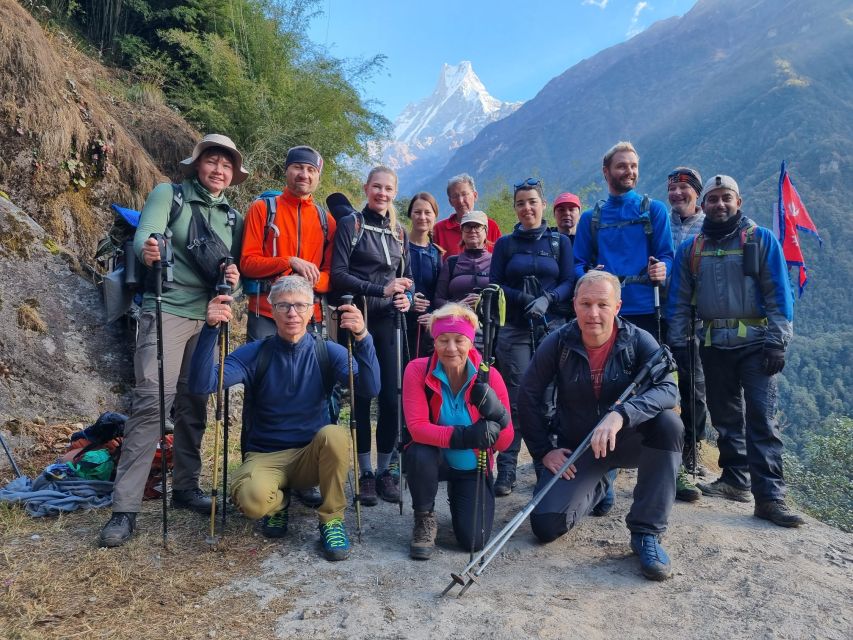
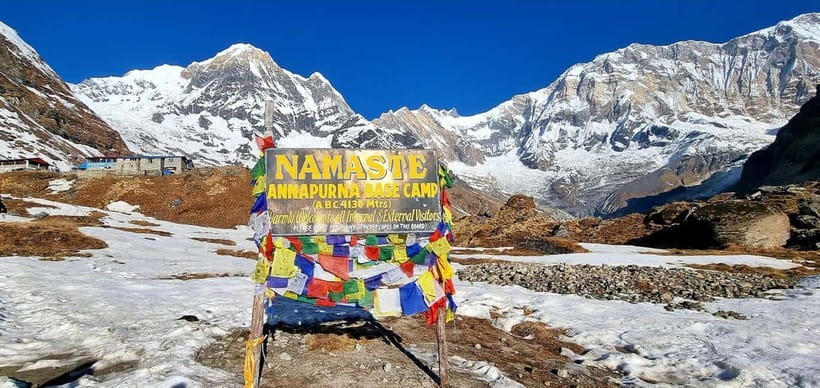
Day 3 is the central achievement of the trip. You walk from Deurali to Annapurna Base Camp in about five hours, reaching 4,130 meters.
The route leads toward towering peaks, glaciers, and the natural mountain amphitheater around the base camp. The destination is more than a sign or viewpoint. You are entering a high basin enclosed by major Himalayan summits, and the scale of the place is the reason this route remains so popular.
The five-hour estimate may look modest beside the previous day’s seven hours, but altitude changes the equation. You should expect a slower pace, regular breaks, and less energy than you had at the start. The guide’s job is especially important here, not to rush you toward the destination but to help you reach it safely.
You spend the night at Annapurna Base Camp. That is a memorable feature of the schedule, since you can wake among the high peaks rather than arriving, taking a photograph, and immediately turning around. Still, the overnight comes with a cost: the next day is an eight-hour descent to Lower Sinuwa.
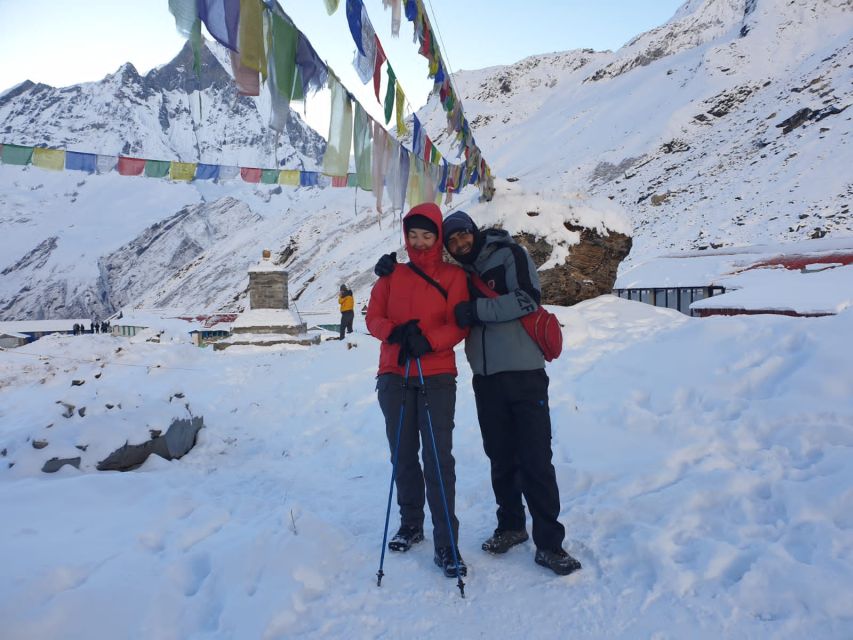
Weather will shape this part of the experience. Ellie’s February trek included difficult snow and ice, with four avalanche crossings on the way down. Kaji helped her through those conditions, but her experience is a clear warning. A five-day itinerary is not equally suitable in every month, and you should ask about current trail conditions before setting out.
More Spa Experiences:
- Pkr/Kathmandu: 5-Day Annapurna Base Camp & Hot spring Trek
★ 5.0 · 6 reviews - Pokhara: 7-Day Annapurna Base Camp Via PoonHill & Hot Spring
★ 5.0 · 6 reviews - Pokhara: Amazing 7-Day ABC Trek with Natural Hot Spring
★ 5.0 · 5 reviews - Whole Day Massage & Spa With Lunch
★ 5.0 · 54 reviews
Day 4: An eight-hour descent to Lower Sinuwa
After sunrise at base camp, you begin the long return to Lower Sinuwa. The listed trekking time is eight hours, making this the hardest day for many people even though you are losing altitude.
The morning light over the peaks can be one of the finest parts of the trek. You also have the chance to notice details you passed too quickly on the way up, including forest sections and changing views down the valley. The return route retraces much of your earlier path, so the sense of discovery is lower than on the ascent.
The physical strain is real. Descending steep trails can be hard on knees and ankles, particularly after a night at high altitude. Trekking poles are included, and I would use them. They provide useful balance on uneven ground and reduce some of the pressure on your legs.
Lower Sinuwa gives you a more comfortable position for the final morning. You are still in the mountains, but the hardest high-altitude section is behind you. Use this night to dry clothing, repack your day bag, and keep some cash ready for personal expenses.
Day 5: Hot springs, then back to Lakeside Pokhara
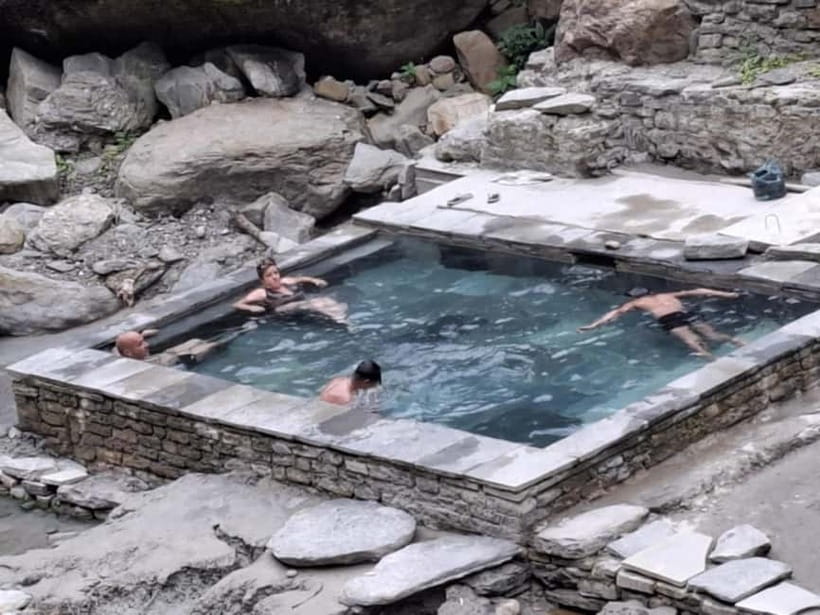
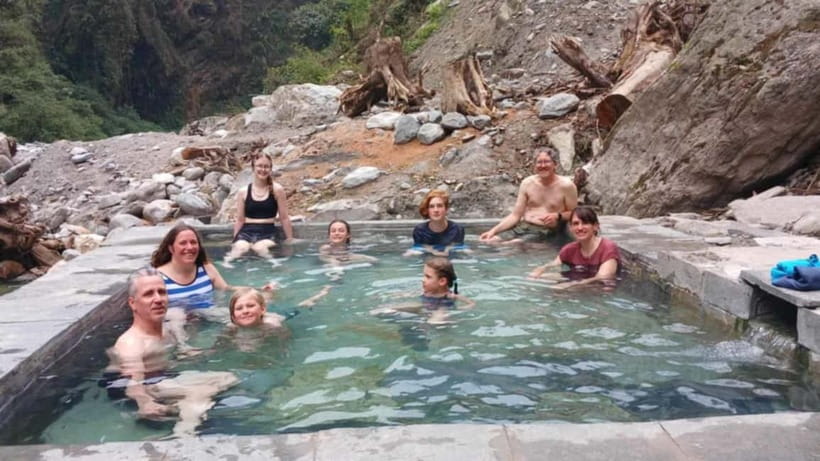
The final day combines about four hours of trekking with a three-hour Jeep journey to Lakeside Pokhara. You descend from Lower Sinuwa to Jhinu Dada, where the natural hot springs provide the day’s main pause.
This is a smart ending. A hot spring stop breaks up the descent and gives you a chance to relax before the road journey. You should bring suitable clothing and keep your towel needs in mind, since personal items such as showers and other extras are not included in the package details.
After Jhinu Dada, the Jeep takes you back toward Pokhara. The return drive lets you shift from mountain mode to town mode gradually, although three hours on the road after four hours of walking can still feel long.
You finish in Lakeside with a strong sense of achievement, but plan your onward schedule carefully. An early arrival, late departure, or an unplanned early return from the mountain may require an extra Pokhara hotel night, and that cost is not included.
What the $150 price really covers
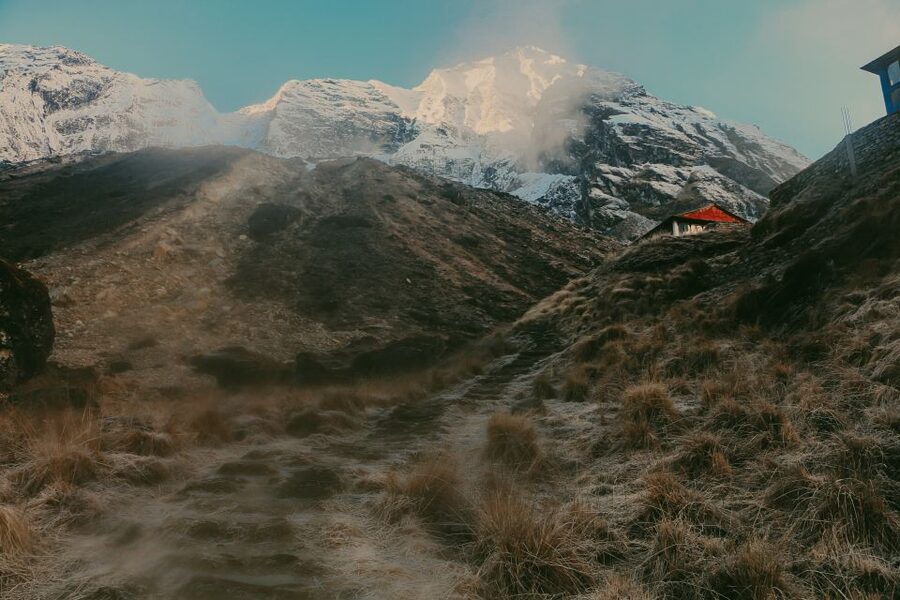
At $150 per person, the trip can offer good value if your priority is a guided route with basic logistics organized. The price includes hotel pickup and drop-off, a licensed guide, permits, paperwork, government taxes, private accommodation during the trek, luggage storage, trekking poles, a sleeping bag, a duffle bag, and transportation listed in the schedule.
It also covers staff costs, including their food, accommodation, salary, equipment, insurance, and transport. Those details matter because a low headline price can otherwise hide several necessary mountain expenses.
Check the meal option carefully. The standard package allows you to purchase meals as you go, while the all-inclusive full package includes breakfast, lunch, and dinner during the trek. Drinks are not included, and you should budget for bottled or boiled water, phone calls, laundry, battery charging, bar bills, showers, and other personal costs.
Porters are also extra. You can arrange one if you do not want to carry your own load, but it should be requested in advance. The supplied duffle bag does not mean porter service is included.
Travel and rescue insurance is not part of the price. You should arrange it yourself, especially for a route reaching 4,130 meters and crossing areas that may have snow or avalanche concerns.
Guide quality matters more than fancy extras
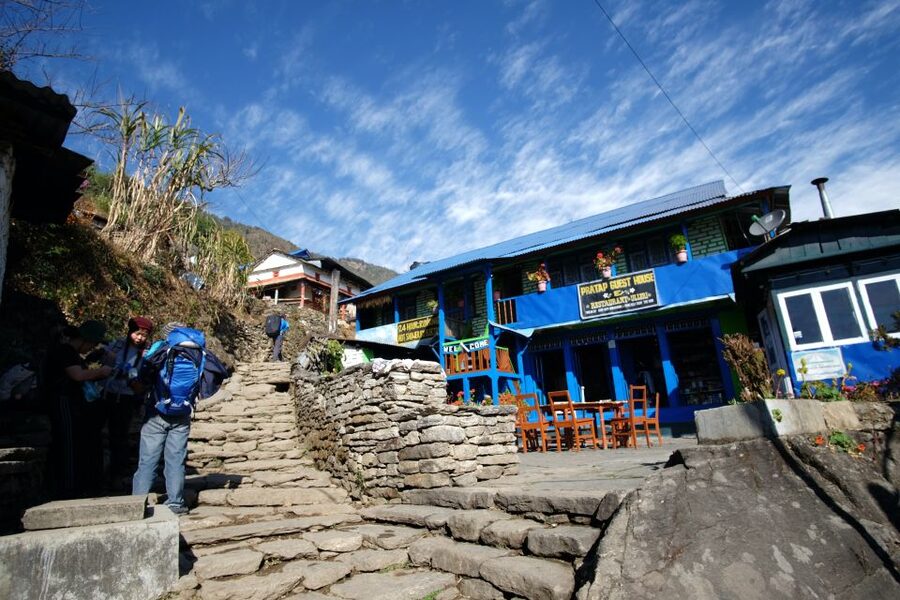
This trip’s strongest praise focuses on the guides. Jeet was described as attentive, respectful, funny, and careful about rest. He also explained things throughout the walk, which can make the villages, forests, and mountain route more meaningful than simply following a trail.
Kaji received special praise for helping during difficult snow and avalanche crossings. That is not a routine service detail. It shows why a licensed guide is valuable when conditions become more serious than the brochure-style schedule suggests.
The experience is available with English, Hindi, or Nepali guidance. Since the group is private, you can discuss your pace and concerns directly with the guide. I would use the first morning to confirm the daily timing, food arrangements, weather outlook, and what to do if the trail becomes unsafe.
The listed customer rating is 5 out of 5 from three reviews. That is encouraging, especially given the specific praise for Jeet and Kaji, but it is still a small sample. I would treat the guide support as a major strength while also making my decision based on fitness, season, and tolerance for a fast itinerary.
What to pack for comfort and safety
The required packing list is sensible for a short high-altitude trek. Start with hiking shoes, a daypack, jacket, warm socks, comfortable clothing, a change of clothes, hat, sunglasses, sunscreen, and cash.
A camera is worth bringing, but protect it from cold and moisture. You should also carry your passport or ID card, since it is specifically listed among the items to bring.
The operator supplies trekking poles, a sleeping bag, and a duffle bag. Even so, check what you receive before departure and keep personal essentials in your daypack. Your larger bag may not be immediately accessible during every section of the route.
Cash is important because personal costs are excluded. Plan for drinks, water, charging, showers, laundry, phone use, and any porter arrangement. The included equipment reduces your packing burden, but it does not remove the need for practical spending money.
Who should choose five days, and who should choose seven
I would recommend this version to hikers who already feel comfortable with long mountain days and want a direct route from Pokhara to base camp. It suits people who value a private guide, want permits and transport handled, and like the idea of ending with a hot spring visit.
The five-day schedule is less suitable if you prefer slow mornings, extra photography time, or gradual altitude adjustment. Ellie’s experience captures the issue well: she found the trip amazing, but also scary and tiring, and felt that seven days would have allowed more time for the views and hiking.
Season choice is equally important. Her February trek encountered worse weather than hoped for and several avalanche crossings. If snow and ice make you uneasy, choose a period with better conditions or ask about a longer plan. A longer itinerary gives you more breathing room if the weather delays progress.
You should also be honest about your fitness. Day 2 lasts seven hours, Day 4 lasts eight, and the route reaches 4,130 meters. This is not a sightseeing transfer with a short mountain walk attached.
Booking details worth checking first
The activity offers free cancellation up to 24 hours before departure and allows you to reserve now and pay later. Pickup is included, and you are asked to wait in your hotel lobby 10 minutes before the scheduled pickup time.
The tour is private, but the exact transport arrangement depends on the number of people in your group. Ask the operator to confirm the vehicle, meal package, porter cost, and available equipment before leaving Pokhara.
Himalayan Nomad Treks Pvt. Ltd. operates the trip. The company’s strongest practical advantage is that staff expenses, permits, paperwork, transport, and several pieces of gear are bundled together. Its main limitation is that food, porters, insurance, drinks, and personal mountain expenses may still add to the advertised price.
Should you book this Annapurna Base Camp trek?
Book it if you want a short, guided route with a private group, a night at base camp, supplied trekking gear, and hot springs at the end. The $150 starting price is attractive once you account for permits, transport, staff costs, accommodation, and guide service.
I would not choose it automatically for a first high-altitude trek in uncertain weather. Ask about current snow and trail conditions, consider a porter, buy travel and rescue insurance, and decide if seven days would suit your pace better.
For a fit hiker with limited time, this can be a powerful introduction to the Annapurna region. For anyone who wants more rest or flexibility, the same mountain goal deserves a slower schedule.
FAQ
How long is the Annapurna Base Camp trek from Pokhara?
The activity lasts five days. It includes Jeep transportation on the first and final days, with trekking on all five itinerary days.
What is the highest point reached on the trek?
The route reaches Annapurna Base Camp at 4,130 meters, where you spend the night before descending the next morning.
Are meals included?
Meals are included only with the all-inclusive full package. The standard option allows you to purchase meals along the route. Soft and hard drinks are not included.
Is a porter included?
No. Porters can be arranged for an additional cost. The package does include a duffle bag, sleeping bag, and trekking poles.
Does the trek include permits and a guide?
Yes. The price includes trekking permits, required paperwork, Trekkers’ Information Management System fees, and an authorized licensed guide. Guides are available in English, Hindi, and Nepali.
Is the hot spring visit included?
Yes. On Day 5, you trek through Jhinu Dada and stop at the natural hot springs before continuing by Jeep to Lakeside Pokhara.
More 5-Day Experiences
- Annapurna base camp trek 5 Days
★ 5.0 · 252 reviews - Kathmandu to Annapurna Base Camp (ABC) 5-Day Trek
★ 5.0 · 102 reviews - Kathmandu/Pokhara: 5-Day Annapurna Base Camp (ABC) Trek
★ 4.9 · 72 reviews - From Pokhara: 5-Day Annapurna Basecamp Trek with Hot Springs
★ 4.9 · 26 reviews
More Treks and Hikes
- Pokhara: 2 & 3 Days Ghorepani Poon Hill Private Guided Trek
★ 4.9 · 27 reviews - Pokhara: 1-Day Scenic Australian Camp & Dhampus Guided Hike
★ 4.9 · 24 reviews - From Pokhara: Day Hiking Australian Camp & Dhampus
★ 5.0 · 17 reviews - Pokhara: 4-Day Mesmerizing Mardi Himal Guided Trek
★ 4.8 · 9 reviews
Just added around Annapurna Region
- Pokhara: Annapurna Foothills Private Day Hike with Transfers★ 5.0 · 3 reviews
- Pokhara: Poon Hill Trek★ 5.0 · 3 reviews
- From Pokhara: Annapurna View Day Hike★ 5.0 · 3 reviews
- Annapurna Circuit Trekking 13 Days★ 4.5 · 3 reviews
- Pokhara: 3 days Trek to Poon hill★ 5.0 · 3 reviews
- Pokhara: 3- days Poon Hill Trek★ 5.0 · 3 reviews
- Pokhara: 3-Day Ghorepani, Poon Hill and Ghandruk Guided Trek★ 4.4 · 4 reviews
- Pokhara: Hike To Australian Base Camp★ 3.5 · 4 reviews
Annapurna Base Camp Treks, compared.



Kathmandu to Annapurna Base Camp (ABC) 5-Day Trek
Read our review →

Browse the lists this tour appears in