
Reviewed · ANNAPURNA BASE CAMP TREKS
Pokhara: 7 Day Annapurna Base Camp Trek
The Himalayas reward steady feet. This 7-day Annapurna Base Camp trek takes you from Pokhara through terraced farms, Gurung villages, rhododendron and bamboo forests, and the high mountain bowl at 4,130 meters. You travel with a private group and a certified guide, so the pace can be adjusted when the trail gets tough.
I like the way this route packs serious mountain scenery into one week, and I especially like the cultural side of the walk, including Ghandruk and its Gurung traditions. The stop at Jhinu Danda’s hot springs is another smart touch. The main caution is the schedule: reaching base camp on day four means a fast climb and a large altitude gain.
The price is $215 per person, which is good value for private transport, permits, standard lodge accommodation, a guide, trekking poles if needed, a duffel bag, and luggage storage in Pokhara. Food is extra, and a porter costs $15 per day. Guides such as Pratikshya, Deepak, Hari, Krishna, Sandesh, Paras, and Bidur have earned especially warm praise for patience, safety, and flexible pacing.
In This Review
- Six things to know before you book
- What the seven-day route is really like
- Day one: Pokhara to Nayapool, then Ghandruk
- Day two: Ghandruk to Lower Sinuwa
- Day three: Sinuwa through Dovan and Himalaya to Deurali
- Day four: Deurali to Machhapuchhre Base Camp and Annapurna Base Camp
- Day five: Annapurna Base Camp back to Sinuwa
- Day six: Sinuwa to Jhinu Danda and the hot springs
- Day seven: Jhinu to Nayapool and back to Pokhara
- The guides make the biggest difference
- What the $215 price includes, and what it does not
- Who should choose this Annapurna trek?
- Practical advice for a smoother week
- FAQ
- How long is the Annapurna Base Camp trek?
- What altitude does Annapurna Base Camp reach?
- Is food included in the $215 price?
- Can I hire a porter?
- What languages can the guide speak?
- Is the group private?
- Should you book it?
Six things to know before you book
- Day four reaches 4,130 meters: The crucial climb runs from Deurali to Machhapuchhre Base Camp and then Annapurna Base Camp.
- Ghandruk adds real cultural interest: You begin in a traditional Gurung village rather than heading straight into the forest.
- The guide shapes the experience: Pratikshya, Deepak, Hari, Krishna, Sandesh, Paras, and Bidur are praised for adjusting speed and helping with altitude trouble.
- Food is not included: You buy meals and drinks at the lodges, so budget beyond the $215 tour price.
- The return is long but rewarding: After base camp, you walk down to Sinuwa, then Jhinu Danda, where riverside hot springs soothe tired legs.
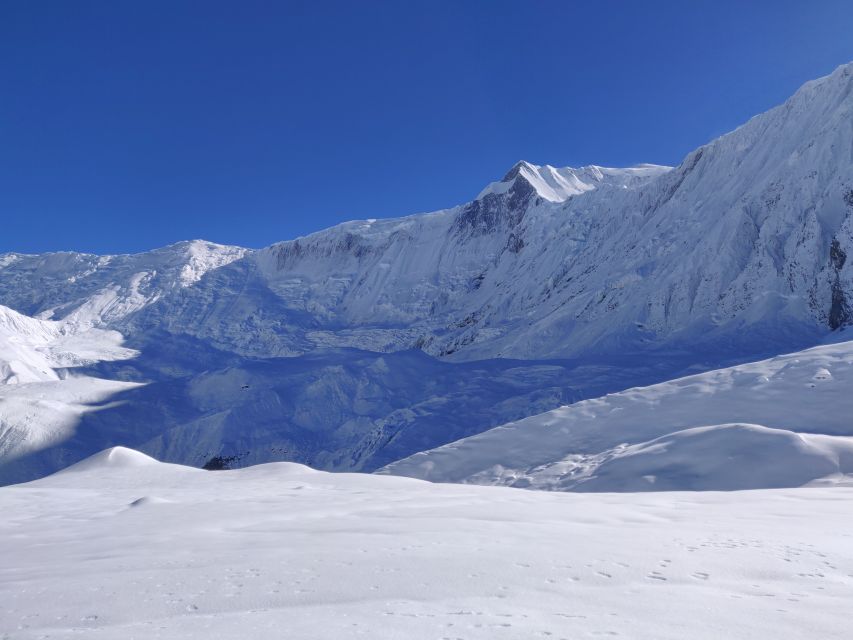
- The trail changes every day: Farms, suspension bridges, forests, steep gorges, alpine meadows, snow, and huge peaks all appear in one compact trip.
What the seven-day route is really like
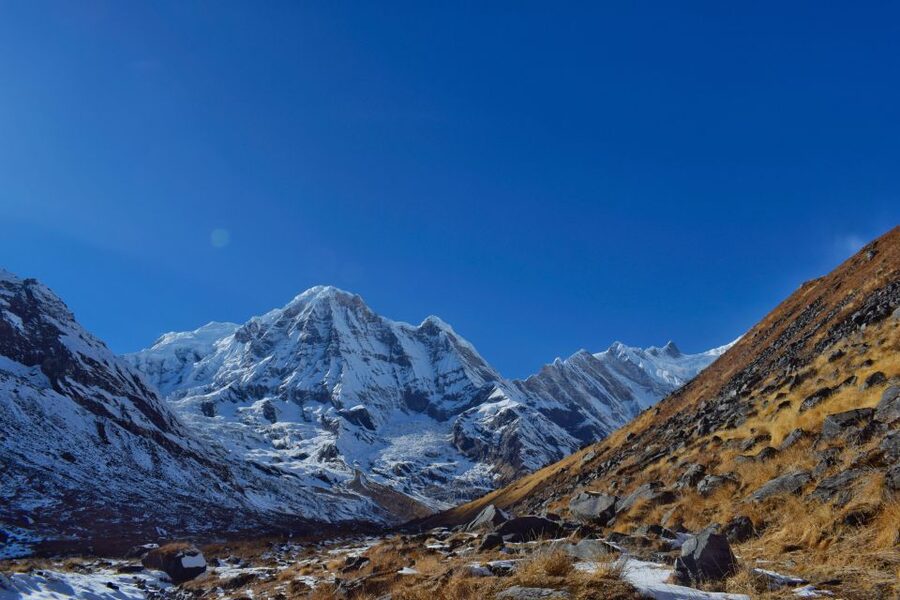
This is not a gentle mountain holiday. It is a serious trek with a clear goal, but the route gives you changing scenery and comfortable stopping points along the way. You sleep in standard tourist lodges, walk with a private guide, and can hire a porter if carrying a full pack sounds unwise.
The itinerary gains altitude quickly. Day one ends at 1,939 meters, while day three reaches 3,230 meters and day four takes you to 4,130 meters. That rise is why your guide matters. A good guide will watch your pace, help you stop when needed, and adjust the plan if altitude becomes a problem.
The strongest part of this experience is the human support. Pratikshya was praised for letting a less-fit couple move at their own pace, while Deepak, Hari, Krishna, and Sandesh were also singled out for care, humor, route knowledge, and good judgment. Paras was valued for estimating progress and matching the walk to personal preferences. That flexibility can make the difference between a hard but joyful trek and a miserable one.
More Annapurna Base Camp Treks:
- Annapurna Base Camp Heli Tour
★ 5.0 · 7 reviews - From Pokhara: 10-Day Poon Hill and Annapurna Base Camp Trek
★ 5.0 · 7 reviews - Pkr/Kathmandu: 5-Day Annapurna Base Camp & Hot spring Trek
★ 5.0 · 6 reviews
Day one: Pokhara to Nayapool, then Ghandruk
Your trip begins with hotel pickup in the Lakeside area of Pokhara. Private transport takes you to Nayapool, where the walking starts. The route passes villages and terraced fields before climbing toward Ghandruk at 1,939 meters.
Ghandruk is one of the most appealing overnight stops on the route. It is a traditional Gurung village, and the setting gives you an early taste of mountain life rather than only mountain scenery. Look for views toward Annapurna South and Machhapuchhre, also called Fishtail.
This first day sets the pattern for the trek: cultivated hillsides give way to forest, and village paths turn into rougher mountain trails. The initial climb can feel harder than the distance suggests, especially if you have just arrived in Nepal or have not trained for repeated uphill walking.
The village stay also helps break up the journey. You are not trying to reach the high country in one push. Still, the trek is already heading upward, so use this day to settle into a slow pace and keep water close.
Day two: Ghandruk to Lower Sinuwa
Day two brings a mixture of uphill and downhill walking through rhododendron forest and small settlements. You cross suspension bridges over the Modi Khola before reaching Lower Sinuwa at 2,249 meters.
This section is scenic but not easy. The repeated climbs and descents can tire your legs more than one long, steady ascent. The forest gives shade, while the bridges add a little drama without turning the route into a technical climb.
The Modi Khola is an important companion for much of the route. You follow its valley toward the base camp, with the river and gorge helping define the day’s scenery. Lower Sinuwa is a practical overnight point because it places you at a useful altitude before the trail climbs higher.
Do not judge your fitness by how you feel at the start of this day. You still have the steepest and highest sections ahead. If your guide is Pratikshya, Paras, Bidur, or another guide with a flexible approach, tell them early if your legs or breathing are struggling. The better pace is the one that gets you safely to base camp, not the one that looks fast on paper.
Day three: Sinuwa through Dovan and Himalaya to Deurali
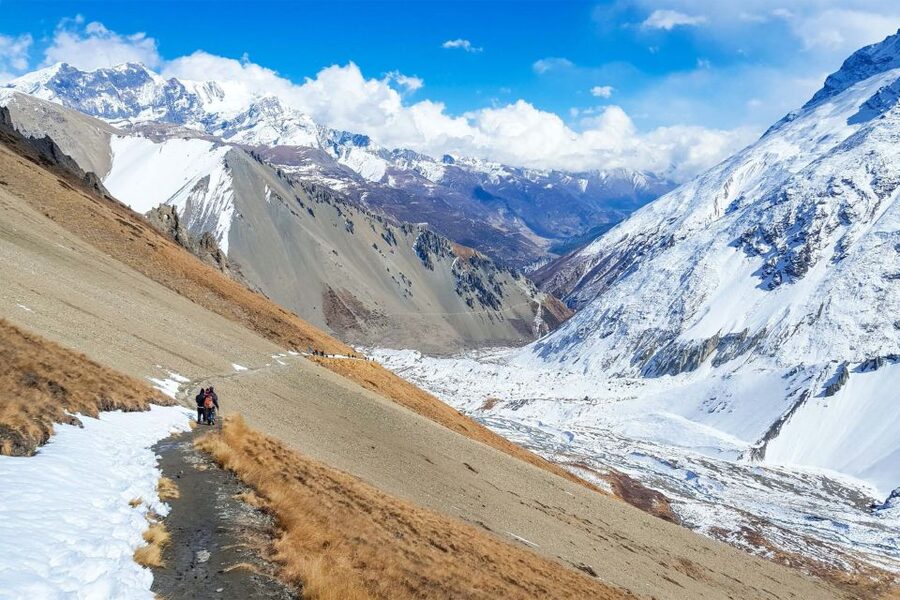
From Sinuwa, the trail passes through dense bamboo and oak forest. You continue toward Dovan and Himalaya, following the Modi Khola gorge, before climbing to Deurali at 3,230 meters.
The scenery grows more rugged here. Forested slopes, steep cliffs, waterfalls, and the narrowing gorge replace the farmland and village views from the lower route. The change is gradual but clear, and this is one of the most varied portions of the trek.
Deurali is also where altitude becomes a more serious concern. You are now above 3,000 meters, and the following day takes you more than 900 meters higher. One trekker had to stop at Deurali because of altitude sickness, but the guide arranged jeep transport and helped change the plan. That example is worth taking seriously: reaching base camp is important, but getting down safely matters more.
There is no need to pretend this is an easy walk. The trail is manageable for a reasonably prepared person, yet it demands stamina. The reviews repeatedly praise guides for slowing down when someone felt unwell and for offering encouragement without turning the day into a race.
More Treks and Hikes:
- Pokhara: 2 & 3 Days Ghorepani Poon Hill Private Guided Trek
★ 4.9 · 27 reviews - Pokhara: 1-Day Scenic Australian Camp & Dhampus Guided Hike
★ 4.9 · 24 reviews - From Pokhara: Day Hiking Australian Camp & Dhampus
★ 5.0 · 17 reviews - Pokhara: 4-Day Mesmerizing Mardi Himal Guided Trek
★ 4.8 · 9 reviews
Day four: Deurali to Machhapuchhre Base Camp and Annapurna Base Camp
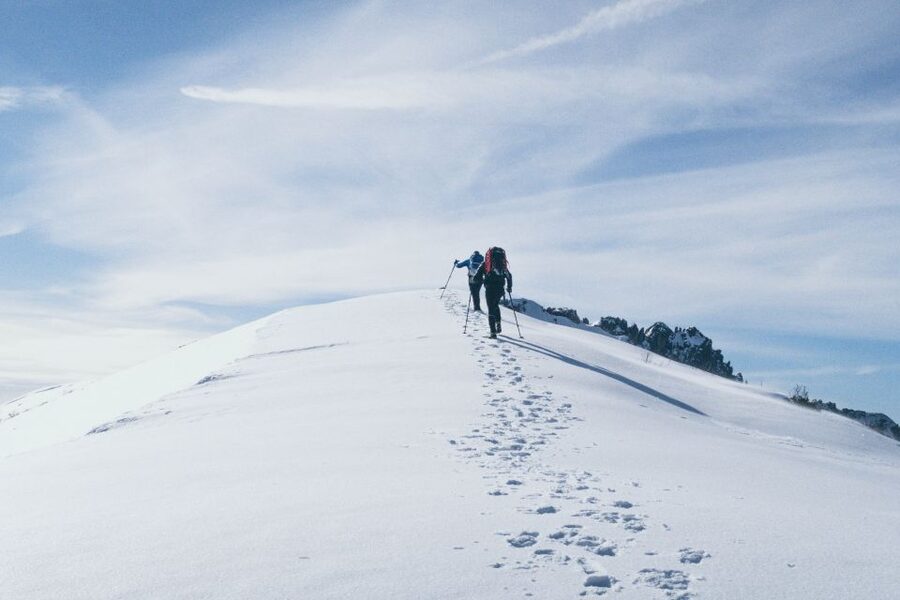
This is the big day. From Deurali, you climb through alpine meadows to Machhapuchhre Base Camp, then continue to Annapurna Base Camp at 4,130 meters, listed here as 13,550 feet.
The trail now opens into a much larger mountain setting. Machhapuchhre, or Fishtail, is one of the route’s signature peaks, and the views become more dramatic as you leave the forest behind. Hiunchuli and the Annapurna range add to the high-altitude panorama.
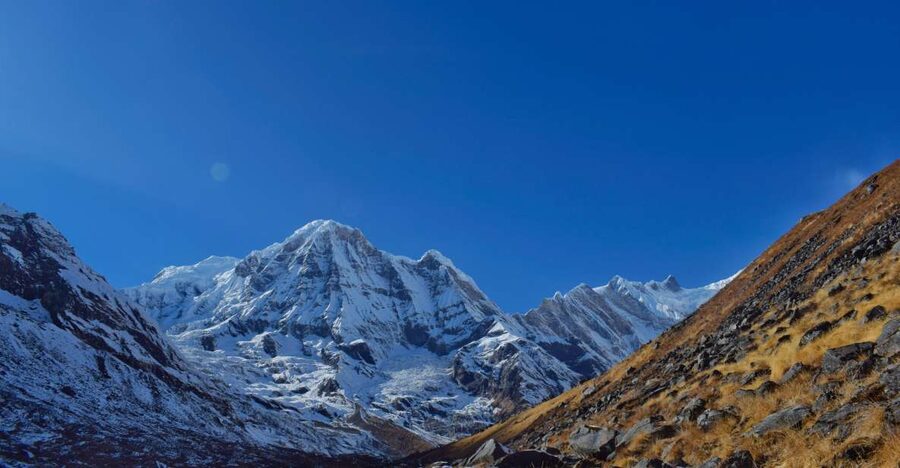
At Annapurna Base Camp, the mountains surround you in an enormous natural amphitheater. The payoff is not one isolated viewpoint. It is the feeling of being enclosed by huge peaks, with Annapurna I and the surrounding massif rising close on every side.
You should expect this day to be demanding. The elevation gain is considerable, and the air is thinner than it was only a few days earlier. Snow is possible as you approach and leave base camp, as one February trekker experienced. Conditions can change with the season, so the guide’s judgment is vital.
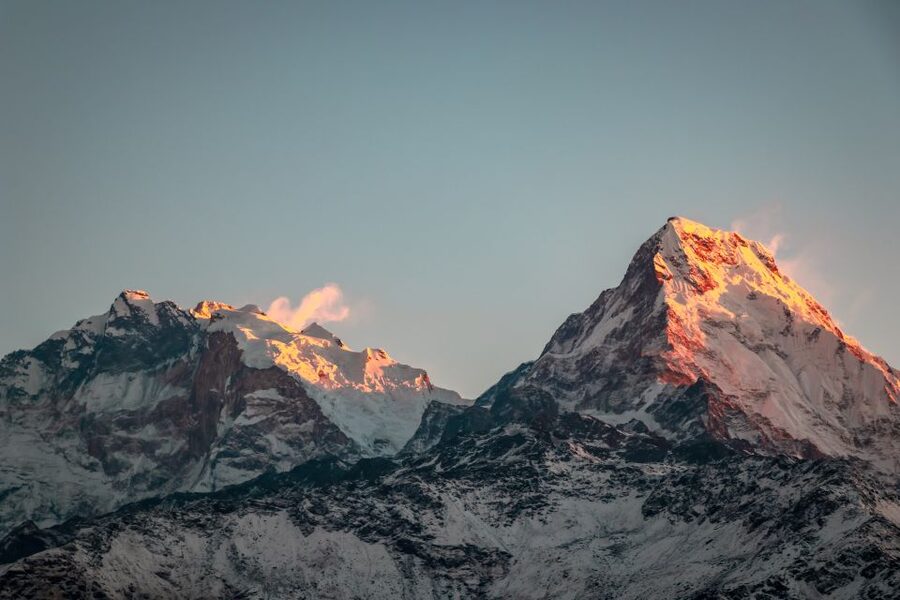
The overnight stay at base camp lets you see the place in more than one kind of light. The early morning sunrise over Annapurna I is a major reward. If the weather is clear, the dawn views may be the finest moment of the entire week.
Day five: Annapurna Base Camp back to Sinuwa
After breakfast, you retrace the trail downhill through the bamboo and rhododendron forests to Sinuwa at 2,249 meters. The descent is easier on your breathing but can be hard on knees and thighs.
This is a day when trekking poles earn their place. Poles are provided if needed, and you should use them if downhill walking makes your joints ache. The same route looks different in reverse, with the forest and gorge now offering a more sheltered feel after the exposed high country.
The descent is long, so do not make the mistake of thinking the hard work ended at base camp. Your guide can help set a steady pace and arrange rest stops. The private format is useful here because you are not forced to match the speed of a larger group.
Sinuwa is a sensible overnight stop before the final push toward Jhinu Danda. It also keeps the next day within the seven-day plan, though the overall schedule remains active rather than leisurely.
Day six: Sinuwa to Jhinu Danda and the hot springs
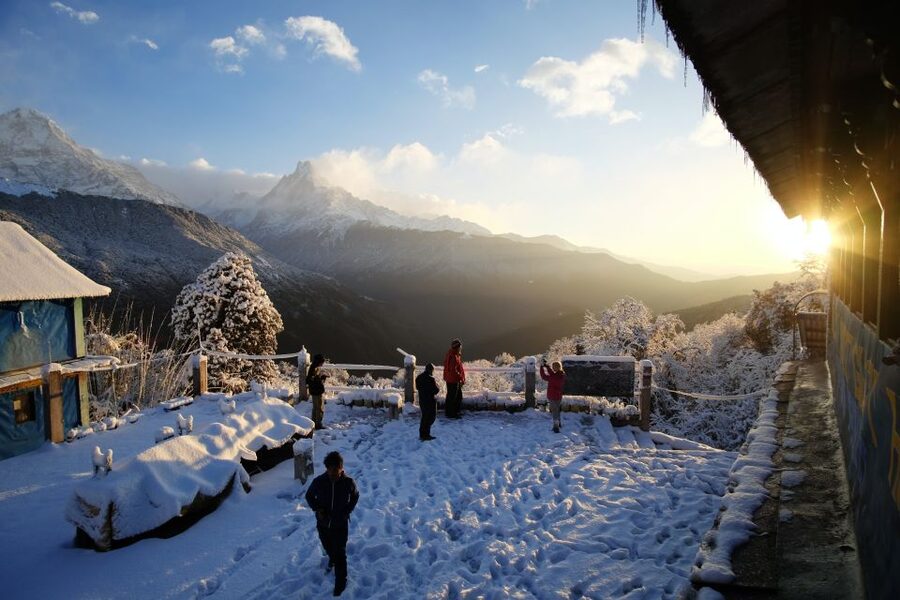
Day six descends to Jhinu Danda at 1,760 meters. The main attraction is the natural hot springs beside the river, where you can soak tired muscles after several days of climbing and descending.
This stop adds a welcome change of rhythm. Instead of simply arriving at another lodge, you have a chance to relax outdoors and mark the end of the high mountain portion of the walk. Bring swimwear. The hot springs were a favorite surprise for some people, and in at least one case the stop was added even though it was not expected.
Jhinu also raises a practical question about the final day. The walk after Jhinu is less exciting for some people because it includes a substantial amount of road. One couple suggested ending the trek in Jhinu rather than continuing to Nayapool, but this seven-day plan continues onward. If you dislike road walking, ask about the available finish before booking.
Even with that drawback, Jhinu is a smart inclusion. After the effort of base camp, a warm soak is exactly the kind of simple pleasure that makes a trek feel well planned.
Day seven: Jhinu to Nayapool and back to Pokhara
The final walking section descends gradually through farmland and villages to Nayapool. From there, private transport takes you back to Pokhara and the Lakeside area.
This day is less about dramatic mountain views and more about closing the loop. You pass back through settled country, moving from the high trail toward roads and regular transport. The contrast helps you understand how far you have walked in one week.
Some people may find the final road-heavy section anticlimactic after Annapurna Base Camp. Others will appreciate an easier finish and a reliable ride back to Pokhara. If you still have energy, Lakeside gives you an easy place to celebrate, eat, and rest beside the lake.
The included hotel pickup and drop-off simplify the start and finish. Luggage storage in Pokhara is also useful because you can trek with only what you need and leave larger bags behind.
The guides make the biggest difference
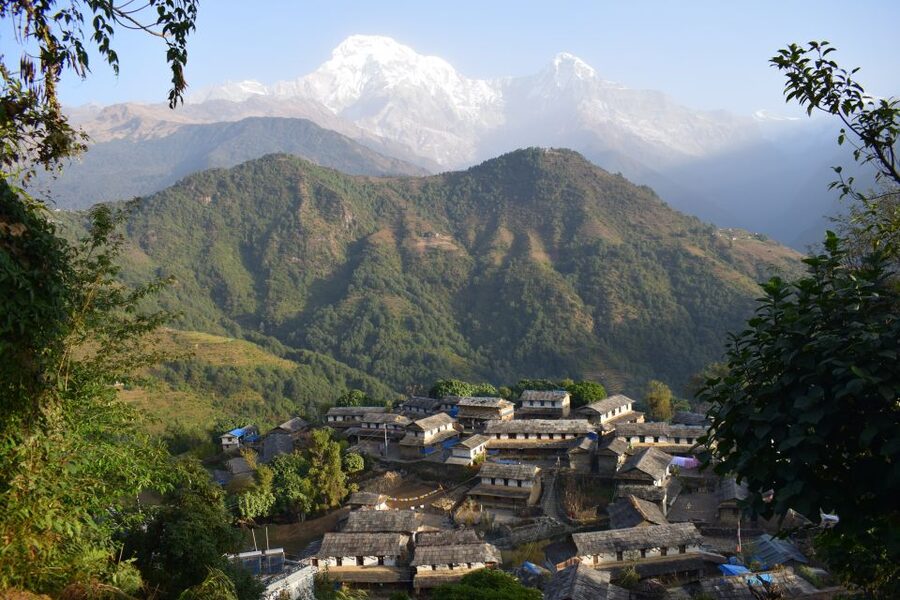
The guide is not just someone who points down the trail. On this route, your guide controls the pace, helps with lodge arrangements, explains the mountains and villages, and responds when plans change.
Pratikshya received especially strong praise for patience, route knowledge, and good relationships with the tea houses. Deepak adapted the walking rhythm to one person’s ability. Hari combined safety, humor, and explanations about Nepal. Krishna was praised for keeping the trip cheerful while giving people space when they wanted quiet.
Sandesh was noted for patience, helpfulness, and taking photos and videos. Paras adjusted the schedule to personal preferences and gave a clear sense of progress. Bidur was valued for care and support, including during a difficult monsoon-season trek.
Those details matter because the trek is private. You are not simply joining a fixed-speed group. Tell the operator what you need, including your experience level and preferred pace. A packing list tailored to the season would be helpful, so ask for one before you leave.
What the $215 price includes, and what it does not
At $215 per person, this is a strong price for a private seven-day trek, especially because it includes several costs that can otherwise add up:
- Pickup and drop-off from hotels in Lakeside, Pokhara
- Private roundtrip transport
- Annapurna Conservation Area permit
- Government permits
- Standard tourist lodge accommodation
- A government-certified guide
- First aid kit
- Duffel bag and trekking poles if needed
- Luggage storage in Pokhara
Food and drinks are extra. You can purchase them along the route, but the total cost of the trip will therefore be higher than the headline price. A porter is available for $15 per day, a reasonable add-on if you would rather focus on walking than carrying your main bag.
The value is strongest for people who want a private arrangement without paying for a high-end trekking package. The lodges are described as standard tourist accommodation, not luxury hotels. Expect the basics and judge the price on access, permits, transport, guiding, and flexibility.
Who should choose this Annapurna trek?
I would recommend this trip to an active visitor who wants a direct route from Pokhara to a famous Himalayan goal. You will like it if you value changing scenery, village contact, strong mountain views, and a guide who can adapt the day to your pace.
It also suits first-time trekkers who want support. Several people completed the route with patient guides, and one first-time trekker found the walk manageable with encouragement. That does not mean the trek is easy. You still need to be ready for steep trails, long walking days, and altitude.
You may want another plan if you prefer slow acclimatization, dislike retracing your steps, or want to avoid road walking at the end. You should also think carefully about the seven-day schedule if you have no trekking experience or are unsure how your body handles altitude.
The private format is a major advantage for couples, friends, and solo hikers who want control over the pace. It is also useful if one person in your group walks more slowly or needs extra breaks.
Practical advice for a smoother week
Bring your passport or ID card, as requested for the trip. Ask for a seasonal packing list before departure, since conditions can range from warm lower valleys to cold and snowy sections near base camp.
Pack light, but do not cut essentials. A warm layer, rain protection, sturdy footwear, water, and clothing for changing conditions are sensible choices, though the exact packing requirements vary by season. Your duffel bag and luggage storage reduce the need to carry everything from Pokhara.
Use the first two days to find your rhythm. The route includes both climbing and descending, so short steps and regular breaks are more useful than trying to keep up a quick pace.
Take altitude symptoms seriously. If you feel unwell at Deurali or higher, tell your guide at once. The experience includes a first aid kit, but the guide’s response and your willingness to change plans are more important than forcing the summit goal.
Cancellation is free up to 24 hours before the activity for a full refund, and you can reserve now and pay later. Starting times should be checked when you book, since availability can vary.
FAQ
How long is the Annapurna Base Camp trek?
The trek lasts seven days, beginning and ending with transport from Pokhara. The walking route runs from Nayapool to Ghandruk, onward to Annapurna Base Camp, then back through Sinuwa and Jhinu Danda to Nayapool.
What altitude does Annapurna Base Camp reach?
Annapurna Base Camp is at 4,130 meters, or 13,550 feet. The itinerary reaches Deurali at 3,230 meters on day three before the final ascent.
Is food included in the $215 price?
No. Food and drinks are available to purchase during the trek but are not included in the tour price.
Can I hire a porter?
Yes. A porter is available for $15 per day. A duffel bag is included, and luggage storage in Pokhara is also provided.
What languages can the guide speak?
Guides are available in English, Hindi, and Nepali. The trek uses government-certified guides.
Is the group private?
Yes. This is a private group experience. Hotel pickup is included from hotels in Lakeside, Pokhara, along with private roundtrip transport.
Should you book it?
Book this trek if you want the Annapurna Base Camp experience in one focused week and value personal guiding over a slow, highly flexible schedule. The scenery is remarkably varied, the Gurung village of Ghandruk gives the route character, and Jhinu’s hot springs provide a welcome finish.
I would be careful if you are not prepared for altitude or if you want a completely road-free ending. Ask for a seasonal packing list, decide in advance if you need a porter, and tell the operator about your fitness and preferred pace.
For an active visitor who wants a private trek at a low listed price, this is a compelling choice. The route is demanding, but the guides’ patience and flexibility help make the challenge feel manageable.
More 7-Day Experiences
- Pokhara: 7-Day Annapurna Base Camp Via PoonHill & Hot Spring
★ 5.0 · 6 reviews - Pokhara: Amazing 7-Day ABC Trek with Natural Hot Spring
★ 5.0 · 5 reviews - Annapurna Base Camp Trek from Pokhara 7 Days
★ 5.0 · 19 reviews - 7 days Nepal Motorcycle tour
★ 5.0 · 12 reviews
Just added around Annapurna Region
- Pokhara: Annapurna Foothills Private Day Hike with Transfers★ 5.0 · 3 reviews
- Pokhara: Poon Hill Trek★ 5.0 · 3 reviews
- From Pokhara: Annapurna View Day Hike★ 5.0 · 3 reviews
- Pokhara: 5-Day Annapurna Base Camp Trek with Hot Spring★ 5.0 · 3 reviews
- Annapurna Circuit Trekking 13 Days★ 4.5 · 3 reviews
- Pokhara: 3 days Trek to Poon hill★ 5.0 · 3 reviews
- Pokhara: 3- days Poon Hill Trek★ 5.0 · 3 reviews
- Pokhara: 3-Day Ghorepani, Poon Hill and Ghandruk Guided Trek★ 4.4 · 4 reviews
Annapurna Base Camp Treks, compared.



Kathmandu to Annapurna Base Camp (ABC) 5-Day Trek
Read our review →

Browse the lists this tour appears in