
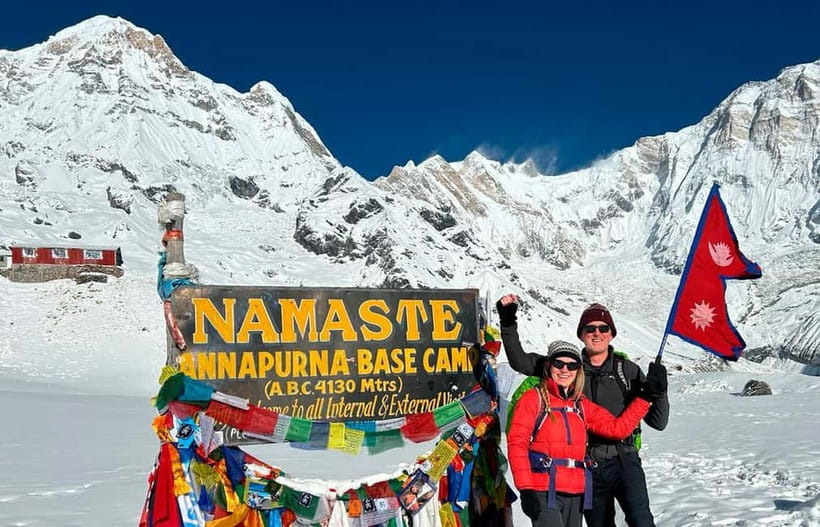
Reviewed · ANNAPURNA BASE CAMP TREKS
Pkr/Kathmandu: 5-Day Annapurna Base Camp & Hot spring Trek
The Himalayas reward steady feet. This five-day Annapurna Base Camp trek packs forests, waterfalls, Gurung villages, hot springs, and huge mountain views into a demanding route from Pokhara. I especially like the quick access to ABC at 4,130 meters and the chance to watch sunrise near Machhapuchare Base Camp. I also like that a private guide, permits, mountain lodging, transfers, and basic gear support are built into the arrangements. The main catch is the pace: reaching base camp in only five days leaves little room for slow acclimatization or weather delays.
You should also look closely at which package you choose. The advertised price is $60 per person, but meals, porter service, and Kathmandu to Pokhara flights depend on the option you book. I would confirm those details before paying. The route is moderate to challenging, and cold, rain, snow, long stair sections, and altitude can turn a beautiful trek into a serious physical test.
In This Review
- Key points before you book
- What the five-day ABC route is really like
- Day 1: Pokhara to Simrung, then Sinuwa
- Day 2: Forest, waterfalls, and Deurali at 3,230 meters
- Day 3: Machhapuchare Base Camp and Annapurna Base Camp
- Sunrise near Machhapuchare Base Camp
- Day 5: Jhinu Danda hot springs and the ride to Pokhara
- Guides, porters, and the value of private support
- What the $60 price does and does not tell you
- Fitness, altitude, weather, and packing
- Who should choose this trek?
- Should you book the five-day ABC trek?
- FAQ
- How long is the Annapurna Base Camp trek?
- What is the highest point reached?
- Does the trek start in Kathmandu or Pokhara?
- Are meals included?
- Is a porter included?
- Is the Jhinu Danda hot spring visit included?
- What are the best seasons for this trek?
Key points before you book
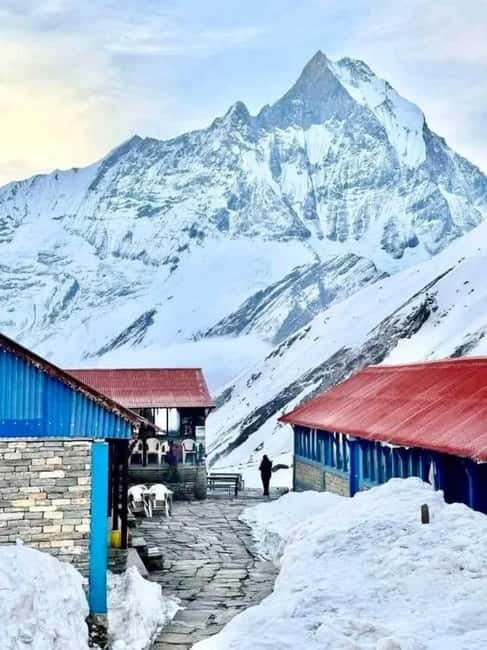
- ABC at 4,130 meters: You reach Annapurna Base Camp on the third trekking day, with views toward Annapurna I, Machapuchare, and Hiunchuli.
- A fast five-day schedule: The route is efficient but demanding, with walking days of up to seven hours and limited spare time.
- Sunrise at Machhapuchare Base Camp: Day four begins with a mountain view before the long descent toward Bamboo or Sinuwa.
- Jhinu Danda hot spring stop: The final day can include a relaxing hot spring visit before the drive back to Pokhara.
- Strong guide support: Guides including Sagar, Raj, Shiva, Nareen, and others have received praise for safety, pacing, care, and organization.
- Private group format: You trek with your own group rather than joining a large public departure, and guides are available in English, French, Japanese, and Chinese.
What the five-day ABC route is really like
This is not a gentle sightseeing outing. It is a compact Himalayan trek that moves from low valleys to the heart of the Annapurna Sanctuary, then drops back down quickly. The reward is a direct look at some of Nepal’s best-known peaks without committing to a week or more on the trail.
Annapurna I rises to 8,091 meters and is one of the world’s highest mountains. At base camp, you are not simply looking at a distant summit from a road or town. You are surrounded by the high mountain basin, with Annapurna I, Machapuchare, and Hiunchuli forming the main visual drama.
The route also has a human side. You pass through traditional settlements, sleep in simple mountain guest houses, and walk through areas where Gurung culture remains part of everyday village life. The accommodation is practical rather than luxurious. A guest house gives you a bed, a place to eat, and shelter from changing mountain weather. It does not promise resort comfort.
More Annapurna Base Camp Treks:
- Pokhara: 7 Day Annapurna Base Camp Trek
★ 4.9 · 38 reviews - Annapurna Base Camp Heli Tour
★ 5.0 · 7 reviews - From Pokhara: 10-Day Poon Hill and Annapurna Base Camp Trek
★ 5.0 · 7 reviews
Day 1: Pokhara to Simrung, then Sinuwa
The first day begins with hotel pickup in Pokhara. From there, a shared Jeep takes you toward Simrung by way of Nayapul. The drive lasts about two to three hours, followed by four to five hours of trekking to Sinuwa.
If you start in Kathmandu, you first take a roughly 30-minute flight to Pokhara. The flight option includes Kathmandu hotel pickup and drop-off, plus the air ticket, but you should check that it is included in the exact package you select. From Pokhara, the trek itself follows the same road and trail arrangement.
The road transfer matters because the walk does not begin at the lowest practical access point. The Jeep carries you deeper into the route, saving time and making a five-day schedule possible. The tradeoff is a shared ride on mountain roads, which may feel tiring before your boots even touch the trail.
From Simrung, the route starts climbing toward Sinuwa. You will likely notice the effort immediately, especially on stair sections. Sinuwa sits at about 2,340 meters, so this first overnight stop begins the altitude change without taking you straight into the high zone.
A mountain guest house in Sinuwa is your base for the night. Keep your first evening simple. Eat, drink water, organize warm clothing, and avoid treating the first day as a warm-up that does not count. The following days are longer and higher.
Day 2: Forest, waterfalls, and Deurali at 3,230 meters
The second day runs from Sinuwa to Deurali and takes about five to six hours. The route passes through dense forest and small settlements, including Himalaya, where tea houses offer a basic break.
This is one of the most appealing parts of the trek. The scenery changes as you walk beside rivers and through wooded sections marked by waterfalls. You are not staring at the same mountain view all day. Instead, the trail moves between shaded forest, wet rock, rushing water, and small places where food and tea are available.
The forest can also make the trail feel more enclosed. If your main goal is nonstop peak photography, this may seem less dramatic than the open views higher up. I would see it as part of the route’s balance. The Annapurna experience is not only about standing below giant summits. It is also about the forests and water systems that lead you there.
Deurali sits at approximately 3,230 meters. That increase is important. Pay attention to headaches, unusual tiredness, nausea, or breathing trouble. The schedule does not offer a dedicated rest day, so you need to tell your guide early if you feel unwell.
The trek provider describes acclimatization as important, and that advice deserves attention. A strong level of fitness helps, but fitness does not make you immune to altitude problems. Walk at a steady pace, drink water, and let your guide adjust the speed if necessary.
Day 3: Machhapuchare Base Camp and Annapurna Base Camp
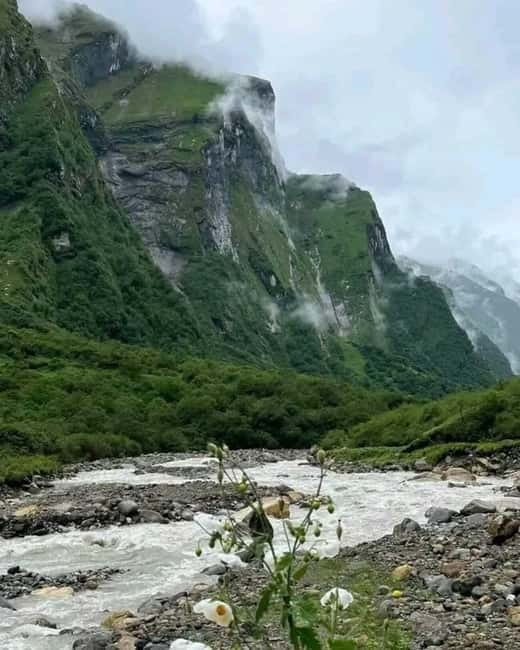
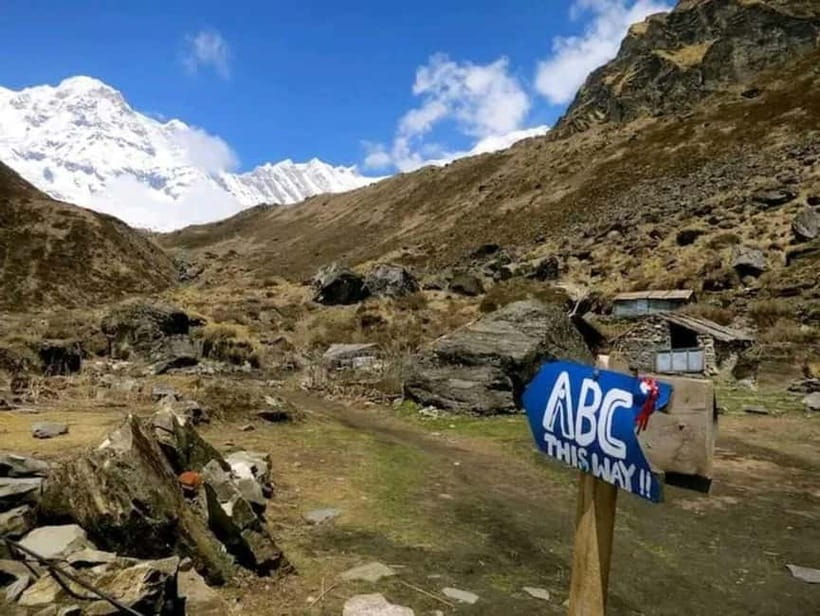
Day three is the defining day. You walk from Deurali to Annapurna Base Camp through Machhapuchare Base Camp, usually taking five to six hours.
Machhapuchare, also called Fishtail, is one of the most recognizable mountains in Nepal. The route through its base camp leads into the MBC valley, where the surroundings become more open and high mountain views take over from the forest. The shift feels dramatic because the trail has carried you through trees, rivers, and waterfalls only a day earlier.
From MBC, you continue to ABC at 4,130 meters. The final approach is not a casual stroll. At this altitude, even a moderate incline can feel slow. Your guide’s pacing matters here, and the praise given to guides such as Sagar, Raj, and Shiva points to one of the package’s real strengths: good support can make a hard day manageable.
At ABC, you stay in a tea house and have time to take in the Annapurna range. The westward sunset view is one of the day’s special rewards. Conditions may be cold, and cloud or snow can limit visibility, so do not treat a clear view as guaranteed.
This is also the night when your body has the least margin. You have reached the highest point of the trip, and sleep can be affected by altitude. Tell your guide how you feel rather than trying to prove that you can push through anything.
More Spa Experiences:
- Pokhara: 7-Day Annapurna Base Camp Via PoonHill & Hot Spring
★ 5.0 · 6 reviews - Pokhara: Amazing 7-Day ABC Trek with Natural Hot Spring
★ 5.0 · 5 reviews - Pokhara: 5-Day Annapurna Base Camp Trek with Hot Spring
★ 5.0 · 3 reviews - Whole Day Massage & Spa With Lunch
★ 5.0 · 54 reviews
Sunrise near Machhapuchare Base Camp
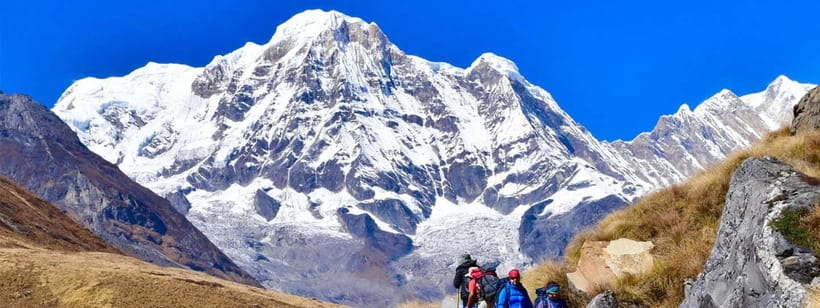
The fourth morning begins with a sunrise view from the high part of the route. The plan is to enjoy the early mountain light, then trek back through Deurali, Himalaya, and Dobhan toward Bamboo or Sinuwa.
Sunrise is valuable here because the peaks can look entirely different in early light than they did the previous afternoon. The cold is part of the deal, though. Have your warm layers ready before bed so you are not searching through your duffle bag in the dark.
The descent takes about six to seven hours, making it the longest walking day in the schedule. Going downhill may sound easier than climbing, but steep steps can punish knees and ankles. Trekking poles are useful, and poles are listed among the equipment you may borrow. One group found that poles were not provided as expected, and the guide made temporary bamboo poles instead. That is a memorable bit of local resourcefulness, but I would still confirm equipment availability before departure.
You may sleep at Bamboo or Sinuwa, depending on the operating plan and conditions. The lower you go, the easier the altitude becomes, but fatigue builds after several consecutive days. This is where a porter can be especially valuable if your package includes one.
Day 5: Jhinu Danda hot springs and the ride to Pokhara
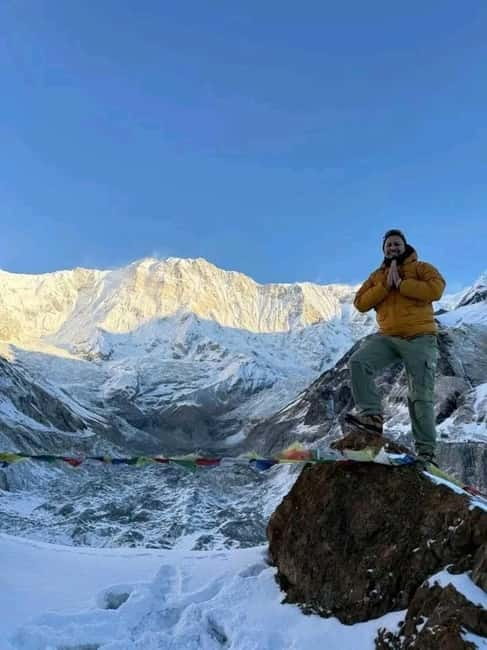
The final day takes about three to four hours of trekking to Simrung by way of Jhinu Danda, followed by a two to three-hour drive back to Pokhara. The expected arrival is around 5 p.m., although mountain roads and trail conditions can affect timing.
Jhinu Danda is the route’s pleasant change of pace. The optional hot spring stop gives you a chance to soak tired legs before the final transfer. It does not erase four days of walking, but it adds a welcome note of comfort to a trip built around effort.
The hot spring visit is optional, so confirm how much time your group plans to spend there. If you are eager to reach Pokhara, you may prefer a shorter stop. If your legs are sore and the schedule allows it, the water can be one of the most satisfying parts of the last day.
The return drive is not just a formality. After a long trek, two to three hours in a shared Jeep can feel tiring. Still, arriving back at your Pokhara hotel on day five makes this format attractive for people with limited holiday time.
Guides, porters, and the value of private support
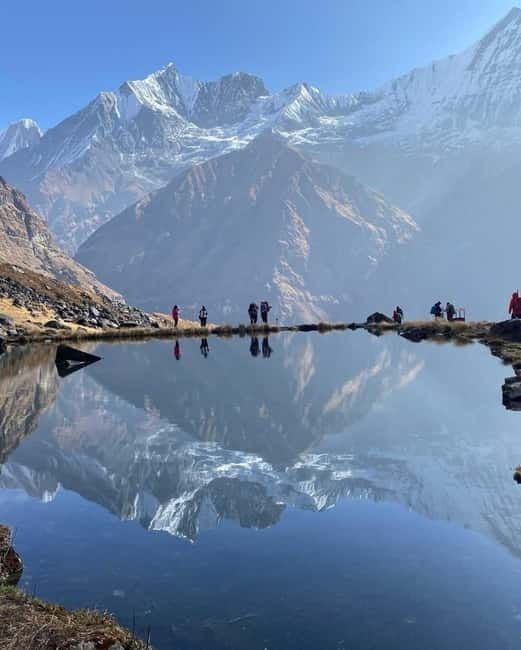
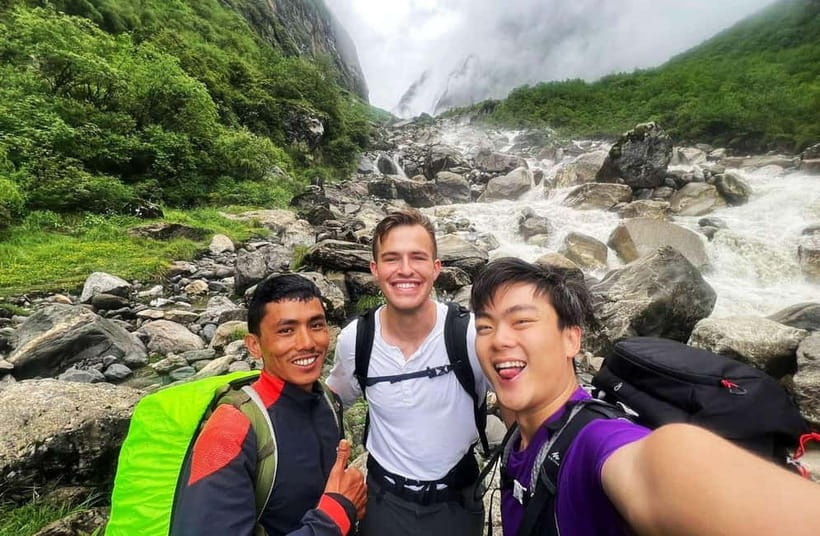
The strongest praise for this trip centers on the people leading it. Sagar is described as careful with safety, pacing, meals, accommodation, and weather. Raj and porter Naron helped one last-minute booking stay on track. Shiva received praise for an efficient itinerary and good handling of the trip.
Nareen, also called Anarayan, was praised for taking close care of a group during cold, rain, and snow. Porter Visnu was also recognized for his support. Another group valued Sagar and porter Azis for their kindness and help, while guides Sagar and Bimal were praised for respectful support and local stories.
These details matter more than polished promises. On a high-altitude trek, a guide who notices your pace, explains conditions, and handles lodge arrangements can save you stress. A porter can also let you walk with a lighter daypack, but only if that service is included in your selected option.
There is one organizational weakness to note. One inexperienced group wanted clearer information about departure times, weather, packing needs, and trekking poles. I would ask those questions before leaving Pokhara, not the night before each walk.
What the $60 price does and does not tell you
At $60 per person, the advertised price looks extremely low for a five-day Himalayan trek. That figure needs careful reading. The exact inclusions depend on whether you choose a budget package, an all-inclusive package, or an option starting in Kathmandu.
The included support can cover:
- Hotel pickup and drop-off in Pokhara
- Kathmandu transfers and the Kathmandu to Pokhara flight, if that option is selected
- Shared Jeep transfers between Pokhara and Simrung
- Four nights in mountain guest houses
- A trekking guide
- Necessary permits
- Borrowed sleeping bags, duffle bags, and trekking poles
- First aid
- Meals and a porter with the all-inclusive option
Budget or Kathmandu options may exclude meals and porter service, with those available as add-ons. Drinks, including hot, cold, and alcoholic drinks, are not included. Travel insurance is also your responsibility.
I would judge the value by the package, not the headline number. A low-cost option can work well if you already have gear, can carry your own belongings, and are comfortable buying meals along the way. The all-inclusive version is easier for most first-time trekkers because food and luggage support are handled.
Ask for a written breakdown of meals, porter arrangements, flight coverage, equipment, and transfers. That small step can prevent a cheap booking from becoming an expensive surprise.
Fitness, altitude, weather, and packing
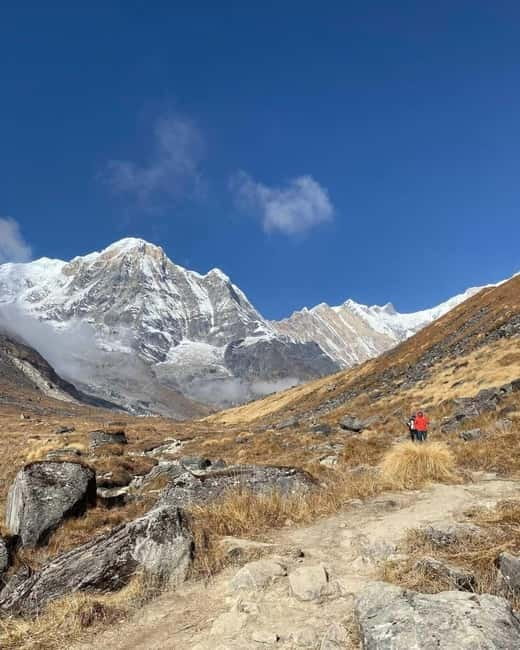
The route is described as moderate to challenging and is not suitable for people with mobility impairments, heart problems, respiratory issues, altitude sickness, or a low level of fitness. You should take those warnings seriously.
You need hiking shoes with a secure grip, warm clothing, sunscreen, water, a camera, travel insurance, and suitable trekking gear. Conditions can shift quickly, especially near ABC. March to May and September to November are listed as the best seasons, but even then, cold temperatures, rain, snow, and unpredictable weather remain possible.
Pack for changing conditions rather than one ideal forecast. Keep warm layers easy to reach, protect your camera and phone from wet weather, and carry enough water for each walking section. Alcohol and drugs are not allowed, and alcohol is not included in the package in any case.
The five-day format suits you if you already walk regularly and want a focused route to ABC. It is less suitable if you want leisurely mornings, extra acclimatization time, or a generous backup plan for bad weather. Beginners can complete it, but only with honest preparation and close attention to pace.
Who should choose this trek?
I would recommend it to fit hikers who have limited time in Nepal and want a direct route to Annapurna Base Camp. It also suits people who value a private group, guide support, mountain guest houses, and the option of a porter.
The trip is a good match for couples, friends, and small groups who want shared effort without joining a large public departure. The availability of English, French, Japanese, and Chinese-speaking guides is useful when communication is a concern.
I would hesitate to recommend it to anyone with a serious medical condition, poor fitness, mobility limitations, or no tolerance for cold and basic lodging. I would also suggest a longer schedule if you are anxious about altitude or want more time for weather delays.
The full rating record is excellent, with six five-star bookings. That is encouraging, but the most useful pattern is not the number itself. It is the repeated praise for guide care, safety, pace, kindness, and problem solving. The one clear criticism concerns pre-trip information, so use the booking process to get those details nailed down.
Should you book the five-day ABC trek?
Book it if your priority is reaching Annapurna Base Camp quickly while keeping a guide and private-group format. The route delivers a lot: high peaks, MBC sunrise, forest trails, waterfalls, Gurung villages, and a hot spring finish.
Before you commit, confirm the exact price package, meals, porter service, flights, trekking poles, departure times, and packing advice. If you can handle five to seven hours of walking, prepare for altitude, and accept simple mountain lodging, this is a strong-value way to reach ABC in a short holiday.
If you need a slow pace or extra acclimatization, choose a longer Annapurna schedule instead. For the right hiker, this five-day plan is demanding but wonderfully direct.
FAQ
How long is the Annapurna Base Camp trek?
The experience lasts five days. Trekking days range from about three to seven hours, with the longest day being the return from the high camp area toward Bamboo or Sinuwa.
What is the highest point reached?
Annapurna Base Camp is the highest point, at approximately 4,130 meters. Machhapuchare Base Camp is visited on the way.
Does the trek start in Kathmandu or Pokhara?
You can begin from Kathmandu or Pokhara. People starting in Kathmandu take a roughly 30-minute flight to Pokhara if the flight option is selected.
Are meals included?
Meals are included with the all-inclusive option. They are not included with the budget or Kathmandu option unless you add them separately.
Is a porter included?
A porter is included with the all-inclusive option. With the budget or Kathmandu option, porter service is available as an add-on.
Is the Jhinu Danda hot spring visit included?
The route passes through Jhinu Danda on the final trekking day, and the hot spring visit is optional. Confirm the planned stop with your guide.
What are the best seasons for this trek?
The recommended seasons are March to May and September to November. Weather can still change quickly, so you should bring warm clothing and prepare for cold conditions.
More 5-Day Experiences
- Annapurna base camp trek 5 Days
★ 5.0 · 252 reviews - Kathmandu to Annapurna Base Camp (ABC) 5-Day Trek
★ 5.0 · 102 reviews - Kathmandu/Pokhara: 5-Day Annapurna Base Camp (ABC) Trek
★ 4.9 · 72 reviews - From Pokhara: 5-Day Annapurna Basecamp Trek with Hot Springs
★ 4.9 · 26 reviews
More Treks and Hikes
- Pokhara: 2 & 3 Days Ghorepani Poon Hill Private Guided Trek
★ 4.9 · 27 reviews - Pokhara: 1-Day Scenic Australian Camp & Dhampus Guided Hike
★ 4.9 · 24 reviews - From Pokhara: Day Hiking Australian Camp & Dhampus
★ 5.0 · 17 reviews - Pokhara: 4-Day Mesmerizing Mardi Himal Guided Trek
★ 4.8 · 9 reviews
Just added around Annapurna Region
- Pokhara: Annapurna Foothills Private Day Hike with Transfers★ 5.0 · 3 reviews
- Pokhara: Poon Hill Trek★ 5.0 · 3 reviews
- From Pokhara: Annapurna View Day Hike★ 5.0 · 3 reviews
- Pokhara: 5-Day Annapurna Base Camp Trek with Hot Spring★ 5.0 · 3 reviews
- Annapurna Circuit Trekking 13 Days★ 4.5 · 3 reviews
- Pokhara: 3 days Trek to Poon hill★ 5.0 · 3 reviews
- Pokhara: 3- days Poon Hill Trek★ 5.0 · 3 reviews
- Pokhara: 3-Day Ghorepani, Poon Hill and Ghandruk Guided Trek★ 4.4 · 4 reviews
Annapurna Base Camp Treks, compared.



Kathmandu to Annapurna Base Camp (ABC) 5-Day Trek
Read our review →

Browse the lists this tour appears in