
Reviewed · ANNAPURNA CIRCUIT TREKS
12 days Annapurna Circuit Trek
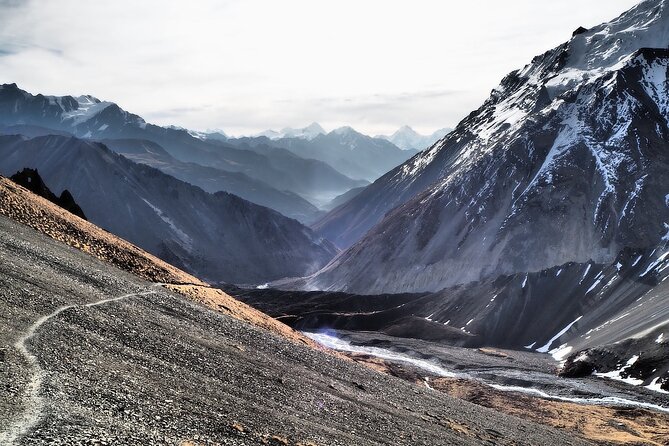
High passes, warm springs, and Himalayan sunrises await. This 12-day Annapurna Circuit trek takes you from Kathmandu through Dharapani, Manang, Thorong La, Muktinath, Tatopani, Ghorepani, and Pokhara, with views of Annapurna, Machhapuchhre, Lamjung Himal, and Dhaulagiri along the way. The route combines mountain walking with local buses, jeeps, teahouses, and village life.
I like the way the trip includes accommodation, most meals, permits, and major transport, so the $1,100 price is easier to understand. I also like the personal approach: the company offers a private trip for your group, customizable plans, and English-speaking guides such as Bhim Panta, Manit, and Kumar. The main drawback is the pace. Several days run close to 10 or 12 hours, and the itinerary requires a moderate fitness level, with an early start for Thorong La.
In This Review
- Key Points Before You Book
- What This Annapurna Circuit Route Does Well
- Day 1: Kathmandu to Dharapani by Road
- Day 2: Dharapani to Chame
- Day 3: The Mountain Views Around Upper Pisang
- Day 4: Upper Pisang to Manang
- Day 5: Acclimatization in Manang and the Ice Lake Option
- Day 6: Manang to Yak Kharka
- Day 7: Yak Kharka to Thorung Phedi
- Day 8: Thorong La Pass and Muktinath
- Day 9: Muktinath to Tatopani Hot Springs
- Day 10: Tatopani to Ghorepani Through Thakali Villages
- Day 11: Poon Hill Sunrise and Pokhara
- Day 12: Pokhara to Kathmandu
- What the $1,100 Price Really Covers
- Who Should Book This Trek?
- Final Verdict: A Strong Value With a Demanding Schedule
- FAQ
- How long is the Annapurna Circuit Trek?
- What is the price per person?
- Is transportation included?
- Is a flight from Pokhara to Kathmandu included?
- Are meals included?
- Is accommodation included?
- Are trekking permits included?
- Is a porter included?
- What level of fitness is required?
- What is the cancellation policy?
Key Points Before You Book
- Thorong La is the physical high point: You wake around 3 a.m. on Day 8 to cross the 5,416-meter pass.
- The route covers two famous viewpoints: Ice Lake near Manang is suggested for acclimatization, while Poon Hill offers the sunrise finale.
- Transport is part of the adventure: Expect public transportation, a jeep from Muktinath to Tatopani, a bus to Pokhara, and a tourist bus back to Kathmandu.
- The $1,100 price includes the essentials: Teahouse lodging, three meals during the trek, permits, guide costs, and listed transfers are covered.
- Porters cost extra: A porter is available for $20 per day and can carry up to 20 kilograms.
- You finish with variety: The route moves from high mountain valleys to Muktinath, hot springs, Thakali villages, Poon Hill, and lakeside Pokhara.
What This Annapurna Circuit Route Does Well
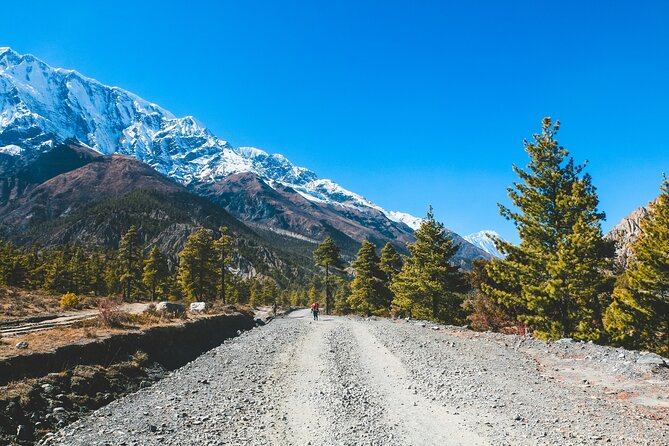
The appeal here is variety. You are not simply walking toward one mountain and then turning around. The route crosses changing terrain, from the Marshyangdi River and rhododendron forests to dry high country, a major Himalayan pass, hot springs, and the lower hills around Ghorepani.
I especially like that the trip includes Manang, Mustang, Ghorepani, and Poon Hill in one compact program. You get the classic Annapurna Circuit experience, then add a final stretch through the Annapurna foothills rather than ending immediately after the pass.
The private format is useful if you want some control over the pace or plan to adjust the route. The company says the trek can be customized, and group discounts are available. That matters because a 12-day schedule is fairly tight for such a demanding route. You should discuss your walking background, preferred pace, and any desired changes before booking.
The high praise for the company centers on planning and personal service. Bhim Panta is described as a friendly host and guide, while Manit is praised for answering questions about the route and equipment during the planning stage. One long-term customer has used the company repeatedly over many years, which suggests a strong focus on returning business rather than a quick one-time sale.
Still, you should keep expectations realistic. This is not a luxury trek. You sleep in teahouses or lodges, travel on public roads, and pay separately for drinks, insurance, personal expenses, and porters. The price covers a lot, but the experience remains a practical Himalayan trek.
More Annapurna Circuit Itineraries:
- Annapurna Circuit Trek with Tilicho Lake
★ 5.0 · 368 reviews - Annapurna Circuit Trek
★ 5.0 · 94 reviews - Annapurna Circuit Trek
★ 5.0 · 35 reviews
Day 1: Kathmandu to Dharapani by Road
The first day is mainly transport. You travel from Kathmandu along the Trishuli River to Besishar, then continue by jeep to Dharapani, where you spend the night.
The advertised duration is about 12 hours, so this is a demanding start even before the walking begins. Road conditions, traffic, and the switch from public transportation to a jeep can shape the day. Bring snacks, water, and something warm within easy reach.
This first stretch gives you a useful look at how the Annapurna Circuit works today. Roads reach far into the route, so you are not walking every mile from the lowlands. The benefit is a shorter overall trip. The tradeoff is a long, bumpy travel day.
Day 2: Dharapani to Chame
The trek begins in earnest as you walk toward Chame, headquarters of the Manang District. The elevation increases, rhododendron forests appear, and the mountain setting begins to feel more serious.
Chame is an important early stop because it marks the start of the high Manang section. You should pay attention to how your body responds here. The route is still relatively early in the trip, but the climb has begun, and the next few days continue upward.
The day is listed at around 12 hours, which is a long time for a trek day. Ask your guide how much of that estimate involves walking and how much involves stops or transfers. A private group may have more flexibility than a fixed large group, but the schedule still requires stamina.
Day 3: The Mountain Views Around Upper Pisang
Day 3 takes you to Upper Pisang at about 3,300 meters. The route provides views of Lamjung Himal, listed at 6,893 meters, and the changing light on the peak is one of the memorable visual moments of the trek.
Upper Pisang is more than a place to sleep. It is a point where the air becomes colder and drier, and where the mountains begin to dominate your day. You should keep your walking pace steady and avoid treating the first clear views as an excuse to rush uphill.
The planned day is about 10 hours. At this altitude, that can feel longer than the clock suggests. The included guide is particularly valuable here because you have someone watching the pace and helping the group manage the rising elevation.
More Treks and Hikes:
- Everest Base Camp Trek – 14 Days
★ 5.0 · 1,499 reviews - Everest Base Camp Trekking
★ 5.0 · 485 reviews - Nagarkot Sunrise View and Day Hiking from Kathmandu
★ 5.0 · 471 reviews - Everest Base Camp Trekking – 13 Day
★ 5.0 · 365 reviews
Day 4: Upper Pisang to Manang
The route continues through Upper Pisang toward Geru and Manang. This is one of the strongest scenic days, with views toward Annapurna II, Annapurna III, Annapurna IV, Gangapurna, Tilicho, and Pisang Peak.
The description of the air becoming drier, colder, and thinner is worth taking seriously. Manang sits at the base of Annapurna III, and you are now entering the section where acclimatization is not an optional extra.
Manang itself is a useful base for seeing how mountain communities live at high altitude. The village is also the center of the next day, which gives you time to pause instead of climbing continuously. The listed duration is about 10 hours, so this remains an active day even though the following day is set aside for acclimatization.
Day 5: Acclimatization in Manang and the Ice Lake Option
Day 5 is the trip’s scheduled acclimatization day in Manang. The plan suggests a walk to Ice Lake, which can help you spend time at a higher elevation before the route heads toward Yak Kharka and Thorong Phedi.
This is a smart part of the schedule. You may be eager to keep moving, but a rest and acclimatization day can make the later high sections more manageable. The plan does not state that Ice Lake is compulsory, so speak with your guide about your condition and the day’s walking goal.
The day is listed at around 12 hours, which sounds more like a full excursion than a quiet rest day. If you need extra recovery, ask whether the walk can be shortened. A private trip makes that conversation easier, but any change should be agreed on in advance or with your guide on the trail.
Day 6: Manang to Yak Kharka
Leaving Manang, you pass Tenki and move away from the Marshyangdi Valley into the Jarsang Khola valley. The route crosses a stream and continues higher toward Yak Kharka.
The scenery becomes more open as the forests thin. This section is about preparation for the pass, not sightseeing alone. Every uphill step matters, and the best strategy is a slow, even pace.
Another 12-hour day is listed, so this is not a gentle transfer between villages. You should carry only what you need for the day if you hire a porter, since porter service is not included. The company says a porter costs $20 per day and carries up to 20 kilograms, a useful option for keeping your own pack manageable.
Day 7: Yak Kharka to Thorung Phedi
From Yak Kharka, the route climbs toward Thorung Phedi, the staging point below Thorong La. The trail reaches a ridge, descends, crosses the Marsyangdi River on a wooden bridge, and then climbs again.
This day has a clear purpose: getting you into position for the pass crossing. Thorung Phedi is not presented as a sightseeing stop, and you should think of it as a practical overnight base before the early start.
The planned duration is around 12 hours. At this stage, altitude and accumulated fatigue are serious considerations. You should tell the guide promptly if you develop symptoms that concern you. The package includes guide salary, insurance, lodging, meals, transportation, and other work costs for the guide, but it does not include your own travel insurance.
Day 8: Thorong La Pass and Muktinath
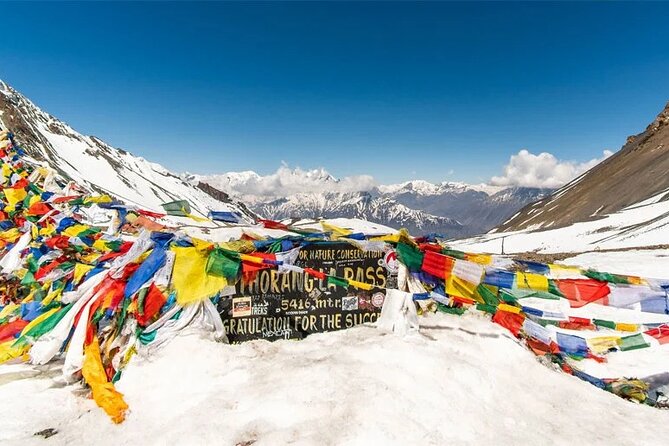
This is the trek’s biggest day. You wake at about 3 a.m. and begin the climb to Thorong La, one of the world’s highest passes, before descending to Muktinath.
The early start helps you tackle the pass before the day becomes more difficult, but it also means limited sleep after a demanding week. Pack warm layers where you can reach them quickly, and keep your water and personal items close.
At the top, the reward is a vast mountain setting and the satisfaction of crossing the route’s highest point. The descent to Muktinath changes the mood of the trek. Muktinath is an important pilgrimage site and a major cultural stop, not just a place to end a hard day.
The day is estimated at 10 hours. That figure should not make the crossing sound easy. Thorong La is the point where fitness, acclimatization, weather, and pacing all matter at once.
Day 9: Muktinath to Tatopani Hot Springs
After the pass, the trip changes gears. You take a jeep for about three hours from Muktinath to Tatopani, then have time to rest at the lodge or visit the hot springs.
This is a welcome recovery day after Thorong La. The road transfer also shows the practical side of the modern Annapurna route. You cover ground quickly, but the ride may feel less peaceful than walking.
Tatopani means hot water, and the springs give you a chance to soak and relax. The experience is not presented as a formal spa visit, so keep expectations simple: it is a natural break in the route, useful for tired legs and a change of pace.
Day 10: Tatopani to Ghorepani Through Thakali Villages
The route leaves Tatopani and passes through the Thakali settlements of Sikha and Chitre. You then reach the east bank of the Kali Gandaki River before climbing toward Ghorepani.
This is a culturally interesting section because the villages and communities give the walk a human scale. After the high, dry country around the pass, the return to greener lower hills feels like a genuine shift rather than a repeat of the earlier route.
The day is listed at around 12 hours, with a substantial ascent to Ghorepani. You should not assume that descending from the pass means the trekking has become easy. The route still has long walking days, and the climb to Ghorepani can test tired legs.
Day 11: Poon Hill Sunrise and Pokhara
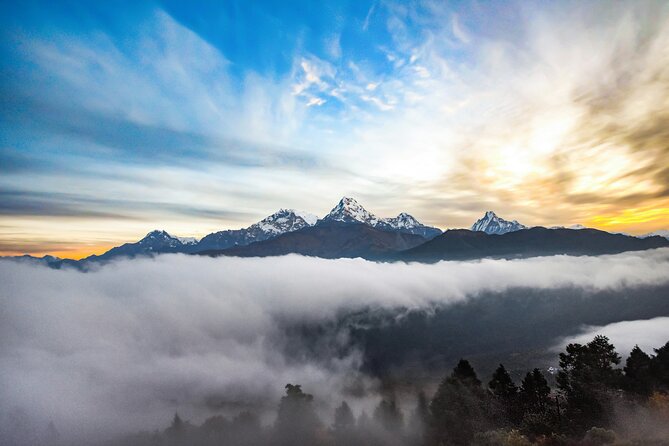
The day begins early with a climb to Poon Hill at 3,210 meters. From the viewpoint, you can watch sunrise across the Dhaulagiri and Annapurna ranges, including Machhapuchhre, also called Fishtail, and Annapurna.
Poon Hill is a strong final viewpoint because it gathers many of the trip’s major peaks into one sunrise scene. The walk to the viewpoint is listed at about one hour, so it is short compared with the earlier days, but you still need warm clothing for the early morning.
After returning from Poon Hill, you trek from Ghorepani to Birethani and take a bus to Pokhara. This is another long day, listed at about 12 hours, but the reward is an overnight in Pokhara with breakfast included.
Pokhara gives you a softer landing after the trail. The package includes one night of accommodation there, and the city’s lake setting provides an easy place to rest before returning to Kathmandu.
Day 12: Pokhara to Kathmandu
After breakfast, you return to Kathmandu by tourist bus. A 25-minute flight is also available, but it costs extra and is not included.
The bus keeps the advertised price lower, while the flight gives you a faster option if you value time more than savings. Since the trek already includes several long road transfers, you may want to decide this before the final day.
The trip ends after a busy 12 days, with a farewell dinner in Kathmandu included. That final meal is a pleasant closing touch, especially after a route that mixes public transport, village lodges, high mountain walking, and two major viewpoints.
What the $1,100 Price Really Covers
At $1,100 per person, the cost is strong for a guided 12-day trek if you use the included services. You receive teahouse or lodge accommodation, breakfast, lunch, and dinner during the trek, one night in Pokhara with breakfast, the listed transport, a licensed English-speaking guide, ACAP and TIMS fees, government and local taxes, and a farewell dinner in Kathmandu.
The guide’s own salary, meals, insurance, lodging, and transport are also covered. That matters because the price is not simply paying for a person to lead you. It covers a package of operating costs that can otherwise appear one by one during a mountain trip.
You still need to budget for drinks, tips, laundry, phone use, camera or video fees, personal purchases, your Nepal visa, and your own insurance. A 15-day visa is listed at $30, a 30-day visa at $50, and a 90-day visa at $125.
Porters are optional at $20 per day, with a carrying limit of up to 20 kilograms. For a high-altitude route with many long days, I would seriously consider this cost if you do not regularly carry a full trekking pack.
Who Should Book This Trek?
I would recommend this trip to a reasonably fit hiker who wants the classic Annapurna Circuit but has only 12 days. You should be comfortable with long days, high altitude, basic teahouse accommodation, early starts, and road transport.
It also suits people who value a private arrangement. Your group travels together, and the route can be adjusted to suit your needs. Families or small groups may appreciate the direct communication offered during planning, especially if they want to ask about equipment, transport, or a possible extension.
The trek is less suitable if you want short walking days, private hotel rooms throughout, or a fully included package with no extra expenses. It is also not a good choice if you are unwilling to prepare for altitude or carry some personal costs outside the tour price.
The company has also arranged longer versions, including a three-day extension to Tilicho Lake. That extension is not part of this $1,100 program, but it may appeal if you want a slower schedule or another major mountain destination.
Final Verdict: A Strong Value With a Demanding Schedule
I like this Annapurna Circuit trek because it packs a remarkable range of Nepal into 12 days. You get Manang and its acclimatization day, the Thorong La crossing, Muktinath, Tatopani’s hot springs, Thakali villages, Poon Hill, and Pokhara. The guide support, permits, meals, and core transport make the price attractive.
The schedule is the deciding factor. Long days begin immediately, and the pass crossing demands proper preparation. Before booking, confirm the walking times, ask how the private format handles slower days, and decide if you want a porter and your own travel insurance.
Book it if you want a well-supported, high-altitude adventure at a reasonable price and are ready for hard days. Choose a longer or more flexible version if you prefer a gentler pace.
FAQ
How long is the Annapurna Circuit Trek?
The experience lasts approximately 12 days, beginning in Kathmandu and ending after the return from Pokhara to Kathmandu.
What is the price per person?
The listed price is $1,100 per person.
Is transportation included?
Yes. The package includes public transportation from Kathmandu to Dharapani, jeep transport from Muktinath to Tatopani, transport from Nayapul to Pokhara, and a tourist bus from Pokhara to Kathmandu.
Is a flight from Pokhara to Kathmandu included?
No. A 25-minute flight can be chosen instead of the tourist bus, but the flight costs extra.
Are meals included?
Breakfast, lunch, and dinner are included during the trek. One night in Pokhara includes breakfast, and a farewell dinner in Kathmandu is also included.
Is accommodation included?
Yes. Teahouse or lodge accommodation is included during the trek, along with one night of accommodation in Pokhara.
Are trekking permits included?
Yes. The Annapurna Conservation Area Permit and Trekkers Information Management System Card fee are included.
Is a porter included?
No. Porters are available for $20 per day and can carry up to 20 kilograms.
What level of fitness is required?
A moderate level of physical fitness is required. The schedule includes several days listed at around 10 or 12 hours, plus the early morning crossing of Thorong La.
What is the cancellation policy?
You can receive a full refund if you cancel at least 24 hours before the experience start time. Cancellations or changes made less than 24 hours before the start time are not accepted for a refund.
Just added around Kathmandu
- Private Shopping Tour in Kathmandu★ 5.0 · 3 reviews
- Nagarkot Sunrise With 7 UNESCO World Heritage Private Tour★ 5.0 · 3 reviews
- Kathmandu: Nightlife and Pub Crawl Tour★ 5.0 · 3 reviews
- Mount Everest Scenic Flight 50 Minutes★ 5.0 · 3 reviews
- Kathmandu: Nagarkot, Bhaktapur, Doleswor & Sanga Statue Tour★ 5.0 · 3 reviews
- Momo Cooking Class -The Art Of Making MoMo with Home Chef★ 5.0 · 3 reviews
- Makalu Base Camp Trek★ 5.0 · 3 reviews
- Everest Experience Trek 6 Day Hiking Adventure★ 5.0 · 3 reviews
Annapurna Circuit Treks, compared.

15-Day Private Annapurna Circuit Trek from Kathmandu
Read our review →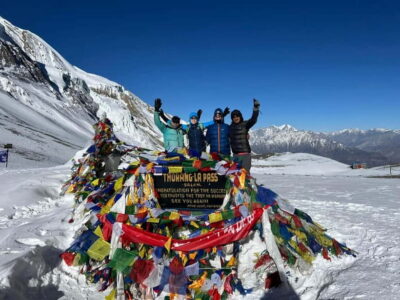
Browse the lists this tour appears in