
Reviewed · EVEREST BASE CAMP TREKS
12 Days Everest Base Camp Trek from Kathmandu
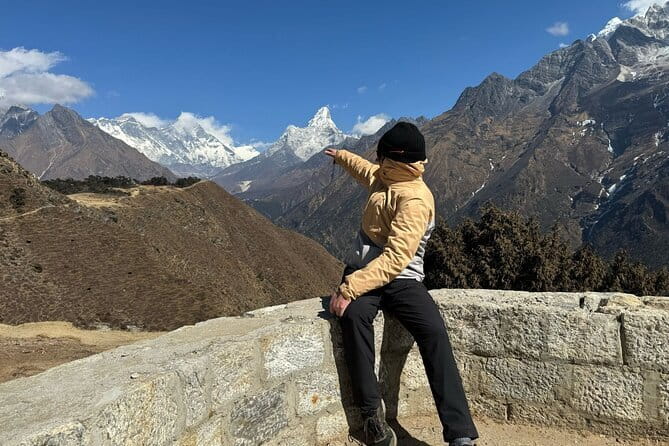
Everest begins with a short flight. This 12-day trek combines the classic route through Namche Bazaar, Tengboche, Dingboche, and Everest Base Camp with a private guide, domestic flights, permits, and guesthouse stays. I like the careful acclimatization schedule, especially the rest days in Namche and Dingboche, and I like that the route includes both mountain scenery and Sherpa villages rather than rushing straight to Base Camp. The main drawback is its demanding pace and altitude, so this is not a casual holiday with a few scenic walks.
I also like that the price includes the Kathmandu to Lukla flights, a government-licensed English-speaking guide, accommodation, pickup, and official trekking documents. Guides named Prakash, Milan, and Dev have received especially warm praise for safety advice, patience, local insight, and keeping spirits up during difficult sections. You should still budget about US$25 per day for food and drinks, plus optional gratuities, and remember that high-altitude conditions can affect the flight schedule and the walking plan.
In This Review
- Key Points Before You Book
- What the US$1,380 Price Covers
- Day 1: Lukla to Phakding Along the Dudh Koshi
- Day 2: Entering Sagarmatha National Park on the Way to Namche
- Day 3: Acclimatization and the View from Namche
- Day 4: Rhododendron Forests and Tengboche Monastery
- Day 5: Pangboche, Orsho, and Dingboche
- Day 6: Acclimatization on Nagarjun Hill
- Day 7: Dingboche to Lobuche
- Day 8: Gorak Shep and Everest Base Camp
- Day 9: Kala Patthar and the Descent to Pheriche
- Day 10: Returning Through Tengboche to Namche
- Day 11: Namche to Lukla
- Day 12: Flight Back to Kathmandu
- Guides, Safety, and the Private Format
- Who Should Book This Everest Trek?
- FAQ
- How long is the Everest Base Camp trek from Kathmandu?
- Is the Kathmandu to Lukla flight included?
- Is accommodation included?
- Are food and drinks included?
- Does a guide accompany the trek?
- Is this a private tour?
- How fit do I need to be?
- Should You Book It?
Key Points Before You Book
- Lukla flights are included: The package covers the round-trip flight between Kathmandu and Lukla, the mountain airstrip where the trek begins.
- Two acclimatization days are built in: You spend one day around Namche Bazaar and another around Dingboche before going higher.
- Everest Base Camp is reached on Day 8: The route passes through Gorak Shep, the last settlement on the trail, before reaching the famous base camp.
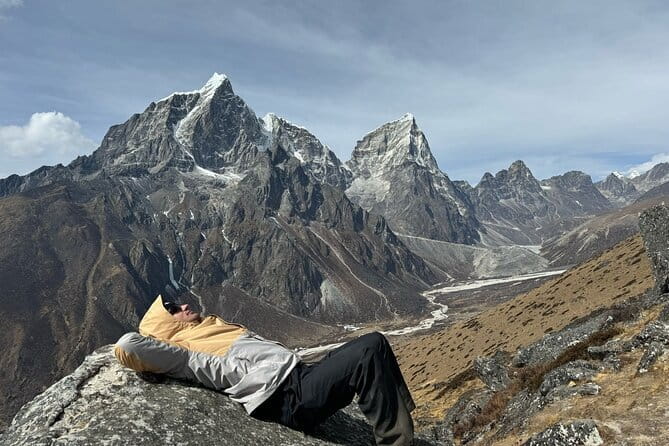
- Kala Patthar adds the big view: A morning climb on Day 9 provides wide views of Everest, Lhotse, Ama Dablam, Nuptse, Thamserku, Pumori, and nearby peaks.
- The tour is private: Only your group takes part, with a guide and a normal emergency first-aid kit included.
- The walking days are long: Most days are about six to seven hours, with an eight-hour day to Everest Base Camp.
What the US$1,380 Price Covers
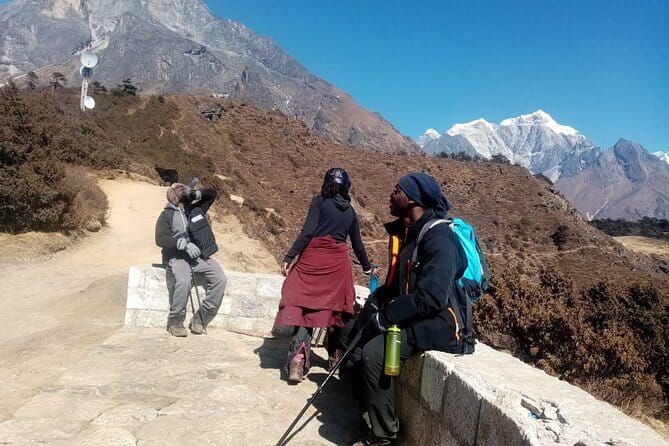
At US$1,380 per person, this trip offers useful inclusions for a high-altitude trek. You get hotel pickup and drop-off, the Kathmandu to Lukla and Lukla to Kathmandu flights, a government-licensed English-speaking trekking guide, permits, official documents, guesthouse accommodation, and a basic emergency first-aid kit.
That matters because the flights and permits are not small extras. The private format also gives you a more personal arrangement than a large group departure. Your walking speed, rest stops, and questions can be handled within your own party, though the itinerary itself remains fairly fixed because the route requires time for acclimatization.
Food and drinks are not included. Set aside around US$25 per day, or roughly US$300 for the trek, based on the stated estimate. Tips are optional and should reflect the service you receive. The package is therefore best judged as a guided trekking price rather than an all-inclusive holiday rate.
Accommodation is in guesthouses during the trek. The description does not specify room arrangements or facilities, so you should ask the operator for current details before booking if those points matter to you. The same advice applies to flight timing and hotel details in Kathmandu.
More Everest Base Camp Treks:
- Everest Base Camp Trek – 14 Days
★ 5.0 · 1,499 reviews - Everest Base Camp Trekking
★ 5.0 · 485 reviews - Everest Base Camp Trekking – 13 Day
★ 5.0 · 365 reviews
Day 1: Lukla to Phakding Along the Dudh Koshi
The adventure starts with a short scenic flight from Kathmandu to Lukla. After meeting the crew, you walk toward Phakding, following the Dudh Koshi River and descending through the first villages of the route.
This opening day covers about six hours of trekking. It gives you an immediate taste of the region without sending you too high too quickly. You will see village life, river scenery, and the first mountain trails, while the relatively low elevation of Phakding helps your body begin adjusting.
The practical point is simple: do not treat Day 1 as a warm-up you can ignore. You are already at altitude, and the following days become harder. Keep your pace steady and use the first day to learn how your boots, pack, and clothing feel.
Day 2: Entering Sagarmatha National Park on the Way to Namche
The trail leaves Phakding and heads toward Monjo, the entrance area for Sagarmatha National Park. You cross streams, pass small villages, and follow a route known for wildlife, flowers, and changing forest scenery.
This is a longer day of around seven hours, ending at Namche Bazaar. The walk becomes more demanding as you gain height, but the route also becomes more visually rewarding. Suspension bridges and river crossings add variety, while the Sherpa settlements give the walk a strong human character.
Namche is more than an overnight stop. It is the main gateway to the Everest region and the place where the route begins to feel truly Himalayan. I would expect this day to test your legs, especially if you have not done much recent hiking.
Day 3: Acclimatization and the View from Namche
You spend a second night in Namche and take a shorter excursion toward Syangboche Airstrip or the Everest View Hotel. The listed walking time is about six hours, but this is still an acclimatization day rather than a push toward the next village.
The purpose is to gain height during the day and return to sleep lower. That pattern helps your body adjust before the route climbs farther into the Khumbu. The views from this area can include Everest and other major peaks, although visibility depends on conditions.
Namche is also a good place to appreciate the Sherpa setting. You have time to explore rather than simply passing through with your head down. Do not waste this day by trying to prove how fast you can walk. Its value comes from preparation.
More Treks and Hikes:
- Nagarkot Sunrise View and Day Hiking from Kathmandu
★ 5.0 · 471 reviews - Annapurna Circuit Trek with Tilicho Lake
★ 5.0 · 368 reviews - Everest Base Camp Trek -14 Days
★ 5.0 · 321 reviews - Annapurna base camp trek 5 Days
★ 5.0 · 252 reviews
Day 4: Rhododendron Forests and Tengboche Monastery
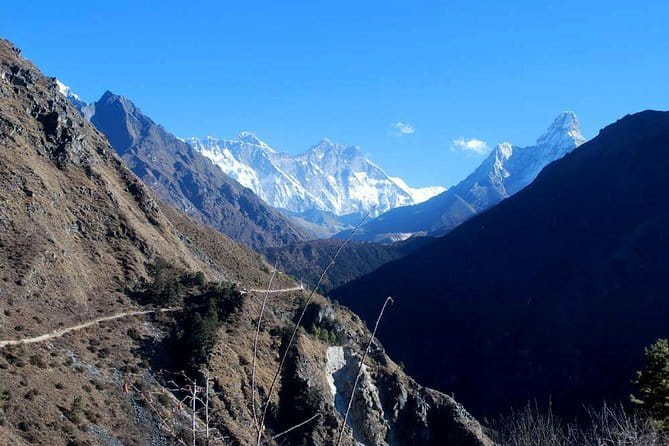
From Namche, the trail heads toward Tengboche through dense rhododendron forest. You cross the Imja Khola before reaching the village and its famous monastery, with around six hours of walking planned.
Tengboche Monastery is one of the cultural highlights of the route. It is described as the oldest monastery in the Khumbu region, and its setting beneath the Himalayan peaks gives the stop a special sense of place. You can explore the monastery, see prayer wheels and Buddhist features, and perhaps witness religious activity depending on the timing of your visit.
This day balances scenery and culture better than a route focused only on reaching Base Camp. The forest section also provides a welcome change from exposed high-altitude ground. The climb still requires effort, but the monastery gives the day a clear reward.
Day 5: Pangboche, Orsho, and Dingboche
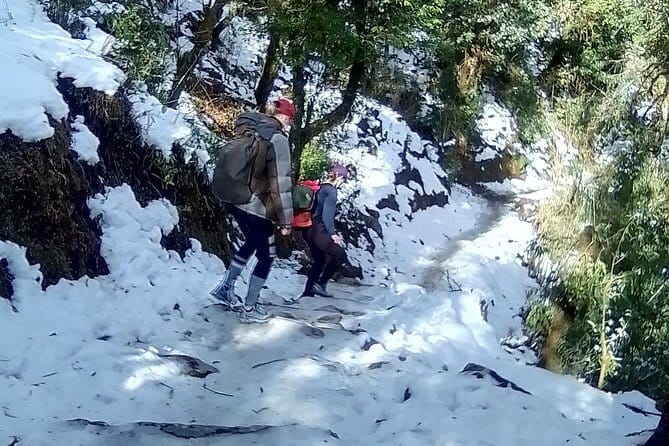
The trail continues through small settlements including Pangboche and Orsho. You cross more suspension bridges and pass stupas, chortens, and other Buddhist markers before reaching Dingboche after about six hours.
The surroundings begin to change as you move higher. Forest becomes less dominant, and the route feels more open and rugged. Dingboche is an important stop because it sits at a height where acclimatization becomes even more important.
This is a day to pay attention to how you feel. The program includes another rest day next, but you should not assume that a rest day cancels out symptoms of altitude sickness. Your guide is there to help with safety and pacing, and you should speak up early if you feel unwell.
Day 6: Acclimatization on Nagarjun Hill
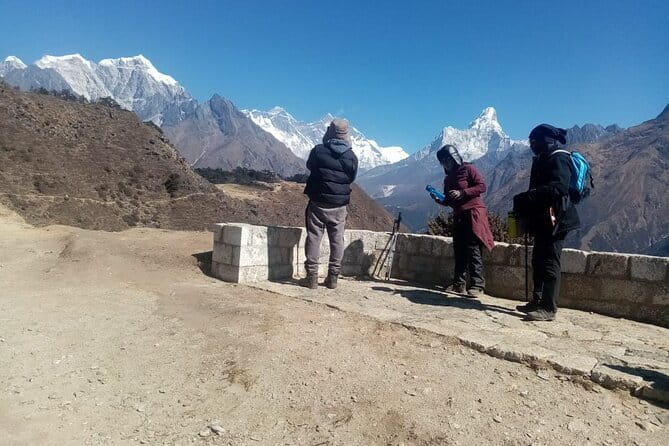
The second planned acclimatization day includes a hike toward Nagarjun Hill. From there, you can see Everest, Lhotse, Ama Dablam, Nuptse, Thamserku, Pumori, and other peaks.
This is one of the smartest features of the schedule. You get a challenging outing without giving up a full night in Dingboche, allowing your body to adjust before the route climbs to Lobuche and beyond. The listed activity lasts about six hours, so do not confuse rest with inactivity.
The view is the main prize, but the day has a practical job too. Take it at a controlled pace. The high country rewards patience, and a slow walk today is much better than struggling later because you pushed too hard.
Day 7: Dingboche to Lobuche
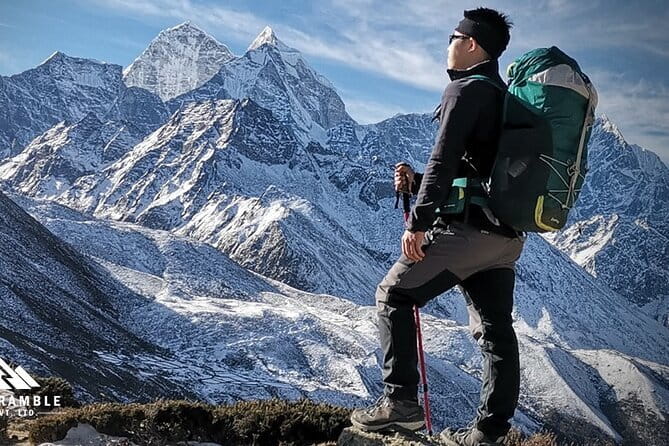
Leaving Dingboche, you gradually climb through small villages. The scenery shifts from forest and shrubs to a more exposed mountain setting, and the trail reaches Lobuche after about six hours.
Lobuche is close to the most demanding part of the trek. The route feels less sheltered here, with fewer trees and a greater sense of altitude. You are no longer simply walking through attractive villages. You are preparing for the approach to Base Camp.
This night may feel important psychologically. You are close to the goal, but the next day is not a quick stroll. Keep your expectations realistic and conserve energy for the full route to Everest Base Camp and back.
Day 8: Gorak Shep and Everest Base Camp
You start early for the trek to Everest Base Camp. The route passes through Gorak Shep, described as the last human settlement on the trail, before continuing to Base Camp. The complete day takes about eight hours.
This is the trip’s central achievement, but it is also the longest walking day listed. The trail can feel slow at this altitude, and the return journey matters just as much as the walk out. Reaching Base Camp is a personal milestone, but the view of Everest itself is not necessarily best from the base camp area. That is why Kala Patthar the next morning is so important.
The base camp stop gives you the setting associated with Everest expeditions, prayer flags, glacier scenery, and the foot of the world’s highest peak. Conditions and access can vary, so follow your guide’s instructions and treat the location with respect.
Day 9: Kala Patthar and the Descent to Pheriche
The morning hike to Kala Patthar is one of the strongest parts of the program. From this famous viewpoint above Everest Base Camp, you can see wide views of Everest, Lhotse, Ama Dablam, Nuptse, Thamserku, Pumori, and surrounding peaks.
The day includes about seven hours of walking and ends in Pheriche. Although the route is now heading down, the early climb to Kala Patthar still demands effort. At altitude, even a short uphill section can feel serious.
I would consider this viewpoint essential. It gives you the broad mountain panorama that Base Camp alone may not provide. Bring patience for the early start and do not rush the descent. Your body has already completed a major effort.
Day 10: Returning Through Tengboche to Namche
After breakfast, you retrace the route through Tengboche and descend toward Phungki Thanka before reaching Namche. The trail follows the Imja River and passes through forest and small villages, with around six hours of walking.
The return route can feel easier because you know the terrain and are losing altitude. Still, downhill walking places its own strain on tired knees and feet. The forests should feel especially welcome after the exposed ground around Lobuche and Base Camp.
Passing Tengboche again gives you a second chance to appreciate the monastery and the mountain setting. If the outward journey felt hurried, the return can offer a calmer look at the villages, bridges, and prayer markers along the route.
Day 11: Namche to Lukla
You descend from Namche through forests, streams, and small villages, returning to Phakding before continuing toward Lukla. The listed trekking time is about seven hours.
This is another full walking day, even though the direction is downhill overall. You are retracing familiar ground, but that does not make it effortless. The best approach is to keep a measured pace and enjoy the gradual return to lower country.
Reaching Lukla marks the end of the walking section. It also leaves you dependent on the flight back to Kathmandu the next day, so keep your plans flexible after the trek rather than scheduling an important onward connection immediately.
Day 12: Flight Back to Kathmandu
The final day includes the flight from Lukla to Kathmandu, followed by hotel transfer and a farewell dinner. The stated duration is about five hours, including the day’s arrangements.
The flight is part of the experience, not just transport. It connects the mountain trail with the capital quickly, but the schedule can be affected by conditions, so it is wise not to plan a tight international departure around the listed return time.
The farewell dinner gives the private group a chance to close the trek together. After nearly two weeks of walking, rivers, monasteries, suspension bridges, and high mountain views, a simple meal and time to prepare for departure make a fitting finish.
Guides, Safety, and the Private Format
The package provides a government-licensed English-speaking trekking guide and a normal emergency first-aid kit. That is important on a route where altitude, long walking days, and remote sections require good judgment.
The strongest praise has gone to individual guides. Prakash is credited with keeping the group safe and comfortable, while Milan is praised for patience, local insight, and practical acclimatization advice. Dev is described as attentive to accommodation, transport, and flights during a family trek. These are useful signs, but your assigned guide may differ, so confirm who will lead your group if a particular guide matters to you.
Because this is a private tour, only your group participates. That suits people who want a more personal pace and direct communication. It may be less suitable if you prefer a social group atmosphere or a lower-cost shared departure.
You need a strong level of physical fitness. The route includes repeated six- and seven-hour walking days, one eight-hour day, steep sections, suspension bridges, and substantial altitude gain. This is a serious trek, not a sightseeing tour with occasional walks.
Who Should Book This Everest Trek?
I would recommend it to hikers who want the classic Everest Base Camp route with a guide, planned acclimatization, and the convenience of included flights and permits. It also suits a private group that values flexibility and personal support.
The trip is a good match for people who care about both scenery and culture. Namche, Tengboche, Dingboche, traditional villages, prayer wheels, stupas, chortens, and Buddhist practices give the route more meaning than a simple point-to-point hike.
I would hesitate to recommend it to anyone with limited fitness or little interest in long mountain walks. The 12-day schedule is efficient, but it leaves little room for delays or extra recovery time. You should also budget for food separately and confirm the accommodation and flight arrangements before paying.
Cancellation is flexible only up to three full days before the start time. After that, the payment is not refunded, and late changes are not accepted.
FAQ
How long is the Everest Base Camp trek from Kathmandu?
The experience lasts approximately 12 days, including flights between Kathmandu and Lukla, the trek to Everest Base Camp, the return walk to Lukla, and the flight back to Kathmandu.
Is the Kathmandu to Lukla flight included?
Yes. The package includes the flight from Kathmandu to Lukla and the return flight from Lukla to Kathmandu.
Is accommodation included?
Yes. Accommodation in guesthouses during the trek is included. The supplied details do not specify room types or guesthouse facilities.
Are food and drinks included?
No. Food and drinks are available for purchase, with an estimated cost of about US$25 per day.
Does a guide accompany the trek?
Yes. A government-licensed English-speaking trekking guide is included, along with a normal emergency first-aid kit.
Is this a private tour?
Yes. Only your group participates in the activity.
How fit do I need to be?
You should have a strong level of physical fitness. Walking days generally last six to seven hours, with an approximately eight-hour day to Everest Base Camp.
Should You Book It?
Book this trek if you want a private, guided route to Everest Base Camp with the major practical pieces already arranged. The included flights, permits, guesthouse accommodation, pickup, and two acclimatization days make the US$1,380 price worth serious consideration.
Go in with clear expectations. You will pay extra for meals and may need to manage a demanding schedule at high altitude. If you are fit, patient, and drawn to Sherpa villages, Buddhist culture, and the mountain views from Kala Patthar, this is a well-structured way to take on one of the world’s great treks.
Just added around Kathmandu
- Private Shopping Tour in Kathmandu★ 5.0 · 3 reviews
- Nagarkot Sunrise With 7 UNESCO World Heritage Private Tour★ 5.0 · 3 reviews
- Kathmandu: Nightlife and Pub Crawl Tour★ 5.0 · 3 reviews
- Mount Everest Scenic Flight 50 Minutes★ 5.0 · 3 reviews
- Momo Cooking Class -The Art Of Making MoMo with Home Chef★ 5.0 · 3 reviews
- Kathmandu: Nagarkot, Bhaktapur, Doleswor & Sanga Statue Tour★ 5.0 · 3 reviews
- Makalu Base Camp Trek★ 5.0 · 3 reviews
- Everest Experience Trek 6 Day Hiking Adventure★ 5.0 · 3 reviews
Everest Base Camp Treks, compared.






Everest Base Camp Trek with Helicopter Return from Gorakshep to Lukla
Read our review →Browse the lists this tour appears in