
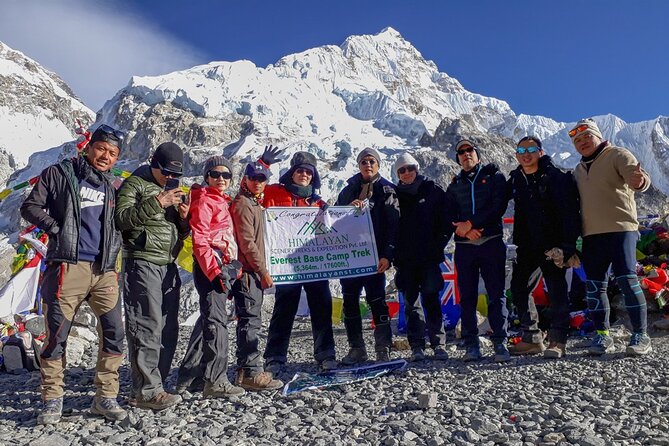
Reviewed · EVEREST BASE CAMP TREKS
12 Days Everest Base Camp Trek
Everest rewards patience, not speed. This 12-day trek from Lukla gives you the classic Khumbu route, Sherpa villages, suspension bridges, monastery visits, and close views of Mount Everest from Kala Patthar at 5,545 meters. I especially like the built-in acclimatization days in Namche Bazaar and Dingboche, plus the practical support of a licensed high-altitude guide, porter service, meals, flights, permits, and basic safety equipment.
I also like the human scale of the trip. You walk beside the Dudhkoshi River for several days, pass through Sherpa settlements, and have time at Tengboche Monastery instead of rushing straight toward base camp. The main concern is altitude: the route is sometimes described as suitable for beginners and seniors, but you still need moderate physical fitness, patience, and a serious approach to acclimatization.
In This Review
- Key points at a glance
- Why this Everest route works so well
- Lukla to Phakding: the first four hours
- Namche Bazaar and the first acclimatization day
- Tengboche and the monastery sunrise
- Dingboche: the rest day that earns its place
- Lobuche and the approach to Everest Base Camp
- Kala Patthar sunrise and the return to Namche
- Lukla, the final flight, and the price
- Guides, group size, and personal attention
- What you need to bring and who should book
- Should you book the 12-day Everest Base Camp Trek?
- FAQ
- How long is the Everest Base Camp Trek?
- Where does the trek start?
- How high is Everest Base Camp?
- How high is Kala Patthar?
- Are flights from Kathmandu to Lukla included?
- Are meals included during the trek?
- Is accommodation included?
- Is a guide provided?
- What is not included in the price?
Key points at a glance
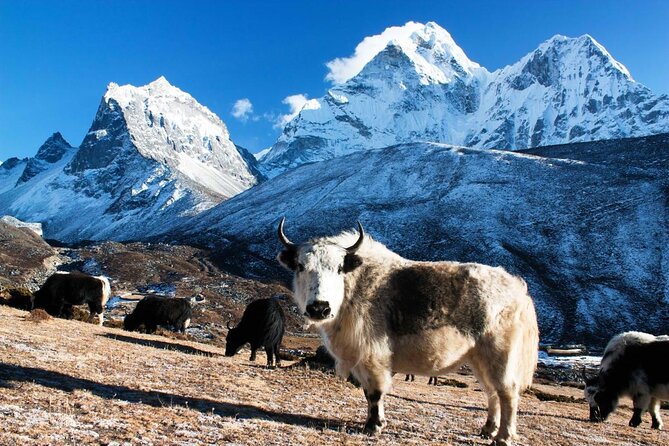
- 5,545-meter Kala Patthar sunrise: The highest point on the route offers one of the finest views of Everest, though the final climb is steep and rocky.
- Two useful acclimatization periods: Namche Bazaar and Dingboche provide rest days with short hikes to help your body adjust.
- A practical $605 package: Flights, food, lodge accommodation, guide, porter service, permits, transfers, and basic trek equipment are included.
- The Lukla flights shape the schedule: The 45-minute domestic flight is scenic and exciting, but the route depends on this mountain-airport connection.
- A maximum group size of 20: This is not a private trek, so the experience may feel social rather than fully flexible.
- Guide support is a major strength: Guides named in past departures include Rajesh Magar, Narayan Ntc, Bikram, Gopal, and Naresh, with particular praise for care, flexibility, and route knowledge.
Why this Everest route works so well
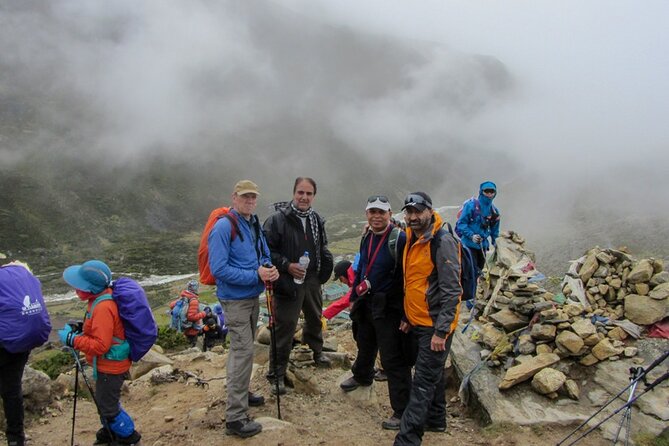
The classic Everest Base Camp route is popular for good reason. It gives you a steady progression from green river valleys to high glacial terrain, with villages and mountain views changing almost every day.
You start at Lukla, around 2,860 meters, and finish the approach at Everest Base Camp, 5,364 meters. Kala Patthar rises even higher. That gain is substantial, so the itinerary does not simply push uphill day after day. The rest day in Namche and the acclimatization day in Dingboche are central to the plan, not spare time.
I like the balance between famous sights and ordinary mountain life. You are not only chasing a photograph of Everest. You are walking past prayer stones, crossing steel suspension bridges, watching pack animals and porters use the same narrow paths, and sleeping in lodges in villages that serve as the backbone of the route.
The route also follows the Dudhkoshi, or Milk River, for about three days. Its pale, fast-moving water gives the first section a strong sense of direction. Keep an eye out for the Danphe, Nepal’s national bird, though sightings are not guaranteed.
More Everest Base Camp Treks:
- Everest Base Camp Trek – 14 Days
★ 5.0 · 1,499 reviews - Everest Base Camp Trekking
★ 5.0 · 485 reviews - Everest Base Camp Trekking – 13 Day
★ 5.0 · 365 reviews
Lukla to Phakding: the first four hours
Your trek begins with a roughly 45-minute flight from Kathmandu to Tenzing-Hillary Airport in Lukla. The short flight is part of the adventure. From the air, you get an early sense of the narrow valleys and steep Himalayan terrain ahead.
At Lukla, the trail begins with a walk toward Phakding. The first day includes a descent and takes about four hours on foot. That shorter opening is helpful because you are adjusting to the route, the altitude, and the rhythm of walking with a daypack.
The path follows the Dudhkoshi and passes through mountain settlements. You will see the local way of life begin to replace the traffic and noise of Kathmandu. The scenery is already impressive, but do not make the mistake of treating day one as a warm-up that does not matter. A gentle pace here helps conserve energy for Namche.
Phakding is a practical first overnight stop. The accommodation is in the best available twin-sharing lodge room, and three meals a day are provided during the trek. Personal snacks, drinks, and other purchases are not included, so carry money for those extras.
Namche Bazaar and the first acclimatization day
Day two is longer, about seven hours from Phakding to Namche Bazaar. You move from one side of the Dudhkoshi to the other, crossing several high steel suspension bridges. These crossings are memorable, but they can also feel exposed if you are not fond of heights.
Namche is the first major altitude test and one of the most interesting settlements on the route. The approach is a long uphill section, and the day can feel demanding even though the distance may not look extreme on a map.
The next day is devoted to acclimatization. You hike toward the Everest View Hotel through Syangboche, with about two hours of walking listed for the outing. The point is not to cover a great distance. It is to climb higher for a view, then return to Namche to sleep at a lower elevation.
I like this design because it lets you see Everest without burning a full trekking day. The Everest View Hotel stop also gives you a clear reason to get moving on a rest day. You are resting from the main route, not sitting indoors all day.
The guide support matters here. Gopal has been praised for explaining the mountains of Sagarmatha National Park and for suggesting sensible ways to use acclimatization days. Guides such as Rajesh Magar, Narayan Ntc, and Bikram have also received strong personal praise for care and attention to individual walking speeds.
Tengboche and the monastery sunrise
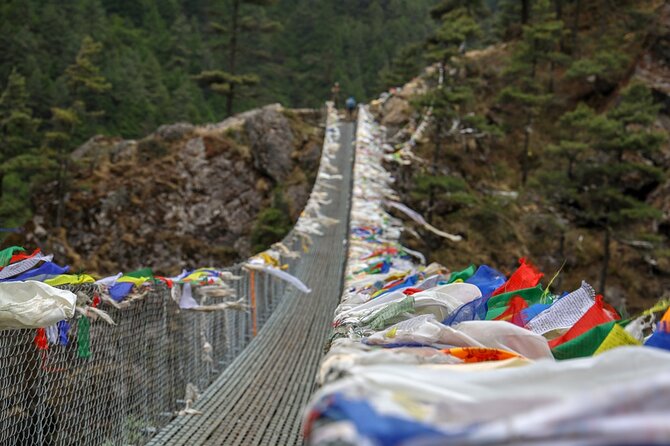
After Namche, the route continues toward Tyangboche, usually written as Tengboche. The walking time is about five hours, beginning with a steep climb before settling into a more moderate stretch.
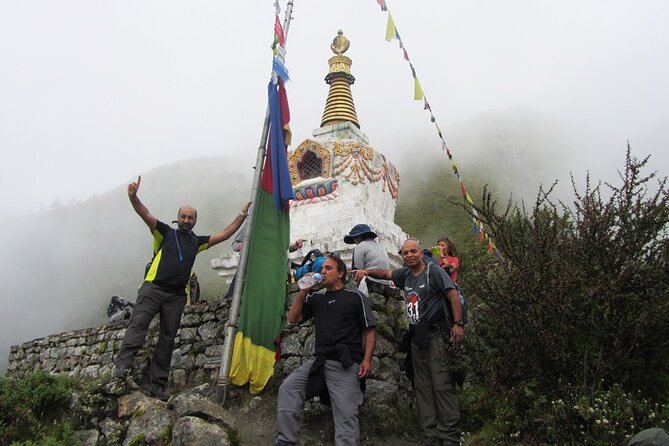
Tengboche is one of the cultural highlights of the trek. Its monastery gives the day a purpose beyond scenery, and the setting is especially striking in the early morning. The plan calls for an early start to see sunrise from the monastery, so expect one of the more memorable wake-up calls of the trip.
The route then drops through rhododendron forest toward Deboche at about 3,320 meters. This change in vegetation is important. You have not yet reached the bare, high-altitude world near base camp, and the forest section gives your legs and eyes a welcome change.
There is a small practical issue in the published day labels: the itinerary lists Dingboche for both day five and day six, while the description clearly continues from Tengboche toward Dingboche on day five. The route itself is understandable, but you should confirm the exact overnight village and lodge arrangements before departure.
More Treks and Hikes:
- Nagarkot Sunrise View and Day Hiking from Kathmandu
★ 5.0 · 471 reviews - Annapurna Circuit Trek with Tilicho Lake
★ 5.0 · 368 reviews - Everest Base Camp Trek -14 Days
★ 5.0 · 321 reviews - Annapurna base camp trek 5 Days
★ 5.0 · 252 reviews
Dingboche: the rest day that earns its place
The walk to Dingboche takes about six hours. The village sits above 4,400 meters, where the air feels noticeably thinner and ordinary tasks take longer.
The following day is another acclimatization period. You hike toward Nagarjuna, a nearby hill, for about three hours. The goal is to gain height during the day, enjoy wider mountain views, and return to Dingboche for the night.
This is where I would take the itinerary seriously. You may feel fine after Namche, but altitude effects often become more noticeable as you climb higher. The schedule gives you time to adjust rather than treating strength and enthusiasm as substitutes for acclimatization.
The company supplies a first-aid kit and an oximeter for checking pulse, oxygen saturation, and heart rate. That does not remove the risks of high altitude, and personal travel insurance is not included, but it does show that the trekking team has basic monitoring tools available.
The trip is described as suitable for beginners and seniors, but that should not be read as easy. You need to manage long walking days, steep sections, cold conditions, and high elevation. A moderate fitness level is specifically required.
Lobuche and the approach to Everest Base Camp
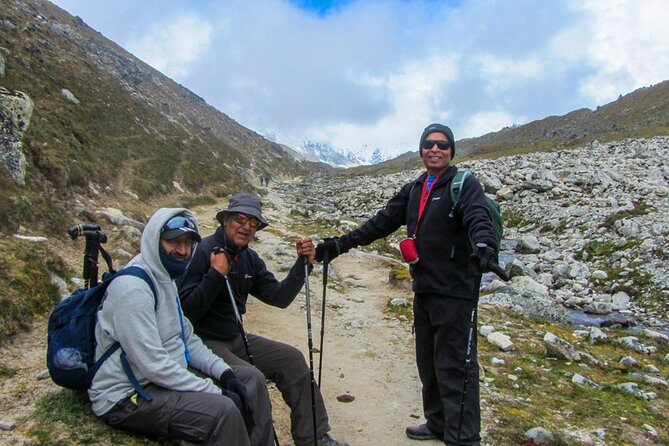
After Dingboche, you walk for about six hours toward Lobuche. The trail enters a broad valley beneath Cholatse and Tawache peaks, with the vegetation becoming sparser as the altitude increases.
Lobuche is a key staging point. You are now close to the main goal, but the hardest physical sections are still ahead. The route can feel more demanding here because the air is thin and the terrain is rocky.
Day eight takes you from Lobuche to Gorakshep in about three hours. The path climbs beside the Khumbu Glacier and passes the International Pyramid Laboratory. The glacier gives this section a stark, high-mountain character that differs sharply from the river valleys below.
From Gorakshep, you continue for roughly two more hours along a rocky trail with downhill and uphill sections to reach Everest Base Camp. The route is not a simple walk to a flat finish. You need to watch your footing, maintain a steady pace, and keep enough energy for the return to Gorakshep.
Base Camp sits at 5,364 meters. The experience is less about standing beneath the summit itself and more about reaching the famous staging ground beside the Khumbu Glacier. Mount Everest does not always appear in the way first-time visitors expect from base camp, which is why the next morning at Kala Patthar is so important.
Kala Patthar sunrise and the return to Namche
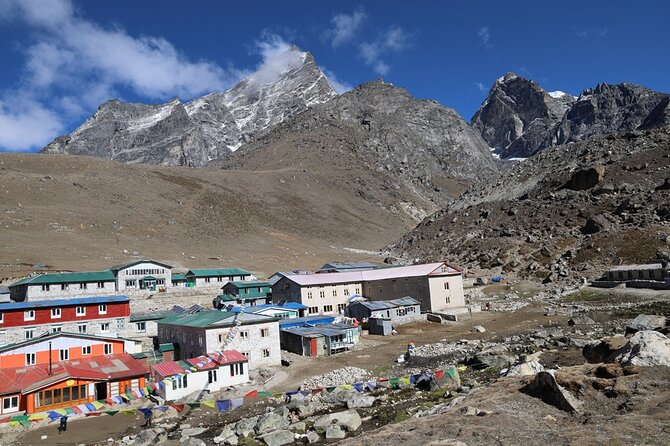
The early hike to Kala Patthar is the visual high point of the trek. You leave before sunrise and climb a steep, rocky trail to 5,545 meters. The reward is a broad view toward Mount Everest and the surrounding peaks as the light changes.
The day is listed as taking about eight hours, so this is not a quick viewpoint stop. At this altitude, the steep climb can feel slow, even for someone who has handled the lower sections comfortably.
I would treat Kala Patthar as the main mountain-view objective and base camp as the achievement objective. At base camp, you reach a famous place. From Kala Patthar, you get the clearest grand view of Everest on this itinerary.
Afterward, the route drops toward Namche Bazaar. The six-hour walk is long but generally easier because you are losing elevation. The familiar path passes through Panboche and returns you to a lower, more comfortable altitude.
This descent often feels like a relief. You may still be tired, but your breathing should feel easier than it did near Gorakshep. The scenery also changes quickly as high rocky ground gives way to more familiar trails and vegetation.
Lukla, the final flight, and the price
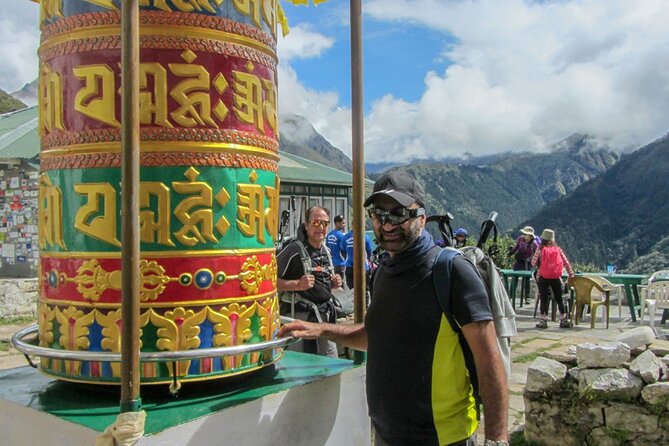
Day eleven takes about seven hours to return from Namche to Lukla. You descend through forest, cross bridges and streams, pass remote villages, and retrace the route through Monjo and Phakding.
The final walk can feel longer than expected because your body has already completed the main climb and descent. Still, it gives you one last chance to notice details you missed while heading uphill.
On day twelve, you take the flight from Lukla back to Kathmandu. The flight lasts about 35 minutes in the itinerary, followed by a drive to your hotel. The rest of the day is free.
At $605 per person, this package offers strong value if you use the included services. Domestic flights, airport transfers, 11 breakfasts, 11 lunches, 11 dinners, lodge accommodation, a licensed guide, one porter for every two trekkers, permits, taxes, and staff accident insurance are all covered.
You also receive a trekking map, hat, duffel bag, trekking pole, achievement certificate, first-aid kit, and oximeter. Walkie-talkie service is available for group departures.
You still need to budget for personal travel insurance, snacks, drinks, personal gear, and tips. The price is especially attractive for someone who wants a supported group trek without arranging flights, permits, food, and porter service separately.
Guides, group size, and personal attention
The maximum group size is 20 people. That is large enough to create a social atmosphere, but it may limit how much the itinerary can change around one individual.
The strongest praise connected with this experience centers on the guides and porters. Rajesh Magar was described as both warm and competent. Gopal received repeated praise for responsibility, mountain knowledge, and help during the full adventure. Bikram was noted for adjusting early starts and walking pace to suit a faster trekker.
That flexibility is valuable, but you should still explain your pace and expectations clearly before the trek begins. One person may want early starts and long walking days, while another may need the planned schedule and regular breaks.
The company has also adapted plans when a trekker struggled above 5,000 meters on a longer EBC and Gokyo journey. That does not promise a particular medical or route decision on your trip, but it suggests that the support team has experience responding to changing needs rather than treating the schedule as untouchable.
What you need to bring and who should book
The package supplies a duffel bag and trekking pole, but personal trekking gear is not included. You should confirm the full gear list before departure and prepare for long days, rocky paths, steep climbs, and cold conditions.
This trek suits you best if you:
- Can handle several hours of walking on consecutive days
- Are willing to follow the acclimatization schedule
- Want a classic Everest route rather than a private luxury experience
- Value included meals, permits, flights, and porter support
- Enjoy village life, monasteries, rivers, and mountain scenery as much as the final viewpoint
It may not suit you if you want a relaxed sightseeing holiday, dislike early starts, or expect base camp to be reached with little physical effort. The route is famous, but fame does not make 5,000-meter walking easy.
Pickup and drop-off are offered by private or shared vehicle, with the main meeting point at Tribhuvan Airport in Kathmandu. Booking confirmation is received at the time of booking, and the tour is near public transportation.
The cancellation terms are simple: you can receive a full refund if you cancel at least 24 hours before the experience begins. Cancellations or changes inside that window are not accepted for a refund.
Should you book the 12-day Everest Base Camp Trek?
I would book this trek if you want the classic Everest experience with the major costs already bundled into one price. The route has the right shape: a gentle first day, a hard approach to Namche, two acclimatization periods, a base camp day, a Kala Patthar sunrise, and a downhill return.
The main decision is not the scenery. The Himalayas will provide plenty of that. The real question is whether you are ready for the altitude, long walking days, basic lodge accommodation, and flight dependence at Lukla.
For a first Himalayan trek, the included guide, porter, meals, permits, flights, and safety kit make $605 a sensible package. Go in with realistic expectations, take the rest days seriously, and discuss your pace with the guide. If that sounds like your kind of challenge, this is a well-structured way to reach Everest Base Camp without having to arrange every moving part yourself.
FAQ
How long is the Everest Base Camp Trek?
The trek lasts approximately 12 days, including flights between Kathmandu and Lukla, the walk to Everest Base Camp, the Kala Patthar climb, and the return to Kathmandu.
Where does the trek start?
The experience begins in Kathmandu, with the main trekking route starting after the domestic flight to Lukla and Tenzing-Hillary Airport.
How high is Everest Base Camp?
Everest Base Camp is listed at 5,364 meters.
How high is Kala Patthar?
Kala Patthar reaches 5,545 meters and is the highest point included in this itinerary.
Are flights from Kathmandu to Lukla included?
Yes. Domestic flights between Kathmandu and Lukla, in both directions, are included.
Are meals included during the trek?
Yes. Breakfast, lunch, and dinner are included for 11 days during the trekking portion.
Is accommodation included?
Yes. The package includes the best available twin-sharing lodge room during the trek.
Is a guide provided?
Yes. One experienced, government-licensed, high-altitude-trained guide is included.
What is not included in the price?
Personal travel insurance, snacks, drinks, personal trekking gear, gratuities, tips, and anything not specifically listed in the inclusions are not included.
Just added around Kathmandu
- Nagarkot Sunrise With 7 UNESCO World Heritage Private Tour★ 5.0 · 3 reviews
- Private Shopping Tour in Kathmandu★ 5.0 · 3 reviews
- Mount Everest Scenic Flight 50 Minutes★ 5.0 · 3 reviews
- Kathmandu: Nightlife and Pub Crawl Tour★ 5.0 · 3 reviews
- Kathmandu: Nagarkot, Bhaktapur, Doleswor & Sanga Statue Tour★ 5.0 · 3 reviews
- Momo Cooking Class -The Art Of Making MoMo with Home Chef★ 5.0 · 3 reviews
- Everest Experience Trek 6 Day Hiking Adventure★ 5.0 · 3 reviews
- Kathmandu: Momo Making Class with a Local Chef★ 5.0 · 3 reviews
Everest Base Camp Treks, compared.






Everest Base Camp Trek with Helicopter Return from Gorakshep to Lukla
Read our review →Browse the lists this tour appears in