
Reviewed · ANNAPURNA CIRCUIT TREKS
13 Days Trekking in Annapurna Circuit
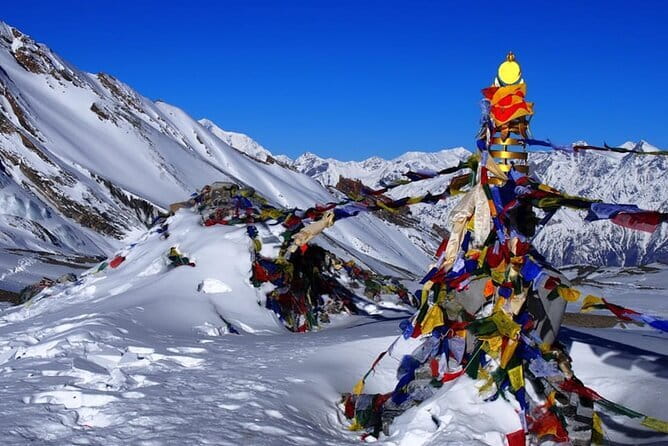
The high point is truly high. This 13-day Annapurna Circuit trek takes you from Kathmandu through villages, pine forests, Tibetan-influenced settlements, and finally over Thorong La Pass at 5,416 meters. I like the built-in acclimatization day in Manang, and I like that the package includes tea-house lodging, meals, permits, a licensed guide, and transport to Pokhara. The main consideration is the physical demand: this is a moderate-fitness trek with long walking days and one very demanding pass crossing.
The route also has a useful local feel. You sleep in simple lodges, walk through Gurung and Manangi communities, and follow the Marsyangdi River before entering high, dry country. Guides named Ravi and Sandip have been praised for their care and organization, but you should confirm who will lead your departure before booking.
In This Review
- Key points to know before you book
- Why the Annapurna Circuit still works so well
- Kathmandu to Bulbule and Bahundanda
- Forest trails, bridges, and the Marsyangdi River
- Chame and the first big mountain views
- Manang and the most valuable rest day
- Yakkharka and Thorong Phedi
- Crossing Thorong La at 5,416 meters
- The finish in Pokhara
- What the $809.10 price really includes
- Who should choose this trek
- Small details that matter before departure
- Should you book this Annapurna Circuit trek?
- FAQ
- How long is the Annapurna Circuit trek?
- Where does the trip begin?
- Is airport pickup included?
- Is this a private tour?
- Is a guide included?
- Is a porter included?
- What accommodation is provided?
- Are meals included?
- Are trekking permits included?
- Is transport back to Kathmandu included?
Key points to know before you book
- Thorong La Pass reaches 5,416 meters: Day 11 is the toughest part of the trip, with an early start, steep climbing, and thin air.
- Manang includes a full acclimatization day: You can walk to Gangapurna Lake or Praken Monastery rather than pushing higher too quickly.
- Tea-house lodging keeps the trip practical: You stay in local lodges instead of carrying camping equipment.
- Meals, permits, and a licensed guide are included: Breakfast, lunch, and dinner are covered during the trek, along with Annapurna permits and TIMS registration.
- The route ends with a private ride to Pokhara: One Pokhara hotel night with breakfast is included, but transport back to Kathmandu is not.
- The $809.10 price covers a lot, but not everything: Porters, personal costs, visas, extra nights, and some transport expenses remain yours.
Why the Annapurna Circuit still works so well
The Annapurna Circuit gives you variety in a compact two-week plan. You begin among terraced fields and lower Himalayan hills, then move through forested river valleys, pine country, and high-altitude settlements shaped by Tibetan Buddhist culture. The scenery changes often enough that the walking never feels like one long repeat.
I especially like the contrast between the early and late stages. Near Bulbule and Bahundanda, the trail passes through green farmland and villages. By the time you reach Thorong Phedi, the trees thin out and the surroundings feel much more exposed. That change helps you understand the mountain environment instead of simply arriving at a viewpoint by vehicle.
This is a lodge-based trek, so you do not need to carry a tent, cooking gear, or a full kitchen. You still need to carry your personal day-to-day equipment, however, unless you pay separately for a porter. That extra cost can make a major difference on a route with altitude and long walking days.
More Annapurna Circuit Itineraries:
- Annapurna Circuit Trek with Tilicho Lake
★ 5.0 · 368 reviews - Annapurna Circuit Trek
★ 5.0 · 94 reviews - Annapurna Circuit Trek
★ 5.0 · 35 reviews
Kathmandu to Bulbule and Bahundanda
Your trip begins with an early departure from Kathmandu. The road journey toward Besisahar and the Bulbule area takes much of the day, with the supplied schedule describing roughly nine hours by public bus and shared transport toward Nyadi, while the first walking segment is listed at about six hours. Road conditions and the exact drop-off point can affect the timing, so you should expect a full travel day rather than a relaxed transfer.
The drive offers terraced fields, small villages, lower Himalayan views, and a gradual change away from the capital. Public transport keeps the price down, but it is less private and less predictable than a dedicated vehicle. That is a fair trade at this price, though you should be ready for a long ride before the walking begins.
From Bulbule, you trek to Bahundanda. The path passes through villages and cultivated hillsides, with elevation gained at a manageable pace. Bahundanda is a good introduction to the rhythm of the circuit: walk, stop for food, watch village life pass by, and sleep in a simple tea house.
The early section is scenic, but it is not yet the grand high-Himalayan stage many people picture. I see that as a benefit. Your body gets time to settle into the route before the serious altitude begins.
Forest trails, bridges, and the Marsyangdi River
The next stage moves through denser forest and across suspension bridges on the way toward Chamche. The Marsyangdi River and its smaller tributaries stay close to the route, giving the walk a strong sense of direction. The trail rises and falls rather than simply climbing in a straight line.
Suspension bridges are part of the character of this section. If you dislike heights or moving bridges, you should be prepared for a few moments that feel more exciting than the itinerary wording suggests. The route also includes gradual ascents, so good pacing matters even before you reach high altitude.
The walk toward Dharapani brings a cultural change as well as a geographic one. Gurung and Manangi villages appear along the way, and the trip places you close to local hospitality rather than keeping you in an isolated trekking camp. The shift from subtropical vegetation toward alpine country becomes more visible as you gain height.
This is where a good guide matters. Ravi and Sandip are both named in strong feedback about the company, with particular praise for comfort, organization, and care. Since guides can vary by departure, ask in advance who is assigned to your group.
Chame and the first big mountain views
Chame is the administrative center of Manang District and one of the more important stops on the route. The walk there brings pine forest, higher slopes, and clear views toward Lamjung Himal and Annapurna II.
The scenery begins to feel more serious here. You are no longer simply walking through foothills. The mountains begin to frame the route, and the changing vegetation gives you a useful visual measure of your progress.
Chame is also a practical stopping point. It helps divide the approach to Manang into reasonable stages, although the daily walking remains demanding. The itinerary does not provide exact walking times for every day, so you should ask the operator for the expected hours and elevation gain before departure.
From Chame, you continue to Lower Pisang through forest and small villages. Annapurna II, III, and IV become more prominent as you approach Pisang, a traditional Manangi settlement. Lower Pisang is an important point on the circuit because the route is moving into a drier, colder, and more culturally Tibetan-influenced area.
More Treks and Hikes:
- Everest Base Camp Trek – 14 Days
★ 5.0 · 1,499 reviews - Everest Base Camp Trekking
★ 5.0 · 485 reviews - Nagarkot Sunrise View and Day Hiking from Kathmandu
★ 5.0 · 471 reviews - Everest Base Camp Trekking – 13 Day
★ 5.0 · 365 reviews
Manang and the most valuable rest day
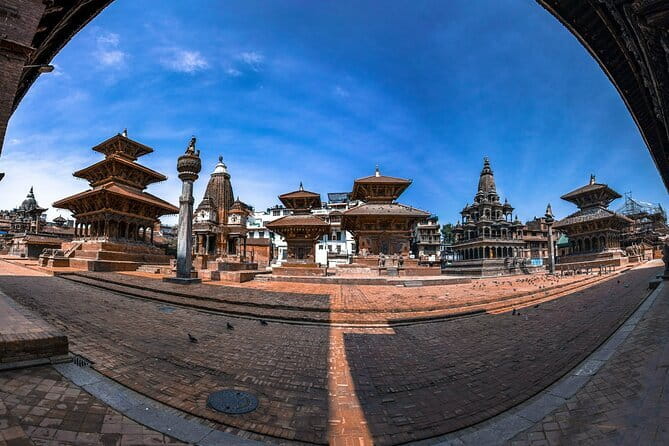
The walk from Pisang to Manang is one of the central stages of the trek. Manang is a large village with Buddhist monasteries and traditional Tibetan cultural influences. It also marks a sensible place to stop and let your body adjust before the pass.
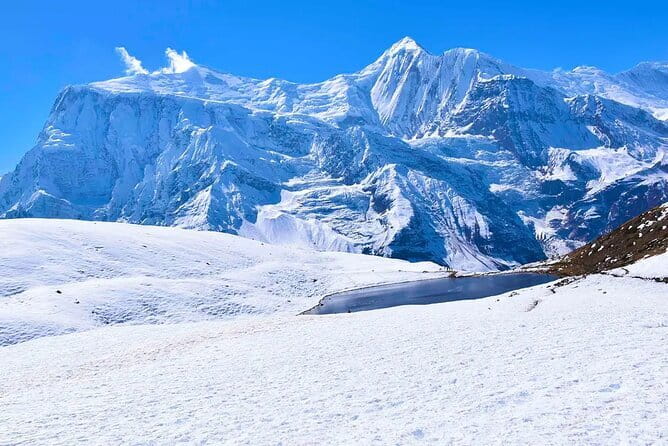
The full acclimatization day is one of the package’s best features. You can hike to Gangapurna Lake or make a shorter outing to Praken Monastery, where the stated reward is a broad view of Gangapurna, Annapurna III, and Himalchuli.
I would not treat this as a wasted day. At altitude, a rest day with a short hike can be more useful than racing ahead. It gives you time to explore Manang, check how you feel, and prepare for the colder and thinner air above.
The itinerary does not state a detailed altitude-sickness procedure beyond the guide carrying a first-aid box and oximeter. Ask how the guide handles symptoms, what happens if you cannot continue, and whether emergency evacuation costs are covered. Those questions are sensible on any trek crossing a 5,416-meter pass.
Yakkharka and Thorong Phedi
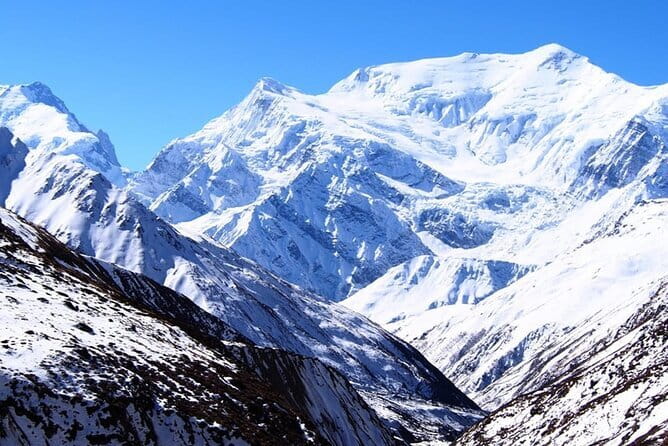
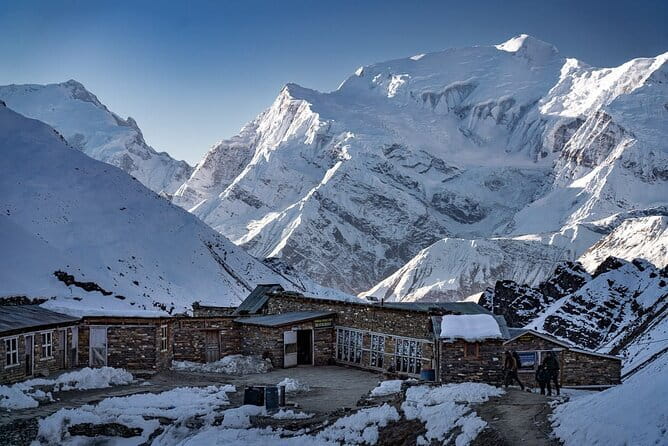
After Manang, the route heads toward Yakkharka through sparse forest and high-altitude country. The views toward Annapurna II and Gangapurna are a major reward, but the surroundings are less sheltered than in the lower valleys.
At this point, pacing becomes more important than speed. You should keep your walking rhythm steady, drink as directed by your guide, and avoid treating the approach as a race. The itinerary lists Yakkharka as the overnight stop, giving you a final stage before the pass approach.
The next day takes you to Thorong Phedi, the base area for Thorong La. The trail becomes steeper, and the changing surroundings make it clear that the hardest day is close. Thorong Phedi is not presented as a sightseeing stop. Its value is practical: you arrive at the final overnight point before the pass crossing.
Because the schedule starts the pass day early, you should organize clothing, water, snacks, and essential items the evening before. A porter is not included, so a heavy pack can make this section much harder. If you need baggage support, budget for a porter separately.
Crossing Thorong La at 5,416 meters
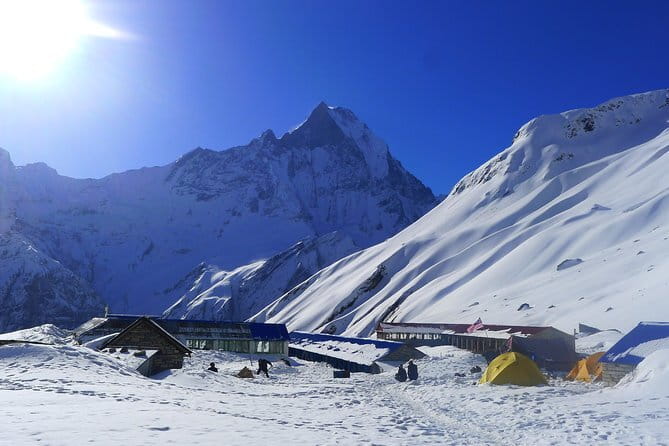
Day 11 is the defining day. You start early and climb from Thorong Phedi to Thorong La Pass, reaching 5,416 meters. The ascent is demanding, and the thin air can make each step feel slow. The reward is a 360-degree Himalayan panorama from the top.
This is not a casual day hike. Even with moderate physical fitness, you need preparation, patience, and an honest approach to your own condition. The guide’s role is especially important here, since weather, altitude, and fatigue can change the day quickly.
The pass crossing is also why the itinerary should not be judged only by its low price. The package organizes the route, lodging, food, permits, and guiding across the section that many people find most difficult to arrange alone.
You should still confirm exactly what happens if conditions prevent the crossing. The supplied information does not state a detailed backup route or emergency transport plan, so this is worth asking before you pay.
The finish in Pokhara
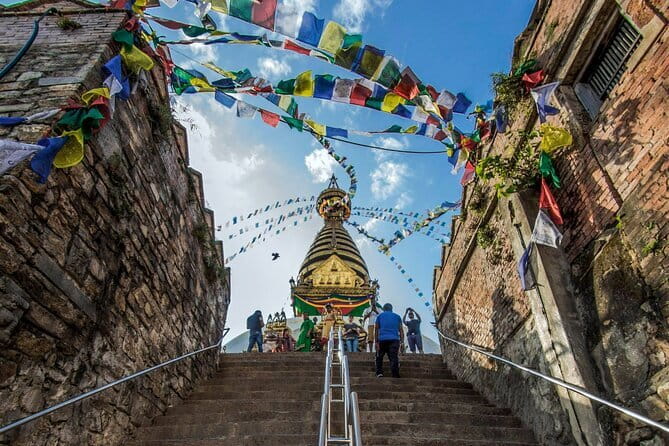
After the pass crossing, the trek is described as complete, and the group travels by bus to Pokhara. A private transfer from the trek ending point to Pokhara is included, along with one standard twin-sharing hotel night and breakfast.
That final hotel night is a welcome change after tea houses. It gives you a chance to rest and enjoy a group dinner before deciding what comes next. The next day is open for your own plans: more time in Pokhara, a Chitwan National Park trip, a return drive to Kathmandu, or another destination.
Transport back to Kathmandu is not included. Extra hotel nights and activities in Kathmandu or Pokhara are also separate, so the advertised price is not the full cost of a longer Nepal holiday.
What the $809.10 price really includes
At $809.10 per person, the price is strong for a 13-day guided trek, especially because it includes several expenses that can add up quickly. You receive:
- Airport pickup by private vehicle if required
- Public transport from Kathmandu toward Besisahar, with shared transport toward Nyadi
- Private transport from the trek’s ending point to Pokhara
- One Pokhara hotel night with breakfast
- Tea-house lodging during the trek
- Breakfast, lunch, and dinner during the trekking days
- Tea or coffee with breakfast
- A licensed guide, including the guide’s food and lodging
- Annapurna Conservation Area permits
- TIMS registration
- A route map
- A first-aid kit with an oximeter
- Government taxes and office service charges
That is good coverage for the core trek. The list also counts 12 breakfasts, 12 lunches, and 12 dinners, so check how those meal counts line up with your exact start and finish arrangements.
You pay extra for personal expenses, a porter, additional hotel nights, activities, transport during the trek that is not already specified, travel back to Kathmandu, and Nepal’s entry visa. The visa application must be made within 15 days of arrival, according to the supplied information.
Who should choose this trek
This route suits you if you want a classic Himalayan circuit with a guide, local lodges, included meals, and a clear high point at Thorong La. It also suits a private group, since only your own party participates in the activity rather than joining a large mixed group.
You should have a moderate level of physical fitness and be comfortable with long walking days, basic tea-house accommodation, suspension bridges, and high altitude. You do not need a camping background, but you do need to take the mountain conditions seriously.
This may not suit you if you want private vehicle transport throughout, luxury lodging, a slow schedule with extra rest days, or a fully inclusive holiday with return transport to Kathmandu. The 13-day plan is efficient, but it leaves little spare time if you need to slow down.
The strongest service praise centers on the guides. Ravi is described as attentive to comfort, accommodation, and food, while Sandip is praised for professionalism and for making the mountain experience more memorable. Those details suggest that the company’s human support is a major part of the value.
Small details that matter before departure
The meeting window is listed as 6:15 to 7:15 in the morning and 8:15 to 9:15 in the morning, Monday through Sunday, for the stated operating period from October 12, 2024, through November 27, 2026. Confirm the exact meeting time, because the itinerary also calls for an early start.
Airport pickup is available if required, but you should state that need when booking. The activity is private, and confirmation is provided at booking.
Free cancellation is available if you cancel at least 24 hours before the local start time. Inside that window, the payment is not refunded and changes are not accepted.
Should you book this Annapurna Circuit trek?
I would choose this trip if I wanted a cost-conscious, guided route with the essential permits, meals, lodging, and transport handled. The acclimatization day in Manang, the private finish to Pokhara, and the support of a licensed guide make the $809.10 price appealing.
Before booking, I would ask three direct questions: Who is my guide, exactly where does the first transport end, and what is the plan if altitude or weather prevents the Thorong La crossing? If the answers are clear and you are ready for the physical effort, this is a practical way to tackle one of Nepal’s great mountain routes.
FAQ
How long is the Annapurna Circuit trek?
The experience lasts approximately 13 days.
Where does the trip begin?
The trip begins in Kathmandu, with early transport toward Besisahar and the Bulbule area.
Is airport pickup included?
Airport pickup by private vehicle is included if required.
Is this a private tour?
Yes. Only your own group participates in the activity.
Is a guide included?
Yes. A government-licensed, experienced guide is included, along with the guide’s food and accommodation.
Is a porter included?
No. A porter for your baggage is available only as an additional expense if you need one.
What accommodation is provided?
The trek uses tea-house accommodation. One standard twin-sharing hotel night with breakfast is included in Pokhara.
Are meals included?
Yes. Breakfast, lunch, and dinner are included during the trek, along with tea or coffee at breakfast.
Are trekking permits included?
Yes. Annapurna Conservation Area permits and the TIMS fee are included.
Is transport back to Kathmandu included?
No. Transport back to Kathmandu is not included. Extra nights and activities in Kathmandu or Pokhara also cost extra.
Just added around Kathmandu
- Nagarkot Sunrise With 7 UNESCO World Heritage Private Tour★ 5.0 · 3 reviews
- Private Shopping Tour in Kathmandu★ 5.0 · 3 reviews
- Mount Everest Scenic Flight 50 Minutes★ 5.0 · 3 reviews
- Kathmandu: Nightlife and Pub Crawl Tour★ 5.0 · 3 reviews
- Kathmandu: Nagarkot, Bhaktapur, Doleswor & Sanga Statue Tour★ 5.0 · 3 reviews
- Momo Cooking Class -The Art Of Making MoMo with Home Chef★ 5.0 · 3 reviews
- Everest Experience Trek 6 Day Hiking Adventure★ 5.0 · 3 reviews
- Kathmandu: Momo Making Class with a Local Chef★ 5.0 · 3 reviews
Annapurna Circuit Treks, compared.

15-Day Private Annapurna Circuit Trek from Kathmandu
Read our review →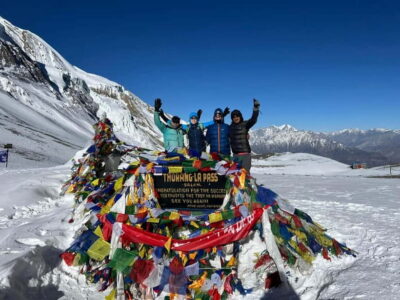
Browse the lists this tour appears in