
Reviewed · EVEREST BASE CAMP TREKS
14 Days Everest Base Camp Trek
The Himalayas reward steady effort. This 14-day Everest Base Camp Trek combines mountain views, Sherpa villages, monastery visits, and careful acclimatization at a price of $2,200 per person. I like the inclusion of domestic flights, permits, meals, a licensed guide, and porter support. I also like that the trip is private, so your group is not folded into a large mixed party.
The main drawback is the physical demand. You need moderate fitness, and the route reaches 5,545 metres at Kala Patthar. The flight and road transfer through Ramechhap can also be affected by weather or availability, so you should come with a flexible attitude and proper high-altitude insurance.
In This Review
- Key points to know before booking
- What the $2,200 price really covers
- Kathmandu, Thamel, and the first night
- Day 2: The long road to Lukla and the short walk to Phakding
- Day 3: The hard climb into Namche Bazaar
- Day 4: Namche acclimatization and the Everest View Hotel
- Day 5: Prayer flags, Ama Dablam, and Tengboche
- Day 6: Pangboche and the approach to Dingboche
- Day 7: Dingboche and the Nagarjun Hill climb
- Day 8: Alpine brush, yak pastures, and Lobuche
- Day 9: Gorak Shep and Everest Base Camp
- Day 10: Kala Patthar and the descent to Pheriche
- Days 11 and 12: Returning through Namche to Lukla
- Day 13: Weather, flights, and a final Kathmandu evening
- Guides, porters, and the private format
- Who should book this Everest trek?
- Should you book it?
- FAQ
- How long is the Everest Base Camp Trek?
- What is the price per person?
- Is airport pickup included?
- Are domestic flights included?
- How many people are required to book?
- Is this a private tour?
- What meals are included?
- Is travel insurance included?
Key points to know before booking
- Kala Patthar reaches 5,545 metres: The highest point gives you the trek’s best wide view of Everest, Lhotse, Nuptse, Ama Dablam, and nearby peaks.
- Two acclimatization days matter: Rest stops in Namche Bazaar and Dingboche include short hikes rather than complete inactivity.
- The package covers the costly basics: Domestic flights, permits, hotels in Kathmandu, meals, a guide, and shared porter service are included.
- You fly via Ramechhap: The journey begins with a four to five hour road trip from Kathmandu before the short flight to Lukla.
- The tour is private for a minimum of two: Your own group takes part, which can make the pace and daily support feel more personal.
- The route includes Everest Base Camp and Tengboche: You get both the famous destination and the cultural side of the Khumbu region.
What the $2,200 price really covers
At first glance, $2,200 may seem high for a walking trip. Look closer and the price includes many of the expensive moving parts. You receive airport transfers by private vehicle, two nights in a three-star Kathmandu hotel with breakfast, domestic flights, airport tax, permits, trekking meals, a licensed guide, and a porter assigned to every two clients.
The package also pays staff wages, accommodation, meals, equipment, insurance, government taxes, value-added tax, and office charges. That is a useful bundle for a high-altitude trek, where small costs can otherwise pile up quickly.
You still need to budget for Nepal’s entry visa, international flights, travel insurance, personal trekking equipment, drinks, hot showers, WiFi, phone use, snacks, desserts, and tips. Lunch and dinner in Kathmandu are also yours to pay for. Mineral water, hot water, coffee, alcohol, and other drinks are not included, so bring extra cash for the trail.
The porter arrangement is worth understanding. One porter carries luggage for two clients, rather than one porter per person. Pack thoughtfully and keep your daypack manageable. You will need to carry the items you want during the day, while your larger bag goes ahead with the porter.
The package includes 13 breakfasts, 12 lunches, and 12 dinners, along with a farewell dinner in a traditional Nepali restaurant. You also receive an achievement certificate at the end. The certificate is a small extra, but the practical value lies in not having to arrange food, permits, transport, and staff independently.
More Everest Base Camp Treks:
- Everest Base Camp Trek – 14 Days
★ 5.0 · 1,499 reviews - Everest Base Camp Trekking
★ 5.0 · 485 reviews - Everest Base Camp Trekking – 13 Day
★ 5.0 · 365 reviews
Kathmandu, Thamel, and the first night
Your airport pickup takes you to a hotel in Thamel, Kathmandu’s well-known area for shops, restaurants, and trekking services. The first afternoon is free for a walk through the neighborhood and last-minute preparation.
I would use this time sensibly. Check your gear, organize your luggage, and avoid treating the first evening as a late night out. The next morning includes a long road journey before the flight to Lukla, so rest is more useful than one more round of shopping.
The final night in Kathmandu is also included. Depending on flight conditions, you may return directly from Lukla or fly to Manthali Airport near Ramechhap and continue by road. That uncertainty is normal for this route, but it means you should avoid scheduling an international flight too tightly after the trek.
Day 2: The long road to Lukla and the short walk to Phakding
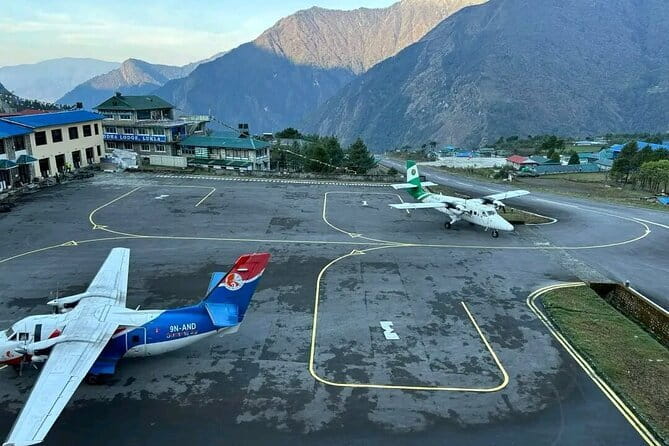
The route begins with a four to five hour drive from Kathmandu to Manthali in Ramechhap. From there, the flight to Lukla takes about 20 minutes. The flight is brief, but it delivers you to the mountain route quickly, so the day can feel full before the walking even starts.
The first walk leads toward Phakding and takes about four hours. This is a sensible introduction to the trek because you are not immediately asked to handle a huge walking day at altitude.
The road transfer is the least romantic part of the journey, but it is useful to know about it in advance. You are not simply leaving Kathmandu and stepping onto a plane. The Ramechhap connection adds time and road travel, yet it is built into the current operating plan.
Day 3: The hard climb into Namche Bazaar
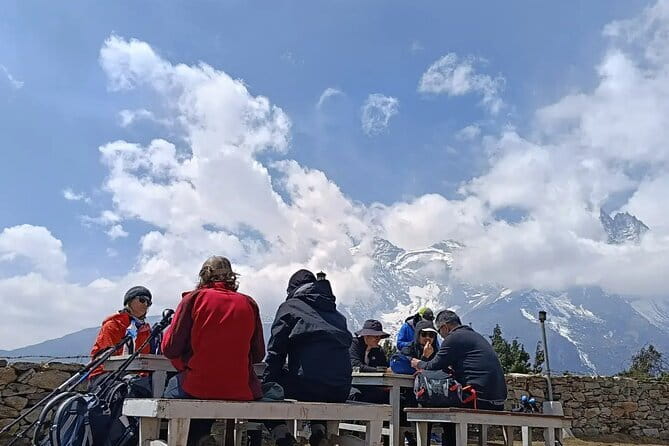
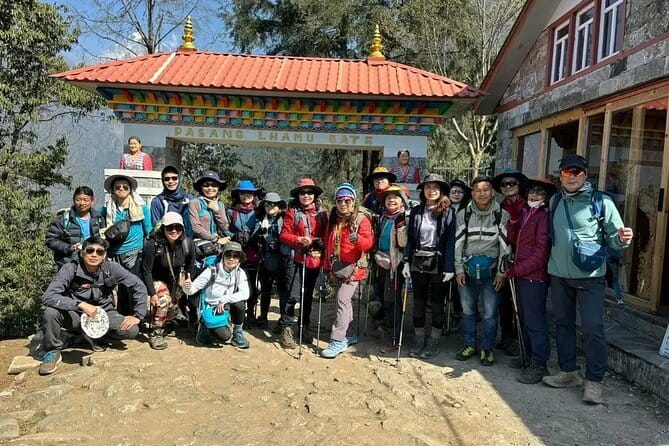
The walk from Phakding to Namche Bazaar takes about five hours and brings a real change in effort. You pass Sherpa communities such as Benkar and Chumoa before reaching Monjo, the entrance to Sagarmatha National Park.
From there, the trail becomes steep and demanding. Namche is the main settlement and trading centre of the Everest region, so reaching it feels like an important step. The town is also a practical place to pause, eat, and adjust to the increasing altitude.
You should not treat this as an ordinary five-hour walk. Steep sections, thin air, and the rough mountain route can make the day tiring. Walk slowly, drink regularly, and let the guide set a safe pace.
More Treks and Hikes:
- Nagarkot Sunrise View and Day Hiking from Kathmandu
★ 5.0 · 471 reviews - Annapurna Circuit Trek with Tilicho Lake
★ 5.0 · 368 reviews - Everest Base Camp Trek -14 Days
★ 5.0 · 321 reviews - Annapurna base camp trek 5 Days
★ 5.0 · 252 reviews
Day 4: Namche acclimatization and the Everest View Hotel
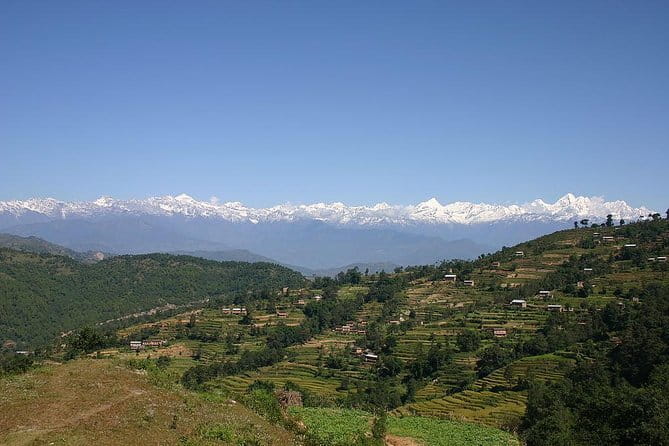
The second day in Namche is not a wasted day. The plan uses it for acclimatization, with a walk to the Everest View Hotel. From there, you can see Ama Dablam, Thamserku, Everest, Nuptse, and other major peaks in a broad mountain panorama.
This short hike is a good compromise. You stay active, which helps your body adjust, but you return to Namche rather than moving higher for the night. The day takes about five hours, so it is still a proper outing.
Namche is also your best chance to enjoy Sherpa food and browse local shops before the settlements become smaller. I like this pause because it gives the trip a human centre. The mountains are the headline, but Namche shows how the region functions as a home, market, and gateway.
Day 5: Prayer flags, Ama Dablam, and Tengboche
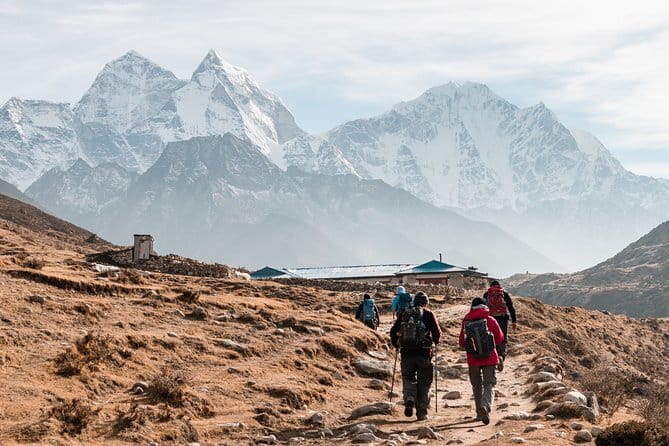
The walk to Tengboche takes about five hours and is described as less steep than the previous day. That makes it a welcome change, especially if your legs still remember the climb into Namche.
The route offers strong photo opportunities, including Ama Dablam, prayer flags, and stupas. Tengboche is one of the cultural highlights of the trek because it is home to an old monastery and a revered Buddhist setting.
The appeal here is not only the mountain view. The monastery gives the journey a sense of place and connects the route with Sherpa religious life. Sunrise and sunset views from Tengboche are especially appealing, although exact viewing conditions depend on weather and timing.
Day 6: Pangboche and the approach to Dingboche
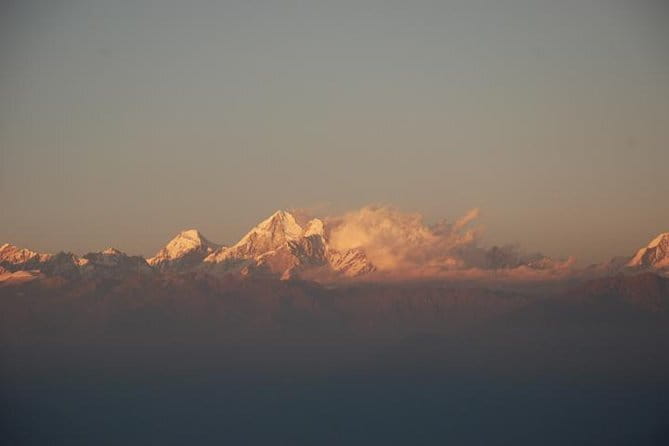
The route continues toward Dingboche in about four hours. Along the way, you pass Pangboche, with Ama Dablam, chortens, and mani walls adding detail to the walk.
The scenery changes as you gain height. Villages become more widely spaced, and the trail moves through a harsher alpine setting. The route description points to fields and yak pastures, which helps explain why the daily walking hours are shorter than lower down.
Dingboche is an important stop because the altitude now demands more care. Even with a relatively short walking day, you may feel the difference. This is where patience matters more than speed.
Day 7: Dingboche and the Nagarjun Hill climb
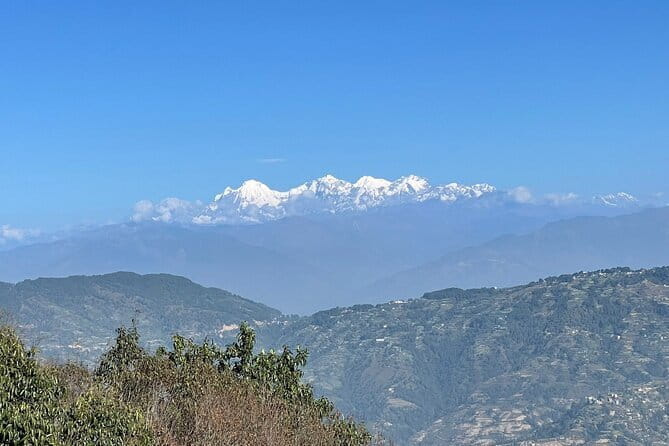
Dingboche provides the second major acclimatization stop. The plan includes a walk to Nagarjun Hill at about 5,100 metres, with striking views as the reward for the climb.
This is a challenging rest day, not a day spent in bed. The point is to go higher during the day and sleep lower in Dingboche. That pattern supports acclimatization while keeping the group moving.
You should expect this to be one of the tougher short days. The distance may not sound large, but altitude changes the rules. A slow pace and close attention to how you feel are important. If you develop serious altitude symptoms, tell your guide at once.
Day 8: Alpine brush, yak pastures, and Lobuche
The four-hour walk toward Lobuche begins through the Pheriche Valley. Alpine brush and yak pastures replace the greener lower sections, while Ama Dablam, Tawoche, and Cholatse rise above the valley.
This part of the route feels more exposed and remote. It also prepares you for the final push toward Base Camp. The gradual ascent is helpful, but altitude remains the main challenge.
Lobuche is a staging point for the next day’s major goal. Do not let the short walking time fool you into overexerting yourself. The highest sections of the trek are still ahead.
Day 9: Gorak Shep and Everest Base Camp
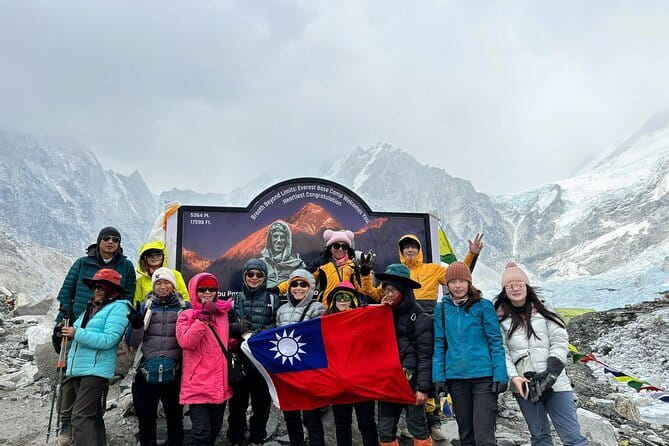
The route reaches Gorak Shep, a high settlement surrounded by snow-covered peaks and positioned near the lateral moraine of the Khumbu Glacier. From there, you continue to Everest Base Camp.
This is the day many people picture when they think of the trek, but it is not simply a photo stop. The route over glacial moraine can be rough, and the altitude makes every step feel more deliberate. The surrounding peaks, ice, and rock show the raw force of the Khumbu environment.
Base Camp is the celebrated destination, but you should keep expectations realistic. The experience is about reaching the site at the foot of Everest and seeing the glacier and surrounding peaks, not about standing on the summit or visiting a permanent camp for climbers at all times of year.
The day takes about four hours according to the plan, though conditions and walking pace can affect the timing. You then spend the night at Gorak Shep before the next early start.
Day 10: Kala Patthar and the descent to Pheriche
The trek’s biggest viewpoint comes before dawn. You climb Kala Patthar to 5,545 metres, the highest point on the route, for a broad view of Everest, Nuptse, Lhotse, Ama Dablam, and other Himalayan peaks.
The early start is tough, especially after the Base Camp day. Yet the timing is practical because mountain views are often clearest in the morning. Sunrise from Kala Patthar can be the defining scene of the entire journey.
After the viewpoint, you descend to Pheriche. The five-hour day combines a hard ascent, a high-altitude viewpoint, and a significant drop in elevation. It is physically demanding, but descending after the summit point usually brings some relief.
This is another day when your guide’s judgment matters. Move slowly on the climb, dress for cold morning conditions, and keep enough energy for the descent.
Days 11 and 12: Returning through Namche to Lukla
Day 11 heads back toward Namche Bazaar. The route generally descends, though you still face uphill stretches. Forests and plant life return as you lose altitude, making the scenery feel less severe after the high valleys.
The day takes about five hours and can be surprisingly tiring. You are coming off the Base Camp and Kala Patthar section, so even a downhill route can test your legs. Namche offers a welcome return to a larger settlement.
Day 12 is the final hiking day, following the trail back to Lukla in about five hours. You spend the night there before the flight. This closing walk can feel both satisfying and bittersweet. You are leaving the high country, but your legs will likely be ready for a rest.
The route back is not new, but the change in direction gives you different views and a clear sense of how far you have come. Lukla is the practical finish line for the walking portion.
Day 13: Weather, flights, and a final Kathmandu evening
The return flight may go to Kathmandu or to Manthali Airport, depending on weather and flight availability. If you land at Manthali, you continue by road to Kathmandu.
This is the trip’s main scheduling risk. Mountain flights can change, so you should leave breathing room before any onward international departure. The plan includes time for shopping in Kathmandu, but that time is best treated as a bonus rather than a guarantee.
The included farewell dinner in a traditional Nepali restaurant is a pleasant way to close the journey. It also gives you a chance to thank the guide and porter who supported the group.
Guides, porters, and the private format
The tour includes a government-licensed trekking guide and porter support. One porter is assigned to two clients, and the company covers staff wages, lodging, meals, gear, and insurance-related staff costs.
The private format is a major advantage for people who prefer their own group. The minimum booking is two people, and only your group participates. That can make the walking rhythm more comfortable than a large fixed group, though it also means your companions should have similar fitness and expectations.
The company’s wider trekking work receives strong praise for organization and care. Pemba, the owner, is specifically praised for customizing routes, while Prayash is highlighted for supportive guiding on a longer Everest, Cho La Pass, and Gokyo Lakes journey. Those comments do not guarantee the same guide on this trek, but they suggest that communication and personal care are important parts of the company’s approach.
Who should book this Everest trek?
I would recommend this trip to someone who wants a structured route with the major Everest region sights already arranged. It suits you if you value private-group travel, included meals, local staff, and a clear acclimatization plan.
It is less suitable if you want a relaxed holiday, dislike early mornings, or have no interest in preparing for high altitude. Moderate fitness is required, but fitness alone does not remove the need for proper insurance, personal gear, and sensible pacing.
The $2,200 cost is strongest for people who would rather pay one operator to arrange permits, transport, staff, meals, and accommodation. If you are an experienced independent trekker with your own equipment and contacts, you may prefer to organize separate services. For most first-time trekkers in the Everest region, the support has practical value.
The cancellation terms are fairly strict close to departure. Cancel at least six full days before the start for a full refund. Cancelling two to six days before may return 50 percent, while cancellations less than two full days before departure receive no refund.
Should you book it?
Book this trek if reaching Everest Base Camp matters to you, and you want the route handled by a local company with private support. The strongest features are the two acclimatization stops, the licensed guide, shared porter service, included permits and meals, and the chance to see Tengboche, Namche, Base Camp, and Kala Patthar in one 14-day plan.
Before paying, confirm the flight arrangement through Ramechhap, ask who will guide your group, check exactly what personal equipment you must supply, and buy insurance that covers high-altitude emergency evacuation. If you can accept weather delays and prepare for the physical strain, this is a well-organized way to experience the Everest region without arranging every detail yourself.
FAQ
How long is the Everest Base Camp Trek?
The experience lasts approximately 14 days, including arrival and departure days in Kathmandu.
What is the price per person?
The listed price is $2,200 per person.
Is airport pickup included?
Yes. Airport pickup and drop-off by private vehicle are included.
Are domestic flights included?
Yes. The package includes domestic flight tickets for the Lukla to Ramechhap route and return, along with domestic airport tax.
How many people are required to book?
The trip requires a minimum of two travelers.
Is this a private tour?
Yes. Only your own group participates.
What meals are included?
The package includes breakfast, lunch, and dinner during the trek, plus breakfast at the Kathmandu hotel. It includes 13 breakfasts, 12 lunches, and 12 dinners, as well as a farewell dinner in a typical Nepali restaurant.
Is travel insurance included?
Travel insurance for you is not included. You must arrange your own policy, including high-altitude emergency evacuation coverage.
Just added around Kathmandu
- Private Shopping Tour in Kathmandu★ 5.0 · 3 reviews
- Nagarkot Sunrise With 7 UNESCO World Heritage Private Tour★ 5.0 · 3 reviews
- Mount Everest Scenic Flight 50 Minutes★ 5.0 · 3 reviews
- Kathmandu: Nightlife and Pub Crawl Tour★ 5.0 · 3 reviews
- Momo Cooking Class -The Art Of Making MoMo with Home Chef★ 5.0 · 3 reviews
- Kathmandu: Nagarkot, Bhaktapur, Doleswor & Sanga Statue Tour★ 5.0 · 3 reviews
- Makalu Base Camp Trek★ 5.0 · 3 reviews
- Everest Experience Trek 6 Day Hiking Adventure★ 5.0 · 3 reviews
Everest Base Camp Treks, compared.






Everest Base Camp Trek with Helicopter Return from Gorakshep to Lukla
Read our review →Browse the lists this tour appears in