
Reviewed · EVEREST BASE CAMP TREKS
14 Days Everest Base Camp Trekking
The world’s highest mountain starts with a small runway. This 14-day Everest Base Camp trek combines Lukla flights, Sherpa villages, mountain monasteries, glacier views, and a carefully paced route to 5,364 meters. I like the built-in acclimatization days in Namche Bazaar and Dingboche, and I also like that the $1,420 price includes permits, domestic flights, a guide, porter support, meals, and trekking lodges.
The strongest praise centers on attentive guides and smooth organization. Guides named Hari, Kapil, and Namo have been singled out for their calm care, good judgment, and friendly manner. The main drawback is the physical demand: several days are listed at around 10 hours, the air gets thin quickly, and Kathmandu accommodation and meals are not included.
In This Review
- Key points to know before booking
- What the $1,420 price really covers
- Kathmandu arrival and the flight into Lukla
- Phakding to Namche Bazaar, the first real test
- Namche Bazaar and the Everest View walk
- Namche to Tengboche, with the first great mountain views
- Pangboche and Dingboche, where altitude takes over
- Dingboche acclimatization and the Nagarjun climb
- Dingboche to Lobuche through the Khumbu Glacier country
- Gorak Shep and Everest Base Camp at 5,364 meters
- Kala Patthar, then the long descent to Pheriche
- Pheriche to Namche and the return through familiar villages
- Lukla celebration and the flight back to Kathmandu
- Guides, group size, and day-to-day support
- Who should book this Everest Base Camp trek?
- Should you book it?
- FAQ
- How long is the Everest Base Camp trek?
- What is included in the $1,420 price?
- Are meals included throughout the trip?
- How high does the trek go?
- Is this a private group tour?
- Do I need strong physical fitness?
Key points to know before booking
- Lukla flights are included: Round-trip flights from Kathmandu to Lukla and departure taxes are covered, saving you a major extra cost.
- Two acclimatization days help: You spend a rest day in Namche Bazaar and another in Dingboche, with optional high walks to help your body adjust.
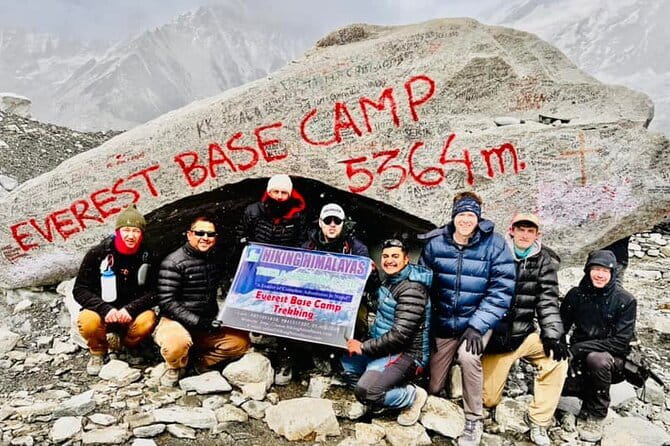
- Everest Base Camp reaches 5,364 meters: The route also includes Kala Patthar at 5,565 meters, the trek’s highest viewpoint.
- Porter support is built in: One porter is provided for every two trekkers, while you walk with a day pack.
- The package covers the main trek costs: Lodging, meals during the trek, permits, guide services, medical kit, and ground transfers are included.
- You need strong fitness: Long walking days, steep climbs, cold conditions, and high altitude make this a serious mountain trek rather than a casual holiday.
What the $1,420 price really covers
At $1,420, this trek offers solid value if you want a largely arranged Everest Base Camp experience. The cost includes private ground transport between your hotel and Kathmandu’s domestic airport, round-trip Kathmandu to Lukla flights, twin-sharing lodge accommodation, required trekking permits, a certified English-speaking guide, and porter service.
Your food during the trek is also covered: 13 breakfasts, 11 lunches, and 11 dinners. Seasonal fruit is included, along with a trekking map, achievement certificate, first aid kit, government taxes, and office service charges.
That list matters because small mountain costs add up fast. You still pay for food and lodging in Kathmandu, budgeted at $45 per day, plus drinks, snacks, hot showers, personal equipment, tips, travel insurance, and the Nepal entry visa. The visa can be obtained on arrival at the airport for $40 for 30 days.
I consider the porter arrangement reasonable: one porter for two trekkers. You should still pack carefully and avoid overloading the porter. Your own bag should contain the items you need during the day, while less-used gear can go with the porter.
The package does not include international flights, so your final cost will be higher. Even so, including the Lukla airfare and permits gives this trip a useful cost advantage over a cheaper-looking package that adds those items later.
More Everest Base Camp Treks:
- Everest Base Camp Trek – 14 Days
★ 5.0 · 1,499 reviews - Everest Base Camp Trekking
★ 5.0 · 485 reviews - Everest Base Camp Trekking – 13 Day
★ 5.0 · 365 reviews
Kathmandu arrival and the flight into Lukla
Day one begins at Tribhuvan International Airport in Kathmandu. A clear flight into the Kathmandu Valley can offer wide views of snow-covered Himalayan peaks, though the day’s plan is mainly about arrival, transfer, and preparation.
The next morning starts early, with a stated meeting time of 6:15 am at Tribhuvan Airport. You fly to Lukla, where the runway sits on a steep mountain slope at about 2,850 meters. That landing is part of the experience, not just a transfer. It quickly tells you that this trek will be very different from a normal walking tour.
At Lukla, you meet the support team and begin walking through the Dudh Koshi Valley. The first day on foot ends at Phakding, around 2,656 meters. The route is well marked, and the shorter opening stage gives you a useful first taste of the trail without immediately pushing you to a very high altitude.
The flight is weather-sensitive by nature, so you should keep your plans flexible around this part of the trip. The package includes the flights, but it does not promise clear skies or a fixed flying experience.
Phakding to Namche Bazaar, the first real test
From Phakding, the trail crosses and recrosses the river on high suspension bridges. These crossings add excitement, but they also require steady footing, especially when the path is busy or wet.
Beyond Monjo, at about 2,845 meters, you enter Sagarmatha National Park. The park protects the mountain environment and marks a change in the feel of the route. You are now walking deeper into the Khumbu region, with steep hillsides and large peaks gradually taking over the view.
The day finishes in Namche Bazaar after a long walk listed at around 10 hours. Namche is set between ridges and has tea shops, lodges, and souvenir stores. It is the most developed settlement on the route, which makes it a practical place to rest, buy small necessities, and get used to the altitude.
This is also one of the harder days because the trail gains height after the relatively gentle start from Phakding. I would treat the schedule as a full mountain day, not a relaxed village stroll.
Namche Bazaar and the Everest View walk
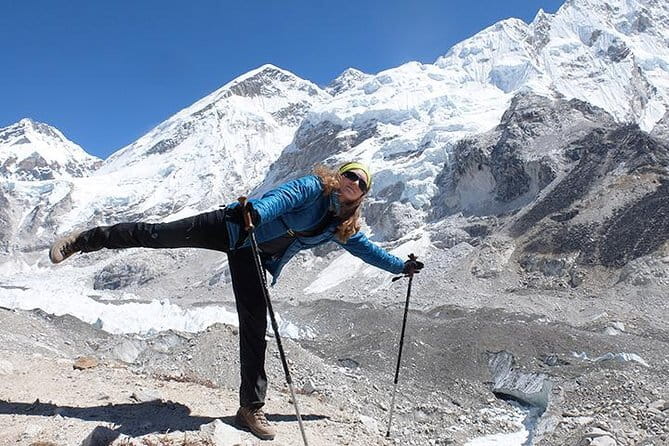
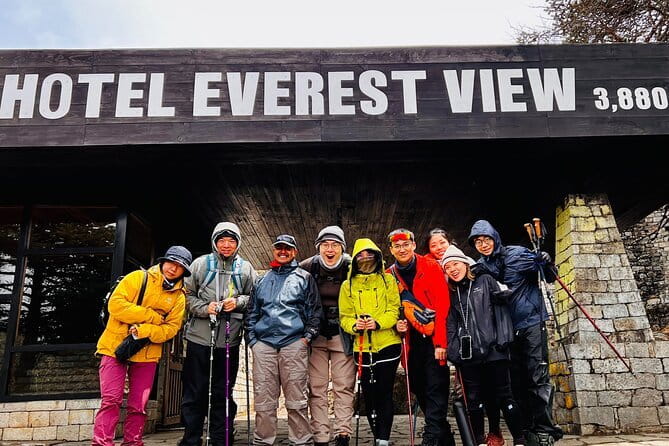
Day four is reserved for acclimatization in Namche. This is one of the tour’s best design choices. Instead of gaining height every day, you spend time at the same sleeping altitude and take an optional walk to the Everest View Point.
The name tells you the purpose. From the higher viewpoint, you can see Everest and other major Khumbu peaks, giving you an early reward before the harder sections of the route. The exact walking plan is flexible enough to let you rest or climb higher according to how you feel.
Namche also gives you a rare chance to enjoy village life during the trek. You can browse its tea shops and souvenir stores, and you are not confined to a remote lodge for the entire day. I like this pause because it gives your legs a break without wasting a day.
You should not treat the acclimatization day as optional from a health point of view. A short high walk followed by sleep at a lower level is a central part of adjusting safely to the route.
More Treks and Hikes:
- Nagarkot Sunrise View and Day Hiking from Kathmandu
★ 5.0 · 471 reviews - Annapurna Circuit Trek with Tilicho Lake
★ 5.0 · 368 reviews - Everest Base Camp Trek -14 Days
★ 5.0 · 321 reviews - Annapurna base camp trek 5 Days
★ 5.0 · 252 reviews
Namche to Tengboche, with the first great mountain views
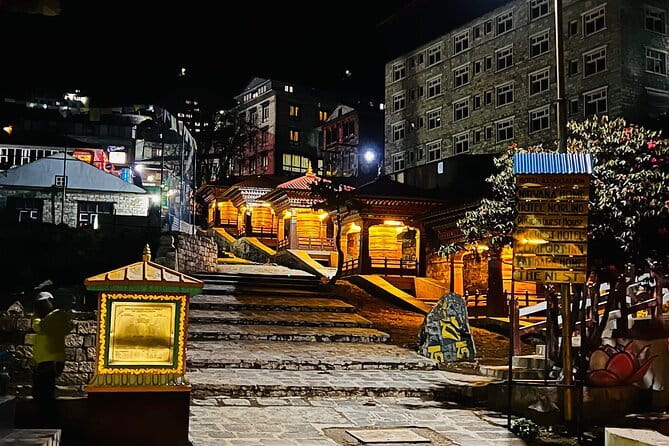
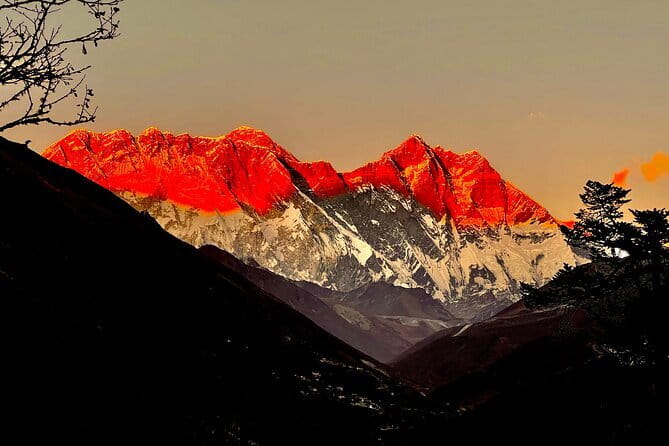
Leaving Namche, the path contours along the valley above the Dudh Koshi. This section brings some of the finest early views of Everest, Lhotse, Nuptse, and Ama Dablam.
You pass several villages before reaching Tengboche, also written as Tyangboche, at about 3,860 meters. The setting includes a monastery, and the route gains a stronger cultural character here. You are not simply walking toward a famous mountain marker. You are moving through villages shaped by Sherpa life and Buddhist practice.
The day is again listed at around 10 hours. The route can feel demanding because you lose height and then climb again toward Tengboche. That rhythm is typical of Himalayan trekking, and it can be more tiring than a steady uphill path.
The payoff is the mountain setting around Tengboche. Ama Dablam is especially striking, and the views of the surrounding peaks open up as the trees begin to thin.
Pangboche and Dingboche, where altitude takes over
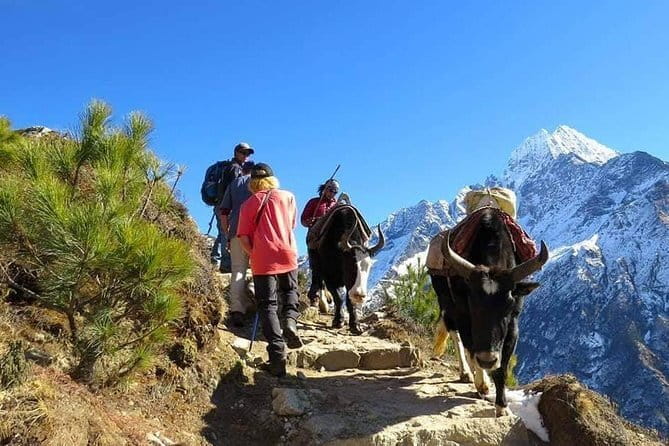
From Tengboche, you descend through forest, cross the Imja Khola, and climb toward Pangboche at approximately 3,985 meters. Pangboche sits opposite Ama Dablam, with views of the peak, a gompa, mani walls, and scattered mountain scenery.
The trail then continues toward Dingboche. At this point, the route leaves much of its lower forest feel behind. You are moving into a higher, more open section, and the cold and thin air become more important than the distance alone.
The listed walking time is around 10 hours, so you should expect a demanding day. Your guide’s role becomes especially important here. The most praised guides on this trip, including Hari and Kapil, have been described as calm, attentive, and careful with the pace and well-being of the group.
I would pay close attention to how you feel in Dingboche. A strong level of fitness is required, but fitness does not cancel out altitude. Walk slowly, drink regularly, and tell your guide early if you feel unwell.
Dingboche acclimatization and the Nagarjun climb
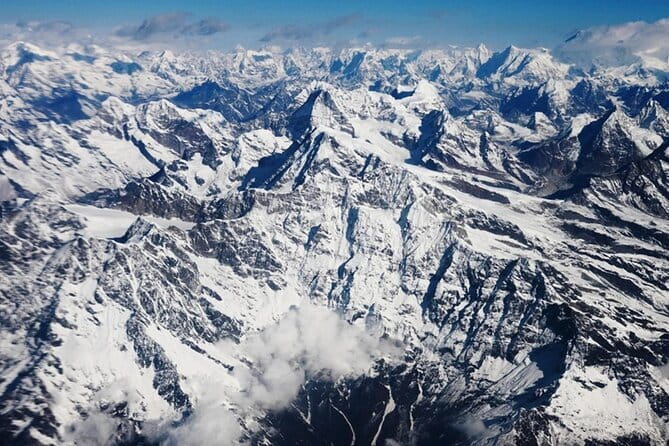
Day seven gives you another acclimatization break in Dingboche. You can walk up the valley toward Tshola Tsho Lake at about 4,510 meters and view the steep walls of Cholatse, 6,440 meters, and Taboche, 6,495 meters.
Another option is climbing toward Nagarjun, which reaches around 5,100 meters. This is a high practice walk, not a throwaway sightseeing stop. It lets you gain height during the day before returning to Dingboche to sleep lower.
I like this second rest day because the route becomes much more serious after Dingboche. You are not rushing from one major point to the next. The schedule gives your body time to adjust before the glacier and base camp sections.
Still, a rest day does not mean an easy day for everyone. The optional climb can be strenuous, and you should decide how far to go based on your condition rather than feeling pressure to reach the highest point.
Dingboche to Lobuche through the Khumbu Glacier country
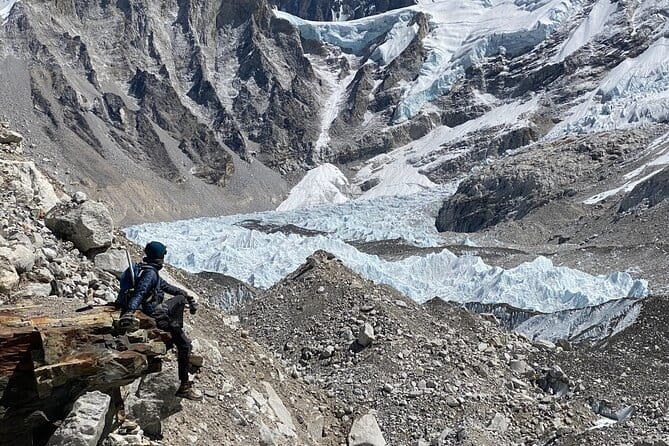
The trail continues up a broad valley beneath Cholatse and Tawache. You then turn toward the foot of the Khumbu Glacier, with a steep climb leading to Duglha at about 4,620 meters.
Duglha is described as a good lunch stop. After the break, the path continues toward Lobuche, where the surroundings feel stark and high. The forests are mostly behind you, and the route is now defined by rock, ice, and enormous mountain walls.
This is another day listed at around 10 hours. At this altitude, distance feels different. Even a moderate climb can take effort, and you should expect a slower pace than you might use at home.
The scenery is powerful, but the facilities become simpler as you go higher. Twin-sharing lodge accommodation is included, yet you should not expect city comforts. Hot showers cost $5 per person, and drinks and snacks are extra.
Gorak Shep and Everest Base Camp at 5,364 meters
Day nine takes you toward Gorak Shep at approximately 5,164 meters. The trail follows the Khumbu Glacier, with views of surrounding peaks and a route that rises over a tributary glacier.
The schedule lists about one hour for the approach to Gorak Shep, followed by a separate seven-hour section for Everest Base Camp. The timing may vary with the group’s pace and conditions, but you should understand the key point: Base Camp is not a quick photo stop after lunch.
The route to Everest Base Camp weaves around ice pinnacles and crevasses on the Khumbu Glacier. It reaches about 5,364 meters, making this one of the highest points of the trek. The path back can use a higher route for broader views, adding to the effort.
Reaching Base Camp is the emotional center of the trip, but it is not the best viewpoint for Everest itself. The next morning’s walk to Kala Patthar is designed for that.
Gorak Shep is a practical overnight stop, not a place to expect comfort or entertainment. The thin air, cold, and long walking day can make this the toughest stage for many people.
Kala Patthar, then the long descent to Pheriche
The next morning begins early with a climb to Kala Patthar at about 5,565 meters. This is presented as one of the finest viewpoints for Everest, Nuptse, Ama Dablam, Pumori, Lola, and Lhumbutse.
The early start is worthwhile for the mountain views, but the climb is serious. You have already walked to Base Camp, and the high altitude makes every step slower. I would save energy for this viewpoint and follow the guide’s pace rather than trying to hurry.
After Kala Patthar, the route is mostly downhill. You retrace the path to Duglha and descend to Pheriche. Downhill walking sounds easy, but tired legs and uneven ground can make it hard on your knees.
This day is listed at around 10 hours, so it is not simply a short return after the summit viewpoint. You should plan on a full day in the mountains.
Pheriche to Namche and the return through familiar villages
The return route follows the river and climbs back through birch and rhododendron forest toward Tengboche. From this section, you see Kwangde, Tawache, Everest, Nuptse, Lhotse, Ama Dablam, Kantega, and Thamserku.
The trail then continues toward Namche Bazaar. The forested sections can feel like a welcome change after the exposed upper valleys. You also begin to notice how much easier breathing feels as you lose altitude.
The day is again listed at around 10 hours. That repeated figure should shape your expectations: this itinerary uses long walking days to complete the route in 14 days, even with two acclimatization stops.
Returning to Namche gives you one more chance to use its tea shops and lodges before the final walk to Lukla. It is a good point to check your gear, recharge if possible, and prepare for the last mountain day.
Lukla celebration and the flight back to Kathmandu
The final trekking day follows the Dudh Kosi down to Lukla at around 2,800 meters. The trail is familiar in places, but the mood changes because you know the mountain section is ending.
The team plans a final celebration with the Sherpa guides and porters. This is a fitting close to a route that depends on their work, from carrying equipment to setting the pace and handling the practical details of each day.
On day 13, you head early to the airstrip for the flight to Kathmandu. Once back in the capital, the rest of the day is free for shopping, packing, postcards, or simply resting.
The final day includes airport transport for your flight home. The company also notes that you can extend your Nepal stay with other activities, but those are not part of this 14-day package.
Guides, group size, and day-to-day support
This is a private tour, so only your group participates. That can make a real difference on a high-altitude route. Your group can set a more suitable pace, and the guide can focus on your condition instead of managing a large mixed party.
The package includes one professional English-speaking certified guide, with the guide’s food, lodging, and insurance covered. One porter is included for every two trekkers, with the porter’s food, lodging, insurance, and safari listed as covered.
The strongest praise goes to the human side of the operation. Hari is described as cooperative and attentive, while Kapil received praise for expert guidance and care. A family group also credited Kapil and Namo with being friendly and supportive, while porters named Ram and Mongol were remembered for their excellent help.
Those details matter because a long trek is shaped by small decisions. A guide who watches your pace, listens when you feel tired, and keeps arrangements moving can make the difference between a hard trip and a miserable one.
Who should book this Everest Base Camp trek?
I would choose this trek if you want the classic Everest Base Camp route with the major logistics arranged in advance. It suits people who value a private group, included Lukla flights, porter help, lodge accommodation, and two acclimatization days.
You should have strong physical fitness and be ready for multiple 10-hour walking days. The route includes suspension bridges, steep climbs, glacier terrain, cold conditions, and heights up to 5,565 meters at Kala Patthar.
I would not choose it if you want a relaxed holiday, luxury lodging, or a schedule with plenty of spare days. The 14-day format is efficient, but it leaves little room for delays or major changes.
The free cancellation policy allows a full refund if you cancel at least 24 hours before the local start time. After that point, the amount paid is not refunded, and late changes are not accepted.
Should you book it?
Book this trek if value and support matter more to you than comfort. The $1,420 price covers the expensive core items, and the private format gives you a better chance of receiving personal attention from the guide.
The best reasons to choose it are the included Kathmandu to Lukla flights, porter ratio, permit coverage, meal package, and carefully placed acclimatization days. The most important caution is the schedule’s physical intensity.
Before booking, budget separately for Kathmandu costs, insurance, snacks, drinks, showers, equipment, tips, and the $40 Nepal visa. If you are fit, prepared for high altitude, and happy with basic mountain lodges, this is a strong-value route to Everest Base Camp.
FAQ
How long is the Everest Base Camp trek?
The experience lasts approximately 14 days, including arrival and departure days in Kathmandu, the flight to Lukla, the trek to Everest Base Camp, the return to Lukla, and the flight back to Kathmandu.
What is included in the $1,420 price?
The price includes private ground transfers, twin-sharing lodge accommodation during the trek, round-trip Kathmandu to Lukla flights and departure taxes, a certified English-speaking guide, porter support, meals during the trek, permits, a trekking map, an achievement certificate, a first aid kit, taxes, and office service charges.
Are meals included throughout the trip?
Breakfast is included for 13 days, along with 11 lunches and 11 dinners. Food and accommodation in Kathmandu are not included and are budgeted at $45 per day.
How high does the trek go?
Everest Base Camp is listed at about 5,364 meters. The route also visits Kala Patthar at approximately 5,565 meters and includes an optional climb toward Nagarjun at around 5,100 meters.
Is this a private group tour?
Yes. Only your group participates in the activity. An English-speaking guide and porter support are included.
Do I need strong physical fitness?
Yes. The tour states that participants should have a strong physical fitness level. Several walking days are listed at around 10 hours, and the route includes steep terrain and high-altitude sections.
Just added around Kathmandu
- Private Shopping Tour in Kathmandu★ 5.0 · 3 reviews
- Nagarkot Sunrise With 7 UNESCO World Heritage Private Tour★ 5.0 · 3 reviews
- Mount Everest Scenic Flight 50 Minutes★ 5.0 · 3 reviews
- Kathmandu: Nightlife and Pub Crawl Tour★ 5.0 · 3 reviews
- Kathmandu: Nagarkot, Bhaktapur, Doleswor & Sanga Statue Tour★ 5.0 · 3 reviews
- Momo Cooking Class -The Art Of Making MoMo with Home Chef★ 5.0 · 3 reviews
- Everest Experience Trek 6 Day Hiking Adventure★ 5.0 · 3 reviews
- Kathmandu: Momo Making Class with a Local Chef★ 5.0 · 3 reviews
Everest Base Camp Treks, compared.






Everest Base Camp Trek with Helicopter Return from Gorakshep to Lukla
Read our review →Browse the lists this tour appears in