
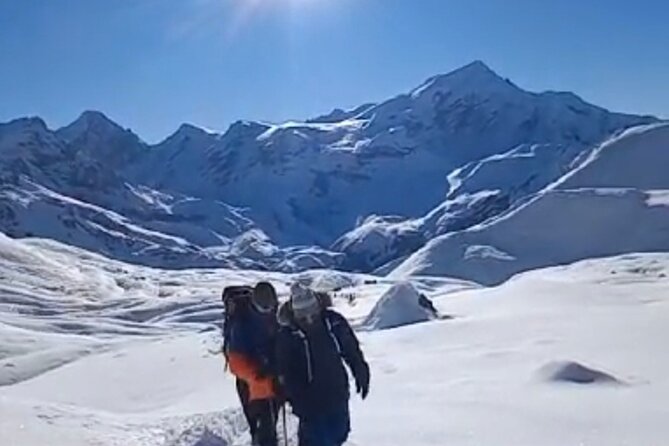
Reviewed · ANNAPURNA CIRCUIT TREKS
8 Days Private Guided Trekking in Annapurna Circuit with Pickup
The high pass is the payoff. This eight-day Annapurna Circuit trek packs forests, Tibetan-style mountain villages, alpine terrain, Muktinath, and the 5,416-meter Thorong La Pass into one brisk trip. I like the private guiding and the broad package, which includes meals, permits, a guide, some gear, and transport from Kathmandu, Pokhara, or Chitwan.
I also like the careful attention guides such as Sobit, Sirjan, Garap, Bijay, and Ramesh have given to pacing, equipment, meals, and altitude problems. The main concern is the schedule: eight days is fast for a route that reaches extreme altitude, so you need moderate fitness, sensible preparation, and honest communication about your health.
In This Review
- Key points to know before booking
- What the $260 price really covers
- Day 1: Six hours from Besisahar to Chame
- Day 2: Forest paths and Upper Pisang
- Day 3: Ngawal, Annapurna views, and Manang
- Day 4: A rest day beside Gangapurna Lake
- Day 5: Letdar and Yak Kharka
- Day 6: The climb toward Thorong High Camp
- Day 7: Thorong La, Muktinath, and Jomsom
- Day 8: A long jeep ride to Pokhara
- Guiding, pacing, and the human side of the trek
- What is included, and what you still need
- Who should book this eight-day route?
- Should you book it?
- FAQ
- What is included in the $260 price?
- Is pickup available from Kathmandu?
- Is this a private tour?
- How high does the trek go?
- What level of fitness is required?
- Can I cancel for a full refund?
Key points to know before booking
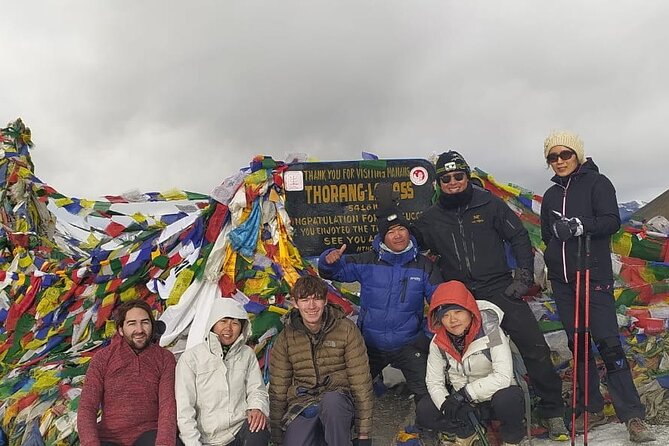
- Thorong La reaches 5,416 meters, making the pass the toughest and most important day of the trek.
- One acclimatization day in Manang includes an optional hike to Gangapurna Lake or a higher viewpoint.
- The tour is private, but some transport is shared, including the road from Kathmandu, Pokhara, or Chitwan to Besisahar and the ride from Jomsom to Pokhara.
- Seven breakfasts, seven lunches, and seven dinners are included, which removes much of the daily planning.
- Permits, guide costs, insurance for the guide, first-aid medicine, and some seasonal fruit are covered in the $260 price.
- The route finishes in Pokhara, after a long jeep ride from Jomsom rather than a flight.
What the $260 price really covers
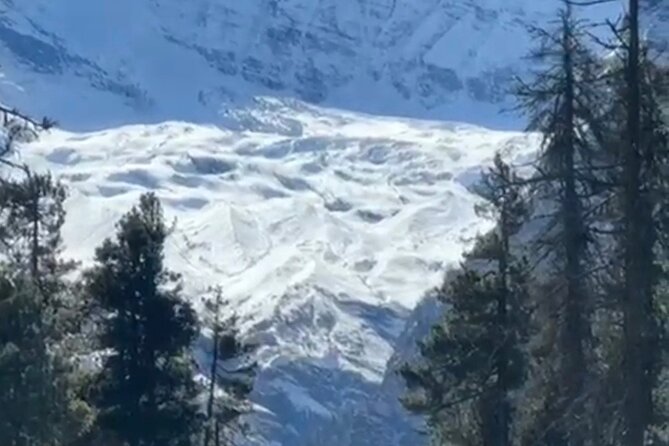
At $260 per person, this is a low-cost way to tackle a demanding Himalayan route with much of the basic structure already arranged. The price includes a guide’s salary, food, accommodation, insurance, government fees, the Annapurna Conservation Area permit, the TIMS card, meals, and road transport on the specified sections.
That matters because small costs on a trek can pile up. Permits, local vehicles, meals, guide support, and emergency basics are not minor extras when you are moving through remote mountain country. The package also includes a trip certificate and the company’s service charge, so the headline price is closer to the real cost than many bare-bones trekking deals.
You should still budget for extra meals, drinks, bar bills, tips, and travel insurance. Travel insurance is especially important here because the route reaches 5,416 meters and the tour information specifically advises discussing health concerns with a doctor.
There is one detail worth clarifying before departure. The trip is private, meaning only your own group participates in the guided activity, but the road transfers are shared. If you value a private vehicle for every leg, ask about an upgrade before paying.
More Annapurna Circuit Itineraries:
- Annapurna Circuit Trek with Tilicho Lake
★ 5.0 · 368 reviews - Annapurna Circuit Trek
★ 5.0 · 94 reviews - Annapurna Circuit Trek
★ 5.0 · 35 reviews
Day 1: Six hours from Besisahar to Chame
The first day is mainly about reaching the trail. You travel to Besisahar, then continue by jeep to Chame, with the total driving time listed at about six hours.
This is not a gentle sightseeing day. Mountain roads can make a short distance feel long, and the jeep transfer gets you to the point where the walking begins. The practical advantage is clear: you save several days that a longer version of the circuit would need.
Because the trip leaves from Kathmandu, Pokhara, or Chitwan, confirm your pickup point and start time. The exact road experience can vary, but you should expect this day to be more about transport than trekking. Keep water, warm layers, snacks, and any medicine in your day bag rather than buried in luggage.
Day 2: Forest paths and Upper Pisang
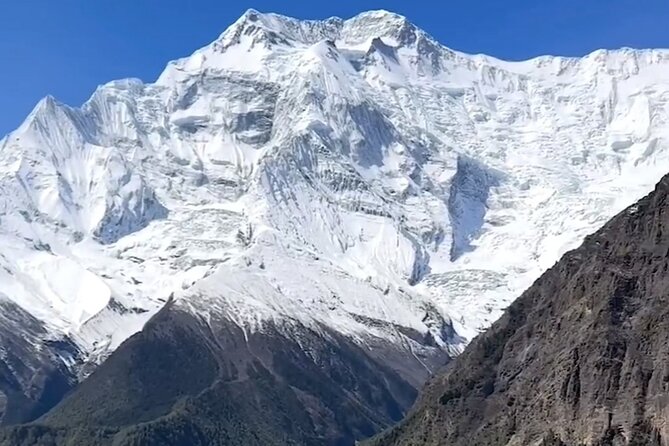
The walking starts through dense forest, with views toward Annapurna II and a stop near Dhikur Pokhari. You pass through the village area around Dhikupokhaari, then reach Lower Pisang before climbing to Upper Pisang for the night.
This section gives you a useful introduction to the route’s changing character. You move from wooded trails into higher mountain country, while village life remains close at hand. Upper Pisang is more than a place to sleep. It marks the route’s shift toward a drier, higher setting and provides a first strong look at the Annapurna range.
The listed walking time is about five hours. That is manageable for a reasonably fit person, but the steady gain in height matters more than the clock. Walk at a pace you can maintain without gasping, and tell your guide early if you feel unusually tired or unwell.
Day 3: Ngawal, Annapurna views, and Manang
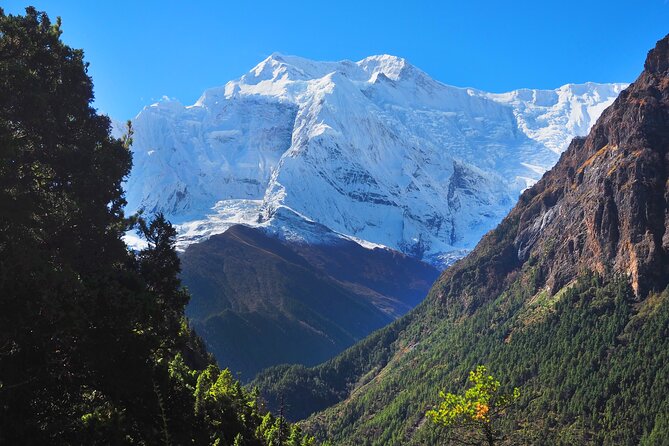
Day three takes you toward Ngawal and then onward to Manang, with about six hours of trekking. The route is valued for its mountain views and open high-country scenery, but this is also the day when the altitude begins to feel more serious.
Manang is an important overnight stop because the following day is reserved for acclimatization. After the effort of reaching it, you have time to rest and adjust before heading higher. Your guide can help set the pace and decide how much extra walking makes sense.
The itinerary mentions an overnight stay in Manang, but it does not specify the exact lodge. Accommodation is included, so ask for the expected standard and room arrangement before departure if that matters to you. Mountain lodging can be simple, and the price is built around practical trekking accommodation rather than luxury.
More Treks and Hikes:
- Everest Base Camp Trek – 14 Days
★ 5.0 · 1,499 reviews - Everest Base Camp Trekking
★ 5.0 · 485 reviews - Nagarkot Sunrise View and Day Hiking from Kathmandu
★ 5.0 · 471 reviews - Everest Base Camp Trekking – 13 Day
★ 5.0 · 365 reviews
Day 4: A rest day beside Gangapurna Lake
The fourth day is a rest day in Manang, with an optional hike to Gangapurna Lake and the option of walking to a higher altitude. This is one of the most valuable parts of the schedule, since rushing upward is a poor way to handle a route that later crosses 5,000 meters.
Gangapurna Lake gives you a reason to move without turning the acclimatization day into another full trekking stage. The listed time is about five hours, though the exact activity depends on the route chosen and how you are feeling.
Take this day seriously. A rest day does not mean sitting indoors all day, but it does mean avoiding the temptation to prove your fitness. Slow walking, fluids, food, and sleep are more useful than pushing for one more viewpoint. One account describes a guide helping a person who developed altitude sickness, which is a good reminder that local support can matter greatly here. Tell your guide about headache, nausea, unusual breathlessness, or confusion rather than trying to hide it.
Day 5: Letdar and Yak Kharka
The trail climbs through alpine terrain toward Letdar and then Yak Kharka, with about five hours of walking. Trees thin out, the air feels sharper, and the route becomes more exposed as you approach the pass country.
Yak Kharka is a practical overnight stop before the push toward Thorong High Camp. The day is not the hardest in terms of distance, but the altitude makes every climb more demanding. You will want a steady pace and enough warm clothing for the evening.
Meals are covered on each of the seven trekking days. That is useful here because you do not need to spend energy arranging every breakfast, lunch, and dinner yourself. Extra food and drinks are not included, so keep some cash available for anything beyond the set meals.
Day 6: The climb toward Thorong High Camp
The sixth day takes you from Yak Kharka toward Thorong High Camp at 4,450 meters. The listed walking time is about four hours, but the short duration should not fool you. At this height, the route can feel slow, and the purpose of the day is to reach the base for the pass crossing.
This is a preparation day in both body and mind. You need to arrive with enough energy for the early start that follows. Your guide will be especially important here, helping with pace and judging how you are coping with the altitude.
The schedule names Thorong La Pass as the day’s focus, but the detailed plan places the overnight at Thorong High Camp before the actual crossing. Confirm the exact overnight arrangement and departure time with the operator, since small changes are common on high mountain routes.
Sleeping at 4,450 meters is not easy for everyone. This is another reason to treat the Manang rest day as essential rather than optional. A sleeping bag and trekking poles are available if needed, which can make the cold and uneven trail easier to manage.
Day 7: Thorong La, Muktinath, and Jomsom
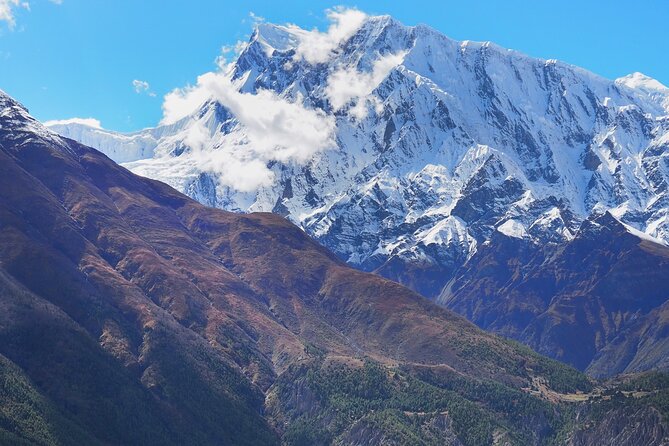
The biggest day begins early with the climb to Thorong La at 5,416 meters. From the pass, you descend to Muktinath at about 3,800 meters, then continue by vehicle to Jomsom.
The pass is the central challenge of this route. The reward is not just reaching a high number on a sign. You cross from the Manang side toward the Muktinath area, moving through dramatic mountain terrain and a major route landmark in the Annapurna region.
Muktinath adds cultural importance to the day. The overview refers to a sacred Lord Vishnu Temple, and the stop gives the trek a religious dimension alongside the physical challenge. You get mountain scenery, a significant Hindu pilgrimage site, and a sharp change in surroundings after the pass.
The listed walking time is six hours, but this should be understood as a demanding high-altitude day, not a casual half-day walk. Weather, trail conditions, and your pace can affect the timing. The early start is practical because it gives you the best chance of crossing before conditions worsen and leaves time for the descent.
The transfer to Jomsom also makes this day logistically busy. Keep your essentials accessible and expect a tiring finish. If you are struggling at altitude, your guide’s judgment and willingness to adjust the plan are more important than sticking rigidly to the printed schedule.
Day 8: A long jeep ride to Pokhara
The final day is a scenic jeep journey from Jomsom to Pokhara, listed at about six hours. You trade walking boots for a road transfer and watch the terrain change during the ride.
This is a useful ending for anyone with limited time. Instead of adding several walking days, the tour gets you back to Pokhara, a lakeside city and a common base for the next part of a Nepal trip. The ride is shared, so comfort and timing may depend on the vehicle and road conditions.
Do not plan a tight onward connection without checking the schedule. Six hours is the estimate, and mountain road travel can take longer. The tour ends in Pokhara, not Kathmandu, so plan your next hotel or transfer accordingly.
Guiding, pacing, and the human side of the trek
The strongest part of this experience is the guide support. The guide cost includes salary, food, accommodation, and insurance, and the individual accounts give useful clues about how that support works in practice.
Sobit is praised for arranging food, accommodation, transportation, guides, and porters, while also adding humor and local cultural context. Sirjan is described as both supportive and helpful during altitude sickness. Garap is credited with adjusting equipment and pacing for someone who had little preparation time in Kathmandu.
Bijay and Ramesh are also associated with highly positive experiences, with Ramesh receiving particular praise for making the trip feel well organized and memorable. You should not assume you will receive a particular guide, but these names suggest the company has several guides who are used to handling the practical demands of the circuit.
The key point is to speak plainly. Tell your guide if boots do not fit, if your pack feels wrong, or if you are not recovering overnight. Good pacing is not about keeping up with the strongest person in the group. It is about reaching the pass safely.
What is included, and what you still need
The package includes a useful set of trekking basics:
- Guide costs, including the guide’s insurance, food, salary, and accommodation
- Annapurna Conservation Area permit and TIMS card
- Shared transport from Kathmandu, Pokhara, or Chitwan to Besisahar and onward to Chame
- Shared transport from Jomsom to Pokhara
- Seven breakfasts, seven lunches, and seven dinners
- Sleeping bag and trekking poles if needed
- First-aid medicine and some seasonal fruit
- Government taxes, official expenses, service charge, and trip certificate
You still need travel insurance, tips for the guide, extra meals, and bar bills. The information does not specify porter costs, so ask directly if you plan to have a porter carry your main bag. That question is important on a route with a high pass and several long days.
The tour requires moderate physical fitness. You should also consult a doctor about health issues before booking, especially because the route reaches 5,416 meters. Free cancellation is available up to 24 hours before the start time, while later cancellations and late changes are not refunded. Poor weather can lead to a new date or a full refund.
Who should book this eight-day route?
I would consider this tour a good fit if you want the Annapurna Circuit’s major mountain moments but have limited time. You get the pass, Manang acclimatization, Muktinath, and a return to Pokhara without arranging every permit, meal, road transfer, and guide detail yourself.
It suits people who enjoy active travel and can handle long days, basic mountain accommodation, and shared road transport. It is also a sensible choice for someone who wants a private group rather than a large organized departure.
I would hesitate if you are new to high-altitude trekking and cannot prepare before arrival. Eight days leaves little spare time if you need a slower pace. The route also may not suit anyone looking for private vehicles throughout, a relaxed walking schedule, or a luxury hotel standard.
Should you book it?
Book this trek if value, guide support, and a fast route through the Annapurna Circuit matter more to you than extra comfort or spare acclimatization days. The $260 package covers a surprising amount, and the strongest praise centers on logistics, flexible pacing, hospitality, and help when altitude becomes a problem.
Before paying, confirm the pickup location, guide assignment, accommodation standard, porter arrangements, shared vehicle details, and the exact high-pass schedule. If you prepare properly and respect the altitude, this is a practical, well-supported way to reach Thorong La and finish in Pokhara.
FAQ
What is included in the $260 price?
The price includes a guide with insurance, salary, food, and accommodation, Annapurna Conservation Area and TIMS permits, specified shared transport, seven breakfasts, seven lunches, seven dinners, some seasonal fruit, first-aid medicine, official fees, service charges, and a trip certificate.
Is pickup available from Kathmandu?
Yes. Shared transportation is provided from your location in Kathmandu, Pokhara, or Chitwan to Besisahar and onward by jeep to Chame.
Is this a private tour?
Yes. Only your own group participates in the private trekking activity. Some transport, including the route to Chame and the ride from Jomsom to Pokhara, is shared.
How high does the trek go?
The route crosses Thorong La Pass at 5,416 meters. Thorong High Camp is listed at 4,450 meters, and Muktinath is listed at about 3,800 meters.
What level of fitness is required?
The tour recommends a moderate physical fitness level. You should consult a doctor about health concerns before booking, particularly because of the high altitude.
Can I cancel for a full refund?
You can cancel at least 24 hours before the experience start time for a full refund. Cancellations or changes made less than 24 hours before the start time are not accepted for a refund. If poor weather causes cancellation, you will be offered another date or a full refund.
Just added around Kathmandu
- Private Shopping Tour in Kathmandu★ 5.0 · 3 reviews
- Nagarkot Sunrise With 7 UNESCO World Heritage Private Tour★ 5.0 · 3 reviews
- Mount Everest Scenic Flight 50 Minutes★ 5.0 · 3 reviews
- Kathmandu: Nightlife and Pub Crawl Tour★ 5.0 · 3 reviews
- Kathmandu: Nagarkot, Bhaktapur, Doleswor & Sanga Statue Tour★ 5.0 · 3 reviews
- Momo Cooking Class -The Art Of Making MoMo with Home Chef★ 5.0 · 3 reviews
- Everest Experience Trek 6 Day Hiking Adventure★ 5.0 · 3 reviews
- Kathmandu: Momo Making Class with a Local Chef★ 5.0 · 3 reviews
Annapurna Circuit Treks, compared.

15-Day Private Annapurna Circuit Trek from Kathmandu
Read our review →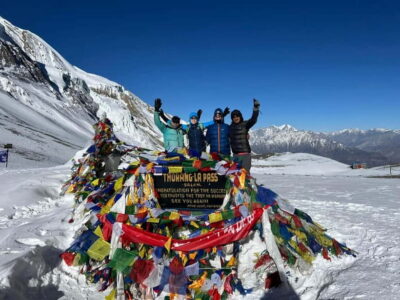
Browse the lists this tour appears in