
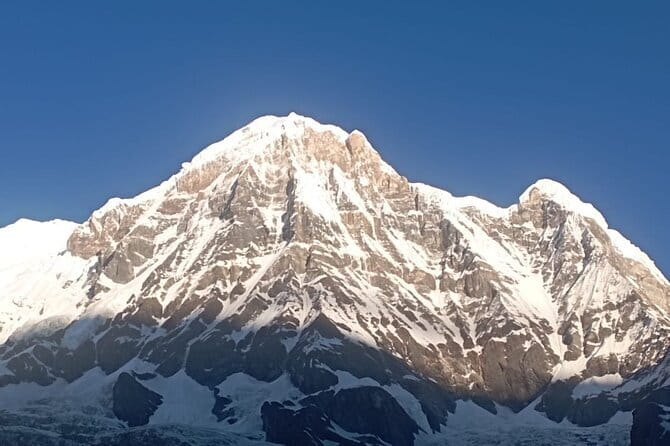
Reviewed · ANNAPURNA BASE CAMP TREKS
Annapurna Base Camp Trek
The Himalayas reward steady walkers. This 10-day Annapurna Base Camp trek combines a classic mountain route with Poon Hill sunrise, village trails, forest paths, and a close look at the Annapurna range. It is run as a private trip by Touch The Himalaya Treks and Expedition, with guides from the region.
I like the way the price includes permits, meals, guide and porter costs, airport transfers, and Kathmandu lodging. I also like the personal care built into the trip, with first-aid-trained guides and a team that has included Rishi, Roshan Pandey, Moti, and Madan Neupane. The main catch is the pace: reaching base camp and returning to Sinuwa in a short schedule makes this a physically demanding trek, not a gentle mountain holiday.
In This Review
- Key points to know before booking
- Why this Annapurna route works so well
- Kathmandu to Pokhara: a long first day
- Nayapul and Ulleri: the first real test
- Ghorepani and the Poon Hill sunrise
- Tadapani to Sinuwa through forest country
- Sinuwa to Deurali: gaining height carefully
- Deurali to Annapurna Base Camp
- Returning to Sinuwa and relaxing at Jhinu
- Pokhara to Kathmandu and the value of the package
- What to pack for this 10-day schedule
- Who should book this trek?
- Should you book the Annapurna Base Camp trek?
- FAQ
- Where does the Annapurna Base Camp trek start?
- How long is the trek?
- Is this a private tour?
- Is airport pickup included?
- What meals are included?
- Are trekking permits included?
- Is a guide provided?
- What fitness level is required?
- Can I cancel for a full refund?
Key points to know before booking
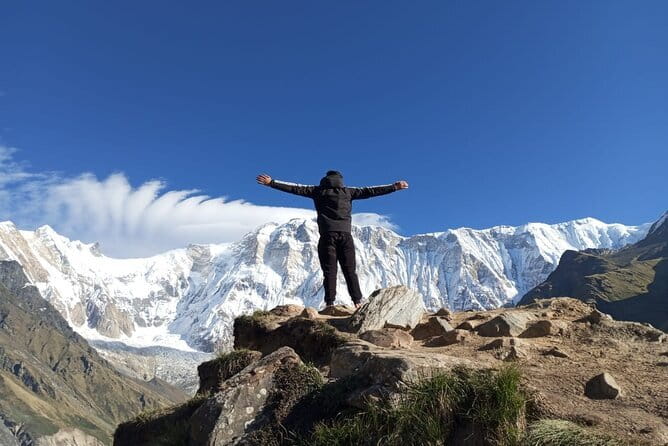
- Poon Hill comes before base camp: The sunrise stop adds a famous mountain view early in the trek, before you reach the higher valleys.
- The route begins in Pokhara: Your first day is mostly transport from Kathmandu, with a bus ride of about seven hours or an optional flight.
- The price covers most major costs: Meals, permits, guide and porter services, equipment, transport, and two Kathmandu hotel nights are included.
- It is a private trip: Only your own group takes part, which can make the walking pace and daily routine more personal.
- The 10-day plan moves quickly: The route includes Ulleri, Ghorepani, Tadapani, Sinuwa, Deurali, Annapurna Base Camp, Jhinu, Pokhara, and Kathmandu.
- You need moderate fitness: Long walking days, steep sections, and the high altitude require preparation, sensible pacing, and attention to your guide.
Why this Annapurna route works so well
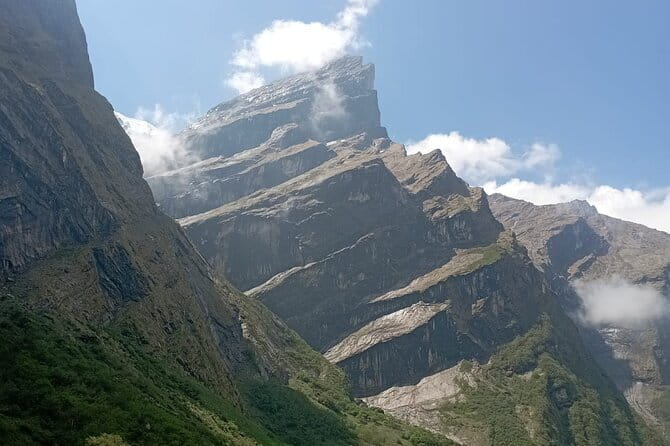
Annapurna Base Camp is a good choice if you want a serious Himalayan trek without committing to a very long expedition. The route passes through inhabited valleys, forest, mountain villages, and high camps rather than giving you mountain scenery only at the end.
The Poon Hill section is especially smart. You reach Ghorepani before dawn, climb for sunrise, then continue toward Tadapani. That gives you a major viewpoint near the start of the journey, so the trip still delivers memorable mountain views even if weather later affects the higher trail.
The private format matters. You are not tied to a large mixed group, and your guide can help manage walking breaks, meals, altitude concerns, and luggage transfers for your party. This is also useful for solo walkers. One woman who completed the trek alone described feeling safe because Madan was available to answer questions and guide Rishi took care of her during the route.
Still, the schedule is tight. The ascent from Deurali to Annapurna Base Camp takes around six to seven hours, followed by a six to seven hour return to Sinuwa the next day. You should be ready for full walking days, not just scenic strolls between tea houses.
More Annapurna Base Camp Treks:
- Annapurna base camp trek 5 Days
★ 5.0 · 252 reviews - Annapurna Base Camp Trek
★ 5.0 · 111 reviews - Kathmandu to Annapurna Base Camp (ABC) 5-Day Trek
★ 5.0 · 102 reviews
Kathmandu to Pokhara: a long first day
The trip begins at 6:15 am in Thamel, Kathmandu. Day one is mainly about reaching Pokhara, around 200 kilometers west of the capital.
By tourist bus, the journey takes roughly seven hours. The road follows the Trishuli River for much of the way, with views of Nepalese countryside and changing mountain scenery. A car or flight is also possible, but the exact choice should be confirmed when you book.
I would treat this day as a transfer day, not as part of your walking holiday. Road travel in Nepal can be tiring, so keep water, snacks, and a small day bag close by. The company includes airport pickup and drop-off, along with two nights of Kathmandu accommodation, one before and one after the trek. That removes several small but annoying logistics from your plate.
Pokhara is the practical base for the Annapurna region. You spend the night there before driving to the trailhead the next morning.
Nayapul and Ulleri: the first real test
After breakfast on day two, you drive for about an hour to Nayapul. From there, the walk toward Ulleri takes around five hours.
The route follows the Modi Khola River and passes through villages where daily life is closely tied to the trail. This is a useful introduction to the human side of the trek. You are not simply walking through empty wilderness. You pass homes, local businesses, and communities connected by footpaths.
Ulleri is also where the route begins to feel properly demanding. The itinerary describes a steady walk through villages and rising terrain, so expect your legs to work from the first walking day. The guide and porter team handle the larger loads, but you still need to carry your water, sun protection, charger, and personal essentials.
This is a good day to establish a rhythm. Walk slowly, drink often, and do not try to prove anything during the opening hours. You have several higher days ahead.
Ghorepani and the Poon Hill sunrise
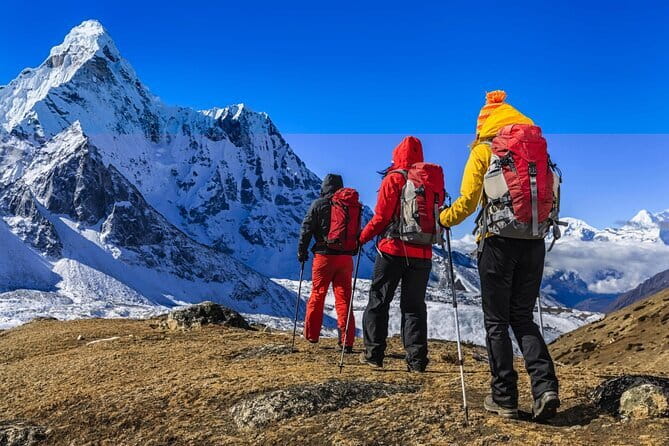
Day three takes you from Ulleri to Ghorepani in about six to seven hours. The trail passes through forest and scenic mountain country, with views opening toward the Annapurna range as you gain height.
Ghorepani is important for two reasons. It is a stop on the way to base camp, and it is the overnight base for the famous Poon Hill sunrise. The listed walking time is around five hours, though the fuller description gives six to seven hours. That difference is a reminder to treat all timings as estimates. Your pace, weather, trail conditions, and group size will affect the day.
On day four, you rise early for Poon Hill. The viewpoint is known for sunrise over the Annapurna and Dhaulagiri mountains. Afterward, you return to Ghorepani for breakfast before continuing toward Tadapani.
This early climb adds effort, but it is worth understanding the tradeoff. You are walking before breakfast and then completing another trek to Tadapani. If you are tired, the morning may feel long. If the skies are clear, though, it gives you one of the route’s most rewarding mountain views without waiting until base camp.
More Treks and Hikes:
- Everest Base Camp Trek – 14 Days
★ 5.0 · 1,499 reviews - Everest Base Camp Trekking
★ 5.0 · 485 reviews - Nagarkot Sunrise View and Day Hiking from Kathmandu
★ 5.0 · 471 reviews - Annapurna Circuit Trek with Tilicho Lake
★ 5.0 · 368 reviews
Tadapani to Sinuwa through forest country
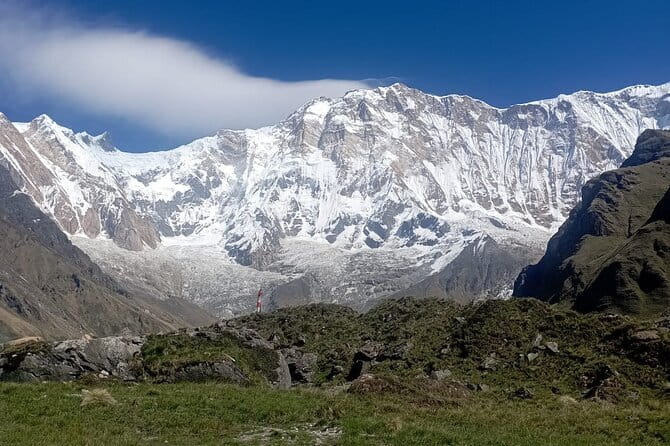
The walk from Tadapani to Sinuwa takes about six to seven hours. It descends through forest and passes several small villages, with views of the Annapurna range appearing through the trees.
This part of the trek changes the mood. After the excitement of Poon Hill, you spend more time on wooded trails and uneven ground. Descending can sound easy, but long downhill sections can be hard on knees and ankles. Good footwear matters, and trekking poles may be useful if you already know you prefer them.
Sinuwa is a key transition point. From here, the route turns toward the higher part of the Annapurna Sanctuary. The day is still within the ability of a reasonably fit walker, but the repeated climbs and descents begin to add up.
The private format helps here. Your guide can keep an eye on the slower members of your party and help decide when a rest is sensible. The company provides a basic first-aid kit, and its guides are described as trained in first aid and high-altitude care.
Sinuwa to Deurali: gaining height carefully
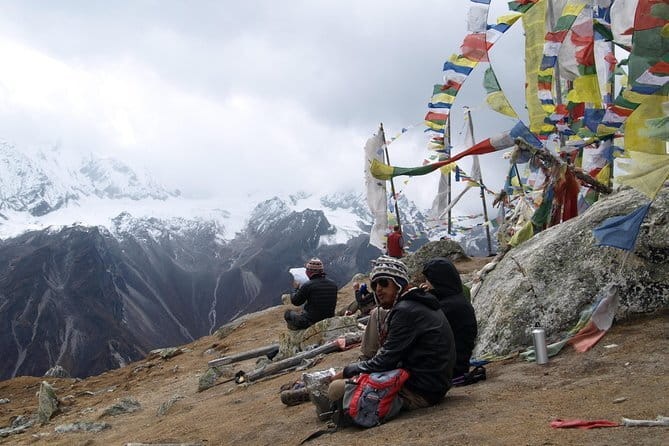
Day six leads from Sinuwa to Deurali in around five to six hours. The trail climbs through forest, and the surroundings become more rugged as you approach the upper valley.
The route description refers to crossing the Khumbu Glacier. Because the Annapurna trek is generally associated with the Annapurna region, I would ask the operator to clarify the exact crossing and trail section before departure. The important practical point is that this day takes you into rougher, higher terrain, where weather and altitude can affect the pace.
This is when you should pay close attention to your body. A headache, unusual tiredness, dizziness, or nausea should be reported to your guide rather than ignored. The guides are responsible for helping with acclimatization, but you must give them accurate information about how you feel.
The guide team has received particularly strong praise for care and organization. Roshan Pandey helped one group complete the demanding 10-day schedule, while Rishi was noted for looking after a solo trekker. These names do not guarantee who will lead your departure, so confirm your guide assignment if that matters to you.
Deurali to Annapurna Base Camp
The central day arrives on day seven. You walk from Deurali through Machapuchare Base Camp and onward to Annapurna Base Camp, with six to seven hours of walking expected.
The scenery becomes more open and dramatic as the trail rises. Machapuchare Base Camp is a major waypoint, not the final destination, and the route continues toward the amphitheater of peaks around Annapurna Base Camp.
This is likely to be the hardest day for many people. You are walking at higher altitude, the air is thinner, and the excitement of reaching the destination can encourage you to move too fast. Let your guide set a steady rhythm. The goal is not to arrive first. The goal is to arrive feeling well enough to enjoy the place.
At base camp, the reward is the mountain setting and the sense of reaching a clear goal after days of approach. The itinerary allows the next morning for views before the descent. Do not expect a luxury stop. The value is the location, the route, and the mountain experience, not elaborate facilities.
Returning to Sinuwa and relaxing at Jhinu

After taking in the base camp views, day eight reverses the route toward Sinuwa. The descent takes another six to seven hours.
The return is not a free extra day. You are covering serious distance, even though you are going downhill. Your knees may feel the strain, and the trail can seem longer because you have already reached the main objective. Keep your pace controlled and save energy for the following day.
On day nine, you walk from Sinuwa to Jhinu in roughly five to six hours. Jhinu is known for nearby natural hot springs, giving you a chance to relax after the high-altitude section. This is a well-chosen final walking stop because it adds a different kind of reward: warm water and recovery rather than another viewpoint.
In the afternoon, you drive back to Pokhara, a journey of about one to two hours. You spend the evening there before returning to Kathmandu. The combination of walking and driving makes this a full day, so do not count on a long spa afternoon.
Pokhara to Kathmandu and the value of the package
Day ten takes you back to Kathmandu by scenic drive in about seven to eight hours, or by a short flight. Once in the capital, you have free time for shopping or exploring before departure.
The $700 price deserves a close look. It includes airport transfers, two Kathmandu hotel nights, trekking permits and fees, three meals during the trek, a licensed guide, porters, transport, guide and porter accommodation, insurance, food, equipment, and a duffel bag. A trekking map and basic first-aid kit are also included.
That is a strong package if you want the main logistics handled. The price is not simply paying for a walking guide. It covers the support system that gets you to the trail, moves your main luggage, arranges permits, and brings you back to Kathmandu.
There is one point to clarify before paying. The inclusions say breakfast, lunch, and dinner are provided during the trek, while the practical notes also say you can buy meals at tea houses. Ask what meals are included at each stop and what drinks, snacks, or extra menu items cost. Carry light snacks and chocolate for long days, as advised by the operator.
Tips for guides and porters are not included. Plan for that extra cost and ask the company for current guidance on appropriate amounts.
What to pack for this 10-day schedule
Keep your personal load light. The operator supplies a duffel bag that is returned after the trek, and porters carry the main baggage. You still need a daypack with the items you cannot afford to lose or be without.
Useful items specifically noted for this trip include:
- Water bottles
- Sunglasses
- A phone or camera charger
- Light snacks and chocolate
- Personal clothing and trekking essentials
- Any medication you normally require
The listing does not give a full equipment checklist, so ask the company what gear is supplied beyond the duffel bag and basic first-aid kit. Do not assume that every item you need is included.
Who should book this trek?
I would recommend it to someone with moderate fitness who wants a private Himalayan route and is comfortable walking for five to seven hours on most trekking days. It suits first-time high-altitude trekkers who want professional support, provided they train beforehand and take the acclimatization advice seriously.
It also suits solo visitors who prefer not to walk alone. The company offers guides who speak English, Hindi, or Chinese, and its guide team is described as government licensed and first-aid trained.
I would hesitate if you dislike early mornings, long walking days, basic mountain accommodation, or changing transport plans. The 10-day schedule is efficient, but efficiency here means less spare time if you need an extra rest day.
The strongest praise for this company centers on its guides and porters. Madan Neupane is associated with careful arrangements, while guides such as Rishi and Roshan Pandey have been praised for kindness, organization, and helping people finish a tough schedule. A group that worked with Moti on another Nepal trek also highlighted his helpful manner, though your own guide may be different.
Should you book the Annapurna Base Camp trek?
Book it if you want a well-supported, private trek that packs Poon Hill and Annapurna Base Camp into 10 days. The package offers good value because many expensive and time-consuming arrangements are included, and the local guide support is a major strength.
Before booking, confirm the transport choice between Kathmandu and Pokhara, the exact meal arrangements, your guide’s name, the equipment supplied, and the plan for altitude management. If you are fit, prepared for demanding days, and happy with simple mountain lodging, this is a sensible way to reach Annapurna Base Camp without having to organize every permit, porter, and transfer yourself.
FAQ
Where does the Annapurna Base Camp trek start?
The meeting point is in Thamel, Kathmandu, Nepal. The stated start time is 6:15 am.
How long is the trek?
The full program lasts approximately 10 days, including transport between Kathmandu and Pokhara and the walking route to Annapurna Base Camp.
Is this a private tour?
Yes. Only your own group participates in the activity.
Is airport pickup included?
Yes. Airport pickup and drop-off are included, along with two nights of accommodation in Kathmandu before and after the trek.
What meals are included?
Breakfast, lunch, and dinner during the trek are listed as included. The practical notes also say meals can be bought at tea houses, so confirm the exact meal arrangements before departure.
Are trekking permits included?
Yes. Necessary trekking permits and fees are included in the price.
Is a guide provided?
Yes. The package includes an English, Hindi, or Chinese-speaking government-licensed guide who is trained in first aid.
What fitness level is required?
A moderate level of physical fitness is required. The trek includes walking days of about five to seven hours, with higher and more demanding sections near Annapurna Base Camp.
Can I cancel for a full refund?
You can receive a full refund if you cancel at least three full days before the local start time. Cancellations or changes made less than three full days before the start are not accepted for a refund.
Just added around Kathmandu
- Private Shopping Tour in Kathmandu★ 5.0 · 3 reviews
- Nagarkot Sunrise With 7 UNESCO World Heritage Private Tour★ 5.0 · 3 reviews
- Kathmandu: Nightlife and Pub Crawl Tour★ 5.0 · 3 reviews
- Mount Everest Scenic Flight 50 Minutes★ 5.0 · 3 reviews
- Momo Cooking Class -The Art Of Making MoMo with Home Chef★ 5.0 · 3 reviews
- Kathmandu: Nagarkot, Bhaktapur, Doleswor & Sanga Statue Tour★ 5.0 · 3 reviews
- Makalu Base Camp Trek★ 5.0 · 3 reviews
- Kathmandu: Momo Making Class with a Local Chef★ 5.0 · 3 reviews
Annapurna Base Camp Treks, compared.



Kathmandu to Annapurna Base Camp (ABC) 5-Day Trek
Read our review →

Browse the lists this tour appears in