
Reviewed · EVEREST BASE CAMP TREKS
Everest Base Camp trek- 11 days
The mountains begin before the trail does. This 11-day Everest Base Camp trek links a thrilling flight to Lukla with Sherpa villages, high monasteries, and sunrise from Kala Patthar, giving you a compact route into the Khumbu region. At $1,699 per person, Mount Face Nepal includes flights, meals, guides, porters, permits, and trekking lodges, which makes the package easy to understand.
I especially like the full-board setup during the trek and the fact that a porter is normally arranged for every two clients. I also like the private format, since only your group takes part. The main drawback is the pace: reaching Everest Base Camp and Kala Patthar in this 11-day schedule requires a moderate level of fitness, and altitude can make even ordinary walking feel tough.
This is not a sightseeing holiday with a little walking added. You spend many days on foot, sleep in simple mountain accommodation, and climb to more than 5,500 meters. Still, the plan includes an acclimatization day in Namche Bazaar, and the route brings you to the places most first-time Everest trekkers hope to see.
In This Review
- Key things to know before booking
- What the $1,699 price really covers
- Day 1: Kathmandu to Lukla and Phakding
- Day 2: Phakding to Namche Bazaar
- Day 3: Acclimatization in Namche Bazaar
- Day 4: Namche to Tengboche at 3,890 meters
- Day 5: Tengboche to Dingboche
- Day 6: Dingboche to Lobuche at 4,910 meters
- Day 7: Lobuche to Gorakshep and Everest Base Camp
- Day 8: Kala Patthar sunrise and descent to Pheriche
- Days 9 and 10: Pheriche back to Namche and Lukla
- Day 11: Lukla to Kathmandu
- Accommodation, food, and porter support
- Who will enjoy this Everest trek
- What the praise tells you about the operator
- Should you book the 11-day route?
- FAQ
- Where does the Everest Base Camp trek start?
- How long is the trek?
- Is airport pickup included?
- Are meals included during the trek?
- Is accommodation included?
- Is a guide and porter provided?
- Is travel insurance included?
- Can I cancel for a full refund?
Key things to know before booking
- Lukla is the dramatic starting point: The Kathmandu to Lukla flight leads directly into the Everest trekking region, followed by a hike to Phakding.
- Namche is more than a rest stop: This Sherpa trading town is the main acclimatization base and a useful place to adjust to altitude.
- The highest viewpoint is Kala Patthar: At about 5,545 meters, it offers the planned sunrise view toward Everest and the surrounding peaks.
- The package covers major trek costs: Flights, meals, accommodation, guide, porter, permits, TIMS card, insurance for staff, and local taxes are included.
- The return schedule is demanding: Day 10 combines Namche, Phakding, and Lukla, so you should be prepared for a long walking day.
- Guide support receives the strongest praise: Dipu, also written as Deepu in some comments, is singled out for patient help, communication, and good company on the trail.
What the $1,699 price really covers
The price is not just a guiding fee. It includes the Kathmandu to Lukla and return airfare, airport pickup and drop-off for the Lukla flights, trekking accommodation, breakfast, lunch, and dinner during the walking portion of the trip. A government-licensed guide and porter are also included.
That matters in the Everest region, where small costs add up quickly. Your package also covers trekking permits, the TIMS card, first-aid equipment, guide and porter wages, their insurance, food, lodging, transportation, local taxes, and service charges. A farewell dinner before departure is included as well.
The value is strongest if you want one company handling the main moving parts. Several written comments praise the airport transfers, advance booking of lodges and flights, and the way the organization lets you focus on walking rather than daily arrangements. Dipu receives particular praise for staying in touch and helping with the practical side of the trek.
You still need to budget for several important items. Your Kathmandu hotel, lunches and dinners in Kathmandu, international flights, Nepal entry visa, personal insurance, drinks, laundry, shopping, tips, and personal trekking equipment are not included. Hot drinks and soft drinks are also extra during the trek.
There is one point to clarify before paying. The package says costs can be recalculated if the number of trekking days changes, and the company normally provides one porter for two clients. Ask exactly how much baggage your porter will carry and what happens if weather or flight delays alter the schedule.
More Everest Base Camp Treks:
- Everest Base Camp Trek – 14 Days
★ 5.0 · 1,499 reviews - Everest Base Camp Trekking
★ 5.0 · 485 reviews - Everest Base Camp Trekking – 13 Day
★ 5.0 · 365 reviews
Day 1: Kathmandu to Lukla and Phakding
The trip begins at 7:15 a.m. from Thamel in Kathmandu. Pickup and drop-off at the local airport are included, which is useful when an early start and trekking gear make city transport less appealing.
The flight to Lukla is one of the memorable parts of the route. You trade Kathmandu for a small mountain airfield at roughly 2,850 meters, then start walking toward Phakding at about 2,660 meters. The first day is relatively short compared with the days ahead, giving you a chance to find your rhythm.
The attraction here is immediate change. You leave the capital behind and quickly reach a trail environment shaped by mountain villages, suspension bridges, and high peaks. The supplied schedule does not give a walking time, so you should treat the first day as an introduction rather than assume it will feel effortless.
Day 2: Phakding to Namche Bazaar
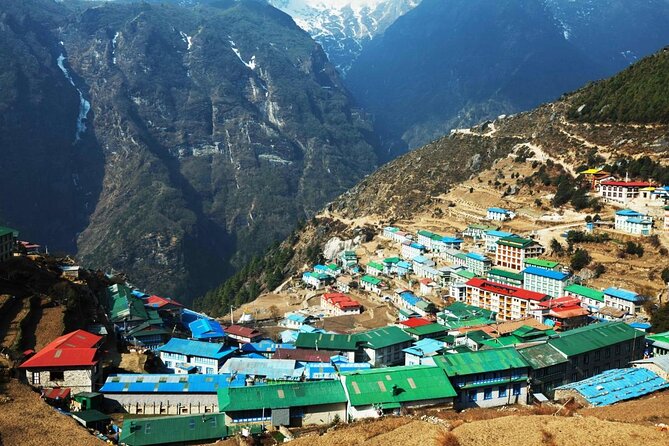
Day two takes you from Phakding to Namche Bazaar, the main gateway to Everest Base Camp. Namche sits at about 3,435 meters and is a major turning point in the trek. The trail becomes more serious, and altitude begins to matter.
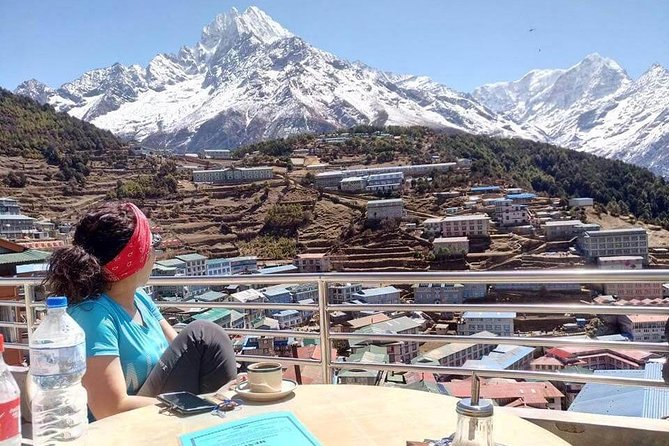
Namche is also one of the best places to see how the local economy works. It is a Sherpa home town and a trading center for people heading farther into the Khumbu. You may find monasteries, local homes, shops, and mountain views gathered in one compact hillside settlement.
The important practical point is that you do not simply pass through Namche and keep climbing. The next day is reserved for acclimatization. That pause is one of the better features of this plan, because it gives your body time to adjust before the route rises higher.
Day 3: Acclimatization in Namche Bazaar
An acclimatization day is not a wasted day. It is what makes the higher part of the trek more manageable. The schedule keeps you at around 3,435 meters rather than pushing you straight toward Tengboche.
The supplied plan does not list a fixed excursion for this day, so ask your guide how it will be used. You might find that the day combines rest with a short walk for views and adjustment. It is also a good time to check your clothing, water, snacks, and any personal equipment before the trail gets colder and steeper.
I like this pause because the rest of the itinerary is tight. You have only 11 days, including flights, so there is little spare time if your body needs a slower pace. The moderate fitness requirement should be taken seriously, especially if you have not trekked at altitude before.
More Treks and Hikes:
- Nagarkot Sunrise View and Day Hiking from Kathmandu
★ 5.0 · 471 reviews - Annapurna Circuit Trek with Tilicho Lake
★ 5.0 · 368 reviews - Everest Base Camp Trek -14 Days
★ 5.0 · 321 reviews - Annapurna base camp trek 5 Days
★ 5.0 · 252 reviews
Day 4: Namche to Tengboche at 3,890 meters
From Namche, the trail rises to Tengboche, a mountain settlement known for its monastery. The day brings you closer to the high peaks and gives you a first strong taste of the Khumbu’s religious culture.
Tengboche Monastery is one of the cultural highlights named in the program. Its setting is as important as the building itself. You are not visiting a city museum with exhibits arranged for tourists. You are reaching a working highland community where monasteries remain part of local life.
This section is also known for views of Everest, Lhotse, Nuptse, Ama Dablam, and Thamserku. Weather controls how much you see, so keep your expectations flexible. Clear skies can make this day a major visual reward, while cloud can turn it into a quieter walking day.
Day 5: Tengboche to Dingboche
The route continues upward to Dingboche at approximately 4,400 meters. You are now well above the altitude of Namche, and the air may feel noticeably thinner. The walk is no longer only about covering distance. Every climb and descent becomes part of your altitude management.
Dingboche is a useful staging point before the route heads toward Lobuche. The village gives you a place to eat, sleep, and prepare for the higher section. Food and accommodation are included here, though drinks and personal extras are not.
This is where the value of having a guide becomes clear. A guide can help you judge how hard to push, when to rest, and how to keep the group moving without turning the trek into a race. The strongest comments about Dipu describe him as supportive, communicative, and good company, which matters on long days when morale can drop.
Day 6: Dingboche to Lobuche at 4,910 meters
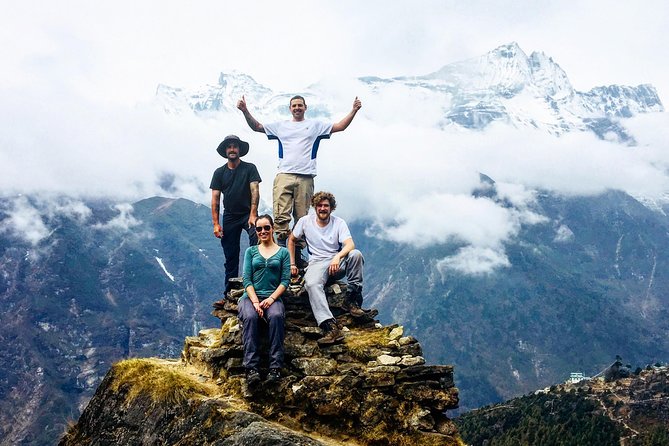
The sixth day takes you to Lobuche, nearly 4,910 meters above sea level. At this point, the trek has moved beyond village wandering and into a high-altitude route where cold, fatigue, and thin air shape the day.
The benefit of this schedule is that the climb is spread across several days. The drawback is that there are still no extra days built in for illness, bad weather, or delayed flights. You should arrive in Nepal with enough fitness to walk for multiple consecutive days, not just complete one long hike.
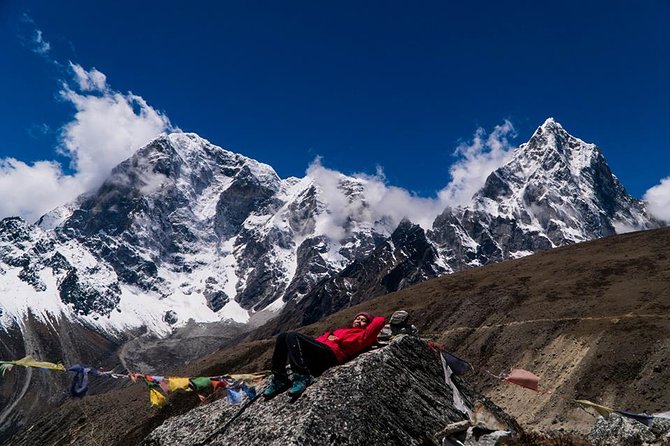
The route’s appeal comes from its setting near the Khumbu Icefall and the famous mountain group around Everest. The program promises views of the icefall and major peaks, but mountain weather can change quickly. Your guide can help you make the most of clear periods, especially in the morning.
Day 7: Lobuche to Gorakshep and Everest Base Camp
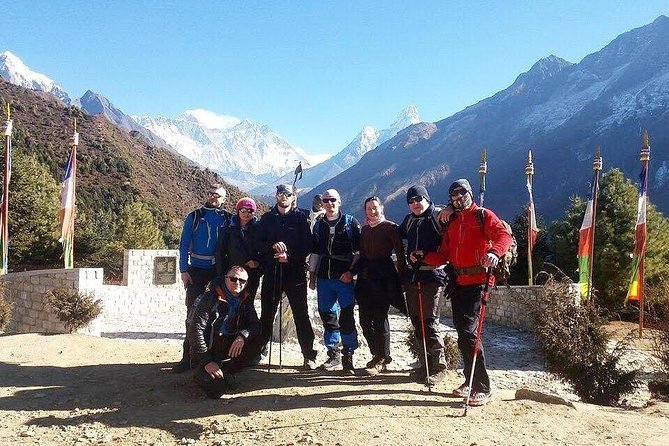
Day seven is one of the central days of the trek. You walk from Lobuche to Gorakshep, continue to Everest Base Camp at about 5,380 meters, then return to Gorakshep at roughly 5,180 meters for the night.
This is a demanding out-and-back day. Reaching Base Camp is a major personal milestone, but the destination is not a high summit and does not offer a single grand viewing platform. The appeal lies in being at the foot of the Everest climbing route, close to the Khumbu Icefall, surrounded by a place known across the world.
The return to Gorakshep is important. You do not finish at Base Camp and descend immediately to a lower village. You must walk back at altitude after already spending much of the day on your feet. Pack only what you need for the outing and keep your water and warm layers easy to reach.
Day 8: Kala Patthar sunrise and descent to Pheriche
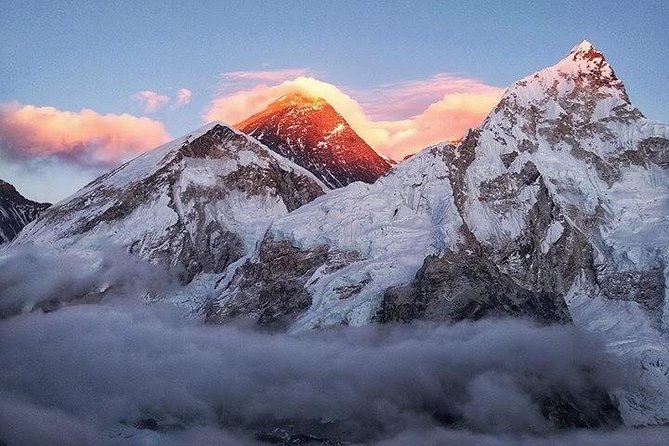
The next morning begins with the trek’s highest point, Kala Patthar at about 5,545 meters. The goal is an early sunrise view over snow-covered Everest and neighboring peaks. This is the viewpoint that gives you the clearest planned mountain panorama in the itinerary.
The climb is short in distance compared with a full trekking day, but altitude makes it strenuous. You should not judge the effort by the map alone. The reward is a broad view toward Everest, Lhotse, Nuptse, Ama Dablam, and other Himalayan peaks.
After Kala Patthar, you descend to Pheriche at about 4,320 meters. That drop in altitude is welcome, and the lower sleeping point should feel easier than Gorakshep. Still, the morning has already used plenty of energy, so the day remains demanding rather than relaxing.
Days 9 and 10: Pheriche back to Namche and Lukla
Day nine takes you from Pheriche to Namche. You retrace part of the route, but walking downhill and through familiar villages does not mean the day is easy. Legs can be tired after Base Camp and Kala Patthar, and descents can be hard on knees.
Day ten is the schedule’s most ambitious return day. It lists Namche to Phakding and then onward to Lukla at about 2,835 meters. That is a lot of trail in one day, so ask the company to explain the expected walking time and how the day is handled if the group is tired.
The benefit is a quick finish and a final night near the airport. The risk is limited flexibility. If you prefer a gentler descent, ask before booking if the return can be extended, keeping in mind that the company says costs are recalculated when trekking days change.
Day 11: Lukla to Kathmandu
The final day is the return flight from Lukla to Kathmandu. Ground transportation back to Kathmandu is included, as is the airport pickup and drop-off connected with the Lukla flights.
Because the itinerary provides no spare day, flight disruption is an important question to ask before you go. The supplied information confirms the flight and ground transport arrangements, but it does not promise a weather backup day or describe a specific delay plan. Travel insurance is not included, so choose a policy that fits your own concerns about trekking and flight changes.
Accommodation, food, and porter support
The trek includes the best available accommodation during the walking period. The exact lodges are not named, so you should expect the standard to vary by village and availability. The package does not promise luxury, but it does remove the need for you to arrange a bed each night.
Breakfast, lunch, and dinner are included during the trek. That is a practical benefit in a remote region, where buying each meal separately can make daily budgeting less predictable. Drinks, including hot, soft, cold, and alcoholic options, cost extra.
A porter normally carries baggage for two clients. You should pack with that arrangement in mind and bring only what is necessary. Tips are not included, so plan for a separate thank-you to the guide and porter if their help makes the trek safer and easier.
Who will enjoy this Everest trek
This tour fits you best if you want the classic Everest Base Camp route without arranging every permit, flight, lodge, meal, and porter yourself. It also suits a private group that wants the trip limited to its own participants.
You should be comfortable with a moderate fitness requirement and several successive walking days. The itinerary reaches 5,545 meters, so physical preparation alone does not guarantee an easy time at altitude. The built-in Namche acclimatization day helps, but it cannot remove the risks and discomfort of high-altitude trekking.
The tour is less suited to someone seeking a relaxed holiday, high-end lodging, or a generous buffer for delays. It is also not the right choice if you want every cost included, since Kathmandu lodging, insurance, visa fees, drinks, equipment, tips, and personal expenses remain yours.
What the praise tells you about the operator
The strongest positive pattern is organization. Airport pickup, airport drop-off, advance flight and lodge arrangements, and communication before and during the trek are repeatedly praised. That matters on a route where a missed connection or unclear lodging plan can create real stress.
Dipu, also spelled Deepu, receives especially warm attention. The comments describe him as helpful during the hike, good company, and attentive to questions and problems. That kind of personal support can make a difficult trip feel more manageable.
The praise is enthusiastic, but the sample is small, with 17 ratings and a 100 percent recommendation figure. I would treat that as encouraging rather than proof that every departure will be identical. Ask direct questions about guide assignment, porter baggage limits, flight delays, and what happens if you need extra trekking days.
Should you book the 11-day route?
Book it if you want a well-organized classic Everest Base Camp trek with the major logistical pieces bundled into one price. The combination of Lukla flights, full-board meals, guide and porter support, permits, private participation, Namche acclimatization, Everest Base Camp, and Kala Patthar gives you a strong package for $1,699.
Think twice if you need a slower pace or extra days for bad weather and altitude problems. Before booking, confirm the return-day walking plan, baggage allowance, accommodation standard, and arrangements for flight disruption. If those answers suit you, Mount Face Nepal offers a practical way to reach the Khumbu’s best-known sights without making you manage every detail alone.
FAQ
Where does the Everest Base Camp trek start?
The meeting point is in Thamel, Kathmandu, Nepal. The stated start time is 7:15 a.m.
How long is the trek?
The experience lasts approximately 11 days, including the flights between Kathmandu and Lukla.
Is airport pickup included?
Yes. Pickup and drop-off at the local airport for the Lukla flight are included, along with ground transportation when returning to Kathmandu.
Are meals included during the trek?
Yes. Breakfast, lunch, and dinner are included during the trekking period. Lunch and dinner in Kathmandu are not included.
Is accommodation included?
Yes. Best available accommodation during the trek is included. A hotel in Kathmandu is not included.
Is a guide and porter provided?
Yes. The package includes a government-licensed guide and a porter. The normal arrangement is one porter for two clients.
Is travel insurance included?
No. Personal travel insurance is not included. Insurance listed in the package relates to guides and porters.
Can I cancel for a full refund?
You can cancel at least 24 hours before the experience start time for a full refund. Cancellations or changes made less than 24 hours before the start time are not accepted for a refund.
Just added around Kathmandu
- Nagarkot Sunrise With 7 UNESCO World Heritage Private Tour★ 5.0 · 3 reviews
- Private Shopping Tour in Kathmandu★ 5.0 · 3 reviews
- Mount Everest Scenic Flight 50 Minutes★ 5.0 · 3 reviews
- Kathmandu: Nightlife and Pub Crawl Tour★ 5.0 · 3 reviews
- Kathmandu: Nagarkot, Bhaktapur, Doleswor & Sanga Statue Tour★ 5.0 · 3 reviews
- Momo Cooking Class -The Art Of Making MoMo with Home Chef★ 5.0 · 3 reviews
- Everest Experience Trek 6 Day Hiking Adventure★ 5.0 · 3 reviews
- Kathmandu: Momo Making Class with a Local Chef★ 5.0 · 3 reviews
Everest Base Camp Treks, compared.






Everest Base Camp Trek with Helicopter Return from Gorakshep to Lukla
Read our review →Browse the lists this tour appears in