
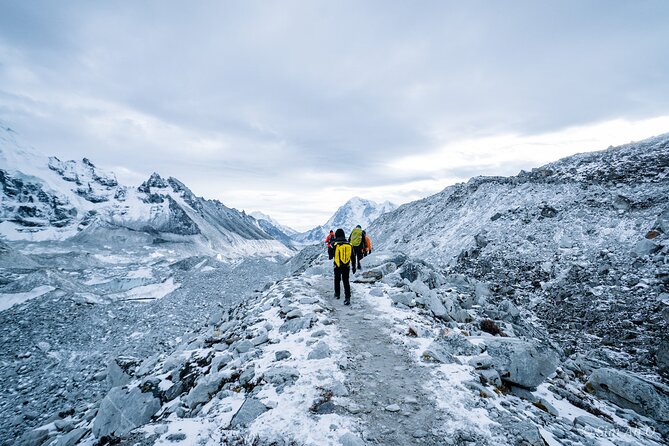
Reviewed · EVEREST BASE CAMP TREKS
Everest Base Camp Trek 12 Days – Best Himalayan Adventure
Everest rewards steady steps. This 12-day private trek takes you from Kathmandu through Lukla, Namche Bazaar, Tengboche, Dingboche, Gorak Shep, and finally Everest Base Camp, with a sunrise viewpoint at Kala Patthar. I like the local Sherpa guidance and the fact that permits, flights, tea-house lodging, staff support, and a first-aid kit are arranged together. I also like the small private format, although you need at least two people to book.
The main consideration is physical demand. You will walk at high altitude, sleep in basic tea houses, and carry some personal gear even if you use a porter. The package details also need a careful check before payment: one section says meals are included, while the detailed exclusions say meals during the trek are not included.
In This Review
- Key points at a glance
- Why this Everest trek is worth considering
- Day 1: Kathmandu and the practical start
- Days 2 and 3: Flying to Lukla and walking toward Namche
- Tengboche: Monasteries, forests, and Ama Dablam
- Dingboche and the value of acclimatization
- Gorak Shep and the walk to Everest Base Camp
- The tea-house stay: practical comfort, not luxury
- Porter support and what you still carry
- What the $1,439 price really covers
- Who should book this trek
- Booking, cancellation, and final checks
- Should you book the Everest Base Camp trek?
- FAQ
- How long is the Everest Base Camp trek?
- Where does the tour start and end?
- Is a minimum number of people required?
- What is the maximum group size?
- Are domestic flights included?
- Is tea-house accommodation included?
- Is a porter included?
- Are meals included?
- Do I need travel insurance?
- What fitness level is needed?
- Can I request vegetarian food?
- What is the cancellation policy?
Key points at a glance
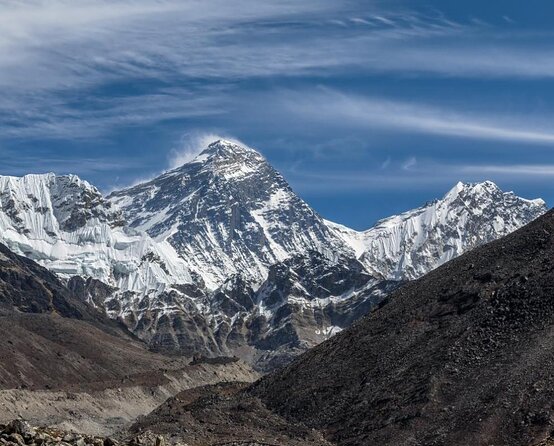
- Kala Patthar and Everest Base Camp: The route includes both the famous base camp and a panoramic viewpoint for Everest, Lhotse, Nuptse, Ama Dablam, and Pumori.
- Sherpa-led support: An experienced Sherpa guide leads the trek, with staff insurance, medication, equipment, and a first-aid kit included.
- Flights to Lukla: Return domestic flights are arranged, though flights may operate from Ramechhap Airport rather than Kathmandu.
- Tea-house trekking: You receive twin-sharing tea-house accommodation for 11 nights, offering a practical way to sleep in the Khumbu region.
- Porter arrangement: One porter is provided for every two hikers according to the inclusions, so pack carefully and confirm the luggage allowance.
- Small private group: Bookings require at least two people, while the stated maximum is 10 or 15 depending on the section of the tour details.
Why this Everest trek is worth considering
At $1,439 per person, this trek brings together several costly and awkward pieces of a Himalayan trip: domestic flights, permits, a private guide, accommodation, porter support, and staff safety provisions. That can be good value if you want one company handling the moving parts rather than arranging each service separately.
I especially like the local focus. This is not simply a march toward a famous sign. The route passes through Sherpa villages, suspension bridges, alpine forests, glacial valleys, and mountain settlements where the pace of life changes with altitude.
The private format should also make the trip feel more personal. Your guide can help monitor how you are coping, answer questions about local life, and adjust the day’s rhythm within the fixed route. The minimum of two people makes this unsuitable for a solo booking, but it works well for a pair of friends, siblings, or partners.
There are limits. This is a demanding trek, not a sightseeing holiday with a few walks added. The package is designed for people with a moderate level of physical fitness, and high altitude can make ordinary uphill walking feel surprisingly hard.
More Everest Base Camp Treks:
- Everest Base Camp Trek – 14 Days
★ 5.0 · 1,499 reviews - Everest Base Camp Trekking
★ 5.0 · 485 reviews - Everest Base Camp Trekking – 13 Day
★ 5.0 · 365 reviews
Day 1: Kathmandu and the practical start
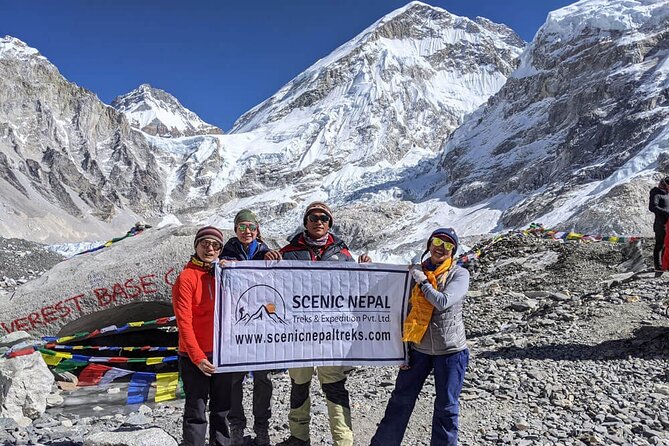
The meeting point is Scenic Nepal Treks and Expedition Pvt. Ltd. on Bhagwati Marg in Kathmandu. The tour begins and ends there, with pickup offered.
This first stage is important because it sets up the trek. Passport name, passport number, expiry date, and country are required for every participant at booking. You should also use this time to check exactly what is included, especially meals, porter service, flight departure point, and baggage arrangements.
The flight may leave from Ramechhap Airport rather than Kathmandu. That detail matters. Ask the company how the transfer is handled and how much time you should allow, particularly if you are arranging your own accommodation or international flights around the trek.
Days 2 and 3: Flying to Lukla and walking toward Namche
Lukla is the mountain gateway for this route. The return domestic flight is included, but schedules in the Himalayas can be affected by local conditions, so leave room in your wider Nepal plans if possible. The information provided does not promise a particular flight time or weather policy, so confirm those details before you go.
From Lukla, the trail leads through the Khumbu region toward Namche Bazaar. This is where the trek begins to feel like a true Himalayan journey. You walk through villages, cross suspension bridges, and move from lower forested areas toward higher mountain country.
Namche Bazaar is one of the most important stops on the route. It is a major Sherpa settlement and a natural place to pause before gaining more altitude. The schedule includes acclimatization days, which I consider one of the strongest safety features of the trip.
Do not treat an acclimatization day as wasted time. Your body needs a chance to adjust, and a slower day can make the later stages more manageable. The schedule description does not give exact walking times or the precise activity for each acclimatization day, so ask for the day-by-day plan before departure.
Tengboche: Monasteries, forests, and Ama Dablam
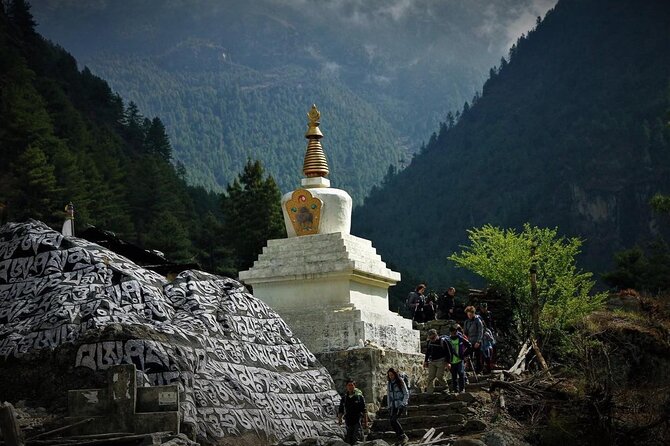
The route continues to Tengboche, a memorable mountain stop known for its Sherpa setting and views. The trail passes through alpine forest and opens toward striking peaks, including Ama Dablam.
This section gives you a useful change of scenery. Earlier walking can feel greener and more sheltered, while higher sections become more open and exposed. The path itself is part of the appeal, but it is also where you begin to notice the physical cost of altitude.
Your Sherpa guide is particularly valuable here. A good guide does more than lead from the front. The guide can help you keep a sensible pace, notice signs that you are struggling, and explain the villages and customs along the way. Several named guides have received strong praise from past clients, including Shankar, Binod, Ramjee, Santosh, and Bi. Guide assignments may vary, so confirm who will lead your group.
More Treks and Hikes:
- Nagarkot Sunrise View and Day Hiking from Kathmandu
★ 5.0 · 471 reviews - Annapurna Circuit Trek with Tilicho Lake
★ 5.0 · 368 reviews - Everest Base Camp Trek -14 Days
★ 5.0 · 321 reviews - Annapurna base camp trek 5 Days
★ 5.0 · 252 reviews
Dingboche and the value of acclimatization
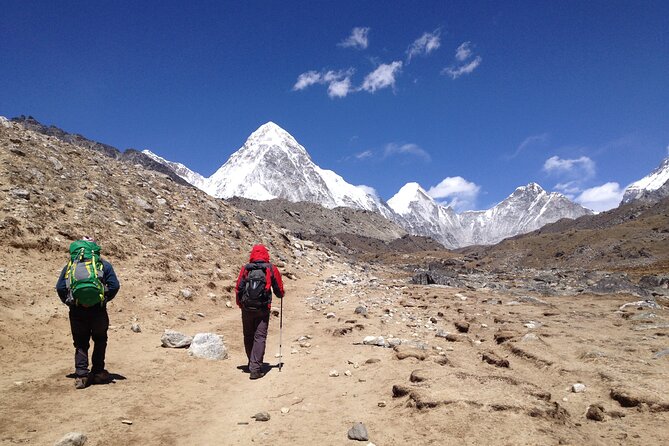
Dingboche is another key altitude stop before the trek moves toward the upper Khumbu. The settlement is surrounded by open mountain scenery, and the air feels noticeably thinner than it does in Kathmandu or Lukla.
This is the point where preparation matters. You will need warm clothing, a waterproof jacket, thermal underwear, gloves, a hat, sturdy trekking boots, and a down jacket rated to at least minus 10 degrees Celsius depending on the season and conditions. Bring spare boot laces. A broken lace is a small problem at home and a nuisance on a remote trail.
The company provides a sleeping bag and silk liner, plus a duffel bag for the trek. You should still bring a daypack for items you need while walking. The packing list also recommends water purification tablets, a water bottle, sunblock, lip protection, polarized sunglasses, toiletries, toilet paper, earplugs, and a headlamp or torch.
The inclusion of staff medication, equipment, and a first-aid kit is reassuring, but it does not replace personal insurance or your own medical supplies. Personal travel and trekking insurance is not included. Make sure your policy covers high-altitude trekking and emergency arrangements before setting out.
Gorak Shep and the walk to Everest Base Camp
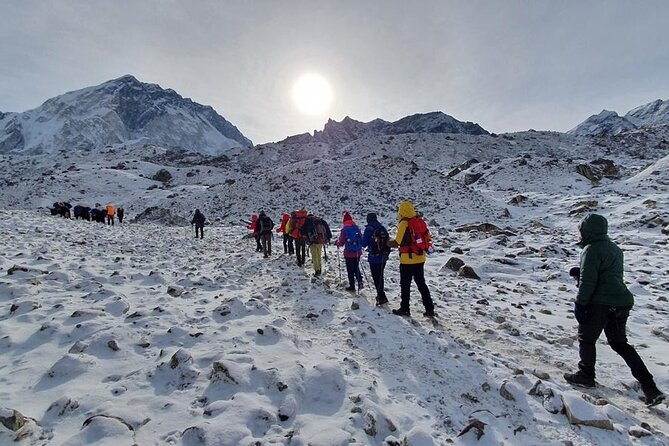
Gorak Shep is the last major stopping point named in the route details before Everest Base Camp and Kala Patthar. At this altitude, the goal is not speed. Every step can feel deliberate, and the cold can become a serious factor.
The walk to Everest Base Camp is the emotional high point for many people. You reach the famous base camp area at 5,364 meters, surrounded by glacial terrain and giant peaks. Mount Everest is the headline, but the wider view includes Lhotse, Nuptse, Ama Dablam, and Pumori.
One useful point to understand before you go: Everest Base Camp itself is not always the best place for a broad view of Everest. That is why Kala Patthar matters. The itinerary includes this viewpoint, where the panorama is expected to be one of the most rewarding parts of the trek.
The provided trip details do not state the exact time of the Kala Patthar walk or whether sunrise is guaranteed. The experience description highlights sunrise there, so ask the operator how the day is arranged and what happens if weather affects the view.
Snow and weather can change the upper trail quickly. One account describes snowstorms around Lobuche and a delayed approach before the group reached base camp. That is a useful reminder to respect the guide’s judgment. Reaching the goal matters, but returning safely matters more.
The tea-house stay: practical comfort, not luxury
You receive twin-sharing tea-house accommodation for 11 nights. Tea houses are a practical way to travel through the region because they provide a bed and a place to rest without requiring full camping equipment.
Do not expect hotel standards. The information does not promise private rooms, heating, attached bathrooms, or hot showers at every stop. Twin sharing means you should be comfortable sharing a room with your companion or another assigned participant.
The company provides a sleeping bag and liner, which helps reduce the amount of bulky equipment you need to carry. Still, pack warm layers, quick-drying shirts, wool-blend socks, liner socks, sandals or running shoes for use after walking, and earplugs.
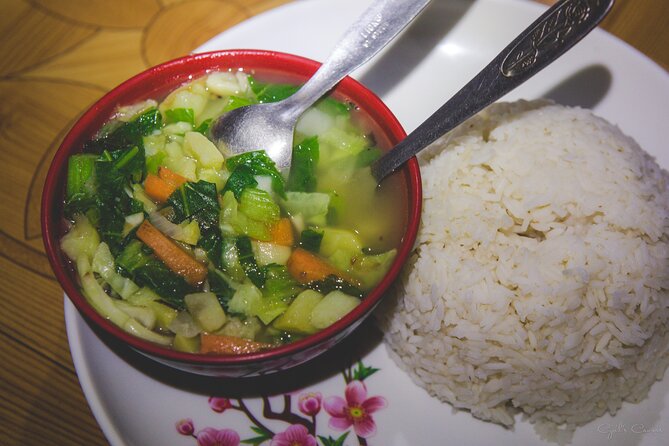
Meals require special attention. The overview says meals are included, but the detailed exclusions state that personal expenses and meals during the trek are not included. Treat this as an unresolved package detail and get written confirmation before booking. Vegetarian food is available if requested in advance.
Porter support and what you still carry
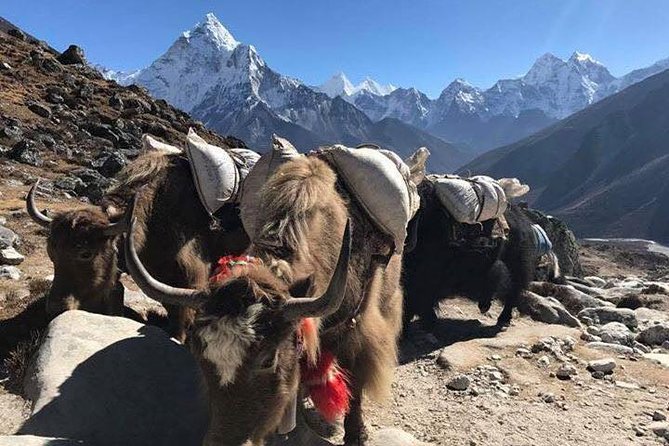
The detailed inclusions say one porter is provided for every two hikers. The overview describes porter use as an option, so this is another point to clarify with the operator.
A porter can carry your larger duffel, but you still need a daypack with water, warm layers, sun protection, personal medication, and anything needed during the day. Keep your load sensible. The packing list includes a backpack, duffel bag, locks for bags, and personal trekking equipment.
Porter support is useful, but it should not become an excuse to overpack. Every extra item creates work for someone else. Take only what you will genuinely use, and ask how much luggage the porter arrangement covers.
What the $1,439 price really covers
The price is strongest when you value organization and local support. It includes a highly experienced Sherpa trekking guide, return domestic flights, trekking permits, staff insurance, medication and equipment, a first-aid kit, twin-sharing tea-house accommodation, and porter support as specified.
Those inclusions reduce the number of separate bookings you need to make. They also provide a local point of contact if flight plans or trail conditions change.
The price does not cover international airfare, Nepal entry visa, personal insurance, personal trekking equipment, tips, gratuities, or, according to the detailed exclusions, meals during the trek. Your personal spending will therefore be higher than the headline price.
I would ask for a written cost sheet covering meals, airport transfers, porter baggage limits, flight departure from Ramechhap, and any extra accommodation before or after the trek. A low headline price is only useful when you know what it leaves out.
Who should book this trek
I would recommend this trip to a fit pair or small group that wants a private route with local leadership and organized logistics. It suits people who can handle long days of walking, basic accommodation, cold conditions, and a less predictable mountain schedule.
It may also work for fit beginners. One past client described completing the trek as a first hiking experience, with the guide and porter providing strong support. That does not make the route easy, but it does show why an attentive crew can matter.
I would hesitate to recommend it to anyone seeking comfort, flexible sightseeing, or a gentle introduction to Nepal. You need patience, fitness, proper equipment, and a willingness to accept that weather may affect flights or the upper trail.
The stated capacity is inconsistent: one section gives a maximum of 15 people, while another says the activity has a maximum of 10. Ask for the confirmed group size. The smaller the group, the more closely the guide can usually focus on individual needs.
Booking, cancellation, and final checks
Confirmation is provided at booking, and free cancellation is available up to 24 hours before the experience start time for a full refund. Cancellations or changes made less than 24 hours before the start are not accepted under the stated policy.
Service animals are allowed, vegetarian food can be requested, and the meeting point is near public transportation. These are useful details, but the mountain conditions remain the main practical issue.
Before paying, confirm four things in writing:
- Whether meals are included
- Whether a porter is included automatically
- Whether the maximum group size is 10 or 15
- How transport to Ramechhap Airport is arranged if your flight leaves there
Should you book the Everest Base Camp trek?
I would book this trek if you want a guided, locally operated route with a private format, organized flights, permits, tea-house accommodation, and strong Sherpa support. The most praised qualities are the care from the guides and crew, smooth organization, and the sense of being well looked after during a hard journey.
I would not book it without clarifying the conflicting meal and porter information. Once those points are settled, the package offers a sensible way to approach Everest Base Camp without arranging every permit, flight, guide, and lodge yourself.
Go for it if your priority is the walking, the mountain views, and the human side of the Khumbu. Just pack carefully, train honestly, insure yourself properly, and let the guide set the pace.
FAQ
How long is the Everest Base Camp trek?
The trek lasts approximately 12 days.
Where does the tour start and end?
It starts and ends at Scenic Nepal Treks and Expedition Pvt. Ltd. on Bhagwati Marg in Kathmandu.
Is a minimum number of people required?
Yes. A minimum of two people is required for each booking.
What is the maximum group size?
The information gives two different limits: one section states a maximum of 15 people, while another states a maximum of 10. Confirm the actual group size before booking.
Are domestic flights included?
Yes. Return domestic flights are included, and the flight may operate from Ramechhap Airport.
Is tea-house accommodation included?
Yes. Twin-sharing tea-house accommodation for 11 nights is included during the trek.
Is a porter included?
The detailed inclusions state that two hikers receive one porter. The overview describes porter service as an option, so confirm the arrangement before booking.
Are meals included?
The tour information is inconsistent. The overview says meals are included, while the detailed exclusions say personal meals during the trek are not included. Ask the operator for written confirmation.
Do I need travel insurance?
Yes. Personal travel and trekking insurance is not included in the price, so you must arrange your own coverage.
What fitness level is needed?
A moderate level of physical fitness is required. You should also bring suitable trekking boots, warm clothing, a waterproof jacket, thermal layers, sun protection, and personal trekking equipment.
Can I request vegetarian food?
Yes. A vegetarian option is available if you advise the company when booking.
What is the cancellation policy?
You can cancel up to 24 hours before the local start time for a full refund. Cancellations or changes made less than 24 hours before the start are not accepted.
Just added around Kathmandu
- Private Shopping Tour in Kathmandu★ 5.0 · 3 reviews
- Nagarkot Sunrise With 7 UNESCO World Heritage Private Tour★ 5.0 · 3 reviews
- Kathmandu: Nightlife and Pub Crawl Tour★ 5.0 · 3 reviews
- Mount Everest Scenic Flight 50 Minutes★ 5.0 · 3 reviews
- Momo Cooking Class -The Art Of Making MoMo with Home Chef★ 5.0 · 3 reviews
- Kathmandu: Nagarkot, Bhaktapur, Doleswor & Sanga Statue Tour★ 5.0 · 3 reviews
- Makalu Base Camp Trek★ 5.0 · 3 reviews
- Everest Experience Trek 6 Day Hiking Adventure★ 5.0 · 3 reviews
Everest Base Camp Treks, compared.






Everest Base Camp Trek with Helicopter Return from Gorakshep to Lukla
Read our review →Browse the lists this tour appears in