
Reviewed · EVEREST BASE CAMP TREKS
Everest Base Camp Trek 14 Days
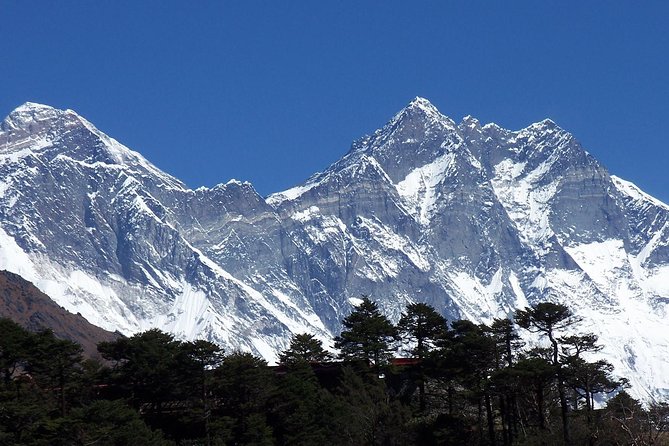
The mountain views begin before the trail does. This 14-day Everest Base Camp trek combines the famous Lukla flight, Sherpa villages, two acclimatization days, and the big walk to Everest Base Camp for $999 per person. I like the private group format, which gives you a better chance to walk at your own pace and receive personal support. I also like the strong attention to airport transfers, permits, flights, guide costs, and rescue-related planning. The main drawback is important: your accommodation, meals, international flights, visa, and trekking insurance are not included, so the final cost will be higher than the advertised price.
You begin early, at 5:45 a.m., and the schedule is demanding. Some walking days are listed as long as 16 hours, even if those figures may reflect the full activity window rather than nonstop hiking. The reward is a classic Khumbu route with Namche Bazaar, Tengboche, Dingboche, Lobuche, Everest Base Camp, and Kalapatthar. Guides including Man Bahadur, Navraj, Raju, Roshan, Ram, and Abinash have received warm praise for care, humor, flexibility, and help with difficult arrangements.
In This Review
- Key points to know before booking
- Day 1 in Thamel: A useful Kathmandu landing
- Day 2: Lukla flight and the walk to Phakding
- Day 3: Entering Sagarmatha National Park and reaching Namche
- Day 4: Acclimatization and the Everest View Point
- Day 5: Forest paths and Tengboche Gompa
- Day 6: Dingboche beneath Ama Dablam and Island Peak
- Day 7: A second acclimatization day at Dingboche
- Day 8: The rocky approach to Lobuche
- Day 9: Everest Base Camp and the Khumbu Icefall
- Day 10: Kalapatthar for the classic Everest view
- Days 11 and 12: Returning through Namche and Lukla
- Day 13: The Lukla flight back to Kathmandu
- Day 14: Airport drop-off or extra time in Nepal
- What the $999 price really covers
- How the private format affects the experience
- Who should book this trek?
- Booking advice and final verdict
- FAQ
- Is airport pickup included?
- What time does the tour start?
- Are flights between Kathmandu and Lukla included?
- Are accommodation and food included?
- Do I need travel insurance?
- Is this a private tour?
Key points to know before booking
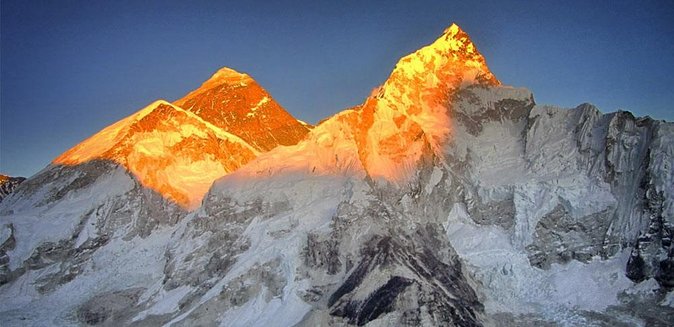
- The private trek reaches Everest Base Camp on day nine, then returns by way of Kalapatthar and Pheriche.
- Two acclimatization days are built in, one at Namche Bazaar and one at Dingboche.
- A Lukla flight is included, along with local permits, national park fees, guide costs, and government taxes.
- The $999 price excludes basic trip expenses, including your tea house stays, food, visa, and travel insurance.
- Airport pickup and drop-off are arranged, with the first meeting at the airport or your Kathmandu hotel.
- The route suits fit hikers, but the altitude, rocky paths, early flights, and long days require preparation.
Day 1 in Thamel: A useful Kathmandu landing
Your first day is built around arrival and preparation. An airport representative picks you up and takes you to your hotel or hostel in Thamel, the central Kathmandu district where you can shop for trekking supplies, eat, and get settled.
In the evening, you meet your guide and check your equipment. This is a valuable start because a gear problem is easier to fix in Kathmandu than in a high mountain village. Use this meeting to ask about the pace, the next morning’s flight, the expected walking hours, and what happens if weather disrupts the Lukla flight.
The airport pickup is especially helpful if you arrive tired or late. The meeting point is either Tribhuwan Airport or the hotel where you stay. Since the start time is 5:45 a.m., keep your first evening simple. You need rest more than a late stroll through Thamel.
More Everest Base Camp Treks:
- Everest Base Camp Trek – 14 Days
★ 5.0 · 1,499 reviews - Everest Base Camp Trekking
★ 5.0 · 485 reviews - Everest Base Camp Trekking – 13 Day
★ 5.0 · 365 reviews
Day 2: Lukla flight and the walk to Phakding
The trek begins with a flight to Tenzing Hillary Airport in Lukla. The flight itself is part of the adventure, and the airstrip puts you directly at the trailhead for the Everest region.
From Lukla, you walk to Phakding for the night. This is a relatively gentle introduction compared with the harder days ahead, and it gives you time to adjust to the rhythm of walking, stopping, eating, and resting.
The local flight is included in the package, but you should still expect the morning to be tightly scheduled. The tour notes that flights may depart from Kathmandu or Manthali, and the operating airport can depend on the current schedule. Ask the operator to confirm your departure point before you plan transport within Kathmandu.
Day 3: Entering Sagarmatha National Park and reaching Namche
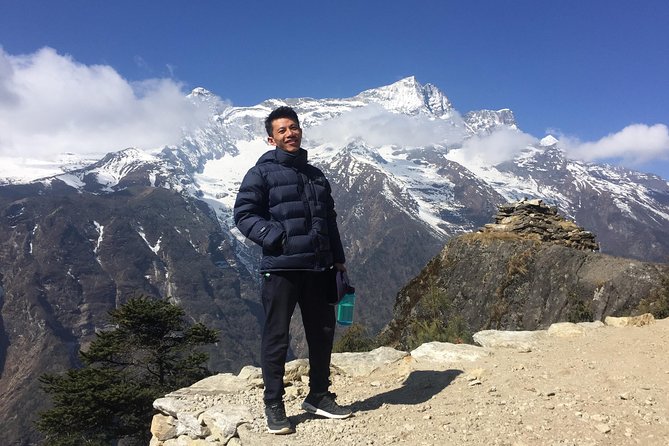
The path follows the Dudh Koshi River and passes through Monjo before entering Sagarmatha National Park. Suspension bridges, river crossings, forest, and village paths make this a varied day rather than a simple uphill march.
Namche Bazaar is the main trading center of the Khumbu region. It is also the first place where altitude becomes a serious part of the trip. The day is described as very long, so you should not treat the distance as a casual walk.
I like this section because it brings you into the daily life of the Sherpa region. You are not simply being driven to a viewpoint. You reach villages on foot, cross the same bridges used by local communities, and gradually see the mountains grow larger.
Day 4: Acclimatization and the Everest View Point
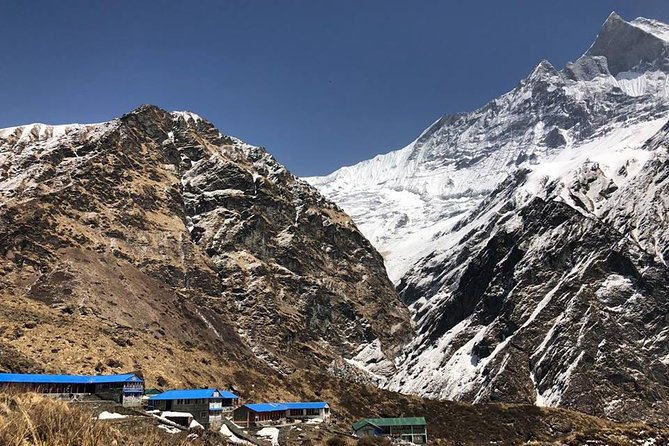
You spend a second night in Namche instead of climbing higher immediately. That pause is one of the most important parts of the plan.
The day includes a hike to the Everest Hotel viewpoint. From there, you can see Mount Everest, Ama Dablam, Thamserku, and Lhotse. The point is not only the scenery. The uphill walk followed by a return to Namche helps your body adjust before the route gains more altitude.
This is a good day to walk slowly and pay attention to how you feel. The itinerary gives you time to adjust, but it does not remove the need for caution. If you feel unwell, tell your guide early. The guide’s role is not just to lead the path. It is also to watch the group and help make sensible decisions.
More Treks and Hikes:
- Nagarkot Sunrise View and Day Hiking from Kathmandu
★ 5.0 · 471 reviews - Annapurna Circuit Trek with Tilicho Lake
★ 5.0 · 368 reviews - Everest Base Camp Trek -14 Days
★ 5.0 · 321 reviews - Annapurna base camp trek 5 Days
★ 5.0 · 252 reviews
Day 5: Forest paths and Tengboche Gompa
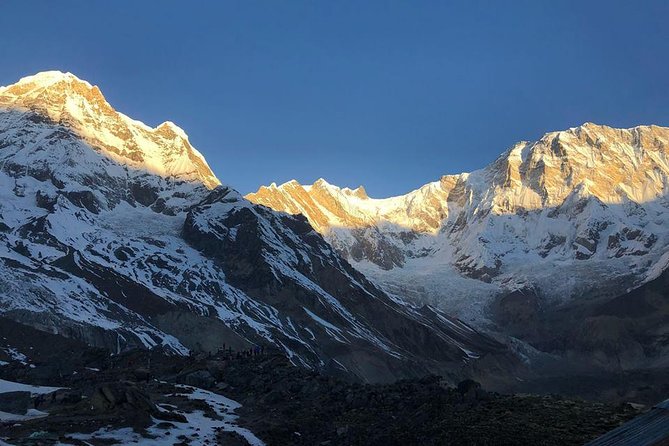
Leaving Namche, the route continues through juniper and rhododendron forest toward Tengboche. The views become more open, with mountain scenery accompanying much of the walk.
Tengboche is best known for its gompa, or Buddhist monastery. The planned visit gives the trek a cultural dimension that is easy to miss if you focus only on reaching Base Camp. You get a chance to see a place connected to the spiritual life of the Khumbu, not just another overnight stop.
This is also one of the more memorable mountain sections because the trail combines forest, high ridges, and views. The path still demands effort, and the day is again listed as a long one. Take your time on climbs and use the stops to drink and eat.
Day 6: Dingboche beneath Ama Dablam and Island Peak
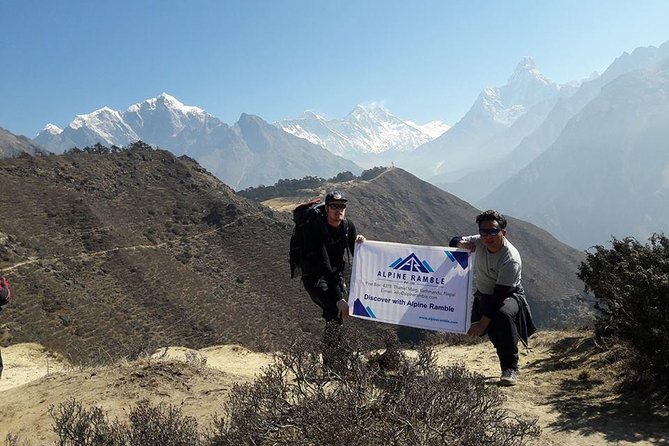
The route crosses the Imja Khola and continues toward Dingboche. The village sits among some of the trek’s most dramatic mountain views, including Ama Dablam and Island Peak.
By this point, the altitude is no longer a minor detail. Your body may feel the difference in the thinner air, and a steady pace matters more than speed. Dingboche is a practical overnight stop because the next day is reserved for acclimatization.
The appeal here is the setting. You are walking through a high Himalayan valley with peaks such as Ama Dablam and Island Peak close at hand. It is also a reminder that this trek is not a sightseeing bus tour. You will spend many hours on uneven trails, often with limited comfort at the end of the day.
Day 7: A second acclimatization day at Dingboche
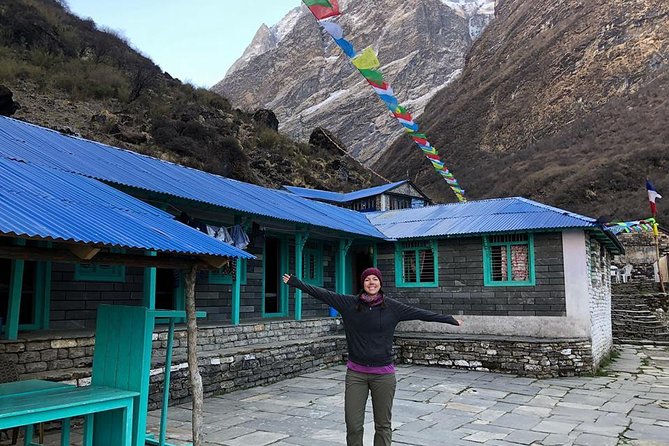
The second acclimatization day gives you two possible hikes: Nangkartshang Peak at 5,083 meters or Chhukung Ri at 5,546 meters. Both options offer views toward Everest, Ama Dablam, Island Peak, and Pumori.
The choices are not equal in difficulty. Chhukung Ri is considerably higher, so your guide should help match the hike to your condition and the group’s ability. The itinerary presents these as options, not obligations.
I see this as one of the strongest features of the trek. A rushed plan could push you upward every day, but this schedule includes a full rest and adjustment day before Lobuche and Base Camp. You still need to take altitude seriously. A planned acclimatization day helps, but it cannot guarantee that everyone will feel well.
Day 8: The rocky approach to Lobuche
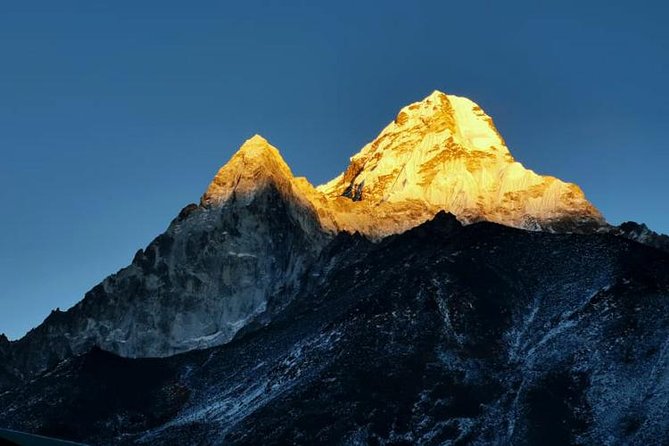
The trail to Lobuche becomes more rugged, with an uneven rocky path and clear views of Pumori, Nuptse, and Lobuche Peak. This is a day when good footwear matters.
The route feels more remote as you move closer to the main Everest Base Camp section. The scenery is impressive, but the physical work becomes more obvious. You should expect a slower pace and less room for distractions.
Lobuche is not the final goal, but it is the staging point for the hardest and most anticipated day. Keep your pack light, organize your clothing before bed, and make sure your phone or camera is charged if you want photos at Base Camp.
Day 9: Everest Base Camp and the Khumbu Icefall
This is the headline day. You walk through the Khumbu Glacier area to Everest Base Camp, then return to Gorakshep.
The route is long and rocky, and the altitude makes every climb feel harder. The stated activity time is only one hour for the Base Camp stop, but that describes the listed stop rather than the whole day. The full route to Base Camp and back is the demanding part, so you should be ready for a long day on foot.
At Base Camp, you can view the Khumbu Icefall. The experience is not simply about standing beneath the world’s highest mountain. Mount Everest itself may not appear at its best from Base Camp, which is why the next morning’s Kalapatthar hike matters so much.
This is also the point where a supportive guide can make a real difference. The operator has paired hikers with guides such as Raju, Roshan, and Abinash, who have been praised for kindness, humor, safety, and adapting the trip to individual needs. Those qualities matter when the group is tired and the air is thin.
Day 10: Kalapatthar for the classic Everest view
You climb to Kalapatthar for a broad view of Mount Everest. This is often the best viewpoint of the trek for seeing Everest clearly, along with the surrounding peaks.
The itinerary then takes you down to Pheriche through pathways described as passing through lush forest. After the exposed high-altitude sections, the descent can feel like a relief, though downhill walking is not always easy on tired knees.
The order of Base Camp first and Kalapatthar second works well. Base Camp gives you the emotional milestone. Kalapatthar gives you the classic mountain panorama. You get two different experiences rather than asking one location to provide everything.
Days 11 and 12: Returning through Namche and Lukla
On day 11, you leave the high mountains and return to Namche Bazaar, crossing suspension bridges and passing villages along the way. The descent is usually faster than the climb, but fatigue can make a familiar trail feel surprisingly long.
Day 12 continues through Jorsale and Monjo to Phakding, then onward to Lukla. You cross the Dudh Koshi River several times and retrace parts of the opening route.
These days are not filler. They let you see the route from another angle and provide time to process the trek. The return is also a practical buffer before the flight. You need to reach Lukla ahead of the Kathmandu departure rather than trying to finish the trail and fly out on the same day.
Day 13: The Lukla flight back to Kathmandu
The early morning flight to Kathmandu takes about 35 minutes. Once you arrive, the rest of the day is free.
You can use the afternoon to walk around Thamel, shop for souvenirs, or simply rest. I would not fill this day with a major sightseeing plan. Mountain flights can be affected by conditions, and even a successful trek leaves you tired.
Airport transfers are included for arrival and departure, and the package includes the local flight tickets. Still, build flexibility into any international connection. The tour schedule does not promise that a delayed local flight will fit neatly with your onward flight.
Day 14: Airport drop-off or extra time in Nepal
The final day is simple. You can extend your stay in Nepal, or the representative can take you to the airport.
That flexibility is useful if you want time in Kathmandu after the trek. It also makes the package suitable for people who plan a wider Nepal trip, although any added nights and activities are outside the stated trek price.
What the $999 price really covers
At $999 per person, the package offers solid value for the services that are included. Your price covers airport transfers, local flights, a guide’s salary, the guide’s food and equipment, guide insurance, national park fees, local permits, government taxes, and value-added tax.
Those inclusions remove several costs that can otherwise be hard to organize. The local flight is especially important, as is the permit and national park paperwork. A private trip also gives you direct contact with the guide rather than placing you in a large fixed group.
But do not treat $999 as the full holiday budget. You must pay separately for:
- Accommodation and food during the trek
- International flights
- Nepal entry visa
- Travel and health insurance
- Emergency rescue and evacuation coverage
- Tips for the trekking guide
The accommodation and food exclusion is the biggest point to clarify before booking. Ask what type of tea house or hotel arrangement is expected and how much extra cash you should carry. The operator’s earlier arrangements have included well-chosen tea houses, but your own package details should be confirmed in writing.
Guide tips are expected, so include them in your planning. Insurance must specifically cover emergency rescue and evacuation. A normal travel policy may not cover high-altitude trekking.
How the private format affects the experience
This is a private tour, so only your group participates. That makes it a good choice if you want the guide to adjust the rhythm to your group rather than to a large crowd.
The strongest praise for Nepal Nirvana Trails centers on personal care. KP and the team have helped with airport arrangements, flight problems, and difficult return plans. One solo woman received extra support when arranging a helicopter after a flight problem. Another parent felt reassured while trekking with a 14-year-old daughter.
Those examples do not guarantee that every issue will be solved in the same way, but they show the value of having a local operator involved when plans change. Guides named Man Bahadur, Navraj, Bhairas, Bala, Raju, Roshan, Ram, and Abinash have all been connected with positive accounts of patience, humor, cultural explanation, and practical support.
Who should book this trek?
I would recommend it to a fit adult who wants the classic Everest route and is comfortable with simple mountain travel. It also suits solo hikers, families with an appropriate level of fitness, and small private groups that value personal attention.
You should think twice if you dislike early starts, uneven paths, basic lodging, long walking days, or uncertain flight schedules. The route includes high altitude and demanding sections. A moderate fitness level is required, but that phrase should not be read as meaning easy.
The schedule is ambitious for 14 days. The two acclimatization days help, yet your experience will depend on how your body responds to altitude. Let your guide know quickly if you feel sick, unusually weak, or unable to maintain the planned pace.
Booking advice and final verdict
I would book this trek if I wanted a private, guided Everest Base Camp route with local flight tickets and permits handled in advance. The strongest reasons are the airport support, the two acclimatization days, the full classic route, and the repeated praise for guides who provide calm, personal help.
Before paying, I would ask for a written breakdown of accommodation, meals, flight departure airport, equipment, and likely extra costs. I would also buy evacuation insurance before arrival and leave spare time around the Lukla flights.
Book it if you want the big Himalayan milestones without organizing every permit and flight yourself. Skip it if you are looking for an all-inclusive $999 holiday, because it is not one. For a private Everest Base Camp trek, the listed inclusions make the price attractive, as long as you budget honestly for everything left out.
FAQ
Is airport pickup included?
Yes. Airport transfer services for arrival and departure are included. You can also be met at Tribhuwan Airport or at the hotel where you stay in Kathmandu.
What time does the tour start?
The stated start time is 5:45 a.m. This early start is especially relevant for the Lukla flight day.
Are flights between Kathmandu and Lukla included?
Yes. Flight tickets from Kathmandu or Manthali to Lukla and from Lukla back to Kathmandu or Manthali are included.
Are accommodation and food included?
No. Accommodation and food for the guest are not included in the stated price.
Do I need travel insurance?
Yes. You must arrange your own travel and health insurance, and it should cover emergency rescue and evacuation.
Is this a private tour?
Yes. Only your group participates in the activity. The tour is not a shared group departure.
Just added around Kathmandu
- Private Shopping Tour in Kathmandu★ 5.0 · 3 reviews
- Nagarkot Sunrise With 7 UNESCO World Heritage Private Tour★ 5.0 · 3 reviews
- Kathmandu: Nightlife and Pub Crawl Tour★ 5.0 · 3 reviews
- Mount Everest Scenic Flight 50 Minutes★ 5.0 · 3 reviews
- Momo Cooking Class -The Art Of Making MoMo with Home Chef★ 5.0 · 3 reviews
- Kathmandu: Nagarkot, Bhaktapur, Doleswor & Sanga Statue Tour★ 5.0 · 3 reviews
- Makalu Base Camp Trek★ 5.0 · 3 reviews
- Everest Experience Trek 6 Day Hiking Adventure★ 5.0 · 3 reviews
Everest Base Camp Treks, compared.






Everest Base Camp Trek with Helicopter Return from Gorakshep to Lukla
Read our review →Browse the lists this tour appears in