
Reviewed · EVEREST BASE CAMP TREKS
Everest Base Camp trek 14 days
The mountains make every step worth counting. This 14-day Everest Base Camp trek takes care of the major planning, including Kathmandu and Lukla flights, trekking permits, lodges, meals, a guide, and key cold-weather gear. I like the sensible acclimatization stops in Namche Bazaar and Dingboche, and I like that the trip ends with a cultural show and farewell dinner rather than simply dropping you back at your hotel.
The main drawback is the physical demand. You will walk for several hours on most trekking days, reach altitudes above 5,000 meters, and spend nights in basic trekking lodges. The schedule also contains a confusing description around the Dingboche days, so I would ask the operator to confirm the exact day-by-day plan before paying.
In This Review
- Five things to know before you book
- What the $1,380 price really covers
- Kathmandu begins the trip at an easy pace
- Lukla to Phakding: the short first walk
- Namche Bazaar and the first altitude test
- Tengboche brings the first great mountain views
- Dingboche and the importance of slowing down
- Lobuche and Gorakshep: high, cold, and basic
- Kala Patthar is the high point, literally
- The return route still demands effort
- Flights, group size, and the practical side
- What past guest feedback tells me about service
- Who should choose this trek?
- Should you book the Everest Base Camp trek?
- FAQ
- How long is the Everest Base Camp trek?
- Where does the trek begin?
- Is the flight from Kathmandu to Lukla included?
- Are meals included?
- Is accommodation included?
- Is trekking equipment provided?
- What is the highest point on the schedule?
- How large can the group be?
- What costs are not included?
Five things to know before you book
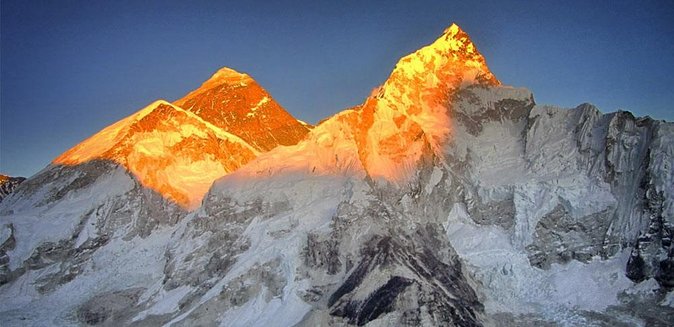
- The trip reaches 5,550 meters at Kala Patthar, the highest point on the schedule and one of the best places for views of Everest.
- Flights connect Kathmandu and Lukla, with the listed flight time from Kathmandu to Lukla taking about 40 to 45 minutes.
- Namche Bazaar and Dingboche provide acclimatization days, which are essential on a high-altitude trek.
- A sleeping bag and down jacket are available, a useful saving if you do not own serious cold-weather equipment.
- The maximum group size is 18 people, large enough for shared support but still manageable on the trail.
- The price is $1,380 per person, including many major trek costs but not international airfare, insurance, tips, entrance fees, or extra Kathmandu meals.
What the $1,380 price really covers
At $1,380, this trek offers a useful bundle for someone who does not want to arrange every piece independently. The package includes airport pickups and departures, Kathmandu to Lukla and Lukla to Kathmandu flights, city transportation, standard twin-share hotel accommodation, trekking lodges, permits, the TIMS card, a guide, daily meals during the trek, and government taxes.
That matters because Everest Base Camp planning has several moving parts. You need a domestic flight, local transport, permits, accommodation, food, and a guide who can help manage the route. Paying one operator to handle these basics can save time and prevent small oversights from becoming costly problems.
I especially like the inclusion of a sleeping bag and down jacket when needed. Good cold-weather gear can cost a lot, and you do not necessarily want to buy equipment for one trek. Ask in advance about the condition, size range, and warmth rating of the supplied items. The information confirms that they are provided, but it does not give technical specifications.
The value is less clear if you already have a local guide, gear, and a way to organize permits and flights yourself. You also need to budget separately for international flights, travel insurance, tips for the trekking crew, entrance fees, personal spending, bar bills, and additional Kathmandu meals. The price is therefore a strong starting package, not the complete cost of a Nepal holiday.
More Everest Base Camp Treks:
- Everest Base Camp Trek – 14 Days
★ 5.0 · 1,499 reviews - Everest Base Camp Trekking
★ 5.0 · 485 reviews - Everest Base Camp Trekking – 13 Day
★ 5.0 · 365 reviews
Kathmandu begins the trip at an easy pace
Day one is arrival in Kathmandu, with accommodation included. The schedule gives you a soft landing before the mountain section, though it does not promise a sightseeing program on arrival day.
Kathmandu is also where you can deal with practical matters such as checking your equipment, confirming the flight to Lukla, and asking the guide about the walking pace. I would use this time to confirm the confusing portion of the schedule around days six and seven. One day is listed as Dingboche acclimatization, while the next is also described in relation to Dingboche. A quick clarification can prevent uncertainty once you are on the trail.
The trip includes a special cultural show and farewell dinner later on. That is a nice touch because the trek is not only about getting to a famous point on a map. You also get a planned introduction to local culture and a proper send-off.
Lukla to Phakding: the short first walk
Day two begins with the Kathmandu to Lukla flight, listed at roughly 40 to 45 minutes. From Lukla, you walk to Phakding for about three to four hours, reaching approximately 2,640 meters.
This first walking day is relatively short compared with what follows. That gives you time to get used to the trail, your boots, your pack, and the general rhythm of the trek. The route is not treated as a grand summit attempt on day one. It is a sensible start.
Breakfast, lunch, and dinner are included on the trekking days marked B.L.D. Accommodation is in a trekking lodge, with meals arranged along the route. You should still expect simple facilities rather than city-hotel comfort.
Namche Bazaar and the first altitude test
On day three, you walk from Phakding to Namche Bazaar, taking about five to six hours and reaching roughly 3,440 meters. The gain in altitude makes this a more serious day than the distance alone suggests.
Namche is an important stop because day four is reserved for acclimatization. That rest does not mean doing nothing. It gives your body time to adjust before the route climbs higher. It also breaks up the rapid upward movement that can make high-altitude trekking unsafe.
I like this structure. A rushed schedule can look efficient on paper but leave you struggling later. Here, the extra day in Namche gives you a better chance to continue at a steady pace.
The town also offers one of the more social parts of the trek. The supplied feedback specifically mentions buying a painting in Namche Bazaar, which points to the town’s role as more than a sleeping stop. You might find time for local shopping, though the package does not promise a guided shopping visit or specific market time.
More Treks and Hikes:
- Nagarkot Sunrise View and Day Hiking from Kathmandu
★ 5.0 · 471 reviews - Annapurna Circuit Trek with Tilicho Lake
★ 5.0 · 368 reviews - Everest Base Camp Trek -14 Days
★ 5.0 · 321 reviews - Annapurna base camp trek 5 Days
★ 5.0 · 252 reviews
Tengboche brings the first great mountain views
Day five takes you to Tengboche at approximately 3,860 meters. The walk is listed at six to seven hours, so you should be ready for a full day on foot.
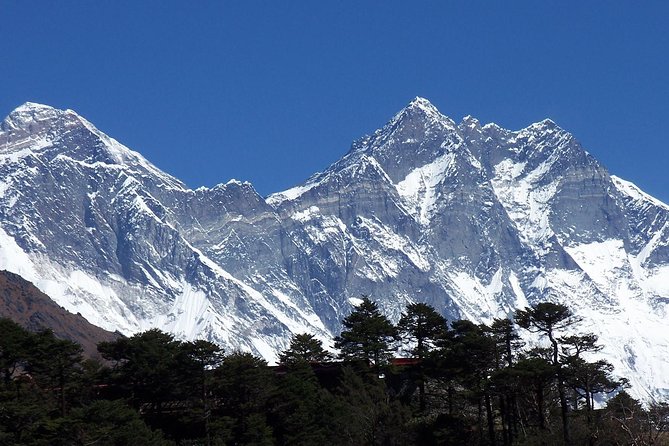
Tengboche is one of the memorable stops on the route because the surrounding peaks begin to feel much closer and more dramatic. The trip specifically highlights views of Ama Dablam, Lhotse, Makalu, Cho Oyu, and Everest. Weather controls how much you see, but the route is designed to put those names into a real mountain setting rather than leave them as distant points on a map.
This is also where the trek becomes less about checking off a destination and more about adjusting to altitude and terrain. The days are long, the air is thinner, and even ordinary walking can feel harder than expected. I would keep your pace conservative and avoid treating a strong first few days as proof that altitude will not affect you.
Dingboche and the importance of slowing down
The schedule includes a Dingboche acclimatization day, followed by a day described as trekking to Dingboche at about 4,410 meters. The order and wording are not fully clear, since the route from Tengboche to Dingboche would normally be the move into that village, while an acclimatization day would follow after arrival.
This is the one part I would have clarified before booking. The broader plan is understandable: you need time around Dingboche before climbing toward Lobuche and Gorakshep. But ask the company whether day six is intended as the arrival day and day seven as the actual rest day, or whether the supplied wording reflects a different arrangement.
Regardless of the exact order, Dingboche is a crucial point in the schedule. At roughly 4,410 meters, you are well above Namche, and the body has less oxygen available. A planned pause here is valuable. Do not be tempted to skip it just because you feel fine that morning.
Lobuche and Gorakshep: high, cold, and basic
Day eight heads to Lobuche at about 4,910 meters, with around five hours of walking. By this stage, the altitude is a constant factor. You may find that the effort feels slower and that rest breaks matter more than they did near Lukla.
Day nine continues to Everest Base Camp and then back to Gorakshep at approximately 5,200 meters. This is one of the hardest and most anticipated days of the trip. The schedule does not give a precise walking time, so you should ask the guide for the expected start and return times during the briefing.
The return to Gorakshep is important. Everest Base Camp is the destination, but you do not sleep there. Gorakshep provides the overnight base before the Kala Patthar hike the next morning. Accommodation at this altitude should be viewed as functional. The package promises trekking lodges, not private luxury, and the cold can make simple rooms feel even simpler.
The reward is the sense of arrival at Everest Base Camp and the surrounding views. The trip is also built around seeing several major peaks, including Everest, Lhotse, Makalu, Cho Oyu, and Ama Dablam. Keep expectations realistic: the mountain views depend on weather and visibility, and Everest Base Camp itself is not necessarily the place with the best direct view of Everest.
Kala Patthar is the high point, literally
Day ten begins with a hike to Kala Patthar at approximately 5,550 meters. The climb is listed at about two and a half hours, followed by a long descent to Pheriche at around 4,200 meters, taking about seven hours.
This is the highest point on the schedule. It is also where you are most likely to appreciate why the itinerary includes acclimatization days. At this altitude, even a modest uphill section can demand patience. The reward is the famous high viewpoint toward Everest and the surrounding peaks.
The day is long because it combines a pre-dawn or early hike, depending on the guide’s plan, with a major descent. The provided information does not specify the start time, so confirm it in Kathmandu or Namche. Pack your warm layers where you can reach them quickly, since the sleeping bag and down jacket may help at night but do not replace your day clothing.
Pheriche gives you a lower sleeping altitude after the high point. That is a welcome change. The descent may be easier for breathing, but it still places stress on knees and ankles. Trekking poles, if you use them, can be helpful, though they are not listed as included.
The return route still demands effort
Day eleven is the walk back to Namche Bazaar, listed at about six hours. Day twelve continues to Lukla, with about seven hours of walking.
It is easy to think of the return as an afterthought. It is not. Fatigue builds over almost two weeks, and descending does not make every step effortless. You still need to manage footing, weather, and a full day on the trail.
Returning to Namche provides a useful change of pace after the high lodges. The final walk to Lukla is another long day, so I would avoid overpacking and keep daily essentials organized. The operator provides transport and accommodation planning, but you remain responsible for your own personal items and spending.
Flights, group size, and the practical side
The package includes the domestic flights between Kathmandu and Lukla. That is one of its biggest conveniences. The schedule allows one day to fly back to Kathmandu on day thirteen, but mountain flights are naturally sensitive to weather. The supplied information does not promise a contingency day, so ask how delays are handled and how they affect the international flight you book afterward.
The maximum group size is 18 people. That is not a tiny private walk, but it is still a reasonable number for a guided trek. A group of this size can offer company and shared support, while also creating differences in walking pace. Ask how the guide manages faster and slower walkers, and whether the group stays together during the day.
The guide’s salary, food, accommodation, and insurance are included. That is a positive sign for clear budgeting, but tips are not included. Plan a separate tip budget and ask the company for local guidance on appropriate amounts.
Transportation in the wider trip includes an air-conditioned car and tourist deluxe bus where relevant. The information does not spell out every transfer, so confirm which journeys use which vehicle. Airport pickups and departures in Kathmandu are included.
What past guest feedback tells me about service
The strongest pattern in the feedback is praise for organization, communication, guides, food, permits, and transport. Suresh and Sobit are named positively, as is a guide called Ram. Pasang Sherpa is also praised in one account. That gives you useful names to ask about when confirming who will lead your group, though staff assignments can change.
The comments repeatedly describe the service as professional and helpful, with specific praise for safety, coordination, meals, accommodation, and permit handling. One account describes completing the trek on June 19, 2024, while another combines the Everest trek with a Kathmandu UNESCO tour. These details suggest the operator can handle add-on sightseeing, but a UNESCO tour is not part of the listed 14-day package, so ask about it separately.
The overall rating information is very strong, with 100 percent recommending the experience across 46 ratings. That is encouraging, especially because the positive points match the practical inclusions. Still, ratings cannot predict mountain weather, altitude response, or whether your group pace suits you. Use the praise as a signal about management, not a guarantee of effortless trekking.
Who should choose this trek?
I would recommend it to someone who wants a famous Himalayan route but does not want to arrange every permit, lodge, flight, meal, and transfer alone. It suits you best if you have moderate physical fitness, can commit to several hours of walking on most days, and accept basic lodge accommodation.
It is also a good fit if you would rather rent or borrow a sleeping bag and down jacket than purchase them. The included equipment reduces the amount of gear you need to source before leaving home.
I would be more cautious if you need a flexible schedule, private rooms, high-end accommodation, or a fully explained contingency plan for delayed Lukla flights. I would also ask detailed questions if you have never walked at altitude. The operator states that moderate fitness is required, but the schedule reaches 5,550 meters, which deserves serious preparation.
Free cancellation is available if you cancel at least 24 hours before the experience begins. Changes or cancellations made inside that window are not accepted for a refund, and cut-off times use local time.
Should you book the Everest Base Camp trek?
I would book this trek if I wanted a clearly packaged route with strong logistical support and a sensible acclimatization pattern. The included flights, permits, meals, guide costs, lodges, and cold-weather gear make $1,380 a competitive starting price.
Before booking, I would confirm three things: the exact Dingboche schedule, the operator’s plan for Lukla flight delays, and the names and experience of the guide assigned to my group. If those answers are clear, this looks like a practical route for a fit first-time Everest Base Camp trekker who values support over luxury.
FAQ
How long is the Everest Base Camp trek?
The full schedule lasts 14 days, including arrival and departure days. The trekking portion runs from Lukla to Phakding, onward to Everest Base Camp and Kala Patthar, then back to Lukla.
Where does the trek begin?
The experience begins in Kathmandu, Nepal. Airport pickup and departure services in Kathmandu are included.
Is the flight from Kathmandu to Lukla included?
Yes. The package includes Kathmandu to Lukla and Lukla to Kathmandu flight tickets. The listed flight time from Kathmandu to Lukla is about 40 to 45 minutes.
Are meals included?
Breakfast, lunch, and dinner are included during the trekking days specified in the schedule. Extra meals in Kathmandu and personal food or bar bills are not included.
Is accommodation included?
Yes. The package includes standard city hotel accommodation with twin-sharing beds and breakfast, plus trekking lodge accommodation throughout the trek.
Is trekking equipment provided?
A sleeping bag and down jacket are provided if you need them during the trek. The available information does not specify their technical ratings or sizes.
What is the highest point on the schedule?
Kala Patthar is the highest listed point, at approximately 5,550 meters. The route also reaches Everest Base Camp and Gorakshep at about 5,200 meters.
How large can the group be?
The maximum group size is 18 people.
What costs are not included?
International airfare, travel insurance, trekking crew tips, entrance fees, extra Kathmandu meals, personal expenses, and bar bills are excluded.
Just added around Kathmandu
- Private Shopping Tour in Kathmandu★ 5.0 · 3 reviews
- Nagarkot Sunrise With 7 UNESCO World Heritage Private Tour★ 5.0 · 3 reviews
- Kathmandu: Nightlife and Pub Crawl Tour★ 5.0 · 3 reviews
- Mount Everest Scenic Flight 50 Minutes★ 5.0 · 3 reviews
- Momo Cooking Class -The Art Of Making MoMo with Home Chef★ 5.0 · 3 reviews
- Kathmandu: Nagarkot, Bhaktapur, Doleswor & Sanga Statue Tour★ 5.0 · 3 reviews
- Makalu Base Camp Trek★ 5.0 · 3 reviews
- Everest Experience Trek 6 Day Hiking Adventure★ 5.0 · 3 reviews
Everest Base Camp Treks, compared.






Everest Base Camp Trek with Helicopter Return from Gorakshep to Lukla
Read our review →Browse the lists this tour appears in