
Reviewed · EVEREST BASE CAMP TREKS
Everest Base Camp Trek 15 days | Local Guide | Flexible Itinerary
The mountains reward patience. This 15-day Everest Base Camp trek combines the classic Sherpa route with two acclimatization days, local guides, porters, tea house lodging, and a quieter return through Phortse and Mong Danda. I like the practical pacing and the fact that the price includes Lukla flights, permits, meals, sleeping gear, and porter support.
I also like the personal scale: this is a private trek for your group, not a large scheduled departure. The main caution is the altitude. You reach 5,364 meters at Base Camp and 5,545 meters at Kala Patthar, so strong fitness, suitable insurance, and flexibility around weather are essential.
In This Review
- Key points before you book
- What this 15-day Everest trek is really like
- Days 1 and 2: Kathmandu to Lukla
- Day 3: The long approach to Namche Bazaar
- Day 4: Acclimatization around Namche and Hotel Everest View
- Days 5 and 6: Tengboche monastery and Dingboche
- Day 7: A second acclimatization day at Dingboche
- Day 8: Toward Lobuche and the Thukla memorial area
- Day 9: Everest Base Camp at 5,364 meters
- Day 10: Sunrise at Kala Patthar
- Days 11 and 12: Returning through Phortse and Mong Danda
- Day 13: Back to Lukla
- Days 14 and 15: Flying back and saying goodbye
- What the $1,890 price includes
- Who should book this trek?
- Should you book the Everest Base Camp Trek?
- FAQ
- How long is the Everest Base Camp trek?
- Where does the trek begin?
- Is the tour private?
- Are flights to Lukla included?
- What is the highest point on the trek?
- Are meals included?
- Is a guide provided?
- Are porters included?
- What happens if bad weather cancels the experience?
Key points before you book
- Kala Patthar reaches 5,545 meters, the highest point of the trek and the best place on this route for views of Everest, Lhotse, and Nuptse.
- Two acclimatization days are built into the plan, one in Namche Bazaar and another in Dingboche.
- Lukla flights, permits, meals, porters, a sleeping bag, down jacket, and hiking poles are included in the $1,890 price.
- The return route uses Phortse and Mong Danda, giving you different views and a less crowded alternative to simply retracing the outbound trail.
- One porter carries 20 kilograms for two people, effectively 10 kilograms of your main bag per person.
- Weather can affect the flights, and the itinerary may require patience when flying between Kathmandu or Ramechhap and Lukla.
What this 15-day Everest trek is really like
This is not a sightseeing holiday with a few walks added. It is a demanding high-altitude trek with long uphill and downhill days, basic tea house accommodation, and limited comforts above Namche. The reward is a gradual change in scenery, from Kathmandu streets to river valleys, Sherpa villages, Buddhist monasteries, high yak pastures, glaciers, and the great peaks around Everest.
The route is designed to gain height in stages. You fly to Lukla at 2,810 meters, spend time at Namche at 3,440 meters, then move higher through Tengboche and Dingboche before reaching Lobuche, Everest Base Camp, and Kala Patthar. That slow climb matters. You cannot remove the risk of altitude sickness, but sensible pacing gives your body a better chance to adjust.
Life Himalaya Trekking supplies an English-speaking, licensed local guide. Guide assignments vary, but named members of the company team have included Raj, Ram, Sagar, Jal, Rabin, Ganesh, Vijay, and Teeras. Past trip accounts place strong emphasis on encouragement, safety, and help when the walking became hard. That is exactly what you need here. A friendly guide is pleasant; a careful guide who notices problems at altitude is far more important.
More Everest Base Camp Treks:
- Everest Base Camp Trek – 14 Days
★ 5.0 · 1,499 reviews - Everest Base Camp Trekking
★ 5.0 · 485 reviews - Everest Base Camp Trekking – 13 Day
★ 5.0 · 365 reviews
Days 1 and 2: Kathmandu to Lukla
Your trip begins with airport pickup at Tribhuvan International Airport in Kathmandu. A company representative meets you and transfers you to your hotel. The first day is mainly for arrival, rest, and getting organized for the mountains.
The next morning usually begins early with the flight to Tenzing Hillary Airport in Lukla. The flight itself is short, listed at about one hour, but the timing can be affected by mountain weather. Flights may operate from Kathmandu or Ramechhap, and the package covers the flight in both directions for the group and staff.
Lukla is the gateway to the Everest region. At 2,810 meters, it is already much higher than Kathmandu, so the first walking day begins with your body adjusting to thinner air. The package includes a 10-kilogram main bag and a 5-kilogram hand-carry allowance for the domestic flight, 15 kilograms total per person. Pack carefully because those limits are not generous for a two-week mountain trip.
Day 3: The long approach to Namche Bazaar
After breakfast at the tea house, you walk toward Namche Bazaar, the main Sherpa center in the Khumbu region. The day takes about five hours according to the schedule and includes the Hillary Bridge, a memorable suspension bridge crossing on the trail.
Namche sits at 3,440 meters, and the climb into town can feel tougher than the distance suggests. The reward is a dramatic change in scenery and your first real arrival in the high mountain culture of the region. Sherpa villages, prayer flags, mountain views, and busy trail life replace the lower valley setting.
The itinerary calls Namche the capital of the Sherpa people. That wording is informal, but the point is sound: Namche is an important service and trading center for the trekking route. You get a useful pause here before the trail climbs higher.
Day 4: Acclimatization around Namche and Hotel Everest View
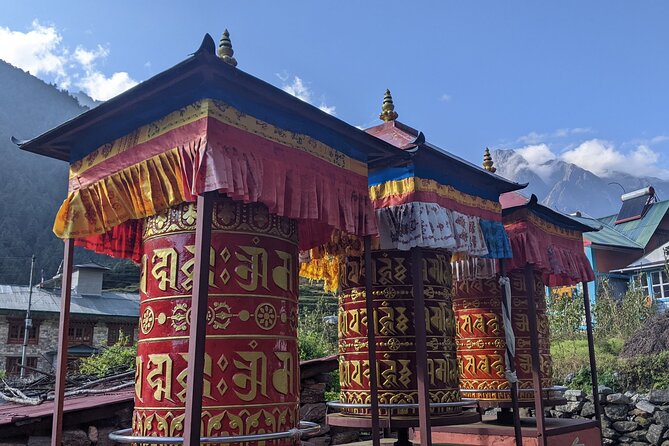
The extra day at Namche is one of the strongest parts of the schedule. You do not simply sit in the lodge. The plan includes a side excursion toward Hotel Everest View, with about one hour allocated at the stop. The purpose is to climb higher for a short time, see the mountains, and return to sleep at the lower elevation of Namche.
This follows the sensible high-altitude rule of climbing higher during the day and sleeping lower when possible. The schedule does not spell out every stop or walking distance, so ask your guide what the day will look like when you arrive.
This is also a good place to learn how your body is handling the altitude. Headaches, unusual tiredness, nausea, and poor sleep deserve attention. Do not treat the acclimatization day as wasted time. It may be the day that helps you continue safely toward Base Camp.
More Treks and Hikes:
- Nagarkot Sunrise View and Day Hiking from Kathmandu
★ 5.0 · 471 reviews - Annapurna Circuit Trek with Tilicho Lake
★ 5.0 · 368 reviews - Everest Base Camp Trek -14 Days
★ 5.0 · 321 reviews - Annapurna base camp trek 5 Days
★ 5.0 · 252 reviews
Days 5 and 6: Tengboche monastery and Dingboche
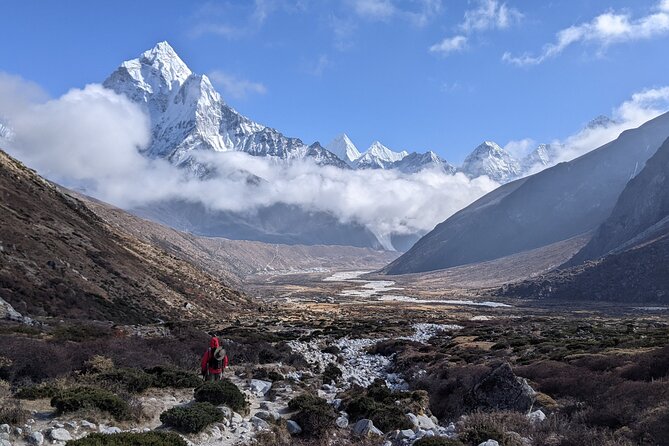
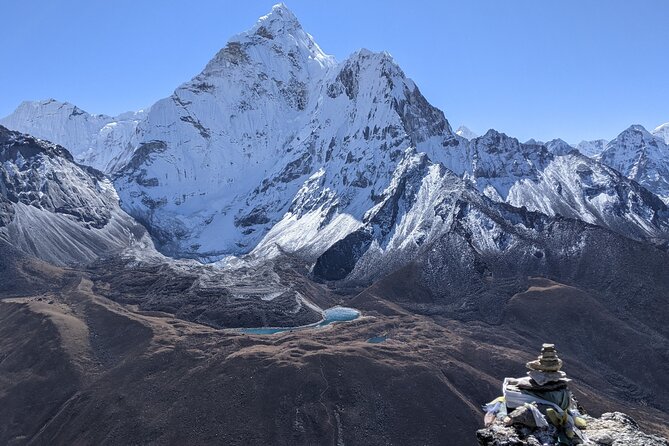
From Namche, the trail continues toward Tengboche, roughly five hours away. The route climbs through mountain scenery with views toward Ama Dablam and other major peaks. Tengboche Gompa gives the day a cultural focus, not just a mountain one.
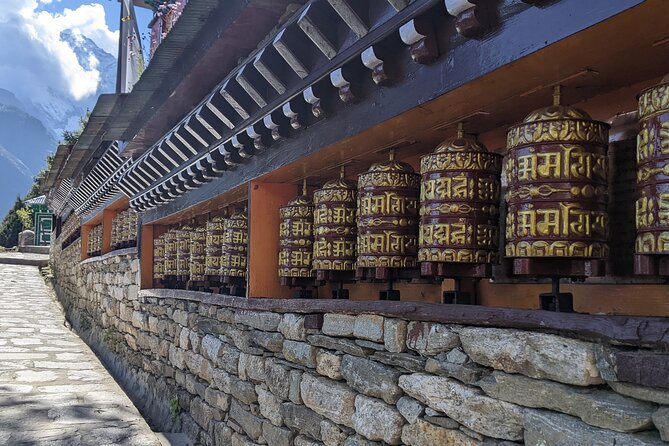
The monastery is one of the most memorable stops on the classic route. You can experience the importance of Tibetan Buddhist practice in the Khumbu and see how spiritual life remains part of daily village life. Admission to the listed Tengboche stop is included.
From Tengboche, you continue toward Dingboche. This four-to-five-hour day follows the Imja Khola and crosses a bridge before reaching Orsho, where the trail separates toward Pheriche and Dingboche. The route follows the Lobuche River area and brings you into a more open, higher valley.
Dingboche is at about 4,410 meters. The air is thinner, the walking feels slower, and small efforts require more patience. Your guide’s job becomes especially important here. You need steady pacing, regular food and water, and honest communication about how you feel.
Day 7: A second acclimatization day at Dingboche
The second rest day is another sensible feature. You stay at Dingboche but remain active with a side excursion. The exact outing is not specified, so you should ask how far you will walk and how much ascent is planned.
At this height, rest does not mean treating the day as a complete day off. Gentle movement helps you adjust, while a short climb gives your guide a chance to observe how you cope. You also get time to enjoy the village and recover before the harder days ahead.
The tea house standard becomes more basic as you gain altitude. Accommodation is described as clean and comfortable lodge lodging, but you should not expect hotel-style facilities. Hot showers and battery charging are not included, so budget extra for both if available.
Day 8: Toward Lobuche and the Thukla memorial area
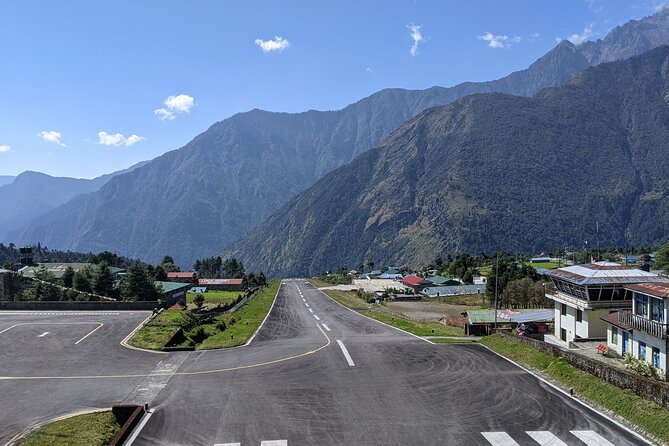
After Dingboche, the route moves toward Thukla and then Lobuche. The schedule describes a morning walk with broad Himalayan views and a stop at Thukla, a significant point before the final approach to Base Camp.
This section has an emotional weight as well as physical difficulty. The Thukla area is associated with memorials to climbers and Sherpa guides who died on Himalayan expeditions. The itinerary does not list a separate admission fee, but the site itself is part of the trekking route.
By Lobuche, you are close to the main goal, yet the altitude makes this part demanding. The distance may not look alarming on a map. At more than 4,900 meters, though, every uphill section takes longer. Keep your pace modest. A guide who encourages you without pushing you recklessly is worth the cost of the trip.
Day 9: Everest Base Camp at 5,364 meters
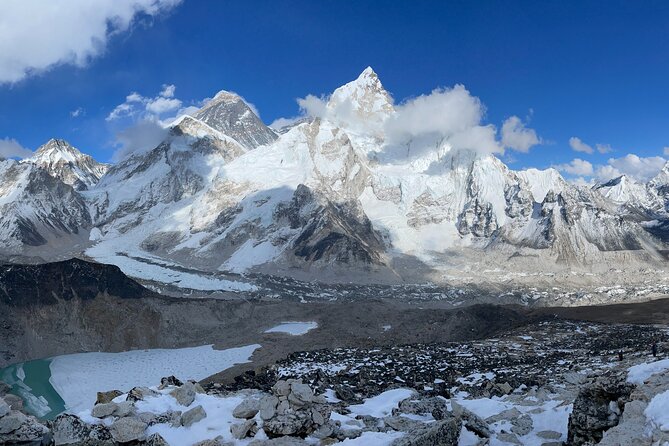
This is the main achievement of the trek. From Lobuche, you continue toward Everest Base Camp, crossing rocky ground and glacial terrain as the route approaches the Khumbu Glacier. The listed visit takes about one hour, with admission included.
Base Camp is not a permanent village in the normal trekking season. It is an expedition staging area when climbing teams are present, and its appearance changes with conditions and season. You should expect a rugged setting rather than a grand viewpoint directly at the summit of Everest.
The sense of arrival comes from the route itself. You have walked from Lukla through Sherpa communities, monasteries, bridges, rivers, and high valleys to reach this point. Take photographs, but keep your attention on footing and breathing. At 5,364 meters, even a short stop can feel taxing.
Day 10: Sunrise at Kala Patthar
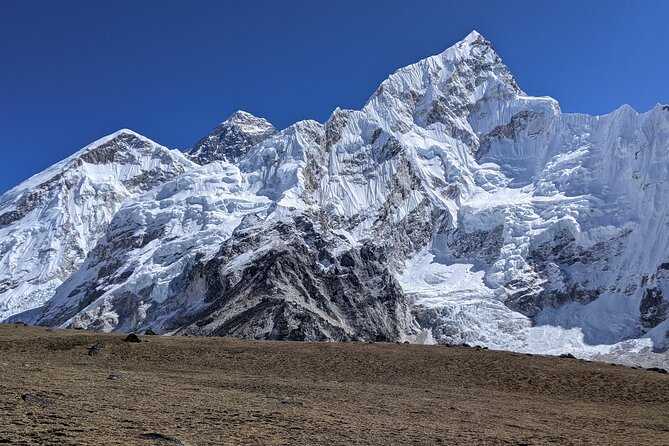
The highest point of the trek comes early in the morning, with a hike to Kala Patthar at 5,545 meters. The goal is the mountain view: Everest, Lhotse, Nuptse, and surrounding peaks appear from a strong vantage point above Gorak Shep.
This is often the visual high point of the entire route. Everest Base Camp gives you the destination, but Kala Patthar gives you the broad mountain panorama. The listed stop is about 20 minutes, and no admission fee is charged.
An early start means cold conditions and a tough climb when you are already tired. Do not underestimate it because the walking time is short. The air is extremely thin, and you may need frequent pauses. The early hour is worthwhile for the light, but your guide should set a pace that matches the group’s condition.
Days 11 and 12: Returning through Phortse and Mong Danda
Instead of following the same route all the way back, the itinerary turns through Pangboche and Phortse. This is one of the more interesting design choices. You get different views of Ama Dablam, Thamserku, and Tengboche Monastery, while also using a less crowded route.
Day 12 follows the river coming from Gokyo Lake and connects with the Gokyo trail at Phortse Thanga, listed at 3,680 meters. From there, the route climbs toward Mong Danda. This section adds variety, but it is not simply an easy stroll downhill. Descending, climbing again, and walking on tired legs can be demanding.
The return through Phortse also shows why a local guide is useful. Trail junctions and route conditions matter in the high country, especially when the group is tired. The itinerary calls this a quieter route, but no specific crowd levels can be guaranteed on your dates.
Day 13: Back to Lukla
The final trekking day follows the route through Toktok, Phakding, Ghat, and Cheplung at about 2,650 meters. The last 200 meters into Lukla are uphill, a small sting at the end of a long journey.
Once you reach Lukla, the walking portion is complete. You have time to enjoy the evening before the flight back. That buffer is useful because the following morning’s flight depends on weather and aircraft operations.
Porters carry the main load throughout the trek. One porter is assigned to two people and carries 20 kilograms, or 10 kilograms from each person. You still need a daypack with your own essentials, and you should confirm exactly what your porter arrangement covers before departure.
Days 14 and 15: Flying back and saying goodbye
Day 14 begins with the earliest possible flight from Lukla toward Kathmandu or Ramechhap. After checking into the hotel, the rest of the day is free. This gives you time to rest after the trek, though delays can change the schedule.
The final day is airport transfer according to your flight time. Pickup and private transportation are included, which removes one chore at the beginning and end of the trip.
The itinerary is listed as approximately 15 days. That word matters. Mountain flights can be delayed by poor weather, and you should not place an important international connection too close to the planned return from Lukla.
What the $1,890 price includes
At $1,890 per person, the package offers solid value if you want a guided trek with logistics arranged in advance. It includes:
- Private transportation
- Domestic flights between Kathmandu or Ramechhap and Lukla
- Sagarmatha National Park, local area, and TIMS permits
- An English-speaking, licensed local guide
- One assistant guide for groups of five or more
- Porters, with one porter for every two people
- Breakfast, lunch, and dinner during the trekking schedule
- Tea house accommodation
- Hiking poles, sleeping bag, and down jacket for use during the trek
- Trail map and achievement certificate
- Farewell dinner
- All listed fees and taxes
The meal count is specified as 14 breakfasts, 13 dinners, and 12 lunches. Lunch and dinner in Kathmandu are not included, and neither are personal snacks or drinks. You also pay for hot showers, battery charging, tips, extra nights, international airfare, and your Nepal visa.
Insurance deserves special care. The package excludes travel insurance and specifies coverage up to 6,000 meters at $200 per person. Read that wording carefully and confirm what is actually required, particularly for evacuation and high-altitude trekking.
Who should book this trek?
I would recommend it to hikers who want the classic Everest route but prefer a private group and local support. It suits people who value a measured itinerary, cultural stops, tea house lodging, and a return route that adds Phortse and Mong Danda rather than repeating every trail.
You need strong physical fitness. The company does not present this as an easy walk, and the maximum altitude is serious. You should also be comfortable with basic accommodation and with paying extra for comforts that are not included.
This trip is less suitable if you need fixed flight times, hotel-level facilities, or a completely predictable schedule. The mountains do not take appointments, and the Lukla flight can be affected by weather.
The company’s strongest service points are the personal guide and porter support. Specific guides named on company trips include Raj, Suren, Sonam, Ram, Phurpa, Rabin, Prakash, Sagar, Jal, Birsha, Ganesh, Vijay, and Teeras. Your guide may be someone else, so ask for the name and experience of your assigned leader before departure.
Should you book the Everest Base Camp Trek?
Book it if you want a well-supported, private 15-day route with the major costs handled and two useful acclimatization stops. The included flights, permits, meals, porter, sleeping bag, down jacket, and poles make the $1,890 price easier to justify.
Before paying, confirm the flight departure point, your assigned guide, hotel details in Kathmandu, the exact acclimatization side trips, and insurance requirements. If you can accept high-altitude discomfort, basic tea houses, and possible weather delays, this is a strong value-focused way to reach Everest Base Camp and Kala Patthar with a local team.
Free cancellation is available up to 24 hours before the start time. Cancellations or changes inside that period are not refunded or accepted, while a weather cancellation offers another date or a full refund.
FAQ
How long is the Everest Base Camp trek?
The trip lasts approximately 15 days, including arrival and departure days in Nepal, the Lukla flights, the trek, and the return to Kathmandu.
Where does the trek begin?
The experience begins with pickup at Tribhuvan International Airport in Kathmandu, Nepal.
Is the tour private?
Yes. Only your own group participates in this private activity.
Are flights to Lukla included?
Yes. Flights from Kathmandu or Ramechhap to Lukla and from Lukla back to Kathmandu or Ramechhap are included for all group members and staff.
What is the highest point on the trek?
Kala Patthar is the highest point, at 5,545 meters. Everest Base Camp is listed at 5,364 meters.
Are meals included?
Breakfast, lunch, and dinner are included during the trekking portion according to the stated meal schedule. Lunch and dinner in Kathmandu, personal snacks, and beverages are not included.
Is a guide provided?
Yes. The package includes an English-speaking, experienced, licensed guide. Groups of five or more receive one assistant guide.
Are porters included?
Yes. One porter is provided for every two people, and each porter carries up to 20 kilograms, or 10 kilograms from each guest.
What happens if bad weather cancels the experience?
If poor weather causes the experience to be canceled, you are offered a different date or a full refund. You can also cancel up to 24 hours before the start time for a full refund.
Just added around Kathmandu
- Private Shopping Tour in Kathmandu★ 5.0 · 3 reviews
- Nagarkot Sunrise With 7 UNESCO World Heritage Private Tour★ 5.0 · 3 reviews
- Kathmandu: Nightlife and Pub Crawl Tour★ 5.0 · 3 reviews
- Mount Everest Scenic Flight 50 Minutes★ 5.0 · 3 reviews
- Momo Cooking Class -The Art Of Making MoMo with Home Chef★ 5.0 · 3 reviews
- Kathmandu: Nagarkot, Bhaktapur, Doleswor & Sanga Statue Tour★ 5.0 · 3 reviews
- Makalu Base Camp Trek★ 5.0 · 3 reviews
- Everest Experience Trek 6 Day Hiking Adventure★ 5.0 · 3 reviews
Everest Base Camp Treks, compared.






Everest Base Camp Trek with Helicopter Return from Gorakshep to Lukla
Read our review →Browse the lists this tour appears in