
Reviewed · EVEREST BASE CAMP TREKS
Everest Base Camp Trek 15 Days
The highest goal needs steady steps. This 15-day trek gives you the classic approach to Everest Base Camp at 5,364 meters, with Sherpa villages, Buddhist monasteries, pine and rhododendron forests, glaciers, and wide mountain views along the way. I like the mix of physical challenge and local culture, and I like that the private format lets your group travel with its own guide and porters.
The strongest praise goes to the guiding teams, especially Lakpa, Pasang, Nima, Neema, Buddha Tamang, Gumbo, Tendi, and Kumar. Past guests describe guides who handled logistics carefully, watched their condition at altitude, and sometimes helped carry day bags when the walking became hard. The main drawback is clear: 15 days at high altitude demands real preparation, and the listing does not provide a full day-by-day route or details such as exact lodge standards and daily walking hours.
In This Review
- Key points to know before booking
- What the 15-day Everest trek is really asking of you
- Leaving Kathmandu at 6:15 am
- From forest paths to high Himalayan rock
- Sherpa villages and Buddhist places along the route
- Reaching Everest Base Camp at 5,364 meters
- Lodge nights, meals, and what the $2,400 covers
- Guides who make the hard days manageable
- The private group advantage
- Fitness, altitude, and the practical risks
- What to pack and what to budget for
- Booking, cancellation, and who should choose this trek
- Should you book the Everest Base Camp Trek?
- FAQ
- How long is the Everest Base Camp Trek?
- Where does the trek start?
- What time does the trek start?
- Where does the activity end?
- How high is Everest Base Camp?
- Is pickup offered?
- Is this a private activity?
- What meals are included?
- Are a sleeping bag and duffel bag provided?
- What costs are not included?
- What fitness level is required?
- Can I cancel for a full refund?
Key points to know before booking
- Everest Base Camp reaches 5,364 meters, so altitude matters as much as fitness.
- Sherpa culture is part of the journey, with traditional villages, Buddhist customs, old heritage sites, and monasteries.
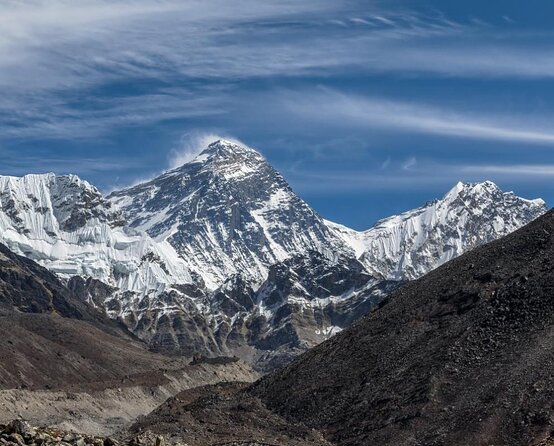
- The scenery changes as you climb, from pine and rhododendron forests to barren high-altitude terrain, glaciers, and the Khumbu icefall.
- Guides receive the highest praise, with Lakpa, Pasang, Buddha Tamang, and others noted for care, communication, and practical support.
- The $2,400 price includes meals, bags, sleeping gear, fees, and taxes, but not insurance, visa costs, snacks, drinks, or tips.
- This is a private trek, ending back at the Kathmandu meeting point after about 15 days.
What the 15-day Everest trek is really asking of you
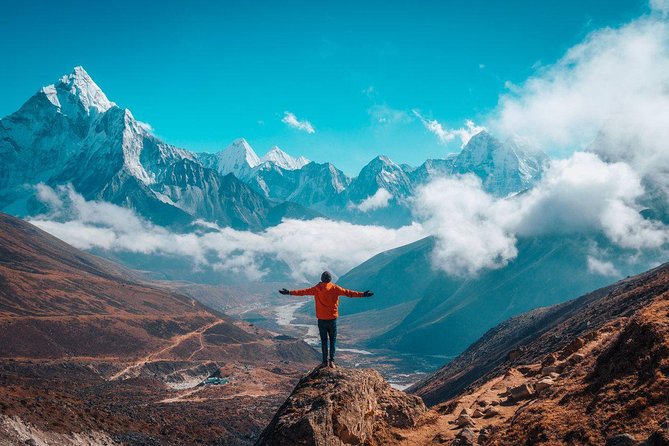
This is not a sightseeing tour with a few walks added. It is a sustained mountain trek to one of the world’s best-known high-altitude destinations. You will spend many days on foot, sleep in scenic lodges, and move through conditions that change from forested valleys to cold, barren areas near the glaciers.
The listed fitness requirement is moderate, but I would treat that phrase seriously. You do not need to be an elite athlete based on the information provided, yet you do need enough stamina for repeated days of walking and the ability to function at high altitude. The height of Base Camp is the key issue. A person who is fit at sea level can still struggle when the air gets thin.
The schedule is approximately 15 days, which gives the trip a more measured pace than a rushed visit. Still, the exact daily distances, named overnight villages, and acclimatization stops are not provided. Ask for the complete day-by-day plan before paying, especially if you want to understand how much time is spent resting, walking, or adjusting to altitude.
More Everest Base Camp Treks:
- Everest Base Camp Trek – 14 Days
★ 5.0 · 1,499 reviews - Everest Base Camp Trekking
★ 5.0 · 485 reviews - Everest Base Camp Trekking – 13 Day
★ 5.0 · 365 reviews
Leaving Kathmandu at 6:15 am
The stated start time is 6:15 am from Sherpa Expedition & Trekking on Chaksibari Marg in Kathmandu. Pickup is offered, so confirm the arrangement in advance rather than assuming someone will collect you automatically. The activity ends back at the same meeting point.
An early start makes sense for a mountain itinerary, but it also means you should organize your bags and breakfast the night before. The tour includes breakfast, lunch, and dinner, yet the practical details of where and when those meals are served are not specified.
The private format is useful here. Only your group participates, so you are not tied to a large mixed party. That can make a difference when one person needs a slower pace, extra help, or a little more time to prepare. It does not remove the physical demands, but it should make communication simpler.
From forest paths to high Himalayan rock
One of the pleasures of this trek is the change in scenery. The lower sections include pine forests and alpine rhododendrons, giving the route color and shelter before the surroundings become more exposed. These forests are not just pretty decoration. They help you feel the steady change in altitude as the vegetation thins.
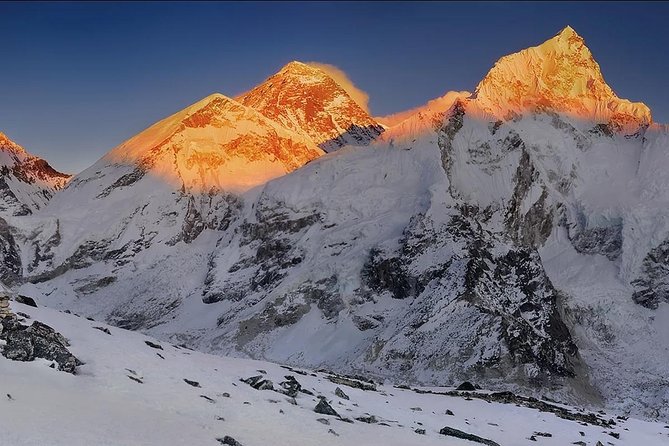
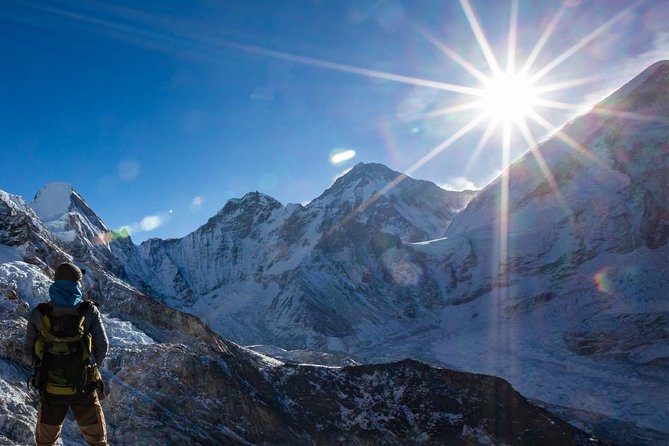
As you continue upward, the setting becomes more severe. You can expect broad views of high peaks, barren mountain terrain, ice, and the Khumbu icefall glaciers. The contrast gives the trek its shape: the walk begins in a more sheltered world and ends near a stark, frozen high-altitude environment.
The mountain views are a major reward, but they are not guaranteed at every moment. Weather is important enough that poor conditions can cancel the experience, with a different date or full refund offered in that case. That policy is reassuring, but you should still leave room in your wider Nepal plans if possible.
Sherpa villages and Buddhist places along the route
The cultural side makes this more than a march toward a famous point. The route passes through Sherpa villages shaped by Buddhist culture and customs. You will also visit old heritage sites and interesting monasteries set among the high peaks.
The supplied details do not name each village or monastery, so I would not promise a particular landmark without asking the operator for the final route. What you can count on is a combination of mountain walking and encounters with the local traditions of the Khumbu region.
Pay attention to the small details. Buddhist customs are not scenery to be rushed past, and monasteries have a different feel from ordinary sightseeing stops. Your guide can help explain what you are seeing and how to behave respectfully. This is one reason the guide matters so much. Several guides were praised for their care, enthusiasm, and understanding of the area, especially Buddha Tamang and Pasang.
More Treks and Hikes:
- Nagarkot Sunrise View and Day Hiking from Kathmandu
★ 5.0 · 471 reviews - Annapurna Circuit Trek with Tilicho Lake
★ 5.0 · 368 reviews - Everest Base Camp Trek -14 Days
★ 5.0 · 321 reviews - Annapurna base camp trek 5 Days
★ 5.0 · 252 reviews
Reaching Everest Base Camp at 5,364 meters
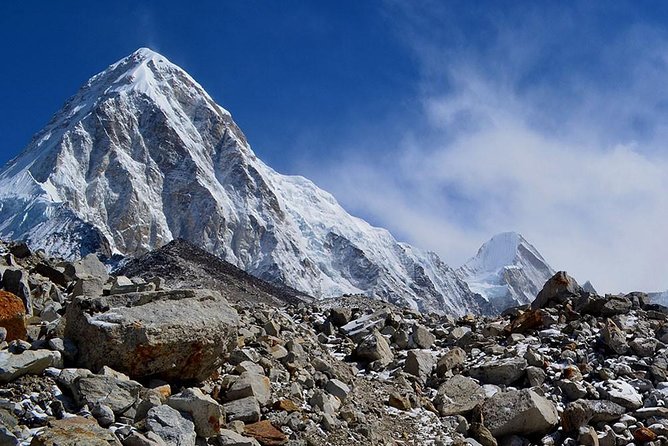
Base Camp is the emotional center of the trek. At 5,364 meters, it is high enough to make the achievement feel substantial, even though you are not climbing Mount Everest itself. You are reaching the staging area associated with expeditions to the world’s highest peak.
The approach is likely to be physically demanding simply because of the altitude and the length of the trek. Do not treat the final arrival as a casual photo stop. Give yourself time to take in the Khumbu icefall glaciers and the surrounding peaks, while listening closely to your guide about your condition.
The experience is best understood as a gradual build. The final destination matters, but the forests, villages, monasteries, lodges, and changing mountain views give the journey its meaning. If you only want a quick mountain photo, this is far more time and effort than necessary. If you want to earn the view step by step, the long format makes sense.
Lodge nights, meals, and what the $2,400 covers
The price is $2,400 per person. That is a serious amount of money, but it covers several costly basics for a 15-day mountain trip: breakfast, lunch, dinner, a sleeping bag, a duffel bag, all fees, and taxes.
The lodge accommodation is described as clean, scenic, and comfortable, with Sherpa hospitality. That sounds appealing, but the information does not promise private rooms, attached bathrooms, heating, charging facilities, or a particular lodge class. Ask about those points if they matter to you. High-altitude lodging can be simple, and comfort should be judged against the remote setting rather than city-hotel expectations.
The included sleeping bag is a practical benefit. It saves you from bringing one from home and reduces the amount of gear you need to arrange. The duffel bag is useful for organizing the equipment carried by the trekking team, though you should confirm its size and weight limit.
Drinks and snacks are not included. Alcoholic beverages and soda are excluded, as are general snacks. You should budget extra for those items, along with Nepal visa costs, travel insurance, and tips for your guide and porter.
The value is strongest if you want one company to arrange the main trekking support, meals, sleeping equipment, and bags. It is weaker if you expect every expense to be covered. The headline price is not the final cost of your Nepal trip.
Guides who make the hard days manageable
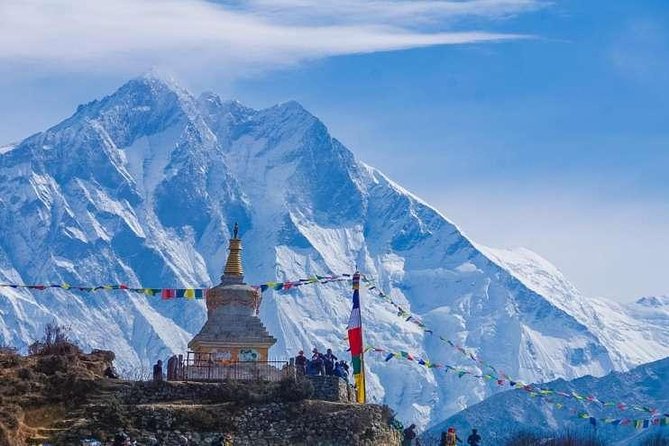
The most consistent strength of this experience is its guiding team. Lakpa and Pasang receive especially warm praise, while Nima, Neema, Buddha Tamang, Gumbo, Tendi, and Kumar are also singled out for care and support.
The useful detail is not simply that the guides were friendly. Pasang was praised for handling a delayed arrival and meeting a group late at night to prepare the logistics. Other feedback describes guides who paid close attention to altitude adaptation and physical condition. Lakpa and the porters were also credited with going beyond basic duties, including carrying day bags when exhaustion set in.
That kind of help is valuable on a trek. A good guide does more than point toward the next mountain. You need someone who communicates clearly, notices when you are struggling, and keeps the practical side of the journey under control.
Your booking may not be assigned to one particular guide. If you have a preference, ask before departure. The names above show the quality of individuals associated with the company, but they do not guarantee who will lead your group.
The private group advantage
A private trek gives you control that a large group often cannot. You can walk at your group’s pace, discuss concerns directly with the guide, and avoid waiting for strangers at every stop. This is especially useful when people in your party have different levels of fitness.
There is a tradeoff. A private group can be more expensive per person than joining a larger departure, although the $2,400 price may already reflect the support included. You also do not have a built-in group of new companions unless your own party provides that social side.
The private format suits couples, families, friends, and solo bookers who prefer close support. A solo trekker can still book a private activity, and the feedback from a solo participant points to the value of feeling safe and well looked after by the guide team.
Fitness, altitude, and the practical risks
The tour asks for moderate physical fitness, but you should prepare for more than ordinary sightseeing. The trip lasts about 15 days and reaches 5,364 meters. That combination means you need patience, steady endurance, and a willingness to slow down.
Altitude is the concern you cannot train for perfectly. You can improve your general fitness, but you cannot assume that strong legs guarantee an easy time at high elevation. Tell your guide promptly if you feel unwell, and follow the guide’s instructions about pace and rest.
The route includes forests, villages, high mountain terrain, and glaciers. Conditions may change, and weather can affect the schedule. The cancellation terms allow a full refund or a different date if poor weather cancels the experience, but it is still wise to avoid booking tight onward connections.
The trek is not suitable for someone seeking comfort with little exertion. It is also not a good choice if you want a completely fixed timetable with no weather or altitude concerns. The mountains set some of the rules.
What to pack and what to budget for
The included sleeping bag and duffel bag reduce your equipment burden, but you still need personal trekking gear. The provided information does not give a formal packing list, so ask the company for one before leaving.
At a minimum, clarify what you must supply for clothing, footwear, personal medicines, water, snacks, and weather protection. Do not assume that the included bags cover every packing need. You should also plan for the items specifically excluded from the price:
- Nepal visa
- Travel insurance
- Tips for the guide and porter
- Snacks
- Soda and other soft drinks
- Alcoholic beverages
Insurance deserves special attention because this is a high-altitude trek. The tour price does not include it, and the information supplied does not describe coverage. Check the policy carefully before departure.
Booking, cancellation, and who should choose this trek
Confirmation is received at booking, and the meeting point is near public transportation. You can cancel for a full refund up to 24 hours before the experience starts. Changes or cancellations inside that 24-hour window are not accepted for a refund.
The activity requires good weather and a minimum number of participants. If the operator cancels for either reason, you are offered another date or experience, or a full refund. Since the trek is private, ask how the minimum number applies to your booking.
You should choose this trek if Everest Base Camp is a major personal goal and you want a supported, culturally focused journey rather than an independent hike. It also suits you if you value a private group, included meals, trekking bags, and a guide who can help with altitude and logistics.
You should think twice if you have limited walking fitness, a strict short holiday schedule, or little tolerance for basic lodge conditions. Ask for the complete itinerary, daily walking times, altitude plan, lodge details, guide assignment, and porter arrangements before you commit.
Should you book the Everest Base Camp Trek?
I would book this trek if I wanted a structured route to Everest Base Camp with strong guide support and a clear focus on Sherpa culture. The repeated praise for Lakpa, Pasang, Buddha Tamang, and the wider support team is encouraging, and the included meals, sleeping bag, duffel bag, fees, and taxes add real value to the $2,400 price.
I would not book without first requesting the missing practical details. The exact day-by-day plan, accommodation standards, daily walking hours, altitude schedule, and final guide assignment all matter. If those answers satisfy you and you are ready for a serious 15-day effort, this is a compelling way to reach the foot of Everest.
FAQ
How long is the Everest Base Camp Trek?
The trek lasts approximately 15 days.
Where does the trek start?
It starts at Sherpa Expedition & Trekking on Chaksibari Marg, Kathmandu 44600, Nepal.
What time does the trek start?
The stated start time is 6:15 am.
Where does the activity end?
The activity ends back at the meeting point in Kathmandu.
How high is Everest Base Camp?
Everest Base Camp is listed at 5,364 meters.
Is pickup offered?
Yes, pickup is offered. Confirm the exact pickup arrangement with the operator before departure.
Is this a private activity?
Yes. Only your group participates in the activity.
What meals are included?
Breakfast, lunch, and dinner are included.
Are a sleeping bag and duffel bag provided?
Yes. A sleeping bag and duffel bag are included.
What costs are not included?
Nepal visa costs, travel insurance, guide and porter tips, alcoholic beverages, soda, and snacks are not included.
What fitness level is required?
The activity recommends a moderate physical fitness level.
Can I cancel for a full refund?
Yes, you can cancel up to 24 hours before the experience start time for a full refund. If poor weather or an insufficient minimum number of participants causes the operator to cancel, you are offered a different date or experience, or a full refund.
Just added around Kathmandu
- Private Shopping Tour in Kathmandu★ 5.0 · 3 reviews
- Nagarkot Sunrise With 7 UNESCO World Heritage Private Tour★ 5.0 · 3 reviews
- Kathmandu: Nightlife and Pub Crawl Tour★ 5.0 · 3 reviews
- Mount Everest Scenic Flight 50 Minutes★ 5.0 · 3 reviews
- Kathmandu: Nagarkot, Bhaktapur, Doleswor & Sanga Statue Tour★ 5.0 · 3 reviews
- Momo Cooking Class -The Art Of Making MoMo with Home Chef★ 5.0 · 3 reviews
- Makalu Base Camp Trek★ 5.0 · 3 reviews
- Everest Experience Trek 6 Day Hiking Adventure★ 5.0 · 3 reviews
Everest Base Camp Treks, compared.






Everest Base Camp Trek with Helicopter Return from Gorakshep to Lukla
Read our review →Browse the lists this tour appears in