
Reviewed · EVEREST BASE CAMP TREKS
Everest Base Camp Trek
The mountain views begin before the hard work does. This 14-day Everest Base Camp trek links Kathmandu, Lukla, Namche Bazaar, Tengboche, Dingboche, Gorak Shep, and Everest Base Camp in one demanding Himalayan journey. I like the built-in acclimatization days at Namche and Dingboche, and I like that the price includes flights, permits, meals, a guide, trekking gear, and airport transfers.
The strongest part of the experience is its personal support. Guides such as Buddhi and Pawan are repeatedly praised for care, encouragement, and good planning. The main caution is the altitude and physical strain. You need strong fitness, patience, and a willingness to accept flight delays, basic mountain facilities, and extra costs for porters, showers, hot water, laundry, phone use, and drinks.
In This Review
- Five things to know before you book
- What the 14-day route is really like
- Day 1 in Kathmandu: a gentle start
- Day 2 to Namche Bazaar: Lukla and the first real climb
- Day 4 at Namche Bazaar: use the rest day wisely
- Day 5 at Tengboche: mountain views and a major monastery
- Day 6 and Day 7 at Dingboche: the essential pause
- Day 8 toward Lobuche: the Khumbu Glacier
- Day 9 at Everest Base Camp: the main goal
- Day 10 at Gorak Shep and Kala Patthar
- Days 11 and 12: the return through Pheriche and Namche
- Days 13 and 14: Kathmandu and departure
- What the $1,799.27 price includes
- Guides, group style, and support
- Fitness, equipment, and practical cautions
- Weather, cancellation, and booking timing
- Who should book this trek?
- FAQ
- How long is the Everest Base Camp trek?
- Where does the trek begin?
- Are flights to Lukla included?
- Is accommodation in Kathmandu included?
- Are meals included?
- Is a guide included?
- Do I need travel insurance?
- Can I cancel for a full refund?
- Should you book it?
Five things to know before you book
- Lukla flights shape the whole trip: The trek begins and ends with domestic flights from Kathmandu, and weather can affect the schedule.
- Acclimatization is built in: You spend a full day around Namche Bazaar and another at Dingboche, both important pauses before higher ground.
- The price covers major essentials: At $1,799.27 per person, the package includes flights, trekking permits, meals, 11 mountain nights, a guide, and a sleeping bag, down jacket, and duffel bag.
- Buddhi and Pawan receive special praise: The guiding team is described as attentive, supportive, cheerful, and careful during difficult sections.
- Everest Base Camp is not the only big moment: Khumbu Glacier, Tengboche Monastery, Kala Patthar, and the memorial stones for lost climbers add weight and variety to the trek.
- Bring a serious travel insurance policy: Emergency helicopter arrangements are included, but your travel insurance company pays the bill.
What the 14-day route is really like
This is not a sightseeing holiday with a little walking added. It is a sustained mountain trek with long days, cold conditions, thin air, and simple accommodation. The route gives you time to adjust, but it still asks a lot from your legs and lungs.
You will start in Kathmandu, fly to Lukla, walk through Phakding and Namche Bazaar, then continue toward Tengboche, Dingboche, Lobuche, Gorak Shep, and Everest Base Camp. The return follows a quicker downhill route through Pheriche and Namche before the flight back to Kathmandu.
The itinerary lists a few stop names and timings in a confusing way. For example, Day 1 refers to Mount Everest even though the day is mainly airport pickup, hotel transfer, and dinner in Kathmandu. Day 9 lists Everest Camp II and only four minutes, which clearly does not describe the actual walking time to Base Camp. Treat the schedule as a route outline, not a minute-by-minute plan.
More Everest Base Camp Treks:
- Everest Base Camp Trek – 14 Days
★ 5.0 · 1,499 reviews - Everest Base Camp Trekking
★ 5.0 · 485 reviews - Everest Base Camp Trekking – 13 Day
★ 5.0 · 365 reviews
Day 1 in Kathmandu: a gentle start
After you land at Tribhuvan International Airport, a representative from Nepal High Trek and Expedition receives you and takes you to the arranged hotel. The first evening includes dinner, a useful chance to meet the guide and sort out any final questions before the mountain section begins.
This opening is simple but valuable. You avoid arriving in Lukla on the same day as an international flight, and you have a chance to settle in before the early domestic departure. Airport pickup and drop-off are included for both domestic and international flights.
Your Kathmandu hotel is not included, so check that cost before you confirm your total budget.
Day 2 to Namche Bazaar: Lukla and the first real climb
The morning flight to Lukla is the gateway to the Everest region. Lukla is the starting point for the walking route, and from here the trail heads toward Phakding before continuing to Namche Bazaar.
The walk to Namche crosses suspension bridges over the Dudh Koshi River. You will see Mount Thamserku, listed at 6,618 meters, and the river valley begins to give the trek its grand Himalayan scale.
The key advice here is to walk slowly. The route is not won by racing the first uphill sections. Your guide will set the pace, and that matters because you are beginning to gain altitude. Namche is reached after a demanding stretch, but it also feels like a genuine mountain town rather than just a sleeping stop.
Day 4 at Namche Bazaar: use the rest day wisely
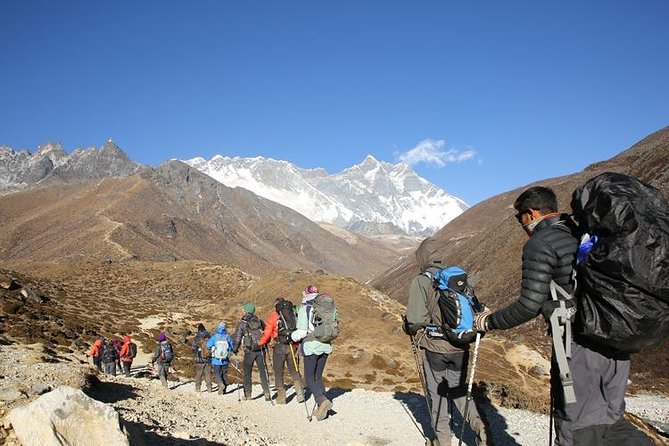
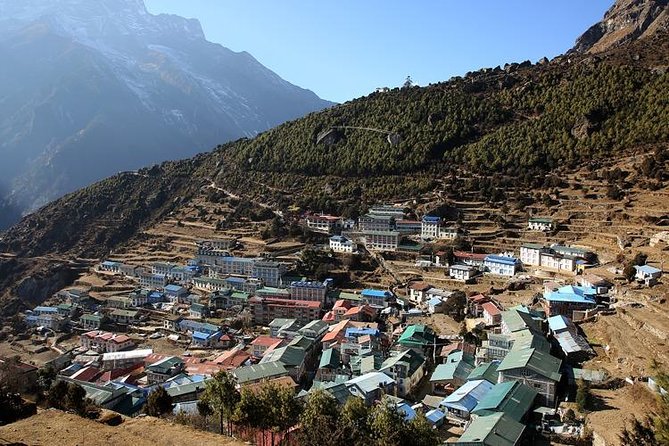
Namche is your first major acclimatization stop. You spend the day exploring the area instead of pushing farther up the valley.
The town has ATMs, banks, internet cafes, and an Irish pub, so it is one of the last places where you can handle practical errands with relative ease. I would use this day to check cash, contact family, and recharge devices if needed. Battery charging later in the mountains costs extra.
The day includes a short walk around the surrounding area. The point is not to exhaust yourself. You are helping your body adjust before the route climbs higher. Take the views, keep your pace easy, and do not treat a rest day as wasted time.
More Treks and Hikes:
- Nagarkot Sunrise View and Day Hiking from Kathmandu
★ 5.0 · 471 reviews - Annapurna Circuit Trek with Tilicho Lake
★ 5.0 · 368 reviews - Everest Base Camp Trek -14 Days
★ 5.0 · 321 reviews - Annapurna base camp trek 5 Days
★ 5.0 · 252 reviews
Day 5 at Tengboche: mountain views and a major monastery
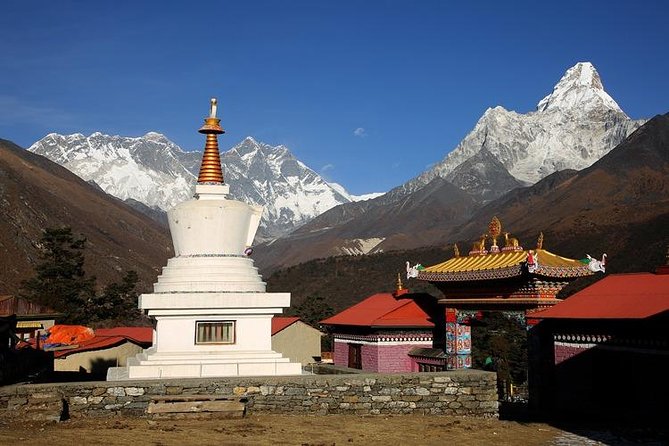
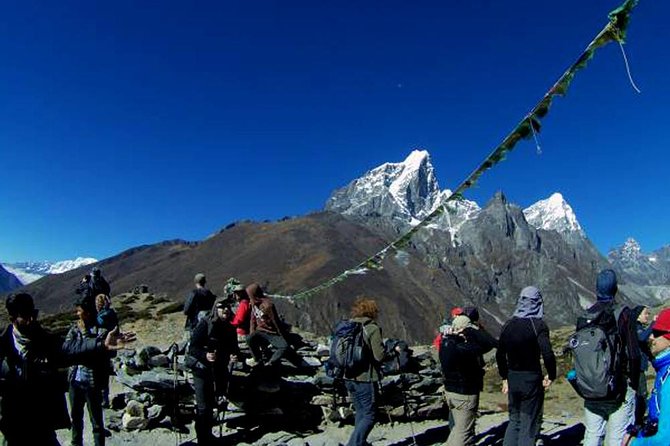
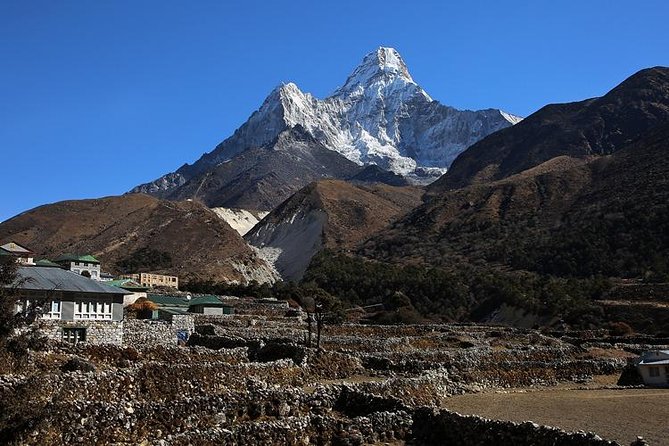
From Namche, the route follows the cold upper valley toward Tengboche. The views open toward Everest, Nuptse, Lhotse, Ama Dablam, and other high peaks.
Tengboche Gompa gives this part of the trek a strong cultural element. You have time to visit the monastery and take photographs with the white mountains behind it. The stop is short in the schedule, but its setting is one of the visual highlights of the route.
You should expect the air to feel colder and the walking to become more serious. The scenery can tempt you to stop constantly for photos, but keep an eye on your energy. The days ahead are harder.
Day 6 and Day 7 at Dingboche: the essential pause
The route continues from Tengboche to Dingboche, with a morning visit to the monastery before the walk. Dingboche sits higher and acts as another important base for altitude adjustment.
The following day is set aside for acclimatization. The route includes a shorter hike toward Chhukung through the Imja Khola valley, with views toward Lhotse and the surrounding peaks. This is a smart design choice. You gain some height during the day, then return to Dingboche rather than sleeping still higher.
Altitude affects people differently, and no itinerary can remove that risk. You need to tell your guide if you feel unwell instead of trying to prove your toughness. The supportive style associated with guides such as Buddhi is especially useful on days like this, when encouragement and sensible pacing matter more than speed.
Day 8 toward Lobuche: the Khumbu Glacier
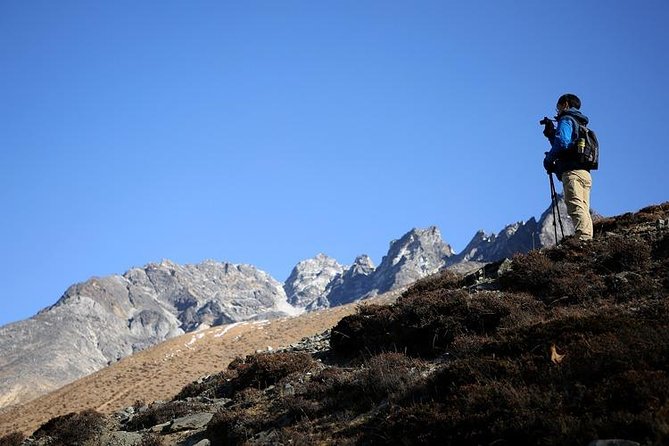
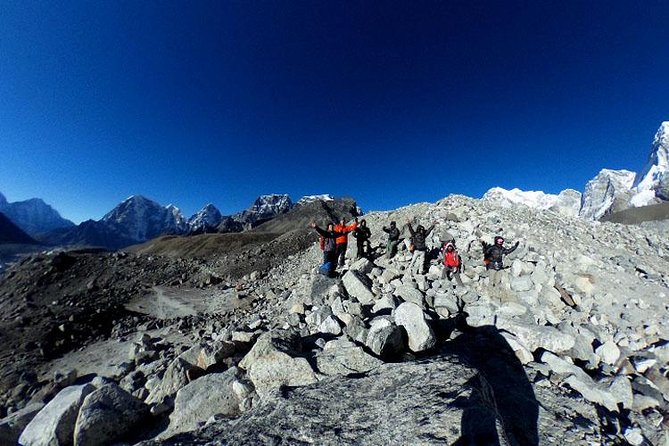
After Dingboche, the trek moves into a harsher, more exposed section. You follow the lateral moraine of the Khumbu Glacier and pass stone memorials honoring climbers who died on nearby peaks.
This is one of the most serious moments of the journey. The memorials add a quiet human note to what can otherwise feel like a grand mountain postcard. They remind you that Everest is not simply a scenic destination. It is a place of real risk and loss.
The route continues toward Lobuche, where cold, altitude, and fatigue become part of the daily calculation. Your included sleeping bag and down jacket are practical benefits here. You should still pack suitable personal clothing, since the package does not mean every item of mountain equipment is supplied.
Day 9 at Everest Base Camp: the main goal
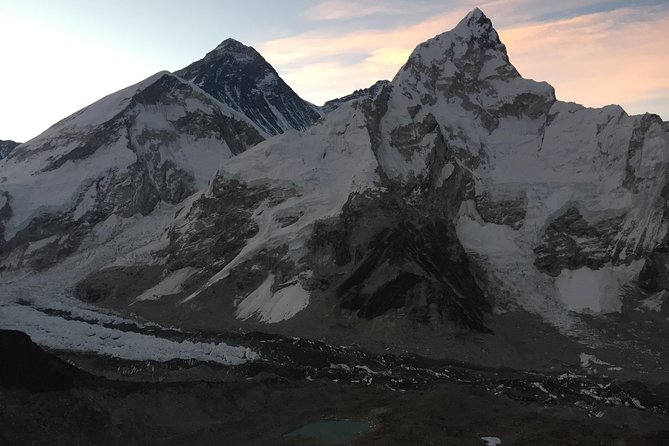
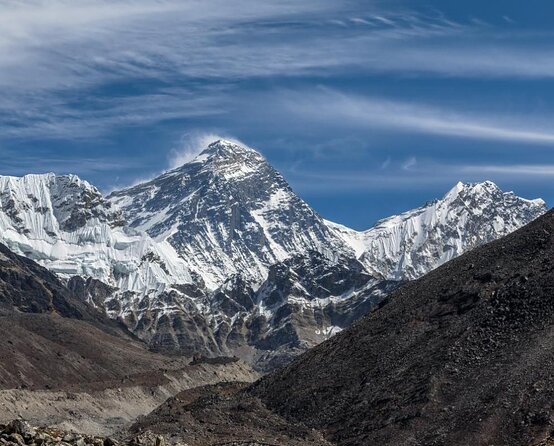
From Lobuche, you continue to Gorak Shep, then walk toward Everest Base Camp. The trail passes among some of the world’s highest peaks, with the Khumbu Glacier adding a rough, icy character to the route.
Reaching Base Camp is the emotional center of the trek. You are not climbing Mount Everest, but you are standing at the staging ground used by expeditions attempting the summit. The achievement comes from getting there on foot after days of gradual ascent.
The schedule allows time for photographs, but do not expect a polished attraction with signs, shops, or easy access. This is a remote mountain destination, and conditions can be rough. The altitude also means that even a modest walk can feel far harder than its distance suggests.
Day 10 at Gorak Shep and Kala Patthar
The next morning begins early with a climb to Kala Patthar. The route is designed for views as sunlight reaches the snow and high peaks. From this viewpoint, you can see a striking collection of Himalayan summits, including Everest.
For many people, Kala Patthar provides the best mountain panorama of the entire trip. Base Camp gives you the sense of arriving at the destination, while Kala Patthar gives you the wider view that helps you understand the scale of the peaks around you.
The ascent is tiring, especially after the previous day. Start with realistic expectations. The schedule describes a continuous climb lasting several hours, and the supplied stop duration is not a reliable guide to the complete walking time.
Days 11 and 12: the return through Pheriche and Namche
The route turns downhill through Pheriche, then takes a slightly different trail toward Orsho and Pangboche. At Pangboche, you can explore an old monastery associated with stories about the scalp and bones of the yeti.
This section gives you more than a simple retreat from Base Camp. You see different parts of the valley and revisit familiar places from a new direction. The descent can feel easier on your breathing, but downhill walking still taxes tired knees and ankles.
From Namche, you continue back to Lukla. The final walking day is listed at about three hours, followed by leisure time in the Lukla valley and an overnight stay at a guesthouse. That evening may feel relaxed, but keep some patience in reserve. Your return flight is still dependent on weather and operating conditions.
Days 13 and 14: Kathmandu and departure
The flight from Lukla returns you to Kathmandu within a few hours. After landing, the itinerary allows time to visit Kathmandu, including Kathmandu Durbar Square and views across the Kathmandu Valley.
This is a welcome change after nearly two weeks of mountain trails. Kathmandu Durbar Square adds a cultural finish, though the exact sightseeing time may depend on the flight schedule.
The final day is for packing, a farewell program, and transfer to Tribhuvan International Airport. You are asked to reach the airport three hours before the flight. Airport transfer is included, which removes one small but useful task from the last morning.
What the $1,799.27 price includes
The price offers good value if you want a guided trek with the major route costs bundled together. It includes:
- Round-trip Kathmandu to Lukla flights
- A government-licensed mountain guide from Kathmandu
- Sagarmatha National Park permits
- Khumbu and Pasang Lhamu Rural Municipality entrance fees
- 11 nights of mountain accommodation
- 12 breakfasts, 12 lunches, and 11 dinners as listed
- Sleeping bag, down jacket, and duffel bag
- Three cups of hot tea during the trek
- Medical kit
- Domestic and international airport pickup and drop-off
- Emergency helicopter arrangements, with payment handled by your insurance company
There is an odd duplication in the meal section, which separately lists 13 lunches, 14 breakfasts, and 13 dinners. Confirm the final meal count with the operator before departure, especially since the main inclusion list gives different totals.
The major extra is porter cost. You also pay for Kathmandu accommodation, insurance, tips, phone calls, laundry, battery charging, bottled water, hot water, showers, and expenses caused by strikes, delays, or canceled flights. The headline price is useful, but it is not your complete trip budget.
Guides, group style, and support
This is a private activity, so only your group participates. That can give you more control over pace and rest breaks than a large shared departure.
The strongest praise focuses on the guides. Buddhi is singled out for leading with care and positivity, while Pawan receives praise for support on a demanding route. The guiding team is repeatedly described as attentive, friendly, and good at keeping people moving through difficult days.
That support has real value at altitude. You will still do the walking yourself, but a good guide can help with pacing, route decisions, morale, and recognizing when someone needs help. The operator also provides a medical kit and has an emergency helicopter arrangement, though your insurance must cover the actual rescue cost.
Fitness, equipment, and practical cautions
The tour requires a strong physical fitness level. You should be ready for repeated days of walking, significant uphill and downhill sections, cold conditions, and altitude. The itinerary includes acclimatization days, but those are not a guarantee that everyone will feel well.
The included sleeping bag, down jacket, and duffel bag reduce the amount of major gear you need to arrange. You should still confirm exactly what personal clothing and equipment you must bring.
Several small costs add up in the mountains. Hot water, showers, bottled water, phone calls, laundry, and battery charging are not included. Tips for guides and porters are also separate, so carry enough money for these items.
Sun protection matters. One practical tip from the trip feedback is to use sunscreen every day, even when the air feels cold. At high altitude, bright sun and snow can catch you off guard.
Weather, cancellation, and booking timing
The experience is commonly booked about 77 days in advance, which gives you a useful planning target. The start time shown is 8:15 a.m., but the early Lukla flight and airport transfer make it wise to confirm the exact pickup details.
You can cancel free of charge up to 24 hours before the start time for a full refund. Changes or cancellations inside 24 hours are not accepted for a refund. Since the trek depends on good weather, a weather cancellation offers either another date or a full refund.
The flight schedule is one of the biggest practical uncertainties. Delays or cancellations can create extra costs, and those costs are not covered by the tour price. Travel and rescue insurance is not optional in practical terms, even though it is listed as your responsibility.
Who should book this trek?
I would recommend this trek to you if reaching Everest Base Camp is a major personal goal and you want a structured private trip rather than arranging each permit, flight, meal, and mountain night yourself.
It suits people who value strong guide support, built-in acclimatization, and a package that handles the main route logistics. It is also a good fit if you want cultural stops such as Tengboche and Pangboche alongside the mountain views.
I would hesitate if you dislike basic accommodation, need a fixed timetable, or are not comfortable with strenuous walking and altitude. The itinerary has some confusing timing labels, and weather can disrupt both the outbound and return flights. You should also budget beyond the advertised price for insurance, porters, tips, Kathmandu lodging, and mountain services.
FAQ
How long is the Everest Base Camp trek?
The experience lasts approximately 14 days, including arrival and departure in Kathmandu, the Lukla flights, the trek, acclimatization days, and the return.
Where does the trek begin?
The trip begins in Kathmandu, Nepal. You are picked up at Tribhuvan International Airport before transferring to the arranged hotel.
Are flights to Lukla included?
Yes. Round-trip domestic flights between Kathmandu and Lukla are included.
Is accommodation in Kathmandu included?
No. The package includes 11 nights of accommodation on the trek, but your hotel in Kathmandu is not included.
Are meals included?
Yes. Breakfast, lunch, and dinner are included during the trekking program. The supplied details show different meal totals in separate sections, so confirm the final count before departure.
Is a guide included?
Yes. A government-licensed mountain guide from Kathmandu is included. The tour is private, so only your group participates.
Do I need travel insurance?
Yes. Travel and rescue insurance is not included. Emergency helicopter arrangements can be made, but the payment is handled by your travel insurance company.
Can I cancel for a full refund?
You can cancel at least 24 hours before the experience start time for a full refund. Cancellations or changes made less than 24 hours before the start time are not refunded or accepted.
Should you book it?
Book this trek if you want a well-supported route to Everest Base Camp and accept that the mountain sets the schedule. The package covers the costly essentials, and the praise for guides such as Buddhi and Pawan points to a team that takes care of people when the trail gets tough.
Before paying, confirm the meal totals, hotel arrangements, porter charges, flight-delay plan, and exact walking schedule. If you arrive prepared for altitude, cold, basic facilities, and extra expenses, the $1,799.27 price can be a solid value for one of the world’s great trekking goals.
Just added around Kathmandu
- Private Shopping Tour in Kathmandu★ 5.0 · 3 reviews
- Nagarkot Sunrise With 7 UNESCO World Heritage Private Tour★ 5.0 · 3 reviews
- Mount Everest Scenic Flight 50 Minutes★ 5.0 · 3 reviews
- Kathmandu: Nightlife and Pub Crawl Tour★ 5.0 · 3 reviews
- Momo Cooking Class -The Art Of Making MoMo with Home Chef★ 5.0 · 3 reviews
- Kathmandu: Nagarkot, Bhaktapur, Doleswor & Sanga Statue Tour★ 5.0 · 3 reviews
- Makalu Base Camp Trek★ 5.0 · 3 reviews
- Everest Experience Trek 6 Day Hiking Adventure★ 5.0 · 3 reviews
Everest Base Camp Treks, compared.






Everest Base Camp Trek with Helicopter Return from Gorakshep to Lukla
Read our review →Browse the lists this tour appears in