
Reviewed · EVEREST BASE CAMP TREKS
Everest Base Camp Trek
The mountains start before the trail. A short flight toward Lukla opens the journey with Himalayan views, then the route moves through Sherpa villages, Buddhist monasteries, Sagarmatha National Park, and the glacier country below Everest. I like the thoughtful acclimatization day in Namche Bazaar and the small group limit of eight, which should make the pace and support more personal.
I also like that the $1,300 price includes airport transfers, domestic flights, two Kathmandu hotel nights, and most meals. The main consideration is altitude: Kala Patthar reaches 5,550 meters, and the trek includes several long days on rough, steep ground. Lukla flights can also be delayed or canceled by weather, so you need patience as well as fitness.
In This Review
- Key points to know before booking
- What the $1,300 price really buys you
- Kathmandu begins with useful preparation
- Lukla to Phakding: the trail starts quickly
- Namche Bazaar brings the first real test
- Tengboche offers the trek’s spiritual pause
- Dingboche gives you time to adjust again
- Lobuche follows memorials and glacier views
- Everest Base Camp is the emotional high point
- Kala Patthar delivers the best mountain view
- The return route is more than a repeat
- Flight delays are part of the practical reality
- The guides can shape the whole trek
- Who should book this Everest trek?
- Should you book the 14-day Everest Base Camp Trek?
- FAQ
- How long does the Everest Base Camp Trek take?
- What is the highest point of the trek?
- Is airport pickup included?
- Are flights to Lukla included?
- Why might I need to use Ramechhap Airport?
- What meals are included?
- How large is the group?
Key points to know before booking
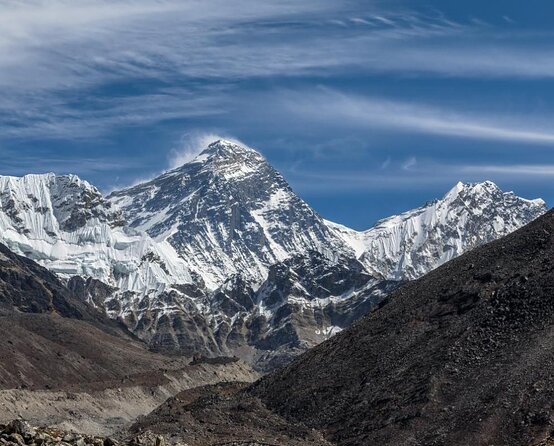
- Kala Patthar reaches 5,550 meters: This is the highest point of the trek and the place planned for sunrise views of Everest.
- Namche gets a full acclimatization day: You visit the Everest View Point and Sherpa Museum before climbing higher.
- The group is limited to eight people: That is useful on narrow trails and during changes caused by weather.
- Flights may use Ramechhap: During the busy season, you may drive from Kathmandu to Ramechhap Airport before flying to Lukla.
- Guide support is a major part of the trip: Ram, Prakash, Gore, Bishnu, Rajesh, Tilak, Binode, Sanjay, and porter Amer are among the staff praised for calm help and encouragement.
- The price covers the expensive essentials: Flights, airport transfers, two Kathmandu hotel nights, breakfast, lunch, and dinner are included, but drinks, personal spending, and tips are not.
What the $1,300 price really buys you
At first glance, $1,300 is a sizeable price for a 14-day walking trip. It becomes more reasonable when you count the two-way flight between Kathmandu and Lukla, or the Ramechhap alternative during peak periods. Those flights are not a minor extra. They are the gateway to the trail and one of the parts most exposed to weather and air traffic.
The package also includes airport pickup and final drop-off, two nights in Kathmandu on a bed-and-breakfast plan, all listed fees and taxes, and 13 breakfasts, 11 lunches, and 11 dinners. That removes several regular costs and gives you a guide team to help with the route and changing conditions.
I would still ask one direct question before paying: exactly which mountain lodges and nights are included in the package price. The schedule clearly includes overnight stops in Phakding, Namche Bazaar, Tengboche, Dingboche, Lobuche, Gorak Shep, Pheriche, and Lukla, but the supplied inclusions do not spell out every lodge night. Clarify that point in writing.
Personal expenses, drinks, alcohol, and tips are extra. Alcohol is only available to people over 18, and at high altitude it may not be a sensible choice anyway. Group discounts are offered, which can improve the value for families or friends booking together.
More Everest Base Camp Treks:
- Everest Base Camp Trek – 14 Days
★ 5.0 · 1,499 reviews - Everest Base Camp Trekking
★ 5.0 · 485 reviews - Everest Base Camp Trekking – 13 Day
★ 5.0 · 365 reviews
Kathmandu begins with useful preparation
Day one is simple but important. A staff member meets you at the airport, drives you to a hotel near Thamel, and holds a pre-trip meeting to prepare you for the morning departure.
This is not a sightseeing day, and that is fine. You get a chance to meet the team, check your bags, and ask last-minute questions before the mountains take over. With a demanding route ahead, a clear briefing matters more than a rushed visit to another temple.
The return to Kathmandu at the end of the trip includes another airport transfer. If you have a later flight home, the final day is left open for extra plans, though the exact timing should be checked against the Lukla flight schedule.
Lukla to Phakding: the trail starts quickly
The flight to Lukla takes about 40 minutes and offers aerial views of the Himalayas. The wording around the flight is important: poor weather and local conditions can cause delays or cancellations. During the busy season, air traffic may shift flights from Kathmandu to Ramechhap, with a road transfer required.
After landing, you walk toward Phakding for roughly three hours. This first trail section is relatively short compared with later days, giving you time to settle into the walking rhythm and explore the local community near your overnight stop.
Lukla is famous for its short mountain runway and dramatic setting. The practical lesson is to keep your schedule flexible. Do not arrange a tight international connection immediately after the expected return flight from Lukla.
Namche Bazaar brings the first real test
The walk from Phakding to Namche Bazaar takes about six hours. The route follows the western banks of the Dudh Koshi, crosses small suspension bridges, and passes through Monjo before the trail climbs toward the main Sherpa center of the region.
Namche sits at about 3,440 meters and marks a clear change in the trek. The path becomes more demanding, and the air becomes thinner. The village is also a useful place to pause, eat, and adjust to the altitude.
Day four is a dedicated acclimatization day. You do not simply sleep late and call it rest. The plan includes a walk to the Everest View Point, followed by time in Namche and a visit to the Sherpa Museum. This is smart scheduling because your body gets a chance to adjust while you still have access to a larger settlement.
The Everest View Point gives you broad mountain views, including Everest and surrounding peaks. The Sherpa Museum adds cultural and mountaineering context, making Namche more than a meal stop. I especially like this part of the schedule because a good acclimatization day should have gentle activity, not complete inactivity.
More Treks and Hikes:
- Nagarkot Sunrise View and Day Hiking from Kathmandu
★ 5.0 · 471 reviews - Annapurna Circuit Trek with Tilicho Lake
★ 5.0 · 368 reviews - Everest Base Camp Trek -14 Days
★ 5.0 · 321 reviews - Annapurna base camp trek 5 Days
★ 5.0 · 252 reviews
Tengboche offers the trek’s spiritual pause
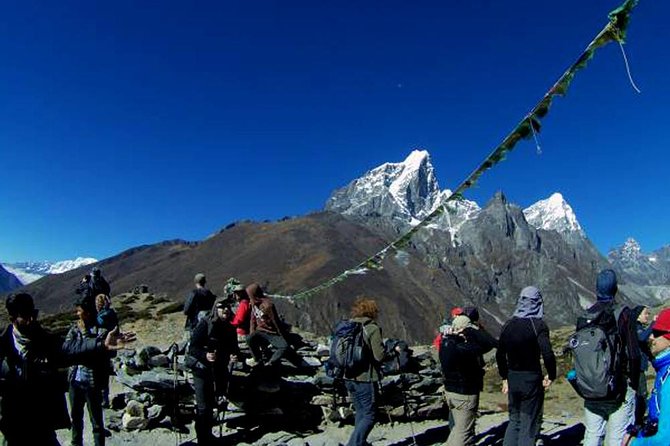
From Namche, the trail climbs along a high route above the Dudh Koshi toward Tengboche. The walk takes about five hours and provides views of Everest, Nuptse, Lhotse, Thamserku, Kwangde, and other major peaks.
Tengboche Monastery is one of the most memorable stops on the route. Its setting gives the day a calmer mood after the hard climb from the lower valleys. The monastery is not just a photo stop. It helps you see how Buddhist practice and Sherpa life remain part of the mountain journey.
There is a practical tradeoff here. Tengboche is reached after a sustained uphill section, and the trail can feel tiring even before the highest parts of the route. Keep your pace steady rather than trying to match the fastest person in the group.
Dingboche gives you time to adjust again
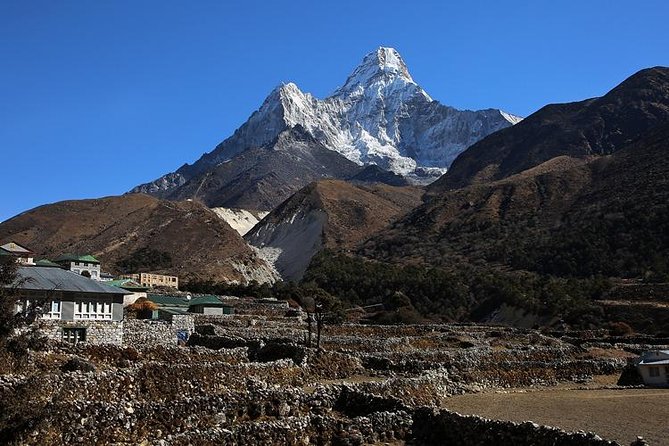
Day six leads through rhododendron forests and meadows toward the Buddhist nunnery at Deboche. You then cross the Imja Khola, with views connected to Island Peak and Amphu Laptsa Peak, before reaching Dingboche after about five hours.
Dingboche is an important staging point before the trek moves into harsher, higher country. Day seven is another rest and acclimatization day, with a short walk of around three hours available if you feel ready.
This is where the trip asks for discipline. You may feel healthy and eager to continue, but altitude problems do not always arrive with much warning. Use the rest day properly, follow the guide’s advice, and avoid treating it as wasted time.
Lobuche follows memorials and glacier views
The walk to Lobuche takes about six hours. You pass through Dughla and climb a hill lined with memorials to Sherpas who died on Everest expeditions. It is a sobering part of the route and gives the mountain a human dimension that photographs cannot provide.
The trail then continues beside the Khumbu Glacier moraine, with views toward Kala Patthar and Pumori. The ground becomes stony and uneven, and the altitude makes every uphill section feel longer.
Lobuche is not a day for rushing. The route is physically demanding, and you need to keep enough energy for the next day, when you reach Everest Base Camp. Good guide support matters here. Several guides connected with this company, including Ram and Prakash, are praised for keeping people calm and motivated when the walking becomes hard.
Everest Base Camp is the emotional high point
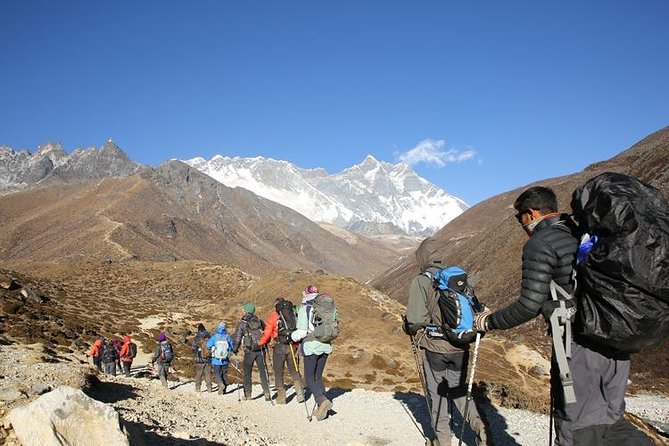
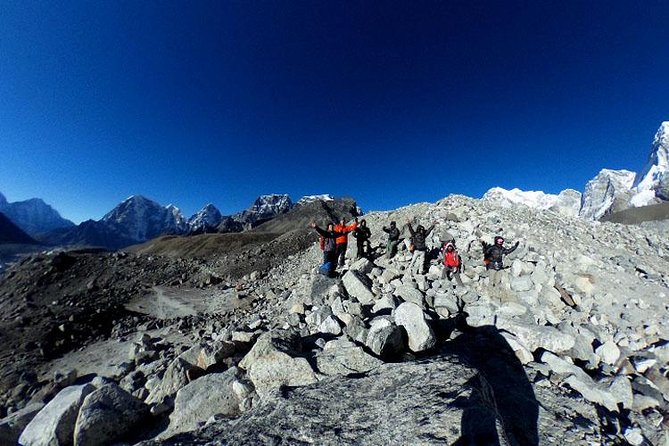
The route from Lobuche to Everest Base Camp takes about six hours, with the Base Camp section scheduled after lunch. You cross stony ground, moraines, and streams before reaching the Khumbu Glacier and the base camp area.
The view is not a neat postcard of the summit. Everest Base Camp is a working mountaineering site, and the surrounding glacier, icefall, and moraine give it a rough, powerful character. You get to explore the base camp and glacier area before returning toward Gorak Shep.
The walk back to Gorak Shep adds around three hours. There is an initial small incline, followed by a steeper section and then a descent toward the lodge. After a full day at altitude, this final stretch can feel surprisingly tough.
One useful point is that Everest Base Camp itself is not the highest point of the trek. The next morning’s climb to Kala Patthar goes higher and usually provides the stronger view of Everest.
Kala Patthar delivers the best mountain view
The early climb to Kala Patthar is planned for sunrise. The ascent takes about two hours and reaches 5,550 meters, the highest elevation on the route.
This is the trek’s great visual reward. From the viewpoint, you can see Everest at dawn along with peaks such as Nuptse, Pumori, Lhotse, Ama Dablam, Thamserku, and Cho Oyu. The cold, thin air and early start are part of the price of that view.
After returning to Gorak Shep for breakfast, you descend toward Pheriche for around six hours. That descent is welcome, but it still demands care because tired legs and loose ground can make downhill walking uncomfortable.
You should take the altitude seriously on this day. At 5,550 meters, this is not an ordinary hill walk. The package requires moderate physical fitness, but I would describe the route as a serious high-altitude trek rather than a casual holiday hike.
The return route is more than a repeat
Day eleven takes you back toward Namche Bazaar in about six hours. The route includes the area around Pangboche, where you can visit the local monastery described as the oldest in the area. You then descend through Tangboche and Phungithanka before continuing toward Namche.
The return journey gives you a different view of places you passed quickly on the way up. Descending is generally easier for breathing, but long downhill sections can be hard on knees and ankles.
Day twelve continues from Namche to Lukla over roughly six hours. You walk through greener surroundings, pass Sherpa hamlets, and cross the Hillary Suspension Bridge before reaching Lukla.
This last walking day is useful because it closes the loop at a manageable pace. It also gives you one more chance to appreciate the villages and mountain views before the flight out.
Flight delays are part of the practical reality
Day thirteen is reserved for the flight from Lukla. During peak season, the flight may land at Ramechhap rather than Kathmandu because of air traffic at Tribhuvan International Airport. In that case, a road journey to or from Ramechhap is part of the transfer plan.
Weather can disrupt the schedule. The operator states that a weather cancellation may lead to a different date or a full refund, but you should still plan your wider Nepal trip with spare time. A delayed flight can affect hotel bookings, international connections, and onward plans.
The small group cap of eight is helpful during these changes. A guide can communicate decisions more directly, and a smaller group is easier to move when plans shift. Still, no operator controls mountain weather or airport traffic.
The guides can shape the whole trek
The strongest personal praise centers on the staff. Ram is described as calm and supportive, especially for someone prone to overthinking. He also kept a family group entertained by teaching a card game. Amer, working as a porter, was praised for practical support.
Prakash is credited with guiding a memorable 12-day version of the trek, while Bishnu, Rajesh, Tilak, Binode, and Sanjay are also singled out for making the journey special. Gore received particular praise for sharing his own gear, fixing shoes, and making careful decisions during a sudden snowstorm.
Those details matter more than polished promises. On a high-altitude route, a guide who notices a damaged shoe, steadies an anxious walker, or makes a cautious call in bad weather can have a real effect on the day.
Who should book this Everest trek?
I would recommend it to someone with moderate fitness who wants a structured route rather than a self-managed trek. The schedule includes acclimatization days, airport transfers, flights, meals, and a guide team, so you are not left to solve every logistical problem yourself.
It suits families and small groups particularly well. The family account involving a granddaughter shows how the trip can work as a shared challenge, provided everyone understands the altitude and physical demands.
I would not choose it for a relaxed vacation, a tight schedule, or anyone unwilling to accept flight delays. The 14-day plan is carefully arranged, but the mountains do not follow a timetable.
You can cancel for a full refund up to three full days before the local start time. Changes made inside that period are not accepted, and cancellations caused by bad weather or failure to meet the minimum group size may lead to a new date or full refund.
Should you book the 14-day Everest Base Camp Trek?
Book it if you want the classic Everest route with strong logistical support and a small group. The itinerary includes the essential names and places: Namche, Tengboche, Dingboche, Lobuche, Everest Base Camp, Kala Patthar, and the Khumbu Glacier.
The value is solid if the listed mountain lodging is confirmed as part of the final price. Before booking, ask about those lodge nights, the Ramechhap transfer during peak season, and the likely plan if Lukla flights are delayed.
For the right person, this is a demanding but well-supported route with memorable cultural stops and exceptional mountain views. Go prepared for thin air, long walking days, and changes in the flight schedule, and the reward is a genuine walk into the Everest region rather than a quick photo stop.
FAQ
How long does the Everest Base Camp Trek take?
The scheduled duration is approximately 14 days, including arrival and departure arrangements in Kathmandu.
What is the highest point of the trek?
Kala Patthar is the highest point, at 5,550 meters.
Is airport pickup included?
Yes. Airport pickup on arrival and airport drop-off for final departure are included.
Are flights to Lukla included?
Yes. The package includes the client’s flight between Kathmandu and Lukla, or between Ramechhap and Lukla when that routing is used. The guide’s flight is also included.
Why might I need to use Ramechhap Airport?
During the busy season, air traffic at Kathmandu Airport may mean that flights operate through Ramechhap instead. A drive to Ramechhap is then part of the plan.
What meals are included?
The package includes 13 breakfasts, 11 lunches, and 11 dinners. Personal expenses, beverages, alcohol, and tips are not included.
How large is the group?
The maximum group size is eight people.
Just added around Kathmandu
- Nagarkot Sunrise With 7 UNESCO World Heritage Private Tour★ 5.0 · 3 reviews
- Private Shopping Tour in Kathmandu★ 5.0 · 3 reviews
- Mount Everest Scenic Flight 50 Minutes★ 5.0 · 3 reviews
- Kathmandu: Nightlife and Pub Crawl Tour★ 5.0 · 3 reviews
- Kathmandu: Nagarkot, Bhaktapur, Doleswor & Sanga Statue Tour★ 5.0 · 3 reviews
- Momo Cooking Class -The Art Of Making MoMo with Home Chef★ 5.0 · 3 reviews
- Everest Experience Trek 6 Day Hiking Adventure★ 5.0 · 3 reviews
- Kathmandu: Momo Making Class with a Local Chef★ 5.0 · 3 reviews
Everest Base Camp Treks, compared.






Everest Base Camp Trek with Helicopter Return from Gorakshep to Lukla
Read our review →Browse the lists this tour appears in