
Reviewed · EVEREST BASE CAMP TREKS
Everest Base Camp Trek
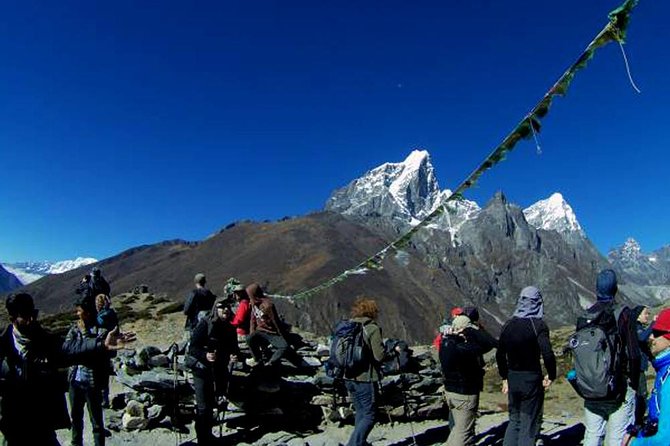
Everest begins with a small plane. This 14-day trek from Kathmandu takes you through Sherpa villages, Tengboche Monastery, Namche Bazaar, Everest Base Camp, and Kala Patthar, with guides, porters, meals, tea-house lodging, and airport transfers included. I like the careful acclimatization stops and the strong guide support, especially from highly praised guides such as Pradip and Laxman.
The main catch is simple: this is a serious high-altitude trek, not a long sightseeing walk. Basic tea houses, cold conditions, flight delays, and the need for good fitness are part of the bargain. The $1,500 price is fair for what it covers, but you should budget extra for drinks, showers, tips, insurance, and possible Lukla flight changes.
In This Review
- Key points at a glance
- Why this Everest trek works in 14 days
- Day 1 in Kathmandu, a soft landing before the mountains
- Day 2, the Lukla flight and the first walk to Phakding
- Days 3 and 4, reaching Namche Bazaar at 3,440 meters
- Day 5, Tengboche and its mountain monastery
- Days 6 and 7, Dingboche at 4,260 meters
- Day 8, the hard approach to Lobuche
- Day 9, Everest Base Camp through Gorak Shep
- Day 10, Kala Patthar and the long descent to Pheriche
- Days 11 and 12, returning through Namche to Lukla
- Days 13 and 14, returning to Kathmandu and going home
- What the $1,500 price really covers
- Tea houses, electricity, and daily comfort
- Who should book this trek?
- Should you book the Everest Base Camp Trek?
- FAQ
- How long is the Everest Base Camp Trek?
- What is the highest point on the itinerary?
- Are meals included during the trek?
- Is accommodation included?
- What happens if the Lukla flight is cancelled?
- Do porters carry the main luggage?
Key points at a glance
- Kala Patthar reaches 5,545 meters: The high point gives you the classic Everest range views, but it is also the hardest morning of the trek.
- Two acclimatization days are built in: You rest at Namche Bazaar and Dingboche instead of racing straight uphill.
- Pradip receives repeated praise: His mountain experience, wildlife spotting, humor, and calm support made a strong impression on several trekkers.
- Meals and tea-house stays are included: Breakfast, lunch, and dinner are covered during the trek, though drinks and snacks cost extra.
- Lukla flights can disrupt the schedule: A cancelled flight may mean waiting another day or paying at least $500 per person for a helicopter.
- Porters carry the main luggage: You normally walk with a smaller day pack, while one porter serves two people.
Why this Everest trek works in 14 days
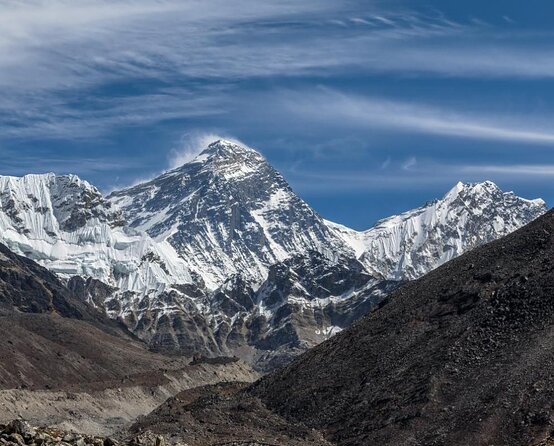
The appeal here is not just reaching a famous sign at Base Camp. You move through the Khumbu region in stages, gaining altitude gradually while passing through the home of the Sherpa people. Namche Bazaar gives you your first real mountain-town pause, Tengboche adds a spiritual stop, and the route then turns tougher and more remote as you approach Gorak Shep.
The schedule includes two acclimatization days. That matters. You spend a rest day at 3,440 meters in Namche, then another at 4,260 meters in Dingboche. These breaks are not wasted time. They give your body a chance to adjust before the trail rises above 5,000 meters.
The itinerary is advertised as about 14 days, but the actual walking days are demanding. Most trekking days are listed at around six hours, with the first walking day from Lukla to Phakding taking about four hours. At altitude, six hours can feel like a full day of work, especially when the trail climbs over rocky ground.
I also like the way the plan uses different overnight stops on the return. You go from Gorak Shep to Kala Patthar and then down to Pheriche, before returning to Namche and Lukla. That downhill movement helps break up the return rather than forcing you to repeat the same schedule in reverse.
More Everest Base Camp Treks:
- Everest Base Camp Trek – 14 Days
★ 5.0 · 1,499 reviews - Everest Base Camp Trekking
★ 5.0 · 485 reviews - Everest Base Camp Trekking – 13 Day
★ 5.0 · 365 reviews
Day 1 in Kathmandu, a soft landing before the mountains
Your arrival begins at Tribhuvan International Airport, where a representative meets you after customs and transfers you to a hotel. The transfer is listed at about one hour, though actual road time in Kathmandu can vary.
Two nights of standard three-star accommodation in Kathmandu are included, one on arrival and one after the trek. The hotels are described as having attached bathrooms, air conditioning, and round-the-clock hot and cold showers. That comfort will feel useful before and after the trek, since tea-house accommodation in the mountains is much simpler.
Lunch and dinner in Kathmandu are not included. You will also pay separately for city entrance fees, meals, drinks, and personal purchases. The company suggests that a meal in Kathmandu may cost around $5 to $7, with roughly $12 to $15 per day enough for basic drinks, showers, and snacks during the trek if you do not drink alcohol or shop heavily.
Day 2, the Lukla flight and the first walk to Phakding
The mountain section starts with an early flight from Kathmandu to Lukla at 2,886 meters. From Lukla, you walk for about four hours to Phakding at 2,640 meters.
This is a sensible first walking day. You are already at altitude, but the route to Phakding is shorter than the days ahead. It gives you time to get used to the walking rhythm, your boots, your day pack, and the guide and porter system.
The Lukla flight is also the trip’s biggest logistical weak point. Weather or operational problems can cancel flights in or out. If that happens, the operator will try to move your flight to the next day, depending on available seats. A helicopter may be arranged for a group, but the listed minimum cost is $500 per person, paid by you.
For that reason, travel insurance covering flight cancellation and delays is essential. The operator specifically suggests coverage of at least $500 per day for this risk. Do not treat the Lukla flight as a minor transfer. It controls the start and finish of the trek.
Days 3 and 4, reaching Namche Bazaar at 3,440 meters
From Phakding, you walk about six hours to Namche Bazaar. The route takes you into the Khumbu region and brings the first major altitude gain, finishing at 3,440 meters.
Namche is the commercial and social center of the Sherpa community. It is more than a place to sleep. It is where the trek begins to feel like a Himalayan journey rather than a mountain walk from one village to another. The town is also the place where the itinerary gives you a full acclimatization day.
The rest day is valuable, but it does not mean sitting indoors all day. The schedule lists about six hours for the acclimatization stop, which suggests a gradual activity or local outing rather than complete bed rest. The exact route is not specified, so ask your guide what the day will involve.
I like having Namche early in the plan. A rushed itinerary might push you onward after arrival, but spending an extra night here gives you a better chance to handle the higher sections ahead. You will still feel the altitude, and a rest day cannot guarantee that everyone adjusts well, but it is a sensible safeguard.
More Treks and Hikes:
- Nagarkot Sunrise View and Day Hiking from Kathmandu
★ 5.0 · 471 reviews - Annapurna Circuit Trek with Tilicho Lake
★ 5.0 · 368 reviews - Everest Base Camp Trek -14 Days
★ 5.0 · 321 reviews - Annapurna base camp trek 5 Days
★ 5.0 · 252 reviews
Day 5, Tengboche and its mountain monastery
The walk from Namche to Tengboche, also called Tyangboche, takes around six hours and finishes at 3,867 meters. The main draw is Tengboche Monastery, which gives the route a cultural and spiritual pause.
The monastery is important to the feel of this trek because the journey is not only about altitude and views. You are moving through Sherpa communities, and Tengboche offers a chance to connect the mountain route with local Buddhist practice.
The overnight stop is higher than Namche, so this day can feel harder than the distance suggests. Pace matters. Your guide should help you keep the day manageable, and the trek’s included guide service is one of its strongest practical features.
Several people singled out Pradip, also called Master Zi or Big Z, for his mountain experience, humor, helpful attitude, and ability to spot wildlife. Another guide is referred to as Pradam or Laxman, with more than 22 years of mountain experience. Guide assignments can vary, but these comments suggest that the company has experienced staff who understand both the route and the needs of a group at altitude.
Days 6 and 7, Dingboche at 4,260 meters
The trail continues from Tengboche to Dingboche, reaching 4,260 meters after roughly six hours. Dingboche is one of the key altitude steps on the entire route.
The following day is another acclimatization day. You rest at Dingboche and take the Chhukung path before returning to the village. The exact walking distance is not given, but the schedule again allows about six hours.
This is where the itinerary earns its keep. The high point is still ahead, and you need time to adjust before sleeping near 5,000 meters. A rest day here may test your patience, especially if you are feeling fit, but rushing would be a poor trade.
Dingboche also marks a change in the character of the trek. You are farther from Kathmandu, the villages are more basic, and the air is thinner. The scenery becomes more dramatic, but your body may care less about the postcard views than about each uphill step. Eat the included meals, drink plenty of safe water, and follow the guide’s pace.
Day 8, the hard approach to Lobuche
From Dingboche, you walk to Lobuche at 4,930 meters. The route includes lunch at Dugla, listed at 4,595 meters, before continuing to Lobuche.
This is a major altitude day. The distance is listed at around six hours, but the combination of height, rocky ground, and thin air makes time feel slower. You should keep your day pack light and avoid treating lunch as a long break if the group needs to keep moving.
Lobuche is an overnight stop with a purpose: it places you close enough to reach Base Camp the next day without trying to cover the entire upper route from Dingboche. The accommodation is in local lodges or tea houses, described as clean and comfortable but basic. Twin-share rooms are standard, while a single supplement is available for an additional $200.
Day 9, Everest Base Camp through Gorak Shep
The walk from Lobuche to Everest Base Camp takes about six hours and passes through Gorak Shep at 5,140 meters. This is the emotional high point for many people, even though the next morning at Kala Patthar reaches a higher elevation.
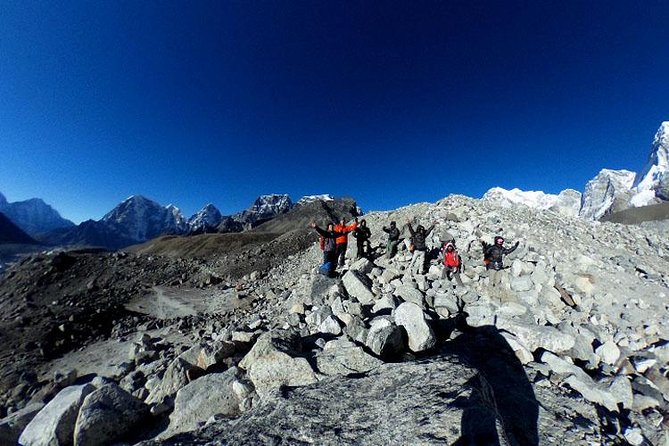
The route is described as rocky, and conditions at this height can make every section demanding. You should expect a long day rather than a quick photo stop. Gorak Shep functions as the staging point for Base Camp and the night before Kala Patthar.
Base Camp itself is a powerful destination because it connects you with the history of Everest expeditions. You can think about the work, risk, sacrifice, and endurance behind the summit attempts. The trek does not take you to the summit, but it does bring you to the foot of the route used by climbers.
A practical point: views of Everest from Base Camp are not always the classic full mountain portrait people expect. Kala Patthar is the better place in this itinerary for a broad Everest view. Base Camp is about the setting, the route, and the feeling of arriving at a famous mountaineering landmark.
Day 10, Kala Patthar and the long descent to Pheriche
The day begins at Gorak Shep with an ascent to Kala Patthar at 5,545 meters. You then descend to Pheriche at 4,243 meters, with the full day listed at about six hours.
Kala Patthar is the highest point on the itinerary and the place to focus on if your main goal is a sweeping view of Mount Everest and the surrounding range. The early start is not specified, so confirm the timing with your guide, but the stop is normally treated as a morning objective in trek schedules because visibility can change later in the day.
This is also the most demanding day. You climb to the trek’s highest point soon after spending the night at Gorak Shep, then lose a large amount of altitude on the way to Pheriche. The descent is welcome, but tired legs can make it uncomfortable.
I would judge this day by how your body feels, not by pride. The guide’s role is crucial here. Pradip was praised for keeping people safe and informed on difficult ground, which is exactly the kind of support you want near the top of the route.
Days 11 and 12, returning through Namche to Lukla
The itinerary describes the return from Pheriche to Namche as about six hours. It also refers to Tyangboche in the description, so the exact overnight routing should be confirmed before departure.
The return to Namche is a welcome change of pace. You descend from the highest villages and reach a larger settlement with more services than the upper tea houses. The next day continues from Namche to Lukla, again listed at about six hours.
At Lukla, you can refresh and rest before the flight. This final walking stretch may look easy on paper, but the accumulated fatigue is real. Porters carry the main luggage, with one porter assigned to two people, while you carry a day pack with water, a camera, sunscreen, a spare jacket, and similar essentials.
Domestic flights allow 15 kilograms including hand luggage, with excess weight charged at about $1 or more. Pack carefully. A small lockable bag can remain in Kathmandu with travel clothing or other items you do not need on the trail.
Days 13 and 14, returning to Kathmandu and going home
The flight from Lukla to Kathmandu is scheduled for Day 13. A representative then transfers you to your Kathmandu hotel, followed by airport drop-off at Tribhuvan International Airport on Day 14.
The extra night in Kathmandu is useful because it gives you a buffer after the trek and before your international departure. Still, the schedule is affected by Lukla weather, so do not make tight onward plans without considering the chance of delay.
Airport pickup and drop-off by private car, van, or bus are included. You need to send your international flight details in advance so the representative can meet you after customs, holding a sign with your name.
What the $1,500 price really covers
At $1,500 per person, the package includes a substantial amount:
- Airport transfers
- Two nights in a standard three-star Kathmandu hotel
- Tea-house and lodge accommodation during the trek
- Flights between Kathmandu and Lukla
- An experienced guide
- Porters, with one porter for two people
- Guide and porter wages, food, accommodation, transport, and insurance
- TIMS card fees
- A first-aid kit
- A duffle bag if needed
- Government taxes and service charges
- Breakfast throughout the program
- Eleven lunches and eleven dinners
That is good value for a guided Himalayan trek, especially because staff costs, domestic flights, lodging, and most meals are bundled together. You are not paying only for a route map. You are paying for logistics in a remote region where getting people, luggage, food, and staff into position takes real planning.
The price does not include travel insurance, Kathmandu lunches and dinners, alcoholic drinks, non-alcoholic drinks, snacks, hot showers, battery charging, tips, or some city entrance fees. Normal water is available free, while bottled or boiled water costs extra. Water purification tablets are recommended.
The operator suggests setting aside 10 to 15 percent of the tour price for tips if the service is good. That would be about $150 to $225 per person. I would also keep a reserve for Lukla disruption, even if your insurance later reimburses you.
Tea houses, electricity, and daily comfort
The mountain accommodation is in local lodges and tea houses. They are described as clean and comfortable, but you should not expect city-hotel privacy or facilities. Twin-share rooms are standard, and a private room costs extra if available.
Electricity exists in some villages, with solar power in some sections. Battery charging costs extra and depends on available power. Bring spare batteries and do not assume you can charge a phone or camera every night.
The included meal structure is straightforward. Breakfast and dinner are taken at the lodge where you sleep, while your guide chooses a lunch stop along the route. Drinks are not included, so tea, coffee, bottled water, soft drinks, and alcohol will steadily add to your spending.
Who should book this trek?
You should consider this trip if you want a guided route with a clear schedule, included meals, porters, and two planned acclimatization days. It suits people who value support and cultural stops as much as the final Base Camp photograph.
You also need strong physical fitness. The operator states this plainly, and the itinerary supports that warning: six-hour walking days, rocky trails, sleeping above 4,000 meters, a 5,545-meter summit at Kala Patthar, and a long return route.
The group size can reach 15 people. That is small enough for organized support but large enough that walking speeds and altitude responses may differ. Ask how many people are in your departure group and who your guide will be, especially if you have read about Pradip, Laxman, or another particular guide.
This is not the best choice if you need a flexible luxury trip, dislike basic lodging, or cannot allow spare time around the Lukla flights. It is a better match if you accept rough edges in exchange for a structured route into the Khumbu.
Should you book the Everest Base Camp Trek?
I would book this trek if the $1,500 price fits your budget and you are ready for the physical demands. The strongest reasons are the sensible acclimatization plan, included porter and guide support, cultural stops at Namche and Tengboche, and the chance to reach both Everest Base Camp and Kala Patthar.
Before paying, confirm the exact Lukla flight arrangements, the guide assigned to your group, the Kathmandu hotels, daily walking times, and what happens if flights are cancelled. Buy travel insurance that covers high-altitude trekking and at least $500 per day for flight disruption.
This trek offers real value, but only if you prepare for the full package: spectacular views, Sherpa culture, thin air, modest tea houses, changing weather, and a few long days when your legs will have strong opinions.
FAQ
How long is the Everest Base Camp Trek?
The program lasts approximately 14 days, including arrival and departure days in Kathmandu, the Lukla flights, acclimatization stops, the trek to Everest Base Camp, Kala Patthar, and the return to Lukla.
What is the highest point on the itinerary?
Kala Patthar is the highest point, at 5,545 meters. Everest Base Camp is listed at 5,364 meters, and Gorak Shep is at 5,140 meters.
Are meals included during the trek?
Yes. Breakfast is included throughout the program, along with eleven lunches and eleven dinners. Alcoholic and non-alcoholic drinks are not included.
Is accommodation included?
Yes. The package includes two nights in a standard three-star hotel in Kathmandu and lodge or tea-house accommodation during the trek. Twin-share rooms are standard.
What happens if the Lukla flight is cancelled?
The flight may be rescheduled for the following day, subject to availability. A group may also arrange a helicopter, but the cost is your responsibility and is listed at a minimum of $500 per person, depending on group size.
Do porters carry the main luggage?
Yes. One porter is provided for every two people. You carry a smaller day pack, while your main luggage is transported by porter. The domestic airline luggage allowance is 15 kilograms, including hand luggage.
Just added around Kathmandu
- Private Shopping Tour in Kathmandu★ 5.0 · 3 reviews
- Nagarkot Sunrise With 7 UNESCO World Heritage Private Tour★ 5.0 · 3 reviews
- Kathmandu: Nightlife and Pub Crawl Tour★ 5.0 · 3 reviews
- Mount Everest Scenic Flight 50 Minutes★ 5.0 · 3 reviews
- Momo Cooking Class -The Art Of Making MoMo with Home Chef★ 5.0 · 3 reviews
- Kathmandu: Nagarkot, Bhaktapur, Doleswor & Sanga Statue Tour★ 5.0 · 3 reviews
- Makalu Base Camp Trek★ 5.0 · 3 reviews
- Everest Experience Trek 6 Day Hiking Adventure★ 5.0 · 3 reviews
Everest Base Camp Treks, compared.






Everest Base Camp Trek with Helicopter Return from Gorakshep to Lukla
Read our review →Browse the lists this tour appears in