
Reviewed · EVEREST BASE CAMP TREKS
Everest Base Camp Trek
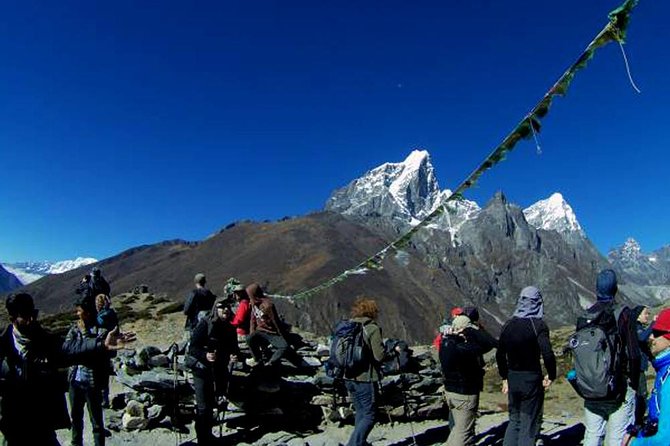
Everest rewards patience, stamina, and early mornings. This 15-day trek from Kathmandu takes you through Sherpa villages, Buddhist monasteries, Sagarmatha National Park, and some of the world’s finest mountain views. I like the carefully planned acclimatization days and the fact that the package includes meals, lodges, permits, porters, gear, and the Lukla flights.
I also like the small maximum group of 12 people, which should make the mountain days easier to manage than a huge organized group. Guides named Krishna and Babu receive warm praise for handling the hard practical work, especially during winter trips. The main concern is altitude: Kala Patthar reaches 5,545 meters, and the cold, long walking days demand real preparation.
In This Review
- Key things to know before you go
- What the $1,800 Everest package really covers
- Kathmandu arrival and the 7:15 a.m. start
- Lukla to Phakding, where the trail begins
- Namche Bazaar and the first altitude adjustment
- Tengboche and the monastery stop
- Pangboche and Dingboche at higher altitude
- Lobuche and the memorial ridge
- Everest Base Camp from Gorak Shep
- The Kala Patthar sunrise and the long descent
- Returning through Namche and Lukla
- The Lukla flight and why the buffer day matters
- Guides, group size, and the human side of the trek
- Who should book this Everest trek?
- Should you book the Everest Base Camp Trek?
- FAQ
- How long is the Everest Base Camp Trek?
- What is the highest point reached on the trip?
- Are meals included?
- Are the Lukla flights included?
- Is accommodation included?
- What is not included in the price?
Key things to know before you go
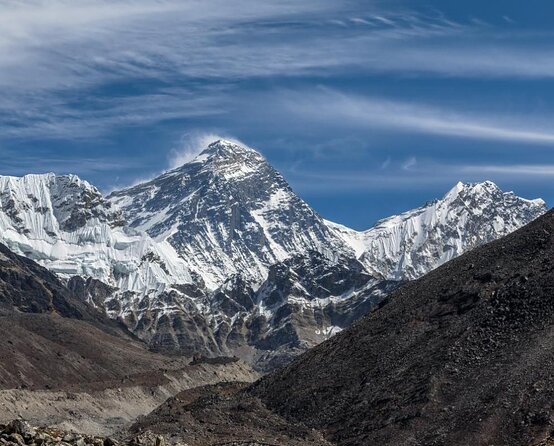
- Sunrise at Kala Patthar: The highest point of the trip offers the classic early-morning view toward Everest, Lhotse, and the surrounding peaks.
- Two acclimatization days: You spend extra time in Namche Bazaar and Dingboche instead of racing uphill every day.
- Lukla flights are weather dependent: A spare day in Kathmandu helps protect the schedule if mountain weather delays the return flight.
- Sherpa culture is part of the route: Mani walls, prayer wheels, monasteries, villages, and the Sherpa Museum add meaning beyond the mountain views.
- The $1,800 package covers a lot: Meals, accommodations, permits, porter support, trekking equipment, ground transport, and domestic flights are included.
- Winter is beautiful but severe: December can offer clear scenery, but the cold is intense, so proper clothing and a good sleeping system matter.
What the $1,800 Everest package really covers
At $1,800 per person, this trek is not just a guided walk with a hotel at either end. The package covers three nights in Kathmandu, 11 lodge nights along the route, three meals a day during the trek, necessary trekking permits, Sagarmatha Conservation fees, ground transportation, and the return flights between Kathmandu and Lukla.
It also includes a porter for every two people, plus a sleeping bag, duffel bag, and walking pole. Those inclusions have real value. You do not need to arrange separate transport to Lukla, search for mountain lodges yourself, or carry every piece of equipment on your back.
The cost does not include international flights, a Nepal visa, personal travel insurance, or tips for the guide and porter. I would treat insurance as essential for a high-altitude trip, even though it is not included. You should also budget for tips before departure, since the package specifically leaves them outside the price.
The wording about meals is slightly untidy, but the main promise is clear: breakfast, lunch, and dinner are provided during the trek. That matters on a route where food choices and supply costs change as you climb. You can focus on walking rather than repeatedly sorting out where your next meal comes from.
More Everest Base Camp Treks:
- Everest Base Camp Trek – 14 Days
★ 5.0 · 1,499 reviews - Everest Base Camp Trekking
★ 5.0 · 485 reviews - Everest Base Camp Trekking – 13 Day
★ 5.0 · 365 reviews
Kathmandu arrival and the 7:15 a.m. start
Your trip begins at Tribhuvan International Airport in Kathmandu. A representative meets you and transfers you to your hotel, giving you time to rest after your international flight.
Later, you meet the guide for a briefing. That meeting is useful because the trek has several moving parts, including early flights, changing altitude, lodge stays, and a return through Lukla. You should arrive in Nepal ready for an early start the next morning. The stated meeting time is 7:15 a.m., so a hotel close to the airport or a well-organized airport transfer can make the first morning less frantic.
Kathmandu itself receives only a small slice of this trip. You have three hotel nights in total, including the arrival period, the return from the mountains, and the final night before departure. The focus here is the trek, not an extended city tour.
Lukla to Phakding, where the trail begins
The mountain portion starts with a morning flight from Kathmandu to Lukla. The flight is short, listed at about 45 minutes on the return, but its importance is much greater than its duration. Lukla is the gateway to the Everest region, and the flight places you directly at the start of the walking route.
After meeting the trekking crew, you walk toward Phakding for roughly three hours. This opening day is relatively easy, with a gradual route through Sherpa villages, past mani walls and prayer wheels.
That first walk gives you time to settle into the rhythm of the trek. You are not yet dealing with the highest altitudes, but you are already seeing how religion and daily life shape the route. Prayer wheels and stone walls are not decorative extras. They are part of the cultural setting you pass through on foot.
Namche Bazaar and the first altitude adjustment
Day three follows the Dudh Koshi River for about six hours. The route crosses suspension bridges decorated with prayer flags, passes through pine forest and villages, and enters Sagarmatha National Park, a UNESCO World Heritage site.
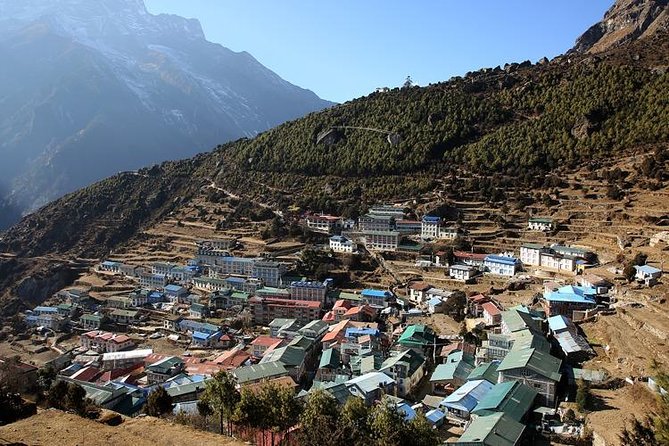
Namche Bazaar is one of the most important stops on the trek. It is a lively mountain settlement and a natural place to pause before the trail climbs higher. The walk there is a clear step up from the gentle first day, so you should pace yourself rather than treating the route like a race.
The following day is set aside for acclimatization. You can explore Namche’s market, visit local bakeries, see the Sherpa Museum, or take a short hike toward the Everest View Hotel or Khumjung village. The point is not to spend the day motionless. A moderate walk helps you adjust while giving your body a break from a full day of forward progress.
I especially like this pause because it adds both cultural interest and practical value. You are learning about the Sherpa region while preparing for the thinner air ahead. The views toward Everest from the surrounding hills make the day feel worthwhile even without covering a great distance.
More Treks and Hikes:
- Nagarkot Sunrise View and Day Hiking from Kathmandu
★ 5.0 · 471 reviews - Annapurna Circuit Trek with Tilicho Lake
★ 5.0 · 368 reviews - Everest Base Camp Trek -14 Days
★ 5.0 · 321 reviews - Annapurna base camp trek 5 Days
★ 5.0 · 252 reviews
Tengboche and the monastery stop
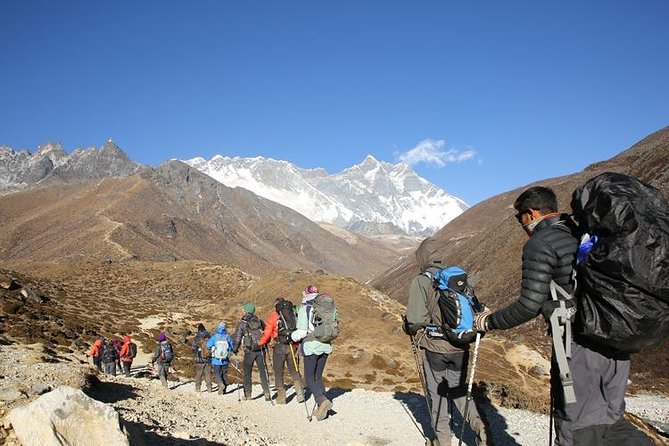
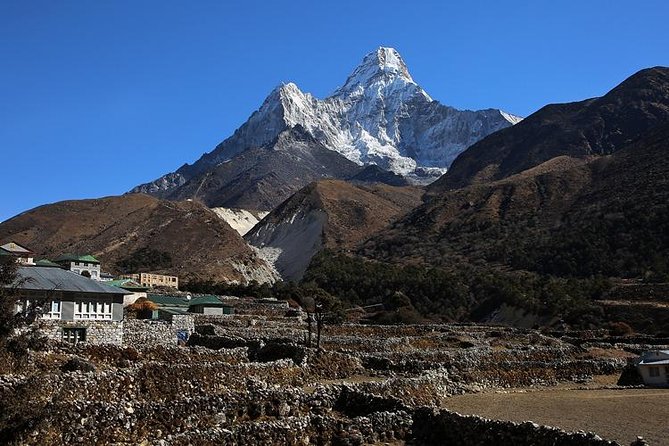
Leaving Namche, the trail climbs for around six hours with views of Everest, Lhotse, and Ama Dablam. You walk through rhododendron and pine forests, then descend toward the Dudh Koshi River before crossing a suspension bridge to Tengboche.
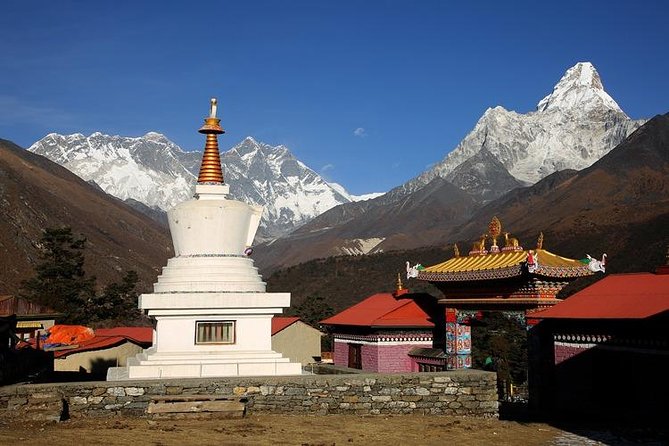
Tengboche is one of the emotional high points of the route. The monastery gives the day a calm, spiritual center, and the mountain scenery around it is a strong reminder that this is not simply a fitness challenge. You are moving through a living Sherpa setting, not just ticking off scenic viewpoints.
The day includes both climbing and descending, which can be more tiring than a steady uphill walk. Keep your pace even and save energy for the second half. The distance is manageable on paper, but the altitude makes six hours feel longer than six hours at home.
Pangboche and Dingboche at higher altitude
Day six begins with a descent through forest to Debuche, followed by a crossing of the Imja Khola River. The trail then climbs past Pangboche, described as the highest permanent settlement in the region, before continuing to Dingboche.
This section feels more open and exposed as the trees thin out. The views become larger, but the route also becomes more demanding. Your body is working harder with each gain in height, so lunch breaks and a steady pace matter.
Dingboche receives another acclimatization day. The scheduled hike goes to Nagarjun Hill at about 5,100 meters, with views toward Makalu, Lhotse, and Island Peak. You return to Dingboche for lunch and a quieter afternoon.
That second rest day is one of the strongest features of the schedule. The itinerary does not force you to gain altitude every day, and the hill walk gives you a controlled way to experience the higher elevation. Still, do not mistake an acclimatization day for an easy holiday. The hike itself reaches a serious height, and the afternoon is intended for rest.
Lobuche and the memorial ridge
From Dingboche, the trail climbs through rocky ground with very little vegetation. After about five hours, you reach Lobuche, passing Dughla and the memorial ridge dedicated to climbers who died on Everest.
This is a sobering part of the route. The memorials change the mood and put the mountain’s risks in plain view. The trip is designed for people with a moderate fitness level, but fitness alone does not remove the effects of altitude or cold.
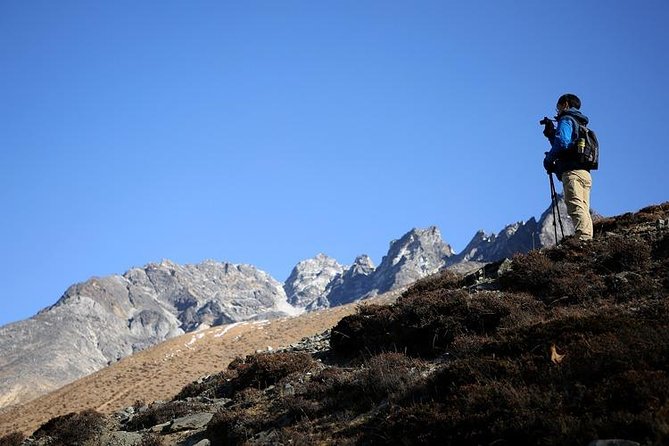
The scenery also changes sharply here. Forest gives way to rock, open ground, and high mountain silence. You may find the day less varied than the earlier sections, but the sense of approaching Base Camp grows with every step.
Everest Base Camp from Gorak Shep
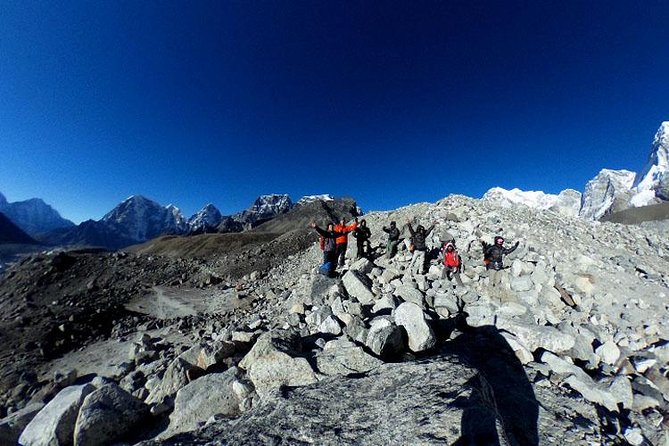
Day nine takes you gradually to Gorak Shep, the last settlement before Base Camp. After lunch, you walk over rocky ground and glacier moraines toward Everest Base Camp. The full day is listed at about seven hours.
Reaching Base Camp is the trip’s main goal, but it may not look exactly like the famous photographs from climbing season. The route description emphasizes the glacier moraines and dramatic mountain setting rather than a permanent camp display. The achievement is in reaching the site at 5,364 meters, after several days of climbing.
Gorak Shep is a functional stopping point, not a place for comfort or leisurely sightseeing. You should expect the high altitude and long day to dominate your experience. The reward is not only the endpoint. It is the accumulated view of the trail, the villages, the bridges, and the changing mountain world that brought you there.
The Kala Patthar sunrise and the long descent
The following morning begins early with a steep climb to Kala Patthar. At 5,545 meters, this is the highest point of the trip and the best scheduled viewpoint for sunrise over Everest and the surrounding Himalayan peaks.
This is the moment that requires the most grit. You climb before breakfast, in darkness and cold, then descend to Gorak Shep for breakfast. After that, you continue down toward Pheriche. The day again totals about seven hours.
I like the choice to place Kala Patthar after Base Camp. You already understand the effort required to reach this height, and the sunrise gives you a visual payoff before the return journey begins. I would not underestimate the cold, though. One winter account describes the temperatures as extremely low, while another specifically praises guide Krishna for handling the practical details during a winter trek. December may bring beautiful clear views, but it also requires serious cold-weather clothing.
Returning through Namche and Lukla
The route back to Namche takes about seven hours and passes again through Pangboche and Tengboche. You descend through forest, cross suspension bridges, and see familiar peaks from new angles.
Walking the same route in reverse can sound repetitive, but downhill travel changes the experience. The air gradually feels easier, and you can notice details that escaped you during the uphill push. The forest sections also feel welcome after the exposed high-altitude ground around Gorak Shep and Lobuche.
The next day continues through pine forest and across high suspension bridges to Lukla, also taking about seven hours. This is the final trekking day, giving you time to think back over the route and the people who helped make it possible.
The porter arrangement is one reason the package is practical. One porter is provided for every two people, which reduces the load you need to carry. You should still pack carefully and keep your own essential items accessible, since the trek involves daily movement between lodges.
The Lukla flight and why the buffer day matters
After breakfast, you fly from Lukla to Kathmandu and return to your hotel. The flight offers one last view of the Himalayas, but the schedule includes an important warning: mountain weather can delay or cancel flights.
Day 14 is held as a buffer in case the Lukla to Kathmandu flight does not operate on schedule. If you arrive in Kathmandu on time, you have an extra day there before your airport transfer on day 15.
This buffer is not wasted space. It is one of the most sensible parts of the plan. If you book separate international flights too tightly around the return from Lukla, a delay could cause real trouble. Keep your final departure flexible enough to use the spare day, and remember that the experience is non-refundable and cannot be changed after booking.
Guides, group size, and the human side of the trek
The group limit is 12 people, a useful middle ground. You get the structure of a guided trip without signing up for a giant procession on the trail.
The strongest praise is directed at the guide support. Krishna is specifically credited with taking care of the details during a cold winter trek, allowing the person on the trail to concentrate on walking. Babu and the Adventure Great Himalaya team also receive warm personal praise for their care and organization.
That matters on the Everest route. You are not only paying for directions. You are paying for help with permits, accommodation, meals, transport, pacing, and the many small decisions that become harder at altitude. The trek remains physically yours to complete, but good support can make the difference between a focused challenge and a stressful one.
Who should book this Everest trek?
I would choose this trip if you want the classic Everest Base Camp route with a guide and a clear support system. It suits someone who can handle repeated six to seven-hour trekking days and who understands that the highest sections will feel demanding.
It also suits you if you value cultural stops as much as photographs. Namche’s museum and market, Khumjung, the monasteries, prayer wheels, memorial ridge, and Sherpa villages give the walk a stronger sense of place.
I would pause before booking if you want a relaxed mountain vacation, dislike early mornings, or are not ready for serious cold and altitude. The phrase moderate physical fitness should not be read as effortless. You need stamina, patience, and enough flexibility to deal with flight delays.
The trip works especially well for people who want costs bundled in advance. Meals, lodges, permits, flights, porter support, and trekking equipment are already arranged. If you prefer to choose every lodge and meal yourself, a fully packaged trek may feel restrictive.
Should you book the Everest Base Camp Trek?
Yes, if you want a guided 15-day route with two acclimatization days, a small group, and major costs included. The $1,800 price is reasonable for the combination of domestic flights, 14 nights of accommodation split between Kathmandu and mountain lodges, meals, permits, porter support, and gear.
Book with clear expectations. The trail is cold, high, and physically serious. Plan for the 7:15 a.m. start, allow room for the Lukla flight buffer, arrange personal travel insurance, and budget for guide and porter tips.
For me, the best reason to choose this package is its balance. You get the famous Base Camp and Kala Patthar goals, but also time in Namche and Dingboche to adjust properly. You get mountain views, Sherpa culture, monasteries, and practical support in one organized route. If that sounds like your kind of challenge, this is a strong way to reach Everest without handling every difficult detail alone.
FAQ
How long is the Everest Base Camp Trek?
The trek lasts approximately 15 days, including arrival and departure days, trekking days, acclimatization days, the Kathmandu to Lukla flights, and a buffer day for possible flight delays.
What is the highest point reached on the trip?
The highest point is Kala Patthar, which reaches approximately 5,545 meters. Everest Base Camp is at about 5,364 meters.
Are meals included?
Yes. Breakfast, lunch, and dinner are included during the trek. The package describes three meals a day, with breakfast, lunch, and dinner provided along the route.
Are the Lukla flights included?
Yes. The package includes the flight from Kathmandu to Lukla and the return flight from Lukla to Kathmandu.
Is accommodation included?
Yes. The package includes three nights in a Kathmandu hotel and 11 nights in lodges during the trek.
What is not included in the price?
International airfare, the Nepal visa fee, personal travel insurance, and tips for the guide and porter are not included.
Just added around Kathmandu
- Private Shopping Tour in Kathmandu★ 5.0 · 3 reviews
- Nagarkot Sunrise With 7 UNESCO World Heritage Private Tour★ 5.0 · 3 reviews
- Kathmandu: Nightlife and Pub Crawl Tour★ 5.0 · 3 reviews
- Mount Everest Scenic Flight 50 Minutes★ 5.0 · 3 reviews
- Kathmandu: Nagarkot, Bhaktapur, Doleswor & Sanga Statue Tour★ 5.0 · 3 reviews
- Momo Cooking Class -The Art Of Making MoMo with Home Chef★ 5.0 · 3 reviews
- Makalu Base Camp Trek★ 5.0 · 3 reviews
- Everest Experience Trek 6 Day Hiking Adventure★ 5.0 · 3 reviews
Everest Base Camp Treks, compared.






Everest Base Camp Trek with Helicopter Return from Gorakshep to Lukla
Read our review →Browse the lists this tour appears in