
Reviewed · EVEREST BASE CAMP TREKS
Everest Base Camp Trek: A short EBC Trek to Iconic Himalaya
The world’s highest mountain is only part of the story. This 9-day Everest Base Camp Trek takes you through Sherpa villages, suspension bridges, rhododendron forests, and the high valleys of Nepal’s Khumbu region. I like the close views of Ama Dablam, Lhotse, and Nuptse, and I especially like that the route includes both Everest Base Camp and a sunrise walk to Kala Patthar. The main concern is the pace: this is a demanding schedule with long walking days and limited time for altitude adjustment.
I also like the practical support from Bold Himalaya Treks and Travels. Guides such as Ramesh and Palden have received especially warm praise, while coordinator Sobit has been noted for staying in touch from Kathmandu. The $681 price is appealing for a guided trek with meals, permits, equipment loans, and airport transfers included, but you still need to budget separately for the Kathmandu to Lukla flights, personal drinks, and hotels in Kathmandu.
In This Review
- The trek in five useful points
- Why this Everest route is worth your time
- Day 1: Lukla to Phakding begins with a flight
- Day 2: Phakding to Namche Bazaar and the first real climb
- Day 3: Tengboche brings monastery and mountain views
- Day 4: Tengboche to Dingboche, where altitude takes over
- Day 5: Dingboche to Lobuche crosses into the high country
- Day 6: Gorak Shep and Everest Base Camp
- Day 7: Kala Patthar sunrise and the long descent
- Days 8 and 9: Returning through Namche to Lukla
- What the $681 price really covers
- Guides, support, and the human side of the trek
- Food, lodging, and what to pack
- Who should book this 9-day trek?
- Should you book the Everest Base Camp Trek?
- FAQ
- How long is the Everest Base Camp Trek?
- How high is Everest Base Camp?
- What is the highest point on the route?
- How many hours do I walk each day?
- Are acclimatization days included?
- Are flights between Kathmandu and Lukla included?
- Is accommodation included?
- What meals are included?
- Can the trek depart from Ramechhap instead of Kathmandu?
The trek in five useful points
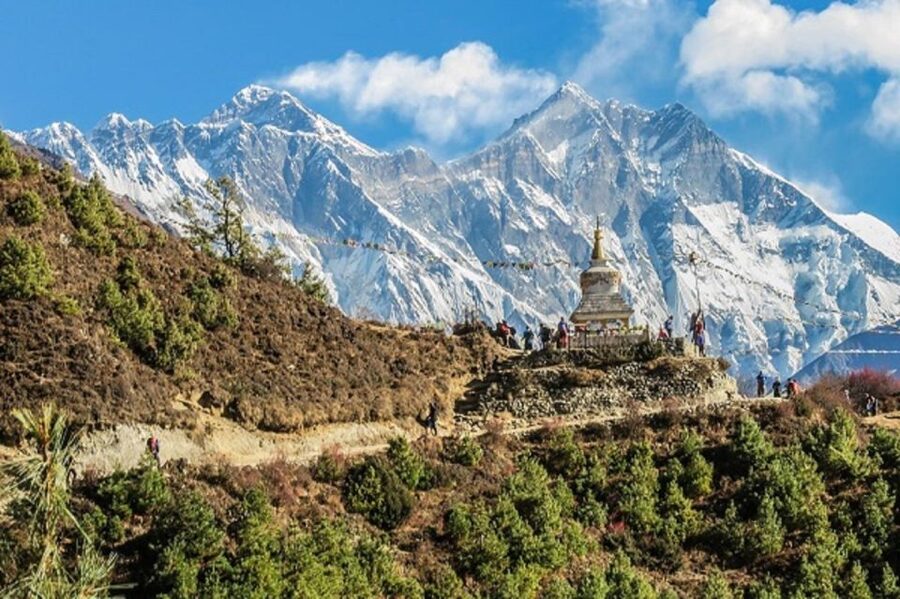
- Everest Base Camp at 5,364 meters: Reach the famous foot of Mount Everest beside the Khumbu Glacier.
- Kala Patthar at 5,545 meters: Add the early morning climb for the clearest sunrise view of Everest.
- A quick, physically serious itinerary: Expect four to eight hours of walking per day, often at high altitude.
- Sherpa culture along the trail: Namche Bazaar and Tengboche offer important stops for local life and Buddhist tradition.
- Flights can shift to Ramechhap: High air traffic may mean a four-hour road transfer from Kathmandu before flying to Lukla.
- Useful gear is supplied: A sleeping bag, down jacket, duffle bag, and trekking pole are available if needed and returned after the trek.
Why this Everest route is worth your time
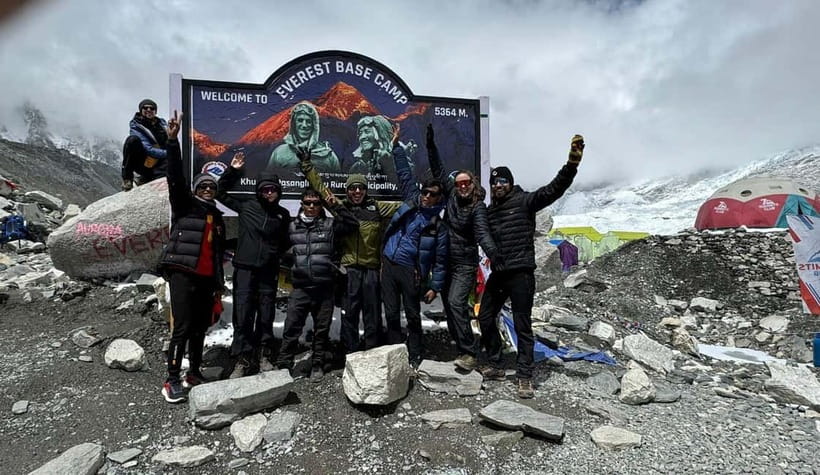
The Everest Base Camp trek is not simply a walk toward a famous sign. It is a gradual change in scale. You begin near Lukla among green hills and forest, then move into open valleys where the peaks seem to rise straight from the trail. By the time you reach Gorak Shep, trees have disappeared and the air feels thin, cold, and serious.
I like the way this route gives you several different rewards. The mountain views arrive early, but the villages, monasteries, and daily rhythm of the Sherpa communities give the walk its human side. You are not rushing from one viewpoint to another. You are following an old mountain route through the Khumbu.
The published distance is about 130 kilometers round trip, though the exact distance depends on the trail and daily route. The highest point on the main Base Camp walk is 5,364 meters. Kala Patthar rises higher, to 5,545 meters, and often provides the more dramatic view of Everest itself.
The tradeoff is clear. Nine days is short for this altitude. The schedule includes acclimatization opportunities in Namche Bazaar and Dingboche, but it does not provide a full rest day in the usual sense. If you are new to high-altitude trekking, adding one or two days is a wise improvement, not a sign of weakness.
More Everest Base Camp Treks:
- Everest Base Camp Trek – 14 Days
★ 5.0 · 1,499 reviews - Everest Base Camp Trekking
★ 5.0 · 485 reviews - Everest Base Camp Trekking – 13 Day
★ 5.0 · 365 reviews
Day 1: Lukla to Phakding begins with a flight
Your morning starts with a flight from Kathmandu to Lukla, followed by a walk of about three hours to Phakding at 2,610 meters. The flight is short, but mountain weather and air traffic can affect the schedule.
There is an important transport detail here. During busy periods, the flight may leave from Ramechhap rather than Kathmandu. In that case, you may drive around four hours from Kathmandu to the Ramechhap airport before taking the plane to Lukla. Build patience into your first day.
The walk to Phakding is a gentle introduction compared with what follows. You will have time to meet your guide, settle into the trekking rhythm, and begin adjusting to the altitude. Your overnight stay is in a standard trekking lodge or guesthouse.
Day 2: Phakding to Namche Bazaar and the first real climb
The route to Namche Bazaar takes about six to seven hours and reaches 3,440 meters. The trail follows the Dudh Koshi valley, crosses suspension bridges, and gradually becomes more demanding as you approach the famous Sherpa trading town.
Namche is one of the most memorable stops on the route. It is a natural meeting place for people heading deeper into the Khumbu, and it gives you a first strong sense of the region’s mountain culture. The rising peaks around the town make the stop feel like a major threshold.
The schedule describes this day as including acclimatization in Namche. In practical terms, you should not treat the arrival day as a full rest day after six or seven hours on foot. If your body needs more time, adding an extra night here is one of the best changes you can make.
Day 3: Tengboche brings monastery and mountain views
The walk from Namche to Tengboche takes roughly five to six hours, with the village at 3,860 meters. The route offers broad views of Himalayan peaks and passes through forested sections before reaching one of the Khumbu’s most important cultural sites.
Tengboche Monastery is the main attraction. It adds a spiritual dimension to the trek, and the setting is memorable, with Himalayan peaks framing the monastery and surrounding village. Even if you are more interested in mountains than religion, this stop helps explain why the Khumbu is more than a scenic route.
The elevation gain begins to matter here. The same walking time that felt manageable near Lukla can feel harder at Tengboche. Keep your pace steady, drink the water you have arranged for yourself, and tell your guide early if you develop a headache or feel unwell.
More Treks and Hikes:
- Nagarkot Sunrise View and Day Hiking from Kathmandu
★ 5.0 · 471 reviews - Annapurna Circuit Trek with Tilicho Lake
★ 5.0 · 368 reviews - Everest Base Camp Trek -14 Days
★ 5.0 · 321 reviews - Annapurna base camp trek 5 Days
★ 5.0 · 252 reviews
Day 4: Tengboche to Dingboche, where altitude takes over
The trek to Dingboche takes about five to six hours and reaches 4,410 meters. This is where the route changes character. Forest becomes less common, the valley opens up, and the air feels thinner.
Dingboche is listed as another acclimatization point. The itinerary allows time to adjust, but the schedule remains quick. A personal rule helps here: do not judge your fitness by how fast you walked on the first two days. At more than 4,000 meters, altitude affects strong hikers too.
An extra day in Dingboche can make the upper section more comfortable. The company specifically offers itinerary changes for better acclimatization, and this is the place where that option has the most practical value.
Day 5: Dingboche to Lobuche crosses into the high country
The walk to Lobuche takes around five to six hours and ends at 4,910 meters. You are now in a colder, more exposed part of the route, with fewer trees and a much stronger sense that you are entering the high Himalaya.
Lobuche is not a sightseeing stop in the usual sense. Its value is its position on the route. It puts you within reach of Gorak Shep and Base Camp, but that convenience comes with a hard night for some trekkers because of the altitude.
This is a day to keep your routine simple. Eat what is provided, protect yourself from the cold, and save energy for the next morning. The trek is not won by racing ahead on Day 5.
Day 6: Gorak Shep and Everest Base Camp
This is the biggest day of the outward journey. You walk from Lobuche to Gorak Shep at 5,140 meters, then continue to Everest Base Camp at 5,364 meters. The combined walking time is about seven to eight hours, and you return to Gorak Shep for the night.
The route follows the Khumbu Glacier and brings dramatic views of the ice and surrounding peaks. The Khumbu Icefall is the visual centerpiece, a huge, shifting mass of blue-white ice that marks the upper route toward Everest. From Base Camp, you get the satisfaction of reaching the place used by climbers preparing for the summit, though the summit itself is not visible in the same classic way as it is from Kala Patthar.
Base Camp can feel less like a quiet viewpoint and more like a rough, high-altitude work area, depending on the season. That is part of its appeal. You are seeing a real staging point for expeditions, not a polished attraction.
The difficult part is the return to Gorak Shep. At this height, even a short climb can feel slow. Your guide’s role matters greatly here. Ramesh was praised for attentive support on a fast eight-day version of this trek, and that kind of close care is useful on a day when conditions can change quickly.
Day 7: Kala Patthar sunrise and the long descent
The early morning climb to Kala Patthar reaches 5,545 meters and is the highest point listed on this route. The reward is a wide sunrise panorama of Everest, Nuptse, Lhotse, and the surrounding Himalayan range.
The climb is short compared with the previous day, but it is not easy. Cold temperatures, darkness, and thin air make the ascent feel demanding. Start slowly and carry only what you need. The descent to Pheriche then takes about seven to eight hours, making this another very full day.
Pheriche sits at 4,371 meters, considerably lower than Gorak Shep, so the overnight stop should feel like a relief. The descent is not merely a retreat. It gives your body a chance to recover while allowing you to see the valley from a different angle.
Days 8 and 9: Returning through Namche to Lukla
Day 8 takes you from Pheriche back to Namche Bazaar in about six to seven hours. The lower altitude usually makes the walking easier, though tired legs and the repeated ups and downs can still slow you down.
Returning through Namche is a useful pause before the final push. You pass again through familiar villages and bridges, but the experience changes when you are heading out. The mountains remain impressive, yet you may find yourself thinking more about hot food, a shower, and a proper bed.
On Day 9, you walk from Namche to Lukla for about six to seven hours, then fly back to Kathmandu. The schedule is efficient, but mountain flights are never something I would connect tightly to an international departure. Allow at least one buffer day before your onward flight. Weather delays are a normal risk in this part of Nepal.
What the $681 price really covers
At $681 per person, the package offers solid value if you want a guided trek and do not already have the required support arranged. The price includes airport pickup and departure services related to the trek, standard lodge accommodation during the walk, breakfast, lunch, and dinner, seasonal fruit items, a guide, national park and local entrance fees, TIMS, government taxes, and service charges.
The equipment allowance is useful. You can request a sleeping bag, down jacket, duffle bag, and trekking pole, with the gear returned after the trek. A T-shirt or cap and a trip certificate are also included. In Kathmandu, the package includes a cultural show and farewell dinner.
The main cost gap is the Kathmandu to Lukla flight. The company can arrange the flight or a helicopter ticket upon request, but the fare itself is listed outside the package price. Hotels in Kathmandu before and after the trek are also extra.
You will need to pay separately for drinks, tea, coffee, bottled water, laundry, communications, personal purchases, and trekking equipment not supplied through the company. Ask for a clear current total before booking, especially for flights and any porter service. Porter arrangements are available upon request rather than automatically included.
Guides, support, and the human side of the trek
A good guide matters more here than on an ordinary day hike. The route has changing weather, high altitude, uncertain flights, and long walking days. You want someone who watches your pace and condition, not someone who simply points toward the next village.
The strongest names connected with this trip are Ramesh, Palden, and Sobit. Ramesh received particular praise for attentive guiding during a rapid eight-day round trip from Lukla. Palden was described as friendly and supportive, while Sobit handled coordination from Kathmandu and was singled out for helping with practical needs.
The company offers guides who speak English, Chinese, Korean, Russian, Traditional Chinese, and Japanese. That range may help if you prefer to discuss health concerns or logistics in a familiar language.
The trek also includes contact and transfer support at the airport. You need to be at the airport at least one hour before the flight, and the exact pickup time depends on your location and flight schedule. If Ramechhap is used, the road transfer changes the timing considerably.
Food, lodging, and what to pack
Accommodation is in standard trekking guesthouses or lodges. The package covers three meals each day, with one item at breakfast, lunch, and dinner, plus some seasonal fruit. Drinks and water are not included, so plan for those costs and carry enough water during each walking day.
The supplied down jacket and sleeping bag can reduce the amount of bulky gear you need to bring. You are still responsible for your personal adventure equipment and clothing. Pack warm layers, thermal clothing, gloves, socks, hiking pants, a jacket, and sturdy hiking shoes.
The essential item is not a gadget. It is clothing that lets you stay warm when you stop moving. High-altitude days can feel very different from sunny lower sections, and the itinerary includes early starts and exposed trails.
Who should book this 9-day trek?
This route suits physically fit trekkers who can walk four to five hours a day and handle longer days when required. The schedule includes several six to eight-hour walking days, with the hardest effort concentrated around Base Camp, Kala Patthar, and the return through Pheriche.
If you are new to high-altitude trekking, I would not choose the nine-day schedule without adding one or two days. Extra time in Namche and Dingboche gives you a better chance to adjust and enjoy the route instead of spending every day managing fatigue.
This trip is not suitable for wheelchair users, babies under one year, or people over 95. The more important practical test is your ability to walk steadily at altitude and accept basic lodge accommodation, changing weather, and uncertain flight timing.
Free cancellation up to 24 hours before departure and the reserve-now, pay-later option give you some booking flexibility. Still, flexibility in the reservation does not remove the need for travel insurance and a buffer day before your international flight.
Should you book the Everest Base Camp Trek?
Book it if you want a fast, guided route to Everest Base Camp with meals, permits, basic trekking gear, and experienced local support included. The combination of Namche, Tengboche Monastery, the Khumbu Icefall, Base Camp, and Kala Patthar gives you both cultural and mountain highlights for the price.
Think twice about the nine-day version if you have no high-altitude experience or if you dislike tight schedules. In that case, ask Bold Himalaya Treks and Travels to add one or two acclimatization days, confirm the separate flight cost, and keep a spare day before leaving Nepal.
For a strong trekker who values efficiency, clear mountain goals, and attentive guides, this is a well-priced way to reach the Khumbu’s most famous points. Just remember that Everest does not care about your calendar. Give the mountains enough time, and the trip will be far more enjoyable.
FAQ
How long is the Everest Base Camp Trek?
The trek lasts nine days, beginning with a flight from Kathmandu to Lukla and ending with the return flight from Lukla to Kathmandu.
How high is Everest Base Camp?
Everest Base Camp is at 5,364 meters.
What is the highest point on the route?
Kala Patthar is the highest point listed, at 5,545 meters.
How many hours do I walk each day?
Walking times range from about three hours on the first day to seven or eight hours on the longest days. Trekkers should be able to walk four to five hours daily, including at high altitude.
Are acclimatization days included?
The schedule includes acclimatization time in Namche Bazaar and Dingboche. One or two extra days can be added for a slower and more comfortable adjustment.
Are flights between Kathmandu and Lukla included?
The Kathmandu to Lukla and Lukla to Kathmandu flights are not included in the price. The company can arrange airplane or helicopter tickets upon request.
Is accommodation included?
Standard trekking guesthouse or lodge accommodation during the trek is included. Hotels in Kathmandu before and after the trek are not included.
What meals are included?
Breakfast, lunch, and dinner are included during the trek, along with some seasonal fruit items. Drinks, tea, coffee, and water are extra.
Can the trek depart from Ramechhap instead of Kathmandu?
Yes. Due to high air traffic, the flight may leave from Ramechhap. If that happens, the transfer from Kathmandu to Ramechhap takes approximately four hours before the flight to Lukla.
Just added around Nepal
- Nagarkot Sunrise With 7 UNESCO World Heritage Private Tour★ 5.0 · 3 reviews
- Private Shopping Tour in Kathmandu★ 5.0 · 3 reviews
- Nagarkot Sunrise and Hike to Changu Narayan Temple★ 5.0 · 3 reviews
- Kathmandu: Nightlife and Pub Crawl Tour★ 5.0 · 3 reviews
- Mount Everest Scenic Flight 50 Minutes★ 5.0 · 3 reviews
- Kathmandu: Nagarkot, Bhaktapur, Doleswor & Sanga Statue Tour★ 5.0 · 3 reviews
- Momo Cooking Class -The Art Of Making MoMo with Home Chef★ 5.0 · 3 reviews
- Kathmandu: Momo Making Class with a Local Chef★ 5.0 · 3 reviews
Everest Base Camp Treks, compared.






Everest Base Camp Trek with Helicopter Return from Gorakshep to Lukla
Read our review →Browse the lists this tour appears in