
Reviewed · EVEREST BASE CAMP TREKS
Everest Base Camp Trek | Deluxe Lodges | Both Way Helicopter Ride
The mountains arrive fast here. This 10-day Everest Base Camp trek pairs a classic Khumbu walking route with shared helicopter flights from Kathmandu to Lukla and from Gorakshep back toward Kathmandu. I like the efficient schedule, and I like that the price includes permits, meals, porters, a guide, warm gear, airport transfers, and lodge stays.
The main trade-off is altitude. You reach Everest Base Camp and Kala Patthar on a tight schedule, so this is not an easy holiday with a few walks added on. You need strong fitness, patience with mountain weather, and a willingness to accept changes if flights or helicopter operations are delayed.
In This Review
- Key points before you book
- Why the 10-day format works, and where it feels tight
- Kathmandu arrival and the quiet start in Thamel
- The helicopter to Lukla and the short walk to Phakding
- Hillary Bridge, Monjo, and the first view of Everest at Namche
- Namche acclimatization and the Everest View Hotel
- Tengboche Gompa and the Imja Khola valley
- Pangboche and a second acclimatization day in Dingboche
- Lobuche and the Thukla memorials
- Everest Base Camp via Gorakshep
- Kala Patthar at sunrise and the helicopter return
- Lodges, meals, luggage, and guide support
- What is included, and what you still need to pay
- Who should book this trek?
- Should you book the Life Himalaya Everest Base Camp trek?
- FAQ
- How long is the Everest Base Camp trek?
- Are helicopter flights included?
- Is accommodation included?
- Are meals included?
- Is travel insurance included?
- How much luggage can I bring?
- Is this a private tour?
Key points before you book
- Shared helicopter flights save time: You fly from Kathmandu to Lukla, then return by helicopter from the Everest Base Camp area toward Lukla and Kathmandu.
- Two acclimatization days are built in: Namche Bazaar and Dingboche give you time to adjust before the highest walking days.
- The route includes both Base Camp and Kala Patthar: You get the famous destination and the best sunrise viewpoint of Everest.
- The package covers practical trek costs: Permits, meals, lodges, guide, porter support, sleeping bags, down jackets, and staff insurance are included.
- The trek is private to your group: You are not placed into a large mixed tour, although the helicopter flights are shared.
- Past guide feedback is especially strong: Guides named in previous trips include Rabin, Tika, Pramod, and Promod, with praise for care, communication, flexibility, and safety.
Why the 10-day format works, and where it feels tight
A standard Everest Base Camp trek often takes longer because walking days are limited by altitude. This version cuts out the long approach to Lukla and the slow return journey. Helicopter transport lets you spend more of your time on the actual Khumbu trail.
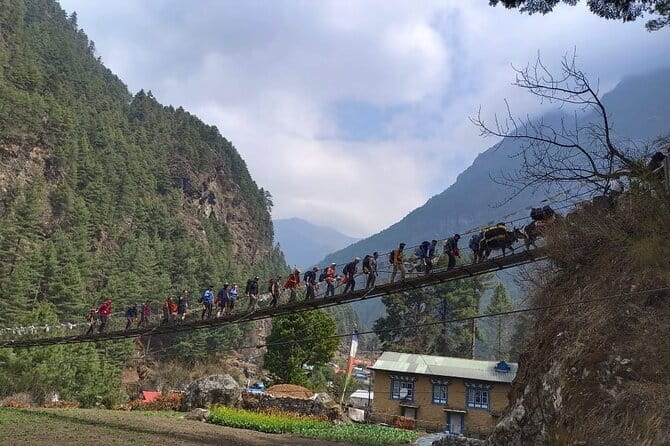
I like this design for anyone with limited holiday time. You still walk through Sherpa villages, cross suspension bridges, visit monasteries, reach Base Camp, and climb Kala Patthar. The route does not simply drop you at a viewpoint and send you home.
Still, ten days leaves little spare time. The plan includes altitude gains that deserve respect. Delays, illness, or a slower pace may require changes, and the supplied information notes that the schedule can be customized for individual or group needs. Ask about this before booking if you want a gentler plan.
The price is $3,332 per person. That sounds high until you separate the helicopter costs from the trek. Shared helicopter flights, two nights in a three-star Kathmandu hotel, lodge accommodation, food, permits, porters, guide costs, equipment, and airport transfers are all bundled together.
The value is strongest if you would otherwise pay separately for mountain transport and support staff. It is less attractive if you prefer a lower-cost trek with a long road or flight return. International airfare, Nepal’s entry visa, drinks, snacks, Kathmandu lunches and dinners, and travel insurance are extra.
More Everest Base Camp Treks:
- Everest Base Camp Trek – 14 Days
★ 5.0 · 1,499 reviews - Everest Base Camp Trekking
★ 5.0 · 485 reviews - Everest Base Camp Trekking – 13 Day
★ 5.0 · 365 reviews
Kathmandu arrival and the quiet start in Thamel
Your first day begins with airport pickup in Kathmandu. A team member meets you at Tribhuvan International Airport and takes you by car or van to the hotel in Thamel.
This first night is useful, not decorative. You can rest after an international flight, meet the trekking team, and prepare for an early start. The package includes one Kathmandu hotel night before the trek and another after it, both with breakfast.
Thamel is a practical base for a Nepal trip, with restaurants, shops, and services close by. The plan does not include lunch or dinner in Kathmandu, so keep some money available for those meals. You also need to arrange your own Nepal visa and international flights.
The helicopter to Lukla and the short walk to Phakding
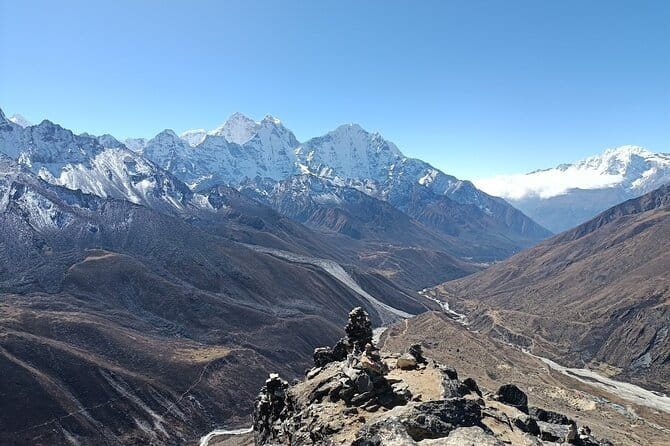
Day two starts early. Your guide takes you from the hotel to the airport for a shared helicopter flight to Tenzing-Hillary Airport in Lukla. The flight takes about 45 minutes and is described as a scenic trip over the Everest and Kanchenjunga regions.
The helicopter option is a major part of this package. It removes the usual approach from Kathmandu to Lukla and gives you a dramatic first look at the mountains. It also means the trek begins in Lukla with your legs fresher than they might be after a longer overland or standard air travel plan.
After landing, you have time to take in Lukla before walking toward Phakding. The first hike follows the bank of the Dudh Koshi River and is intentionally gentle. That short walking day helps you adjust to the change in altitude rather than rushing straight uphill.
The itinerary lists a long overall stop period for Phakding, but the walking itself is described as manageable. Your lodge is a twin-share room at the best available lodge for that night and throughout the trek. The term deluxe should not be mistaken for luxury hotel standards. Mountain lodges provide comfort and shelter, but facilities can be basic.
Hillary Bridge, Monjo, and the first view of Everest at Namche
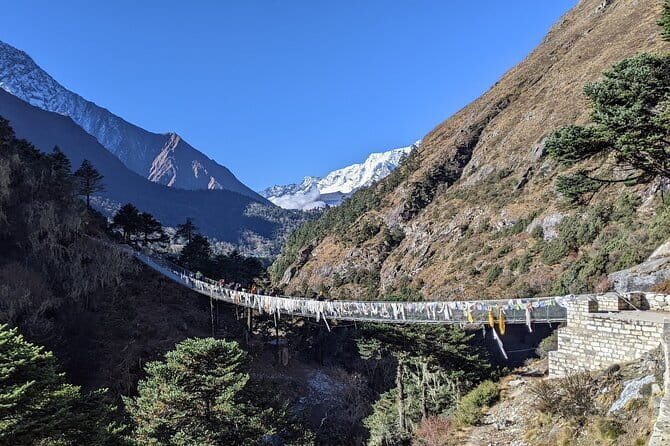
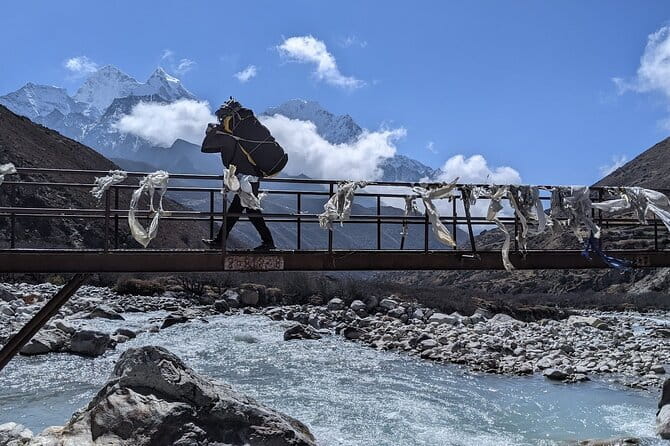
The next morning brings pine forests, river views, Benkar village, and the route toward Monjo. You cross suspension bridges, including the Hillary Bridge, and enter the area leading to Sagarmatha National Park.
The trail then climbs toward Namche Bazaar. This is one of the route’s more demanding early sections, with the path rising after the confluence of the Dudh Koshi and Bhote Koshi rivers. The reward is your first view of Everest peeking over the Lhotse and Nuptse range.
Namche is more than a place to sleep. At about 3,440 meters, it is the main service center on the route, with a market, restaurants, massage centers, and spas. You have a chance to rest, eat, and adjust before the route gets higher and more remote.
I would treat this day with care. The combination of a sustained climb and rising altitude can feel harder than the distance suggests. Your guide’s pacing matters here. Past trips with Life Himalaya have specifically praised guides such as Rabin, Tika, Pramod, and Promod for encouragement, flexibility, and attention to safety.
More Helicopter Trips:
- Everest Base Camp Helicopter Tour landing at Everest View Hotel
★ 5.0 · 668 reviews - Everest Base Camp Helicopter Tour landing at Hotel Everest View
★ 5.0 · 218 reviews - Everest Base Camp Trek with Helicopter Return from Gorakshep to Lukla
★ 5.0 · 161 reviews - Everest Base Camp helicopter tour with landing
★ 5.0 · 61 reviews
Namche acclimatization and the Everest View Hotel
Day four is the first dedicated acclimatization day. The plan follows the sensible idea of climbing higher during the day and sleeping lower at Namche.
You hike toward Syangboche, near Khumbila Peak, and continue to the Everest View Hotel at about 3,880 meters. The hotel is known for its high setting and broad views toward Everest, Ama Dablam, Lhotse, and nearby peaks. You can stop for coffee there, although the hotel admission is not included.
This is a valuable day because it gives your body time to respond to altitude without sacrificing scenery. It also keeps the itinerary from becoming a straight push to Base Camp. You return to Namche for more time in the town, where the plan allows several hours to rest or explore.
Do not judge acclimatization by how you feel after one good morning. Altitude symptoms can appear later. Follow the guide’s advice, drink regularly, and report problems early. Travel insurance covering rescue and evacuation up to 5,500 meters is not included, so arranging suitable insurance is essential.
Tengboche Gompa and the Imja Khola valley
After Namche, the route follows the Dudh Koshi for a while before crossing another suspension bridge. You then enter the Imja Khola valley and walk toward Tengboche Gompa.
Tengboche is one of the most memorable cultural stops on the route. The monastery gives the trek a strong sense of place, rather than making it only a mountain walk. The itinerary includes the visit, and you have around five hours assigned to the stop and walking day.
The scenery becomes more dramatic here, with Ama Dablam appearing as a major visual landmark. The route also feels more exposed and serious as you gain height. You are no longer simply walking between lower villages. Each day now has a clearer effect on your breathing and energy.
The five-hour walking estimates should be treated as guide figures, not promises. Pace, rest breaks, weather, and altitude all matter. You are better off moving steadily than trying to match a clock.
Pangboche and a second acclimatization day in Dingboche
Day six takes you toward Pangboche Buddhist Monastery, with views of Ama Dablam and other high peaks. The supplied plan describes this as a wonderful hiking day and suggests the landmark is outstanding, while also noting that altitude sickness can still occur.
That last point is worth taking seriously. No itinerary can guarantee that you will avoid altitude problems. Pangboche is a meaningful stop because it connects the walking route with the religious life of the Khumbu, while the surrounding peaks keep the scenery constantly changing.
Dingboche provides the second acclimatization day on day seven. Again, the approach is climb high and sleep low. After breakfast, you hike to a higher point near Dingboche, then return to the village.
This is one of the best features of the schedule. The trek is short, but it does not remove all acclimatization time. The day also gives you a chance to test your boots, clothing, hydration system, and general stamina before the route becomes more demanding.
Lobuche and the Thukla memorials
From Dingboche, the route reaches Lobuche. The day is described as relatively light in walking terms, but you gain significant altitude.
You follow steep slopes toward the wide valley at Dughla. Beyond it, you pass the memorial area near Thukla, where monuments honor climbers and mountaineers who died in the Everest region. This is a solemn part of the trek and a reminder that the mountain is not simply a backdrop for photographs.
Lobuche is a high settlement and an important staging point before the Base Camp push. Expect colder conditions and thinner air. Your included down jacket and sleeping bag, rated to minus 20 degrees Celsius, are practical additions here. You return both items after the trip.
The package also provides a duffel bag, trekking bag, T-shirt, trail map, and first aid supplies for the group and staff. An oximeter is included in the first aid kit. These details do not remove the risks of high altitude, but they show that the operator has planned for ordinary trekking needs.
Everest Base Camp via Gorakshep
Day nine is the central day of the trek. Leaving Lobuche, you walk across glacier terrain toward Gorakshep, generally taking about four hours according to the plan. Gorakshep is the final settlement before Everest Base Camp.
From there, you continue toward Base Camp. The route is rocky and uneven, and the terrain requires patience. Reaching Base Camp is an achievement, but it is important to understand the view. During much of the climbing season, you do not get the classic full view of Mount Everest from Base Camp itself because nearby ridges and peaks block it.
The real attraction is standing at the foot of the route used by Everest expeditions, seeing the Khumbu Glacier area, and recognizing the scale of the surrounding peaks. Your guide helps you manage the timing and return to Gorakshep.
The information provided gives roughly six hours for this stop and day, but the exact pace will depend on conditions. You should expect a full, tiring day at high altitude. Eat, rest, and keep your expectations realistic. Base Camp is a hard-won place, not a quick photo stop.
Kala Patthar at sunrise and the helicopter return
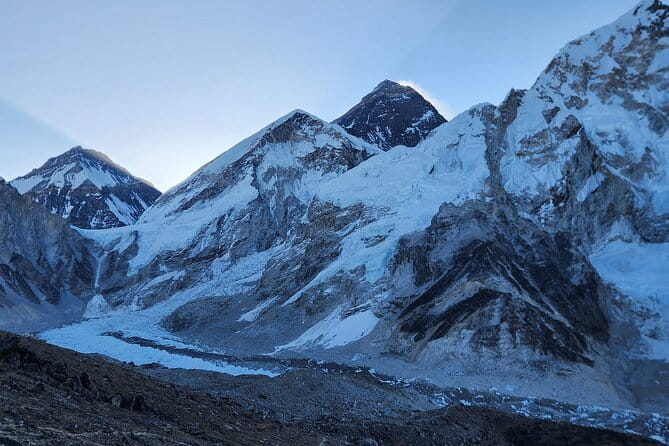
Day ten starts before sunrise with a hike to Kala Patthar. This is the best viewpoint in the program for a broad panorama of Everest and the surrounding peaks. Watching the first light reach the face of Everest is the visual high point of the trek.
The climb is short compared with the full route, but the altitude makes it strenuous. If you are tired after Base Camp, the early start can feel especially hard. Still, Kala Patthar is the stop I would protect most carefully if mountain views are your main reason for coming.
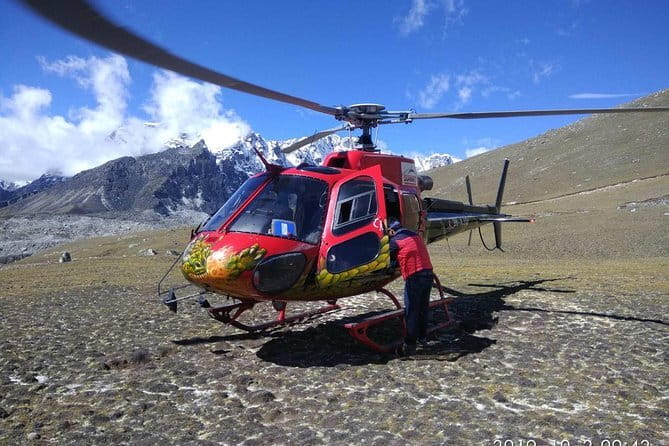
The package includes a shared helicopter flight from the Everest Base Camp area at Gorakshep toward Lukla, as well as helicopter transport between Lukla and Kathmandu. The exact flight sequence and operating conditions should be confirmed before departure, since mountain aviation depends on weather and available aircraft.
A helicopter return saves a long walk back down the Khumbu. It also reduces the physical wear of the trek and gives you another aerial view of the region. The trade-off is that shared flights can involve waiting, and helicopter schedules may change.
Lodges, meals, luggage, and guide support
Accommodation during the trek is twin-share in the best available lodges. Two nights in Kathmandu are in a three-star hotel with breakfast. This is a practical arrangement, but the phrase deluxe lodges should not lead you to expect resort-style rooms in remote mountain villages.
The package includes breakfast for all ten days, eight lunches, and eight dinners. Drinks and snacks are not included. You should budget for those extras, especially on longer walking days when a hot drink or snack may be welcome.
Your luggage allowance is 10 kilograms for the main bag and 5 kilograms for a handbag. One porter is assigned for every two people. The guide and porters receive accommodation, food, transport, salary, equipment, and accidental insurance through the package.
The guide is the person who most affects your day-to-day experience. Past feedback gives Life Himalaya a strong record for attentive communication and flexible pacing. One account describes an 11-day version with guide Tika as especially focused on safety and sensible decisions. Another praises Pramod for adapting the trip to an individual travel style.
The itinerary is private to your own group, which should make communication easier. The helicopter flights are still shared, so private does not mean every part of the journey is exclusive.
What is included, and what you still need to pay
At this price, the package covers most of the major trek expenses:
- Shared helicopters between Kathmandu, Lukla, and the Everest Base Camp area
- Private airport transportation
- Kathmandu hotel stays with breakfast
- Twin-share lodge accommodation
- A licensed trekking guide and porters
- Breakfast, lunch, and dinner during the trek
- Sagarmatha National Park and local municipality permits
- Down jacket and minus 20 degree sleeping bag
- Duffel bag, map, T-shirt, first aid kit, and oximeter
- Guide and porter costs, equipment, food, transport, and accidental insurance
- Farewell dinner at a traditional Nepali cultural restaurant
- Emergency and rescue coordination
- Government taxes and office service charges
You still pay for international airfare, Nepal entry visa, travel insurance, drinks, snacks, Kathmandu lunches and dinners, and anything not listed.
Travel insurance deserves special attention. The package does not include insurance for rescue and evacuation up to 5,500 meters. Do not treat the included emergency coordination as a substitute for your own policy.
Who should book this trek?
I would recommend it to a fit hiker who has about ten days for the Everest region and values time savings. The helicopter flights make the route possible within a shorter holiday, while the walking itinerary still includes the villages, monasteries, acclimatization stops, Base Camp, and Kala Patthar.
It also suits someone who wants one organized price rather than arranging permits, porters, guides, lodges, meals, and mountain transport separately. The private format is helpful if your group wants some control over pace and daily decisions.
I would hesitate if you dislike early starts, basic lodge accommodation, shared transport, or uncertain mountain schedules. I would also choose a longer itinerary if this is your first high-altitude trek and you want more breathing room.
Booking at least several weeks ahead is sensible. This trip is booked, on average, 34 days in advance, which is a useful sign that you should not leave planning until the last minute.
Should you book the Life Himalaya Everest Base Camp trek?
Book it if you want the Everest Base Camp route but cannot give up several weeks, and if the extra helicopter cost fits your budget. The package is strong on logistics, support, and time management, while the two acclimatization days add welcome care to a compressed schedule.
Before paying, confirm the helicopter routing, weather backup plan, exact lodge standards, luggage handling, and how the itinerary changes if you need a slower pace. If those answers suit you, this is a well-supported way to reach Base Camp and Kala Patthar without walking the full return route.
Free cancellation is available up to 24 hours before the local start time. Changes or cancellations made inside that window are not accepted for a refund.
FAQ
How long is the Everest Base Camp trek?
The planned duration is 10 days, including arrival and departure arrangements in Kathmandu, helicopter flights, trekking days, acclimatization days, Base Camp, and Kala Patthar.
Are helicopter flights included?
Yes. Shared helicopter transport is included from Kathmandu to Lukla, from the Everest Base Camp area at Gorakshep toward Lukla, and between Lukla and Kathmandu.
Is accommodation included?
Yes. You receive two nights in a three-star Kathmandu hotel with breakfast and twin-share accommodation in the best available lodges during the trek.
Are meals included?
Breakfast is included for all 10 days. The package also includes eight lunches and eight dinners. Drinks, snacks, and lunch and dinner in Kathmandu are not included.
Is travel insurance included?
No. You must arrange your own travel insurance covering rescue and evacuation up to 5,500 meters.
How much luggage can I bring?
The stated allowance is 10 kilograms for a large bag and 5 kilograms for a handbag.
Is this a private tour?
Yes. Only your group participates in the private activity. The helicopter flights are shared.
More Treks and Hikes
- Nagarkot Sunrise View and Day Hiking from Kathmandu
★ 5.0 · 471 reviews - Annapurna Circuit Trek with Tilicho Lake
★ 5.0 · 368 reviews - Everest Base Camp Trek -14 Days
★ 5.0 · 321 reviews - Annapurna base camp trek 5 Days
★ 5.0 · 252 reviews
Just added around Kathmandu
- Private Shopping Tour in Kathmandu★ 5.0 · 3 reviews
- Nagarkot Sunrise With 7 UNESCO World Heritage Private Tour★ 5.0 · 3 reviews
- Kathmandu: Nightlife and Pub Crawl Tour★ 5.0 · 3 reviews
- Mount Everest Scenic Flight 50 Minutes★ 5.0 · 3 reviews
- Momo Cooking Class -The Art Of Making MoMo with Home Chef★ 5.0 · 3 reviews
- Kathmandu: Nagarkot, Bhaktapur, Doleswor & Sanga Statue Tour★ 5.0 · 3 reviews
- Makalu Base Camp Trek★ 5.0 · 3 reviews
- Everest Experience Trek 6 Day Hiking Adventure★ 5.0 · 3 reviews
Everest Base Camp Treks, compared.






Everest Base Camp Trek with Helicopter Return from Gorakshep to Lukla
Read our review →Browse the lists this tour appears in