
Reviewed · EVEREST BASE CAMP TREKS
Everest Base Camp Trek from Lukla
The trail starts with a tiny runway. This 12-day route from Lukla gives you two major rewards: sunrise from Kala Patthar at 5,545 meters and a visit to Tengboche Monastery, where mountain views meet Sherpa Buddhist culture. I also like the built-in acclimatization days in Namche and Dingboche, plus the small group size of no more than 10 people.
The main catch is altitude. You will walk roughly 5 to 7 hours on most trekking days, often on steep and rocky trails, and the $466 price does not include flights, meals, insurance, or personal costs. Still, with a guide, porter service, tea-house lodging, permits, and a first aid kit included, this is a strong base package if you are prepared to arrange the extras.
In This Review
- Key points at a glance
- What the $466 price really covers
- Lukla and the first walk to Phakding
- Namche Bazaar and the first acclimatization day
- Tengboche Monastery and the forested Khumbu Valley
- Dingboche at 4,410 meters
- Lobuche and the harder miles toward Base Camp
- Gorakshep and Everest Base Camp at 5,364 meters
- Kala Patthar and the sunrise payoff
- The return through Pheriche, Namche, and Lukla
- Guides, porters, and the level of support
- Tea houses, food, and daily comfort
- Who should book this trek?
- Should you book the Everest Base Camp trek from Lukla?
- FAQ
- How long is the Everest Base Camp trek from Lukla?
- What is the price per person?
- Are flights to and from Lukla included?
- What accommodation is included?
- Are meals included?
- What are the highest points on the route?
- How many acclimatization days are included?
- How long do you walk each day?
- What is the group size and guide language?
Key points at a glance
- Kala Patthar at 5,545 meters: The best scheduled viewpoint for Everest, especially at sunrise.
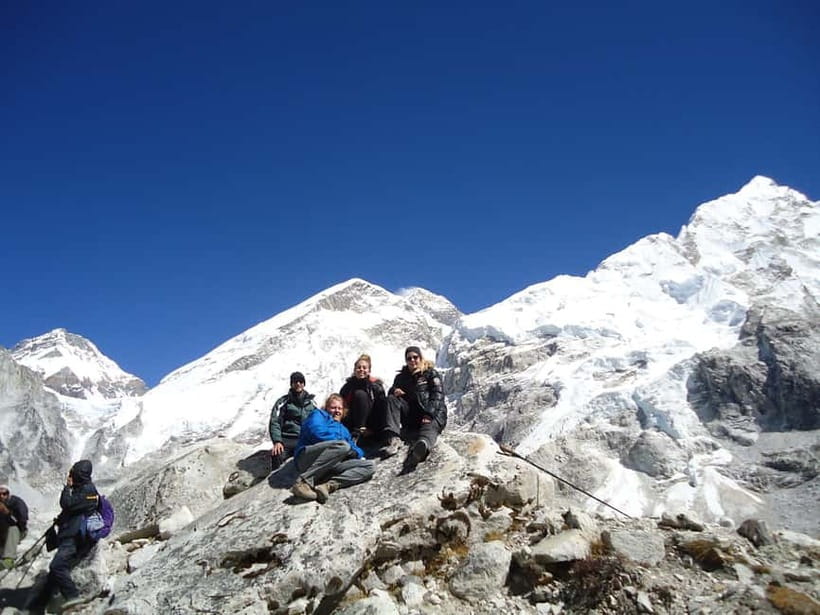
- Everest Base Camp at 5,364 meters: Reach the famous Khumbu Icefall area after passing through Gorakshep.
- Two acclimatization stops: Spend extra nights in Namche Bazaar and Dingboche to help your body adjust.
- Tengboche Monastery: Visit one of the Khumbu region’s most important spiritual centers, with views of Ama Dablam, Everest, and Lhotse.
- Small guided group: The group is limited to 10 people, with an English-speaking guide and porter service.
- Flexible arrangements: Peregrine Treks can assist with Lukla flights, meals, extra porters, and itinerary changes for an added cost.
What the $466 price really covers
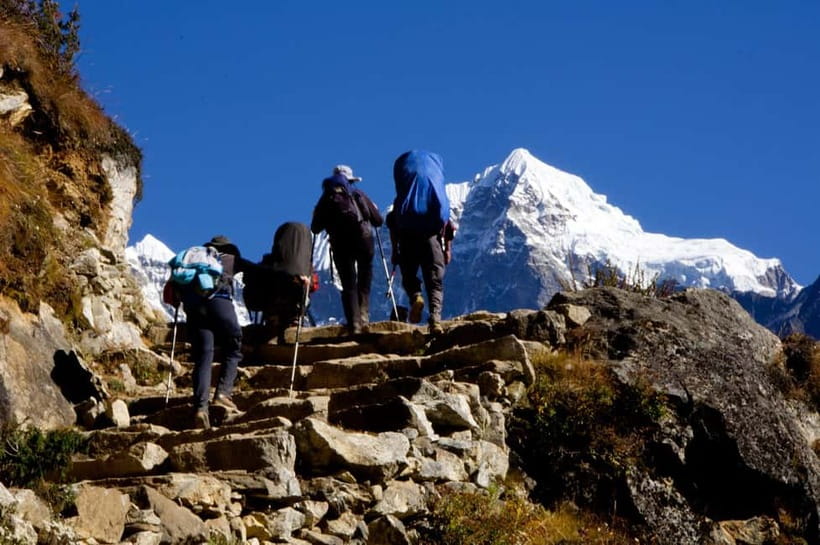
At $466 per person, this is not an all-inclusive Everest package. It is better understood as the core trekking service. You receive a professional English-speaking guide, tea-house accommodation, permits and entrance fees, porter service, a first aid kit, and applicable taxes.
That list covers the essentials of moving through the Khumbu Valley with support. Tea houses give you a bed and a place to eat, while the porter service means you do not need to carry every item in your bag. The guide is especially important on a high-altitude route, where pacing and daily decisions matter as much as route finding.
You must pay separately for flights, meals, drinks, laundry, internet, snacks, travel insurance, and visa fees. Lukla flights are not included, and you need to share your flight details so the guide can meet you at the airport. The company can help arrange the flight, but you should treat that as an additional cost and confirm the price before departure.
The food budget needs attention. Meals are not part of the listed price, although Peregrine Treks can arrange them. A few people have added meal arrangements through the company, with one group receiving a 10 percent discount on meal prices. Dal bhat was a reliable favorite, providing the filling rice, lentils, and vegetables you need after long hours on the trail.
The value is good if you want a guided trek without paying for a larger luxury package. It is less attractive if you expect flights, full meals, and Kathmandu services to be included. Ask for a complete cost estimate before booking, including Lukla flights, food, extra porter help, and any airport transfers.
More Everest Base Camp Treks:
- Everest Base Camp Trek – 14 Days
★ 5.0 · 1,499 reviews - Everest Base Camp Trekking
★ 5.0 · 485 reviews - Everest Base Camp Trekking – 13 Day
★ 5.0 · 365 reviews
Lukla and the first walk to Phakding
Your trip begins at Tenzing-Hillary Airport in Lukla. The airport itself is part of the adventure, with the trek starting almost immediately after you meet the guide. The first guided section lasts about five hours, followed by the walk toward Phakding.
The route enters the Khumbu Valley and follows the Dudh Koshi River. You will pass through green forest and cross several suspension bridges, an easy introduction to the region’s footpaths and mountain villages.
Phakding is a modest overnight stop rather than a major attraction. Its importance is practical: it lets you begin gaining altitude gradually instead of racing uphill on the first day. The village sits beside the river, and the combination of forest, water, and mountain air gives you a gentle start.
You should use this evening to check your boots, organize your daypack, and learn how the guide handles the daily pace. The trek is not a sightseeing bus tour. You will spend most of each day walking, so small adjustments early on can prevent bigger problems later.
Namche Bazaar and the first acclimatization day
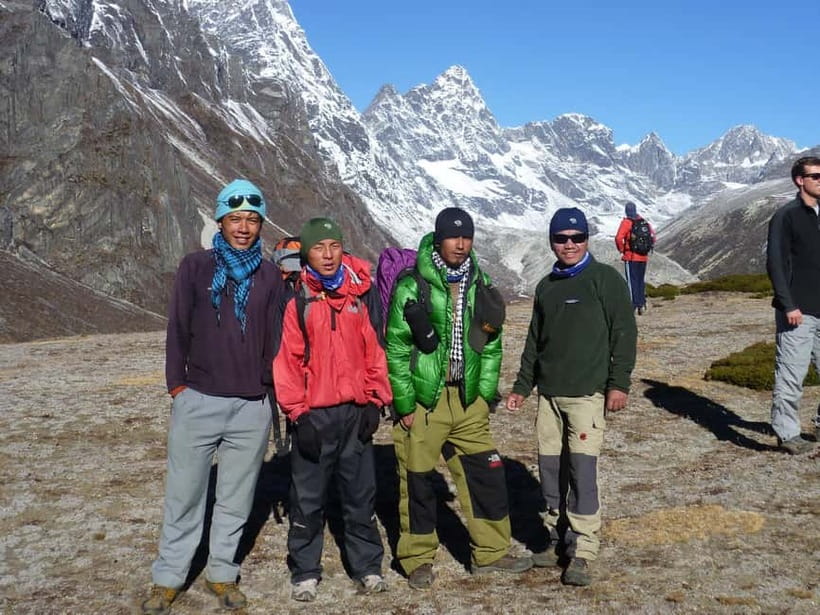
The trail from Phakding to Namche is one of the harder early days. The walk takes about eight hours, with a steady ascent through the valley and across more suspension bridges. Your first major goal is Namche Bazaar, the Sherpa capital and the busiest settlement on this route.
Namche is a useful place to rest, but it is not simply a rest stop. You can explore local markets, see daily Sherpa life, and look toward Thamserku and Kongde Ri. The town is also where you begin to notice the effect of altitude more clearly.
The following day is reserved for acclimatization. That is a major strength of this itinerary. Instead of pushing higher every day, you spend time at the same altitude and explore the area at a slower pace.
Use this day sensibly. Short walks and local exploration are more useful than exhausting yourself with a long excursion. The goal is to help your body adjust, not to collect extra miles. Carry local currency here, since ATMs become scarce beyond Namche Bazaar.
Tengboche Monastery and the forested Khumbu Valley
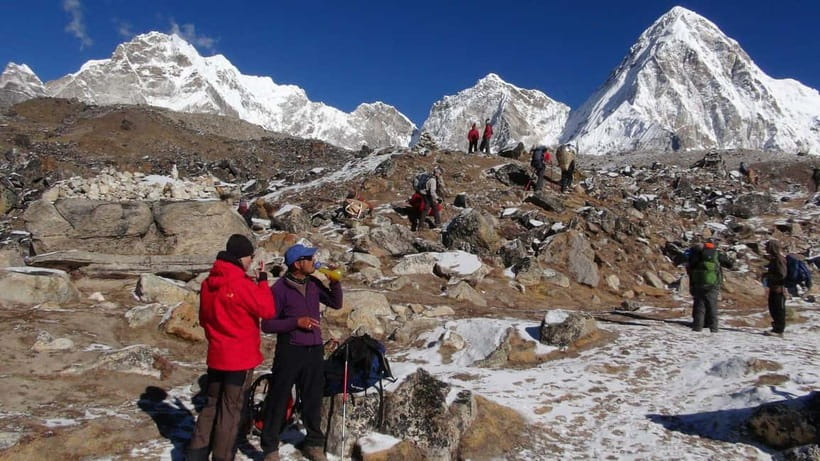
From Namche, the trail continues toward Tengboche through rhododendron and pine forests. The walking day is again listed at about eight hours, so you should expect a full day rather than a quick transfer between villages.
Tengboche is one of the most memorable stops because it combines culture and scenery. Its monastery is one of the largest and most important in the region, serving as a spiritual center for monks and local Sherpa communities.
The setting is especially striking. The monastery has views toward Ama Dablam, Everest, and Lhotse, giving you a natural frame for the visit. You can learn about local Sherpa culture here, but the value comes from observing respectfully rather than treating the monastery like a photo prop.
The forests begin to thin as you climb higher. That change matters. You are moving from the greener lower Khumbu into a colder, more open section where altitude becomes the central fact of the journey. Keep your warm clothing easy to reach, even if the morning begins under clear skies.
More Treks and Hikes:
- Nagarkot Sunrise View and Day Hiking from Kathmandu
★ 5.0 · 471 reviews - Annapurna Circuit Trek with Tilicho Lake
★ 5.0 · 368 reviews - Everest Base Camp Trek -14 Days
★ 5.0 · 321 reviews - Annapurna base camp trek 5 Days
★ 5.0 · 252 reviews
Dingboche at 4,410 meters
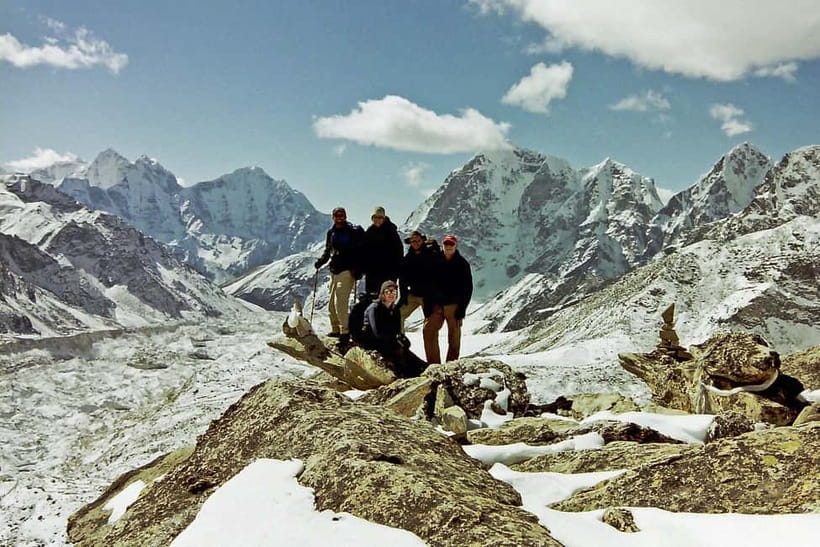
The trek from Tengboche leads to Dingboche, a small village at about 4,410 meters. This is a key stage of the trip because the air is thinner and the route becomes more demanding.
Dingboche includes another acclimatization day. The extra night is not wasted time. It gives you a chance to slow your schedule before the route climbs toward Lobuche, Gorakshep, and Base Camp.
Short hikes around Dingboche can help you adjust, but the provided plan does not specify one fixed excursion. Follow your guide’s advice and keep the effort moderate. Headaches, unusual tiredness, nausea, or difficulty walking should not be ignored at this altitude.
The views are a major reward, with high Himalayan peaks surrounding the village. At the same time, tea-house accommodation is basic. You should expect function rather than comfort, and you should pack warm layers, a hat, sunscreen, and a refillable water supply.
Lobuche and the harder miles toward Base Camp
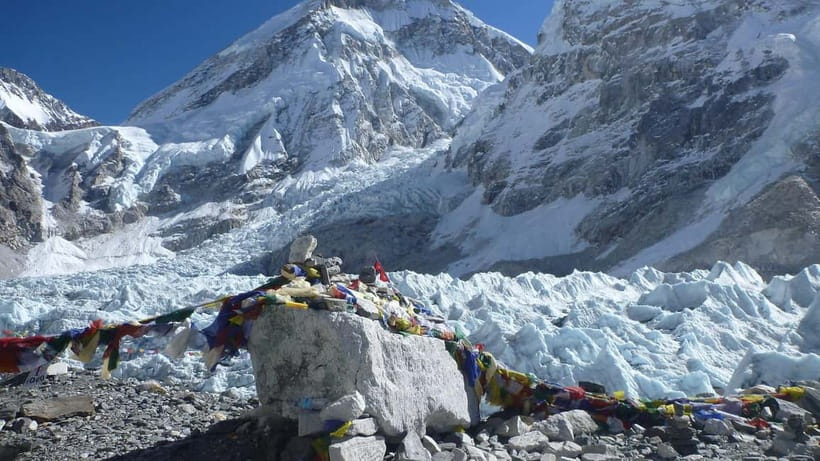
After Dingboche, the route climbs to Lobuche. The settlement is remote and surrounded by high peaks, while the plant life becomes less plentiful as you gain altitude. The visual change is dramatic: the green forest is behind you, and the open, rocky surroundings make the destination feel much closer.
The walk is listed at about eight hours. At this point, your pace will matter more than speed. Take regular breaks, drink water, and keep snacks handy. The trek information specifically recommends comfortable shoes, warm clothing, sunscreen, water, and snacks, and all of these become more important here.
Lobuche is also the point where some people choose to alter their plans. One group arranged an extra night at Gorakshep for a small additional charge, while another changed the timing of Base Camp and Kala Patthar to catch a sunset view first. These options show useful flexibility, but they are not included automatically. Discuss changes with Peregrine Treks before relying on them.
Gorakshep and Everest Base Camp at 5,364 meters
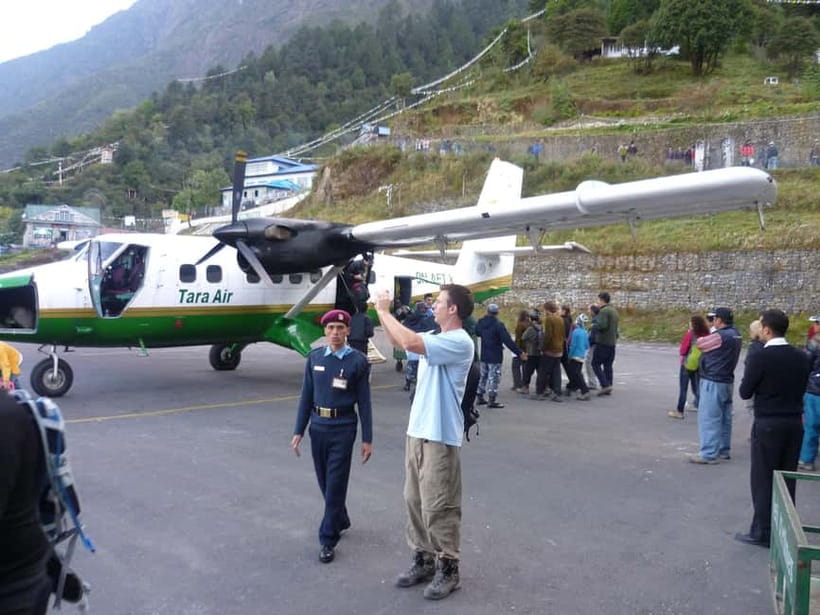
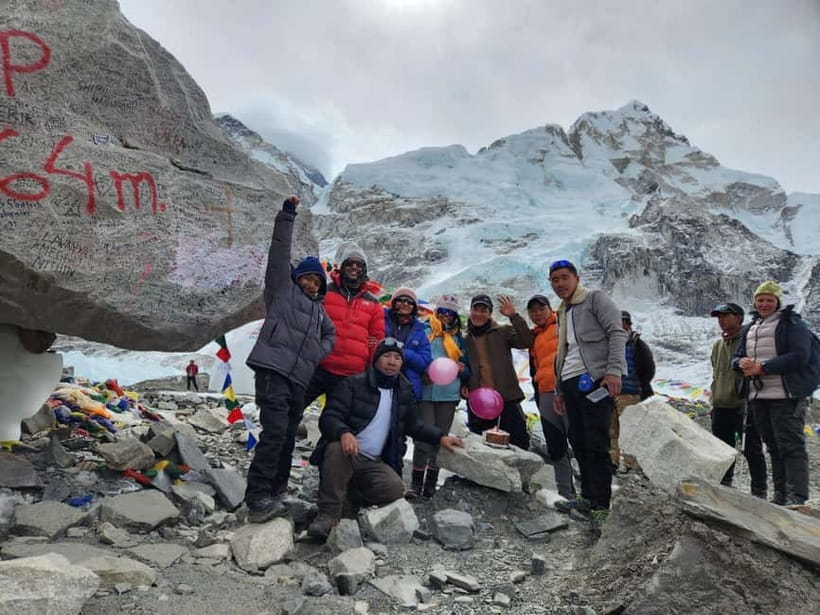
The route from Lobuche reaches Gorakshep, the final overnight point before Everest Base Camp. From there, you continue to the base of Mount Everest at 5,364 meters.
Reaching Base Camp is the emotional high point for many people. You are close to the Khumbu Icefall and surrounded by some of the world’s highest peaks. The setting is powerful, but keep your expectations realistic: Everest itself is not necessarily the most dominant-looking mountain from every point on the route. The achievement comes from reaching the site and seeing the icefall and surrounding summits at close range.
The day can feel long because the altitude slows every movement. Your guide’s role is valuable here, helping you manage the timing and return safely to Gorakshep. Do not treat the Base Camp walk as a casual photo outing. At 5,364 meters, even a familiar distance can take much longer than expected.
The itinerary lists this as an eight-hour hiking day. Weather can change quickly in the Himalayas, so prepare for cold, wind, cloud, and changing trail conditions. A camera is worth carrying, but warmth and water matter more.
Kala Patthar and the sunrise payoff
The early hike to Kala Patthar reaches 5,545 meters, higher than Everest Base Camp. This is generally the finest scheduled viewpoint for Mount Everest and the surrounding Himalayan peaks.
The sunrise timing is the key. Golden light catches Everest and the nearby giants, creating the sharpest views of the trip. The climb is demanding because it comes after several high-altitude days, but the payoff is hard to beat.
Some people choose a sunset visit instead, then go to Base Camp the next morning. That variation was arranged for one group and may suit you if weather, energy, or photography matters more than following the standard sequence. Confirm any change with the operator, since the published plan places Kala Patthar in the morning.
After Kala Patthar, you descend to Pheriche. The downhill route is welcome, but it can still be tiring on knees and feet. Trekking poles, if you use them, would be useful, though they are not specifically listed as included equipment.
The return through Pheriche, Namche, and Lukla
The return route retraces much of the same trail. From Pheriche, you walk back toward Namche, then continue to Lukla on the final trekking day.
Going downhill does not mean the days become effortless. The route still involves about eight hours of walking, and tired legs can make uneven ground awkward. The advantage is psychological: you know the route, the altitude is falling, and the finish is in sight.
Returning through Namche gives you another chance to look around the Sherpa capital and spend any remaining local currency. From there, the path leads back through the forests and river valleys toward Lukla.
The trip ends at Tenzing-Hillary Airport. Flights can be affected by mountain weather, so keep your post-trek schedule flexible. The package does not include the flight from Lukla, and the company’s assistance with flight arrangements should be confirmed in advance.
Guides, porters, and the level of support
The group is limited to 10 participants, which is a sensible size for a high-altitude trek. A small group makes it easier for the guide to notice when someone is struggling, and it reduces the feeling of being part of a large moving crowd.
Peregrine Treks provides an English-speaking guide and porters. Reports of the service place strong emphasis on the trekking staff, including guide Tirtha, who handled the route and daily organization well. Guides also helped with practical changes, such as an extra night in Gorakshep or a different order for Kala Patthar and Base Camp.
The company was also responsive before departure. Preparation meetings through WhatsApp helped one group sort out arrangements and understand what to expect. Another group used the company to add meals and an extra porter after booking.
That flexibility is useful, but it also reveals a point you should clarify early: the $466 package is a starting structure, not the end of every arrangement. Ask precisely what your guide, porter allowance, meals, flights, airport transfers, and Kathmandu services include.
Tea houses, food, and daily comfort
Tea-house lodging is included, but comfort remains basic. You should think of these places as simple mountain accommodation with the essentials, not as hotels with wide service menus.
Food can be surprisingly satisfying after a full day outside. Dal bhat was singled out as a dependable source of energy, and meals arranged through the company helped take pressure off the group. Drinks, laundry, internet, and other personal purchases cost extra.
Pack snacks because the trek information specifically recommends them, and carry local currency for purchases beyond Namche. Internet and ATMs are not something to depend on throughout the route.
Warm clothing is essential. Also bring a hat, sunscreen, comfortable shoes, water, and a camera. Alcohol and drugs are not allowed, and littering is prohibited. Those rules are simple, but they matter in a fragile mountain environment.
Who should book this trek?
I would recommend this trek to fit adults who want a supported Everest Base Camp route and are comfortable with long walking days. It suits you best if the chance to see Sherpa villages, mountain monasteries, and high Himalayan views matters as much as reaching the Base Camp sign.
The itinerary is also a good fit if you value built-in acclimatization. Namche and Dingboche provide two extra days that make the schedule more responsible than a rushed ascent.
This is not suitable for people with mobility impairments, heart problems, or pregnancy. The information also lists people prone to seasickness as unsuitable, although seasickness is an unusual concern for a land trek and is worth clarifying directly with the operator.
You must have travel insurance that covers high-altitude trekking. That is not an optional extra on a route this remote. Weather changes rapidly, and the package does not include insurance or emergency evacuation coverage.
Should you book the Everest Base Camp trek from Lukla?
Book it if you want a reasonably priced, guided trek with porters, tea houses, permits, and two acclimatization days already built into the plan. The strongest parts are the cultural stop at Tengboche, the Sherpa atmosphere of Namche, the achievement of Base Camp, and the sunrise from Kala Patthar.
Do not book it without first pricing the extras. Flights, meals, insurance, visa fees, drinks, internet, laundry, and personal expenses can change the real total by a great deal. I would also ask Peregrine Treks about porter limits, flight support, meal options, and the exact plan for bad weather.
With those details clear, this is a practical way to reach Everest Base Camp without losing the human side of the route. You get mountain scenery, Sherpa culture, small settlements, and a support team that can adjust the plan when conditions or energy levels call for it.
FAQ
How long is the Everest Base Camp trek from Lukla?
The trek lasts 12 days. It begins at Tenzing-Hillary Airport in Lukla and returns there at the end of the route.
What is the price per person?
The listed price is $466 per person. Flights, meals, travel insurance, visa fees, and personal expenses are not included.
Are flights to and from Lukla included?
No. Flights are excluded. You need to share your flight details with the company, and Peregrine Treks can provide assistance with issuing Lukla flight tickets.
What accommodation is included?
Tea-house accommodation is included throughout the trek.
Are meals included?
Meals are not included in the listed price. The company can arrange meals, and additional meal arrangements may be available at an extra cost.
What are the highest points on the route?
Everest Base Camp is at 5,364 meters, while Kala Patthar reaches 5,545 meters.
How many acclimatization days are included?
The plan includes one acclimatization day in Namche Bazaar and one in Dingboche.
How long do you walk each day?
The trek involves about 5 to 7 hours of walking daily. Several itinerary sections are listed as approximately eight-hour hiking days.
What is the group size and guide language?
The group is limited to 10 participants, and the live guide speaks English.
Just added around Nepal
- Nagarkot Sunrise With 7 UNESCO World Heritage Private Tour★ 5.0 · 3 reviews
- Private Shopping Tour in Kathmandu★ 5.0 · 3 reviews
- Nagarkot Sunrise and Hike to Changu Narayan Temple★ 5.0 · 3 reviews
- Kathmandu: Nightlife and Pub Crawl Tour★ 5.0 · 3 reviews
- Mount Everest Scenic Flight 50 Minutes★ 5.0 · 3 reviews
- Kathmandu: Nagarkot, Bhaktapur, Doleswor & Sanga Statue Tour★ 5.0 · 3 reviews
- Momo Cooking Class -The Art Of Making MoMo with Home Chef★ 5.0 · 3 reviews
- Kathmandu: Momo Making Class with a Local Chef★ 5.0 · 3 reviews
Everest Base Camp Treks, compared.






Everest Base Camp Trek with Helicopter Return from Gorakshep to Lukla
Read our review →Browse the lists this tour appears in