
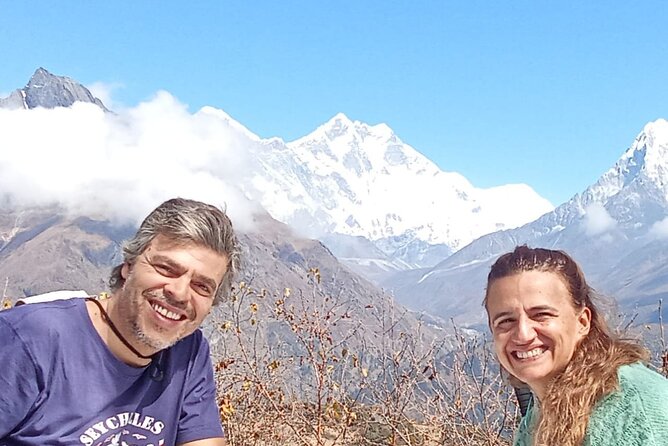
Reviewed · EVEREST BASE CAMP TREKS
Everest Base Camp Trek Via Gokyo Lake and Cho La Pass
Two classic Himalayan routes meet here. This 14-day trek links Everest Base Camp with the quiet Gokyo Lakes and the demanding Cho La Pass, giving you famous mountain views, Sherpa villages, monasteries, glaciers, and high-altitude adventure in one trip. I especially like the route’s variety and the practical support of included flights, meals, permits, guides, porters, and emergency oxygen. The main caution is clear: this is a serious high-altitude trek, not a casual hike.
I also like the two acclimatization days in Namche Bazaar and the chance to see Everest from several angles, including Kala Patthar and the Gokyo Valley. The $1,000 price is attractive for what it covers, but you must budget for insurance, gear, tips, showers, Wi-Fi, charging, Kathmandu meals, and possible extra nights caused by weather delays.
In This Review
- Key points to know before booking
- Why this route is more than a standard Everest trek
- Day 1: Kathmandu arrival, briefing, and gear check
- Day 2: Lukla flight and the walk to Phakding
- Days 3 and 4: Namche Bazaar and the first Everest views
- Day 5: Pine forest and Tengboche Monastery
- Days 6 and 7: Dingboche, alpine ground, and Lobuche
- Day 8: Gorak Shep and Everest Base Camp
- Day 9: Kala Patthar sunrise and Dzongla
- Day 10: Cho La Pass and the Gokyo Valley
- Days 11 and 12: Gokyo Lakes and the return to Namche
- Days 13 and 14: Dudh Koshi River, Lukla, and Kathmandu
- What the $1,000 price really covers
- Food, teahouses, and comfort on the trail
- Safety, fitness, and who should book
- Booking details and cancellation
- Should you book this Everest circuit?
- FAQ
- How long is the Everest Base Camp trek via Gokyo Lake and Cho La Pass?
- What is included in the $1,000 price?
- Is Cho La Pass difficult?
- Are meals included in Kathmandu?
- Are personal trekking clothes and equipment provided?
- Is this a private tour?
- What happens if bad weather cancels the trip?
Key points to know before booking
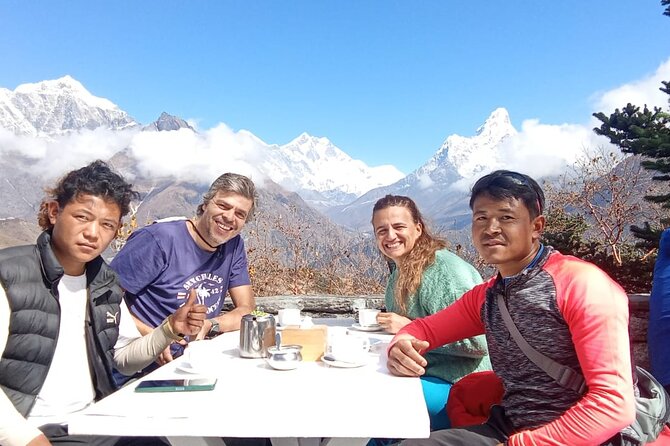
- Everest Base Camp and Gokyo Lakes in one route: You get the classic Khumbu experience plus the quieter Gokyo Valley.
- Cho La Pass is the hardest day: The early crossing involves icy high-altitude terrain and requires good fitness, careful pacing, and suitable equipment.
- Two nights in Namche help with altitude: The built-in rest and acclimatization time makes the climb more manageable.
- The package covers the big costs: Flights, teahouses, meals, permits, airport transfers, a guide, and porter support are included.
- This is a private group experience: Only your own group participates, with a porter ratio of one porter for every two people.
- Weather can change the plan: Lukla flights are vulnerable to poor weather, so insurance and spare time matter.
Why this route is more than a standard Everest trek
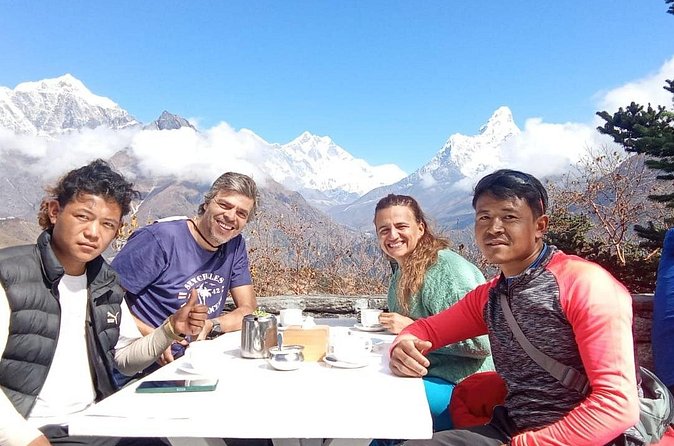
Many people picture the Everest Base Camp route as a straight walk up and back. This version gives you a wider slice of the Khumbu. You still reach Base Camp and Kala Patthar, but you also cross Cho La Pass and spend time around the Gokyo Lakes.
That extra loop matters. The trail does not simply repeat the same views. You move from pine forests and Sherpa villages to barren alpine ground, glacial valleys, icy pass terrain, and calm mountain lakes. The route also includes monasteries, memorials to climbers, suspension bridges, and teahouse stays that make the journey feel like more than a series of uphill walks.
The trade-off is effort. Cho La adds a real mountain crossing, and the route reaches high elevations quickly enough that altitude becomes a central concern. You should choose this trek because you want the harder, fuller version of the Everest region, not because it is the cheapest way to reach Base Camp.
More Everest Base Camp Treks:
- Everest Base Camp Trek – 14 Days
★ 5.0 · 1,499 reviews - Everest Base Camp Trekking
★ 5.0 · 485 reviews - Everest Base Camp Trekking – 13 Day
★ 5.0 · 365 reviews
Day 1: Kathmandu arrival, briefing, and gear check
Your guide meets you at Tribhuvan International Airport with a sign bearing your name. Airport pickup is included, which is useful after an international flight and removes one early logistical worry.
The first day also includes a trek briefing and gear check. Treat this as important, not ceremonial. The team can identify missing or unsuitable items before you leave Kathmandu, where personal equipment can be rented if needed.
You receive one hotel night with breakfast in Kathmandu. Lunch and dinner are not included in the city, so plan for those separately. The hotel night at the end of the trip may be optional, and extra nights are not covered if flight delays or an early return disrupt the plan.
Day 2: Lukla flight and the walk to Phakding
The trek begins with a morning scenic flight from Kathmandu to Lukla. The flight is short, but it is a major part of the logistics because Lukla is the trailhead for this route.
From Lukla, you walk through Sherpa villages toward Phakding. This is a useful first day on foot because it introduces you to the rhythm of the trek without immediately pushing you toward the highest sections.
You will carry a daypack while the porter handles the main trekking bag. The included duffel bag is provided for your gear and must be returned at the end. Pack it with the items you will need during the walking days, since teahouse rooms and services are simple.
Days 3 and 4: Namche Bazaar and the first Everest views
The trail crosses suspension bridges and enters Sagarmatha National Park before reaching Namche Bazaar. This is one of the most memorable settlements on the route, both for its mountain setting and for its role as the region’s main trading center.
You may catch your first clear view of Everest around this section, although weather controls how much you see. Namche also brings a noticeable change in altitude, so the extra day here is valuable.
The optional hike to Everest View Hotel reaches about 3,880 meters. It gives you a good reason to walk higher and return to Namche rather than sleeping at that elevation. You can also explore the local market and Sherpa museum.
I would use this day for patience rather than sightseeing ambition. Eat, drink, walk slowly, and rest. A hot shower or Wi-Fi may cost extra at the teahouse, but after several walking days, a shower can feel like a luxury worth paying for.
More Treks and Hikes:
- Nagarkot Sunrise View and Day Hiking from Kathmandu
★ 5.0 · 471 reviews - Annapurna Circuit Trek with Tilicho Lake
★ 5.0 · 368 reviews - Everest Base Camp Trek -14 Days
★ 5.0 · 321 reviews - Annapurna base camp trek 5 Days
★ 5.0 · 252 reviews
Day 5: Pine forest and Tengboche Monastery
The walk to Tengboche passes through pine forest with views toward Thamserku and Everest. The change from busy Namche to a more open mountain route is one of the pleasures of this stage.
Tengboche Monastery gives the day a cultural focus. The monastery is not just a photo stop. It helps explain the Buddhist setting of the Sherpa communities you pass through, and it gives the trek a sense of place beyond mountain scenery.
The itinerary describes this as a long day, so pace yourself. You may feel strong at this point, but the effects of altitude often become more noticeable as you climb. The guide’s role is important here, especially in keeping the group together and watching for signs of trouble.
Days 6 and 7: Dingboche, alpine ground, and Lobuche
After crossing the Imja Khola and passing Pangboche, you continue to Dingboche. The route begins to feel more exposed and higher, with less forest and more open mountain ground.
Dingboche is a key point because altitude starts to shape every decision. Even a moderate walking distance can feel tiring. The schedule gives you a gradual progression rather than sending you from low valleys straight to Base Camp.
The next stage reaches Lobuche through alpine terrain and past memorials honoring climbers who died in the Everest region. These memorials add a sober note to the trek. They remind you that the Himalayas are beautiful but not harmless.
The listed timing for the Lobuche stop is only five minutes, which is clearly not a realistic walking estimate. You should confirm the exact daily schedule with the operator before departure. The route itself is described as a gradual ascent, but the total walking time and elevation profile are worth clarifying.
Day 8: Gorak Shep and Everest Base Camp
From Lobuche, you continue toward Gorak Shep and then follow the Khumbu Glacier to Everest Base Camp. This is the day many people have imagined for years, but it is not an easy photo opportunity.
The trail near the glacier is rough, and the altitude makes the effort feel greater than the distance suggests. At Base Camp, you can take photographs and enjoy the achievement before returning to Gorak Shep.
Everest Base Camp itself does not necessarily offer the broadest view of Everest. The glacier, surrounding peaks, and expedition setting are the main attractions here. The next morning at Kala Patthar is designed to provide the great panorama.
The schedule gives this section about eight hours. Start with enough energy for the return walk. Reaching Base Camp is only halfway through the day.
Day 9: Kala Patthar sunrise and Dzongla
The early climb to Kala Patthar is one of the strongest parts of the trip. At sunrise, you may see Everest and the surrounding peaks catching the first light. The viewpoint offers a more open mountain panorama than Base Camp.
After descending to Lobuche, you continue toward Dzongla. This is where the trek shifts from the standard Base Camp route toward Cho La Pass and Gokyo.
The combination of an early viewpoint climb and another walking section makes this a demanding day. Bring warm layers for the sunrise and keep your expectations flexible. Mountain weather can hide the peaks, even when the timing is right.
Day 10: Cho La Pass and the Gokyo Valley
Cho La is the adventure centerpiece. You cross the pass early in the morning and then descend into the quieter Gokyo Valley.
The route is described as icy, so this is not a simple high pass walk. Good boots, warm clothing, trekking poles, and careful footing matter. Personal gear is not included, although you can rent equipment in Kathmandu.
Your guide and porter support are especially useful on this day. The guide manages the pace and route, while the porter lets you travel with a lighter daypack. Emergency oxygen is also listed as part of the safety support, but it should not make you careless about altitude or weather.
This is the day to judge the trek honestly. If you want Everest scenery without a demanding pass, the standard route may suit you better. If you want a stronger sense of adventure and can prepare properly, Cho La is the reason to choose this itinerary.
Days 11 and 12: Gokyo Lakes and the return to Namche
The morning climb above Gokyo provides views toward Everest, Cho Oyu, and Makalu. You also visit the third and fourth Gokyo Lakes, which give this route a calmer character than the busier Base Camp section.
The lakes are a major reward for taking the longer circuit. Their setting among high mountains and glacial terrain is very different from the villages and glacier paths earlier in the trek.
The following day descends through Machhermo, Dole, and Khumjung before reaching Namche Bazaar. A hot shower and rest in Namche will likely feel well earned. Since showers and charging are personal expenses, carry enough Nepalese currency for these small comforts.
The descent is not automatically easy. Tired legs, uneven paths, and a long day can still test you. Walking poles are useful, especially after Cho La.
Days 13 and 14: Dudh Koshi River, Lukla, and Kathmandu
The final trekking day follows the Dudh Koshi River toward Lukla. After nearly two weeks on foot, this section is less about new sights and more about finishing steadily.
The next morning, you fly back to Kathmandu. The stated flight time is about 35 minutes, but the useful thing to remember is that mountain flights depend on weather. A late flight can affect onward international connections, so do not schedule your international departure too tightly after returning to Kathmandu.
The trip ends back at the airport meeting point. You can arrange an optional hotel night, rest, shop, or book a massage if you stay in the city.
What the $1,000 price really covers
At $1,000 per person, the package offers strong value for a 14-day Himalayan trek. It includes round-trip Kathmandu to Lukla flights, one Kathmandu hotel night with breakfast, 12 nights in twin-sharing teahouses, all trek meals, permits, airport transfers, a licensed English-speaking guide, porter support, a duffel bag, taxes, and trekking service charges.
Those inclusions remove several expensive or complicated pieces from your planning. Meals and accommodation during the trek are covered, and the guide and porter structure gives you local support without requiring you to arrange every detail yourself.
You still need money for:
- International airfare and Nepal visa fees
- Lunch and dinner in Kathmandu
- Boots, jackets, poles, and other personal equipment
- Mandatory travel insurance
- Guide and porter tips
- Hot showers, Wi-Fi, and battery charging
- Extra hotel nights caused by flight delays or an early return
- Personal purchases
The porter ratio of one porter for every two people is a useful detail. It suggests a lighter load for each porter than a one-to-one arrangement, but you should still pack sensibly and respect the weight limits set by the operator.
Food, teahouses, and comfort on the trail
All breakfasts, lunches, and dinners during the trek are included. That makes budgeting easier and means you are not making daily food arrangements while tired.
Teahouse accommodation is in twin-sharing rooms, so this is not a private hotel-style trip. Facilities are basic, and optional services cost extra. Wi-Fi, showers, and charging may be available at a fee, but the information does not promise them at every stop.
Previous trips with the company have received praise for well-organized service and good food. One guide, Shisir, was praised for reassuring a tired hiker and even swapping backpacks when the load became too heavy. Another guide, Udio, was described as friendly on shorter Nepal trekking trips. Those are encouraging signs, though you should ask who will lead your specific departure.
Safety, fitness, and who should book
The tour asks for moderate physical fitness, but the route itself demands more than that phrase may suggest. You need to handle repeated walking days, steep climbs, cold mornings, high altitude, rough trail surfaces, and one icy pass crossing.
The included guide, emergency oxygen support, permits, and planned acclimatization help. They do not remove the need for travel insurance or personal preparation. Insurance is mandatory, and it should cover high-altitude trekking and emergency evacuation before you leave home.
I would recommend this route to people who:
- Want both Everest Base Camp and Gokyo Lakes
- Are comfortable with a demanding multi-day trek
- Prefer a private group rather than a large shared departure
- Value included logistics and local support
- Can accept simple teahouse accommodation
- Have time to handle possible flight disruptions
I would be cautious about booking it if you have no multi-day hiking experience, dislike cold or basic lodging, or want a relaxed holiday. One positive account described a first multi-day trek as a major challenge, but that does not make the route easy for everyone.
Booking details and cancellation
Confirmation is provided at booking, and the activity begins and ends at Tribhuvan International Airport in Kathmandu. Service animals are allowed, and only your own group participates.
You can cancel for a full refund up to 24 hours before the start time. Changes or cancellations inside that period are not accepted for a refund. The trip depends on good weather and a minimum number of participants, so a cancellation by the operator may lead to a different date or a full refund.
Should you book this Everest circuit?
I would book this trek if your main goal is to see the Everest region from several sides and you are ready for Cho La’s physical demands. The combination of Base Camp, Kala Patthar, Gokyo Lakes, Sherpa villages, monasteries, and glacier terrain gives you a fuller experience than the usual out-and-back route.
The $1,000 cost is appealing because so many core services are included. Before paying, confirm the daily walking times, the exact altitude schedule, the Cho La equipment advice, the name of your guide, and the plan for weather delays.
Choose it for variety, challenge, and strong logistical support. Skip it if you want an easy introduction to Nepal. This is a serious trek with a very good reward for the effort.
FAQ
How long is the Everest Base Camp trek via Gokyo Lake and Cho La Pass?
The trek lasts approximately 14 days, including arrival and departure in Kathmandu, the flights to and from Lukla, and the walking route through Everest Base Camp, Cho La Pass, and Gokyo.
What is included in the $1,000 price?
The price includes round-trip domestic flights between Kathmandu and Lukla, one Kathmandu hotel night with breakfast, 12 nights of twin-sharing teahouse accommodation, all trek meals, a licensed English-speaking guide, porter support at a one-to-two ratio, permits, airport transfers, a duffel bag, taxes, and trekking service charges.
Is Cho La Pass difficult?
Cho La Pass is described as an early-morning crossing over icy high-altitude terrain. You should have moderate physical fitness, suitable personal gear, and travel insurance for high-altitude trekking.
Are meals included in Kathmandu?
Only breakfast at the included Kathmandu hotel night is provided. Lunch and dinner in Kathmandu are not included.
Are personal trekking clothes and equipment provided?
No. Boots, jackets, poles, and other personal trekking equipment are not included. You can rent equipment in Kathmandu.
Is this a private tour?
Yes. Only your own group participates in the activity.
What happens if bad weather cancels the trip?
If poor weather causes the experience to be canceled, you are offered a different date or a full refund. Extra hotel nights caused by flight delays are not included.
Just added around Kathmandu
- Private Shopping Tour in Kathmandu★ 5.0 · 3 reviews
- Nagarkot Sunrise With 7 UNESCO World Heritage Private Tour★ 5.0 · 3 reviews
- Kathmandu: Nightlife and Pub Crawl Tour★ 5.0 · 3 reviews
- Mount Everest Scenic Flight 50 Minutes★ 5.0 · 3 reviews
- Momo Cooking Class -The Art Of Making MoMo with Home Chef★ 5.0 · 3 reviews
- Kathmandu: Nagarkot, Bhaktapur, Doleswor & Sanga Statue Tour★ 5.0 · 3 reviews
- Makalu Base Camp Trek★ 5.0 · 3 reviews
- Everest Experience Trek 6 Day Hiking Adventure★ 5.0 · 3 reviews
Everest Base Camp Treks, compared.






Everest Base Camp Trek with Helicopter Return from Gorakshep to Lukla
Read our review →Browse the lists this tour appears in