
Reviewed · EVEREST BASE CAMP TREKS
Gokyo to Everest Base Camp Trek
The long way to Everest is the best way. This 17-day circuit links Gokyo Lakes, Cho La Pass, and Everest Base Camp, giving you far more variety than the standard route. I like the two-night stay at Gokyo, which allows time for Gokyo Ri, and I like the careful support from Ace the Himalaya guides and porters. The main concern is the altitude: Cho La reaches about 5,330 meters, and the days around Base Camp and Kala Patthar are demanding.
You begin and end in Kathmandu, with flights between Kathmandu and Lukla, meals and lodging along the trail, permits, a guide, and one porter for every two clients included. The price is $2,200 per person, a fair package for the number of services covered, though you still need to budget for drinks, insurance, tips, equipment, and meals in Kathmandu.
In This Review
- Key details that shape the trek
- Why this Everest circuit is worth the extra effort
- Kathmandu arrival and the flight to Lukla
- Phakding to Namche Bazaar: the first real climb
- Through Phortse and Machhermo to Gokyo
- Two nights at Gokyo and the climb to Gokyo Ri
- Thangnak and the pre-dawn test of Cho La
- Lobuche and the walk to Everest Base Camp
- Kala Patthar delivers the great panorama
- The final walk to Lukla and Kathmandu
- What the $2,200 price really covers
- Guide support and group size
- Who should book this trek?
- Should you book the Gokyo to Everest Base Camp trek?
- FAQ
- How long does the Gokyo to Everest Base Camp trek last?
- What is the highest point on the trek?
- Are flights between Kathmandu and Lukla included?
- Is accommodation included?
- Are meals included?
- Is a guide and porter included?
- Do I need travel insurance?
- What happens if bad weather cancels the trip?
Key details that shape the trek
- Gokyo Ri reaches 5,483 meters, with broad views toward Everest, Cho Oyu, and Makalu.
- Cho La Pass is the route’s hardest crossing, with a pre-dawn start and possible snow or ice.
- The two-night Gokyo stay helps with acclimatization and gives you a better chance to enjoy the lakes and summit.
- A maximum group size of 15 keeps the trip organized without making it feel like a large expedition.
- Guide Nima and guides Raj Kumar, Raj N, Ramesh, Ganesh, and Lakpa Sherpa received especially warm praise for safety, flexibility, and personal care.
- Kathmandu to Lukla flights are included, but poor weather can affect the schedule and may lead to a changed date or full refund.
Why this Everest circuit is worth the extra effort
The classic Everest Base Camp route is famous for good reason, but the Gokyo route adds a different rhythm. You first follow the Dudh Koshi River toward Namche Bazaar, then turn west toward Gokyo and the Ngozumpa Glacier. After crossing Cho La, you join the Base Camp route near Lobuche.
That change matters. You see quiet valleys, high lakes, glacier country, Sherpa villages, monasteries, and the familiar Everest trail in one long circuit. You also avoid simply walking up and down the same path.
I especially like the balance between major goals and acclimatization. You have a rest day in Namche and two nights in Gokyo. Those pauses are not wasted time. At high altitude, they give your body a chance to adjust and give you room to enjoy the place instead of treating every day as a race.
Still, this is not a gentle sightseeing holiday. You spend many days at high elevation, and the Cho La crossing depends on weather and trail conditions. Several days are long on the schedule, and the accommodation becomes basic as you move farther from the main villages.
More Everest Base Camp Treks:
- Everest Base Camp Trek – 14 Days
★ 5.0 · 1,499 reviews - Everest Base Camp Trekking
★ 5.0 · 485 reviews - Everest Base Camp Trekking – 13 Day
★ 5.0 · 365 reviews
Kathmandu arrival and the flight to Lukla
Day one is simple and useful. An Ace the Himalaya representative meets you outside Tribhuvan International Airport with a signboard and transfers you to your hotel. The package includes two nights in a three-star hotel in Kathmandu, one at the beginning and one at the end.
The next morning starts early with the 35-minute flight to Tenzing and Hillary Airport in Lukla, at 2,804 meters. The flight is included in the price, which removes one major planning task. You should still allow patience in your schedule, since the trek depends on mountain weather and the experience provider notes that poor weather can cause cancellation or a date change.
Lukla is not simply a transport stop. It is the start of the walking part of your trip, and your guide briefs you there before the trail begins. The first night is in Phakding, giving you a short introduction to walking in the Khumbu region before the bigger climb toward Namche.
The return flight from Lukla to Kathmandu is also included on day 16. That is helpful, though you should avoid arranging an international flight immediately afterward. The stated program returns you to Kathmandu that day, while the final airport transfer takes place on day 17.
Phakding to Namche Bazaar: the first real climb
The route from Phakding follows the Dudh Koshi and crosses suspension bridges decorated with prayer flags. After entering Sagarmatha National Park, the trail rises toward Namche Bazaar.
The river crossings and forest make this a memorable opening day, but the listed schedule runs to about 17 hours, so you should be ready for an early and tiring start. The distance is not the only challenge. You are gaining altitude, and the path becomes steeper as Namche approaches.
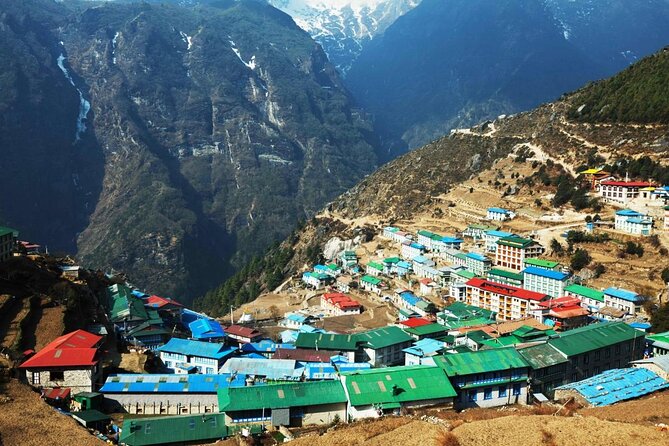
Namche Bazaar is the main service center of the Everest region. It is also where the trek begins to feel serious. You have a full acclimatization day here, with a short hike to a museum featuring Sherpa customs and the area’s mountain story.
Use this day as intended. Walk enough to help your body adjust, but do not turn it into a personal race. Namche is a good place to sort your clothing, check your water supply, and listen closely to your guide’s advice.
Through Phortse and Machhermo to Gokyo
After Namche, the trail climbs through rhododendron forest toward Phortse. As you gain height, juniper and large conifers appear, and the setting becomes more open and alpine. Spring brings especially attractive forest conditions, according to the route description.
Phortse gives the circuit a quieter feel than the central Everest Base Camp path. You continue through terrain shaped by steep valleys and high mountain weather, with the trip gradually shifting from village walking to glacier country.
The next stop is Machhermo. The route climbs a ridge with views down toward Kengtega and up toward Cho Oyu, then drops to a river before climbing again toward the terminal moraine of the Ngozumpa Glacier.
This section is where the itinerary earns its name as an Everest Circuit. You are not just heading toward one famous viewpoint. You are moving through the sources of the Dudh Koshi and toward the high lakes of Gokyo.
The listed days from Namche onward can run to 18 hours, although those figures appear to describe the full daily tour window rather than continuous walking. Even so, expect long mountain days and a steady pace.
More Treks and Hikes:
- Nagarkot Sunrise View and Day Hiking from Kathmandu
★ 5.0 · 471 reviews - Annapurna Circuit Trek with Tilicho Lake
★ 5.0 · 368 reviews - Everest Base Camp Trek -14 Days
★ 5.0 · 321 reviews - Annapurna base camp trek 5 Days
★ 5.0 · 252 reviews
Two nights at Gokyo and the climb to Gokyo Ri
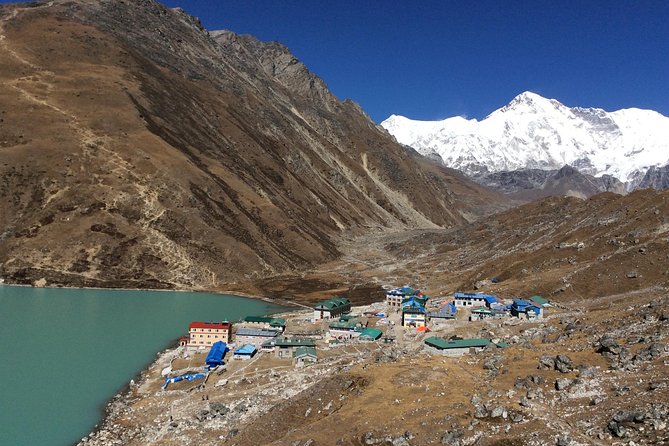
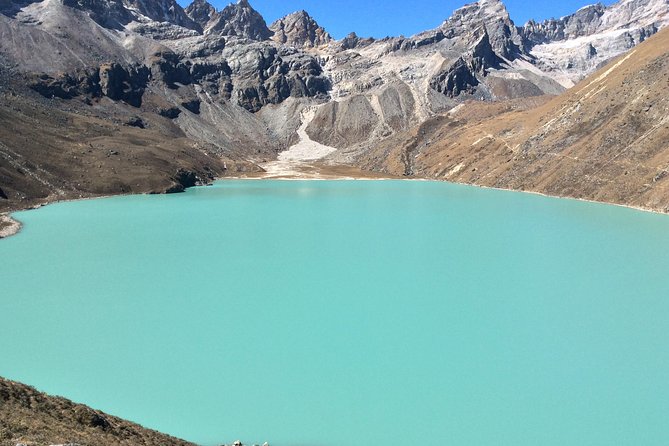
Gokyo, at about 4,790 meters, is one of the trip’s finest stops. You stay two nights, with the village serving as a base for the lakes and the climb to Gokyo Ri.
The Gokyo Lakes are west of Everest Base Camp and sit beside the Ngozumpa Glacier. Their setting gives you a different view of the Everest region, one that feels less focused on a single mountain objective.
The climb to Gokyo Ri begins early and rises to about 5,483 meters. It is steep, but the reward is one of the broadest viewpoints on the trek. From the top, you can see the Gokyo Valley and major peaks including Cho Oyu, Everest, and Makalu.
The altitude makes this a serious outing. Do not judge the climb only by its distance. At this height, slow walking, regular water breaks, and following your guide’s pace matter more than speed.
One detail worth clarifying is that the itinerary lists Gokyo Ri as a 30-minute admission stop, but the description calls it an early-morning steep climb. Treat it as a substantial mountain hike, not a brief photo stop.
Thangnak and the pre-dawn test of Cho La
From Gokyo, you walk to Thangnak, a remote settlement near Cho La. Accommodation here is described as very basic, with dormitory-style rooms. This is one of the clearest compromises in the trip.
You are not paying for comfort at Thangnak. You are staying in a practical location that makes the pass possible. Pack with that in mind, and use the supplied sleeping bag and down jacket. The provider includes both items for the trek, and they must be returned afterward.
Cho La day begins around 4:00 or 5:00 in the morning. The early start aims to get you over the pass between about 9:00 and 10:00, before afternoon weather becomes more difficult. At roughly 5,300 meters, this is the trek’s key physical test.
Snow and ice may be present, and conditions can change quickly. The experience provider requires travel insurance that covers emergency high-altitude rescue and evacuation, and you should regard that as essential rather than optional.
The trip’s strongest practical quality appears here: flexibility. Guide Nima was praised for putting safety first and changing plans around heavy snow and poor weather. Other guides, including Raj Kumar, Raj N, Ganesh, and Lakpa Sherpa, were also praised for adjusting timing and route choices when conditions changed.
That flexibility is valuable, but it does not make Cho La easy. You need moderate physical fitness at a minimum, and you should be comfortable with long walking days, early starts, steep ground, and basic lodging.
Lobuche and the walk to Everest Base Camp
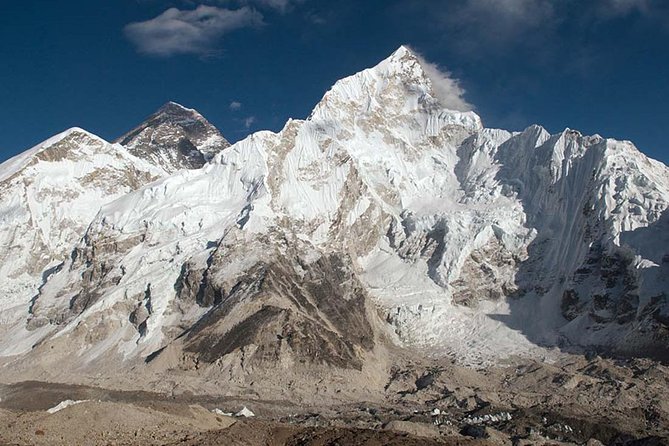
After the pass, the route continues to Lobuche on a shorter and easier day of about four hours. This is a useful recovery point after Cho La.
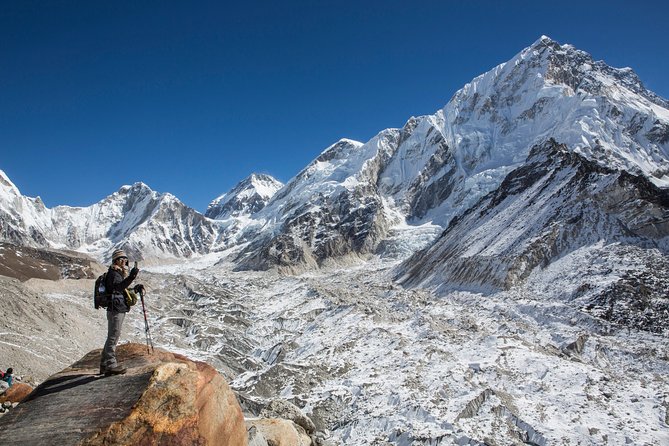
Day 12 is the major objective: the walk along the Khumbu Glacier to Everest Base Camp, at about 5,365 meters. The route is difficult, and the high altitude makes even a manageable trail feel slow. Spring may bring activity at Base Camp, but the itinerary does not promise a particular expedition season or level of access.
Base Camp itself is not the summit of Everest, and it does not give the classic full mountain view many people picture. Its value is symbolic and geographic: you have reached the staging area for climbers attempting the world’s highest peak.
You should also expect a long day. The stated tour window reaches about 19 hours, which signals an early start and a late return. The walk to Base Camp is only one part of the day, since you must return to Lobuche afterward.
Kala Patthar delivers the great panorama
The next morning brings Kala Patthar, a small peak rising to about 5,555 meters. The climb is described as one of the most difficult and rewarding days of the trek.
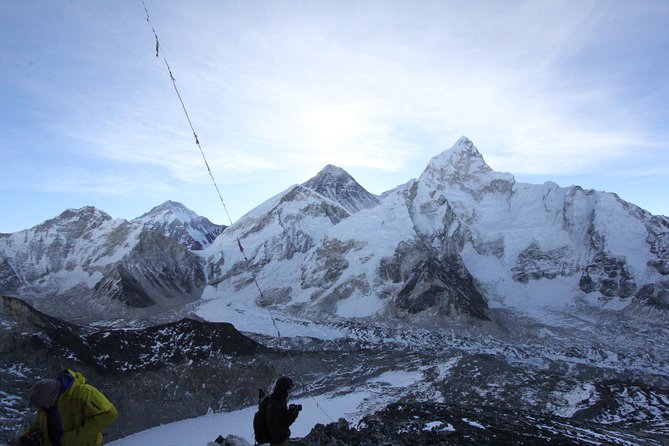
For many people, this is the best mountain viewpoint of the entire program. The route gives you a close, dramatic view of Everest along with several surrounding peaks. If your main goal is a memorable mountain panorama rather than simply reaching the Base Camp marker, Kala Patthar deserves your full effort.
Altitude remains the limiting factor. You are climbing higher than Base Camp after many days of exertion, so pace yourself and follow the guide’s instructions. The listed stop duration is only 15 minutes, but that should not be read as the length of the climb. It is better understood as time at the viewpoint.
After Kala Patthar, the route turns downhill. The return to Namche passes through Pangboche and Tengboche, with the trail continuing to the familiar trading town. The descent is a relief for your lungs, but tired legs can make downhill walking surprisingly hard.
The final walk to Lukla and Kathmandu
Day 15 is the last walking day. You return from Namche to Lukla and have the afternoon free. This is a good time to think back over the circuit, sort your equipment, and thank the staff who carried and organized much of the journey.
The package includes one porter for every two clients. That arrangement helps keep your personal load manageable, but you still need to pack responsibly. Personal trekking equipment is not included, and tips for guides, porters, and drivers are expected.
The following day, the 35-minute flight returns you to Kathmandu. You are met at the airport and transferred to your hotel. Day 17 ends with an airport transfer for your departure.
What the $2,200 price really covers
At $2,200 per person, the cost is not just a guided walk. It includes:
- Airport transfers
- Two Kathmandu hotel nights
- Fourteen nights in guesthouses during the trek
- Kathmandu to Lukla and return airfare
- A licensed English-speaking guide
- One porter for every two clients
- Trekking permits and government charges
- Breakfast throughout the program
- Fourteen lunches and fourteen dinners
- A down jacket and sleeping bag
- Filtered trail water using a Katadyn Pocket Water Filter
- Seasonal fruit
- A duffel or kit bag and sun hat
That is strong value for a 17-day Himalayan trip, particularly because flights, permits, staff, meals, and basic gear can quickly become expensive when arranged separately.
The price does not include international flights, a Nepal entry visa, travel insurance, personal equipment, alcoholic drinks, hot and cold drinks, Kathmandu lunches and dinners, or tips. Those extras are not minor details. You should price insurance that covers high-altitude evacuation before booking, and you should carry enough money for drinks and gratuities.
The included filtered water is a useful touch. It cuts down on repeated bottled-water purchases and helps you avoid carrying every day’s supply from the start.
Guide support and group size
The group limit is 15 people. That is large enough to keep the price reasonable but small enough for a guide to monitor the group more closely than on a mass-market departure.
The strongest praise for Ace the Himalaya centers on staff support. Raj N was waiting at the airport for one arrival and provided reassurance from the first transfer. Raj Kumar was described as kind, supportive, and willing to adjust the plan as trail conditions changed. Ramesh and porter Biroj were praised for creating a well-organized and friendly trek, while Ganesh and porter Sonam managed difficult snow, rain, and blizzard conditions.
One especially useful lesson comes from the bad-weather accounts: the guide may need to change timing, route choices, or even the transport plan. A helicopter ride was used by one pair after poor conditions affected their plans. A helicopter is not listed as included, so you should ask how any such change would be handled financially before departure.
Who should book this trek?
You should consider this route if you want more than a direct Base Camp walk. It suits someone who values Gokyo Lakes, high viewpoints, Sherpa villages, monasteries, and a challenging pass as much as the final Base Camp goal.
You also need a moderate fitness level and a good attitude toward uncertainty. Weather can affect Lukla flights and Cho La. The rooms may be basic, especially at Thangnak. Meals are included, but drinks are not, and personal equipment remains your responsibility.
This is not the right pick if you want a comfortable lodge holiday, a relaxed walking pace, or a low-altitude introduction to Nepal. The route is long, high, and physically serious.
Booking is flexible only within limits. You receive confirmation at booking, and cancellation brings a full refund if made at least six full days before the start time. A cancellation two to six full days ahead receives 50 percent, while cancellation less than two full days ahead is nonrefundable. If bad weather cancels the experience, you are offered another date or a full refund.
Should you book the Gokyo to Everest Base Camp trek?
I would choose this trek over the standard Everest route if you have the time, fitness, and patience for Cho La. The Gokyo Lakes and Gokyo Ri add some of the trip’s most memorable scenery, while the pass gives the journey a real sense of achievement.
The best reason to book is the combination of logistics and human support. Flights, permits, meals, water filtration, a sleeping bag, a down jacket, guide, and porter are bundled into a clear price. The staff record is also encouraging, especially in difficult weather.
The caution is just as clear: this is a high-altitude expedition-style trek with basic nights, long days, and weather risk. If that sounds exciting rather than alarming, the $2,200 package offers a well-supported route through the Everest region with far more variety than a simple out-and-back walk.
FAQ
How long does the Gokyo to Everest Base Camp trek last?
The program lasts approximately 17 days, including arrival and departure days in Kathmandu, the trek between Lukla and the Everest region, and the return flight to Kathmandu.
What is the highest point on the trek?
The route reaches about 5,555 meters at Kala Patthar. Gokyo Ri reaches about 5,483 meters, while Cho La Pass is about 5,300 to 5,330 meters.
Are flights between Kathmandu and Lukla included?
Yes. The package includes airfare from Kathmandu to Lukla and from Lukla back to Kathmandu.
Is accommodation included?
Yes. Two nights are included at a three-star hotel in Kathmandu, with fourteen nights in guesthouses during the trek. Accommodation is twin-share or double-share, and Thangnak has very basic dormitory-style lodging.
Are meals included?
Breakfast is included for all 16 listed breakfast services, along with 14 lunches and 14 dinners during the trekking portion. Lunch and dinner in Kathmandu are not included.
Is a guide and porter included?
Yes. The package includes a licensed English-speaking trekking guide and one porter for every two clients.
Do I need travel insurance?
Yes. Travel insurance covering emergency high-altitude rescue and evacuation is required but not included in the price.
What happens if bad weather cancels the trip?
If poor weather causes the experience to be canceled, you are offered a different date or a full refund. Weather may also affect the Lukla flights and the timing of the Cho La crossing.
Just added around Kathmandu
- Private Shopping Tour in Kathmandu★ 5.0 · 3 reviews
- Nagarkot Sunrise With 7 UNESCO World Heritage Private Tour★ 5.0 · 3 reviews
- Mount Everest Scenic Flight 50 Minutes★ 5.0 · 3 reviews
- Kathmandu: Nightlife and Pub Crawl Tour★ 5.0 · 3 reviews
- Momo Cooking Class -The Art Of Making MoMo with Home Chef★ 5.0 · 3 reviews
- Kathmandu: Nagarkot, Bhaktapur, Doleswor & Sanga Statue Tour★ 5.0 · 3 reviews
- Makalu Base Camp Trek★ 5.0 · 3 reviews
- Everest Experience Trek 6 Day Hiking Adventure★ 5.0 · 3 reviews
Everest Base Camp Treks, compared.






Everest Base Camp Trek with Helicopter Return from Gorakshep to Lukla
Read our review →Browse the lists this tour appears in