
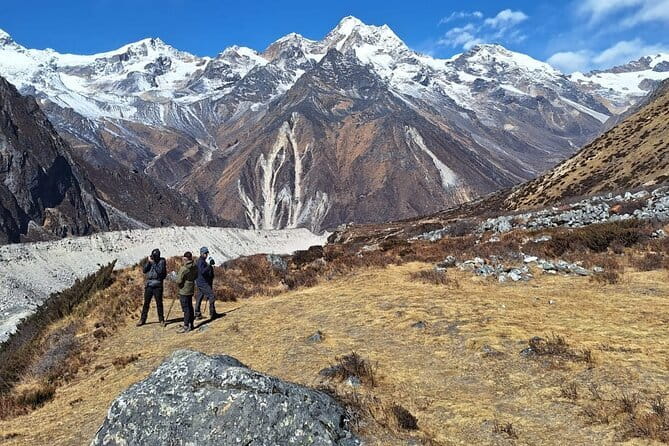
Reviewed · HIKING & TREKKING
Kanchenjunga Circuit Trek 19 Days
Kanchenjunga rewards patience. This 19-day circuit trek links Nepal’s North and South Base Camps, with clear rivers, jungle woodland, high glaciers, quiet villages, and huge Himalayan views. I like the route’s remote character and the chance to see Mount Kanchenjunga from several angles. I also like the small group size, capped at eight people, which should make the long days easier to manage. The main drawback is the amount of rough road travel at the start and end, plus very basic food and tea-house lodging.
At $2,000 per person, the price covers a lot: domestic flights, private jeep transport, permits, guides, porters, accommodation, most meals, taxes, and basic medical supplies. Guide care is a major part of the experience. Past guests gave especially warm praise to Raj, Jangbu, Abinta, and the wider Nepal Nirvana Trails team, with one experienced trekker calling the support excellent after completing nine previous treks in Nepal.
In This Review
- Key points to know before you book
- Why this Kanchenjunga route feels different
- Days 1 and 2 in Kathmandu: arrival and preparation
- Days 3 and 4: flying east and taking the rough road
- Days 5 to 7: forest trails, bridges, and Ghunsa
- Days 8 and 9 at Khambachen: a needed rest day
- Days 10 to 12: the glacier and Pang Pema
- Days 13 and 14: Sele Le and three high passes
- Days 15 and 16: Yalung Glacier and the southern side
- Days 17 to 19: Yamphudin, Kanyam, and the return flight
- What the $2,000 price really covers
- Who should book this trek?
- Should you book the Kanchenjunga Circuit Trek?
- FAQ
- How long is the Kanchenjunga Circuit Trek?
- What is included in the $2,000 price?
- Are domestic flights included?
- Is airport pickup available?
- How many people can join the group?
- Is a porter included?
- What level of fitness is required?
- Is food included during the trek?
- Is travel insurance included?
Key points to know before you book
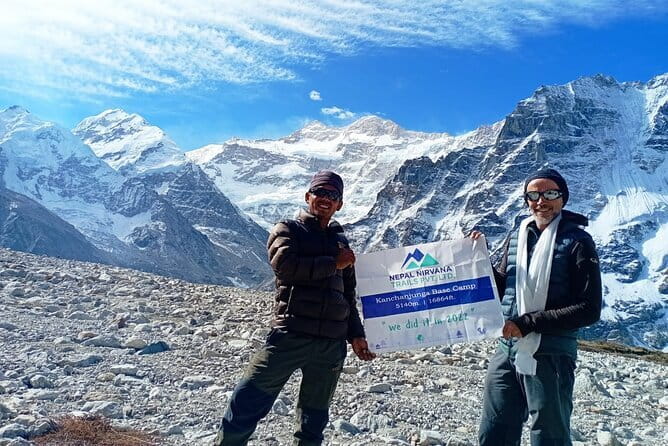
- Two base camps in one circuit: You visit Pang Pema, the North Base Camp, then cross high passes toward the Yalung Glacier and the South Base Camp area.
- Long road access: Private jeep transfers connect Bhadrapur, Taplejung, Sekathum, Yamphudin, Kanyam, and the airport. The road sections are part of the adventure, not a minor transfer.
- Remote and quiet: Villages have fewer tourist facilities than Nepal’s better-known trekking routes, so you get more solitude but less comfort.
- Serious altitude and fitness demands: The route reaches Pang Pema and several passes above 4,400 meters, with steep, rough, and sometimes landslide-prone sections.
- Small-group support: Groups can include up to eight people, with one porter shared between every two trekkers.
- A well-covered package: Permits, domestic flights, tea houses, guide and porter costs, taxes, breakfast, lunch, dinner, and local transport are included.
Why this Kanchenjunga route feels different
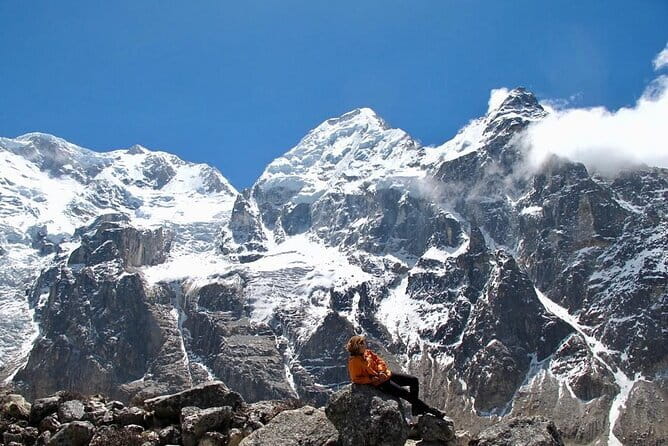
The Kanchenjunga region sits far from the easy access and heavy foot traffic of Nepal’s most famous routes. That remoteness shapes every part of the trip. You spend more time reaching the trail, but once walking begins, the reward is a quieter route through forest, stone villages, river valleys, glaciers, and high mountain country.
I like the route because it does not offer only one dramatic viewpoint. The itinerary approaches Kanchenjunga from the north, then turns across high passes toward the Yalung Glacier and the southern side. You see changing angles, changing vegetation, and changing village life as the altitude rises and falls.
This is not a gentle sightseeing holiday. You should have a strong level of physical fitness. Several days are listed at around 12 hours, although that total includes the day’s full activity and transport in some cases. The high passes, glacier trails, steep descents, and remote sections demand steady effort.
More Treks and Hikes:
- Everest Base Camp Trek – 14 Days
★ 5.0 · 1,499 reviews - Everest Base Camp Trekking
★ 5.0 · 485 reviews - Nagarkot Sunrise View and Day Hiking from Kathmandu
★ 5.0 · 471 reviews
Days 1 and 2 in Kathmandu: arrival and preparation
Your first day begins with airport pickup at Tribhuvan International Airport. A Nepal Nirvana Trails representative takes you to a three-star hotel in Kathmandu, where breakfast is included for the Kathmandu portion of the stay.
Day two handles the practical work. The management team meets you around 9 a.m. to collect your original passport for permit preparation. Around 5 p.m., you meet at the company office, receive your passport back, and presumably review the trek arrangements.
I value this preparation day because the Kanchenjunga area requires permits and careful planning. It also gives you time to organize clothing, medication, and personal items before leaving the city. The package includes three nights in a Kathmandu hotel with breakfast, although extra hotel nights and lunch or dinner in Kathmandu are not covered.
Days 3 and 4: flying east and taking the rough road
On day three, you fly from Kathmandu to Bhadrapur, also called Chandragadhi Airport. The flight takes about 45 to 50 minutes. From there, a private jeep drives toward Taplejung, passing through Kanyam and following the Mechi Highway.
This is a long transfer day, listed at about 12 hours. The road journey gives you an early look at eastern Nepal, but it can be tiring. One important point from the available feedback is that the long four-wheel-drive rides were the main downside for some people, even when the trekking itself was excellent.
Day four continues by local jeep toward Sekathum. Many people prefer to walk from Taplejung to Sekathum, but this trip uses the vehicle to save time and preserve energy for the high mountain section. That is a sensible choice for a 19-day schedule, though you should not picture the trek as beginning immediately after landing in Nepal.
The first two road days are the price of reaching a remote trailhead. Pack snacks, water, and something to occupy you during the drive. Personal drinks, snacks, bottled water, charging, Wi-Fi, and hot showers are not included.
Days 5 to 7: forest trails, bridges, and Ghunsa
The hiking begins on day five at Sekathum. The trail follows the Ghunsa Khola through forest, crossing many bridges and gaining height toward Amjilosa. This is where the trip changes from transport-heavy to foot-powered.
Day six continues from Amjilosa to Gyabla, also known as Kyapra. You walk through dense forest with no human settlement for sections of the route. The quiet is a major part of the appeal, but it also means you should stay prepared with water, basic snacks, and suitable clothing.
On day seven, the path passes through woodland and reaches Phale before continuing to Ghunsa. Ghunsa is an important village on the route, and many trekkers use it for acclimatization. It is also one of the places where you may see more activity during the main trekking season, since people heading to and returning from the North Base Camp use this section.
I like this opening hiking section because it builds the trip gradually. You begin beside rivers and bridges, pass through thick forest, and reach mountain villages before the trail becomes more exposed and demanding.
A few more trips worth weighing up before you book
- Private Kathmandu Sightseeing Tour | UNESCO World Heritage sites
★ 5.0 · 756 reviews - Everest Base Camp Helicopter Tour landing at Everest View Hotel
★ 5.0 · 668 reviews - Half day cooking class in Thamel kathmandu
★ 5.0 · 607 reviews - Kathmandu: Full Day 7 UNESCO Tour with Lunch – Private/Group
★ 5.0 · 415 reviews
Days 8 and 9 at Khambachen: a needed rest day
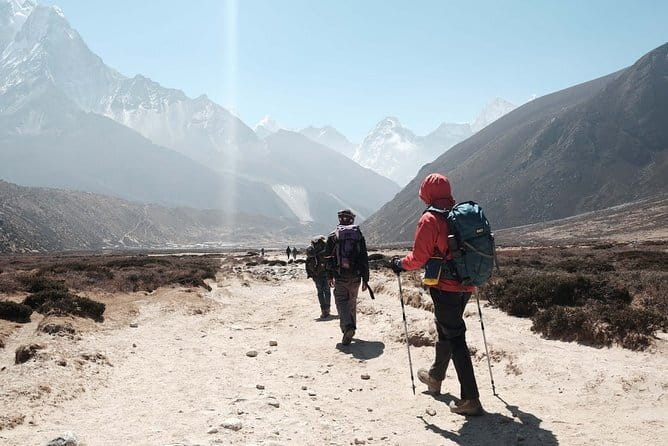
Day eight takes you from Ghunsa to Khambachen through open pine forest. The route crosses areas prone to landslides, so conditions may affect the pace. The description also notes possible sightings of blue sheep and snow leopards. These are possibilities, not promises, but the wildlife adds interest to an already dramatic section.
Khambachen is listed as the overnight stop on day eight and the rest point on day nine. That second day is used for a shorter hike toward nearby glaciers, viewpoints, and lakes, helping your body adjust to altitude.
This rest day is one of the most important parts of the schedule. The itinerary climbs steadily, and rushing higher without a pause would make the route harder. You may meet other trekking groups here during the main season, but the region remains far quieter than Nepal’s busiest circuits.
Expect basic tea-house accommodation and simple food. The package includes tea-house lodging, but comfort is limited. The operator specifically advises choosing vegetarian food during the trek, a useful suggestion when kitchens and supplies are basic.
Days 10 to 12: the glacier and Pang Pema
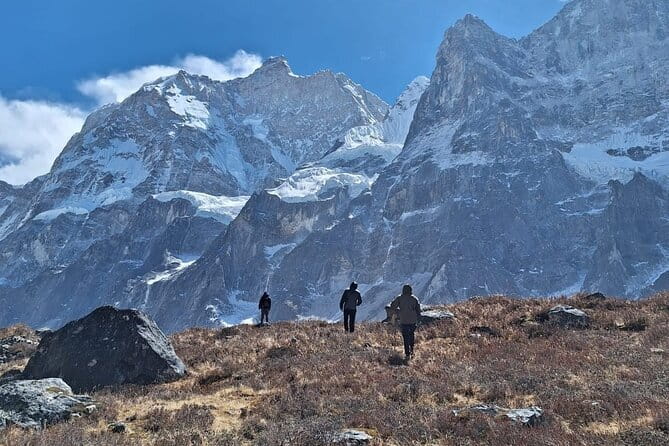
From Khambachen, day ten follows the Kanchenjunga Glacier trail toward Lhonak. The route becomes more exposed and high mountain in character. During peak season, you may share this stretch with people walking to and from the North Base Camp.
Day eleven is one of the central goals of the trip: the hike to Pang Pema, the North Base Camp of Mount Kanchenjunga. The trail climbs gradually over moraines, with broad mountain views along the way. At this altitude, the terrain and weather matter as much as the distance. You need good footwear, warm layers, and patience.
The route then retraces its steps on day twelve, returning to Ghunsa. That backtracking is necessary because the circuit cannot simply continue north. It also lets you see familiar valleys from a different direction, though some people may find the repeated section less exciting after the base camp visit.
The North Base Camp day is likely to be the emotional high point for many people. You are not simply stopping at a viewpoint beside a road. You walk through a remote glacier region to reach a high mountain base, and the effort gives the scenery its value.
Days 13 and 14: Sele Le and three high passes
Day thirteen leaves the usual route to Gyabla and climbs toward Sele Le. The trail passes through dense forest, with another chance of seeing snow leopards. Human settlements are isolated here, and the few tea houses may open only during the trekking season.
That seasonal limitation matters. You are traveling through a remote area where services cannot be assumed in the way they can in Kathmandu. Your guide and porter support are included, but you still need to bring personal essentials and accept a simple routine.
Day fourteen is the toughest-looking day on paper. From Sele Le Pass, you cross Sinion La at 4,440 meters, Mirgin La at 4,480 meters, and Sinelapche Bhanjyang at 4,645 meters. The reward is a series of wide Himalayan views, but the effort is serious.
You should not treat this as an ordinary day hike. The altitude, repeated climbs, and rough trail require strong fitness. A licensed, first aid-trained guide accompanies the group, and a first aid kit with basic medication is included. Even so, your travel and health insurance must cover emergency rescue and evacuation.
Days 15 and 16: Yalung Glacier and the southern side
Day fifteen heads toward the Yalung Glacier, bringing you close to the southern mountain scenery. The route offers views of Rathong, at 6,682 meters, and Kabru, at 7,412 meters. This section gives the circuit its second major mountain perspective after Pang Pema.
The itinerary describes the trail as moving higher and closer to the mountain views. You should expect a demanding day in a high setting, with weather and trail conditions affecting the experience. The glacier scenery is the reason to accept the hard work of the previous passes.
On day sixteen, the route turns downhill through rhododendron forest and follows the Simbuwa Khola toward Tortong. The change from snow and rock to forest is welcome. It also gives your legs a break from constant climbing, though downhill walking can be rough on knees.
The route is often described as visiting the South Base Camp, but the listed day-by-day stops focus on the Yalung Glacier and the southern approach rather than naming a separate South Base Camp overnight stop. If reaching a specific South Base Camp point is essential to you, confirm the exact trail objective with the operator before paying.
Days 17 to 19: Yamphudin, Kanyam, and the return flight
Day seventeen continues downhill from Tortong toward the Amji Khola. The trail passes Lasiya or Lamite Bhanjyang at 3,415 meters and Dhupi Bhanjyang at 2,665 meters before reaching Yamphudin.
This is a good final hiking day because the route leaves the highest mountain terrain and returns to village country. The descent includes steep sections, so do not assume the hardest work ends once you leave the glaciers.
Day eighteen follows the Kabeli Khola, then leaves the mountain villages by road for Kanyam. Day nineteen allows time to see the green tea cultivation area before a two to three-hour drive to Bhadrapur Airport. The flight back to Kathmandu takes another 45 to 50 minutes and is scheduled for the late part of the day.
The final two days repeat the transport challenge from the beginning. If you dislike long jeep rides, this circuit may test your patience. If you see the road as part of the cost of reaching a remote corner of Nepal, the arrangement makes practical sense.
What the $2,000 price really covers
At $2,000 per person, this is not a cheap walk, but the package covers the expensive pieces of a remote Nepal trek. You receive both domestic flights, a private jeep from Bhadrapur through Taplejung to Sekathum, and the return road journey from Yamphudin through Kanyam to Bhadrapur Airport.
The price also includes three nights in a three-star Kathmandu hotel with breakfast, tea-house accommodation during the trek, all necessary trekking permits, and 18 breakfasts, 17 lunches, and 16 dinners. Guide and porter salaries, food, equipment, insurance, local and government taxes, VAT, and official expenses are included.
One porter is provided for every two trekkers. That is useful, but you should still pack sensibly and keep your day items in your own small bag. Personal purchases are extra, including snacks, beer, soft drinks, juice, water, Wi-Fi, battery charging, and hot showers.
Tips for the guide and porter are not included, though they are appreciated. The strongest praise connected with this operator focuses on care and support, especially from guides such as Raj and Jangbu. Abinta was also praised for her warmth and understanding of local culture, nature, and trails.
Who should book this trek?
I would choose this trip if you want a remote Himalayan route and have the fitness for long days, high passes, and basic lodging. It suits people who care more about quiet trails, glacier scenery, and village life than polished facilities.
The small maximum group of eight is a useful advantage. You have a better chance of moving at a shared pace, and guide support should feel more personal than on a large departure.
I would hesitate if you want short daily walks, comfortable hotels, reliable hot showers, or a smooth road journey. I would also think twice if you have not prepared for altitude. The itinerary reaches 4,645 meters and includes glacier and moraine terrain, so this is a serious trek even though transport shortens the approach.
Free cancellation is available up to 24 hours before the start time for a full refund. Within 24 hours, cancellation or changes are not accepted, so check your flights, insurance, and fitness plans before the final day.
Should you book the Kanchenjunga Circuit Trek?
Book it if your ideal Nepal trip includes two base-camp approaches, high passes, quiet villages, and a sense of being far from the usual tourist routes. The price is reasonable for the included flights, private road transport, permits, meals, staff, and accommodation.
Skip it if you want comfort or an easy introduction to trekking. The long jeep rides, simple food, seasonal tea houses, rough trails, and high altitude are not small details. For a fit trekker who values remote scenery and dependable staff support, this 19-day route offers a serious and memorable Himalayan challenge.
FAQ
How long is the Kanchenjunga Circuit Trek?
The trek lasts approximately 19 days, beginning and ending in Kathmandu.
What is included in the $2,000 price?
The price includes trekking permits, three nights in a three-star Kathmandu hotel with breakfast, tea-house accommodation, domestic flights, private jeep transfers, guides, porters, meals during the trek, a first aid kit, taxes, VAT, and official expenses.
Are domestic flights included?
Yes. The package includes flights from Kathmandu to Bhadrapur and from Bhadrapur back to Kathmandu.
Is airport pickup available?
Yes. Pickup is offered from Tribhuvan International Airport in Kathmandu, followed by transfer to the booked hotel.
How many people can join the group?
The activity has a maximum of eight travelers.
Is a porter included?
Yes. One porter is provided for every two trekkers. The package covers the porter’s salary, food, equipment, and insurance.
What level of fitness is required?
You should have a strong level of physical fitness. The route includes long walking days, high-altitude passes, glacier areas, steep sections, and trails that can be affected by landslides.
Is food included during the trek?
Yes. The package includes 18 breakfasts, 17 lunches, and 16 dinners. Food is described as very basic, and vegetarian meals are recommended.
Is travel insurance included?
No. You must arrange your own travel and health insurance, including coverage for emergency rescue and evacuation.
Just added around Kathmandu
- Private Shopping Tour in Kathmandu★ 5.0 · 3 reviews
- Nagarkot Sunrise With 7 UNESCO World Heritage Private Tour★ 5.0 · 3 reviews
- Kathmandu: Nightlife and Pub Crawl Tour★ 5.0 · 3 reviews
- Mount Everest Scenic Flight 50 Minutes★ 5.0 · 3 reviews
- Momo Cooking Class -The Art Of Making MoMo with Home Chef★ 5.0 · 3 reviews
- Kathmandu: Nagarkot, Bhaktapur, Doleswor & Sanga Statue Tour★ 5.0 · 3 reviews
- Makalu Base Camp Trek★ 5.0 · 3 reviews
- Kathmandu: Momo Making Class with a Local Chef★ 5.0 · 3 reviews
Hiking & Trekking, compared.


Nagarkot Sunrise View and Day Hiking from Kathmandu
Read our review →


