
Reviewed · EVEREST BASE CAMP TREKS
Luxury Everest Base Camp Trek -11 Days
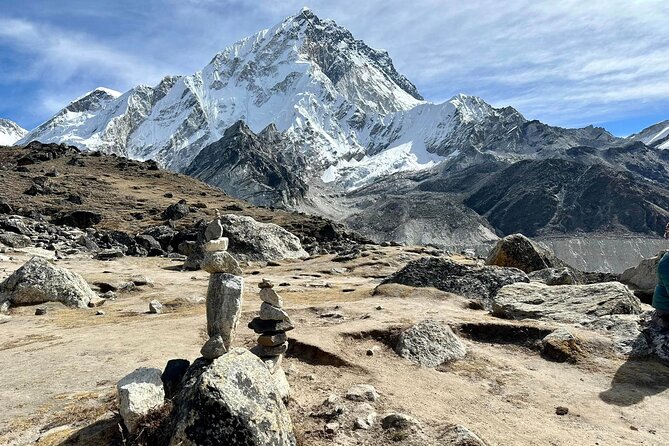
Everest arrives by foot, then by helicopter. This 11-day luxury Everest Base Camp trek combines the classic Khumbu route with upgraded teahouses, private airport transfers, a support team, and a shared helicopter flight from Gorakshep back to Kathmandu. I like the air-and-ground views of Everest and the fact that you avoid the long walk back down. I also like the careful pacing, with acclimatization days in Namche Bazaar and Dingboche.
The main consideration is altitude. You reach 5,545 meters at Kala Patthar, and the trek includes long, demanding days on rocky ground. The helicopter return is also subject to mountain weather, so you should treat it as a valuable plan rather than an absolute guarantee.
In This Review
- Key points before you book
- What you are paying $4,500 for
- Day 1: A soft landing in Kathmandu
- Day 2: Flying to Lukla and starting the trail
- Day 3: Phakding to Namche Bazaar
- Day 4: Acclimatizing around Namche
- Day 5: From the Everest View area to Tengboche
- Day 6: Diboche to Dingboche at 4,360 meters
- Day 7: A second acclimatization day in Dingboche
- Day 8: Dingboche to Lobuche
- Day 9: The hard push to Everest Base Camp
- Day 10: Kala Patthar and the helicopter return
- Day 11: Leaving Nepal with a clear plan
- The comfort level: luxury, with sensible expectations
- Guides, porters, and the human side of the trip
- Best seasons and who should book
- Should you book the Luxury Everest Base Camp Trek?
- FAQ
- Where does the Luxury Everest Base Camp Trek begin?
- How long does the trek last?
- Is the helicopter flight included?
- What accommodation is provided?
- Are meals included?
- Do I need travel insurance?
Key points before you book
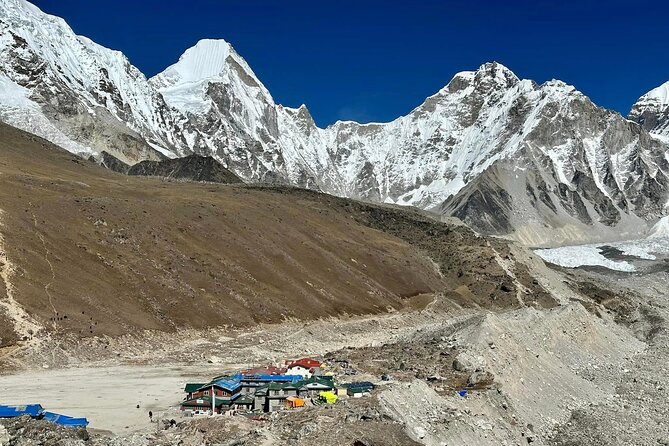
- Return by helicopter: After reaching the Everest Base Camp area, you fly from Gorakshep toward Kathmandu on a shared helicopter.
- Two acclimatization days: The schedule pauses at Namche Bazaar and Dingboche to help you adjust to rising altitude.
- Upgraded mountain lodging: You stay in upgraded teahouses on a twin-sharing basis, plus two nights in a five-star Kathmandu hotel.
- Kala Patthar at 5,545 meters: The high point gives you a major Himalayan viewpoint, though the climb is strenuous.
- Strong personal support: A guide accompanies you, and one porter is provided for every two clients.
- Private group format: Only your own group takes part, with airport pickup and a farewell Nepalese dinner included.
What you are paying $4,500 for
The price is high compared with a basic Everest Base Camp trek, but it pays for more than a bed and a guide. You receive airport transfers, two nights in a five-star Kathmandu hotel, upgraded teahouses in the mountains, meals during the trek, permits and local fees, a guide, porters, flights to Lukla, and the shared helicopter return from Gorakshep.
That helicopter is the big cost difference. A standard trek usually requires several more days of walking back toward Lukla, followed by a flight to Kathmandu or Ramechhap. Here, the return flight can save time and spare your knees after the hardest section of the route. It also gives you a second view of Everest country, this time from above.
The package includes one porter for every two clients, rather than one porter per person. That is normal for a supported trek, but you should pack with the arrangement in mind. You will need to keep your daily essentials in your daypack while the porter carries the larger duffle bag.
The value is strongest for someone who wants a smoother, more supported experience and does not want to spend the full return journey on foot. It is less compelling if you mainly want the lowest possible price or prefer a longer, slower route through the Khumbu.
More Everest Base Camp Treks:
- Everest Base Camp Trek – 14 Days
★ 5.0 · 1,499 reviews - Everest Base Camp Trekking
★ 5.0 · 485 reviews - Everest Base Camp Trekking – 13 Day
★ 5.0 · 365 reviews
Day 1: A soft landing in Kathmandu
Your trip begins at Tribhuvan International Airport, where a representative meets you and transfers you to your hotel by private vehicle. After an international flight, that simple handoff matters. Kathmandu airport can be busy, and having someone waiting removes an early layer of guesswork.
You spend the night in a five-star hotel. The package includes two Kathmandu nights with breakfast, one at the start and one associated with the trip schedule. The final evening also includes a farewell dinner at an authentic Nepalese restaurant with cultural performance.
Do not expect this day to feel like sightseeing. It is mainly for arrival, rest, and preparation. The early start for the Lukla flight comes quickly, so a quiet evening is more useful than an ambitious city tour.
Day 2: Flying to Lukla and starting the trail
The mountain portion begins with a flight from Kathmandu or, depending on operating arrangements, from Ramechhap to Lukla. Lukla sits at about 2,860 meters, so you gain altitude immediately after leaving the capital.
From Lukla, you walk to Phakding. This first trail day is useful because it gets your legs moving without sending you straight into the highest part of the route. You also begin to learn the rhythm of trekking here: steady walking, regular pauses, and attention to how your body responds.
The stated start time for the activity is 6:00 am. That early schedule is practical for mountain flights, though flight operations can change. You should expect possible delays if conditions affect the Lukla connection, and the package notes that extra costs caused by weather or other delays are not included.
Day 3: Phakding to Namche Bazaar
The walk from Phakding to Namche Bazaar brings a clear increase in effort and altitude. Namche sits at roughly 3,440 meters, and this is where the trek begins to feel like a serious Himalayan journey.
Namche is the Khumbu’s best-known trading center and a natural stopping point. The route here includes sustained uphill walking, so you will appreciate the guide’s pacing and the porter support. The day is not simply a transfer between lodges. It is your first real test of breathing, stamina, and patience.
The luxury label does not turn this into a gentle walk. Upgraded teahouses may offer better comfort at the end of the day, but they cannot flatten the trail. Your fitness needs to be at least moderate, as the operator advises.
More Treks and Hikes:
- Nagarkot Sunrise View and Day Hiking from Kathmandu
★ 5.0 · 471 reviews - Annapurna Circuit Trek with Tilicho Lake
★ 5.0 · 368 reviews - Everest Base Camp Trek -14 Days
★ 5.0 · 321 reviews - Annapurna base camp trek 5 Days
★ 5.0 · 252 reviews
Day 4: Acclimatizing around Namche
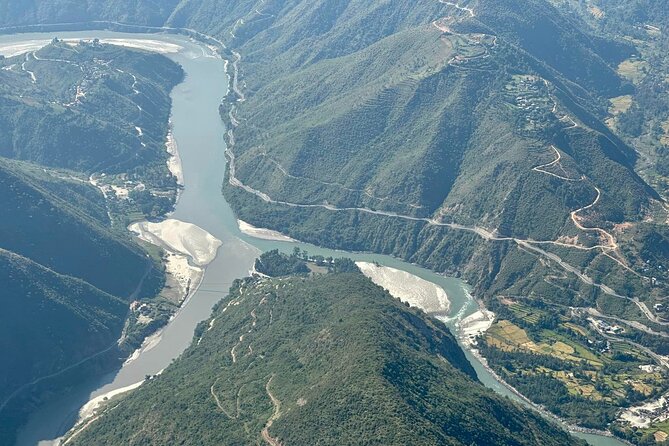
The first acclimatization day is spent around Namche at approximately 3,880 meters. The purpose is simple: give your body time to adjust before climbing higher.
The itinerary provides an opportunity to explore the area and take in views of the Everest ranges. The exact walking plan can vary with the guide and the group, but this should not be treated as a rest day spent entirely indoors. Short walks at altitude are part of the adjustment process.
I consider this pause one of the itinerary’s strongest features. A rushed schedule may look attractive on paper, but the Khumbu rewards a slower approach. You are better off using this day to walk lightly, drink what you need, and notice how you feel before continuing.
Day 5: From the Everest View area to Tengboche
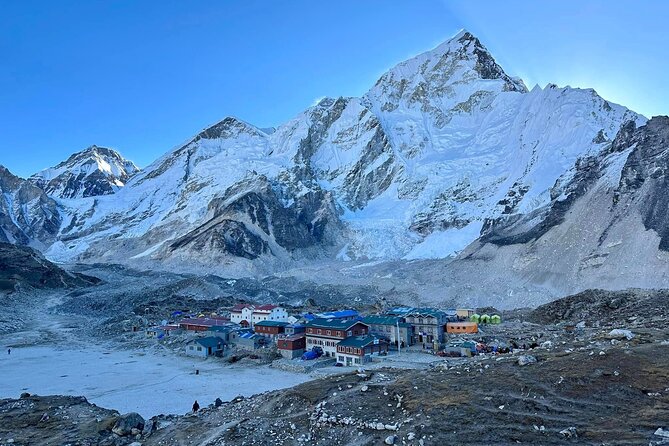
The route continues toward Tengboche, at about 3,820 meters, with a walking time of roughly four to five hours. The day begins from the Hotel Everest View area, according to the schedule.
Tengboche is one of the memorable stops on the route because of its setting among the high peaks. The walk is shorter than some later stages, which gives you a chance to settle into the altitude before the trail rises toward Dingboche.
You should also note that the altitude figures do not move upward in a perfectly straight line. Tengboche is slightly lower than Namche’s acclimatization elevation, yet the general direction of the trek continues higher. That is normal in mountain itineraries, where the trail rises and falls before reaching the upper valley.
Day 6: Diboche to Dingboche at 4,360 meters
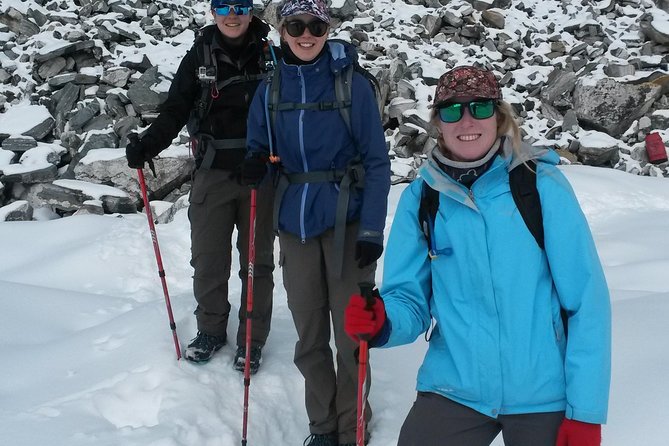
This five to six-hour stage takes you from Diboche to Dingboche, which sits at about 4,360 meters. The air will feel thinner here, and a walking pace that seemed easy near Lukla may now require more concentration.
The trail enters a more exposed, high-altitude setting, with broad views of the surrounding Himalayan peaks. Your guide’s role becomes increasingly important. A good guide watches the group’s pace, helps with practical decisions, and makes sure nobody treats the schedule as a race.
The company’s reviews give particular credit to its guides and porters. Prakash is singled out for being an outstanding guide, while Bhagwat, the company leader, is praised for staying closely involved with planning and communication. Those names matter because support becomes more valuable as the route gets higher and the days become longer.
Day 7: A second acclimatization day in Dingboche
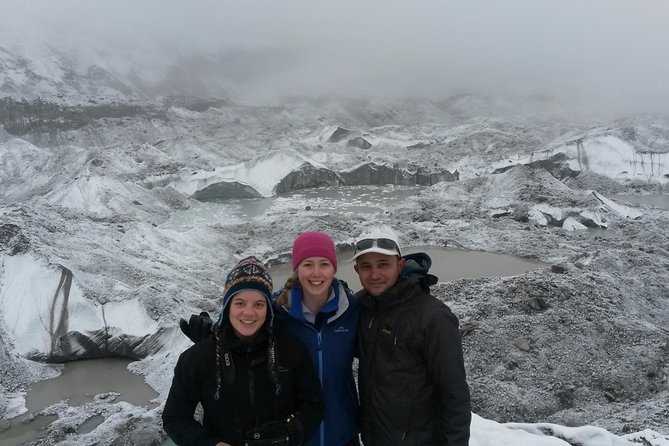
Dingboche gets another acclimatization day, at 4,360 meters. This is not wasted time. It is one of the best choices in the schedule.
You may take a short walk to gain a little more height and return to sleep lower, but the supplied plan does not specify one fixed excursion. What is clear is the reason for the pause: your body needs time to adjust before the trail moves into the Lobuche and Gorakshep section.
This day also gives you a chance to assess your condition. If you have a headache, unusual fatigue, or difficulty walking comfortably, tell your guide. The itinerary includes medical supplies and travel and rescue arrangements, but good communication remains the first practical step.
Day 8: Dingboche to Lobuche
The walk from Dingboche to Lobuche takes about five to six hours and is described as moderate, though high altitude and weather can make that label feel optimistic. The trail crosses rocky ground and glacial moraines, with striking views of the surrounding peaks.
At this point, comfort is relative. An upgraded teahouse can give you a more pleasant place to eat and sleep, but you are still in a remote mountain region. Hot showers, boiled water, battery charging, laundry, and other personal extras cost extra, so budget for them if they matter to you.
Lobuche is an important staging point before the Base Camp day. The short daylight, cold conditions, and thin air make it sensible to keep the evening quiet. You will want your warm layers, headlamp, water, and essential items easy to reach.
Day 9: The hard push to Everest Base Camp
The route from Lobuche through Gorakshep to Everest Base Camp takes about six to seven hours. This is one of the most demanding days because you cover rocky terrain, glacial moraine, and a steady series of uphill sections at very high altitude.
Gorakshep is the launching point for the walk to Base Camp. The route is not a polished path, and you should expect uneven ground rather than a simple sightseeing stroll. The surrounding peaks and high mountain scenery give the day its reward, but the altitude controls the pace.
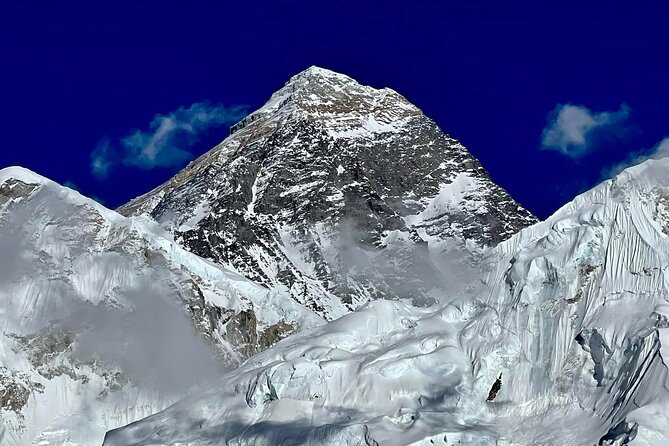
Reaching Everest Base Camp is a major moment, though the famous summit itself is not visible from every point at Base Camp. The next morning’s climb to Kala Patthar is included because it provides the stronger panoramic viewpoint of Everest and the surrounding ranges.
This is also where the luxury format earns its keep in a practical way. You have a support team, meals, organized accommodation, and a planned helicopter return instead of facing the entire descent alone. Still, no upgrade removes the physical demands of the day.
Day 10: Kala Patthar and the helicopter return
The morning hike from Gorakshep to Kala Patthar reaches 5,545 meters, or 18,192 feet. This is the highest point on the itinerary and one of the most celebrated viewpoints on the Everest Base Camp route.
The climb is strenuous. Even if the distance looks manageable, the altitude makes every step slower. You should carry only what you need, follow the guide’s pace, and allow plenty of time for pauses.
From the summit area, you can take in wide views of Everest and the surrounding Himalayan ranges. This is the point where the itinerary delivers its strongest mountain panorama from the ground.
The return is by shared helicopter from Gorakshep to Kathmandu. That flight is the experience’s signature feature, letting you see the route from the air after walking through it. The schedule depends on safe flying conditions, and the package specifically notes that mountain weather can cause delays or extra nights. You should keep some flexibility in your plans.
The inclusion says the helicopter fare is from Gorakshep to Kathmandu, shared. Ask the operator before departure how the flight timing is handled and what happens if weather prevents the helicopter from operating that day. The package does not cover all expenses caused by an unscheduled mountain stay.
Day 11: Leaving Nepal with a clear plan
A company representative takes you to the airport about three hours before your scheduled flight. The activity ends back at the original meeting point, Tribhuvan International Airport.
The final day is intentionally simple. After the physical effort of the trek and the helicopter return, you need a reliable airport transfer more than another packed excursion. If your return flight is late or you arrive back from the mountains earlier than planned, extra Kathmandu accommodation is not included.
The comfort level: luxury, with sensible expectations
The word luxury needs a little translation here. In Kathmandu, you receive a five-star hotel. In the mountains, you stay in upgraded teahouses on a twin-sharing basis. That is a meaningful improvement over the most basic lodging, but it is not a luxury resort experience at 4,000 meters and above.
Meals during the trek include breakfast, lunch, and dinner. Food is included for the scheduled trekking days, while meals in Kathmandu are generally not included except for the farewell dinner. Vegetarian meals are available if you request them when booking, and you should also provide any other dietary requirements in advance.
Personal costs can add up. Phone calls, laundry, bar bills, battery charging, hot showers, bottled or boiled water, extra porters, and tips are excluded. You should also buy travel and rescue insurance, since that is not part of the package.
Guides, porters, and the human side of the trip
The operator provides an experienced guide and one porter for every two clients. A duffle bag is supplied for the trek and returned afterward, while company T-shirts are also included.
The strongest praise centers on the human support. Prakash receives special credit as a guide, and Bhagwat is repeatedly described as responsive, organized, and personally involved. One customer said Bhagwat answered questions over six months before the trip, which is useful evidence for anyone who wants close planning support rather than a hands-off booking.
The company also has repeat business from an adventure club in Hyderabad that sends members to Nepal each year. That does not guarantee a perfect trip, but it suggests the operator has built lasting relationships with groups that return for trekking support.
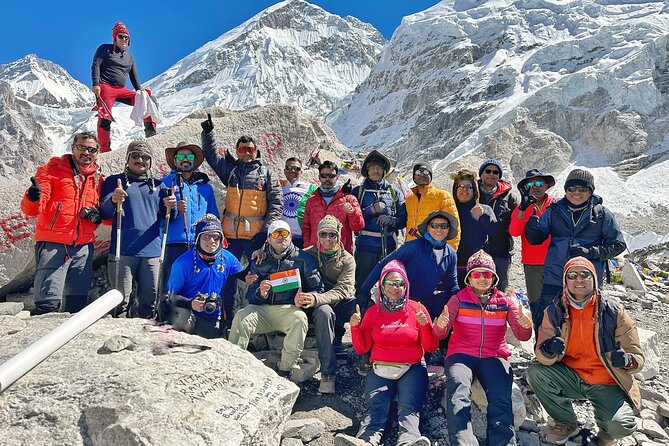
Because this is a private activity, only your group takes part. That gives you more control over walking speed and rest stops than a large mixed group. It may also mean that the experience depends heavily on the particular guide assigned to your departure, so it is sensible to request details about your guide before arrival if possible.
Best seasons and who should book
Spring and autumn are presented as the best seasons for this trip because weather is more stable for helicopter operations and Himalayan views. That is especially important here: the return flight is a central part of the value, not a minor extra.
I would recommend this trek to you if you want Everest Base Camp but prefer organized support, upgraded mountain lodging, and a faster return. It also suits private groups, families with appropriate fitness, and people who place a high value on time.
You should think twice if you dislike early starts, long uphill walks, shared rooms, uncertain mountain schedules, or cold conditions. The tour is described as family-friendly, but children and older family members still need to meet the physical demands of high-altitude trekking. The package itself asks for moderate physical fitness.
Cancellation is flexible up to 24 hours before the start time for a full refund. Changes or cancellations inside that window are not accepted for a refund, and the local cut-off time applies.
Should you book the Luxury Everest Base Camp Trek?
Book it if the shared helicopter return is important to you and you want strong logistical support without giving up the classic walking route. The two acclimatization days, upgraded teahouses, private group format, and praised guide and management support make the $4,500 price easier to justify.
Do not book it simply because the word luxury sounds effortless. You still walk for up to seven hours on rocky high-altitude trails and climb to 5,545 meters. If you understand that tradeoff, this is a well-supported way to experience Everest from both the trail and the sky.
FAQ
Where does the Luxury Everest Base Camp Trek begin?
The trek begins at Tribhuvan International Airport in Kathmandu, Nepal. Airport pickup and transfer to the hotel by private vehicle are included.
How long does the trek last?
The planned duration is 11 days, including arrival in Kathmandu, the trek to Everest Base Camp, the Kala Patthar hike, the helicopter return, and airport departure.
Is the helicopter flight included?
Yes. A shared helicopter flight from Gorakshep to Kathmandu is included. Mountain weather can delay or affect flights, and extra costs caused by an unscheduled delay are not included.
What accommodation is provided?
You receive two nights in a five-star Kathmandu hotel with breakfast. During the trek, accommodation is in upgraded teahouses with twin-sharing rooms.
Are meals included?
Breakfast, lunch, and dinner are included during the scheduled trekking days. Meals in Kathmandu are not included, apart from the farewell Nepalese dinner. Vegetarian food is available if requested in advance.
Do I need travel insurance?
Yes. Travel and rescue insurance are not included in the tour price. You should arrange suitable coverage before beginning the trek.
Just added around Kathmandu
- Private Shopping Tour in Kathmandu★ 5.0 · 3 reviews
- Nagarkot Sunrise With 7 UNESCO World Heritage Private Tour★ 5.0 · 3 reviews
- Mount Everest Scenic Flight 50 Minutes★ 5.0 · 3 reviews
- Kathmandu: Nightlife and Pub Crawl Tour★ 5.0 · 3 reviews
- Kathmandu: Nagarkot, Bhaktapur, Doleswor & Sanga Statue Tour★ 5.0 · 3 reviews
- Momo Cooking Class -The Art Of Making MoMo with Home Chef★ 5.0 · 3 reviews
- Makalu Base Camp Trek★ 5.0 · 3 reviews
- Everest Experience Trek 6 Day Hiking Adventure★ 5.0 · 3 reviews
Everest Base Camp Treks, compared.






Everest Base Camp Trek with Helicopter Return from Gorakshep to Lukla
Read our review →Browse the lists this tour appears in