
Reviewed · MOMO MAKING CLASSES
Nepalese Kitchen in Pokhara: Momos or Dal Bhat Cooking Class
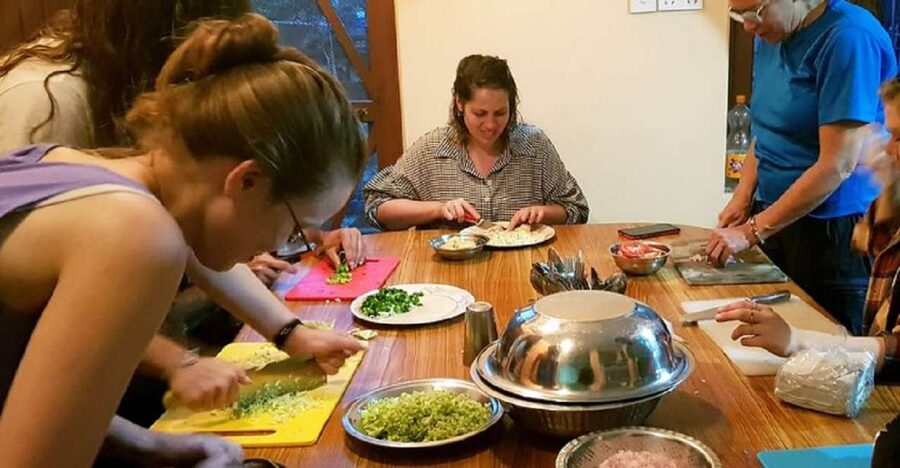
Come hungry, and bring your appetite. This three-hour Pokhara cooking class puts you in a real Nepalese home kitchen, where Sarita guides you through momos or dal bhat from chopping board to dining table. I like the small, personal setting, and I like that you eat the meal you prepare rather than simply watching a demonstration.
The class also gives you a friendly look at daily food traditions, with fresh ingredients, homemade items, and plenty of patient instruction. The main consideration is time: momos involve repeated folding and can produce a very large batch, while dal bhat has several separate steps. If you want a quick snack lesson, this may feel long. If you enjoy cooking, it is excellent value at $28 per person.
In This Review
- Five useful things to know before you book
- Why this Pokhara cooking class feels personal
- Starting from Lakeside Road in Pokhara
- Choosing between momos and dal bhat
- Momos: a hands-on lesson in folding and filling
- Dal bhat: the better choice for a full Nepalese meal
- What happens during the three hours
- Sarita’s teaching style
- Fresh ingredients, spices, and recipes you can reuse
- Is $28 good value in Pokhara?
- Who should book this experience?
- Practical tips for a better class
- Should you book the Pokhara home cooking class?
- FAQ
- How long does the cooking class last?
- Where is pickup available?
- Can I choose between momos and dal bhat?
- What languages are available?
- Are ingredients and the meal included?
- Can I cancel the booking?
Five useful things to know before you book
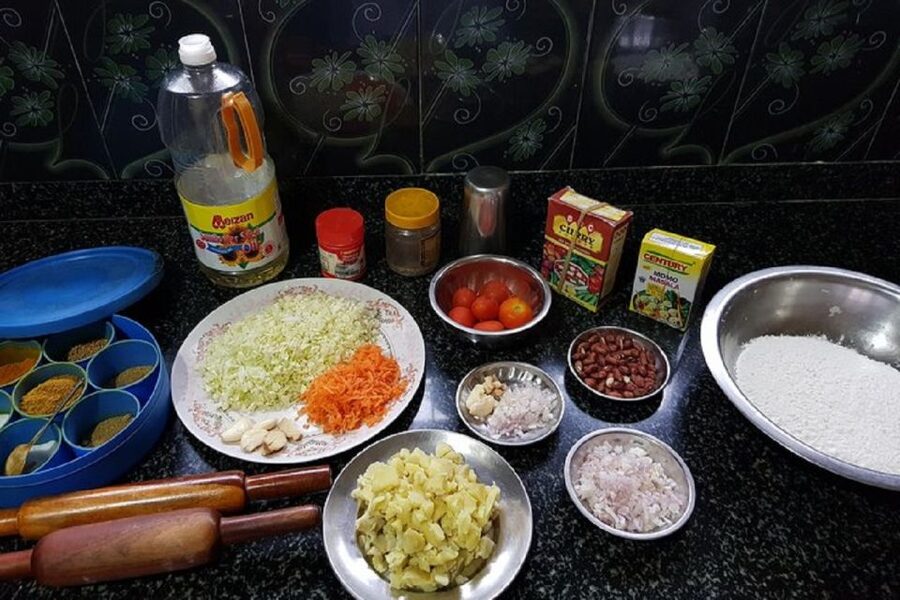
- Sarita leads the class: Her calm, friendly teaching style and clear English have helped beginners from several countries feel at ease.
- You cook in a private home kitchen: This feels more personal than a standard culinary school and gives you a glimpse of everyday Nepalese life.
- Choose momos or dal bhat: Momos are hands-on and playful, while dal bhat teaches you how several parts of Nepal’s best-known meal come together.
- Expect a generous portion: Momo sessions can produce 70 or more dumplings, so arrive hungry and consider bringing a takeaway container.
- Transfers are included: Pickup and drop-off are arranged from the Lakeside Road area in Pokhara, though one participant had trouble with a taxi request for extra payment.
- You leave with a recipe: A printed or digital recipe makes it possible to try the dish again at home.
Why this Pokhara cooking class feels personal
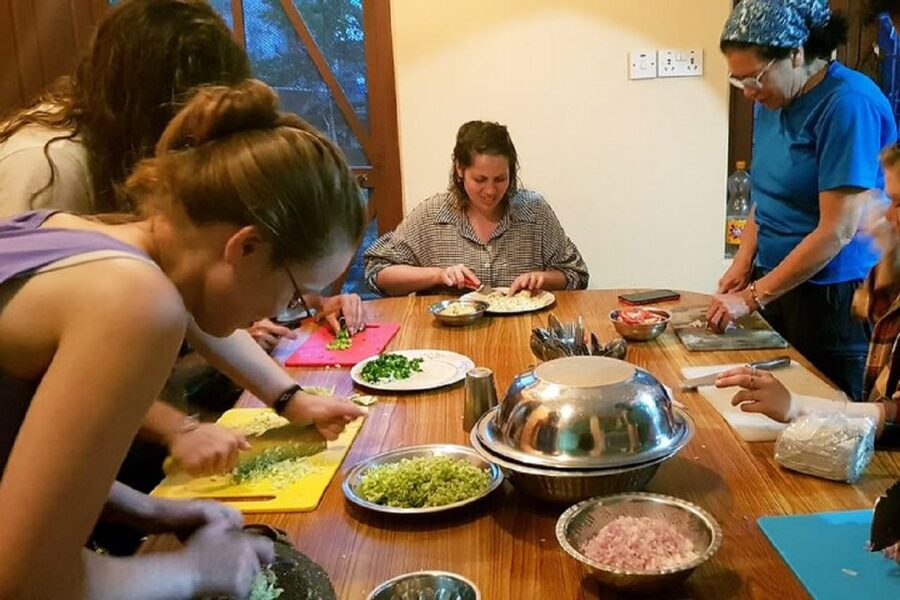
Cooking classes can range from polished demonstrations to noisy group events where you barely touch the food. This one is closer to being invited into a family kitchen. The group is private, and the class may be as intimate as one couple, Sarita, and her husband or family members.
That small scale matters. You can ask questions, repeat a technique, and take your time shaping a momo without feeling rushed. Several people found Sarita patient and encouraging, especially when their first dumplings looked less like neat parcels and more like tiny culinary experiments.
The setting also gives the experience a cultural layer. You are not just learning a restaurant recipe. You are seeing how cooking fits into a Nepalese home, hearing about local food customs, and sharing conversation with the host and her family. Some ingredients may be homemade, and past sessions have included vegetables from the family garden.
Do not expect a formal kitchen studio with matching counters and a printed workbook waiting at every station. The appeal is the ordinary home setting. It is warm, direct, and less polished, which is exactly why it feels genuine.
More Momo and Nepali Cooking Classes:
- Nepalese Momos or Dal Bhat Cooking Class (Cook with Delight)
★ 5.0 · 99 reviews - MoMo or Dal Bhat Cooking Class at Aama Kitchen in Pokhara
★ 4.9 · 28 reviews - Pokhara: 3 Hour MoMo cooking class
★ 4.5 · 10 reviews
Starting from Lakeside Road in Pokhara
The class includes round-trip transport from the Lakeside Road area, specifically Lakeside-6, Pokhara. This is useful if your hotel is in or near the main Lakeside zone, since you do not need to find the house on your own.
Pickup and drop-off are listed from two options in the Lakeside Road area. Confirm the exact meeting point and pickup time when you reserve, since the class has several possible starting times. You should also keep your phone available in case the host or driver needs to coordinate.
The transfer is a convenience, but I would pay attention to the taxi arrangement. One participant reported that the driver tried to ask for extra payment for additional services. That does not appear to reflect the cooking class itself, but it is a useful reminder to confirm what transport is included before setting off. If you prefer to make your own way there, ask in advance if independent arrival is possible.
Bring a passport or identity card. A copy is accepted, according to the activity information. You will not need to bring ingredients, cooking tools, or drinking water. Those are supplied.
Choosing between momos and dal bhat
Your biggest decision is the menu. Both choices teach real techniques, but they offer different kinds of cooking.
Momos: a hands-on lesson in folding and filling
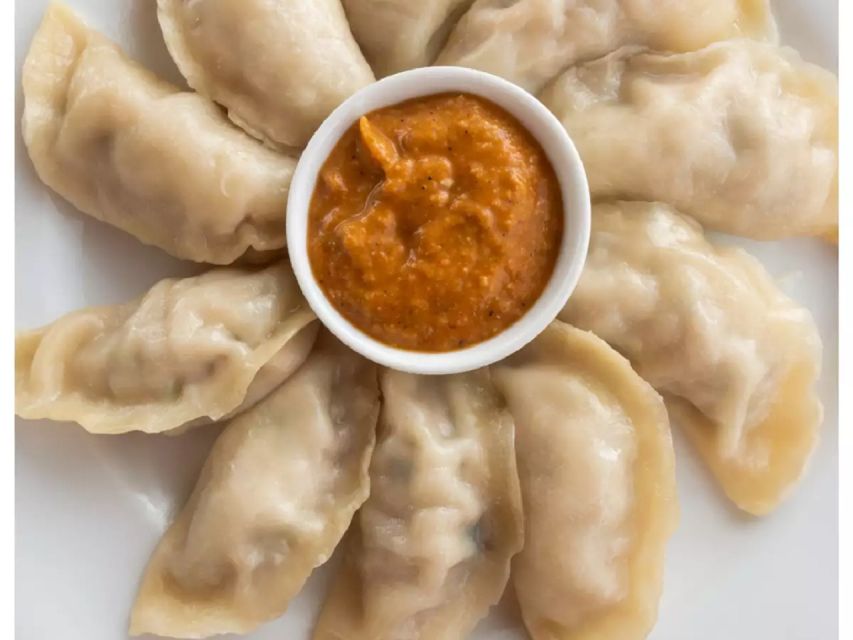
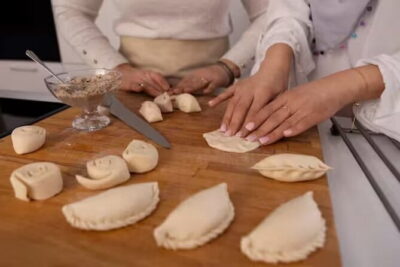
Momos are Nepal’s famous dumplings, and making them is far more involved than ordering a plate in a restaurant. You work with dough, prepare the filling, season it, shape each dumpling, and steam the finished batch. The dipping sauce is part of the fun too.
The class is especially good for anyone who enjoys working with their hands. You will learn how the dough should feel, how much filling to add, and how to close the edges without making a pocket that bursts during steaming. The first few may look awkward. That is normal. With Sarita’s patient help, your folds should improve as the session continues.
The quantity can be surprising. One class produced more than 70 momos, and another participant described being very full by the end. That is wonderful value if you are hungry and want a full meal, but it can be too much if you have recently eaten. Bring a reusable container if you have one and want to save some for later.
The menu can vary by class or preference. Vegetable and cheese momos have been prepared, while the broader Nepalese momo tradition also includes meat fillings. The supplied details do not promise a choice of every filling, so ask what is available when booking. One useful suggestion from a past participant was to learn several small batches, such as vegetable, chicken, and buff, rather than one large batch. That option is worth asking about if variety matters to you.
More Cooking Classes:
- Pokhara: 3 Hour Authentic Nepali Thakali Dish Cooking Class
★ 5.0 · 10 reviews - Pokhara: Nepali Cooking Class and Momo Making Workshop
★ 5.0 · 6 reviews - Half day cooking class in Thamel kathmandu
★ 5.0 · 607 reviews - Kathmandu: Local Women-Led Nepali Cooking & Momo Class
★ 4.9 · 360 reviews
Dal bhat: the better choice for a full Nepalese meal
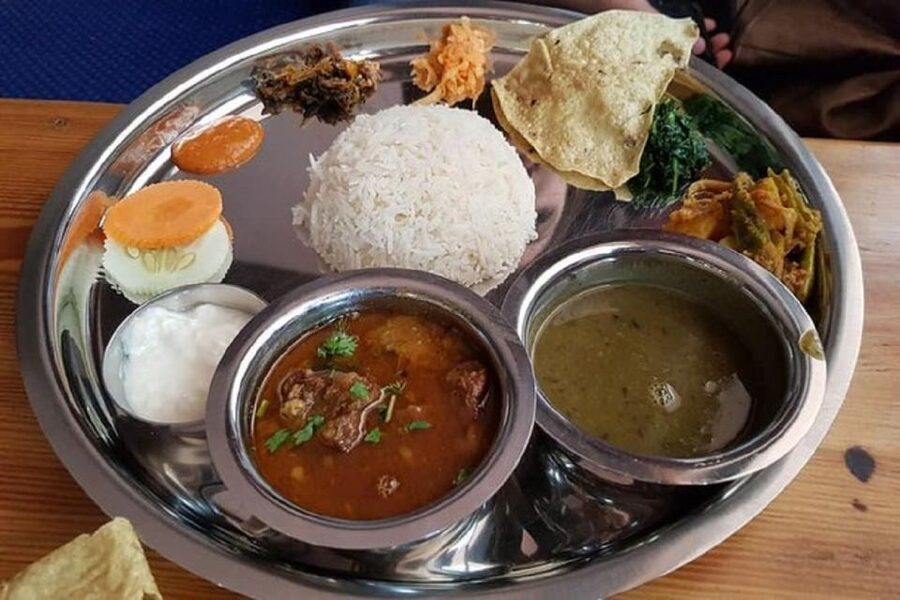
Dal bhat is the everyday classic: lentils with rice and accompanying vegetable dishes. It looks simple on a menu, but preparing it involves several stages, seasonings, and timing decisions.
This option is useful if you want to understand a meal you are likely to encounter throughout Nepal. You will chop, mix, season, and cook several elements rather than focus on one food. Sarita explains the role of local spices and how fresh vegetables are handled, then helps you keep the parts moving toward the table.
I would choose dal bhat if you want a broader lesson in Nepalese home cooking. You learn more than a single technique, and the finished meal feels substantial. It also offers a clearer look at how different dishes are balanced together.
The tradeoff is that dal bhat requires patience. One person noted that it has many steps, and another suggested having the recipe from the beginning to make the order easier to follow. A printed or digital recipe is provided, but you may find it helpful to take notes as you go, especially if you want to recreate the meal soon after returning home.
What happens during the three hours
The class begins with an introduction to the ingredients, spices, and cooking methods used in Nepalese homes. This opening is not wasted time. It helps you understand what you are handling before the chopping and mixing begin.
Next comes the preparation. You take part in the work rather than standing back. Depending on your menu, you may chop vegetables, prepare a filling, mix seasonings, make dough, or work through the separate parts of dal bhat. Sarita guides you step by step and explains not only what to do, but why a particular method or ingredient is used.
The teaching is aimed at beginners. English, Hindi, and Nepali are available, and Sarita’s English has been praised as clear and easy to follow. If English is not your strongest language, the class can still work well because the lesson is practical and shown directly in front of you. You can watch, copy, and ask for a slower explanation.
After the cooking comes the best part: sitting down to eat what you made. The meal is included, as are drinking water and the ingredients. Conversation about food and family life continues over the table, making the class feel like a shared meal rather than a lesson that ends when the stove is turned off.
The listed duration is three hours, though a momo session has sometimes taken closer to four hours. That extra time may depend on the size of the batch and the pace of the group. Do not schedule a tight appointment immediately afterward.
Sarita’s teaching style
The strongest part of this experience is the host. Sarita is repeatedly described as warm, organized, cheerful, and patient. She welcomes people into her home, answers questions, and gives enough help for beginners to succeed without taking over the work.
That balance is important. A cooking class loses its value if the instructor does everything while you watch. Here, you are expected to chop, season, shape, and cook. Sarita steps in when a technique needs correcting, then lets you try again.
Her family may also be part of the welcome. People have enjoyed meeting family members and children, drinking tea, and seeing a clean home kitchen in use. This is not a staged cultural display. It is a simple household encounter built around food.
If you are shy about cooking in front of someone, remember that imperfect results are part of the point. The class is not a test. Your first momo may be lopsided, and that gives Sarita something to fix with you. By the end, you should have a better feel for the process and a meal worth eating.
Fresh ingredients, spices, and recipes you can reuse
The cooking uses fresh ingredients and spices supplied by the host. Several sessions included homemade items, and some vegetables came from the family garden. Those details matter because the lesson connects ingredients to place instead of relying on hard-to-find packaged substitutes.
You also learn adaptable ideas. A momo lesson can help you make other dumpling-style foods at home, not just one Nepalese version. The recipe gives you a base, while the practical guidance helps with texture, filling, seasoning, and shaping.
The recipe is sent in printed or digital form. One participant appreciated receiving the full instructions in their native language. If you have dietary needs or want a particular version, ask before the class rather than assuming every variation is included.
The provided details do not list every ingredient or promise vegetarian, chicken, buff, or cheese options for every booking. Ask about the menu when you reserve. That is especially important if you avoid certain foods.
Is $28 good value in Pokhara?
At $28 per person, this is not the cheapest way to eat lunch in Pokhara. It is a fair price for a private, three-hour activity that includes transport from Lakeside, instruction, ingredients, water, the meal, and a recipe to take home.
The value improves if you compare it with a normal restaurant meal. You are paying not only for food, but also for personal teaching, cultural contact, and the chance to repeat the dish later. The recipe may become the most useful souvenir of the day.
It is also good value for couples and small groups. A private class means you do not spend the session waiting behind a large group. You can set the pace and ask questions that suit your own cooking level.
The price is less attractive if you want only a short demonstration or a tasting. You will be doing real preparation, and momos can take a lot of time. Think of it as a relaxed half-day activity with lunch included, not a fast food stop.
Who should book this experience?
I would recommend it to couples, solo visitors, families, and small private groups who enjoy food and want contact with local daily life. Beginners are welcome, and you do not need to know Nepali cooking before arriving.
It is a strong choice after trekking or sightseeing, when you want a slower activity and a chance to sit down. It also suits anyone who has already eaten momos or dal bhat in restaurants and now wants to understand how the dishes are made.
Choose momos if you like repetitive hands-on work, want to learn a useful folding skill, and enjoy a large shared batch. Choose dal bhat if you want a complete Nepalese meal and a lesson covering several dishes and cooking stages.
I would hesitate only if your schedule is tight, you dislike cooking, or you need a very specific menu that has not been confirmed. The private-home setting is a benefit for most people, but it may feel informal if you expect a professional culinary school.
Practical tips for a better class
- Eat lightly beforehand, especially if you select momos. The quantity can be generous.
- Wear comfortable clothing suitable for kitchen work.
- Ask about vegetarian, meat, cheese, or other filling choices before arrival.
- Keep extra time after the three-hour booking in case preparation runs long.
- Bring your passport or an accepted copy.
- Take notes about spice amounts and cooking order, even though a recipe is provided.
- Bring a reusable container if you would like to carry extra momos away.
- Confirm the included taxi service and avoid agreeing to extra transport charges without checking first.
- If you want to arrive independently, ask the host before booking.
Should you book the Pokhara home cooking class?
Book it if you want more than a restaurant meal. Sarita’s friendly instruction, the private family kitchen, fresh ingredients, and the chance to eat your own work make this one of Pokhara’s more personal food activities.
I would pick dal bhat for the broadest lesson in Nepalese home cooking, and momos for the most playful hands-on session. At $28, the package is strong for a three-hour private experience with transfers and a recipe. Just allow extra time, confirm your preferred menu, and arrive hungry.
FAQ
How long does the cooking class last?
The listed duration is three hours. Some momo sessions have taken longer because shaping a large batch requires extra time, so avoid booking another activity immediately afterward.
Where is pickup available?
Pickup and drop-off are available from the Lakeside Road area in Lakeside-6, Pokhara. Confirm your exact meeting point and time when booking.
Can I choose between momos and dal bhat?
Yes. The experience offers a choice between a momo cooking class and a dal bhat cooking class. Ask about specific filling options before arrival.
What languages are available?
The live guide can provide the class in English, Hindi, or Nepali.
Are ingredients and the meal included?
Yes. Fresh ingredients, spices, drinking water, and the meal you prepare are included. Extra food or drinks outside the class are not included.
Can I cancel the booking?
You can cancel up to 24 hours in advance for a full refund. The activity also allows you to reserve and pay later.
More Workshops
- Kathmandu: Local Lead Nepali Cooking & Momo-Making Class
★ 5.0 · 212 reviews - Knife (Khukuri) Making Workshop- Forge of the Gurkhas
★ 5.0 · 143 reviews - Local Women Lead Nepali Cooking Class
★ 5.0 · 125 reviews - The best Private Nepali Cooking Class in Kathmandu
★ 5.0 · 83 reviews
Just added around Pokhara
- Double Dare: Tandem Bungee Adventure★ 4.3 · 3 reviews
- Exhilarating Pokhara-Kathmandu Bus Journey Experience★ 3.5 · 3 reviews
- 3 Day Australian Camp Dhampus Ghandruk Easy Trek in Pokhara★ 3.5 · 3 reviews
- Paragliding in Pokhara★ 5.0 · 3 reviews
- Seti George and Thrilling Suspension Bridge Tour at Pokhara★ 4.5 · 3 reviews
- Overnight Dhampus Australian Camp Easy Hiking from Pokhara★ 5.0 · 3 reviews
- Full Day Entire Pokhara Tour by Car with Guide★ 4.5 · 3 reviews
- 5 Days Mardi Himal Trek.★ 5.0 · 3 reviews
Momo Making Classes, compared.




Nepalese Momos or Dal Bhat Cooking Class (Cook with Delight)
Read our review →
The best Private Nepali Cooking Class in Kathmandu
Read our review →
Browse the lists this tour appears in