
Reviewed · MOMO MAKING CLASSES
Kathmandu: Local Lead Nepali Cooking & Momo-Making Class
Good food makes Kathmandu easier to understand. This three-and-a-half-hour cooking class takes you beyond restaurant menus, starting with masala tea and a short ingredient-shopping trip before moving into the kitchen. You make several Nepali dishes, shape momos by hand, and eat what you prepare.
I like the small maximum group of 12, which gives the chef room to help with tricky steps. I also like the mix of cooking and culture: traditional utensils, local ingredients, and stories about why the food matters. The main consideration is that the exact dishes can vary, and the class includes several courses, so it may feel long if you only want a quick momo lesson.
For the listed $5 price, this is unusually strong value if that rate is available when you book. Hotel pickup and drop-off are offered only with selected options, and the academy is about a 10-minute walk from Thamel according to one useful guest tip. You finish back at the cooking school, usually with recipes to help you repeat the meal at home.
In This Review
- What Makes This Kathmandu Class Worth Your Time
- Starting With Masala Tea in Thamel
- The Market Stop: Seeing What Goes Into Nepali Food
- Making Momos, Kathmandu’s Favorite Dumplings
- Three Nepali Dishes, Not Just One
- Traditional Tools and Clear, Patient Instruction
- Sitting Down to Eat What You Made
- Recipes You Can Use After Kathmandu
- Who Will Enjoy This Class Most?
- Is $5 Good Value for Three and a Half Hours?
- Timing, Location, and Cancellation Advice
- Should You Book the Kathmandu Cooking Class?
- FAQ
- How long does the Kathmandu cooking class last?
- Where does the cooking class begin and end?
- Is hotel pickup included?
- What food will I learn to prepare?
- Can I choose vegetarian or chicken momos?
- Is the class suitable for beginners?
- What is the cancellation policy?
What Makes This Kathmandu Class Worth Your Time
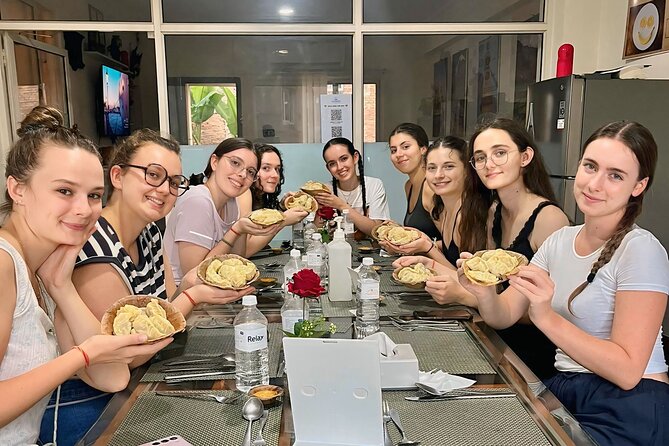
- Momos are made by hand, with a choice of vegetarian or chicken filling.
- Ingredient shopping comes first, giving you a look at the everyday building blocks of Nepali cooking.
- Three traditional dishes are prepared, usually covering an entrée, main course, and dessert.
- Masala tea opens the class, adding a simple but welcome Nepali ritual.
- Groups are capped at 12 people, keeping the lesson social without making it unwieldy.
- A cookbook or recipe PDF may be provided, so the class can continue in your own kitchen.
Starting With Masala Tea in Thamel
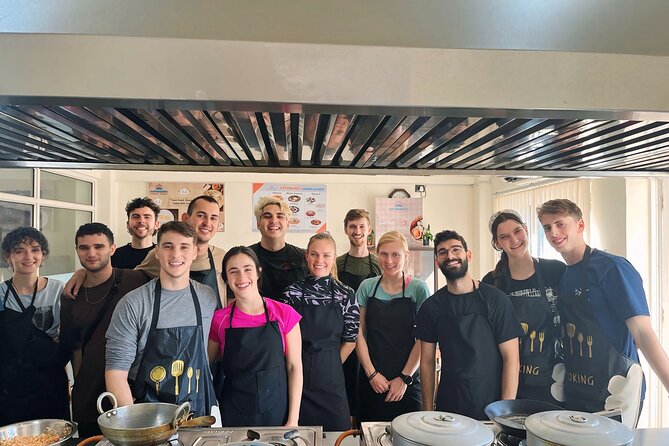
The class begins at Kathmandu Cooking Academy on Yapikhya Marg, Kathmandu 44600. It is near public transportation and within walking distance of Thamel, with one practical estimate putting the walk at about 10 minutes from a hotel in the Thamel area.
That location matters. If you are staying in Thamel, you may not need a vehicle at all. If you select an option with hotel pickup and drop-off, transport is included, but do check the option details carefully because pickup is not part of every booking.
A cup of Nepali masala tea sets the tone. It is a small beginning, but a good one. You get a chance to meet the chef and other participants before handling knives, dough, and hot pans. The class is designed for beginners, and the teaching style is described as clear, patient, and easy to follow.
The kitchen itself has received praise for being clean. That is not a glamorous detail, but it matters in a hands-on food class. You will be using shared equipment and working with several ingredients, so a tidy, organized room makes the session more comfortable.
More Cooking Classes in Kathmandu
- Half day cooking class in Thamel kathmandu
★ 5.0 · 607 reviews - Kathmandu: Local Women-Led Nepali Cooking & Momo Class
★ 4.9 · 360 reviews - Local Women Lead Nepali Cooking Class
★ 5.0 · 125 reviews
The Market Stop: Seeing What Goes Into Nepali Food
Before cooking, you take a short trip to a local market or shop to buy important ingredients. This part gives the class more meaning than a lesson that simply places premeasured bowls in front of you.
You see the raw materials before they become lunch. The shopping stop also helps explain the difference between cooking from a recipe and cooking from a food culture. Ingredients are not just items on a list. They connect the dishes to local habits, available produce, and the flavors people use at home.
The stop is short, so do not expect a full market tour or a major sightseeing visit. Its purpose is practical: gather what you need, learn what the ingredients are, and return to the academy. If you enjoy food shopping and local context, this will add a lot. If you want every minute devoted to cooking, it may feel like a pause in the main event.
That balance is worth considering when you plan your day. The class lasts about 3 hours and 30 minutes, and the market visit is part of that time. You are paying for a cultural food lesson, not just a fast demonstration.
Making Momos, Kathmandu’s Favorite Dumplings
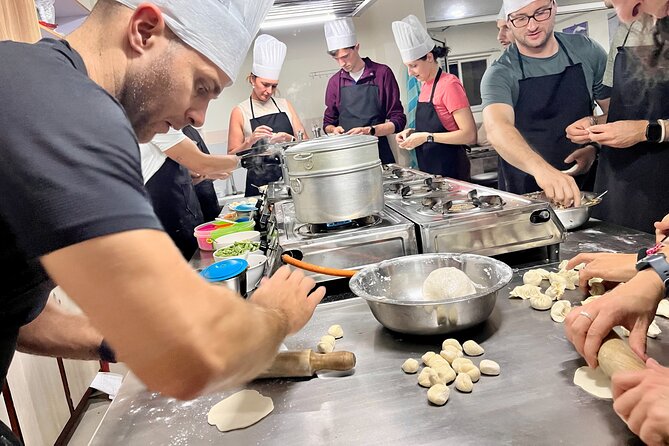
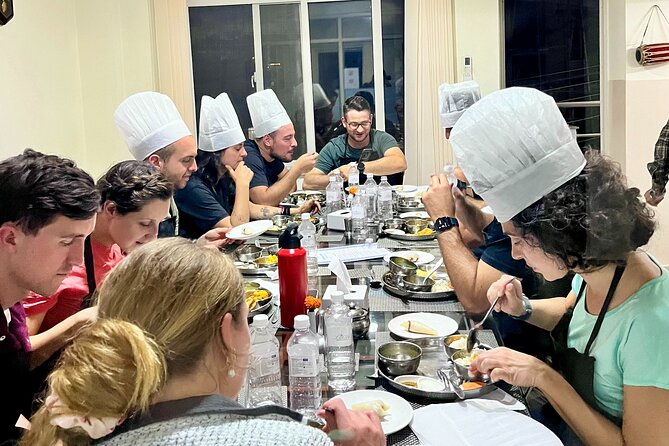
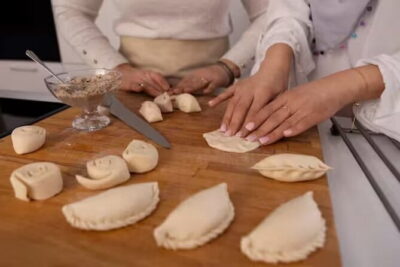
Momo-making is the part most people will anticipate, and for good reason. These dumplings look simple until you try to fold them neatly. The class gives you hands-on practice, so you are not merely watching a chef produce a perfect batch while you stand nearby.
You can make vegetarian or chicken momos. The exact preparation depends on the class selection, but you will learn the basic process of preparing the filling, handling the dough, shaping the dumplings, and cooking them with guidance from the instructor.
The social side is part of the fun. A helpful detail from the class feedback is that participants laughed at the difference between the chef’s dumplings and their own. That is exactly the right attitude for a first attempt. Your first momo may look more like a small parcel than a restaurant dumpling, and that is fine. The lesson is built around practice rather than perfection.
I would choose this class for anyone who has eaten momos in Nepal but wants to understand the work behind them. It is also a good solo activity. Cooking gives you an easy way to meet people, and the shared meal at the end avoids the awkwardness of trying to make conversation from scratch.
Three Nepali Dishes, Not Just One
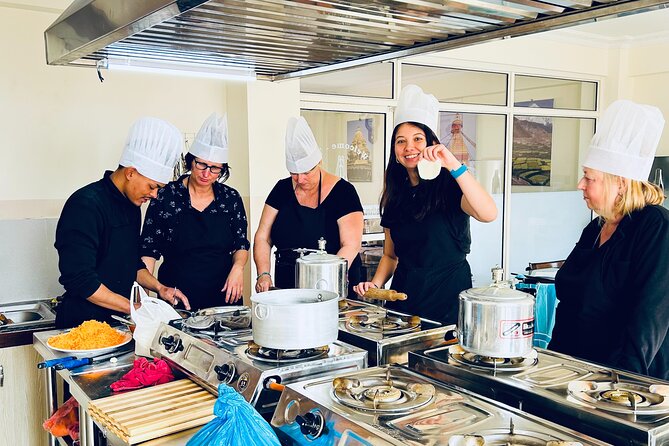
The lesson covers three traditional Nepali dishes: one entrée, one main course, and one dessert. The menu can draw from several local recipes, so you should not assume every session serves exactly the same combination.
Dishes mentioned in the experience include dal bhat, bara, momos, and yomari. One menu example included bara, momos, dal bhat, and three types of dessert, followed by a detailed cookbook. That gives you a sense of the possible range, though the class selection may change.
Dal bhat is especially useful to learn because it is one of Nepal’s best-known meal patterns. It introduces the relationship between lentils, rice, and accompanying flavors. You are not only learning a recipe. You are learning how a familiar everyday meal is put together.
Bara offers another angle on Nepali food. It is a savory lentil-based dish, and making it lets you work with a different texture from dumpling dough. Yomari, a traditional sweet dumpling, brings the class back to shaping, but with a dessert purpose.
The dessert course is a real advantage. Many cooking classes stop after the main dish, but Nepali sweets help show how broad the cuisine can be. If you have a sweet tooth, ask at the start which dessert is planned so you know what to look forward to.
More Momo and Nepali Cooking Classes:
- The best Private Nepali Cooking Class in Kathmandu
★ 5.0 · 83 reviews - Kathmandu: Traditional Momo Making Class & Pickup
★ 4.8 · 60 reviews - Traditional Nepali Momo Making Classes
★ 5.0 · 53 reviews - Kathmandu: Local Women-Lead Nepali Cooking & Momo Class
★ 4.9 · 45 reviews
Traditional Tools and Clear, Patient Instruction
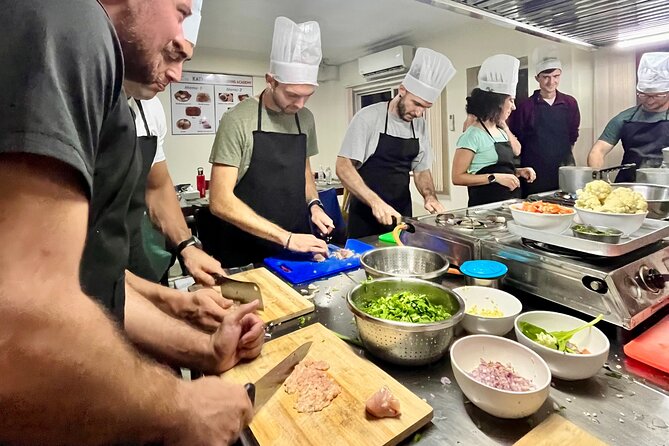
The cooking uses traditional utensils and basic equipment supplied by the academy. The chef leads each step, explains the technique, and helps you as you work.
The most consistent praise goes to the instruction. The chef is described as patient, friendly, and able to explain things in clear English. That combination is important because cooking terms and hand movements can be hard to follow when a class moves too quickly.
You should expect to participate rather than sit back. You will prepare ingredients, cook different dishes, shape momos, and work through the recipes with other participants. Beginners should be comfortable here, while experienced cooks may enjoy the chance to compare methods and ask about local techniques.
The group limit of 12 is a sensible middle ground. A class of this size can feel lively, but it is still small enough for the instructor to notice when your dough is too thick or your folding technique needs help. Exact group size on your date may be smaller, but 12 is the stated maximum.
One thing to keep in mind is that a shared class will not move at your personal speed. You may wait while another person catches up, or you may need to repeat a step that you already understand. That is part of the social format, not a flaw, but private instruction would suit someone seeking a highly tailored lesson.
Sitting Down to Eat What You Made
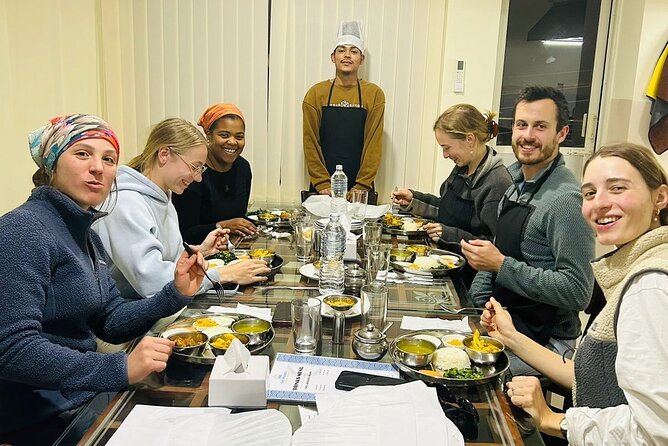
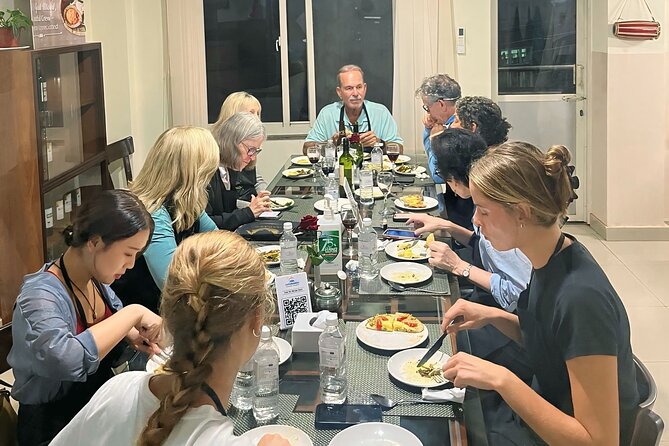
After the cooking, you sit down for a tasting session. This is the payoff, but it also gives you a useful chance to judge the dishes while the techniques are fresh in your mind.
Food made by a group rarely looks identical from plate to plate. That is part of the charm. The class feedback describes the meals as delicious, and one participant specifically appreciated having several dishes and desserts to try. You get a broader meal than you would from a momo-only class.
The tasting also turns the lesson into a shared cultural exchange. You compare results, talk with the instructor, and enjoy a meal that you had a hand in preparing. For solo visitors, this communal ending may be one of the strongest reasons to book.
Specialty drinks and alcohol are not included. Nepali masala tea is included during the lesson, but you should budget separately if you want anything beyond the supplied food and tea.
Recipes You Can Use After Kathmandu
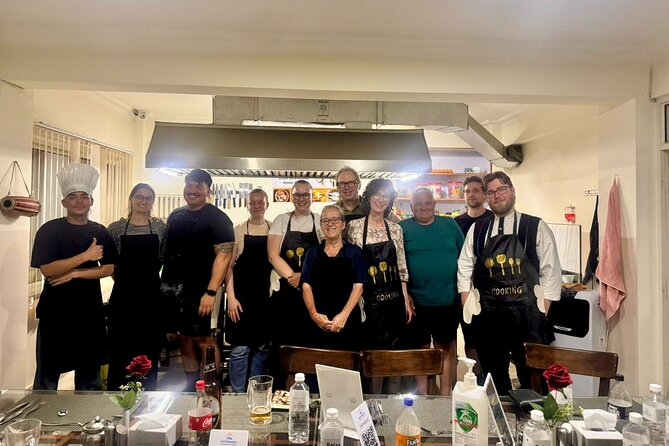
A cooking class earns extra value when it does not end at the door. Recipes may be sent as a PDF, and a detailed cookbook is also mentioned as part of one class experience. That gives you a practical way to recreate the food later.
This matters most with momos. The first batch can be fiddly, and your technique may improve after a few attempts at home. A recipe guide helps you remember the filling, dough, and cooking steps instead of relying on a vague memory of what the chef did.
You should save any digital recipes before leaving the trip if your internet access will be limited later. Also take mental notes about the shape and texture of the dough. Written instructions help, but dumpling-making is partly a hand skill.
Who Will Enjoy This Class Most?
I would recommend this experience to:
- First-time cooks who want patient, step-by-step help
- Solo visitors looking for an easy social activity
- Couples and families who enjoy making food together
- Anyone curious about momos beyond the restaurant plate
- People staying near Thamel who want a convenient half-day activity
- Experienced home cooks seeking Nepali recipes and local context
It may be less suitable if you want a private lesson, a quick one-hour activity, or a tightly fixed menu. The class includes shopping, several dishes, cooking, and eating, so it asks for a good part of your afternoon or morning.
Families should also consider the cooking format. The experience is hands-on, but the available information does not specify a child age range or special child pricing. If you are booking with young children, confirm those details before paying.
Is $5 Good Value for Three and a Half Hours?
At the listed $5 per person, the value is excellent on paper. You receive instruction from an experienced chef, a market or shop visit, cooking equipment, ingredients for the lesson, masala tea, several dishes, and a tasting session. A recipe guide may add value after the trip.
The important qualifier is the price option. Pickup and drop-off are included only when you select the relevant option, and specialty or alcoholic drinks are extra. Check the final booking screen for the exact package and total before assuming transport is included.
Even if the price changes, the format offers more than a standard demonstration. You are paying for food, instruction, local contact, and a meal. The small group also improves the odds of getting direct help instead of watching from the back of a crowded room.
Tips are not included. They are optional, but a gratuity is a sensible way to thank the chef if the lesson is friendly and useful.
Timing, Location, and Cancellation Advice
The experience lasts about 3 hours and 30 minutes and ends at the academy. Build in enough time afterward because the schedule includes the market or shop visit, cooking, and tasting.
The meeting point is Kathmandu Cooking Academy on Yapikhya Marg. It is near public transportation, and the school is reported to be around a 10-minute walk from Thamel. Hotel pickup and drop-off are available only if that option is selected.
You can cancel for a full refund up to 24 hours before the start time. Cancellations or changes made within 24 hours are not refunded or accepted, and the cutoff follows Kathmandu local time. That is generous enough for normal trip planning, but Nepal itineraries can shift, so do not leave cancellation decisions until the last day.
Should You Book the Kathmandu Cooking Class?
Yes, if you want a friendly, practical introduction to Nepali food and have half a day to spare. The strongest reasons are the patient instruction, small group, market stop, hands-on momo work, and the chance to eat several dishes you helped prepare.
I would book it especially for a solo visit, a first trip to Kathmandu, or a rainy afternoon when sightseeing is less appealing. The experience offers real contact with local food without requiring advanced cooking skills.
Skip it if you dislike group activities or only want to make momos. For everyone else, the combination of tea, shopping, cooking, stories, and a shared meal gives you a useful taste of Kathmandu that lasts longer than a single restaurant visit.
FAQ
How long does the Kathmandu cooking class last?
The class lasts approximately 3 hours and 30 minutes, including the ingredient-shopping visit, cooking lesson, and tasting session.
Where does the cooking class begin and end?
It begins at Kathmandu Cooking Academy on Yapikhya Marg, Kathmandu 44600, Nepal, and ends back at the same meeting point.
Is hotel pickup included?
Hotel pickup and drop-off are included only if you select an option that offers them. They are not automatically included with every booking.
What food will I learn to prepare?
You prepare three traditional Nepali dishes, covering an entrée, main course, and dessert. Possible dishes include momos, dal bhat, bara, and yomari, but the exact selection may vary.
Can I choose vegetarian or chicken momos?
Yes. The momo portion offers a vegetarian or chicken option.
Is the class suitable for beginners?
Yes. The chef provides step-by-step instruction, and the class is described as suitable for both beginners and experienced cooks.
What is the cancellation policy?
You can cancel at least 24 hours before the start time for a full refund. Cancellations and changes made less than 24 hours before the experience are not refunded or accepted.
More Workshops
- Knife (Khukuri) Making Workshop- Forge of the Gurkhas
★ 5.0 · 143 reviews - Kathmandu: Local Lead Nepali Cooking & Momo Making Class
★ 4.9 · 40 reviews - Knife Khukuri Making Workshop
★ 4.9 · 38 reviews - Best Nepali Cooking Class in Thamel with Local Market Trip
★ 5.0 · 26 reviews
Just added around Kathmandu
- Private Shopping Tour in Kathmandu★ 5.0 · 3 reviews
- Nagarkot Sunrise With 7 UNESCO World Heritage Private Tour★ 5.0 · 3 reviews
- Kathmandu: Nightlife and Pub Crawl Tour★ 5.0 · 3 reviews
- Mount Everest Scenic Flight 50 Minutes★ 5.0 · 3 reviews
- Kathmandu: Nagarkot, Bhaktapur, Doleswor & Sanga Statue Tour★ 5.0 · 3 reviews
- Momo Cooking Class -The Art Of Making MoMo with Home Chef★ 5.0 · 3 reviews
- Makalu Base Camp Trek★ 5.0 · 3 reviews
- Kathmandu: Momo Making Class with a Local Chef★ 5.0 · 3 reviews
Momo Making Classes, compared.



Nepalese Momos or Dal Bhat Cooking Class (Cook with Delight)
Read our review →
The best Private Nepali Cooking Class in Kathmandu
Read our review →
Nepalese Kitchen in Pokhara: Momos or Dal Bhat Cooking Class
Read our review →
Browse the lists this tour appears in