
Reviewed · WORKSHOPS
Knife (Khukuri) Making Workshop- Forge of the Gurkhas
Steel, fire, and a knife you helped shape. The Forge of the Gurkhas khukuri workshop offers a rare chance to learn a traditional Nepali craft in a working blacksmith’s home rather than a polished souvenir shop. I like the personal setting, especially meeting Indra, a blacksmith with more than 40 years of experience, and I like that your finished six-inch khukuri is a useful keepsake, not a factory trinket. The main drawback is that safety rules limit how much of the grinding you can do yourself.
This four-hour activity costs $68 per person, includes pickup, and accepts a maximum of five people. Guides such as Swoyam and Namrata help with transport, translation, and local conversation. If you enjoy hands-on craft, small groups, and a close look at everyday Nepali life, this is one of Kathmandu’s more memorable activities.
In This Review
- Key points before you book
- Why the khukuri matters in Nepal
- From your Kathmandu hotel to the forge
- Meeting Indra and seeing the old craft firsthand
- Hammering the heated iron
- Grinding, sparks, and safety limits
- Making the handle and finishing your keepsake
- What the $68 price really buys
- The experience feels authentic, but not effortless
- Who will enjoy this most
- Practical advice for a smooth visit
- Should you book the Forge of the Gurkhas workshop?
- FAQ
- Where does the khukuri-making workshop take place?
- How long does the activity last?
- How much does the workshop cost?
- What size knife do I make?
- Can I make a larger khukuri?
- What parts of the knife-making process can I do?
- Is hotel pickup available?
- How many people can join the workshop?
- Can I cancel for a full refund?
Key points before you book
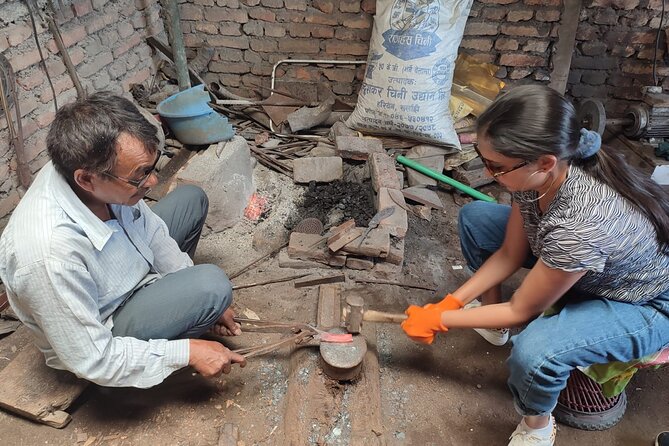
- You help shape a six-inch khukuri: Hammer the heated iron, take part in the early grinding, and help with buffing and polishing.
- Indra is the working blacksmith: His decades of experience are a major part of the experience, not just a background detail.
- The workshop is in a home setting: Expect a rustic forge, family hospitality, and a less commercial feel than a shop visit.
- Hotel pickup is included: The ride into the hills also gives you time to talk with your guide about Nepal.
- Safety controls the hardest work: The host handles the most dangerous blade grinding, particularly the spark-producing stages.
- Plan on roughly four to four and a half hours: Young children may lose patience, and you should leave room in your day for traffic.
Why the khukuri matters in Nepal
The khukuri is more than a curved knife sold to tourists. It is linked with the Gurkha warrior and is traditional among Nepal’s hill communities. Its shape makes it useful for many ordinary tasks, from cutting timber to preparing meat and vegetables.
The blade is made from tempered steel and is known for its sharp edge. Handles are traditionally made from wood or buffalo horn, while the blade sits inside a wood-and-leather scabbard. The knife you make in this workshop is smaller than many working khukuris, with a blade of about six inches, but it still gives you a clear sense of the design.
One small feature has both practical and symbolic meaning. A notch near the handle is said to keep blood from running onto the grip. It also represents the Hindu Trinity of Brahma, Vishnu, and Shiva. Details like this give the workshop more substance than simply heating metal and hitting it with a hammer.
More Workshops:
- Half day cooking class in Thamel kathmandu
★ 5.0 · 607 reviews - Kathmandu: Local Women-Led Nepali Cooking & Momo Class
★ 4.9 · 360 reviews - Kathmandu: Local Lead Nepali Cooking & Momo-Making Class
★ 5.0 · 212 reviews
From your Kathmandu hotel to the forge
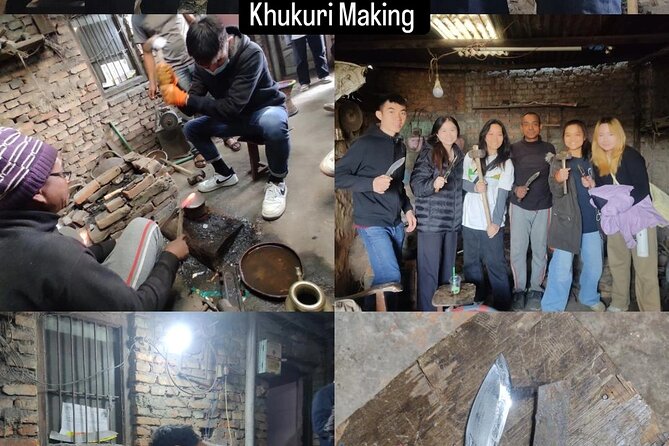
Pickup is offered from your hotel, and guides have collected people in the Thamel area before taking them by taxi toward the hills. The trip is part of the activity rather than dead time. Swoyam, one of the guides, uses the ride to explain local places, daily life, and things to do in Nepal.
The workshop is in a more remote part of Kathmandu, and the setting is rustic. That is a strength if you want a working craft environment, but it also means you should not expect a modern studio with spotless benches and display lighting.
The group limit is five people. That matters here. A forge requires attention, tools, heat, and personal guidance, so a small group gives you more time near the work. It also keeps the atmosphere closer to a visit with a craftsperson than a large demonstration.
Allow about four hours, with some sessions lasting closer to four and a half. Kathmandu traffic can affect the day, so avoid scheduling this too tightly against a flight, long-distance bus, or another fixed appointment.
Meeting Indra and seeing the old craft firsthand
At the workshop, you meet Indra, who has spent more than four decades making khukuris. His work is the heart of the activity. You see how much skill goes into controlling a basic forge and shaping steel with a relatively small amount of equipment.
The material may begin as scrap steel, including old truck suspension springs. That recycling element is worth noticing. You are not starting with a shiny, pre-cut souvenir blank. You watch a plain piece of metal gradually become a curved blade.
Indra’s hammer work is a highlight. He knows how to shape the steel through repeated heating and striking, and his experience becomes clear when the blade starts to take form. His assistants can help when you need a break, which is useful because hammering is more tiring than it first appears.
The family setting adds warmth. Several sessions have included tea, conversation, and lunch with the household. Lunch is not advertised as the main feature, so treat it as a possible part of the welcome rather than a guaranteed centerpiece. The important point is that you are spending time in a working family environment, not moving through a staged cultural display.
Hammering the heated iron
Your first active task is hammering the iron. The host heats the metal and shows you how to strike it as the blade begins to flatten and curve.
You are not expected to work like a professional blacksmith. Indra and his assistants guide the process, correct your position, and take over when the metal needs precise treatment. The goal is shared participation: you do real work, but the finished knife remains safe and well made.
This is the most physical part of the workshop. If your arms tire, you can pause while an assistant continues. That makes the activity suitable for many people, but it is not a passive demonstration. Wear clothes and shoes you do not mind using around a forge, and be ready for heat, noise, and metal dust.
The best part is seeing the difference between your first strikes and the final shape. The knife does not appear all at once. It develops through many small corrections, which gives you a better respect for the craft.
A few more trips worth weighing up before you book
- Everest Base Camp Trek – 14 Days
★ 5.0 · 1,499 reviews - Private Kathmandu Sightseeing Tour | UNESCO World Heritage sites
★ 5.0 · 756 reviews - Everest Base Camp Helicopter Tour landing at Everest View Hotel
★ 5.0 · 668 reviews - Everest Base Camp Trekking
★ 5.0 · 485 reviews
Grinding, sparks, and safety limits
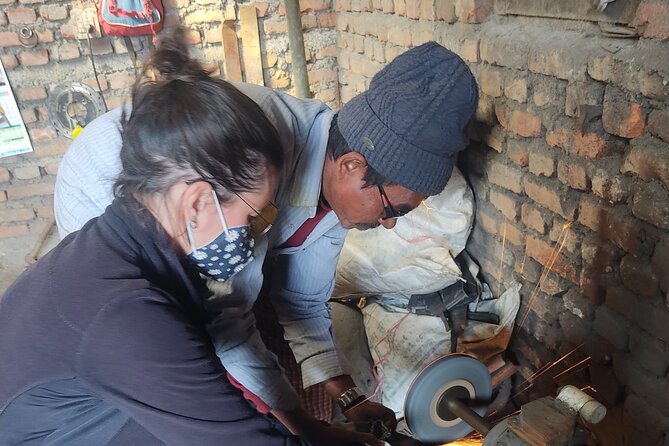
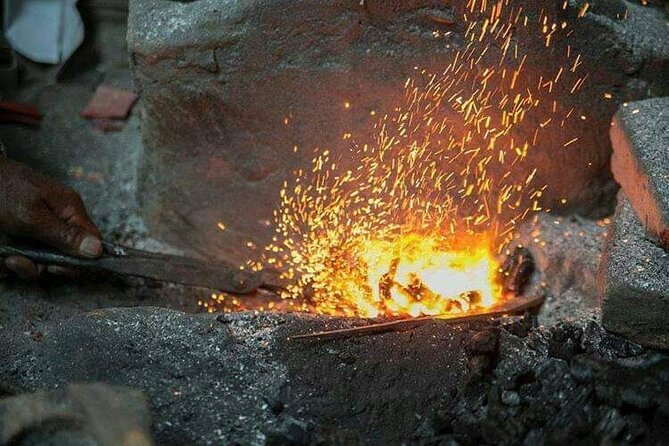
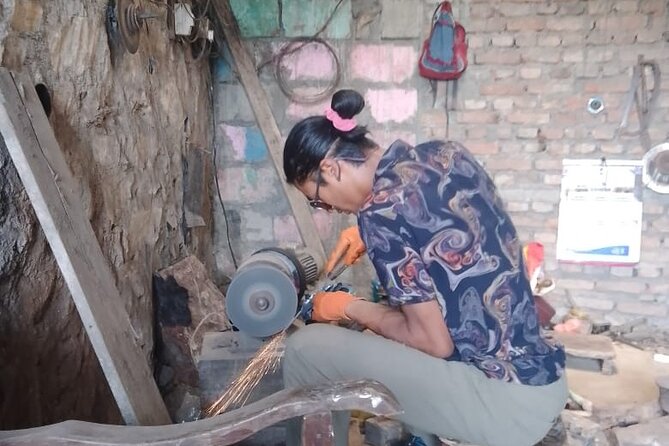
Grinding is where expectations need to be clear. The workshop description allows you to take part in the first grinding and later buffing and polishing, but it also says that the host handles blade grinding for safety. In practice, you may get supervised time with parts of the process, while Indra completes the spark-heavy and technically risky work.
That balance is sensible. A grinding wheel throws sparks, removes metal quickly, and can damage the blade if used poorly. You should stay clear when the host is operating the wheel at the most hazardous stages.
Some descriptions of the activity give the impression that you will grind the blade yourself. The practical reality is more limited. You help where it is safe, then watch a skilled smith perform the precision work. If full control over every step is important to you, ask for clarification before booking.
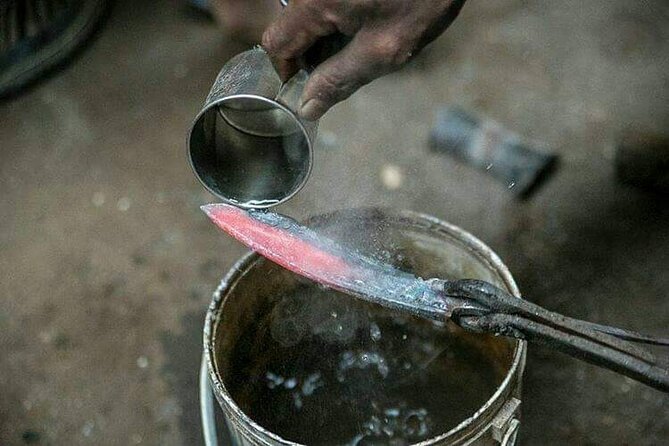
The final buffing and polishing make the knife look dramatically different. The rough, dark metal becomes smooth and bright, and the curved profile becomes easy to recognize. This is when the project starts to feel like your own object rather than a piece of workshop material.
Making the handle and finishing your keepsake
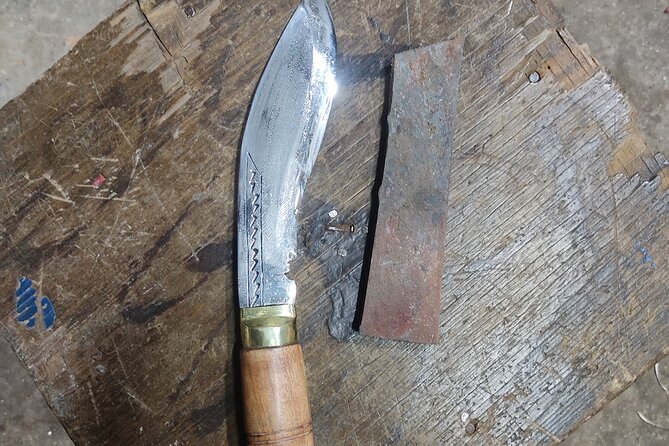
The handle is another important part of the process, although the exact amount of hands-on handle work can vary. You see how the grip is fitted and finished, with traditional materials such as wood or buffalo horn associated with khukuri construction.
The final product is a six-inch knife included in the price. Some participants have chosen a larger ten-inch version for an added fee, but confirm the current upgrade cost and availability when you arrange the activity.
Personalization may also be possible. A few people have had their knives customized, which makes the keepsake more meaningful. Ask about this before the final stage if you want initials or another personal detail.
Do not assume the blade is decorative. The finished knife can be extremely sharp. Handle it carefully at the workshop, keep it inside its scabbard when possible, and check airline and customs rules before placing it in your luggage. The activity price includes the knife, but it does not state that shipping or special travel packaging is included.
What the $68 price really buys
At $68, this is not the cheapest activity in Kathmandu. You can buy a khukuri from a market or souvenir shop for less, and shopping takes far less time.
The value comes from the setting and the process. Your fee covers about four hours, transport, a small group, guide support, instruction from an experienced blacksmith, and a knife you helped make. You also get a personal connection to a traditional craft that is becoming less common.
I think the price is fair for someone who values participation and local contact. It is less attractive if you simply want a knife as quickly and cheaply as possible. The finished blade may be the souvenir, but the real value is the memory of turning scrap steel into something useful.
The included pickup improves the deal, particularly if you are staying in Thamel. You avoid finding the workshop alone, and the guide can help with conversation and translation. Namrata has accompanied participants, while Swoyam has been praised for friendly explanations and clear English.
The experience feels authentic, but not effortless
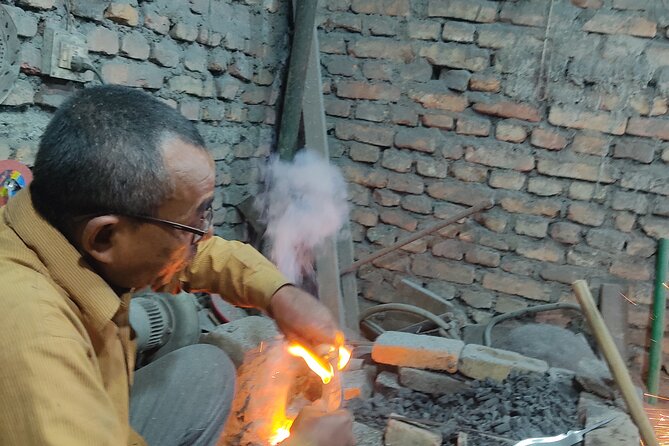
The strongest feature is the lack of polish. You visit a real blacksmith’s home and see a forge that feels primitive compared with a modern metalworking studio. That can be dusty, hot, and rough around the edges, but it is also why the activity feels genuine.
You are not standing behind glass while someone performs a short show. You hammer the metal, observe the expert work, and take part in the safer finishing stages. The host and assistants make you feel welcome, but the process still belongs to their working craft.
There are limits. You will not become a blacksmith in one afternoon, and you will not control every technical stage. One important reason is safety. Another is quality: Indra’s skill is needed to make sure the blade is properly shaped, polished, and usable.
Quality control also deserves a practical note. A small number of finished knives have developed cracks during the process. The provider has said that a replacement can usually be made and delivered in such cases, so inspect your knife before leaving and ask immediately if you see a problem.
Who will enjoy this most
I would recommend the workshop to adults and older children who like making things, learning a traditional skill, and spending time with local people. It suits anyone who prefers a personal activity over another temple visit or shopping stop.
It is especially good for people interested in blacksmithing, military history, recycling, tools, or Nepalese culture. Couples and small groups benefit from the five-person limit, and families can enjoy it if children are prepared for a long session.
Younger children may struggle with the pace. A family with children aged four and six found that the children ran out of patience during the four to five hours, so bring distractions or consider booking without very young children.
This is not the best choice if you dislike heat, noise, manual effort, or rustic settings. It is also not ideal if you expect to perform every stage independently. Think of it as a guided craft session with a master smith, not an open forge where you work alone.
Practical advice for a smooth visit
Wear simple clothing and sturdy closed shoes. The activity involves hot metal, sparks, grinding, and polishing, so avoid anything delicate or valuable.
Tell the provider your pickup location as soon as you book. Same-day bookings and late changes can create problems, especially if you are staying far outside Kathmandu. Pickup is offered, but it is not unlimited. One failed booking involved a location about 40 kilometers from the workshop, which the provider said was too far for standard pickup.
Keep the day flexible. Four hours is the advertised duration, but transport and the pace of the work can stretch the outing. Confirm the meeting time and pickup point rather than assuming the provider already has those details.
The cancellation terms are strict close to departure. You can receive a full refund if you cancel at least 24 hours before the start time. Cancellations or changes made less than 24 hours ahead are not accepted for a refund.
Should you book the Forge of the Gurkhas workshop?
Book it if you want a personal Kathmandu experience with a real craft at its center. The combination of Indra’s skill, a small group, hotel pickup, local conversation, and a knife you helped shape makes the $68 worthwhile for the right person.
Go in with sensible expectations. You will hammer the steel and participate in selected grinding, buffing, and polishing stages, but the host will handle the most dangerous work. If you want an authentic, slightly rough-edged workshop and a useful Nepalese souvenir with a story behind it, this is a strong choice.
FAQ
Where does the khukuri-making workshop take place?
It takes place in Kathmandu, in a more remote area toward the hills, at or near the home workshop of the blacksmith Indra.
How long does the activity last?
The activity lasts approximately four hours. Some sessions have taken about four and a half to five hours, including transport and the workshop.
How much does the workshop cost?
The listed price is $68 per person.
What size knife do I make?
The workshop includes a small khukuri with a blade of about six inches.
Can I make a larger khukuri?
A ten-inch khukuri has been available for an additional fee. Confirm the current price and availability before the workshop.
What parts of the knife-making process can I do?
You take part in hammering the iron, the first grinding stage, and the final buffing and polishing. The host handles the more dangerous blade grinding for safety.
Is hotel pickup available?
Yes. Pickup is offered, and guides have collected participants from hotels in Kathmandu, including the Thamel area. Provide your pickup location promptly because distant locations may not be covered.
How many people can join the workshop?
The maximum group size is five travelers.
Can I cancel for a full refund?
Yes, if you cancel at least 24 hours before the local start time. Cancellations or changes made less than 24 hours before the activity are not eligible for a refund.
Just added around Kathmandu
- Nagarkot Sunrise With 7 UNESCO World Heritage Private Tour★ 5.0 · 3 reviews
- Private Shopping Tour in Kathmandu★ 5.0 · 3 reviews
- Mount Everest Scenic Flight 50 Minutes★ 5.0 · 3 reviews
- Kathmandu: Nightlife and Pub Crawl Tour★ 5.0 · 3 reviews
- Kathmandu: Nagarkot, Bhaktapur, Doleswor & Sanga Statue Tour★ 5.0 · 3 reviews
- Momo Cooking Class -The Art Of Making MoMo with Home Chef★ 5.0 · 3 reviews
- Kathmandu: Momo Making Class with a Local Chef★ 5.0 · 3 reviews
- Everest Experience Trek 6 Day Hiking Adventure★ 5.0 · 3 reviews
Workshops, compared.




Nepalese Momos or Dal Bhat Cooking Class (Cook with Delight)
Read our review →
The best Private Nepali Cooking Class in Kathmandu
Read our review →
Nepalese Kitchen in Pokhara: Momos or Dal Bhat Cooking Class
Read our review →
Browse the lists this tour appears in