
Reviewed · MOMO MAKING CLASSES
Kathmandu: Local Women-Led Nepali Cooking & Momo Class
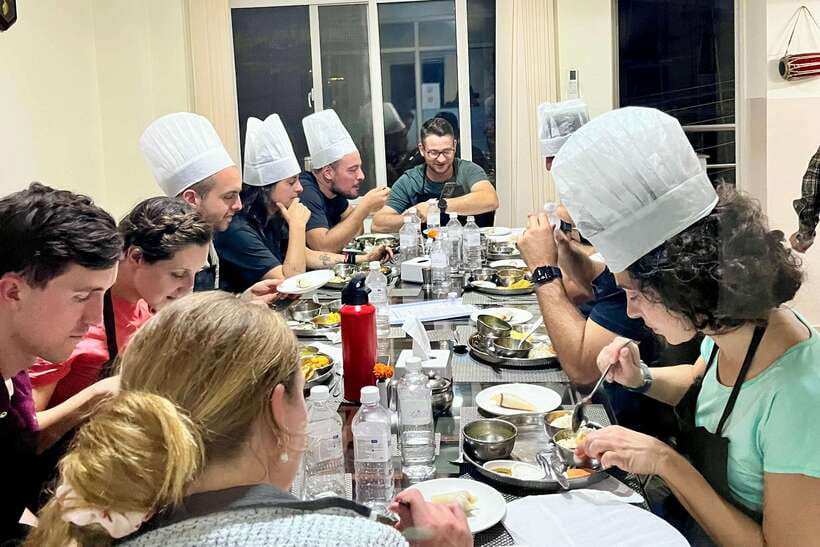
Momos are the perfect Kathmandu souvenir. This small-group class brings you into Nepali food through a local market visit, hands-on cooking, and a full meal you help prepare. I like the way the class begins with ingredients rather than a lecture, and I especially like the patient teaching from instructors such as Nish, Nishma, Bikram, Vicky, and Jojo.
The second big plus is its friendly, social feel. You are not simply watching a chef work. You shape dumplings, mix fillings, prepare sauces, and sit down with the group to eat. The main consideration is that the class takes place in a kitchen reached by stairs, and the market explanation may be fairly brief if you want detailed food background.
In This Review
- Five things to know before booking
- A food lesson with a Kathmandu welcome
- The local market: shopping for the lesson
- Making momo from dough to dipping sauce
- Dal bhat and the wider Nepali menu
- Why the women-led format matters
- The final meal: your work on the plate
- Teaching quality and group size
- Price, pickup, and practical value
- Who should book this Kathmandu cooking class?
- Should you book the momo class?
- FAQ
- How long does the Kathmandu cooking class last?
- What dishes will I learn to cook?
- Is the class suitable for vegetarians?
- Is hotel pickup available?
- Is the cooking class taught in English?
- Can I get the recipes after the class?
Five things to know before booking
- The market visit comes first: You help choose vegetables, spices, and other ingredients before cooking.
- Momo and dal bhat lead the menu: Additional dishes may include chatamari, bara, yomari, thukpa, curry, or dessert.
- You cook from start to finish: The class covers dough, fillings, sauces, cooking methods, and serving.
- Nish receives repeated praise: Her clear instructions, patience, humor, and warm manner are a major part of the class appeal.
- The meal is substantial: Many participants leave having prepared three dishes or a full lunch or dinner.
- The price is unusually low: The listed price is $4 per person, but check the exact option, pickup choice, and menu before paying.
A food lesson with a Kathmandu welcome
The class is based in Thamel, with the exact meeting point depending on the option you choose. Hotel pickup and drop-off are available if selected, including pickup from locations within Kathmandu, but you need to provide your hotel details when booking.
I would arrive 15 minutes early. That matters in Kathmandu, where a short walk can take longer than expected because of traffic, narrow streets, and steep approaches. One participant found the cooking academy easy to reach from a Thamel hotel but noted stairs and a steep hill when following a map route.
The activity usually lasts about three hours, though the advertised duration is two to four hours. That time includes the market visit, preparation, cooking, and eating. It is best treated as a half-day activity rather than something to squeeze between two tightly timed sightseeing stops.
The kitchen uses cooking equipment and accessories, and aprons are provided. Comfortable clothing is the sensible choice. You will be handling flour, fillings, spices, and hot food, so this is not the moment for your finest Kathmandu dinner outfit.
More Cooking Classes in Kathmandu
- Half day cooking class in Thamel kathmandu
★ 5.0 · 607 reviews - Kathmandu: Local Lead Nepali Cooking & Momo-Making Class
★ 5.0 · 212 reviews - Local Women Lead Nepali Cooking Class
★ 5.0 · 125 reviews
The local market: shopping for the lesson
The opening market walk gives the class a practical starting point. Instead of seeing Nepali dishes as fixed recipes, you see the ingredients that shape them. You may shop for vegetables, spices, meat, and other items needed for the selected menu.
This is useful because Nepali cooking often depends on balance rather than a single signature flavor. Lentils, rice, chilies, ginger, garlic, herbs, and spice mixes each play a different part. Choosing ingredients with the chef helps you understand what goes into the food before you start chopping.
The market visit is also a good chance to ask questions. You can ask about the ingredients used in momo filling, the spices in chicken curry, or the lentils used for bara and dal bhat. The instructors speak English, and the class is designed for questions.
I would keep expectations sensible. The market stop is part of the cooking activity, not a long guided food tour. One person wanted more explanation about the different foods at the market, so if ingredient detail is important to you, ask directly rather than waiting for a formal presentation.
Once the shopping is finished, the group returns to the kitchen. The exact route and meeting point can vary, especially if you choose hotel transport, so confirm those details ahead of time.
Making momo from dough to dipping sauce
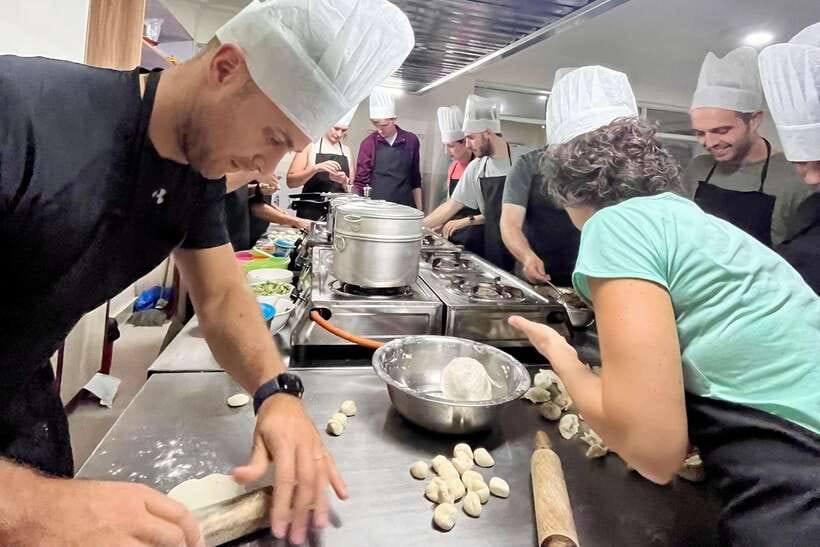
Momo is the main attraction, and rightly so. These Nepali dumplings are easy to eat but require several small skills: making or handling the dough, preparing a filling, rolling wrappers, shaping the dumplings, and cooking them properly.
The class focuses on the whole process. You may work with chicken, vegetarian, or buffalo fillings, depending on the selected menu and available choices. One participant who attended alone specifically enjoyed learning to make buffalo momo, while another prepared both vegetable and chicken fillings.
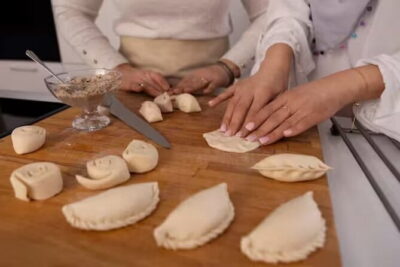
This hands-on approach is the best part of the lesson. You are not just given a finished dumpling to copy. You help make the filling, prepare the dough, fold the momo, and mix the dipping sauce. That makes the class useful at home, even if your first dumplings look more like little parcels than perfect restaurant shapes.
Nish is frequently praised for taking time with each step and not rushing anyone. That matters for momo because folding can feel fiddly at first. Her calm guidance, along with the help of Bikram and other instructors, makes the class suitable for beginners.
You should also expect plenty of food. The dumplings are cooked after preparation and eaten as part of the final meal. Several people found themselves too full to finish everything, and one person took leftover momo away in a goodie bag. The exact handling of leftovers can vary, so do not count on that, but arriving hungry is smart.
Dal bhat and the wider Nepali menu
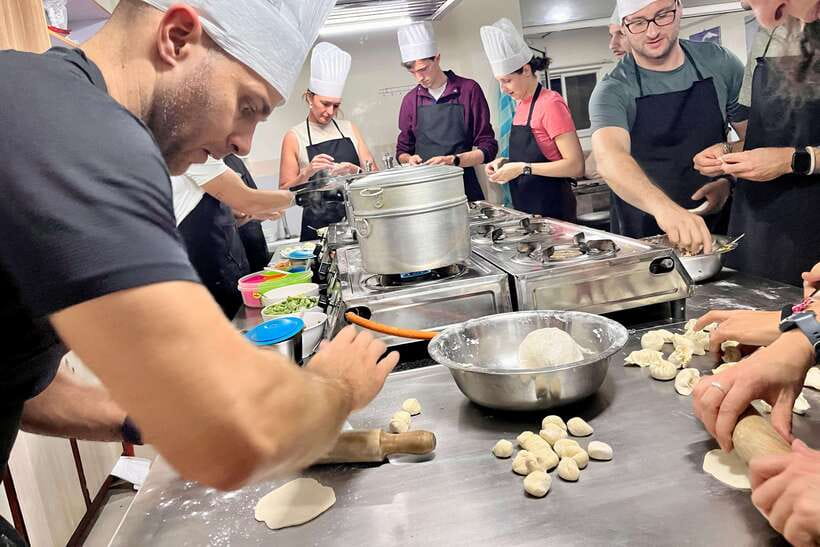
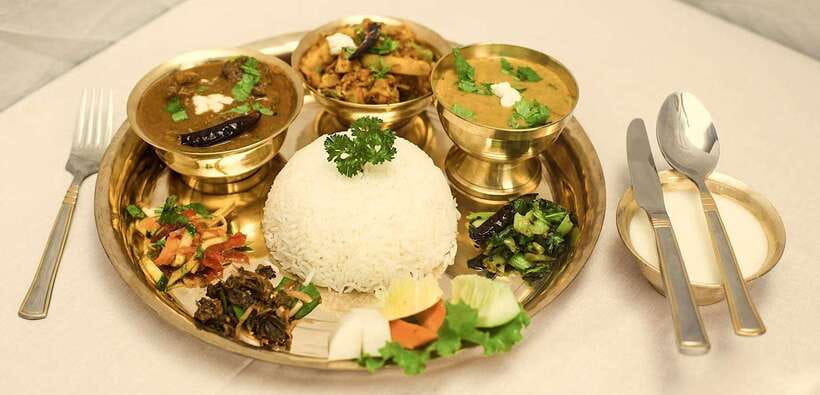
Momo gets the attention, but the class can introduce you to a wider set of Nepali dishes. Dal bhat is the central option: rice served with lentil soup and curry, often treated as the everyday backbone of Nepali dining.
Learning dal bhat gives you useful context. It is not one single recipe so much as a meal pattern that can change with household, region, season, and available ingredients. You learn how the lentils, rice, curry, and accompaniments fit together on one plate.
Additional dishes depend on the option and menu you select. Possible choices include:
- Chatamari: A thin rice-flour flatbread often called Nepali pizza, topped with a choice of ingredients.
- Bara: A fried lentil patty with a crisp outside and tender center.
- Thukpa: A hearty noodle soup with Tibetan roots that has become popular in Nepal.
- Chicken curry with roti: A spice-led main course paired with flatbread.
- Mushroom choila: Spicy marinated mushrooms prepared in a style associated with bold Newari flavors.
- Yomari: A sweet dumpling filled with jaggery and sesame.
- Carrot pudding or kheer: A sweet finish that shows the dessert side of Nepali home cooking.
- Aloo chop: A potato snack that one participant singled out as especially good.
- Masala tea: Black tea prepared with warming spices and served during the lesson.
The menu flexibility is a real advantage. You can choose dishes that match your interests, dietary needs, or appetite. Some people make three dishes, while others prepare enough for a full lunch or dinner.
Still, do not assume every dish listed will appear in one session. Momo and dal bhat are the main focus, while the additional dishes depend on your selected option and the class arrangement. Tell the provider about dietary restrictions, allergies, or medical conditions in advance.
More Momo and Nepali Cooking Classes:
- The best Private Nepali Cooking Class in Kathmandu
★ 5.0 · 83 reviews - Kathmandu: Traditional Momo Making Class & Pickup
★ 4.8 · 60 reviews - Traditional Nepali Momo Making Classes
★ 5.0 · 53 reviews - Kathmandu: Local Women-Lead Nepali Cooking & Momo Class
★ 4.9 · 45 reviews
Why the women-led format matters
The women-led focus gives this activity a clear social purpose as well as a culinary one. You are learning from local cooks while supporting Nepali women working in food and tourism.
The strongest teaching praise centers on Nish and Nishma. Their style comes across as warm, patient, funny, and easy to approach. Bikram, Vicky, and Jojo are also described as helpful and engaging, with instructors moving around the group to explain techniques and answer questions.
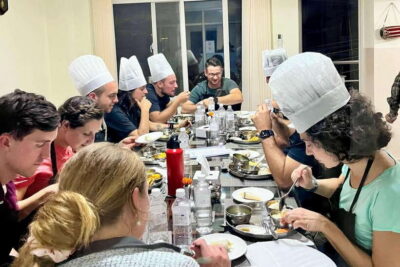
I like that the class does not sound stiff or overly formal. There is time to talk with the teachers and other people in the group, and the kitchen setting encourages conversation. Several participants treated it as a relaxed way to meet people from different parts of the world while doing something practical.
That social side can be a plus or a drawback. If you want a quiet private lesson, a small-group class may still feel more communal than personal. If you enjoy cooking beside other people and sharing a table afterward, the atmosphere should suit you well.
The final meal: your work on the plate
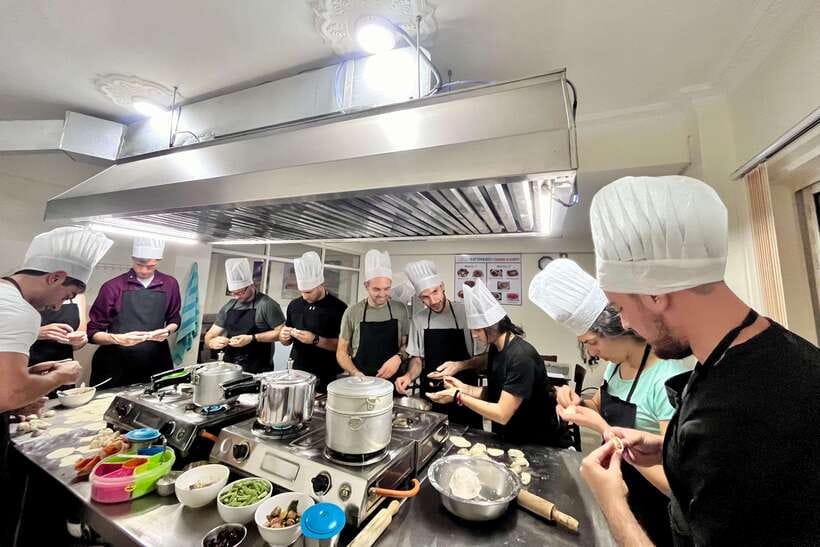
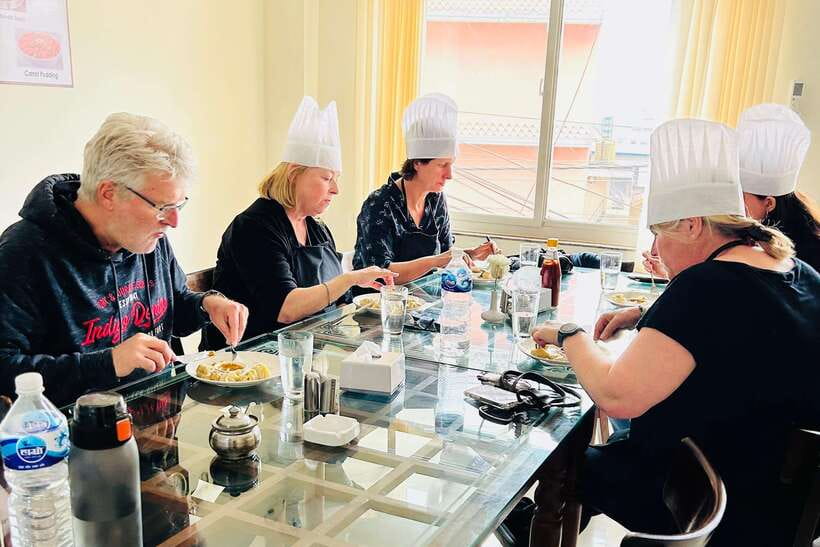
The meal at the end gives the class a satisfying purpose. You sit down to eat food made through your own effort, rather than receiving a token tasting portion.
The strongest feedback centers on generous servings, fresh preparation, and the feeling of having made a proper meal. Depending on the menu, your plate may include momo, dal bhat, chatamari, bara, curry, soup, or dessert. Masala tea is included during the lesson.
I would think of this as both a lesson and lunch or dinner. You spend time preparing several components, so the final meal can be filling. It also helps you understand how separate dishes work together, especially when rice, lentils, curry, pickles, dumplings, and sweets appear around the same table.
The meal is where the class becomes more than a recipe demonstration. You can taste the effect of different spices, compare fillings, and see how texture changes between steamed dumplings, fried bara, soft lentils, and crisp flatbread.
Teaching quality and group size
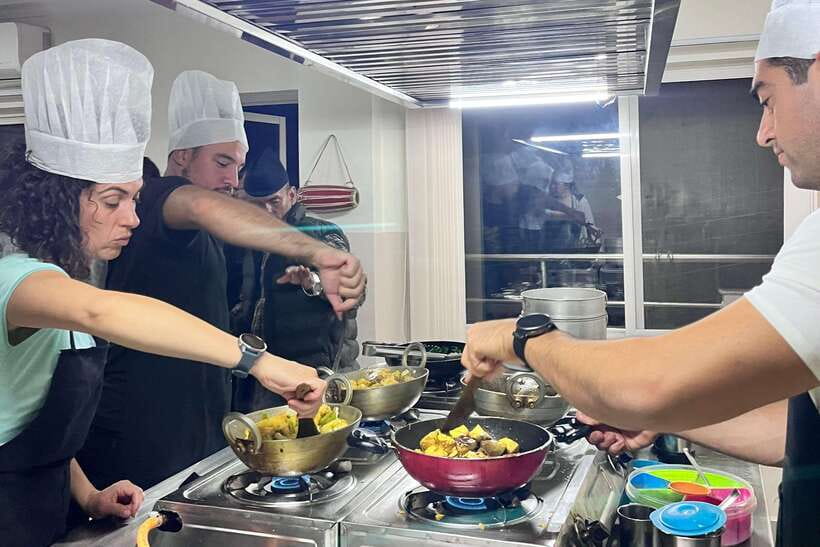
The class is offered in a small-group format, allowing more direct help than a large demonstration. That is important for momo shaping and for anyone who has never worked with Nepali ingredients.
The instructors are repeatedly praised for speaking clear English and explaining each stage in an easy way. People with little cooking experience found the lesson manageable, while more confident cooks still picked up recipes and techniques worth trying at home.
The class also seems accommodating. One participant with both vegan and gluten-free needs was helped with suitable food and learned about using millet flour. That is encouraging, but you should still disclose dietary needs before arrival. Do not wait until the market or kitchen to explain an allergy.
The strongest practical tip is to arrive hungry but not rushed. The class includes a lot of preparation and eating, and the best part is taking part in each stage. If you only want a quick momo tasting, this is more time than you need.
Price, pickup, and practical value
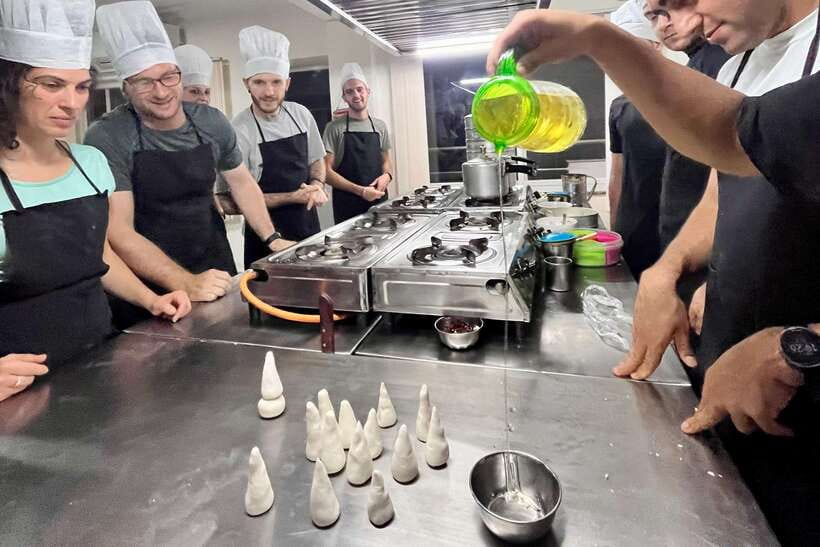
At the listed $4 per person, this is an unusually inexpensive activity for a three-hour class with ingredients, instruction, equipment, masala tea, a market visit, and a cooked meal. Even allowing for the possibility that prices vary by menu or booking option, the experience offers strong value if the displayed rate is available for your date.
Hotel pickup and drop-off are optional rather than automatically included in every booking. That distinction matters because transport can change the total cost and the time you need before the class. Check the selected option carefully, particularly if you are staying outside central Thamel.
Free cancellation is available up to 24 hours before the start time, and you can reserve now and pay later. Those terms are useful if your Kathmandu plans depend on trekking dates or changing transport, but always confirm the conditions attached to your specific booking option.
The activity is not suitable for wheelchair users or people with visual impairments. Stairs and a steep approach may also be difficult for anyone with limited mobility. Bring a camera if you want photos, but keep it out of the way while working around food and hot cookware.
Who should book this Kathmandu cooking class?
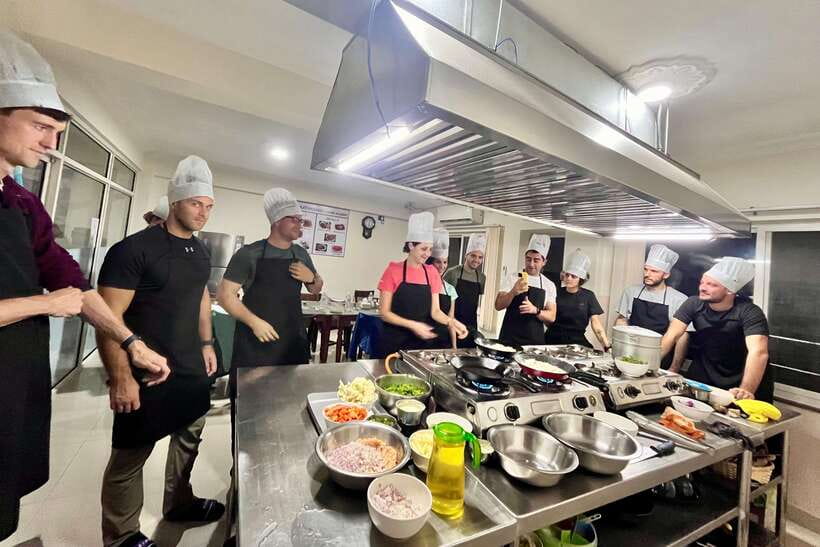
I would recommend this class to you if you want an activity that combines food, local contact, and a full meal. It works especially well for:
- First-time visitors who want more than restaurant dining
- Couples, families, and friends looking for a shared activity
- Solo participants comfortable joining a small group
- People eager to learn momo folding and recreate the recipes at home
- Vegetarians and people with dietary needs who give advance notice
- Anyone with a spare morning or afternoon in Thamel
It may be less suitable if you dislike group activities, have limited mobility, or want a detailed market tour with long explanations about every ingredient. It is also not a passive food tasting. You will be chopping, mixing, shaping, and helping with the meal.
The recipe book is available as a PDF through WhatsApp after the class if you request it. Physical copies cost extra. That is worth knowing if you want a permanent kitchen reference, since the class itself may move quickly once several dishes are underway.
Should you book the momo class?
Book it if you want practical cooking, friendly local instruction, and enough food for a real meal. The repeated strengths are clear: Nish and the other teachers are patient, the kitchen is organized, the class is hands-on, and the momo lesson gives you a skill you can attempt at home.
I would choose the class even if momo is not your only interest. Ask in advance about dal bhat and the additional dishes, then state your dietary needs before the day. If your priority is a market-focused food walk or a private cooking lesson, this may not be the best fit.
For most people staying in Kathmandu, though, the combination is hard to beat: a short market visit, local recipes, a social kitchen, and dinner made by you. Just confirm the price, meeting point, pickup option, and menu before booking.
FAQ
How long does the Kathmandu cooking class last?
The experience usually lasts around three hours, including the market visit, cooking session, and meal tasting. The advertised duration can range from two to four hours depending on the selected option.
What dishes will I learn to cook?
Momo and dal bhat are the main dishes. Depending on the option you choose, you may also prepare chatamari, bara, yomari, thukpa, chicken curry with roti, mushroom choila, carrot pudding, kheer, or other Nepali dishes.
Is the class suitable for vegetarians?
Vegetarian momo and other vegetarian dishes are available. You should tell the provider about dietary preferences, allergies, or medical conditions in advance.
Is hotel pickup available?
Hotel pickup and drop-off are available if you select that option. Pickup can be arranged from locations within Kathmandu, and you should provide your hotel details when booking.
Is the cooking class taught in English?
Yes. The listed teaching language is English, and the instructors provide step-by-step guidance throughout the class.
Can I get the recipes after the class?
You can request a PDF recipe book through WhatsApp after the class. Physical recipe books are available for an additional cost.
More Workshops
- Knife (Khukuri) Making Workshop- Forge of the Gurkhas
★ 5.0 · 143 reviews - Kathmandu: Local Lead Nepali Cooking & Momo Making Class
★ 4.9 · 40 reviews - Knife Khukuri Making Workshop
★ 4.9 · 38 reviews - Best Nepali Cooking Class in Thamel with Local Market Trip
★ 5.0 · 26 reviews
Just added around Kathmandu
- Private Shopping Tour in Kathmandu★ 5.0 · 3 reviews
- Nagarkot Sunrise With 7 UNESCO World Heritage Private Tour★ 5.0 · 3 reviews
- Kathmandu: Nightlife and Pub Crawl Tour★ 5.0 · 3 reviews
- Mount Everest Scenic Flight 50 Minutes★ 5.0 · 3 reviews
- Momo Cooking Class -The Art Of Making MoMo with Home Chef★ 5.0 · 3 reviews
- Kathmandu: Nagarkot, Bhaktapur, Doleswor & Sanga Statue Tour★ 5.0 · 3 reviews
- Makalu Base Camp Trek★ 5.0 · 3 reviews
- Kathmandu: Momo Making Class with a Local Chef★ 5.0 · 3 reviews
Momo Making Classes, compared.



Nepalese Momos or Dal Bhat Cooking Class (Cook with Delight)
Read our review →
The best Private Nepali Cooking Class in Kathmandu
Read our review →
Nepalese Kitchen in Pokhara: Momos or Dal Bhat Cooking Class
Read our review →
Browse the lists this tour appears in