
Reviewed · MOMO MAKING CLASSES
Local Women Lead Nepali Cooking Class
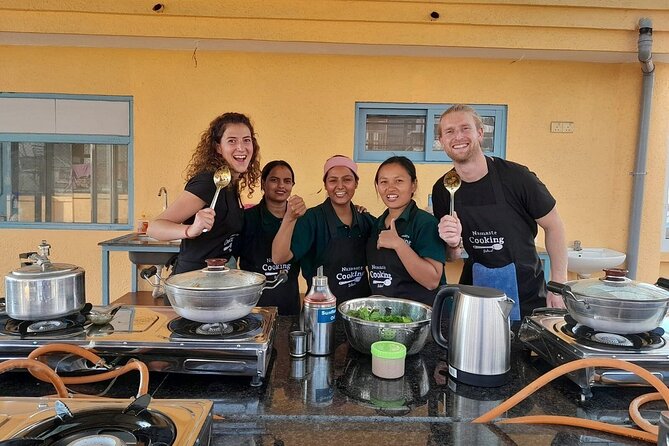
Your best Kathmandu meal may begin with chai. In Thamel, Namaste Cooking School offers a four-hour, hands-on Nepali cooking class led by local women who work with ingredients sourced from nearby farmers. I like the warm, personal welcome and the chance to learn about indigenous spices, and I also like that lunch and a recipe book are included. The main consideration is the meeting-point information: the school is in central Thamel, while the listed start and end point is Tribhuvan Airport, so confirm pickup details before you go.
This is more than a quick demonstration. You choose from three menus, cook the food yourself with guidance, and sit down to eat what you made. The class costs $30 per person, a fair price for a half-day activity that combines instruction, a full meal, cultural exchange, and take-home recipes. It is especially appealing if you are traveling alone, want a break from sightseeing, or would like a friendly way to meet people.
In This Review
- Key points to know before booking
- Why this Thamel cooking class feels personal
- Starting with chai and a choice of menus
- Learning the spices behind Nepali flavor
- Cooking instead of watching
- A meal you prepare yourself
- The recipe book makes the experience last
- The setting and group size
- Is $30 a good value?
- Who should book this experience?
- Should you book the Namaste Cooking School class?
- FAQ
- Where does the cooking class take place?
- What is the listed meeting point?
- How long does the experience last?
- How much does the class cost?
- Is lunch included?
- What language is the class offered in?
- Can I choose what I cook?
- Can I tell the school about allergies or dietary restrictions?
- What happens if I need to cancel?
Key points to know before booking
- Women-led and locally connected: The school places local women at the center of the class and sources ingredients from local farmers.
- Three menus to choose from: You select your cooking menu after arriving, with dietary restrictions and allergies discussed at the same time.
- Real hands-on cooking: You prepare the food yourself, with guidance rather than simply watching a chef work.
- Masala chai starts the class: The welcome drink gives the session a distinctly Nepali beginning.
- Lunch and a recipe book are included: You eat the meal you prepare and leave with instructions for making it again at home.
- Small enough for conversation: The maximum group size is 16 people, and the class is offered in English.
Why this Thamel cooking class feels personal
Kathmandu has no shortage of restaurants serving dal bhat, momos, curries, and spiced tea. A cooking class gives you something those meals cannot: a look at how the flavors come together and a chance to ask questions while you work.
Namaste Cooking School keeps that exchange central. The class is run by women, and the teaching style appears to be friendly and social rather than stiff or formal. You may cook, talk, laugh, sing, or even dance as the session unfolds. That light mood matters. You are more likely to remember the food when the afternoon feels like time spent with welcoming hosts instead of a lecture in a kitchen.
I also like the school’s connection with local farmers. The use of indigenous ingredients gives the lesson a stronger sense of place. You are not simply following a generic South Asian recipe. You are being introduced to the spices and food traditions that shape Nepali cooking.
The location in the heart of Thamel is useful. Thamel is one of Kathmandu’s easiest areas for visitors to reach, with restaurants, hotels, shops, and public transportation nearby. If you are staying in central Kathmandu, the school should be easy to fit into a day of sightseeing. Still, the stated meeting point is Tribhuvan Airport, and the activity ends back at the meeting point. Since pickup is offered and the school is described as being in Thamel, check the exact arrangement when you book.
More Cooking Classes in Kathmandu
- Half day cooking class in Thamel kathmandu
★ 5.0 · 607 reviews - Kathmandu: Local Women-Led Nepali Cooking & Momo Class
★ 4.9 · 360 reviews - Kathmandu: Local Lead Nepali Cooking & Momo-Making Class
★ 5.0 · 212 reviews
Starting with chai and a choice of menus
The class begins with a traditional cup of masala chai. This is a small detail, but it sets the right tone. In Nepal, offering tea is a familiar sign of welcome, and beginning with chai makes the session feel more like a visit than a transaction.
After the welcome, you choose one of three menus. This gives you some control over the meal and helps the instructors match the class to your interests. The menu options are not specified in the available details, so you should ask what each one contains before making your choice.
This is also the point to tell the team about allergies or dietary restrictions. Do not wait until the cooking begins. Discuss your needs clearly when you arrive so the instructors can explain which dishes are suitable and what changes may be possible.
The menu choice is one of the better features for mixed groups. One person may want to focus on familiar Nepali comfort food, while another may prefer to try something less familiar. The three-menu format offers a little variety without making the class feel complicated.
Learning the spices behind Nepali flavor
Before you start cooking, the instructors introduce the regional spices used in Nepali food. This part gives useful context to the practical work that follows.
Nepali food can look simple on the plate, but spice timing and combinations do much of the work. A short explanation of the ingredients helps you understand why the finished dishes taste the way they do. You are not just adding spices because a recipe tells you to. You begin to connect those ingredients with local food traditions.
I would pay close attention here and ask questions. Since the class focuses on indigenous culinary heritage, this is your best opportunity to learn which flavors are especially associated with Nepal and how they are used at home. The supplied information does not list the exact spices, so the lesson will be the place to find out what goes into your selected menu.
This section also makes the recipe book more useful later. A list of ingredients is helpful, but knowing how a spice fits into the dish gives you a better chance of reproducing the flavor in your own kitchen.
Cooking instead of watching
The main part of the experience is hands-on. You prepare the dishes yourself while the instructors guide you through each stage. That makes a major difference if you want practical skills rather than a short cooking show.
You can expect to handle the food, follow instructions, and take an active role in bringing the meal together. The class is conducted in English, which makes the steps easier to follow for English-speaking participants. The instructors also teach Nepali words during the session, giving you a simple way to connect language with food and culture.
The teaching style seems particularly welcoming for solo visitors. A solo participant can sometimes feel awkward joining a group activity, but this class is built around conversation and shared work. You are not left sitting at the edge while couples or families take over. The women leading the class are described as upbeat, kind, attentive, and fun, which helps the social side of the experience.
The class is also suitable for couples and friends. One pair, Sabita and Sushila, received special praise for making the session feel like time spent with new friends. If you are traveling with someone, you can cook together while still meeting other people in the group.
Do not expect a professional culinary-school setting. The appeal is not advanced technique or restaurant-level training. The appeal is learning everyday Nepali dishes in a relaxed setting, with enough guidance to make the process enjoyable and manageable.
More Momo and Nepali Cooking Classes:
- The best Private Nepali Cooking Class in Kathmandu
★ 5.0 · 83 reviews - Kathmandu: Traditional Momo Making Class & Pickup
★ 4.8 · 60 reviews - Traditional Nepali Momo Making Classes
★ 5.0 · 53 reviews - Kathmandu: Local Women-Lead Nepali Cooking & Momo Class
★ 4.9 · 45 reviews
A meal you prepare yourself
Lunch is included, and you eat the dishes made during the class. This is where the activity pays off. Instead of leaving with only notes and a demonstration, you get to taste the result while the instructions are still fresh in your mind.
The portions appear generous enough that you should not expect to leave hungry. The food is prepared with fresh ingredients, and the class places value on capturing the true flavors of Nepali cuisine. The exact meal depends on the menu you choose, so it would be misleading to promise a particular dish.
I like this format because it ties the cultural lesson to a real meal. You learn about spices, use them in a dish, and then taste the finished food. That simple sequence makes the information easier to remember.
The meal also creates room for conversation. You may share stories with the instructors and other participants, practice a few Nepali words, or talk about food traditions in your own country. For many people, that exchange will be as memorable as the cooking itself.
There is one practical benefit worth noting: you are not expected to handle the cleanup. The instructors take care of it, allowing you to focus on cooking and eating. That is a welcome perk during a half-day activity, especially after a busy morning walking around Kathmandu.
The recipe book makes the experience last
At the end of the class, you receive a Namaste Cooking School recipe book. This is more useful than a token souvenir. It gives you a way to recreate the meal at home and share part of the experience with family or friends.
Several of the dishes are described as manageable to make again, which is important. A recipe book filled with difficult, hard-to-find preparations would spend most of its life on a shelf. If the recipes use ingredients you can obtain at home, you have a real chance of keeping the class alive after Nepal.
The book also helps you remember the social side of the day. One participant described cooking at home later and recalling the laughter, singing, and dancing from the class. That is the best kind of cooking souvenir: something you use, not something you pack away.
Before leaving, check that you understand the recipe notes and ask about substitutions if you live somewhere where certain Nepali ingredients are difficult to find. The instructors’ explanation may be more useful than the printed page alone.
The setting and group size
The maximum group size is 16 people. That is not a private lesson, but it is small enough for a shared class rather than a large production. Your experience may depend on how many people are booked on your date.
A full group can bring energy and make the social side more enjoyable. It may also mean you need to wait briefly for instructions or access to a work area. If you prefer quiet, one-to-one instruction, this may not be your ideal cooking experience. If you enjoy meeting people, the group format is part of the fun.
The school is located in central Thamel, a practical base for visitors. Public transportation is nearby, and the area is easy to combine with other plans. You can use the class as a midday or afternoon break from temples, markets, and city walks.
The details list airport pickup as the meeting point, though the school itself is in Thamel. Because of that mismatch, I would confirm the exact pickup location, return point, and timing before setting out. Pickup is offered, but the details provided do not explain whether it is included in the $30 price or arranged separately.
Is $30 a good value?
At $30 per person, this is a strong value if you want an activity that fills about four hours. You receive a welcome drink, menu choice, spice introduction, instruction, hands-on cooking, lunch, and a recipe book.
Compare that with a standard restaurant meal. A restaurant can give you a delicious plate, but it will not show you how the food was made or give you recipes to take home. The class also includes a cultural exchange led by local women, which adds value beyond the meal itself.
The price is especially reasonable for solo visitors. A solo traveler can enjoy a planned social activity without paying for a private experience. Couples and friends also get a full afternoon of shared work and food for a modest cost.
The value is lower if you are looking for advanced chef training, a highly specialized menu, or a private class. The information does not promise those things. This is best understood as a friendly introduction to Nepali cooking and culture.
Who should book this experience?
I would recommend it to first-time visitors who want a more personal connection with Kathmandu’s food. It also suits anyone who enjoys cooking, wants a break from temple visits, or likes taking practical souvenirs home.
Solo visitors should give it serious thought. The welcoming instructors and shared meal make it easier to meet people, and you do not need to arrive with a group to enjoy the afternoon.
Couples and friends will find plenty to do together, but the class does not depend on having a partner. People interested in women-led local businesses may also appreciate the school’s clear focus on female instructors and local food traditions.
This may not suit you if you have very strict dietary needs that require extensive menu changes. The team asks about restrictions and allergies, which is encouraging, but the available details do not specify every possible adaptation. Contact the school before booking if your needs are complex.
You should also check the weather and cancellation terms. The experience requires good weather and a minimum number of participants. You can cancel for a full refund up to 24 hours before the start time, but cancellations or changes made later are not refunded or accepted. If bad weather or low numbers force a cancellation, you are offered another date or a full refund.
Should you book the Namaste Cooking School class?
Yes, if you want a friendly, practical, good-value introduction to Nepali food in Kathmandu. The best reasons to book are the local women leading the class, the farmer-sourced ingredients, the chance to cook every dish yourself, and the meal and recipe book included in the price.
I would confirm the airport and Thamel meeting details before paying, and I would ask for the three menu choices if you have dietary concerns. Once those points are clear, this is an easy activity to recommend for a relaxed half-day with food, conversation, and a useful connection to Nepal’s culinary traditions.
FAQ
Where does the cooking class take place?
Namaste Cooking School is located in the heart of Thamel in Kathmandu, with easy access for visitors and culinary enthusiasts.
What is the listed meeting point?
The listed start and end point is Tribhuvan Airport in Kathmandu. Pickup is offered, so confirm the exact arrangements with the experience provider before the class.
How long does the experience last?
The cooking class lasts approximately four hours.
How much does the class cost?
The price is $30 per person.
Is lunch included?
Yes. Lunch is included, and you eat the food prepared during the class.
What language is the class offered in?
The class is offered in English.
Can I choose what I cook?
Yes. You choose from three menus after arriving at the school.
Can I tell the school about allergies or dietary restrictions?
Yes. The school asks about dietary restrictions and allergies during the menu-selection stage.
What happens if I need to cancel?
You can cancel up to 24 hours before the start time for a full refund. Cancellations or changes made less than 24 hours before the experience are not accepted or refunded. If the class is canceled because of poor weather or because the minimum number of participants is not reached, you are offered another date or a full refund.
More Workshops
- Knife (Khukuri) Making Workshop- Forge of the Gurkhas
★ 5.0 · 143 reviews - Kathmandu: Local Lead Nepali Cooking & Momo Making Class
★ 4.9 · 40 reviews - Knife Khukuri Making Workshop
★ 4.9 · 38 reviews - Best Nepali Cooking Class in Thamel with Local Market Trip
★ 5.0 · 26 reviews
Just added around Kathmandu
- Nagarkot Sunrise With 7 UNESCO World Heritage Private Tour★ 5.0 · 3 reviews
- Private Shopping Tour in Kathmandu★ 5.0 · 3 reviews
- Mount Everest Scenic Flight 50 Minutes★ 5.0 · 3 reviews
- Kathmandu: Nightlife and Pub Crawl Tour★ 5.0 · 3 reviews
- Kathmandu: Nagarkot, Bhaktapur, Doleswor & Sanga Statue Tour★ 5.0 · 3 reviews
- Momo Cooking Class -The Art Of Making MoMo with Home Chef★ 5.0 · 3 reviews
- Kathmandu: Momo Making Class with a Local Chef★ 5.0 · 3 reviews
- Everest Experience Trek 6 Day Hiking Adventure★ 5.0 · 3 reviews
Momo Making Classes, compared.



Nepalese Momos or Dal Bhat Cooking Class (Cook with Delight)
Read our review →
The best Private Nepali Cooking Class in Kathmandu
Read our review →
Nepalese Kitchen in Pokhara: Momos or Dal Bhat Cooking Class
Read our review →
Browse the lists this tour appears in