
Reviewed · MOMO MAKING CLASSES
Nepali Cooking training & Cultural Homestay Experience
Cook Nepal, then sleep under Himalayan skies. This two-day Kathmandu experience combines a hands-on Nepali cooking class with a night in a local family home, and I like the shared family meal and the chance to trade city noise for a quieter setting. I also like that pickup, dinner, breakfast, tea, coffee, accommodation, and private transportation are included in the $30 price. The main consideration is the loose-looking schedule: the experience begins at 4:15 pm, but the exact timing of the temple, Durbar Square, and Everest-view portions is not clearly explained.
You should come ready for a personal, home-based experience rather than a polished restaurant class. The food centers on Dal Bhat, vegetables, pickle, and chicken, and you eat what you help prepare with your Nepali hosts. The return trip to your next destination is not included, and drinks beyond tea and coffee can cost extra, so plan for that before you arrive.
In This Review
- Key points about this Kathmandu homestay
- Why this $30 experience is worth considering
- Starting at 4:15 pm in Kathmandu
- Uma Maheshwor Temple and the quieter side of the city
- Kathmandu Durbar Square adds a major city landmark
- Cooking Dal Bhat with a Nepali family
- Dinner becomes the real cultural exchange
- Spending the night in a clean homestay room
- Himalayan views from the homestay
- What the private format means for you
- Drinks, transport, and other practical costs
- Who should book this Kathmandu experience?
- Should you book it?
- FAQ
- How long does the Nepali cooking and homestay experience last?
- What time does the experience start?
- What food will I learn to cook?
- Is transportation included?
- Is accommodation included?
- Can I cancel for a full refund?
Key points about this Kathmandu homestay
- A $30 overnight cultural exchange: You receive accommodation, dinner, breakfast, tea or coffee, pickup, and private transportation, making this a strong value for a short stay.
- Dal Bhat is the heart of the class: You learn to prepare rice, lentil soup, vegetables, pickle, and chicken, then sit down to eat the meal together.
- A 4:15 pm start shapes the visit: The afternoon departure leads into an evening of cooking, dinner, and a night in the homestay.
- Uma Maheshwor Temple adds a local religious stop: This gives the experience more cultural range than a cooking class alone.
- Kathmandu Durbar Square connects food with place: The historic square provides a city landmark alongside the family setting.
- Everest means a clear-day view: The Himalayan sight is weather-dependent, so treat it as a bonus rather than a guarantee.
Why this $30 experience is worth considering
At $30 per person, this is priced less like a full sightseeing package and more like an affordable cultural stay with food included. You are not simply paying for a cooking lesson. You are also receiving a night of accommodation, dinner, breakfast, pickup, tea or coffee, and private transportation during the experience.
That combination matters in Kathmandu, where a single organized meal and a separate overnight stay can quickly cost more than expected. The value is strongest if you want a simple place to sleep and a meaningful evening activity in one booking.
I would not judge the price by the number of major sights alone. This is not designed as a full Kathmandu sightseeing circuit. Its best feature is the time spent around food and family life, with the temple, square, and mountain view adding context.
The private format is useful if you prefer to ask questions freely or keep the pace suited to your own group. It also means you are not joining a large class with strangers. Group discounts may be available, which could make the experience even more attractive for friends or families traveling together.
More Cooking Classes in Kathmandu
- Half day cooking class in Thamel kathmandu
★ 5.0 · 607 reviews - Kathmandu: Local Women-Led Nepali Cooking & Momo Class
★ 4.9 · 360 reviews - Kathmandu: Local Lead Nepali Cooking & Momo-Making Class
★ 5.0 · 212 reviews
Starting at 4:15 pm in Kathmandu
The listed start time is 4:15 pm, so you should keep the afternoon open. Pickup is offered, and private transportation is included, but you should confirm the exact pickup point and timing when you book.
An afternoon start makes practical sense for a homestay. You can spend the earlier part of the day elsewhere in Kathmandu, then move into a quieter evening focused on cooking and conversation. The tradeoff is that you will not have a long block of daylight for sightseeing.
The schedule includes three named stops: Uma Maheshwor Temple, Kathmandu Durbar Square, and Mount Everest. The first two are actual cultural and historic places in the Kathmandu area. Mount Everest is presented as a view from the location on a clear day, not as a physical sightseeing stop at the mountain itself.
That distinction is important. You should read the Everest portion as Himalayan scenery viewed from Kathmandu, weather permitting. No Kathmandu-based two-day cooking stay can take you to Everest during this short program.
Uma Maheshwor Temple and the quieter side of the city
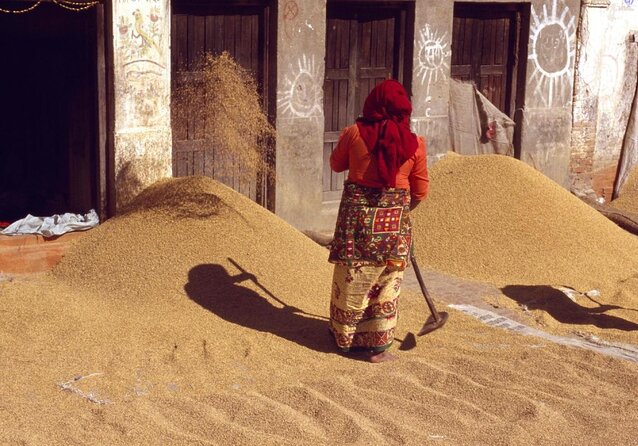
Uma Maheshwor Temple gives the experience a religious and local setting before or around the home visit. The supplied details do not give a precise length of time at the temple, so you should expect it to be one part of the wider program rather than a separate guided temple tour.
The value of this stop is its connection to everyday Nepali culture. A cooking lesson can teach you what goes into a meal, while a temple visit helps place that meal within the wider life of Kathmandu. You may find this especially worthwhile if you want more than a restaurant demonstration.
Keep your expectations measured. The temple is not described with a detailed guide program, special ceremony, or extended historical talk. If your main goal is architecture, art, or a long sightseeing explanation, you may want to pair this experience with a dedicated Kathmandu heritage tour.
The quiet setting is one of the main promises of the homestay. You are offered a clean and comfortable room for the night, away from the city crowds, smoke, and noise. That wording suggests a calmer base, though the exact neighborhood and room arrangements are not provided.
Kathmandu Durbar Square adds a major city landmark
Kathmandu Durbar Square gives the itinerary a stronger sightseeing anchor. It is one of the city’s best-known historic areas, and its inclusion keeps the experience from feeling like a cooking class detached from Kathmandu.
The information provided does not specify entrance fees, the time spent there, or whether a guide explains the square in detail. Ask about those points if the square is a high priority for you. The program may simply include a visit as part of the private transportation route.
I like the contrast here. You begin with a famous public place, then move toward the much more personal setting of a family home. One part shows Kathmandu through monuments and public spaces. The other shows it through food, hospitality, and a shared evening.
Because the start time is late afternoon, daylight could be limited depending on the season and the day’s schedule. You should not book this as your only chance to see the square. Treat it as an added stop within a homestay experience.
More Momo and Nepali Cooking Classes:
- Local Women Lead Nepali Cooking Class
★ 5.0 · 125 reviews - The best Private Nepali Cooking Class in Kathmandu
★ 5.0 · 83 reviews - Kathmandu: Traditional Momo Making Class & Pickup
★ 4.8 · 60 reviews - Traditional Nepali Momo Making Classes
★ 5.0 · 53 reviews
Cooking Dal Bhat with a Nepali family
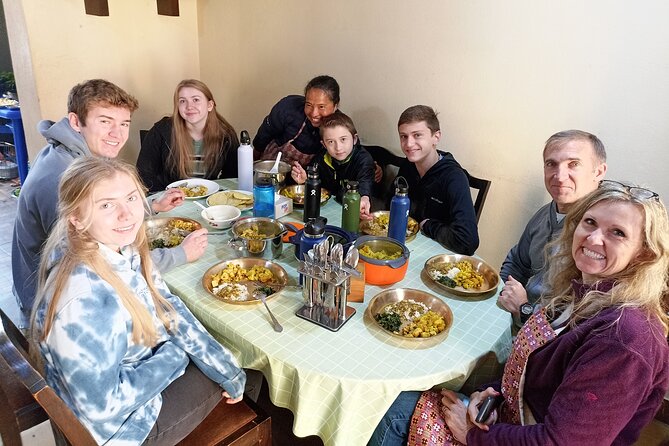
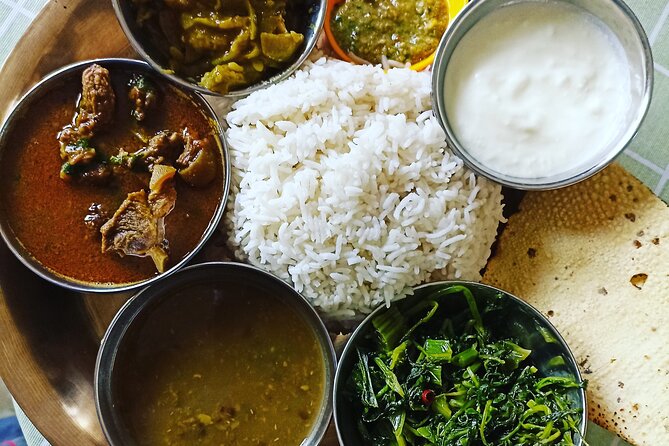
The cooking class is the center of the program. You learn to prepare a traditional meal built around Dal Bhat, Nepal’s familiar combination of rice and lentil soup, with mixed vegetables, pickle, and chicken.
This is a good menu for a hands-on class because it shows how a meal comes together in parts. The lentil soup provides the main savory base. Rice makes the dish filling. Vegetables, pickle, and chicken add variety, texture, and stronger flavors.
The important point is that you do not just watch the food being prepared. You take part in making it, then eat the finished meal with the family. That shared table is likely to be more memorable than a quick restaurant tasting because the food is connected to conversation and daily home life.
The experience is also useful for anyone who wants a practical introduction to Nepali food without committing to a long culinary course. You learn one substantial meal rather than a wide menu of dishes. That focused approach keeps the class approachable, especially if this is your first time cooking Nepali food.
The details do not state how much of the preparation you handle, how long the lesson lasts, or whether vegetarian substitutions are available. If you have dietary restrictions, ask before booking. Chicken is part of the described meal, and other drinks or food orders may cost extra.
Dinner becomes the real cultural exchange
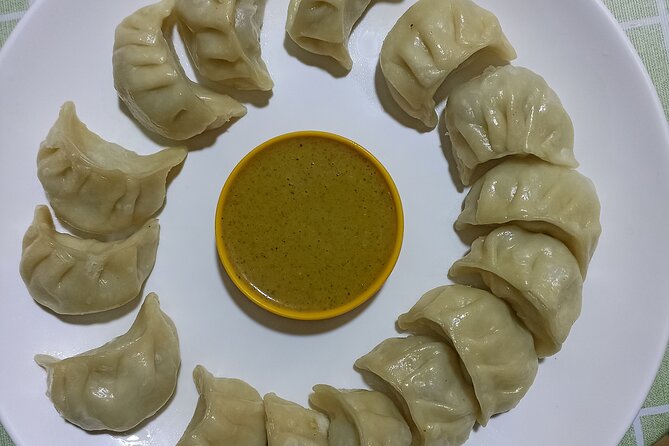
After preparing the meal, you eat dinner with the family. This is where the program moves beyond a standard cooking class. Shared food gives you a natural reason to talk, ask questions, and learn how a Nepali household welcomes visitors.
The strongest praise attached to the experience centers on the feeling of being included with the family. That tells you what to value here: not speed, luxury, or a long list of attractions, but the warmth of taking part in an ordinary evening.
I would bring curiosity and patience. A homestay works best when you are willing to listen, try the food, and accept that the evening may feel less scripted than a restaurant class. You may find the conversation and family connection more important than perfect measurements or professional kitchen equipment.
The provider is Kalpana’s Cooking Course Training. No individual instructor names are supplied, so you should not expect a named chef-led presentation based on the information available. The personal quality comes from the host family setting and the shared meal.
The class is private, with only your group participating. That can make the evening more relaxed and personal. It also means the experience may depend heavily on the particular family and the way your group interacts with them.
Spending the night in a clean homestay room
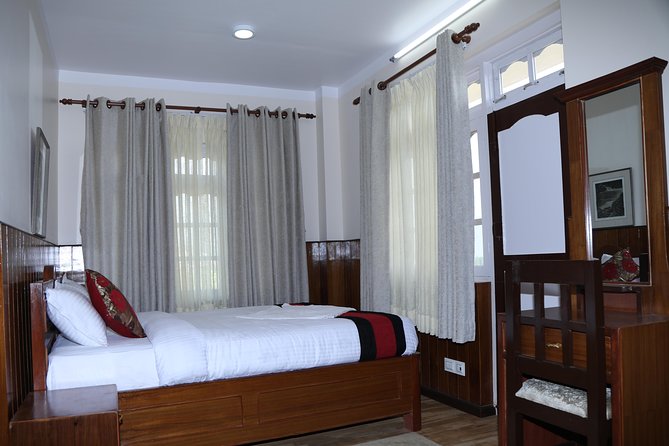
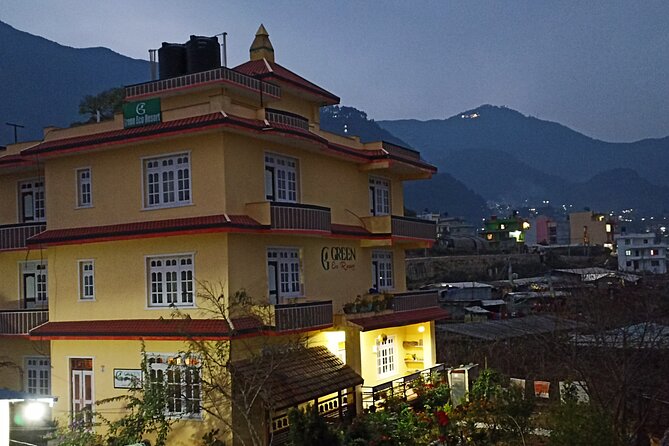
Accommodation is included for one night. The room is described as clean and comfortable, and the program is presented as a quiet retreat from central Kathmandu’s noise and smoke.
You should think of this as a practical homestay, not a hotel replacement. The information does not list private bathrooms, room size, Wi-Fi, heating, air conditioning, or hotel-style services. If any of those details matter to you, ask before you commit.
The overnight stay gives the cooking lesson more time to feel natural. You are not rushing away after dinner. You can rest, then have breakfast with tea or coffee before the experience ends.
Breakfast is included, although the exact menu is not provided. Dinner is also included, and transportation for the pickup portion is covered. Return transport to your next destination is specifically excluded, so arrange that separately.
This is a good fit for someone who values local contact over hotel facilities. If you need a predictable room standard, a private bathroom, or a full list of amenities, the limited accommodation information is a reason to investigate further.
Himalayan views from the homestay
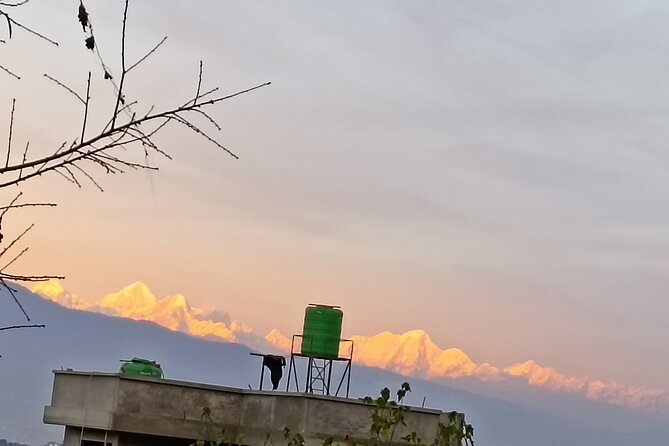
On a clear day, you may see the Himalayas from the location. This is one of the most appealing details, but it is also the least dependable part of the experience.
Weather, haze, and visibility control the view. The program does not promise a particular mountain or guarantee that Mount Everest itself will be visible. You should enjoy the sight if conditions cooperate, but do not book the experience solely for an Everest photograph.
The mountain view works best as a quiet extra after the city visits and cooking session. A clear horizon can turn a simple breakfast or evening pause into a special moment. On a cloudy or hazy day, the homestay and food remain the main attractions.
The itinerary’s reference to Mount Everest could confuse some people. You are not traveling to the Everest region. You are staying in Kathmandu and may see distant Himalayan peaks from the property.
What the private format means for you
Only your group participates, and private transportation is included. That gives you more control than a large shared excursion, although the exact route and timing are not fully described.
A private format usually suits couples, families, and small groups who want to stay together. It is also helpful if your group wants to spend more time asking about food or family customs rather than moving through a fixed class with many participants.
The tradeoff is that there may be less of a built-in social atmosphere beyond your own group and the host family. If you want to meet many other people, a group cooking workshop could offer more interaction.
Near public transportation, the experience is reasonably reachable, but pickup is the more convenient choice if you are carrying luggage or arriving from another part of Kathmandu. Since the meeting time is fixed at 4:15 pm, confirm where the pickup happens rather than assuming it will be at your hotel.
Most people can participate, according to the supplied details. Still, cooking involves standing and handling ingredients, and no specific accessibility information is given. Ask directly if you have mobility, dietary, or medical needs.
Drinks, transport, and other practical costs
Tea and coffee are included, along with dinner and breakfast. Alcoholic drinks, soft drinks, bottled drinks, and other orders are not included unless specifically stated otherwise.
This is easy to manage if you simply plan to drink tea, coffee, and water. Bring extra money if you want packaged drinks or alcohol. The stated price is low enough that these small additions could change the final cost only modestly, but it is better to know in advance.
Pickup transportation is included, as is private transportation during the program. The ride back to your next destination is not included. If you are ending the trip at another hotel, a bus station, airport, or a different city, budget for that transfer separately.
Confirmation arrives at booking, and mobile tickets are supported. Free cancellation is available if you cancel at least 24 hours before the local start time. Changes or cancellations inside that window are not accepted for a refund.
Who should book this Kathmandu experience?
I would recommend it to you if you want a short, affordable introduction to Nepali home cooking and family life. It suits people who prefer a personal setting, enjoy eating local food, and do not need a tightly scripted sightseeing tour.
It is also a smart option for a first visit to Kathmandu when you want one evening to feel slower and more personal. The combination of food, temple, historic square, and possible mountain views gives you several ways to connect with the city.
You may want a different experience if your priority is a formal chef’s lesson, extensive sightseeing, luxury accommodation, or a guaranteed Everest view. The schedule is compact, and several details, including stop durations and room facilities, are not specified.
The strongest reason to choose this program is the family meal. The strongest reason to hesitate is the lack of precise scheduling information. Ask about the route, the room, dietary needs, and the meaning of the Everest stop before paying.
Should you book it?
Book this experience if you value human contact, home cooking, and good value more than polished presentation. For $30, the included meal, overnight stay, breakfast, pickup, and private format make it an appealing choice, especially for a small group.
Skip it if you need a detailed sightseeing itinerary or hotel-level certainty. If you go, arrive at the 4:15 pm start ready to cook, eat, talk, and accept the Himalayas as a weather-dependent bonus. That is the right way to enjoy this simple, personal Kathmandu experience.
FAQ
How long does the Nepali cooking and homestay experience last?
The experience lasts approximately two days and includes one night of accommodation in a homestay.
What time does the experience start?
The listed start time is 4:15 pm.
What food will I learn to cook?
The meal includes Dal Bhat, rice, lentil soup, mixed vegetables, pickle, and chicken.
Is transportation included?
Pickup transportation and private transportation during the experience are included. Return transportation to your next destination is not included.
Is accommodation included?
Yes. One night of accommodation in a clean and comfortable homestay room is included.
Can I cancel for a full refund?
Yes, if you cancel at least 24 hours before the experience start time. Cancellations made less than 24 hours before the start are not refundable.
Just added around Kathmandu
- Private Shopping Tour in Kathmandu★ 5.0 · 3 reviews
- Nagarkot Sunrise With 7 UNESCO World Heritage Private Tour★ 5.0 · 3 reviews
- Mount Everest Scenic Flight 50 Minutes★ 5.0 · 3 reviews
- Kathmandu: Nightlife and Pub Crawl Tour★ 5.0 · 3 reviews
- Momo Cooking Class -The Art Of Making MoMo with Home Chef★ 5.0 · 3 reviews
- Kathmandu: Nagarkot, Bhaktapur, Doleswor & Sanga Statue Tour★ 5.0 · 3 reviews
- Makalu Base Camp Trek★ 5.0 · 3 reviews
- Kathmandu: Momo Making Class with a Local Chef★ 5.0 · 3 reviews
Momo Making Classes, compared.




Nepalese Momos or Dal Bhat Cooking Class (Cook with Delight)
Read our review →
The best Private Nepali Cooking Class in Kathmandu
Read our review →
Nepalese Kitchen in Pokhara: Momos or Dal Bhat Cooking Class
Read our review →
Browse the lists this tour appears in