
Reviewed · LANGTANG VALLEY TREKS
Private 8 – Day Langtang Trekking
Mountains begin surprisingly close to Kathmandu. This eight-day private trek takes you from the capital to Langtang Valley, a scenic route through Langtang National Park, Tamang villages, forest trails, and high mountain settlements. I like the combination of natural scenery and local culture, especially the final stay around Kyanjin Gompa, the valley’s oldest monastery.
I also like that the price of $584.22 per person covers the major trekking costs: transport, guide, porters, lodges, meals, park fees, permits, and emergency rescue assistance. The main drawback is the long road journey at the beginning and end, plus the fact that Kathmandu hotels, travel insurance, drinks, and tips are not included.
The private format makes this a practical choice if you want your walking pace and daily plans handled by one guide for your own group. The schedule is active but not rushed, with a full day around Kyanjin for the optional climb to Kyanjin Ri at 4,884 meters.
In This Review
- What makes this Langtang trek worth considering
- The real value of the $584.22 price
- Day 1: The long road to Syabrubesi
- Day 2: Forest trails inside Langtang National Park
- Day 3: Climbing toward Langtang Village
- Day 4: The short climb to Kyanjin Gompa
- Day 5: Kyanjin village and the climb to Kyanjin Ri
- Day 6: Retracing the trail to Lama Hotel
- Day 7: Returning to Syabrubesi
- Day 8: The long return to Kathmandu
- Guides, porters, and the private format
- What to pack and what to budget for
- Who should book this trek?
- Should you book the Langtang trek?
- FAQ
- How long is the private Langtang trek?
- What time does the trek start?
- Is transportation included?
- Are meals included?
- Is Kyanjin Ri part of the trek?
- Can I cancel for a full refund?
What makes this Langtang trek worth considering
- Kyanjin Ri reaches 4,884 meters, giving you a serious high-altitude objective without adding extra days to the trip.
- The trek begins with a road journey from Kathmandu, making Langtang one of Nepal’s more accessible mountain routes.
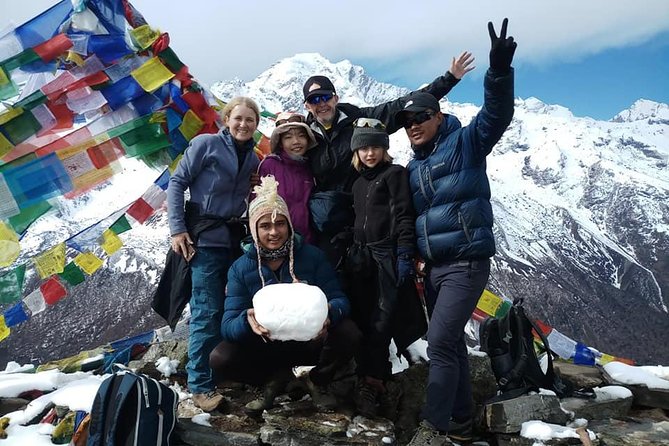
- Tamang and Tibetan cultural settings appear along the route, including stone-walled villages, prayer flags, and Kyanjin Gompa.
- Seven breakfasts, seven dinners, and eight lunches are included, which keeps daily spending easier to manage.
- Daily oxygen saturation checks are included, along with a guide, porters, duffle bag, trekking map, and completion certificate.
- The private group setup lets you trek with only your own party rather than joining a large mixed group.
The real value of the $584.22 price
At $584.22 per person, this trek offers a strong package for an eight-day private trip in Nepal. The cost includes the parts that can quickly become expensive when arranged separately: overland transport, a government-authorized guide, porters, lodge accommodation, Langtang National Park fees, TIMS and other required permits, meals, and government charges.
The inclusion of emergency rescue assistance is also important. It does not replace travel insurance, which you still need to arrange yourself, but it gives you a useful layer of support if a serious problem occurs on the trail.
Your meals are covered throughout the trek: dinner on seven nights, breakfast on seven mornings, and lunch on all eight days. Tea, coffee, boiled water, alcohol, laundry, phone bills, and bar charges are extra, so carry some Nepalese rupees for those small daily purchases.
Kathmandu accommodation is not part of the package. You will also need to pay tips for your guide and porters. Those costs are easy to overlook when comparing prices, but they should be part of your working budget.
More Langtang and Gosaikunda Treks:
- Langtang Valley Trek
★ 5.0 · 140 reviews - Langtang Valley Trek
★ 5.0 · 50 reviews - Kathmandu: 6-Day Limitless Langtang Trek
★ 5.0 · 21 reviews
Day 1: The long road to Syabrubesi
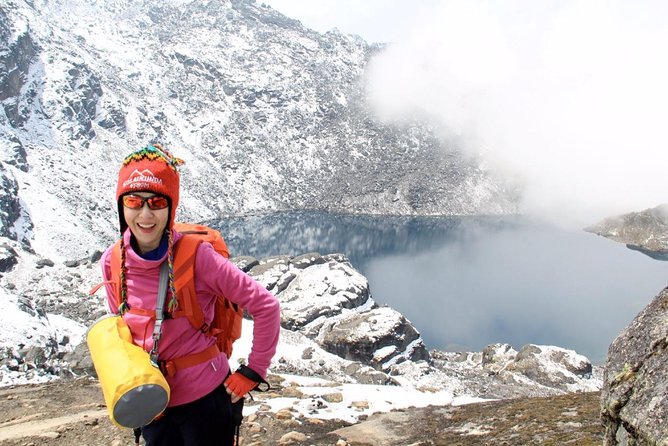
The trip starts early, with a 7:15 am departure from the company office in Raniban Marg, Nagarjun, Kathmandu. You drive toward Syabrubesi, known in the schedule as Syafru Bensi, through hills, green forest, terraced fields, and small settlements.
The road portion takes about six hours. This is not a sightseeing drive with frequent organized stops, so you should think of it as the necessary gateway to the trek. The benefit is clear: Langtang is close enough to Kathmandu to fit into an eight-day program, but the road can make this first day feel long.
Overland transportation is included, and the trip ends at accommodation in or around Syabrubesi. Since the following day begins on foot, use the evening to organize your daypack and keep only essential items within easy reach.
Day 2: Forest trails inside Langtang National Park
After breakfast, you begin the trek toward Lama Hotel. The walking time is listed at about five hours, mainly through dense subtropical forest.
The route passes Bamboo, a familiar stopping point on the trail. Forest walking gives you shade and a cooler setting, but it also means the views can be limited for stretches. This day is about finding your rhythm, not collecting nonstop mountain photographs.
You should expect a steady trekking day rather than a gentle stroll. The trail through the park introduces the area’s plant life and helps create a gradual transition from the road-accessible lower valley to the higher settlements ahead.
Langtang National Park admission and the necessary permits are included. That is useful because you do not need to handle those payments or arrangements yourself.
Day 3: Climbing toward Langtang Village
From Lama Hotel, the trail continues to Langtang Village, with around five hours of walking. The route begins somewhat steeply and becomes harder as you gain height.
This is one of the days when a private guide can make a real difference. The pace can be adjusted to your group, and the guide can help you take sensible breaks instead of pushing everyone along at the same speed. The company has used guides including Dhan, Amar, Tek, Ritika, Kumar, Jangbu, Saroj, and Laxman on different trips, with personal care and clear communication repeatedly praised.
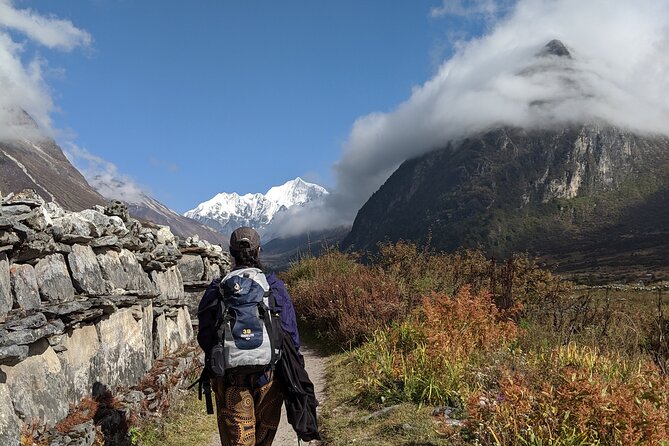
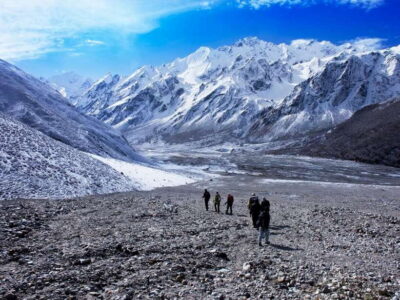
The forest gradually gives way to more open mountain surroundings as you approach Langtang Village. The change in scenery is part of the reward. You move from dense woodland into a cultural setting shaped by Tamang and Tibetan connections, with stone construction and prayer flags becoming more visible.
This is also a day to pay attention to your body. The itinerary includes everyday oxygen saturation checks, which provide a simple way to monitor how you are responding to increasing altitude. They are not a substitute for telling your guide if you feel unwell.
More Treks and Hikes:
- Everest Base Camp Trek – 14 Days
★ 5.0 · 1,499 reviews - Everest Base Camp Trekking
★ 5.0 · 485 reviews - Nagarkot Sunrise View and Day Hiking from Kathmandu
★ 5.0 · 471 reviews - Annapurna Circuit Trek with Tilicho Lake
★ 5.0 · 368 reviews
Day 4: The short climb to Kyanjin Gompa
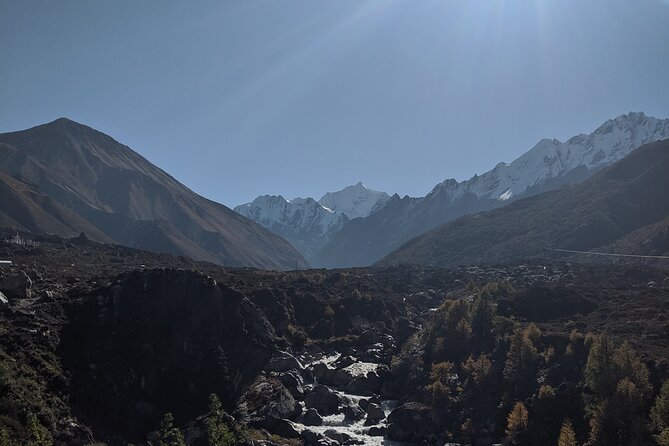
The fourth day covers about three hours from Langtang Village to Kyanjin Gompa. Compared with the previous day, this is a shorter walking schedule, but the altitude makes it meaningful.
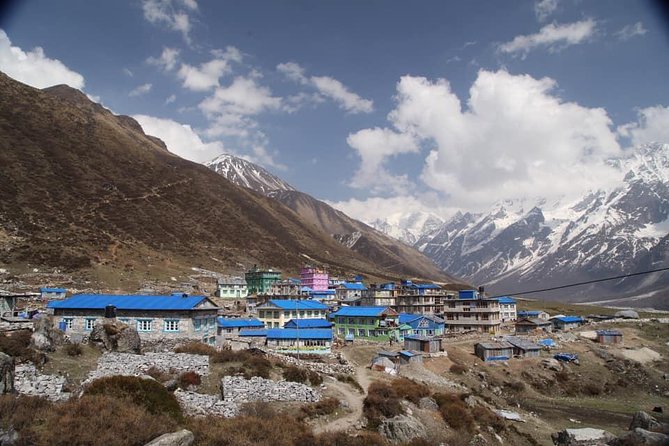
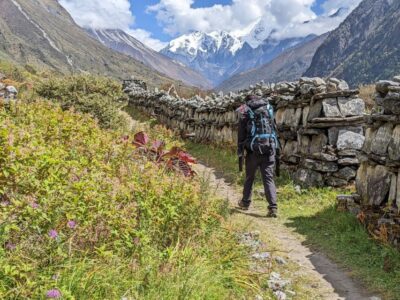
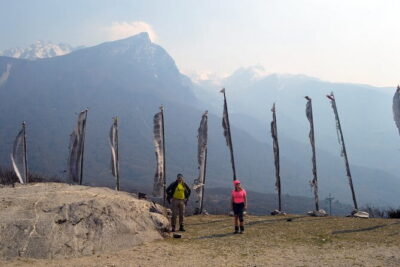
The route passes through a small settlement marked by stone walls and prayer flags. The scenery becomes more open as you approach Kyanjin, and the village serves as the main base for exploring the upper Langtang Valley.
Kyanjin Gompa is the central goal of this route and is described as the oldest monastery in the valley. The appeal is not just the building itself. You are reaching a high settlement where religious symbols, mountain surroundings, and local village life come together in a compact setting.
A shorter day gives you time to settle into your lodge, walk around the village, and prepare for the next day’s optional high point. The lodge accommodation is included, but you should not expect hotel-style comforts. This is a trekking route, and the value comes from location and simplicity rather than luxury.
Day 5: Kyanjin village and the climb to Kyanjin Ri
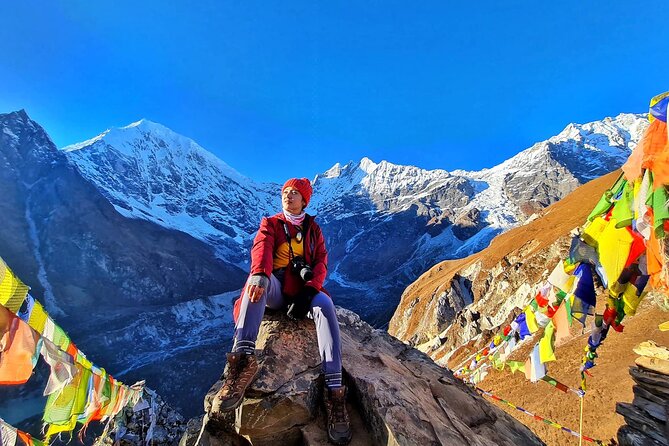
Day five is set aside for exploring Kyanjin and the surrounding valley. You can visit Kyanjin Gompa and attempt Kyanjin Ri, which reaches 4,884 meters.
The climb is optional, but it is the day’s main challenge. The schedule allows about four hours of walking, though the exact time will depend on your pace and how long you spend enjoying the views. A high-altitude climb like this can feel demanding even when the distance is not extreme.
This is where the private arrangement is especially useful. You can discuss with your guide whether Kyanjin Ri suits your condition that morning. Stronger trekkers can focus on the summit, while others can enjoy the village and nearby viewpoints without feeling they have failed the trip.
Several people who booked related Langtang trips with this company reached Kyanjin Ri or Tserku Ri with guides such as Amar, Laxman, and Ritika. That does not guarantee your own experience, but it suggests the guides are accustomed to supporting guests on demanding high-altitude walks.
The views from this area are a major reason to choose Langtang. You are surrounded by high Himalayan scenery, glaciers, and the upper valley rather than simply walking through one village after another. Keep your schedule flexible, since weather can affect what you see and whether the upper hike is sensible.
Day 6: Retracing the trail to Lama Hotel
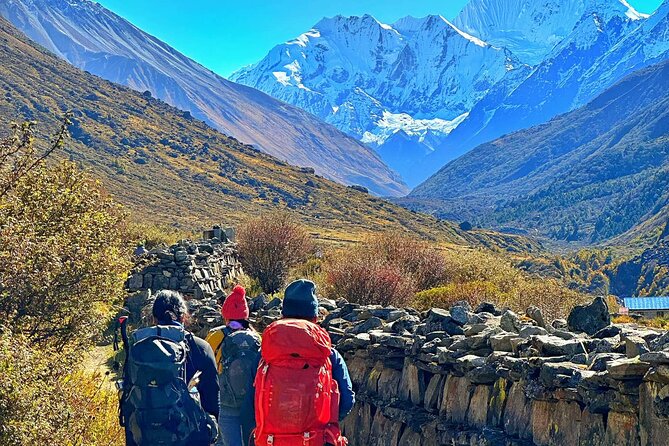
After breakfast, you walk back toward Lama Hotel, with about six hours on the trail. You retrace much of the route from the ascent, this time descending through rhododendron forest.
The return route is generally easier than the climb toward Kyanjin, but downhill walking can still tire your knees and feet. Trekking poles may be useful, though the provided equipment list does not specifically state that poles are included, so ask the operator before departure if you need them.
Retracing the trail has one advantage: you recognize places you passed quickly on the way up. You may also notice how much the scenery changes when you are moving downhill and have a different angle through the forest.
Lama Hotel provides a practical overnight break before the final descent to Syabrubesi. Since dinner and accommodation are included, you can finish the day without worrying about finding a separate place to eat.
Day 7: Returning to Syabrubesi
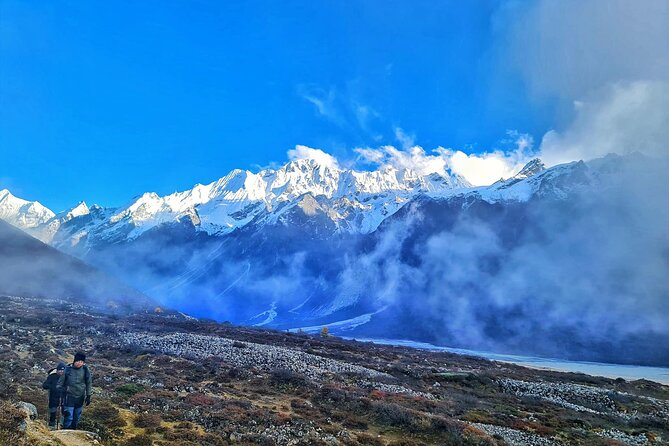
The last trekking day takes about five hours, descending from the forest route to Syabrubesi. The trail continues through dense woodland, and the walk marks your return from the high valley to the roadhead.
This is a satisfying but sometimes bittersweet day. The demanding part of the trek is behind you, yet the quiet mountain routine is ending. You may find the final descent easier than the ascent, although tired legs can make even familiar ground feel slow.
Syabrubesi is your final trekking-night stop. Your guide and porters remain part of the service, and their help is one of the strongest reasons to choose this package over trying to arrange each element independently.
The company’s owner, Tej, is described as being personally involved before and after trips, with communication praised for being easy and reliable. That kind of contact can matter if you have questions about equipment, timing, or changes before setting off.
Day 8: The long return to Kathmandu
After breakfast, you walk to the bus stop and begin the drive back to Kathmandu. The journey takes about six hours and follows the Pashang Lhamu Highway through terraced fields and small settlements before continuing along the Trishuli route.
As on day one, the road is part of the experience and part of the price of reaching Langtang without adding more travel days. You should allow extra patience for the return. The schedule says approximately six hours, but road conditions can affect the actual arrival time.
The activity ends back at the Nepal Alternative Treks and Expeditions meeting point in Kathmandu. Lunch is included on this final day, which is helpful during the long transfer.
Guides, porters, and the private format
You receive one government-authorized trekking guide and porters, with their expenses covered. The porters carry the main load, while you keep a smaller daypack for items you need during the walk.
The strongest praise connected with this company centers on personal care, communication, and practical support. Specific guides named in past trips include Dhan, Tek, Amar, Ritika, Kumar, Jangbu, Saroj, and Laxman. One guide, Tek, was praised for kindness, good English, and a caring approach. Kumar was singled out for close attention, while Laxman helped a guest reach Tserku Ri.
Those comments should not make you expect a particular guide on your departure. Staff assignments can change. Still, they give you a useful picture of the service style: small-group attention, help on steep sections, and regular contact with the company owner.
The private format is best for families, couples, and friends who want to walk together. It also suits people who prefer not to match their pace to a large group. The tradeoff is that a private trek can feel quieter and less social than a shared departure.
What to pack and what to budget for
The package includes a trekking map, duffle bag, oxygen saturation checks, and a trekking completion certificate. You should still confirm what personal equipment is supplied before leaving Kathmandu.
Your own spending budget should cover:
- Kathmandu hotel accommodation and meals
- Travel insurance
- Tea, coffee, boiled water, and other drinks
- Alcohol and bar charges
- Laundry and phone bills
- Tips for the guide and porters
Travel insurance deserves special attention because emergency rescue assistance from the operator is not the same as a full insurance policy. The supplied information does not specify coverage limits, so check your policy carefully before trekking.
The route requires good weather. If the trip is canceled because of poor weather or because the minimum number of participants is not met, you can choose another date or experience, or receive a full refund. You can also cancel for a full refund if you do so at least 24 hours before the start time. Changes or cancellations made later are not accepted for a refund.
Who should book this trek?
I would recommend this trip if you want a relatively short Himalayan trek with a real high-altitude day, a private guide, and most core expenses bundled into one price.
It suits you best if:
- You have eight days available, including the road journeys.
- You want mountain scenery without committing to a much longer Nepal trek.
- You value a private pace and direct help from a guide.
- You are interested in Tamang and Tibetan cultural settings.
- You are comfortable with several hours of walking on consecutive days.
- You want Kyanjin Ri as an optional challenge.
I would think twice if you dislike long bus rides, prefer private hotels, or want every drink and Kathmandu expense included. The itinerary also has limited flexibility on paper, so discuss your fitness, preferred pace, and interest in Kyanjin Ri before departure.
Should you book the Langtang trek?
Book it if you want a well-priced private route that combines forest, villages, monastery visits, and high mountain views in one week. The inclusion of transport, meals, lodges, permits, porters, and rescue assistance makes $584.22 a persuasive value.
I would choose this trek for a first Himalayan experience when I wanted strong logistical support without joining a large group. Before paying, confirm your Kathmandu hotel plans, insurance, likely guide assignment, equipment needs, and the amount you should budget for tips and drinks.
FAQ
How long is the private Langtang trek?
The experience lasts approximately eight days, including the road journeys between Kathmandu and Syabrubesi.
What time does the trek start?
The stated start time is 7:15 am from Nepal Alternative Treks and Expeditions at Raniban Marg 136/205, Nagarjun, Kathmandu.
Is transportation included?
Yes. Overland transportation listed in the itinerary is included, including the drive from Kathmandu to Syabrubesi and the return journey.
Are meals included?
Yes. The package includes seven dinners, seven breakfasts, and eight lunches. Tea, coffee, boiled water, alcoholic drinks, and bar charges are not included.
Is Kyanjin Ri part of the trek?
The itinerary includes a full day around Kyanjin with an optional hike to Kyanjin Ri at 4,884 meters. The schedule also includes exploration of Kyanjin Gompa and the surrounding area.
Can I cancel for a full refund?
Yes, if you cancel at least 24 hours before the experience start time. Cancellations made less than 24 hours before departure are not refunded.
Just added around Kathmandu
- Private Shopping Tour in Kathmandu★ 5.0 · 3 reviews
- Nagarkot Sunrise With 7 UNESCO World Heritage Private Tour★ 5.0 · 3 reviews
- Mount Everest Scenic Flight 50 Minutes★ 5.0 · 3 reviews
- Kathmandu: Nightlife and Pub Crawl Tour★ 5.0 · 3 reviews
- Kathmandu: Nagarkot, Bhaktapur, Doleswor & Sanga Statue Tour★ 5.0 · 3 reviews
- Momo Cooking Class -The Art Of Making MoMo with Home Chef★ 5.0 · 3 reviews
- Kathmandu: Momo Making Class with a Local Chef★ 5.0 · 3 reviews
- Everest Experience Trek 6 Day Hiking Adventure★ 5.0 · 3 reviews
Langtang Valley Treks, compared.
Trekking in Annapurna/Langtang/Everest/Upper Mustang regions
Read our review →
Browse the lists this tour appears in