
Reviewed · LANGTANG VALLEY TREKS
Langtang Valley Trek
Big mountains, without a month-long commitment. The Langtang Valley Trek gives you Himalayan scenery, Tamang culture, yak pastures, and high mountain air in about eight days, with the trailhead reached by road from Kathmandu. I like the short approach from the capital and the fact that the route stays at a lower altitude than some of Nepal’s famous treks.
I also like the practical support: a local English-speaking guide, porters, seven nights in teahouses, and the option to borrow a down jacket and sleeping bag. The main consideration is the daily effort. You should expect six to seven hours of hiking most days, basic lodge rooms, and limited personal comfort once you leave Kathmandu.
At $700 per person, this is a strong package for a supported Himalayan trek. It covers transport by local bus, park and TIMS fees, meals during the trek, accommodation, guide and porter costs, and several useful pieces of cold-weather equipment. Still, you must budget for Kathmandu accommodation, insurance, drinks, personal gear, tips, and emergency evacuation.
In This Review
- Key Points Before You Book
- Why Langtang Works for a Short Nepal Trip
- The Road From Kathmandu to Syabrubesi
- What Seven Nights in a Teahouse Really Means
- Six to Seven Hours on the Trail
- Mountains, Meadows, and Tamang Culture
- A Look at the Eight-Day Shape
- Guides, Porters, and Care on the Trail
- Is $700 Good Value?
- Who Will Like This Trek Most?
- Booking Details Worth Checking
- Should You Book the Langtang Valley Trek?
- FAQ
- How long is the Langtang Valley Trek?
- How many hours do you hike each day?
- What type of accommodation is included?
- Are meals included?
- Is transport from Kathmandu included?
- Is a guide provided?
- Are porters included?
- Can I borrow trekking equipment?
- Is emergency evacuation included?
Key Points Before You Book
- A short road transfer from Kathmandu: The journey begins with local bus transport between Kathmandu and Syabrubesi, keeping the approach relatively simple and affordable.
- Seven nights in basic teahouses: You sleep in mountain lodges rather than tents, but rooms and facilities are simple.
- Six to seven hours of walking daily: This is not a casual sightseeing trip. A moderate fitness level is required.
- Tamang culture and Himalayan scenery: The route brings together local village life, high peaks, yak grazing areas, and Tibetan-influenced traditions.
- Small groups of up to 15 people: The group size allows more personal attention than a large commercial trek.
- Useful gear can be borrowed: A sleeping bag, down jacket, and duffel bag are available on request and must be returned after the trek.
Why Langtang Works for a Short Nepal Trip
Langtang is a sensible choice if you want a real Himalayan trek but cannot spare two or three weeks. The trailhead is a relatively short drive from Kathmandu, and the route does not climb as high as some other major trekking circuits.
That lower altitude does not mean the trek is effortless. You still spend much of the day walking uphill and downhill, and the mountain lodges are basic. But the route offers a good balance: substantial mountain scenery and cultural contact without the longer approach and higher altitude demands found on some better-known routes.
You will spend time among wide valleys, towering Himalayan peaks, forests, mountain settlements, and open grazing areas. The scenery changes as you move farther into the valley, which helps the walk feel like a journey rather than a series of disconnected viewpoints.
I particularly like the combination of natural and cultural interest. You are not simply walking toward a famous mountain photo. You also have the chance to learn about Tamang culture and see how people live in a high mountain setting.
More Langtang and Gosaikunda Treks:
- Langtang Valley Trek
★ 5.0 · 140 reviews - Private 8 – Day Langtang Trekking
★ 5.0 · 29 reviews - Kathmandu: 6-Day Limitless Langtang Trek
★ 5.0 · 21 reviews
The Road From Kathmandu to Syabrubesi
The trek begins with transport from Kathmandu to Syabrubesi by local bus. This is included in the price, along with the return journey.
A local bus is practical rather than luxurious. You should expect a slower, more basic form of transport than a private vehicle. The advantage is cost and local character. The drawback is that you have less control over departure timing, comfort, and roadside stops.
Syabrubesi serves as the gateway to the walking route. From here, the experience changes quickly. You leave behind Kathmandu’s traffic and urban noise and begin moving through a mountain valley on foot.
Because the road transfer is part of the package, you do not need to arrange the main approach independently. That matters for a first Nepal trek. The logistics are simpler, and your guide can help keep the group organized at the start and end of the route.
What Seven Nights in a Teahouse Really Means
Teahouse trekking is one of Nepal’s great practical pleasures, but you should set your expectations correctly. These are basic mountain lodges, not hotels. You get a roof, a bed, shared facilities, and a place to eat, but comfort can be limited.
Seven nights of accommodation are included. Meals during the trekking portion are also included, with breakfast, lunch, and dinner provided according to the route plan.
The arrangement keeps the trek lighter than a camping expedition. You do not need to carry a tent, cooking equipment, or a full supply of food. You can focus your energy on walking, while the guide and porter team handle much of the daily support.
Bring clothes suitable for hiking and your own personal trekking equipment. A sleeping bag, down jacket, and duffel bag can be borrowed if requested, which is useful if you do not want to buy specialized gear for one trip.
The borrowed equipment must be returned after the trek. Ask about availability before departure rather than assuming every item will be waiting for you.
Six to Seven Hours on the Trail
The stated walking time is around six to seven hours per day. That figure is important because it tells you more than the word easy ever could.
The route may be relatively moderate compared with higher Himalayan treks, but you still need steady endurance. You will walk for most of the daylight period, often over uneven ground and changing gradients. A moderate level of fitness is required, and children must be accompanied by an adult.
You should train with long walks before arrival. Add hills or stairs if possible. The goal is not speed. It is to walk for several hours, recover overnight, and do it again the next day.
The guide and porter support make the experience more manageable, but they do not remove the physical work. Porters are assigned at a ratio of one porter for every two trekkers. Pack carefully and keep your personal day bag light.
A small group of no more than 15 people is another plus. It is large enough to create company on the trail but small enough for the guide to give more individual attention. The minimum booking is two people, so this is not designed as a solo departure.
More Treks and Hikes:
- Everest Base Camp Trek – 14 Days
★ 5.0 · 1,499 reviews - Everest Base Camp Trekking
★ 5.0 · 485 reviews - Nagarkot Sunrise View and Day Hiking from Kathmandu
★ 5.0 · 471 reviews - Annapurna Circuit Trek with Tilicho Lake
★ 5.0 · 368 reviews
Mountains, Meadows, and Tamang Culture
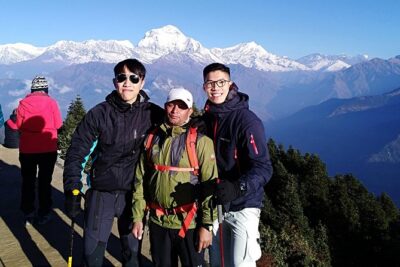
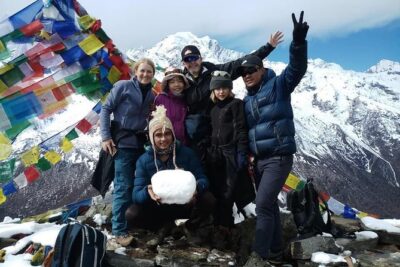
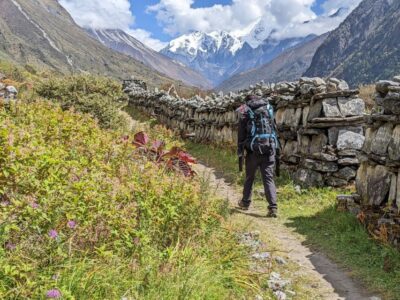
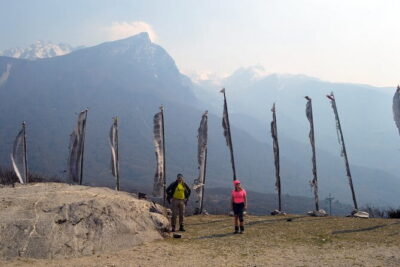
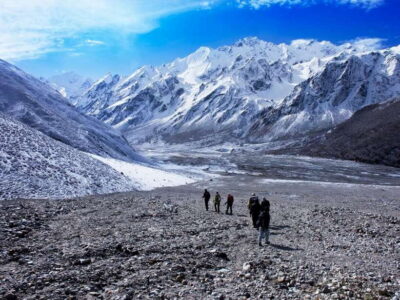
The scenery is the main reason to choose Langtang. You can expect views of the Langtang range, broad Himalayan valleys, and snow-capped peaks. The route also passes through meadows where yaks graze, adding a distinctly high-country feel to the walk.
The cultural side is just as valuable. The experience introduces you to Tamang culture and Tibetan-influenced mountain traditions. Your guide can help explain local lifestyles, customs, and the ways communities function in a demanding environment.
This cultural contact gives the trek more meaning than a simple mountain march. You are walking through inhabited places, not an empty wilderness. At the same time, the package information does not promise specific cultural performances, museum visits, or formal village tours, so you should expect the culture to come through the route, lodges, guide explanations, and daily encounters.
The scenery also has a quiet quality. Langtang is described as peaceful, with wide valleys surrounded by high mountains. That makes it appealing if you want a less crowded-feeling route and a more measured pace than a major expedition-style trek.
A Look at the Eight-Day Shape
The published schedule identifies Incredible Treks as the operating stop and gives the overall duration as approximately eight days. It does not provide a full day-by-day breakdown in the available details, so you should request the exact overnight sequence before booking.
The broad structure is clear:
- You begin with the road transfer from Kathmandu to Syabrubesi.
- You then spend the main part of the trip walking through the Langtang Valley.
- Each night is spent in a basic teahouse.
- The return is made by road back to Kathmandu.
This broad outline helps you understand the rhythm. Most days are walking days, not sightseeing days with short transfers. The mountain lodges become your overnight base, and meals are part of the daily trekking routine.
Ask the operator to confirm the precise villages, walking distances, elevation changes, and planned final viewpoint. Those details matter when you are comparing this route with other Nepal treks or deciding if your fitness is suitable.
Guides, Porters, and Care on the Trail
The package includes a licensed English-speaking trekking guide and porters, plus their related expenses. This is one of the most important inclusions in a Himalayan trek.
A good guide does more than point toward the next village. You need someone who can manage the walking pace, explain local life, help with basic health concerns, and keep the group together. Several named guides connected with the company have received especially warm praise for care and support, including Ram Krisna and Lochan Gurung.
You should confirm your assigned guide before departure. The published package does not guarantee a particular person, and guide availability can change.
The strongest praise around this operator centers on personal care and a feeling of safety. That matters in the mountains, where a cheerful attitude and close attention can make a hard day feel far more manageable. One account also highlights a guide’s attention to highland health, but you should still carry personal medication and travel insurance.
Porter support is valuable, though it also raises an ethical point. Pack responsibly, follow the operator’s weight guidance, and remember that someone else is carrying part of your load.
Is $700 Good Value?
At $700 per person, the trek offers a solid bundle of core costs.
Included are:
- Seven nights of teahouse accommodation
- Transport from Kathmandu to Syabrubesi and back by local bus
- National Park and TIMS fees
- Breakfast, lunch, and dinner during the trek
- A licensed English-speaking guide
- Porters at a ratio of one porter for every two trekkers
- Taxes, fees, and handling charges
- Sleeping bag, down jacket, and duffel bag on request
That is meaningful value. If you booked each major service separately, the transport, permits, lodging, meals, guiding, and porter support would all need separate attention.
The price does not cover accommodation in Kathmandu, lunch and dinner in the capital, personal insurance, emergency evacuation, personal trekking equipment, bottled water, drinks, laundry, telephone costs, alcohol, or tips for field staff.
The largest financial warning is emergency evacuation. Helicopter rescue and related emergency costs are not included. Personal medical, accident, and rescue insurance is essential for this kind of trip.
You should also carry enough money for drinks, snacks, and personal purchases. Bottled mineral water and other personal expenses are excluded.
Who Will Like This Trek Most?
This trek suits an active person who wants a guided Himalayan route without committing to a very high-altitude expedition. It is especially useful if you have only eight days available and want to spend that time walking rather than sitting in a city.
It also suits first-time Nepal trekkers who prefer a package with the main logistics arranged. The included bus transfers, permits, food, teahouses, guide, and porters reduce the number of details you must manage yourself.
You should think twice if you dislike basic accommodation or long walking days. Six to seven hours on foot, repeated over several days, is a real physical commitment.
It may also be a poor fit if you want private transport, upscale lodges, a completely private group, or a detailed sightseeing schedule in Kathmandu. This is a practical trekking package, not a luxury holiday.
Booking Details Worth Checking
Confirmation is provided at booking, and the experience is offered as a mobile ticket. Pickup is available, but confirm the exact pickup point and timing before the trip.
The maximum group size is 15 people, with at least two people required per booking. Public transportation is nearby, which may be useful for reaching the starting point or moving around Kathmandu.
The cancellation policy is straightforward. You can receive a full refund if you cancel at least 24 hours before the experience begins. Cancellations or changes made within 24 hours are not accepted for a refund.
Before paying, ask for the final day-by-day plan. Confirm the guide’s name, porter arrangements, equipment availability, expected walking times, and the Kathmandu hotel plan, since city accommodation is not included.
Should You Book the Langtang Valley Trek?
Book it if you want good Himalayan scenery, cultural contact, and strong practical support in a compact eight-day trip. The price covers the expensive and complicated parts of a guided trek, and the smaller group format should help you receive more personal attention.
Do not book it expecting easy walking or comfortable hotels. The route still demands six to seven hours of hiking each day, and teahouse facilities are basic. You also need proper insurance and a separate emergency budget.
For an active visitor with limited time, Langtang is a sensible choice. The mix of accessible trail logistics, Tamang culture, snow-capped peaks, yak meadows, and lower altitude makes this one of the more approachable ways to experience Nepal’s high country.
FAQ
How long is the Langtang Valley Trek?
The trek lasts approximately eight days, including transport between Kathmandu and Syabrubesi.
How many hours do you hike each day?
You should expect to hike around six to seven hours per day.
What type of accommodation is included?
Seven nights of basic teahouse accommodation are included during the trekking portion.
Are meals included?
Breakfast, lunch, and dinner are included during the trek. Lunch and dinner in Kathmandu are not included.
Is transport from Kathmandu included?
Yes. Local bus transport between Kathmandu and Syabrubesi, in both directions, is included.
Is a guide provided?
Yes. The package includes a licensed English-speaking trekking guide.
Are porters included?
Yes. Porter services and related expenses are included, with one porter assigned for every two trekkers.
Can I borrow trekking equipment?
A sleeping bag, down jacket, and duffel bag can be provided upon request. These items must be returned after the trek.
Is emergency evacuation included?
No. Emergency evacuation expenses, including helicopter rescue, are not included. Personal medical, accident, and rescue insurance are also not included.
Just added around Kathmandu
- Private Shopping Tour in Kathmandu★ 5.0 · 3 reviews
- Nagarkot Sunrise With 7 UNESCO World Heritage Private Tour★ 5.0 · 3 reviews
- Mount Everest Scenic Flight 50 Minutes★ 5.0 · 3 reviews
- Kathmandu: Nightlife and Pub Crawl Tour★ 5.0 · 3 reviews
- Momo Cooking Class -The Art Of Making MoMo with Home Chef★ 5.0 · 3 reviews
- Kathmandu: Nagarkot, Bhaktapur, Doleswor & Sanga Statue Tour★ 5.0 · 3 reviews
- Makalu Base Camp Trek★ 5.0 · 3 reviews
- Kathmandu: Momo Making Class with a Local Chef★ 5.0 · 3 reviews
Langtang Valley Treks, compared.
Trekking in Annapurna/Langtang/Everest/Upper Mustang regions
Read our review →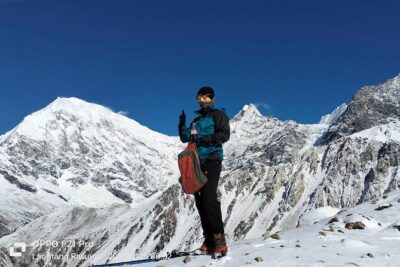
Browse the lists this tour appears in