
Reviewed · LANGTANG VALLEY TREKS
Kathmandu to Langtang Valley 7-Day Trek
The mountains arrive after a long road. This trek pairs wild rhododendron forests and waterfalls with high Himalayan views, and I especially like that the route reaches Kyanjin Ri at 4,773 meters without requiring previous trekking experience. I also like the personal touch reported from guides such as Raj Tamang and Pratip, who were praised for careful pacing, encouragement, and clear explanations of Nepalese culture.
The main catch is the travel time. Your first and last days involve long bus or shared-jeep rides, and several walking days run from five to seven hours. You need moderate physical fitness, and the stated price of $300 does not include meals, so your final cost will be higher.
In This Review
- Key Points Before You Book
- Why Langtang Works Well for a Short Nepal Trek
- Day One: The Long Road From Kathmandu to Syapru Besi
- Day Two: Waterfalls and Forest Trails to Lama Hotel
- Day Three: Rhododendron Forests on the Way to Langtang Village
- Day Four: Reaching Kyanjin Gompa at 3,800 Meters
- Day Five: The Kyanjin Ri Climb and the Long Descent
- Day Six: Returning Through the National Park to Syapru Besi
- Day Seven: Shared Transport Back to Kathmandu
- What the $300 Price Really Covers
- Guide Support and the Human Side of the Trek
- Who Should Book This Route?
- Should You Book the Langtang Valley Trek?
- FAQ
- How long does the Langtang Valley Trek take?
- What time does the trek start?
- Is hotel pickup and return included?
- Does the price include meals?
- What accommodation is included?
- Is Kyanjin Ri included?
- Do I need previous trekking experience?
Key Points Before You Book
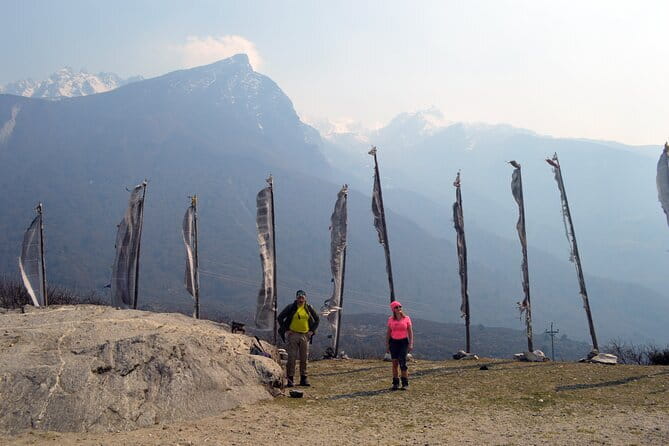
- Kyanjin Ri reaches 4,773 meters: The high point gives views toward Langtang Ri, Dorje Lakpa, and Langtang Lirung.
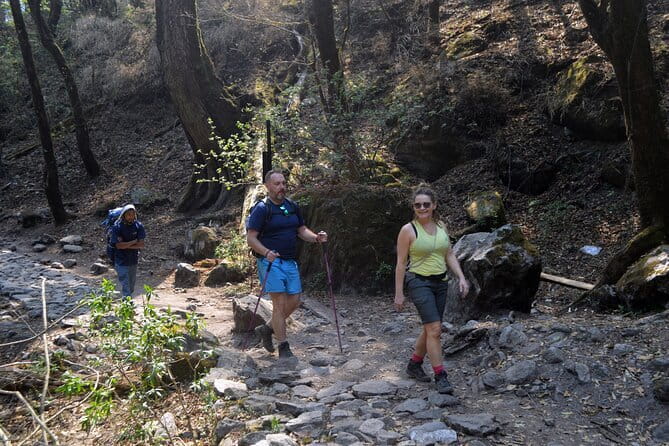
- The route passes through Langtang National Park: Expect forest, waterfalls, mountain villages, wildflowers, and possible sightings of Himalayan wildlife.
- Seven days includes transport from Kathmandu: The trek itself is balanced with long road transfers at the beginning and end.
- Accommodation is in mountain guest houses: The package includes lodging, a national park permit, and a TIMS card.
- Guides are a major strength: Raj Tamang, Pratip, and Raju have all been singled out for care, humor, organization, and steady support.
- The $300 price covers the basics: Transport, lodging, permits, and hotel transfers are included, but meals and gratuities are extra.
Why Langtang Works Well for a Short Nepal Trek
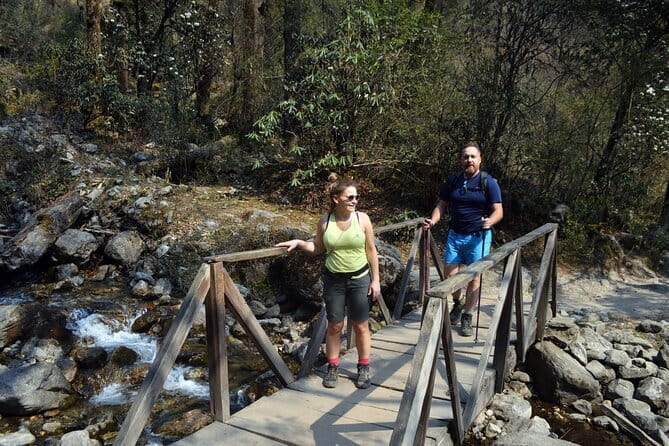
Langtang Valley sits in Nepal’s Rasuwa district, roughly 80 kilometers north of Kathmandu. It lies inside Langtang National Park and reaches toward the border with China’s Tibet Autonomous Region.
That location gives you a strong mountain experience in only one week. You do not spend days crossing a large approach route before the views begin. Instead, the road carries you north from Kathmandu, then the walking starts at Syapru Besi.
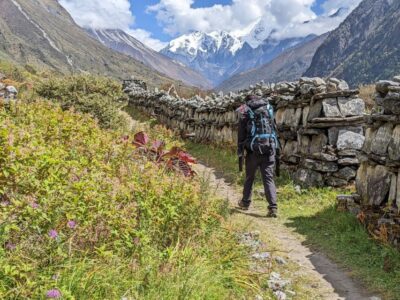
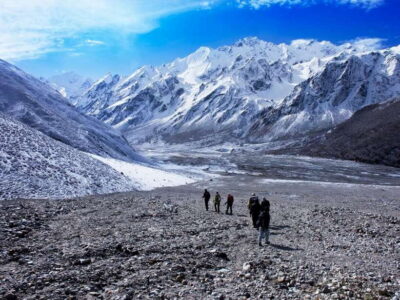
I like the variety here. Lower sections pass through dense forest with oak, maple, pine, and rhododendron. In the right season, wildflowers add color beside the trail. Higher up, the trees thin out and the valley opens toward snow-covered peaks and glaciers.
The park is also home to Himalayan black bears, Himalayan tahr, Assam macaques, yaks, red pandas, snow leopards, and more than 250 bird species. That does not mean you should expect to spot a red panda or snow leopard. It does mean the route moves through a protected area with far more than scenery to watch for.
This is not a luxury mountain holiday. The accommodation is in mountain guest houses, meals are not included, and the road journeys can be tiring. But for $300 per person, the package covers several costly essentials, including shared transport, lodging, permits, and hotel pickup and return.
More Langtang and Gosaikunda Treks:
- Langtang Valley Trek
★ 5.0 · 140 reviews - Langtang Valley Trek
★ 5.0 · 50 reviews - Private 8 – Day Langtang Trekking
★ 5.0 · 29 reviews
Day One: The Long Road From Kathmandu to Syapru Besi
The trip begins with hotel or apartment pickup at around 6:45 in the morning. From there, you are taken to the local bus area in Balaju before starting the road journey to Syapru Besi.
The drive takes about six to seven hours, though road conditions can affect the actual timing. The itinerary gives the day a total duration of about 16 hours, which is a useful warning: this is not a gentle sightseeing morning followed by a short transfer.
Syapru Besi is the practical gateway for the Langtang Valley route. Your first night here positions you for the walking section that begins the next day.
The transport is shared rather than private. That helps keep the price low, but it also means less control over departure timing, seating, and roadside stops. If you value comfort and privacy above price, this is the part of the package you may find least appealing.
Still, the included pickup is useful. You do not have to find the bus area alone in unfamiliar Kathmandu, and the return transfer to your hotel is included at the other end.
Day Two: Waterfalls and Forest Trails to Lama Hotel
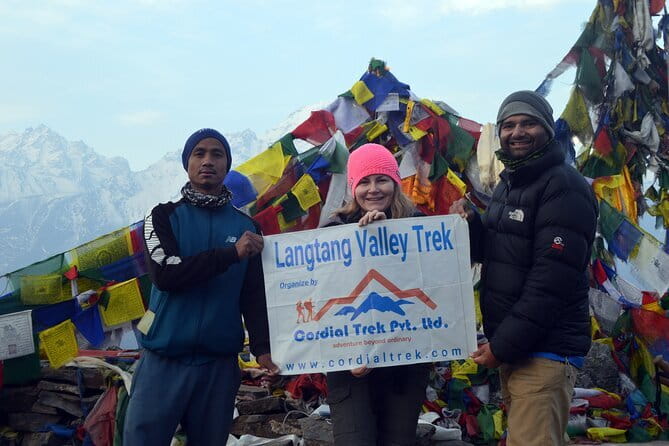
The first walking day takes you from Syapru Besi to Lama Hotel, with about five to six hours on foot. The route stays inside Langtang National Park and passes waterfalls, traditional villages, and forested sections.
This is where the trip begins to feel like a proper Himalayan trek rather than a transport package. You move at walking speed, hear the river and forest around you, and pass through communities connected to the valley route.
The five to six hour estimate is manageable for anyone used to regular walking, but it should not be treated as an easy stroll. The trail rises and falls, and the total day is listed at roughly 16 hours, including the full schedule around the trek.
Your overnight stay is in a mountain guest house at Lama Hotel. Since meals are excluded, you should budget separately for breakfast, lunch, dinner, drinks, and snacks. The supplied information does not specify the exact guest houses or room arrangements, so ask the provider what is planned for your departure.
Day Three: Rhododendron Forests on the Way to Langtang Village
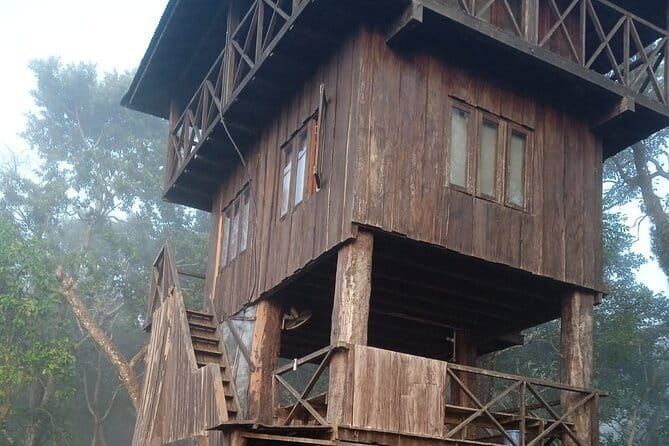
Day three is one of the longer walking days, with six to seven hours from Lama Hotel to Langtang village. The route climbs through dense rhododendron and pine forest toward the higher valley.
The trees are a major part of the appeal. Rhododendrons are Nepal’s national flower, and the trail can feel particularly colorful when they bloom. You also get a gradual change in scenery as the forest gives way to broader mountain views.
Langtang village provides an important cultural and geographic pause in the journey. You are no longer simply walking through woodland. The valley begins to frame the mountains, and the trek’s destination at Kyanjin Gompa feels closer.
The drawback is simple: this is a demanding day after the previous day’s walking. You should not book the route because the distance sounds short on a map. The walking hours, elevation gain, and repeated days on foot matter more than the straight-line distance.
This is also a good day to pay attention to your guide’s support. Pratip has been praised for checking on people throughout the route and helping groups stay comfortable. Raj Tamang has also been singled out for keeping the journey organized and motivating people when the trail became difficult.
More Treks and Hikes:
- Everest Base Camp Trek – 14 Days
★ 5.0 · 1,499 reviews - Everest Base Camp Trekking
★ 5.0 · 485 reviews - Nagarkot Sunrise View and Day Hiking from Kathmandu
★ 5.0 · 471 reviews - Annapurna Circuit Trek with Tilicho Lake
★ 5.0 · 368 reviews
Day Four: Reaching Kyanjin Gompa at 3,800 Meters
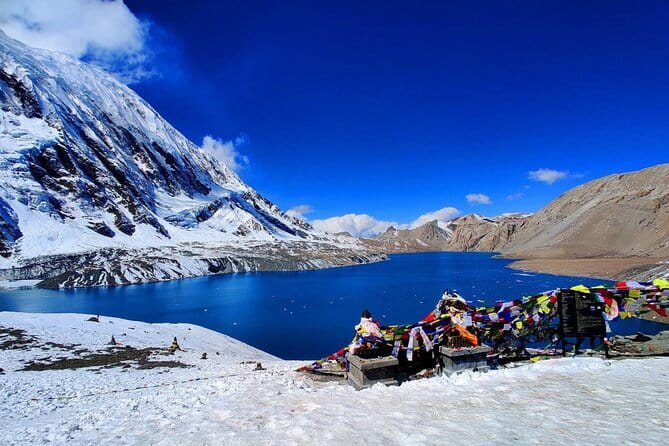
The walk from Langtang village to Kyanjin Gompa takes about three to four hours. Compared with day three, it is shorter, giving you time to enjoy the higher valley rather than rushing through it.
Kyanjin Gompa is described as one of the oldest monasteries in the region. It is also the base for the trek’s highest outing, Kyanjin Ri. The surrounding mountains provide the main visual reward, with broad views toward the high peaks and glaciers.
At roughly 3,800 meters, Kyanjin Gompa is high enough for altitude to become a serious consideration. The itinerary does not include a separate acclimatization day, so you should walk steadily, drink enough water, and tell your guide promptly if you feel unwell.
The shorter walking day helps, but it does not remove the challenge. A person with moderate fitness may manage the schedule, yet previous experience with long walks at altitude would make the trip more comfortable.
This is also the point where the route feels most remote. Mobile access, weather, and guest house conditions can vary, and the package does not promise hotel-style facilities. That is part of the appeal for some people, but it is worth knowing before you commit.
Day Five: The Kyanjin Ri Climb and the Long Descent
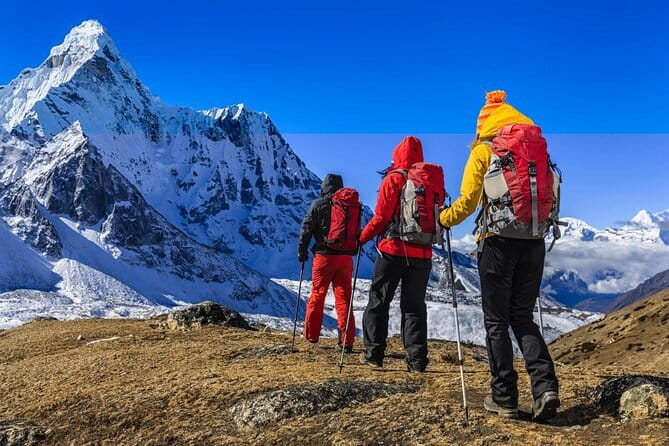
Day five is the trip’s mountain high point. From Kyanjin Gompa, you make a three to four hour round trip to Kyanjin Ri, reaching approximately 4,773 meters.
From the summit area, the route offers views of Langtang Ri, Dorje Lakpa, and Langtang Lirung. The exact visibility depends on weather, but this is the day built around the strongest Himalayan panorama.
The climb is short in hours but serious in elevation. At 4,773 meters, thin air can make every uphill step feel slower. You should focus less on speed and more on a steady pace. A guide who watches the group closely is especially valuable here.
Several guides have received strong personal praise for this section. Raj Tamang was credited with supporting people from the Kathmandu pickup through the climb to Kyanjin Ri. Pratip was praised for helping a group reach the summit at about 4,700 meters while keeping the organization smooth. Raju was described as attentive, cheerful, and fun during a six-day version of the route.
After the summit outing, you hike back down to Lama Hotel for the night. That makes this an especially full day: an early high-altitude climb followed by a long descent. The listed schedule gives the day around 16 hours, so you should expect tired legs by evening.
The itinerary does not include a night at Kyanjin Gompa after the summit outing. If spending more time in the high valley matters to you, ask if the route can be changed before booking.
Day Six: Returning Through the National Park to Syapru Besi
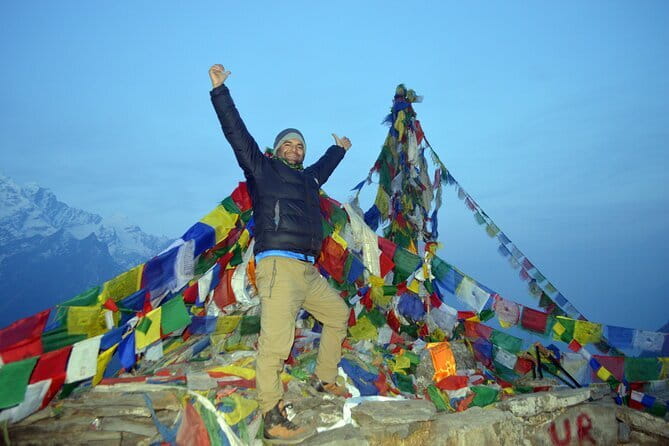
Day six retraces the route from Lama Hotel to Syapru Besi, taking about five to six hours. You will see familiar forest and village sections from a different direction, with the satisfaction of gradually losing altitude.
The return walk is not just a formality. After the high point and long descent of day five, your legs may still feel heavy. The downhill sections can be hard on knees, and walking poles may be useful, though the supplied details do not confirm whether they are provided.
You spend the night in a guest house at Syapru Besi. This is a practical stop before the road journey back to Kathmandu. It also gives you a chance to repack and prepare for a long day in a vehicle.
Day Seven: Shared Transport Back to Kathmandu
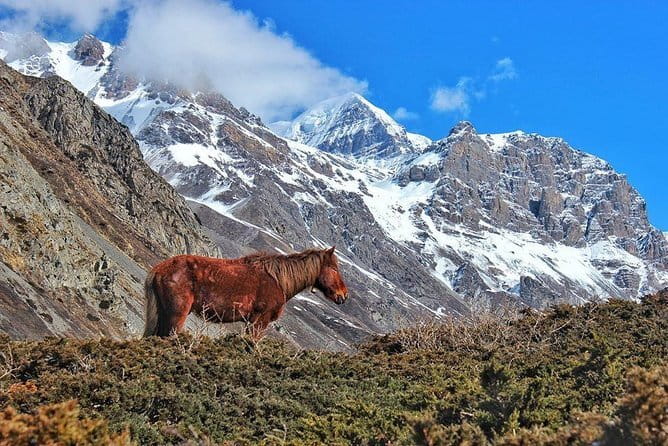
The final day involves a seven to eight hour bus or shared-jeep ride from Syabrubesi to Kathmandu. The spelling varies in the schedule, but this is the same gateway village used at the beginning of the route.
The provider then escorts you back to your Kathmandu hotel. The transfer is included, which is helpful after six days of walking and carrying gear.
Do not plan an important flight or fixed evening appointment immediately after this drive. The stated duration is already long, and road conditions can affect arrival time. Keeping the evening open is the sensible choice.
What the $300 Price Really Covers
At $300 per person, this is a low-cost way to arrange the main framework of a Langtang trek. The price includes:
- Shared bus or jeep transport between Kathmandu and Syapru Besi
- Mountain guest house accommodation
- Langtang National Park permit
- TIMS card
- Hotel pickup and return
The omissions matter. Meals are not included, and gratuity for the guide is optional. You should also confirm what personal equipment, drinks, insurance, and any other incidental costs you must arrange yourself, since those details are not specified.
The value is strongest if you want a guide and permits organized without paying for private transport. Group discounts may make the cost better for several people traveling together, while the private activity format means only your own group participates. That combination is useful: you get a group rate structure without joining a large mixed party.
The package is less attractive if you expect all-inclusive pricing. Food costs add up over seven days, and the shared road transport will not feel as comfortable as a private vehicle.
Guide Support and the Human Side of the Trek
The strongest pattern in the available feedback is the care shown by the guides and porters. Raj Tamang is repeatedly praised for organization, encouragement, and looking after people from the first pickup to Kyanjin Ri.
Pratip is also mentioned for staying attentive and treating the group with warmth. Porters named Dup, Dub, and Maila were praised for working well together, while Hem and Haj were credited with helping people along the way. The names vary by departure, so you should ask who will lead your group rather than assume a particular guide is available.
Raju is another guide worth requesting if possible. He has been described as cheerful, attentive, and good company on the trail. Acharya and Nilakantha were praised for clear explanations of Nepal’s history, culture, and the differences between Hindu and Buddhist deities, though those comments relate to other Nepal activities rather than this exact seven-day route.
One small service detail also says something useful about the operator: a pair of shoes left in the van was found and returned to a hotel the next day. That is not a reason to book a Himalayan trek by itself, but it points to responsive communication when something goes wrong.
Who Should Book This Route?
I would recommend this trek to you if you want a first Himalayan experience with a fixed seven-day outline, guided support, and the major permits already arranged.
It suits people who can handle five to seven hours of walking on several consecutive days and who accept basic mountain lodging. It is also a good fit if you want the scenery of Langtang without committing to a much longer trek.
You should think twice if you dislike long road journeys, shared transport, guest houses, or paying separately for meals. The high point at Kyanjin Ri also makes this more demanding than a low-altitude nature walk.
The route operates most of the year except during the monsoon season. Before choosing dates, ask about expected weather, trail conditions, accommodation, meals, and the guide assigned to your group. Confirmation is provided at booking, and cancellation is free if you cancel at least 24 hours before the start time. Changes or cancellations inside that window are not accepted for a refund.
Should You Book the Langtang Valley Trek?
Book it if you want strong mountain views, a real national park trek, and caring guide support at a modest base price. Kyanjin Ri gives the itinerary a clear goal, while the rhododendron forests, waterfalls, villages, monastery, and glaciers keep the route varied.
Skip it if you need private transport, included meals, or a relaxed schedule. The road days are long, the walking days are substantial, and the 4,773-meter climb requires respect.
For the right kind of hiker, this is a practical introduction to Langtang: not polished, not effortless, but full of mountain scenery and guided support where it matters most.
FAQ
How long does the Langtang Valley Trek take?
The experience lasts approximately seven days, including transport from Kathmandu to Syapru Besi and the return journey to Kathmandu.
What time does the trek start?
The stated start time is 6:45 am, with pickup from your hotel or residential apartment in Kathmandu.
Is hotel pickup and return included?
Yes. Pickup in Kathmandu is included at the beginning, and you are escorted back to your Kathmandu hotel after the return journey.
Does the price include meals?
No. Meals are not included in the $300 per-person price.
What accommodation is included?
Mountain guest house accommodation is included during the trek, including overnight stops along the route and at Syapru Besi.
Is Kyanjin Ri included?
Yes. The itinerary includes a three to four hour round trip from Kyanjin Gompa to Kyanjin Ri, which reaches approximately 4,773 meters.
Do I need previous trekking experience?
Previous trekking experience is not required, but you should have a moderate level of physical fitness because several days involve five to seven hours of walking.
More 7-Day Experiences
- 7 days Nepal Motorcycle tour
★ 5.0 · 12 reviews - Langtang Trek from Kathmandu 7 Days
★ 5.0 · 5 reviews - 7 Day Kathmandu Pokhara Tour
★ 4.5 · 5 reviews - 7 Days Langtang Valley Trek from Kathmandu
★ 5.0 · 3 reviews
Just added around Kathmandu
- Private Shopping Tour in Kathmandu★ 5.0 · 3 reviews
- Nagarkot Sunrise With 7 UNESCO World Heritage Private Tour★ 5.0 · 3 reviews
- Kathmandu: Nightlife and Pub Crawl Tour★ 5.0 · 3 reviews
- Mount Everest Scenic Flight 50 Minutes★ 5.0 · 3 reviews
- Momo Cooking Class -The Art Of Making MoMo with Home Chef★ 5.0 · 3 reviews
- Kathmandu: Nagarkot, Bhaktapur, Doleswor & Sanga Statue Tour★ 5.0 · 3 reviews
- Makalu Base Camp Trek★ 5.0 · 3 reviews
- Kathmandu: Momo Making Class with a Local Chef★ 5.0 · 3 reviews
Langtang Valley Treks, compared.
Trekking in Annapurna/Langtang/Everest/Upper Mustang regions
Read our review →
Browse the lists this tour appears in