
Reviewed · MOMO MAKING CLASSES
Discover Ranjana Lipi the Traditional Newari Script
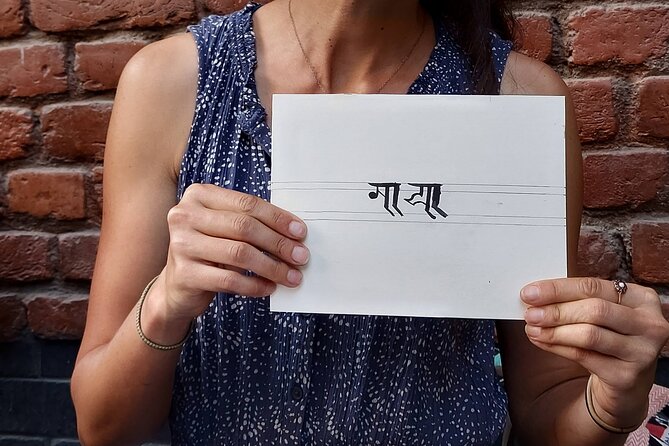
Write a script, eat like a Newar. This three-hour workshop in Kirtipur gives you a hands-on way to meet Newari culture through Ranjana Lipi, traditional food, and local hospitality. I like the practical format: you do not just look at an old script, you write it yourself with a bamboo pen and ink. I also like that the meal is part of the experience rather than an afterthought.
The price is $42 per person, including food, drinks, materials, instruction, and a framed piece of your own writing. The main consideration is that this is a small group cultural workshop, not a broad sightseeing tour. You will spend your time at Jatra Restaurant, and the session may feel too focused if you want temples, monuments, and a packed city itinerary.
In This Review
- Key points at a glance
- Why Ranjana Lipi makes a good Kathmandu experience
- Arriving at Jatra Restaurant in Kirtipur
- The welcome: Sagun, drinks, and Newari hospitality
- Learning the first Ranjana Lipi strokes
- Bamboo pens, ink, and the value of making something
- The Newari meal: Sagun and Samay Baji
- A three-hour schedule that does not feel rushed
- How much value do you get for $42?
- Who will enjoy this workshop most?
- Language, teaching style, and what to expect in class
- Practical details before you book
- Should you book Discover Ranjana Lipi?
- FAQ
- Where does the Ranjana Lipi workshop take place?
- How long does the experience last?
- What times are available?
- How much does the experience cost?
- What is included in the price?
- Is transportation included?
- Is coffee or tea included?
- How many people can join the workshop?
- Do I need prior experience with Ranjana Lipi?
- Can I cancel for a full refund?
Key points at a glance
- Write Ranjana Lipi by hand: Local instructors guide you through the script with bamboo pens, ink, and canvas paper.
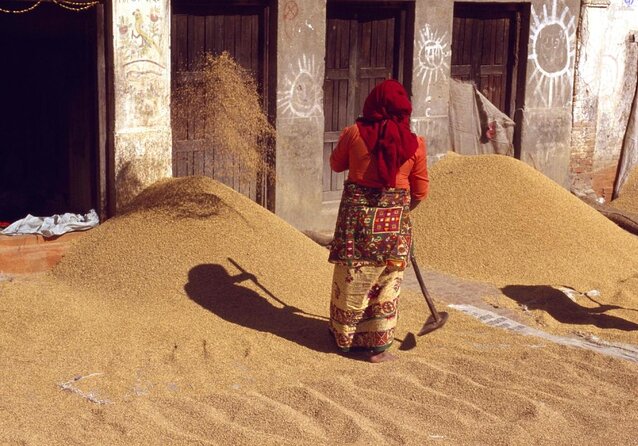
- Eat a full Newari spread: The experience includes Sagun welcome snacks and a Samay Baji platter.
- Take home your own artwork: Your finished Ranjana script is framed as a useful, personal memento.
- Choose a morning or evening session: Workshops run from 8 to 11 am or 5 to 8 pm.
- Keep the group intimate: A maximum of 15 people allows room for personal help with each stroke.
- Meet in Kirtipur: The workshop begins and ends at Jatra Restaurant on Chithu Road.
Why Ranjana Lipi makes a good Kathmandu experience
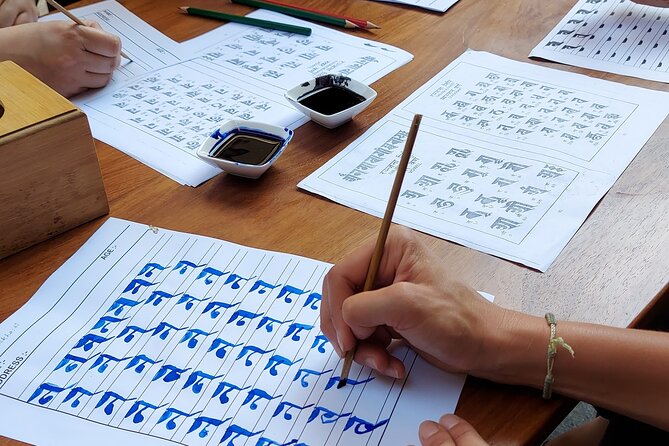
Ranjana Lipi is not simply decorative lettering. It is an old Newari script often seen in Buddhist writing, prayer inscriptions, and traditional artwork. One participant came to the workshop after noticing the mantra Om Mani Padme Hum written in Ranjana Lipi while studying Buddhist philosophy. That is a good reason to attend: once you know a few of its forms, details in Nepalese religious art can become easier to notice.
I like the fact that the class gives you a physical connection to the script. You hold a bamboo pen, work with ink, and repeat the strokes on paper. This is slower and more memorable than taking a photograph of a sign or hearing a short explanation from a guide.
The workshop also links writing with Newari customs and food. That connection matters. You are not learning a detached alphabet in a classroom. You are being welcomed with Sagun, served a traditional drink in an earthen cup, and given a Newari meal as part of the same three-hour gathering.
More Momo and Nepali Cooking Classes:
- Kathmandu: Local Women-Led Nepali Cooking & Momo Class
★ 4.9 · 360 reviews - Kathmandu: Local Lead Nepali Cooking & Momo-Making Class
★ 5.0 · 212 reviews - Local Women Lead Nepali Cooking Class
★ 5.0 · 125 reviews
Arriving at Jatra Restaurant in Kirtipur
The meeting point is Jatra Restaurant on Chithu Road, Kirtipur 44618. The activity ends at the same place, so you do not need to arrange a separate pickup after the class. It is near public transportation, which makes the fixed meeting point useful if you are making your own way across Kathmandu Valley.
Private transportation is not included. I would plan your route before setting out, especially for the morning start at 8 am. The exact travel time from your hotel depends on where you are staying, so leave enough room to arrive without rushing into the opening welcome.
The Kirtipur setting gives the workshop a clear sense of place, but the experience itself is not a walking tour. You should come expecting to remain at the restaurant for the class, food, and conversation. If you want to add sightseeing, plan it separately rather than expecting the workshop to take you around town.
The welcome: Sagun, drinks, and Newari hospitality
The session begins with a traditional welcome. Sagun, a Newari snack offering, is served along with an alcoholic or nonalcoholic drink. Some participants especially enjoyed the traditional touch of tika, Sagun, and a welcome drink, though the supplied details do not promise that tika is included at every session.
This first part sets the tone. Food is not being used as a quick sample before the main activity. It introduces you to customs that help explain the social side of Newari culture. I find this kind of welcome more useful than a long opening talk because you are taking part from the first few minutes.
You can choose an alcoholic or nonalcoholic drink with the included food service. Coffee and tea are not included, so budget for those separately if you want them. Personal expenses and tips are also outside the price.
Learning the first Ranjana Lipi strokes
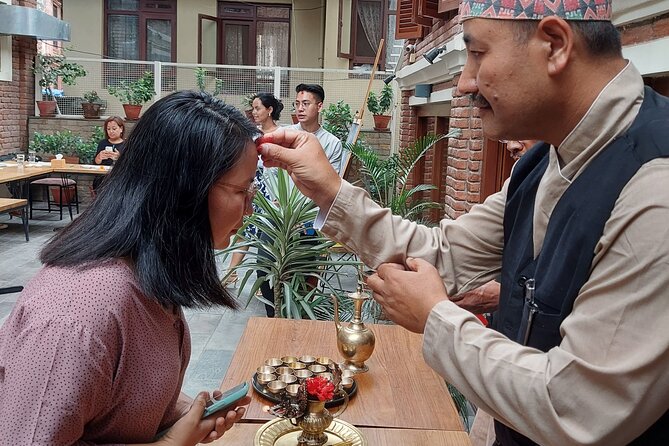
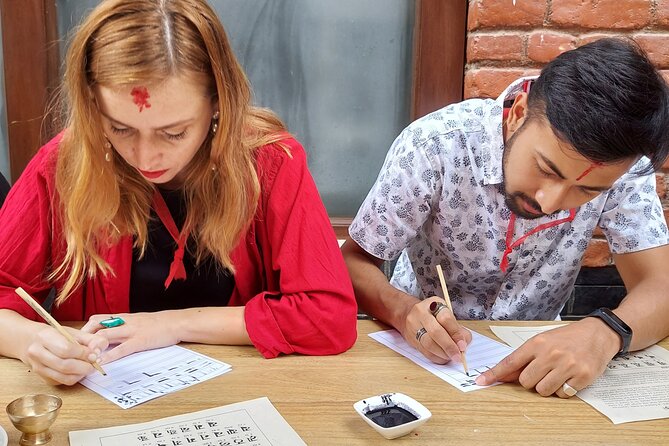
The central activity is instruction from a Ranjana Lipi teacher. You receive bamboo pens, ink, and paper, then practice the script under guidance. The instructors are described as supportive, helping with individual strokes and the rules that shape the letters.
That support is important because an unfamiliar script can look complicated at first. You will not simply be handed a sheet and left alone. The class is designed for people with little or no prior experience, while also giving people with a personal connection to Newar culture a chance to sharpen their technique.
One participant who identified as Newar described the class as a proud moment, since the script connected directly to their own roots. That tells me the workshop is not only for international visitors. Local participants and people already familiar with Newar traditions can also find purpose in learning a script they may have seen but never studied.
The public information does not give a detailed lesson plan or list every character taught. I would therefore treat this as an introduction rather than a full language course. In three hours, your goal is to understand the shapes, practice the basic method, and create a finished piece, not master Ranjana Lipi.
A few more trips worth weighing up before you book
- Everest Base Camp Trek – 14 Days
★ 5.0 · 1,499 reviews - Private Kathmandu Sightseeing Tour | UNESCO World Heritage sites
★ 5.0 · 756 reviews - Everest Base Camp Helicopter Tour landing at Everest View Hotel
★ 5.0 · 668 reviews - Half day cooking class in Thamel kathmandu
★ 5.0 · 607 reviews
Bamboo pens, ink, and the value of making something
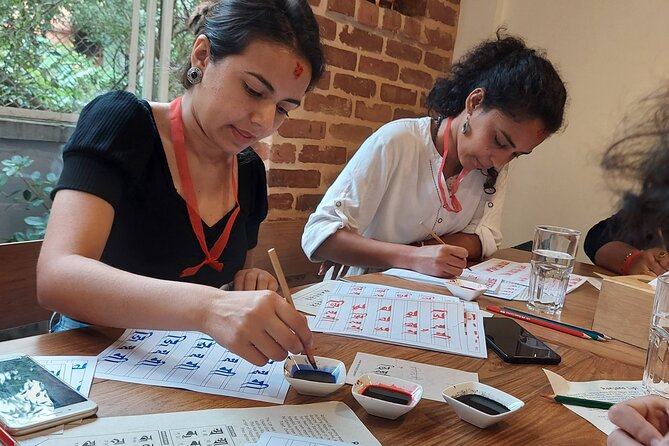
The materials are simple: a customary bamboo pen, ink, and canvas paper. That simplicity is part of the appeal. You are working with the same kind of basic tools described in the workshop rather than using a modern calligraphy kit that could belong anywhere.
Your hand will need time to adjust. The script depends on careful strokes and rules, so do not judge your first attempt too harshly. The instructors are there to correct and guide you, and the point is to experience the process as much as to produce a polished result.
I especially like the framed memento. Many cultural activities end with a quick photograph or a small purchased souvenir. Here, you leave with a piece you made during the class. It has more meaning because it records your first attempt at Ranjana Lipi in your own hand.
The Newari meal: Sagun and Samay Baji
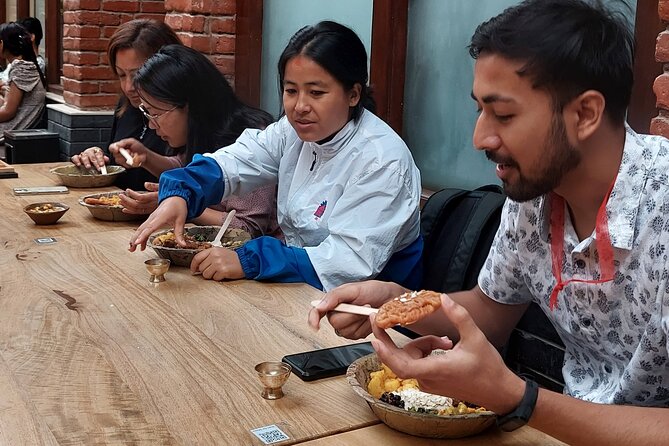
Food forms a substantial part of the experience. Along with the welcome Sagun, you receive a Newari Samay Baji platter and an alcoholic or nonalcoholic drink. The menu is described as traditional and mouthwatering, and the food received repeated praise for its flavor and presentation.
Samay Baji is a well-known Newari platter served with several elements rather than one single dish. The supplied information does not specify every item on the plate, so you should not expect a fixed list of ingredients in advance. What you can count on is a traditional Newari meal included in the workshop price.
The meal also gives you a natural break from writing. Ink work requires concentration, and a pause for food keeps the three-hour session from feeling like a long lesson. I would think of the meal as part of the cultural teaching, not merely a lunch add-on.
Food preferences and dietary arrangements are not explained in the available details. If you have allergies, dietary restrictions, or concerns about alcohol, ask the provider before booking. The stated drink choice is alcoholic or nonalcoholic, but no further menu adjustments are promised.
A three-hour schedule that does not feel rushed
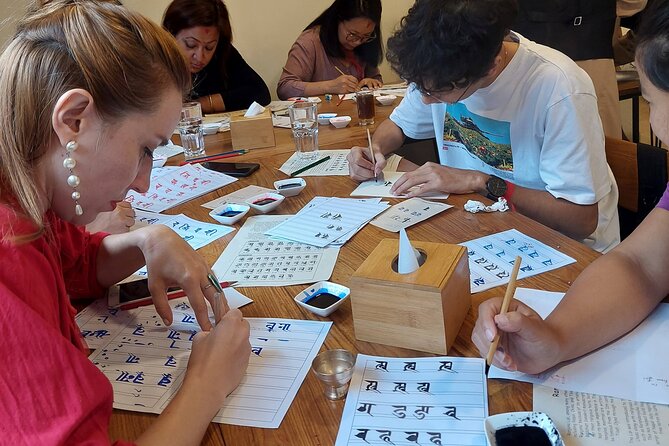
You can select one of two schedules:
- Morning: 8 am to 11 am
- Evening: 5 pm to 8 pm
Both sessions last about three hours and finish at Jatra Restaurant. The morning option works well if you want to keep the rest of the day open. The evening option may suit you better after daytime sightseeing, although the experience ends at about 8 pm.
The timing includes the cultural welcome, writing instruction, practice, food, and completion of your framed work. Since no detailed minute-by-minute schedule is provided, the pace may vary slightly depending on the group and the time needed for instruction.
A maximum of 15 participants keeps the group from becoming unwieldy. That matters in a writing class. In a large room, you might wait a long time for help with a difficult stroke. With fewer people, the instructor has a better chance to look at your work and guide you.
How much value do you get for $42?
At $42 per person, the cost covers more than a short demonstration. You receive approximately three hours of instruction, bamboo pens, ink, paper, an included Newari meal, Sagun snacks, a drink, and a framed memento.
I consider that a fair price if you value direct participation. The food alone is not the main reason to book, and the framed script would not replace a full sightseeing day. The value comes from the combination: you learn a cultural art, eat traditional food, and leave with something you produced.
Group discounts are available, which may make the workshop more appealing for families, friends, or small organized groups. Since the maximum group size is 15, I would ask about the exact discount before booking rather than assume a set percentage.
The price does not include private transportation, coffee or tea, personal expenses, or tips. Those exclusions are modest, but they matter if you are building a tight daily budget. Your own transport to Kirtipur is the main extra cost to consider.
Who will enjoy this workshop most?
I would recommend this experience to you if you enjoy learning by doing. It suits people interested in calligraphy, Buddhist art, Newari food, local customs, and small-group cultural activities.
It is also a strong choice for families and friends. The food gives non-art specialists something to enjoy, while the writing keeps the activity more memorable than a standard meal. Group discounts add another reason to consider it for a small party.
People with Newar family roots may find the class especially meaningful. One participant described finally learning a script connected to their heritage as a proud experience. You do not need that personal connection to appreciate the class, but it can add another layer.
I would be less likely to recommend it to you if you want a major historical tour, extensive sightseeing, or a highly advanced calligraphy course. The workshop is focused and stationary. It offers a window into Newari culture, not a full tour of Kathmandu Valley.
Language, teaching style, and what to expect in class
The instructors have been described as professional and helpful. One account noted that the teachers did not speak English, but the class was still understandable through their teaching and guidance. That suggests you should be ready to learn visually, watch demonstrations closely, and ask for help with gestures or simple communication if needed.
The lack of confirmed English instruction is worth considering. If you want detailed discussion of grammar, script history, or Buddhist texts, ask about language support before booking. If your main aim is to copy strokes and make a framed piece, visual teaching may be enough.
The experience appears well organized, with a clear welcome, prepared materials, food service, instruction, and a finished memento. Still, the class will depend partly on the instructor and the mix of people in your session. A group with many complete beginners may move at a different speed from one with returning or experienced participants.
Practical details before you book
Confirmation is provided at the time of booking, and mobile tickets are accepted. The activity is near public transportation, but private transport is not included. Your start and finish point is Jatra Restaurant, so keep the address available on your phone.
Most people can participate, according to the supplied information. No special fitness requirement is stated, though you will be sitting and writing for part of the session. The group limit is 15 people.
Free cancellation is available if you cancel at least 24 hours before the start time. A cancellation made less than 24 hours ahead is not refunded, and changes inside that period are not accepted. The cut-off uses local time.
The activity requires good weather. If poor weather causes cancellation, you are offered another date or a full refund. That policy is useful, but it also means you should keep an eye on conditions if your schedule in Kathmandu is tight.
Should you book Discover Ranjana Lipi?
I would book this workshop if you want a personal, food-centered introduction to Newari culture rather than another sightseeing stop. The hands-on writing, supportive instruction, traditional welcome, Samay Baji, and framed memento give the three hours a clear purpose.
The strongest reason to go is the combination of learning and making. You are not only told that Ranjana Lipi matters. You practice it, eat within a Newari setting, and carry home your own first piece.
Skip it if you need private transport, guaranteed English-language teaching, or a tour packed with monuments. For everyone else, $42 is a reasonable price for a small cultural experience with plenty to do and a souvenir that does not feel mass-produced.
FAQ
Where does the Ranjana Lipi workshop take place?
The workshop starts at Jatra Restaurant on Chithu Road, Kirtipur 44618, Nepal. It also ends at the same meeting point.
How long does the experience last?
The workshop lasts approximately three hours.
What times are available?
You can book a morning session from 8 am to 11 am or an evening session from 5 pm to 8 pm.
How much does the experience cost?
The listed price is $42 per person.
What is included in the price?
The price includes a Newari Samay Baji platter, Sagun welcome snacks, an alcoholic or nonalcoholic drink, bamboo pens, ink, paper, instruction from a Ranjana Lipi teacher, and a framed piece of your own writing.
Is transportation included?
No. Private transportation is not included. The meeting point is near public transportation.
Is coffee or tea included?
No. Coffee and tea are not included in the experience price.
How many people can join the workshop?
The activity has a maximum group size of 15 participants.
Do I need prior experience with Ranjana Lipi?
No prior experience is stated as a requirement. The class is designed to teach you how to write and practice the script with instructor guidance.
Can I cancel for a full refund?
Yes, if you cancel at least 24 hours before the experience start time. Cancellations or changes made less than 24 hours before the start are not accepted for a refund. If poor weather forces cancellation, you will be offered another date or a full refund.
Just added around Kathmandu
- Private Shopping Tour in Kathmandu★ 5.0 · 3 reviews
- Nagarkot Sunrise With 7 UNESCO World Heritage Private Tour★ 5.0 · 3 reviews
- Mount Everest Scenic Flight 50 Minutes★ 5.0 · 3 reviews
- Kathmandu: Nightlife and Pub Crawl Tour★ 5.0 · 3 reviews
- Kathmandu: Nagarkot, Bhaktapur, Doleswor & Sanga Statue Tour★ 5.0 · 3 reviews
- Momo Cooking Class -The Art Of Making MoMo with Home Chef★ 5.0 · 3 reviews
- Everest Experience Trek 6 Day Hiking Adventure★ 5.0 · 3 reviews
- Kathmandu: Momo Making Class with a Local Chef★ 5.0 · 3 reviews
Momo Making Classes, compared.




Nepalese Momos or Dal Bhat Cooking Class (Cook with Delight)
Read our review →
The best Private Nepali Cooking Class in Kathmandu
Read our review →
Nepalese Kitchen in Pokhara: Momos or Dal Bhat Cooking Class
Read our review →
Browse the lists this tour appears in