
Reviewed · EVEREST BASE CAMP TREKS
Everest Base Camp Trek
Everest begins with a small plane. This 14-day trek pairs round-trip Kathmandu to Lukla flights with a guided walk through Namche Bazaar, Tengboche, Dingboche, Lobuche, and Everest Base Camp. I like that tea house lodging, airport transfers, a licensed guide, and key government charges are bundled into the price. I also like the private format, limited to your own group, with a maximum of eight people. The main concern is altitude: you reach about 5,364 meters, where even fit hikers can feel unwell.
You should also look closely at the meal and hotel details before paying. The package lists dinner and two Kathmandu hotel nights, while the main description refers to three hotel nights, and food is otherwise listed as an extra cost of about $350. The route is demanding, but the strong 4.9 rating from 97 reviews and full recommendation rate suggest that the guides, especially Bishnu and Basu, have made a very good impression.
In This Review
- Key points to know before booking
- Why this Everest trek is appealing
- Kathmandu begins with temples and preparation
- The Lukla flight starts the mountain route
- Namche Bazaar gives you a vital pause
- Tengboche combines views with a monastery visit
- Dingboche and Chukhung mark the high-altitude test
- Lobuche and the Khumbu Glacier feel remote
- Gorak Shep and Everest Base Camp are the big payoff
- Kala Patthar adds the high viewpoint
- The return through Namche and Lukla
- What to pack and what to clarify
- Who should book this trek?
- Should you book the Everest Base Camp Trek?
- FAQ
- How long does the Everest Base Camp Trek last?
- Is airfare to Lukla included?
- How high does the trek go?
- Is food included in the price?
- What insurance is required?
- How many people can join the private tour?
Key points to know before booking
- Lukla flights are included: The price covers domestic airfare from Kathmandu to Lukla and back, including airport tax, but weather delays and cancellations are possible.
- The private group is small: Only your party takes part, with no more than eight people per booking.
- Altitude is the real challenge: The route reaches approximately 5,364 meters at Everest Base Camp, not simply a high hill walk.
- Tea houses provide the basic lodging: Eleven nights are listed in tea houses, with two Kathmandu hotel nights included in the detailed inclusions.
- Guides receive the highest praise: Bishnu handles arrangements, while Basu is singled out for careful, attentive guiding.
- Budget beyond the $999 price: Food and drinks are estimated at $350 per person, and gratuities at $150 per person.
Why this Everest trek is appealing
At $999 per person, this is an attractive starting price for a guided Everest Base Camp trip. It includes the expensive and important pieces: flights to Lukla, a licensed trekking guide, tea house lodging, Kathmandu accommodation, airport pickup and drop-off, permits and government charges, a first aid kit, and service fees.
That price does not cover everything. Food and drinks are listed separately at about $350 per person, and gratuities are estimated at $150. Add those amounts and the practical trip cost reaches roughly $1,499 before personal gear, insurance, and any unexpected flight or accommodation costs.
I like the fact that the guide is responsible for the route and first aid arrangements. The package says all leaders have basic first aid training and know the closest medical facilities. That is useful, but it is not a substitute for medical evacuation insurance, which is required.
The strongest praise centers on the people managing the trip. Bishnu is described as staying on top of arrangements and trying to keep everything running well. Basu receives particular praise as a guide who paid close attention to the details. On a long mountain route, that kind of steady help matters more than flashy extras.
More Everest Base Camp Treks:
- Everest Base Camp Trek – 14 Days
★ 5.0 · 1,499 reviews - Everest Base Camp Trekking
★ 5.0 · 485 reviews - Everest Base Camp Trekking – 13 Day
★ 5.0 · 365 reviews
Kathmandu begins with temples and preparation
The trip starts at Tribhuvan Airport, where a guide from Himalayan Recreation provides arrival assistance and private car transfer. That first pickup is a small but welcome service after an international flight, especially if Kathmandu is new to you.
The opening day includes Kathmandu and Thamel. Thamel is the city’s main tourist district and a practical place to sort out trekking needs. The company says its guide can help you buy or rent required gear in Kathmandu, and you may leave extra luggage at the office or hotel while you walk with a lighter pack.
A second day includes Swayambhunath, Boudhanath Stupa, and the Garden of Dreams in the stated schedule. These sites give you a quick introduction to Kathmandu’s religious and urban character before the mountains take over.
There is a timing point to clarify. The same day also lists a flight to Lukla and a long stay in Phakding. Since Kathmandu sightseeing, a domestic flight, and the trek to Phakding are all shown together, ask the operator for the final day-by-day sequence. The package may organize these elements differently depending on flight timing.
The accommodation information also needs a quick check. The main description says three nights in a three-star Kathmandu hotel, while the detailed inclusions specify two nights, one at the beginning and one after the trek. Confirm the number of nights and whether breakfast is included on both hotel stays.
The Lukla flight starts the mountain route
The flight from Kathmandu to Lukla takes about an hour and is included in the package. Lukla is the gateway for this route, and reaching it by air saves the long overland approach that would otherwise add substantial time.
The flight is also one of the least predictable parts of the trip. The operator warns that Lukla flights can be delayed or canceled, and recommends keeping one or two extra days available. This is not a minor footnote. If your international flight home is scheduled immediately after the trek, a weather delay could create a serious problem.
From Lukla, the route reaches Phakding, then continues toward Namche Bazaar. The schedule gives long 12-hour blocks to several trekking days, but these appear to describe full-day route segments rather than literal walking times. Ask for expected daily walking hours, elevation gain, and planned rest stops before you go.
Namche Bazaar gives you a vital pause
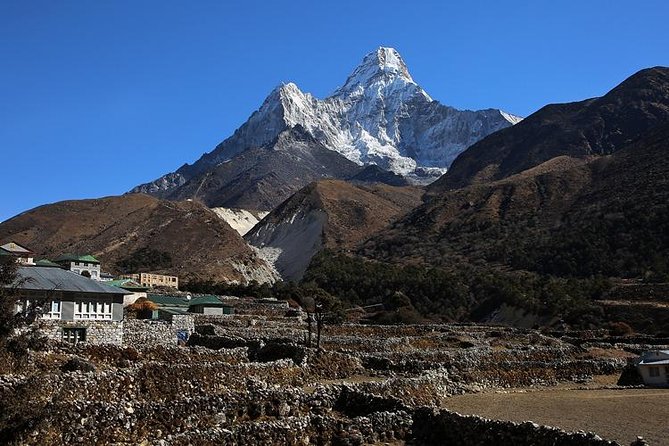
The route from Phakding follows the Dudh Kosi River toward Namche Bazaar. Namche is the main settlement in the Khumbu region and an important stopping point on the way to Base Camp.
The plan gives you a full day in Namche, including a visit to an Everest viewpoint. That rest day is one of the most valuable parts of the schedule. You are still gaining altitude, and a slower day gives your body more time to adjust before the route climbs higher.
The Everest View Point visit is listed at about two hours. It offers an early mountain panorama and helps you understand the scale of the journey ahead. The town itself is also a useful place to settle into tea house life before the higher, colder sections.
The package does not promise private rooms, heating arrangements, or attached bathrooms in the tea houses. You should ask about those details if comfort is important to you. The lodging is included, but the exact standard can vary, and the high mountain sections are not designed as a hotel holiday.
More Treks and Hikes:
- Nagarkot Sunrise View and Day Hiking from Kathmandu
★ 5.0 · 471 reviews - Annapurna Circuit Trek with Tilicho Lake
★ 5.0 · 368 reviews - Everest Base Camp Trek -14 Days
★ 5.0 · 321 reviews - Annapurna base camp trek 5 Days
★ 5.0 · 252 reviews
Tengboche combines views with a monastery visit
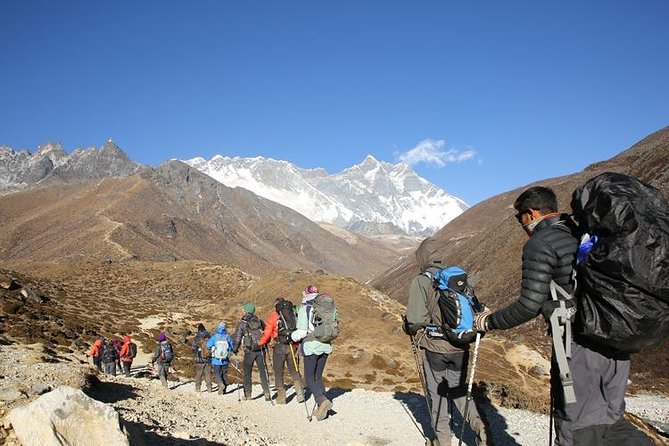
The walk to Tengboche brings you into one of the route’s most memorable cultural settings. Tengboche Gompa is included, with an hour allocated for the visit.
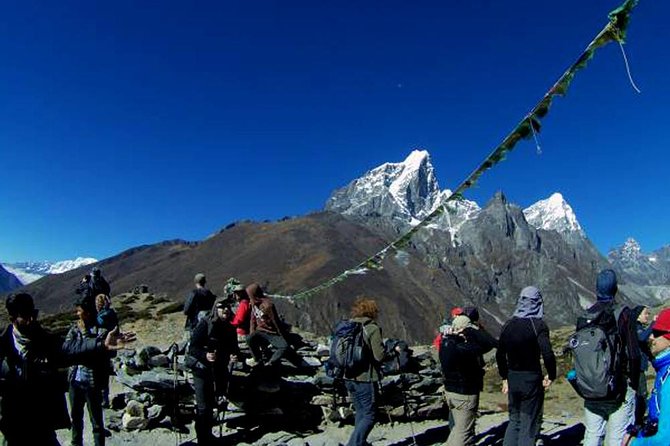
This stop matters because the trek is not only about reaching a famous point on a map. The gompa adds a spiritual and local dimension to the route, while the surrounding mountain views include Ama Dablam and Taboche. Those peaks give this section a dramatic sense of place without requiring a separate side trip.
The schedule treats the day as a long route section, so you should expect a full day on foot. A professional guide is especially useful here, as the route, weather, and altitude can make a simple-looking day more tiring than expected.
Dingboche and Chukhung mark the high-altitude test
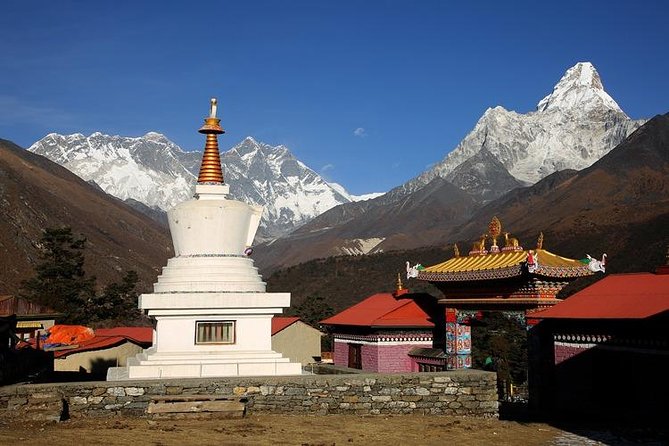
After Tengboche, the route reaches Dingboche. A full day is listed there, followed by another day associated with Dingboche and Chukhung.
Dingboche is an important acclimatization point because the route has now moved well above the lower villages. The schedule gives you time in the area rather than rushing directly toward Base Camp. That slower rhythm is sensible, although you should ask exactly how the acclimatization day is planned.
Chukhung is connected with the route toward Island Peak, but this package does not list an Island Peak climb. Do not assume a summit attempt or technical mountaineering is included. Here, the key value is time at altitude and exposure to the high mountain scenery.
The company requires a strong level of physical fitness. That is fair wording. This is not a casual sightseeing walk, and fitness alone does not prevent altitude sickness. The operator specifically advises discussing the trip with your doctor before departure.
Lobuche and the Khumbu Glacier feel remote
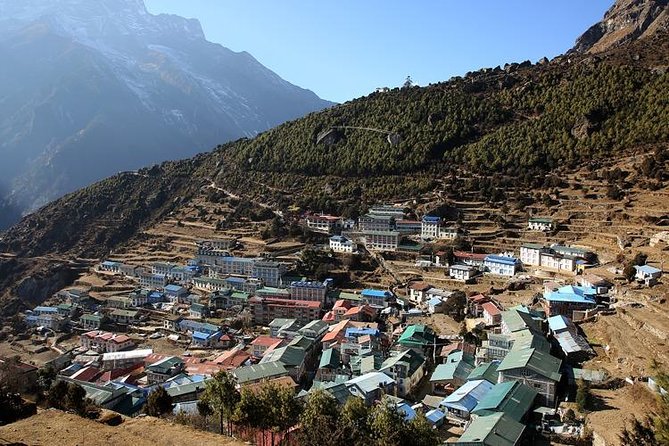
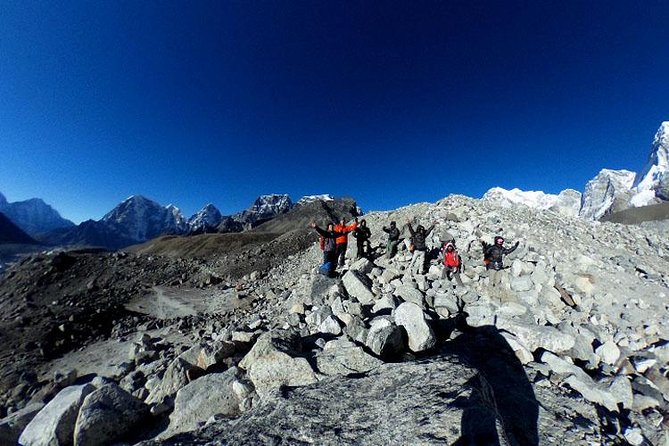
The route continues to Lobuche, followed by a visit to the Khumbu Glacier. This is where the surroundings become more severe and the walking more physically demanding.
The glacier is one of the route’s defining features. It is not presented as a technical glacier activity, so you should understand this as a scenic stop along the trekking route rather than a climbing excursion.
Lobuche is also one of the last major stops before Gorak Shep and Base Camp. Tea house accommodation is included for the mountain nights, but food and drinks are not generally covered. The extra $350 food budget is therefore important, especially because meals at higher elevations can cost more than you may expect in Kathmandu.
Gorak Shep and Everest Base Camp are the big payoff
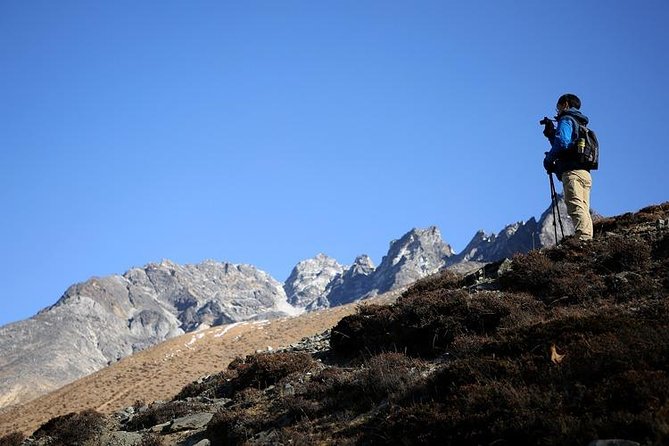
The route reaches Gorak Shep and Everest Base Camp on Day 9. Mount Everest is listed as a three-hour stop, while Gorak Shep receives a full-day allocation.
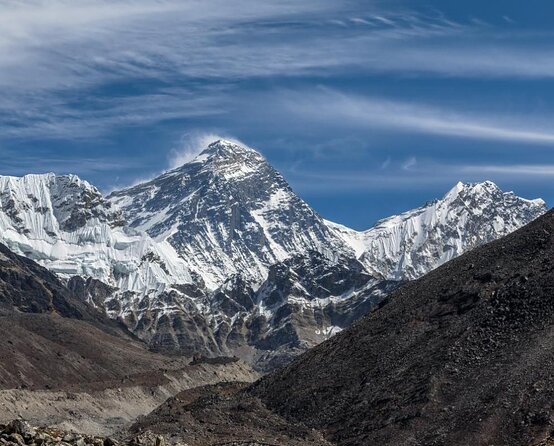
Base Camp is the emotional high point of the trip, but it is worth keeping expectations realistic. You do not stand on the summit of Everest, and the view of Everest itself may not be the clearest from Base Camp. The achievement is reaching this remote, high point on foot, beside the Khumbu Glacier and beneath some of the world’s most famous peaks.
The altitude here is approximately 5,364 meters, or 17,598 feet. That number should guide your planning more than the attractive price or the promise of a professional guide. Headaches, fatigue, breathing trouble, and other altitude effects can affect people of any age, gender, and fitness level.
Travel insurance covering medical expenses and emergency repatriation is required. You must show proof of insurance to the tour leader on the first day. That requirement is sensible, and I would treat it as essential rather than administrative paperwork.
Kala Patthar adds the high viewpoint
The following day includes Kala Patthar, followed by the route toward Pheriche, the Dughlha Road, and Pangboche. Kala Patthar is listed as a one-hour stop and is often the viewpoint people most associate with the Everest Base Camp route.
Its value is the high mountain panorama and the chance to look back over the route you have walked. It is also another demanding high-altitude effort, so the short listed duration should not make you assume it will feel easy.
The return toward Pheriche and Pangboche begins the long descent. Descending is usually welcome, but it still places stress on tired legs. The guide’s job becomes important again here, helping the group maintain a safe pace rather than rushing simply because the elevation is dropping.
The return through Namche and Lukla
The route returns through Namche Bazaar before continuing to Lukla. Namche gives you a familiar stop after the high country, while Lukla is the final mountain base before the flight back to Kathmandu.
The schedule places the Lukla return on Day 12 and Kathmandu on Day 13. The final Kathmandu night gives you a buffer before departure, though the company still advises one or two spare days because of possible Lukla flight disruption.
The airport transfer service is included for both arrival and departure assistance. Your Nepal arrival details must be sent ahead so the company can arrange pickup. The final day in Kathmandu is otherwise open, which gives you time to rest or handle any last city plans.
What to pack and what to clarify
The company asks you to pack as lightly as possible and recommends keeping your luggage under 22 pounds, or 10 kilograms. You are expected to carry your own luggage, so that limit is practical advice, not just a suggestion.
Extra luggage can be left at the company office or hotel and collected after the trek. Gear can also be bought or rented in Kathmandu, with help from the guide.
Before booking, I would confirm these points in writing:
- Whether the package includes two or three Kathmandu hotel nights
- Which meals are covered, since dinner is listed as included but food and drinks are also an extra cost
- The exact daily walking hours
- How weather-related Lukla delays are handled
- What tea house room and bathroom arrangements are provided
- The precise permit documents required
You need a passport copy with at least six months of validity, two passport-size photos, your occupation, and your home address details for permits. The tour is available from age eight, but the altitude and physical demand should matter more than the minimum age.
The standard guide language is English. A different language-speaking guide costs an additional $200 per group. That can be worthwhile if clear communication is important for safety and comfort.
Who should book this trek?
I would recommend this trip to someone who wants a guided Everest Base Camp experience without arranging flights, permits, tea houses, and airport transfers alone. The private group format is a major advantage if you want your pace and questions handled within your own party.
It suits hikers who are physically prepared, flexible about flight schedules, and comfortable with basic tea house accommodation. It is less suitable if you need fixed arrival times, polished hotel standards throughout, or a relaxed walking holiday.
The combination of included flights, a licensed guide, and small-group service gives the $999 base price good value, provided you budget honestly for meals, tips, insurance, gear, and possible delays. The high ratings and praise for Bishnu and Basu strengthen the case, but no guide can remove the risks of altitude or mountain weather.
Should you book the Everest Base Camp Trek?
Book it if you want a structured, private route to Everest Base Camp and are ready for serious altitude, simple lodging, and schedule changes. The included Lukla flights and guide support remove much of the planning burden.
I would not book until the hotel-night count, meal coverage, daily walking times, and flight-delay policy are confirmed. If those details match your expectations, this is a practical and well-priced way to tackle one of Nepal’s best-known treks, with personal guide support rather than a large tour crowd.
Free cancellation is available if you cancel at least 24 hours before the local start time. Inside that window, the payment is not refunded.
FAQ
How long does the Everest Base Camp Trek last?
The experience lasts approximately 14 days, beginning and ending in Kathmandu.
Is airfare to Lukla included?
Yes. Round-trip domestic airfare between Kathmandu and Lukla is included, along with airport tax. Lukla flights can be delayed or canceled because of weather, so one or two spare days are recommended.
How high does the trek go?
The route reaches approximately 5,364 meters, or 17,598 feet, above sea level at Everest Base Camp.
Is food included in the price?
Food and drinks are listed as an extra cost of about $350 per person. Dinner is also listed among the inclusions, so you should confirm exactly which meals are covered before departure.
What insurance is required?
You must have travel insurance covering medical expenses and emergency repatriation. Proof of insurance must be shown to the tour leader on the first day.
How many people can join the private tour?
The activity is private and limited to your own group. A maximum of eight people can be included in one booking.
Just added around Kathmandu
- Nagarkot Sunrise With 7 UNESCO World Heritage Private Tour★ 5.0 · 3 reviews
- Private Shopping Tour in Kathmandu★ 5.0 · 3 reviews
- Kathmandu: Nightlife and Pub Crawl Tour★ 5.0 · 3 reviews
- Mount Everest Scenic Flight 50 Minutes★ 5.0 · 3 reviews
- Kathmandu: Nagarkot, Bhaktapur, Doleswor & Sanga Statue Tour★ 5.0 · 3 reviews
- Momo Cooking Class -The Art Of Making MoMo with Home Chef★ 5.0 · 3 reviews
- Kathmandu: Momo Making Class with a Local Chef★ 5.0 · 3 reviews
- Makalu Base Camp Trek★ 5.0 · 3 reviews
Everest Base Camp Treks, compared.






Everest Base Camp Trek with Helicopter Return from Gorakshep to Lukla
Read our review →Browse the lists this tour appears in