
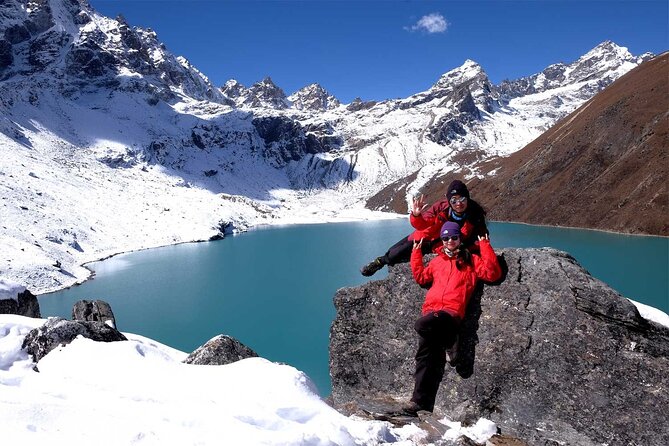
Reviewed · EVEREST BASE CAMP TREKS
Everest Base Camp Trek with Helicopter Return to Lukla – 10 Days
The mountain finish comes from the sky. This 10-day Everest Base Camp trek combines a demanding walk through Sherpa country with a helicopter flight from Gorakshep to Lukla, saving you the long return journey on foot. I like the helicopter return for its sweeping views and the small group size of up to 15 people, which should make the pace and guide support more manageable.
The package also includes permits, standard guesthouses, a licensed English-speaking guide, a duffel bag, sleeping bag, domestic flights, airport transfers, and a Kathmandu farewell dinner with Nepali food and traditional dance. The main caution is the schedule: 10 days is a tight timetable for a high-altitude trek, and the price does not include meals during the trek, porter service, insurance, or personal costs.
In This Review
- Key points at a glance
- Kathmandu to Lukla: setting up the trek
- Walking through Sherpa country
- Namche Bazaar and the first real altitude test
- Tengboche monasteries and high valley scenery
- Dingboche and the need to slow down
- Everest Base Camp and Kala Patthar
- The helicopter flight from Gorakshep to Lukla
- What the $799 price really covers
- Who should choose this 10-day trek?
- Should you book it?
- FAQ
- How long is the Everest Base Camp trek with helicopter return?
- Where does the experience begin?
- Is accommodation in Kathmandu included?
- Are trekking permits included?
- Is the helicopter ride included?
- Are meals included during the trek?
- Is porter service included?
- What kind of insurance do I need?
- What happens if bad weather cancels the experience?
Key points at a glance
- Gorakshep to Lukla by helicopter: You get an aerial look at the route instead of retracing every step on foot.
- Kala Patthar sunrise: The high viewpoint gives you one of the finest planned mountain moments on the route.
- Sherpa villages and monasteries: Namche Bazaar and Tengboche add local culture to the mountain scenery.
- Altitude remains the real challenge: A moderate fitness level is required, but fitness alone does not remove the risk of altitude sickness.
- Useful core inclusions: Permits, flights, lodging, transfers, a guide, trekking gear, and a first-aid kit are covered.
- Strong guide reputation: Ram is repeatedly praised for patience, flexibility, preparation, and care, with Rupak, Dambar, Naren, and Pemba also associated with well-regarded trekking teams.
Kathmandu to Lukla: setting up the trek
Your experience begins with pickup at Tribhuvan International Airport in Kathmandu. The stated start time is 9:00 am, so you should provide your arrival details carefully and allow time for the private vehicle transfer. A three-star Kathmandu hotel with breakfast is included, giving you a practical place to rest before the mountain section.
Kathmandu is more than a staging point. The city gives you a first taste of Nepalese religious life, street scenes, and local food before you head into the Khumbu region. The package does not include lunch or dinner in Kathmandu, so you will need to budget for those meals.
The flight to Lukla is one of the memorable pieces of the trip. The program lists domestic flights between Kathmandu or Manthali and Lukla, plus the helicopter return from Gorakshep. Because flights can be affected by weather and operating conditions, confirm the exact departure airport and flight plan before you go. The information provided names both Kathmandu and Manthali, so this is worth clarifying with the operator.
Lukla is the gateway to the trek. From there, you begin walking through the Khumbu, where the route shifts quickly from town life to footpaths, suspension bridges, forest, stone walls, and mountain settlements. The change is part of the appeal. You are not simply being driven to a viewpoint. You earn the views one day at a time.
More Everest Base Camp Treks:
- Everest Base Camp Trek – 14 Days
★ 5.0 · 1,499 reviews - Everest Base Camp Trekking
★ 5.0 · 485 reviews - Everest Base Camp Trekking – 13 Day
★ 5.0 · 365 reviews
Walking through Sherpa country
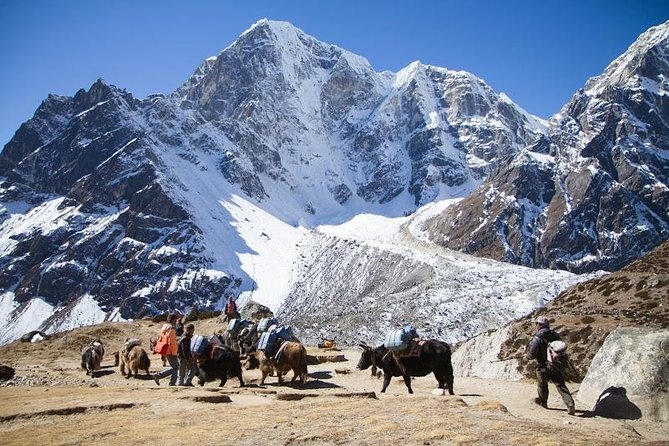
The route follows the Dudh Koshi River and passes through forests and Sherpa villages. This opening section is likely to feel more varied than the high alpine days later on. You will see a mix of green woodland, river crossings, stone-built homes, and mountain paths before the air becomes noticeably thinner.
The guesthouses are described as standard rather than upscale. That distinction matters. You should expect basic trekking accommodation, not hotel-style comfort. The reward is location and practicality: you sleep along the route, eat in local lodges, and remain close to the communities that support life in the high valleys.
A guide adds real value here. The best part of guided trekking is not merely finding the path. A good guide helps with timing, lodge arrangements, local customs, weather changes, and the slow rhythm needed at altitude. Ram receives especially warm praise for patience and flexibility, including his habit of watching group condition and adjusting support when needed. Guides named Rupak, Dambar, Naren, and Pemba have also been praised for keeping groups organized and spirits steady.
You should still ask how porter support will work. Porter service is optional, and the package suggests one porter for two trekkers. That means you may either pay extra for help with your main bag or carry it yourself. The included duffel bag is useful, but it is not the same thing as having a porter.
Namche Bazaar and the first real altitude test
Namche Bazaar is one of the key stops on the route. It is a mountain trading center and an important place to pause before the path climbs higher. The horseshoe-shaped settlement is known for its steep surroundings, and the stop gives you a chance to slow down, organize your gear, and adjust to the altitude.
This is where the trip becomes more than a scenic hike. You may feel the climb in your breathing and legs, even if you are normally fit. The package asks for moderate physical fitness, but you should treat that as a minimum, not a guarantee that the high altitude will be easy.
The guide’s role becomes especially important from this point. Walk slowly, drink regularly, and tell your guide if you feel unwell. The schedule is short, so there may be pressure to keep moving, but your health should control the pace. The included medical kit is helpful, yet it does not replace travel insurance that covers medical treatment and high-altitude evacuation.
Namche also gives the trek its human side. You pass through places where trade, tourism, religious life, and mountain work meet. The route is famous for Everest, but the people and settlements make it feel like a journey rather than a simple climb to a photo stop.
Tengboche monasteries and high valley scenery
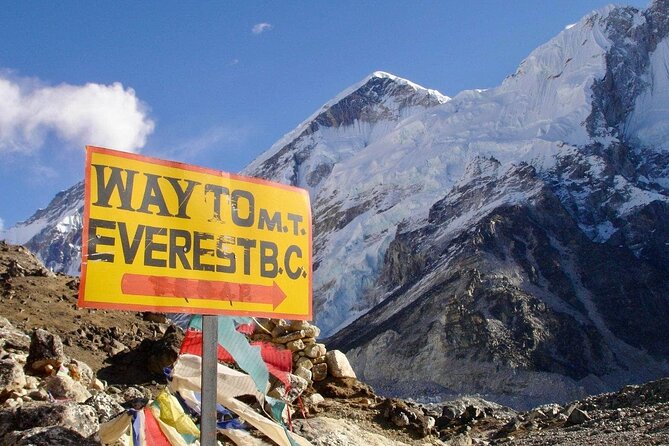
Tengboche brings a strong cultural element to the trek. Its monastery is one of the best-known religious sites in the Khumbu, and the stop gives you a chance to see how Buddhist practice fits into everyday mountain life.
I like this part of the route because it breaks up the steady focus on altitude and peaks. You are not only walking toward a famous base camp. You are passing through a living region with religious buildings, Sherpa communities, and traditions that give the journey its character.
The scenery also changes as you gain height. Forest gives way to more open mountain country, with broad views and fewer trees. The provided itinerary does not specify exact daily walking hours or distances, so do not assume every day will feel alike. Ask for the detailed day-by-day plan, including elevation gains, before booking or departing.
Tengboche can also be a demanding stop because the route is no longer an easy low-altitude walk. The combination of uphill walking, cold conditions, and thinner air means you should pack for function rather than fashion. Warm layers, gloves, sun protection, sturdy footwear, and a refillable water container matter more than extra clothing choices.
More Helicopter Trips:
- Everest Base Camp Helicopter Tour landing at Everest View Hotel
★ 5.0 · 668 reviews - Everest Base Camp Helicopter Tour landing at Hotel Everest View
★ 5.0 · 218 reviews - Everest Base Camp Trek with Helicopter Return from Gorakshep to Lukla
★ 5.0 · 161 reviews - Everest Base Camp helicopter tour with landing
★ 5.0 · 61 reviews
Dingboche and the need to slow down
Dingboche is named as an acclimatization point, and that is one of the most important features of the schedule. Acclimatization means giving your body time to adjust before climbing higher. It may feel strange to spend a day walking less when the base camp is still ahead, but this pause supports a safer and more enjoyable trek.
The 10-day format makes Dingboche especially important. This is a compact Everest Base Camp program, so the schedule has less spare time than a longer itinerary. If weather, illness, or flight delays cause changes, the trip may have limited flexibility.
I would ask the operator how the acclimatization day is structured. The supplied information confirms a stop in Dingboche but does not specify the exact activity, walking distance, or elevation plan. That detail will help you judge if the itinerary matches your experience and comfort level.
The high valley around Dingboche offers a different kind of beauty from the lower trail. Trees become scarce, the air feels sharper, and the mountains seem closer. At this point, the walking itself becomes the main event. You are moving through a place where every rise in the trail costs effort.
Everest Base Camp and Kala Patthar
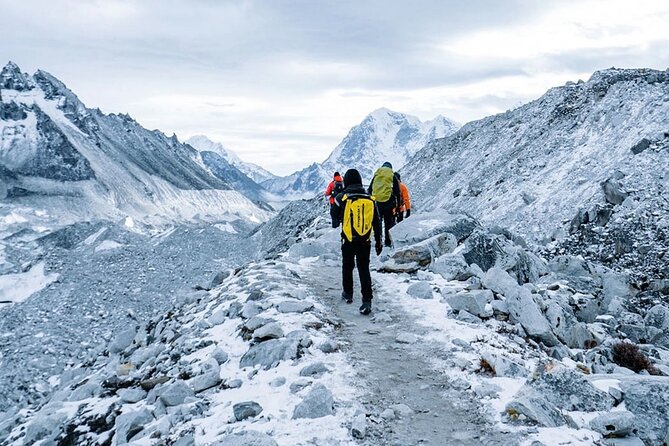
Reaching Everest Base Camp is the emotional center of the trip. The base camp sits at the foot of the Khumbu Icefall area and is tied to the famous climbing route, though the view from the trekking route is not the same as the image often used in books and films. The achievement comes from reaching the place on foot, after days of gradual ascent.
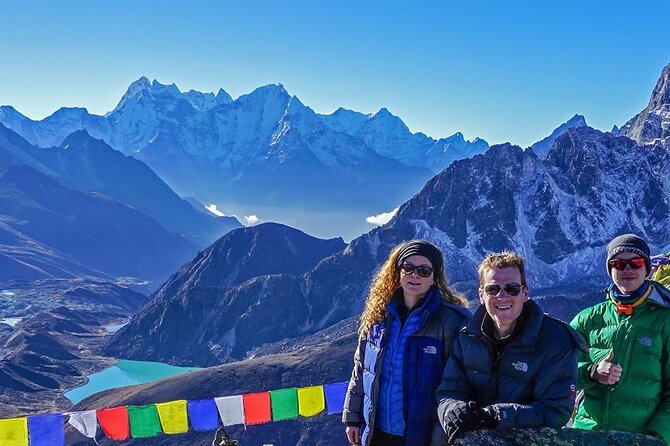
The itinerary also includes Kala Patthar, timed for sunrise. This is a major strength of the program. Kala Patthar is used as a high viewpoint for views toward Everest and the surrounding peaks, and sunrise gives the mountains changing light and contrast. You will need an early start, cold-weather clothing, and enough energy for another demanding climb.
Do not treat Base Camp and Kala Patthar as easy photo stops. The altitude is serious, and the route can feel tough even for strong hikers. Your guide should monitor how you are doing and help you decide how hard to push. The company’s most praised guide qualities include patience, encouragement, and attention to group condition. Those qualities matter more here than a fast pace.
The itinerary promises views of Everest and the mountain route you have followed. Weather remains a factor. Clear skies can produce extraordinary photographs, while cloud or snow can limit what you see. The package requires good weather for the helicopter portion, so you should remain flexible.
The helicopter flight from Gorakshep to Lukla
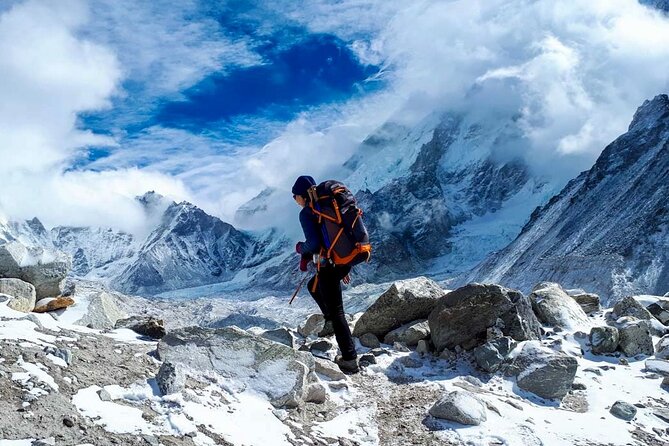
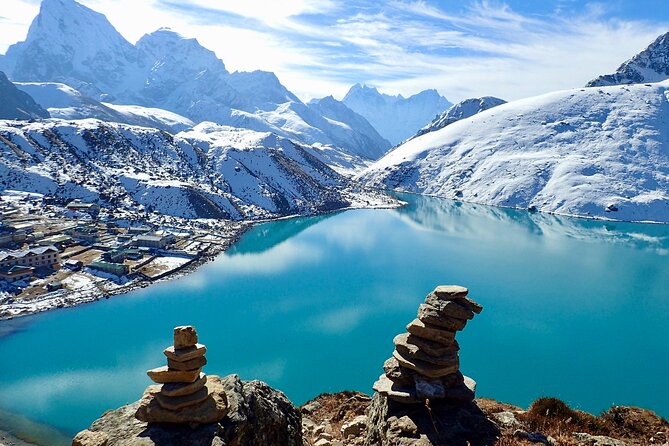
After reaching the highest part of the trek, the helicopter flight from Gorakshep to Lukla changes the mood completely. Instead of walking back through the same valleys, you see the route from above. Rivers, villages, ridges, and the winding trail become part of one broad aerial picture.
This is not just a faster transfer. It is a second way to understand the Khumbu. On foot, you notice the effort of each climb and the details of village life. From the helicopter, you gain a sense of distance and scale. The combination makes the itinerary feel distinct from a standard return trek.
The practical benefit is just as important. Walking back to Lukla takes several days and repeats much of the route. The helicopter return gives you those days back, which is useful if you have limited vacation time or want to reduce the strain of a long descent.
The trade-off is weather dependence. Helicopter operations can be delayed or canceled if conditions are poor. The stated policy offers a different date or a full refund if the experience is canceled because of bad weather, but you should still allow some flexibility in your wider Nepal schedule. Ask how a delayed helicopter affects your onward plans.
The package also lists a domestic flight round-trip between Kathmandu or Manthali and Lukla. Since the helicopter replaces the trekking return but not necessarily the flight arrangements, confirm exactly how the return transport is handled.
What the $799 price really covers
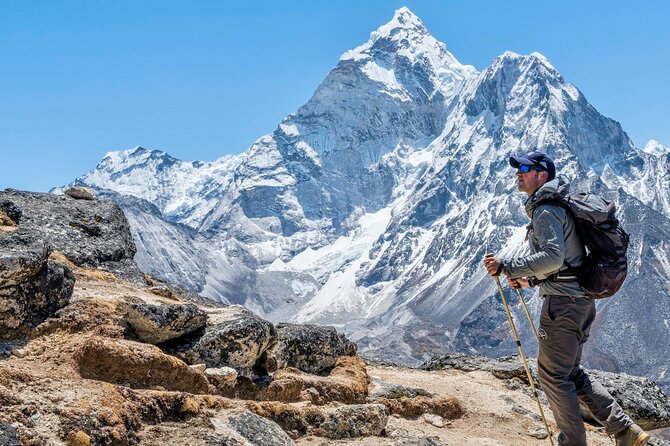
At $799 per person, the price is appealing for a guided Everest Base Camp program with a helicopter return. You receive private arrival and departure transfers, a three-star Kathmandu hotel with breakfast, permits, domestic flights, standard guesthouses, a licensed English-speaking guide, trekking gear, a medical kit, official taxes, and the farewell dinner.
That is a useful bundle. Permits and transport can be awkward to arrange on your own, and a local guide adds support where conditions and altitude can change plans quickly. The helicopter element is also the feature that gives this trip its special character.
The price is not all-inclusive. You must pay for international flights, a Nepal visa, lunch and dinner in Kathmandu, all meals during the trek, optional porter service, insurance, snacks, drinks, laundry, and tips. Those costs can add up, especially in the mountains where food and drinks may cost more than in Kathmandu.
Insurance deserves special attention. It must cover medical care and high-altitude evacuation. Do not treat ordinary travel insurance as sufficient until you check the altitude limit and evacuation terms.
The 4.9 rating from 34 submitted ratings and a 100 percent recommendation figure point to a strong overall record. The most consistent praise centers on guides, especially Ram, who is described as patient, adaptable, and attentive. That is encouraging, but you should still judge the trek by its physical demands and included costs rather than the score alone.
Who should choose this 10-day trek?
I would recommend it to you if you want the classic Everest Base Camp route but do not want to spend several extra days walking back to Lukla. It suits people who value local guiding, basic guesthouse accommodation, and a memorable aerial finish more than comfort at every stage.
It may also suit a small group of friends. Past trekking teams connected with the operator included couples, solo participants, and larger groups with a wide age range. The maximum group size for this experience is 15, which is more manageable than a very large expedition group.
I would be cautious if you are new to high-altitude walking, dislike basic lodging, or need a relaxed schedule with plenty of spare days. The 10-day plan leaves less room for delays and recovery. Moderate fitness is required, and altitude can affect anyone.
Before booking, ask for four details: the exact daily itinerary, the flight departure airport, the meal arrangements in the mountains, and the plan if the helicopter cannot fly. Those answers will tell you more than a glossy mountain photograph.
Booking is flexible up to 24 hours before the 9:00 am start time for a full refund. Changes made inside that 24-hour window are not accepted, and poor weather can lead to a new date or refund.
Should you book it?
Book this trek if you want a focused Everest Base Camp challenge with a helicopter return, cultural stops, guide support, and a celebratory Kathmandu dinner. The strongest value comes from combining the walking route with a fast aerial return, while the strongest human element is the guide team, with Ram earning particular praise for care and flexibility.
Do not book it simply because the price looks low or the schedule sounds easy. You must budget for meals, porter service, insurance, and personal spending, and you need to accept basic lodging and serious altitude. For a fit and prepared hiker with limited time, this is an exciting way to reach Everest Base Camp without walking the entire route twice.
FAQ
How long is the Everest Base Camp trek with helicopter return?
The experience lasts approximately 10 days.
Where does the experience begin?
It begins with pickup at Tribhuvan International Airport in Kathmandu, Nepal. The stated start time is 9:00 am.
Is accommodation in Kathmandu included?
Yes. The package includes accommodation in a three-star Kathmandu hotel with breakfast.
Are trekking permits included?
Yes. Sagarmatha National Park, TIMS, and Pasang Lhamu entry permits are included.
Is the helicopter ride included?
Yes. A helicopter ride from Gorakshep to Lukla is included.
Are meals included during the trek?
No. All meals during the trek are excluded. Lunch and dinner in Kathmandu are also excluded.
Is porter service included?
No. Porter service is optional. The package recommends one porter for two trekkers.
What kind of insurance do I need?
You need insurance that covers medical care and high-altitude evacuation.
What happens if bad weather cancels the experience?
If poor weather causes cancellation, you will be offered a different date or a full refund.
More Treks and Hikes
- Nagarkot Sunrise View and Day Hiking from Kathmandu
★ 5.0 · 471 reviews - Annapurna Circuit Trek with Tilicho Lake
★ 5.0 · 368 reviews - Everest Base Camp Trek -14 Days
★ 5.0 · 321 reviews - Annapurna base camp trek 5 Days
★ 5.0 · 252 reviews
Just added around Kathmandu
- Private Shopping Tour in Kathmandu★ 5.0 · 3 reviews
- Nagarkot Sunrise With 7 UNESCO World Heritage Private Tour★ 5.0 · 3 reviews
- Mount Everest Scenic Flight 50 Minutes★ 5.0 · 3 reviews
- Kathmandu: Nightlife and Pub Crawl Tour★ 5.0 · 3 reviews
- Momo Cooking Class -The Art Of Making MoMo with Home Chef★ 5.0 · 3 reviews
- Kathmandu: Nagarkot, Bhaktapur, Doleswor & Sanga Statue Tour★ 5.0 · 3 reviews
- Makalu Base Camp Trek★ 5.0 · 3 reviews
- Kathmandu: Momo Making Class with a Local Chef★ 5.0 · 3 reviews
Everest Base Camp Treks, compared.






Everest Base Camp Trek with Helicopter Return from Gorakshep to Lukla
Read our review →Browse the lists this tour appears in