
Reviewed · EVEREST BASE CAMP TREKS
Everest Base Camp with Gokyo Lake 17 Days
Everest is only the beginning. This 17-day trek through Sagarmatha National Park links the classic Everest Base Camp route with the high lakes of Gokyo and the demanding Cho La Pass. You get mountain villages, Buddhist monasteries, giant peaks, and a proper taste of life above 4,000 meters, without having to arrange every permit, bed, meal, porter, and airport transfer yourself.
I like the route’s variety. Gokyo Lake and Gokyo Ri give you a different view of Everest than the standard trail, while the Cho La crossing adds a real high-pass challenge. I also like the practical package: airport transfers, city hotels, trekking lodges, meals, a guide, porter support, permits, and basic cold-weather gear are included. The main concern is the altitude. This is not a casual walk, and the schedule gives you only one clearly listed acclimatization day before the route climbs sharply.
In This Review
- Key points at a glance
- What this route gives you that the standard EBC walk does not
- Days 1 to 4: Kathmandu, Lukla, Phakding, and Namche
- Days 5 to 7: Dole, Machhermo, and the Gokyo Valley
- Day 8: Gokyo Ri and the walk to Thagnak
- Day 9: Crossing Cho La Pass at 5,420 meters
- Days 10 to 12: Lobuche, Gorak Shep, and the Everest objective
- Days 13 to 16: Tengboche, Monjo, Lukla, and Kathmandu
- Meals, lodges, gear, and porter support
- Is $1,480 a fair price?
- Fitness, group size, and the hard practical truths
- Who will get the most from this trek?
- Should you book Everest Base Camp with Gokyo Lake?
- FAQ
- Where does the trek start?
- How long does the experience last?
- What is the highest point on the route?
- Does the trip include Everest Base Camp?
- Is Gokyo Lake included?
- Are meals included?
- Is accommodation included?
- Is a guide included?
- Is porter support included?
- What does the price exclude?
- What is the cancellation policy?
Key points at a glance
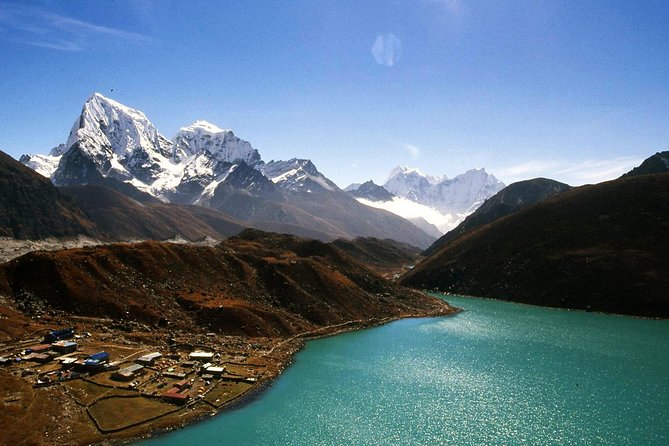
- Gokyo Lake and Gokyo Ri: The route reaches the sacred turquoise lake at 4,760 meters, followed by a high viewpoint hike.
- Cho La Pass at 5,420 meters: This is the physical crux of the trip and requires steady footing, stamina, and a sensible attitude toward changing conditions.
- Everest Base Camp or Kala Patthar: The day 12 plan offers one of two major high-altitude objectives, so confirm which option your guide intends to lead.
- Small maximum group: The operator accepts up to 18 people, a size that can still feel manageable on a mountain trail.
- Strong guide and porter support: Pemba and Pasang are praised by name for helpful service, while porters are repeatedly described as friendly and useful.
- $1,480 package value: The price covers many major trekking costs, though international flights, insurance, tips, personal expenses, and Kathmandu meals remain yours.
What this route gives you that the standard EBC walk does not
The usual Everest Base Camp route has a clear appeal: Namche Bazaar, Tengboche, Lobuche, Gorak Shep, and the famous base camp. This version adds the Gokyo Valley before crossing Cho La Pass to join the Everest route farther east.
That change matters. You are not simply walking up and back through the same valley. You see the Khumbu from two sides, visit Gokyo’s sacred waters, climb Gokyo Ri, and cross one of the region’s best-known high passes. The price is extra effort and more exposure to altitude.
The route also includes a visit to Khumbu’s largest monastery, generally associated with Tengboche in this region. That stop gives the trek a cultural pause after several days of hard walking. The mountains are not just scenery here. Buddhist prayer flags, monasteries, village lodges, and porters carrying supplies are part of the daily rhythm.
More Everest Base Camp Treks:
- Everest Base Camp Trek – 14 Days
★ 5.0 · 1,499 reviews - Everest Base Camp Trekking
★ 5.0 · 485 reviews - Everest Base Camp Trekking – 13 Day
★ 5.0 · 365 reviews
Days 1 to 4: Kathmandu, Lukla, Phakding, and Namche
Your trip starts in Kathmandu, where airport pickup and transfer to a three-star hotel are included. The city portion includes breakfast, but extra meals, drinks, bar bills, and personal purchases are not part of the package. One cultural show and a farewell dinner are included, which gives the city stay a little structure.
On day two, you fly to Lukla and walk to Phakding at 2,620 meters. The flight is the gateway to the trek, and Lukla’s mountain air makes the change from city travel feel immediate. The walk to Phakding is a relatively gentle opening compared with what follows, though you are already beginning the altitude adjustment.
Day three climbs to Namche Bazaar at 3,420 meters. This is one of the most important stops on the route. Namche is the main trading and supply center of the Khumbu, and the trail becomes noticeably more demanding as it gains height.
Day four is reserved for rest and exploration in Namche. Do not treat this as a wasted day. At altitude, an easy day can help your body adjust before the route climbs above 4,000 meters. You can use the time to walk slowly, look around town, and avoid spending the entire day charging up and down hills.
Days 5 to 7: Dole, Machhermo, and the Gokyo Valley
From Namche, the route turns toward Dole, at 4,110 meters. The stated walking time is about six hours. This is where the trek begins to feel serious. You are leaving the lower villages behind and moving into a colder, thinner-air section of the Khumbu.
Day six reaches Machhermo at 4,410 meters in roughly three to five hours. The shorter walking day is welcome, but the altitude still makes ordinary slopes feel harder than expected. You should keep your pace slow and even. This is not the place to prove anything to the mountain.
Day seven reaches Gokyo at 4,760 meters. The lake is one of the route’s main rewards, and its setting beneath the high peaks gives this trek a character different from the direct Everest Base Camp path. The sacred water is also a reminder that Gokyo is not simply a scenic photo stop. It has religious meaning for local communities.
Accommodation during the trek is in local trekking lodges. The package covers the lodging, breakfast, lunch, dinner, and tea or coffee during the trekking section. Exact lodge standards can vary, so I would expect practical mountain accommodation rather than hotel comforts.
Day 8: Gokyo Ri and the walk to Thagnak
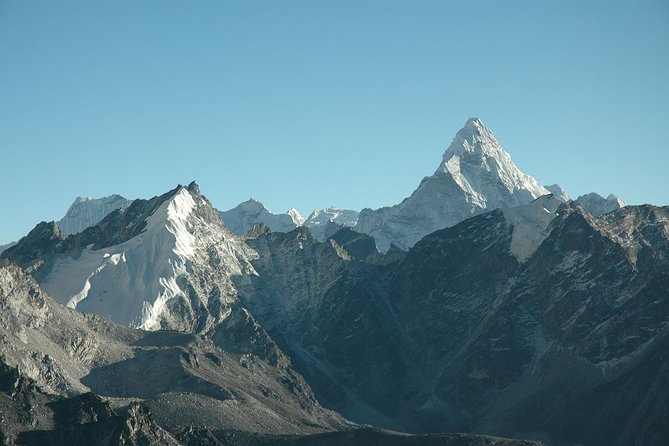
Day eight combines a hike to Gokyo Ri with a trek to Thagnak, at 4,678 meters. Gokyo Ri is the high viewpoint on this side of the route, giving you a broad mountain panorama after the lake visit.
This is also a demanding day because the schedule combines a viewpoint climb with onward travel. The route does not provide another full rest day at Gokyo in the outline, so you need to be ready for an early and physically long day.
Thagnak is a staging point before Cho La Pass. Think of it as preparation for the next major effort, not a destination where you will want to spend a leisurely afternoon. Your guide’s judgment matters here, particularly if anyone in the group is struggling with the altitude.
A few more trips worth weighing up before you book
- Private Kathmandu Sightseeing Tour | UNESCO World Heritage sites
★ 5.0 · 756 reviews - Everest Base Camp Helicopter Tour landing at Everest View Hotel
★ 5.0 · 668 reviews - Half day cooking class in Thamel kathmandu
★ 5.0 · 607 reviews - Nagarkot Sunrise View and Day Hiking from Kathmandu
★ 5.0 · 471 reviews
Day 9: Crossing Cho La Pass at 5,420 meters
Cho La is the biggest physical question mark in the program. At 5,420 meters, it is the highest point listed on the crossing day and one of the most demanding sections of the entire trek.
The route then continues to Dzonglha. Conditions can change, and footing may be difficult, but the supplied details do not specify fixed equipment requirements or seasonal conditions. You should ask the operator what footwear and extra gear are expected before departure. The company says sleeping bags and down jackets are available if needed, which is useful at these elevations.
This is where the trek separates itself from a standard lodge-to-lodge walk. You are not only gaining altitude. You are crossing a high mountain pass between valleys. Anyone choosing this package should be comfortable with a strenuous day and understand that the pass may be the section most affected by conditions.
Days 10 to 12: Lobuche, Gorak Shep, and the Everest objective
Day ten goes to Lobuche at 4,940 meters. At this point, even a modest walking distance can feel tiring. The reward is proximity to the Everest region’s best-known high-altitude landmarks.
Day eleven reaches Gorak Shep at 5,147 meters. This is an important base for the next morning, but it is also very high. Keep your expectations realistic. Sleep at this altitude may be difficult, and the cold can be more noticeable than in the lower villages.
On day twelve, you make a morning hike to either Everest Base Camp at 5,365 meters or Kala Patthar at 5,550 meters, then descend to Pheriche at 3,950 meters. These are different experiences. Everest Base Camp puts you at the famous mountaineering destination, while Kala Patthar is the higher viewpoint option.
The wording of the plan says either Everest Base Camp or Kala Patthar, not necessarily both. I would confirm this before booking, especially if one particular goal matters most to you. The descent to Pheriche is a welcome change after the high nights at Gorak Shep, and the lower elevation should feel easier on your body.
Days 13 to 16: Tengboche, Monjo, Lukla, and Kathmandu
Day thirteen reaches Tengboche at 3,860 meters. This is the cultural heart of the return route, with the area’s major monastery and wide mountain views. It gives you a chance to slow down and absorb the spiritual side of the Khumbu after the technical effort of Cho La and the high Everest section.
Day fourteen continues to Monjo at 2,635 meters. The descent brings thicker air and a more comfortable walking rhythm. Day fifteen returns to Lukla at 2,840 meters, where the trekking portion ends.
On day sixteen, you fly back to Kathmandu. Mountain flights are a practical part of the route, and the program includes the transport arrangement, but the supplied details do not promise a fixed flight time. Keep your schedule flexible around the return to the city.
Day seventeen is departure day. Airport departure assistance is included, which is useful after a long trek when you may be tired and carrying equipment.
Meals, lodges, gear, and porter support
During the trek, breakfast, lunch, and dinner are included, along with tea or coffee. This is a meaningful part of the price because you are not buying every meal separately in remote mountain villages. Kathmandu meals outside the listed breakfast are excluded.
The package includes a guide, the guide’s salary, accommodation, meals, and insurance. It also includes one porter for every two people to carry baggage. That arrangement can make a major difference. You still need to carry a daypack, but you do not have to haul your full luggage over Cho La and the high valleys.
A sleeping bag and down jacket are available if needed. The company also supplies a T-shirt, first-aid medicine items, and a trip achievement certificate. These are modest extras, but the sleeping bag and down jacket have practical value in cold lodge rooms.
The guide names attached to the experience include Pemba and Pasang. Pemba is specifically praised for being helpful and friendly, while Pasang is described as helpful, with the porter team also receiving warm comments. That matters because a good guide is not only there to point out the path. On a high-altitude route, communication and judgment are part of the service.
Is $1,480 a fair price?
At $1,480 per person, this is a strong package value if you want an organized trek. The fee includes Kathmandu airport transfers, city transportation, a three-star hotel with breakfast, trekking lodges, trekking meals, a guide, porter support, permits, the TIMS card, taxes, a cultural show, farewell dinner, and some gear.
You still pay for international airfare, travel insurance, tips for the trekking crew, entrance fees, personal expenses, bar bills, and extra Kathmandu meals. Those exclusions are normal for a package of this kind, but you need to budget for them rather than treating $1,480 as the entire trip cost.
The package is especially useful if you do not want to arrange permits, local transport, lodging, and porter logistics yourself. Independent planning may offer more flexibility, but this route has several moving parts, including Lukla flights, multiple valleys, a high pass, and a return connection. Paying for organization has real value here.
Fitness, group size, and the hard practical truths
The operator asks for moderate physical fitness, but I would read that requirement carefully. This is a 14 to 19 day high-altitude trek, with several days above 4,000 meters and a pass at 5,420 meters. Moderate fitness may be enough for the walking itself, but comfort at altitude varies widely.
The maximum group size is 18. That is not a private trek, but it is still more manageable than a large coach-style group. Ask how the company handles different walking speeds and what happens if someone needs to stop or descend.
You should also allow for the fact that the stated duration is approximate. The outline runs to 17 days, while the overall duration is given as 14 to 19 days. Mountain transport and conditions can affect plans, so avoid scheduling an important international connection immediately after the planned return.
Free cancellation is available if you cancel at least 24 hours before the experience starts. A cancellation inside that window is not refundable, and changes made inside 24 hours are not accepted.
Who will get the most from this trek?
I would choose this trip if you want Everest Base Camp but also want a more varied route. Gokyo Lake, Gokyo Ri, and Cho La make the journey feel like a full Khumbu circuit rather than a single destination walk.
It suits people who enjoy long days, basic lodge accommodation, and a clear group plan. It also suits anyone who values having a guide and porter team arranged in advance.
I would think twice if you want a relaxed holiday, private rooms, short walking days, or a guaranteed visit to both Everest Base Camp and Kala Patthar. The route is demanding, and the plan only promises one of those two day 12 goals.
Should you book Everest Base Camp with Gokyo Lake?
Book it if you want a well-supported high-altitude trek with the best elements of the Everest region in one route. The price covers the costly practical pieces, the route has real variety, and guide and porter support receive particularly strong praise.
Before paying, confirm three things: whether day 12 means Everest Base Camp or Kala Patthar, what equipment is supplied for Cho La, and how the operator handles schedule changes caused by mountain flights or conditions. If you accept the altitude, basic lodges, and strenuous pass crossing, this is a compelling way to see the Khumbu with less logistical worry.
FAQ
Where does the trek start?
The experience starts in Kathmandu, in Nepal’s Kathmandu Valley.
How long does the experience last?
The planned program lasts 17 days, while the stated approximate duration is 14 to 19 days.
What is the highest point on the route?
Cho La Pass is listed at 5,420 meters. Kala Patthar is listed at 5,550 meters if that option is chosen on day 12.
Does the trip include Everest Base Camp?
The day 12 plan includes a morning hike to either Everest Base Camp or Kala Patthar. You should confirm which option applies to your booking.
Is Gokyo Lake included?
Yes. The route reaches Gokyo at 4,760 meters, followed by a hike to Gokyo Ri and a trek onward to Thagnak.
Are meals included?
Breakfast, lunch, and dinner are included during the trek, along with tea or coffee. Breakfast is included with the city hotel stay. Extra Kathmandu meals are not included.
Is accommodation included?
Yes. The package includes a three-star city hotel with breakfast and trekking lodge accommodation during the mountain route.
Is a guide included?
Yes. The guide’s salary, accommodation, meals, and insurance are included.
Is porter support included?
Yes. The arrangement provides one Sherpa porter for every two people to carry baggage.
What does the price exclude?
The price excludes international airfare, travel insurance, tips for the trekking crew, tour entrance fees, extra Kathmandu meals, personal expenses, and bar bills.
What is the cancellation policy?
You can cancel up to 24 hours before the experience starts for a full refund. Cancellations or changes made less than 24 hours before the start time are not accepted for a refund.
Just added around Kathmandu
- Private Shopping Tour in Kathmandu★ 5.0 · 3 reviews
- Nagarkot Sunrise With 7 UNESCO World Heritage Private Tour★ 5.0 · 3 reviews
- Kathmandu: Nightlife and Pub Crawl Tour★ 5.0 · 3 reviews
- Mount Everest Scenic Flight 50 Minutes★ 5.0 · 3 reviews
- Momo Cooking Class -The Art Of Making MoMo with Home Chef★ 5.0 · 3 reviews
- Kathmandu: Nagarkot, Bhaktapur, Doleswor & Sanga Statue Tour★ 5.0 · 3 reviews
- Makalu Base Camp Trek★ 5.0 · 3 reviews
- Everest Experience Trek 6 Day Hiking Adventure★ 5.0 · 3 reviews
Everest Base Camp Treks, compared.






Everest Base Camp Trek with Helicopter Return from Gorakshep to Lukla
Read our review →Browse the lists this tour appears in