
Reviewed · WORKSHOPS
Knife Khukuri Making Workshop
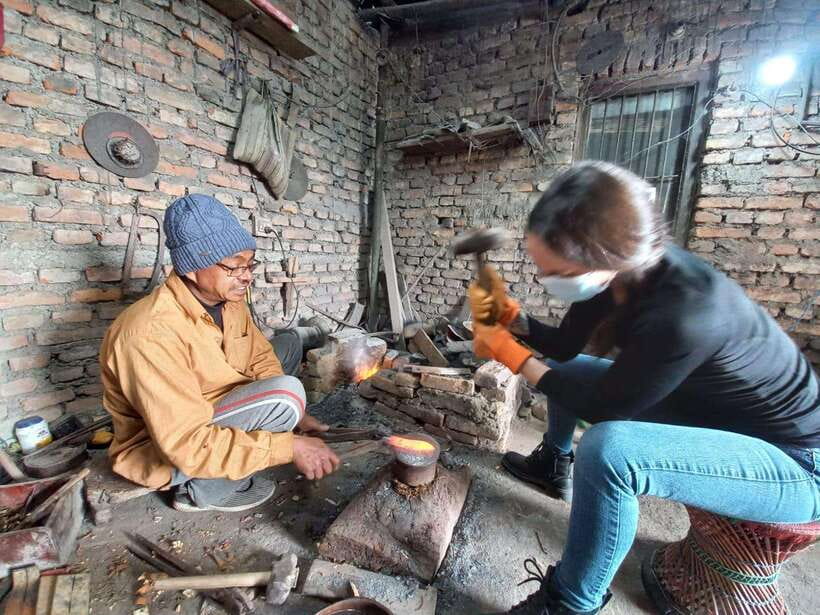
Steel, sparks, and a story to take home. This four-hour workshop gives you a rare look at Nepalese blacksmithing while letting you help make a small six-inch khukuri. I like the personal setting in a local blacksmith’s home and the chance to meet a craftsman with more than 40 years of experience. I also like that pickup, tools, refreshments, and a knife cover are included. The main consideration is that you will not complete every step yourself. The dangerous grinding and sharpening work stays with the professional.
You will hammer heated iron, help with the first grinding, learn why the khukuri matters to Nepal, and watch a rough piece of metal become a useful blade. Guides such as Namrata, Sajeena, and Swayam help explain the process in English or Hindi. If you expect a full blacksmithing course, this is not it. If you want a safe, meaningful craft experience with a strong souvenir at the end, it is a fine choice.
In This Review
- Key points at a glance
- Why a khukuri is more than a knife
- Arriving at a blacksmith’s home in Bagmati
- Hammering the raw iron into shape
- Grinding, sparks, and the limits of participation
- The handle, cover, and finished knife
- The guide makes the difference
- Is $73 a good value?
- Who should book this workshop?
- Should you book the khukuri workshop?
- FAQ
- Where does the khukuri-making workshop take place?
- How long does the experience last?
- How much does the workshop cost?
- What size knife will I make?
- Can I perform every step of the knife-making process?
- Is hotel transportation included?
- What languages are available?
- How many people can join the group?
- What should I wear?
- Are children allowed to join?
Key points at a glance
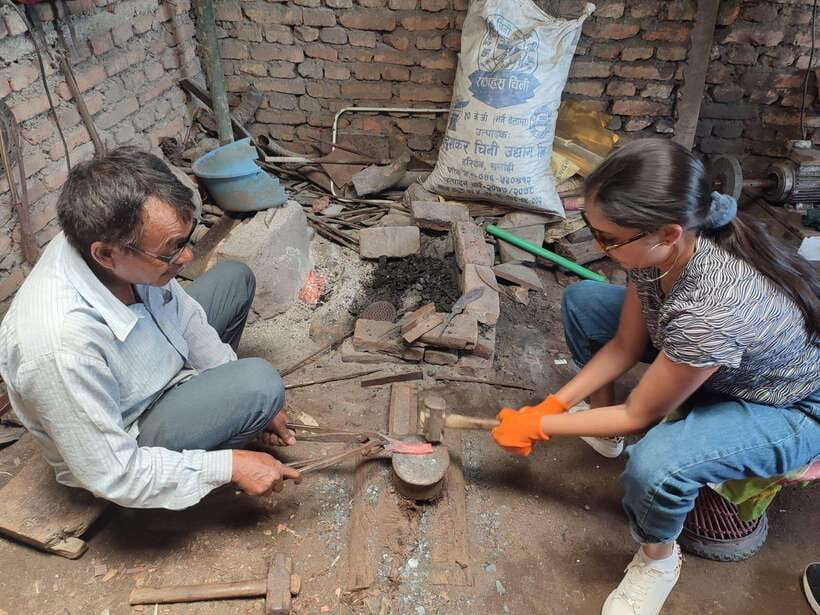
- A local family workshop: You visit a blacksmith’s home and working studio, rather than a polished factory showroom.
- A small but useful souvenir: You make a six-inch khukuri and receive a cover for it.
- Real hands-on work: You can hammer the iron and help with the first grinding, while the blacksmith handles the risky stages.
- Strong cultural context: You learn about the khukuri’s connection to Gurkha warriors, hill communities, and Hindu symbolism.
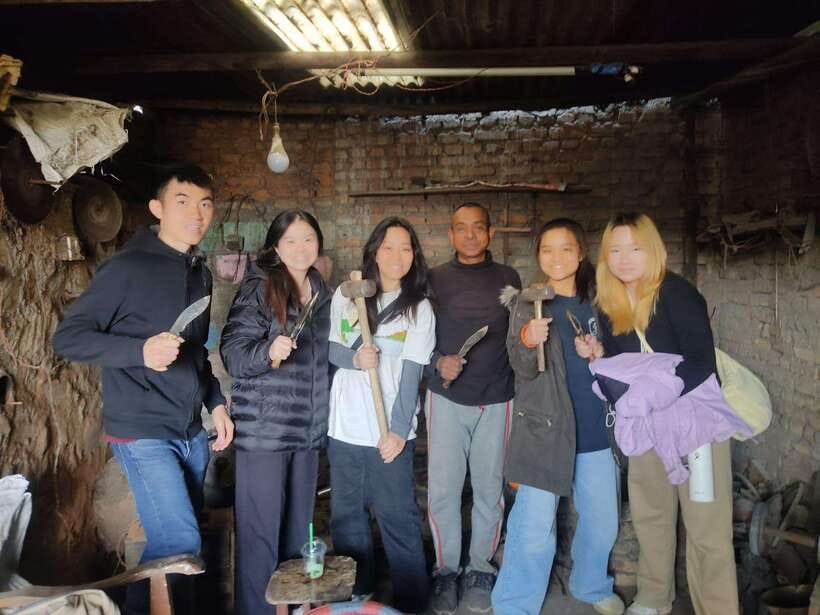
- Small-group attention: Groups are limited to five people, which matters when you are working near hot metal.
- Easy hotel transfer: Pickup and drop-off are included, with transport receiving an 86 percent perfect rating.
Why a khukuri is more than a knife
The khukuri is one of Nepal’s clearest cultural symbols. It is linked with the loyalty and courage of Gurkha warriors, but it is not only a ceremonial object. Across Nepal’s hill communities, it has long been used for practical jobs such as shaping timber and cutting meat or vegetables.
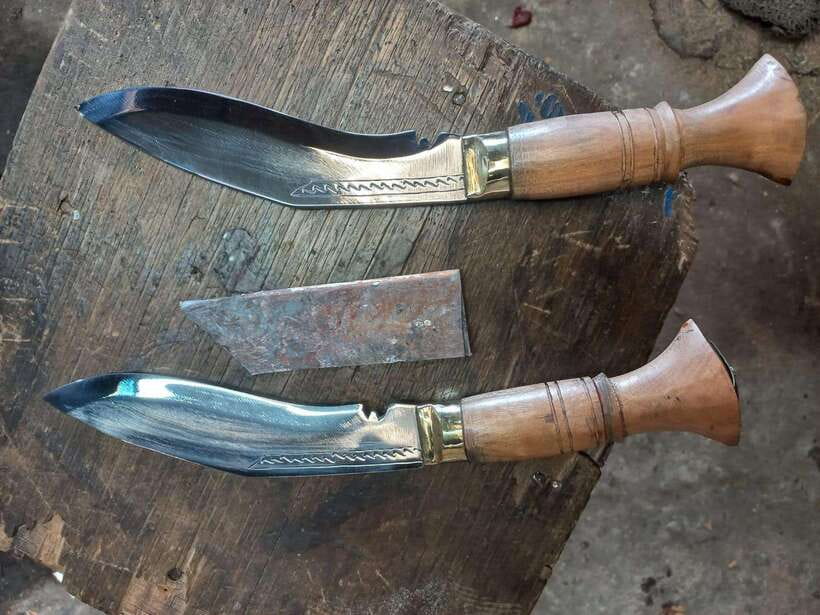
The blade is made from tempered steel. Its slight curve gives it a distinctive profile, and its sharp edge makes the finished knife genuinely useful. Handles are commonly made from wood or buffalo horn, while the blade rests in a wood-and-leather scabbard.
You will also hear about the small notch near the handle. It helps keep blood from running onto the grip, and it carries religious meaning connected with Brahma, Vishnu, and Shiva. That detail gives the workshop more weight than a simple make-your-own souvenir session. You are learning how an object can carry practical, military, religious, and family meaning at the same time.
The knife made during this activity is deliberately small. A six-inch blade is easier to handle and transport than a full-size khukuri, but it still shows the shape and character of the traditional design.
More Workshops:
- Half day cooking class in Thamel kathmandu
★ 5.0 · 607 reviews - Kathmandu: Local Women-Led Nepali Cooking & Momo Class
★ 4.9 · 360 reviews - Kathmandu: Local Lead Nepali Cooking & Momo-Making Class
★ 5.0 · 212 reviews
Arriving at a blacksmith’s home in Bagmati
Your day begins with pickup from your hotel lobby. The included transfer saves you from sorting out local transport and takes you to the blacksmith’s home and studio in Nepal’s Bagmati Zone.
This setting is a major part of the appeal. You are not watching a staged demonstration in a large tourist center. You are visiting a working craftsperson in a personal setting, where the tools, heat, hammer, and finished knives are part of everyday work.
The group limit is five people. That is small enough for the guide to translate questions, explain the steps, and help you take part without crowding the work area. It also makes a difference for safety. Hot metal and flying sparks are not ideal companions for a large group.
The host has been making knives for more than 40 years. The supplied information gives his experience as 42 years, while some descriptions refer to more than 40 years. Either way, you are learning beside someone who has spent decades judging heat, pressure, shape, and edge quality by hand.
Tea, water, and snacks are included. Several visits have included friendly family hospitality, with tea and fruit such as guava available from the home garden. These touches are not the main reason to book, but they help turn the appointment into a personal meeting rather than a technical lesson.
Hammering the raw iron into shape
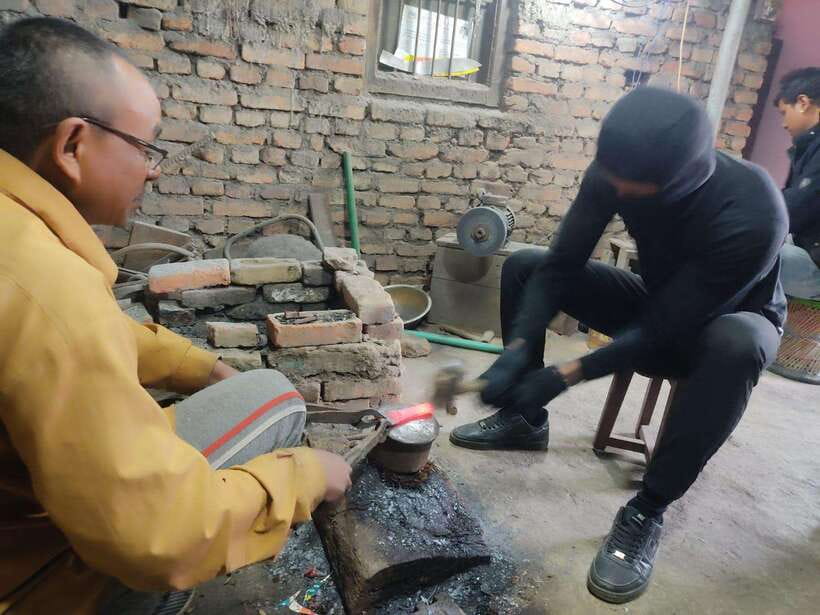
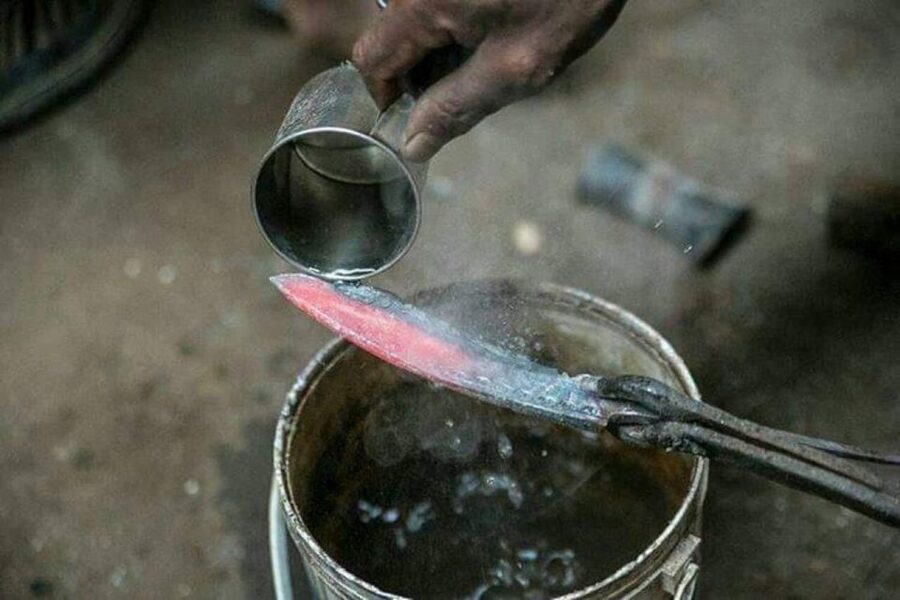
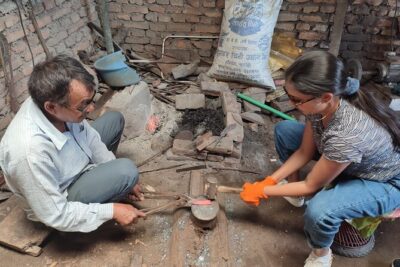
The first practical stage is hammering. The blacksmith starts with a raw piece of iron or steel and works it toward the curved outline of the blade. You get to help with the hammering under close guidance.
This is the most satisfying part for many people because you can feel the force needed to change the metal. It also gives you a quick lesson in how much skill is hidden inside a simple-looking knife. Swinging a hammer is easy. Knowing where to strike, how hard to strike, and when the metal is ready requires years of practice.
Do not expect to shape the whole knife independently. The blacksmith handles the difficult forming work, including the fine control needed to create the khukuri’s curve. Your role is supervised and limited to steps that can be completed safely.
I like this arrangement. You get real participation without pretending that a few hours can replace a lifetime of craft. The finished knife is better because the professional remains responsible for the parts that affect its strength and shape.
Wear long pants. That is the stated clothing requirement, and it is sensible around a forge and hot metal. You should also follow instructions closely and keep clear of the working area when asked.
Grinding, sparks, and the limits of participation
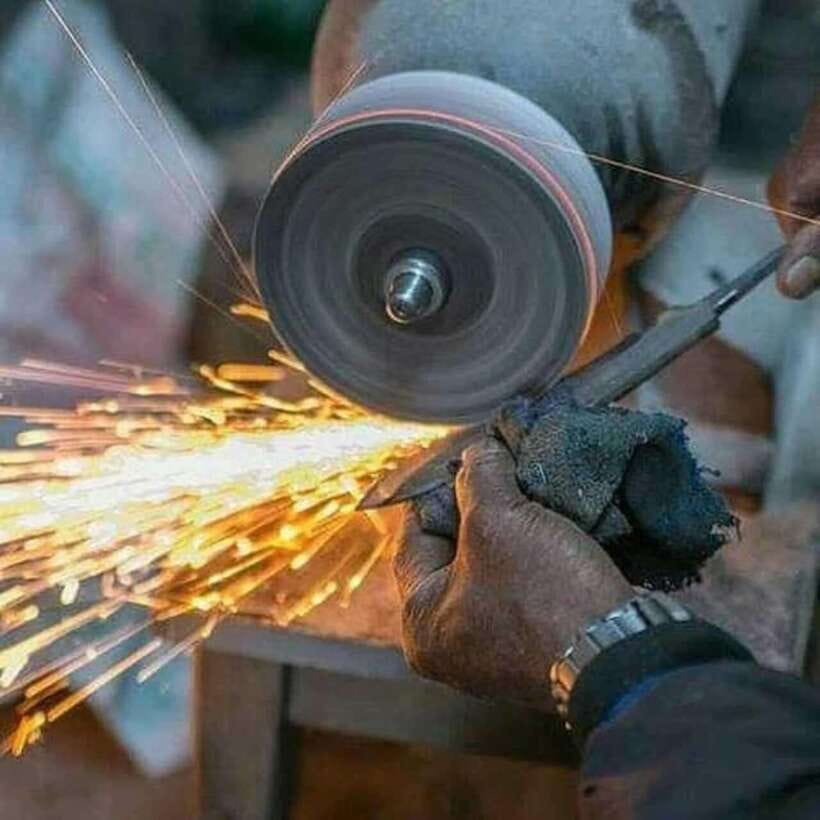
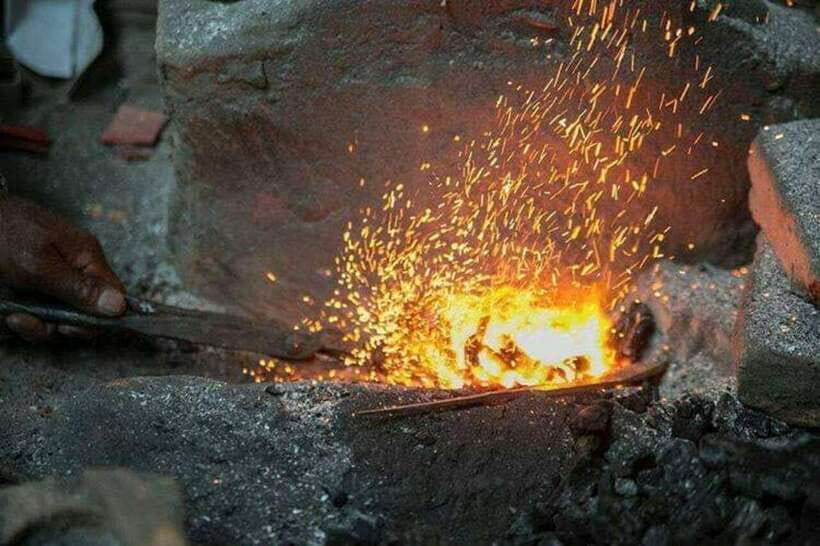
After the hammering, the blade needs grinding. This creates the clean surfaces and sharp profile that make the rough metal look like a knife.
You can help with the first grinding stage, but the host does the blade grinding that creates sparks. The safety instructions specifically advise you to stay clear during this work. The final sharpening and other skilled stages are also handled by the blacksmith.
This is the point where expectations matter most. The activity is hands-on, but it is not a do-it-yourself forge course. You will not be left alone with a grinder, and you will not be expected to sharpen a blade without supervision.
Some people may find the limits disappointing, especially if they have booked a traditional blacksmithing class hoping to perform every step. I see the tradeoff differently. A sharp knife, hot steel, and powered grinding tools demand experience. Letting the host take over the risky work keeps the session safer and gives you a better finished product.
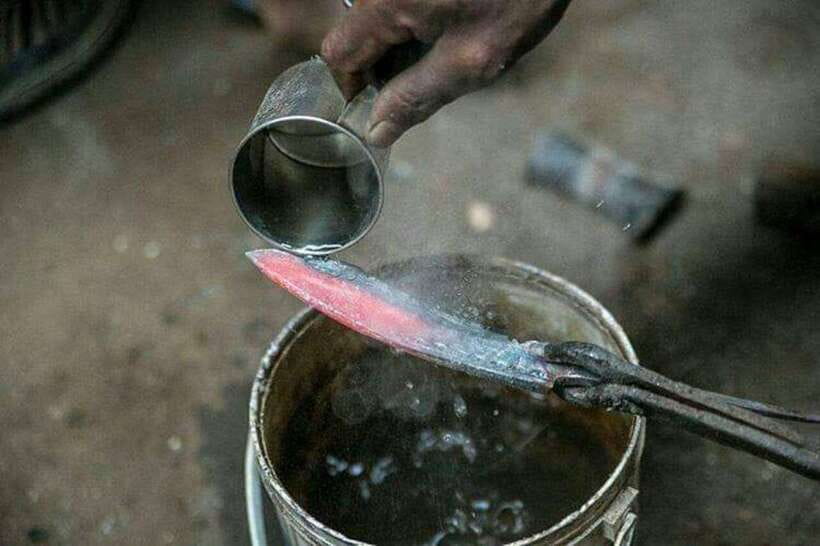
You will watch the raw metal change quickly. One distinctive part of the experience is seeing a rough piece of steel become a recognizable khukuri in less than the full four-hour appointment. The exact working time can vary, but the activity is scheduled for four hours, including transport, explanation, craft work, and the relaxed time around it.
A few more trips worth weighing up before you book
- Everest Base Camp Trek – 14 Days
★ 5.0 · 1,499 reviews - Private Kathmandu Sightseeing Tour | UNESCO World Heritage sites
★ 5.0 · 756 reviews - Everest Base Camp Helicopter Tour landing at Everest View Hotel
★ 5.0 · 668 reviews - Everest Base Camp Trekking
★ 5.0 · 485 reviews
The handle, cover, and finished knife
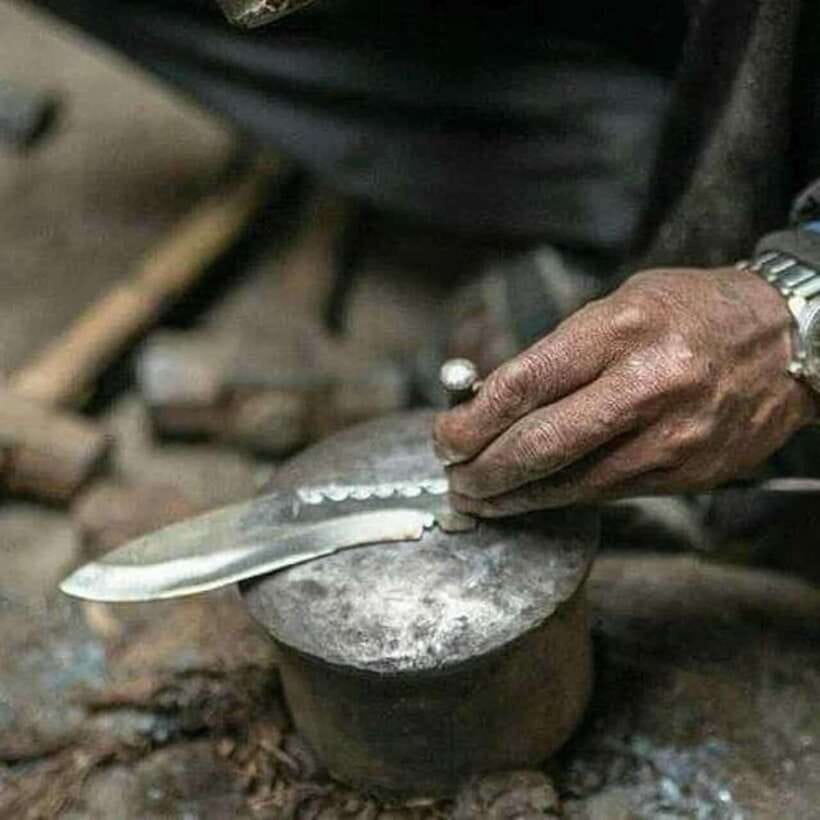
The full khukuri-making process includes shaping the handle and fitting the blade. The experience description says you will take part in making the handle, though the included hands-on stages are specifically listed as hammering and first grinding. This means the amount of handle work you personally perform can depend on the host’s safety judgment and the pace of your visit.
A standard knife cover is included. The traditional scabbard is made from wood and leather, giving the blade a proper home rather than leaving you with a bare knife wrapped in paper.
A horn or bone cover can be made for an additional cost. If the appearance of the scabbard matters to you, ask about that extra option before the work begins. It can turn a practical souvenir into a more decorative keepsake, but it is not part of the $73 price.
The finished knife is the reward for the work. It is not merely a certificate or a mass-produced item selected from a shelf. You have watched its creation, helped with part of the process, and taken home an object connected to a local craft tradition.
Several people have found the finished blade sturdy and well made. One useful detail is that the workshop uses hard steel, which can be more durable than softer versions commonly sold in markets. You should still follow any care advice given by the host, since the activity information does not specify a maintenance routine.
The guide makes the difference
The blacksmith is the star of the workshop, but the guide shapes how much you understand. Guides including Namrata, Sajeena, and Swayam have helped explain the craft, translate questions, and add context about Nepalese customs and the origin of the khukuri.
That support is especially useful if you do not speak Hindi or Nepali. The listed languages are English and Hindi, and the guide helps keep the conversation moving while the blacksmith works.
Namrata has been praised for being warm and attentive, while Sajeena has been described as especially helpful throughout the pickup, workshop, and return to the hotel. Swayam has also helped make the activity a highlight for families. These details matter because a workshop can become confusing when the host is busy with the forge. A good guide lets you focus on the craft instead of wondering what is happening next.
You should use the time to ask about the blade’s design, the role of the khukuri in Nepal, the materials used for handles, and how the blacksmith learned the trade. The workshop gives you access to a person and a process that most ordinary sightseeing does not.
Is $73 a good value?
At $73 per person, this is not the cheapest souvenir activity in Nepal. You can buy a knife in a market for less, and you can visit cultural sites without paying for a private craft session.
The value comes from what is bundled into the price. You receive hotel pickup and drop-off, a small-group appointment, an English or Hindi-speaking host or guide, the tools, tea, water, snacks, a knife cover, and the handmade knife itself.
You are also paying for access to a skilled artisan and for the time needed to work safely. The result is a personal object rather than a factory-made purchase. If you already want to take home a khukuri, the guided making process makes the extra cost easier to justify.
The price is less attractive if you only want a finished knife and have no interest in the history or production. In that case, a market purchase may suit you better. For a meaningful activity during a Kathmandu-area visit, the combination of craft, conversation, transport, and souvenir gives the $73 fee solid value.
Who should book this workshop?
I would recommend it to adults and older children who enjoy making things, local history, and meeting craftspeople. Children under 10 are not suitable for the activity. Older children may be able to participate with help, but the host decides which steps are safe.
It also suits families particularly well. You can take part as much or as little as your ability allows, and the blacksmith handles the difficult work. That flexibility means one family member can hammer while another prefers to watch.
This is a good choice if you want a break from temples, monuments, and organized sightseeing. It gives you a physical activity and a conversation with a local family. It is also a strong fit for anyone who collects useful objects with a story.
You should think twice if you dislike heat, noise, sparks, or close supervision. The workshop takes place in a real working smithy, not a quiet craft studio. Long pants are required, and you need to respect the safety boundaries around the grinder.
The experience is limited to five participants, but that does not mean every moment will be private. You may share the blacksmith’s attention with other people in the group. Still, the small size gives the session a personal feel without requiring you to book a private appointment.
Free cancellation is available up to 24 hours before the activity for a full refund, and you can reserve now while paying later. Starting times depend on availability, so check the schedule before arranging other plans.
Should you book the khukuri workshop?
Book it if you want a genuine Nepalese craft experience, not just another item from a souvenir shop. The strongest reasons are the seasoned blacksmith, the home workshop setting, the chance to hammer the metal yourself, and the well-explained cultural meaning of the khukuri.
Go in with clear expectations. You will not forge and sharpen the complete blade alone. The host takes over the dangerous and highly skilled stages, which is exactly why the final knife is safe, attractive, and durable.
For $73, you get a four-hour activity, transport, refreshments, guidance, and a useful six-inch khukuri with a cover. I would make this a priority for families, craft fans, and anyone looking for a personal Kathmandu-area memory that has more substance than a quick market purchase.
FAQ
Where does the khukuri-making workshop take place?
The activity takes place in Nepal’s Bagmati Zone, at the home and working studio of a local blacksmith.
How long does the experience last?
The scheduled duration is four hours.
How much does the workshop cost?
The price is $73 per person.
What size knife will I make?
You will make a small khukuri with a blade measuring about six inches.
Can I perform every step of the knife-making process?
No. You take part in hammering the iron and the first grinding. The host handles dangerous grinding, sharpening, and other highly skilled stages for safety.
Is hotel transportation included?
Yes. Pickup from your hotel lobby and drop-off afterward are included.
What languages are available?
The host or guide can provide the experience in English or Hindi.
How many people can join the group?
The activity is limited to five participants.
What should I wear?
You should bring and wear long pants.
Are children allowed to join?
Children under 10 are not suitable for this experience. Older children may participate in some steps when the host considers it safe.
Just added around Kathmandu
- Private Shopping Tour in Kathmandu★ 5.0 · 3 reviews
- Nagarkot Sunrise With 7 UNESCO World Heritage Private Tour★ 5.0 · 3 reviews
- Mount Everest Scenic Flight 50 Minutes★ 5.0 · 3 reviews
- Kathmandu: Nightlife and Pub Crawl Tour★ 5.0 · 3 reviews
- Kathmandu: Nagarkot, Bhaktapur, Doleswor & Sanga Statue Tour★ 5.0 · 3 reviews
- Momo Cooking Class -The Art Of Making MoMo with Home Chef★ 5.0 · 3 reviews
- Makalu Base Camp Trek★ 5.0 · 3 reviews
- Everest Experience Trek 6 Day Hiking Adventure★ 5.0 · 3 reviews
Workshops, compared.


Knife (Khukuri) Making Workshop- Forge of the Gurkhas
Read our review →

Nepalese Momos or Dal Bhat Cooking Class (Cook with Delight)
Read our review →
The best Private Nepali Cooking Class in Kathmandu
Read our review →
Nepalese Kitchen in Pokhara: Momos or Dal Bhat Cooking Class
Read our review →Browse the lists this tour appears in