
Reviewed · MOMO MAKING CLASSES
Momo Making Class in Kathmandu with Pickup & Drop off from Hotel
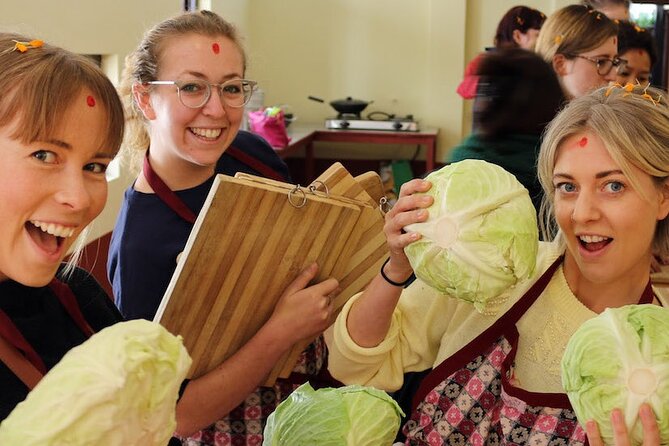
Momos are Nepal’s edible calling card. This two-hour Kathmandu class gives you more than a plate of dumplings: you visit a local market, choose ingredients, make dough and filling from scratch, then sit down to eat what you made. I especially like the market visit and the chance to request vegetarian, vegan, or chicken momos. I also like that the class covers both classic steamed momos and soup momo, a less common style. The main consideration is the short schedule, since the market visit, cooking lesson, shaping, and meal all fit into about two hours.
The class begins at 1 PM at the Kathmandu Cooking Academy in Thamel. Optional hotel pickup and drop-off within Kathmandu Valley make the outing easy, but you should confirm that transport is selected when booking. With a maximum of 10 people and a price of $29 per person, this is a small, fairly priced introduction to Nepali food.
In This Review
- Key points at a glance
- Starting at 1 PM in Thamel
- Choosing ingredients at a Kathmandu market
- Learning the dough and filling from scratch
- Shaping steamed momos or soup momo
- Eating the results with Nepali masala tea
- Is $29 a fair price?
- Who will enjoy this class most?
- Practical advice before you book
- Should you book the Kathmandu momo class?
- FAQ
- Where does the momo class begin?
- What time does the class start?
- How long does the experience last?
- Where does the class end?
- Is hotel pickup available?
- What types of momo filling are offered?
- Can I choose the type of momo I make?
- Is the market tour included?
- Is Nepali masala tea included?
- How many people can join the class?
- What is included in the $29 price?
- Are drinks and tips included?
- Can I cancel for a full refund?
Key points at a glance
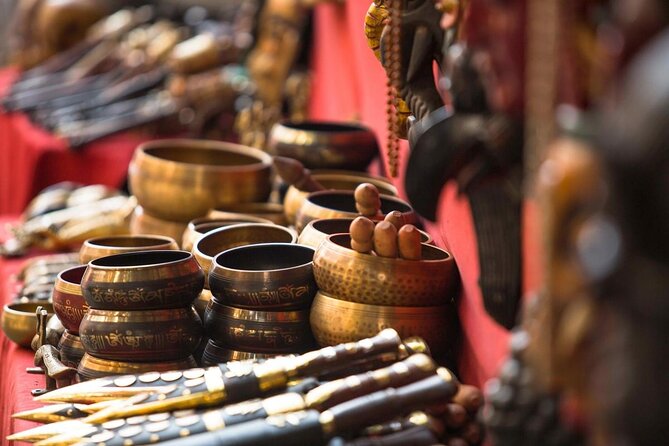
- Market shopping comes first: You help select fresh ingredients instead of simply arriving at a prepared kitchen.
- Three filling choices: The class offers vegetarian, vegan, or chicken options, so you can match the meal to your diet.
- Two momo styles: Learn traditional steamed momos or try soup momo, a more unusual preparation.
- Hands-on from start to finish: You prepare the dough and filling, shape the dumplings, and eat the finished food.
- Small class size: The group is limited to 10 people, which should allow room for individual guidance.
- Hotel transport is optional: Pickup and drop-off within Kathmandu Valley can remove some of the day’s transport hassle.
Starting at 1 PM in Thamel
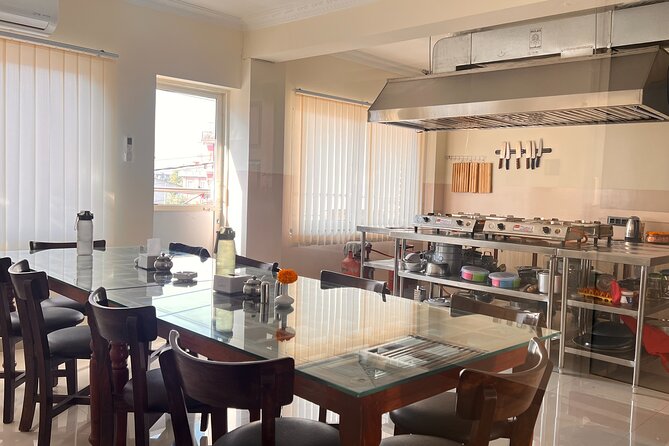
The meeting point is Kathmandu Cooking Academy on Yapikhya Marg in Kathmandu 44600. The class starts at 1 PM and ends back at the same meeting point, unless you arrange the optional hotel transfer within Kathmandu Valley.
That central setup matters. Thamel is one of the easiest parts of Kathmandu for visitors to reach, and ending where you began keeps the activity simple. If you are already staying nearby, you can likely make your own way there and avoid adding pickup time to a two-hour class. If your hotel is farther across the valley, pickup and drop-off offer a useful convenience.
The group limit is 10 people. That is not a private lesson, but it is small enough to make hands-on help realistic. You are not simply watching a chef fold dumplings from across a large room. The format is designed for participation, questions, and specific requests.
The schedule is fairly tight. You will want to arrive ready to begin at 1 PM, since the class has several stages to cover. A confirmed booking is issued at the time of reservation, and mobile tickets make it easy to keep the details on your phone.
More Momo and Nepali Cooking Classes:
- Kathmandu: Local Women-Led Nepali Cooking & Momo Class
★ 4.9 · 360 reviews - Kathmandu: Local Lead Nepali Cooking & Momo-Making Class
★ 5.0 · 212 reviews - Local Women Lead Nepali Cooking Class
★ 5.0 · 125 reviews
Choosing ingredients at a Kathmandu market
The market visit is the feature that gives this class its local flavor. Rather than finding every ingredient measured and waiting beside a cooking station, you go out with the local instructor and help choose what will go into your momo filling.
This is a small but important difference. Food shopping shows you how a familiar dish begins before it reaches a restaurant menu. You can look at the ingredients, make choices, and connect the final meal to a real place in Kathmandu. The market also gives the class a stronger sense of everyday food culture than a lesson held entirely indoors.
You choose between vegetarian, vegan, or chicken momos. The information provided does not specify the exact ingredients or market route, so you should think of this as a guided selection rather than a fixed shopping list. That flexibility is useful if you have dietary preferences or simply want to make a filling that suits you.
The market portion also takes time away from cooking. That is not a flaw, but it is worth understanding. If you want a long, technical cooking workshop, two hours may feel brief. If you want a compact food activity with a taste of local shopping, the balance works better.
Learning the dough and filling from scratch
Back at the cooking academy, the instructor shows you how to prepare the momo dough and filling. The dough is not an afterthought. Getting it right affects how easily the wrappers shape, how well they hold the filling, and how the finished dumpling feels when you eat it.
You then work through the filling preparation before moving to the folding stage. The class is aimed at beginners, but it also leaves room for cooks with more experience. The best part of this setup is that you are not only collecting a recipe. You are learning the order of the work and seeing how the separate parts come together.
A previous participant particularly valued being able to make specific requests suited to personal needs. That suggests the instructor is willing to adjust the class within reason, which is helpful for people choosing vegetarian or vegan food. Still, you should state dietary needs clearly when booking or at the start of the lesson rather than assume every variation is available.
All cooking equipment and accessories are included. You do not need to bring kitchen tools, ingredients, or special supplies. The class description does not list an apron or protective clothing, so wear something comfortable and practical for handling food.
Shaping steamed momos or soup momo
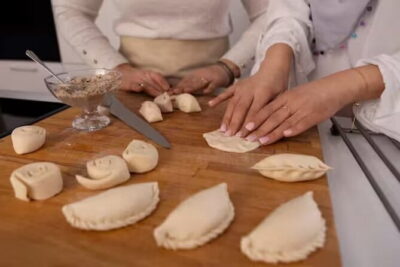
Once the dough and filling are ready, you shape the momos yourself. This is the hands-on heart of the class. Folding dumplings can look simple when an experienced cook does it, but your first few may be less tidy. That is part of the fun, and the instructor’s step-by-step help should make the process approachable.
You can choose traditional steamed momos or experiment with soup momo. Steamed momos are the familiar choice and provide a straightforward introduction to the dish. Soup momo offers a different challenge and gives you a chance to try a preparation that is less standard than the usual steamed dumpling.
The supplied details do not explain the exact folding pattern, cooking equipment, or soup recipe. You should therefore book this for the practical experience of making and eating momos, not for a highly technical master class with a long written syllabus.
The freedom to choose the style is a strong point. It lets you keep things classic or try something new without committing to a completely different activity. If you have never made dumplings, steamed momos may be the easier starting point. If you already cook often, soup momo may make the lesson more interesting.
More Workshops:
- Half day cooking class in Thamel kathmandu
★ 5.0 · 607 reviews - Knife (Khukuri) Making Workshop- Forge of the Gurkhas
★ 5.0 · 143 reviews - The best Private Nepali Cooking Class in Kathmandu
★ 5.0 · 83 reviews - Kathmandu: Traditional Momo Making Class & Pickup
★ 4.8 · 60 reviews
Eating the results with Nepali masala tea
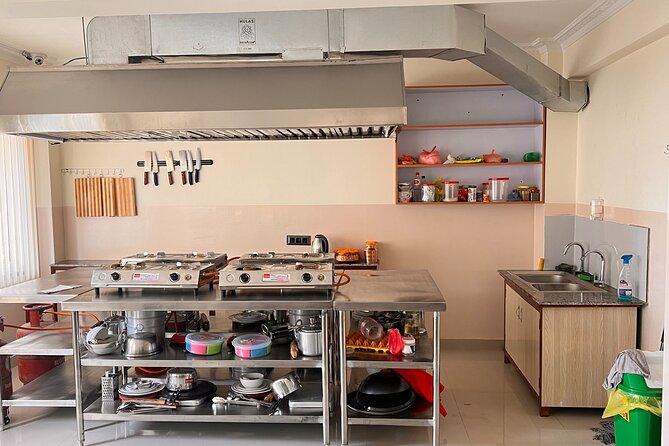
After the cooking is complete, you sit down for a tasting session with the momos you prepared. This gives the class a clear payoff. You get to judge the dough, filling, folds, and final cooking all at once, rather than leaving with a recipe and no chance to sample the result.
A complimentary cup of Nepali masala tea comes with the tasting. The tea adds a traditional local touch and helps turn the lesson into a small meal rather than a quick demonstration. Specialty drinks and alcoholic drinks are not included, so plan to pay separately if you want anything beyond the included tea.
The food quantity is not stated, so I would not book this as a full-day feast or assume it replaces every other meal. It is best viewed as a cooking activity followed by a satisfying tasting session.
The setting is described as cozy and local. That fits the purpose of the class: you are there to work with food, not to dine in a formal restaurant. The atmosphere should appeal to anyone who enjoys a relaxed activity with a clear connection to place.
Is $29 a fair price?
At $29 per person, the value is strong if you want several elements in one short activity. The fee includes the market tour, instruction, ingredients for the class, cooking equipment, the food you prepare, and Nepali masala tea. Optional hotel pickup and drop-off within Kathmandu Valley are also included when that service is selected.
A simple cooking demonstration could cost less, but it would not offer the same level of participation. Here, you are involved in buying the ingredients, making the dough, preparing the filling, shaping the momos, and eating the finished dish. That chain of activities gives the price more weight.
The value is especially good for visitors who want an introduction to Nepali cuisine without spending half a day in a kitchen. It also works well for couples, friends, and small groups, with group discounts available. You should check the final rate for your party because the base price is listed per person.
The limitation is that $29 does not cover specialty or alcoholic drinks, and tips for the chef or staff are not included. Those are ordinary extra costs, but it is better to know them before you arrive.
Who will enjoy this class most?
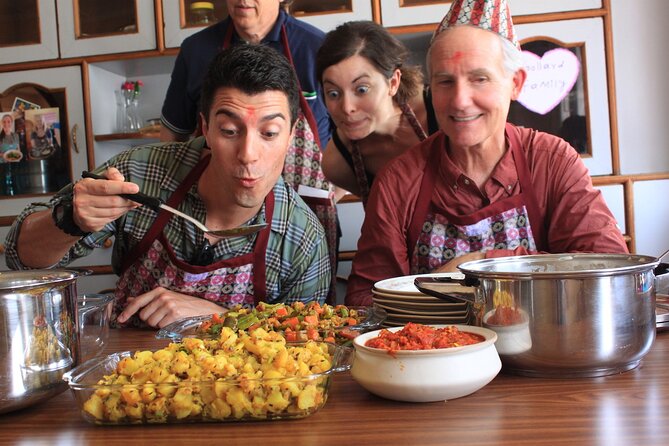
I would recommend this class to first-time visitors who want a food activity with some local context. The market stop makes it more meaningful than a lesson that starts with ingredients already laid out, while the cooking portion remains simple enough for beginners.
It also suits people who prefer small, active experiences. You are not just sitting and listening. You are choosing ingredients, preparing food, and shaping dumplings with a chef’s guidance.
Vegetarians and vegans have a clear starting point because both options are offered alongside chicken. Still, if you have allergies or strict dietary requirements, ask for confirmation before the class. The information confirms the available filling categories, but it does not describe cross-contamination procedures or every ingredient used.
Families and groups may enjoy the social side, especially with group discounts. The class has a maximum of 10 people, so it should feel more manageable than a large commercial workshop. The two-hour length also keeps the activity from becoming tiring.
You may want to skip it if you are looking for a detailed professional cooking course, a long market tour, or a fully private experience. The schedule is compact, and the class is shared with other people.
Practical advice before you book
Choose your filling preference in advance if possible. Vegetarian, vegan, and chicken options are available, and deciding early can make the market stop and kitchen work more efficient.
Think about transport carefully. The class meets and finishes at the cooking academy, so travelers staying near Thamel may find it easiest to walk or arrange their own ride. Pickup and drop-off within Kathmandu Valley are available as an option for added convenience.
Keep the timing in mind. The start time is 1 PM, and the full activity lasts about two hours. Do not plan a major appointment immediately afterward, especially if you are using hotel transport.
A mobile ticket is accepted, and confirmation arrives when you book. Free cancellation is available if you cancel at least 24 hours before the local start time. Cancellations made less than 24 hours ahead are not refunded, and changes within that period are not accepted.
Tips for the chef or staff are not included. Tipping is optional, but you may want small cash available if you feel the instruction and service deserve it.
Should you book the Kathmandu momo class?
Yes, if you want a friendly, affordable introduction to Nepali food with real participation. The market visit, ingredient choices, local instruction, and final tasting give this class more substance than a basic dumpling demonstration. I particularly like the option to request a filling that suits your diet and to choose between steamed momos and soup momo.
Book it with realistic expectations. This is a compact two-hour experience, not an advanced culinary course. The group can reach 10 people, the market route and recipes are not fixed in detail, and extra drinks cost more.
For $29, the package offers a good mix of food, culture, and practical activity. If you are in Kathmandu and want to make one of Nepal’s best-known dishes rather than simply order it, this is an easy experience to recommend.
FAQ
Where does the momo class begin?
The class begins at Kathmandu Cooking Academy on Yapikhya Marg, Kathmandu 44600, Nepal.
What time does the class start?
The class starts at 1 PM.
How long does the experience last?
The activity lasts approximately two hours.
Where does the class end?
The activity ends back at the Kathmandu Cooking Academy meeting point.
Is hotel pickup available?
Yes. Optional hotel pickup and drop-off are available within Kathmandu Valley.
What types of momo filling are offered?
You can choose vegetarian, vegan, or chicken filling.
Can I choose the type of momo I make?
Yes. You can choose traditional steamed momos or soup momo.
Is the market tour included?
Yes. The class includes a guided market tour to select fresh ingredients for the momos.
Is Nepali masala tea included?
Yes. The tasting session includes one complimentary cup of Nepali masala tea.
How many people can join the class?
The activity has a maximum group size of 10 people.
What is included in the $29 price?
The price includes the hands-on class, local instruction, guided market tour, necessary cooking equipment and accessories, tasting of your prepared momos, and Nepali masala tea. Hotel pickup and drop-off are available as an optional service within Kathmandu Valley.
Are drinks and tips included?
Specialty drinks, alcoholic drinks, and tips for the chef or staff are not included.
Can I cancel for a full refund?
Yes, if you cancel at least 24 hours before the experience start time. Cancellations made less than 24 hours ahead are not refunded.
Just added around Kathmandu
- Private Shopping Tour in Kathmandu★ 5.0 · 3 reviews
- Nagarkot Sunrise With 7 UNESCO World Heritage Private Tour★ 5.0 · 3 reviews
- Kathmandu: Nightlife and Pub Crawl Tour★ 5.0 · 3 reviews
- Mount Everest Scenic Flight 50 Minutes★ 5.0 · 3 reviews
- Momo Cooking Class -The Art Of Making MoMo with Home Chef★ 5.0 · 3 reviews
- Kathmandu: Nagarkot, Bhaktapur, Doleswor & Sanga Statue Tour★ 5.0 · 3 reviews
- Makalu Base Camp Trek★ 5.0 · 3 reviews
- Kathmandu: Momo Making Class with a Local Chef★ 5.0 · 3 reviews
Momo Making Classes, compared.




Nepalese Momos or Dal Bhat Cooking Class (Cook with Delight)
Read our review →
The best Private Nepali Cooking Class in Kathmandu
Read our review →
Nepalese Kitchen in Pokhara: Momos or Dal Bhat Cooking Class
Read our review →
Browse the lists this tour appears in