
Reviewed · WORKSHOPS
Thangka Painting Workshop
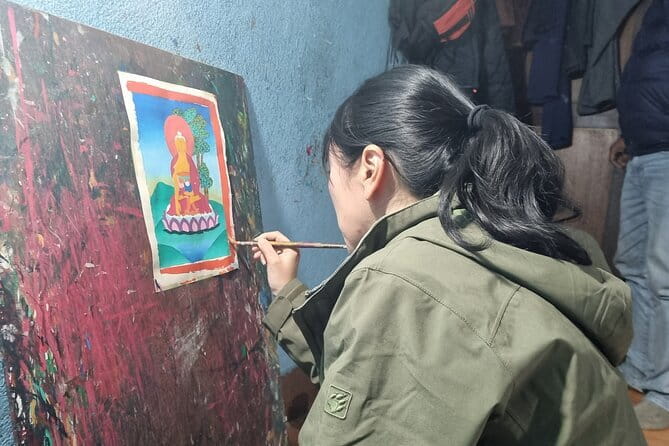
Paint your own piece of Kathmandu. This five-hour workshop lets you work beside artists with about three decades of experience, watch real thangka painting in progress, and take home the piece you create. I like the hands-on instruction and the chance to choose one design from three options. I also like that a private booking keeps the session focused on your group.
The main thing to consider is time. Much of the class involves careful coloring, while fine details can take longer than the scheduled four to five hours. If you already paint, you may want more than two hours for the detailed work, so ask about the pace before you begin.
In This Review
- Five details that shape the experience
- Why painting your own thangka matters
- Arriving at the workshop around 12:45 pm
- Choosing one of three designs
- Sitting beside artists with decades of practice
- What the four to five hours feel like
- A private class with room for questions
- Is $72 a fair price?
- What makes the souvenir different
- Who will enjoy this Kathmandu workshop?
- Booking and cancellation details
- Should you book the Thangka Painting Workshop?
- FAQ
- Where does the Thangka Painting Workshop take place?
- What time does the workshop start?
- How long does the workshop last?
- Is transportation included?
- Can I take home the painting I make?
- What happens if I need to cancel?
Five details that shape the experience
- You choose one of three designs, giving you a personal starting point instead of a random souvenir.
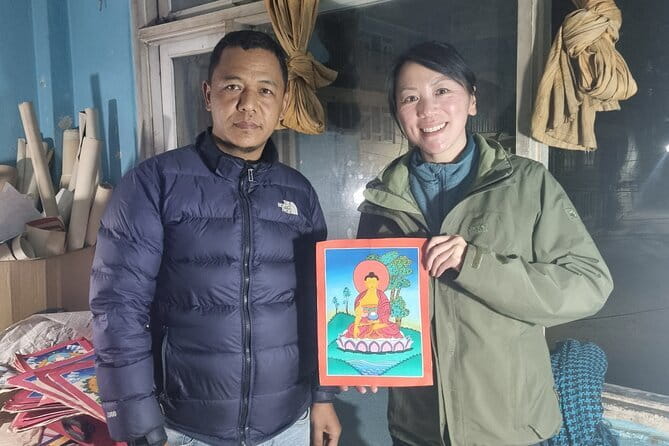
- Artists with roughly 30 years of experience teach the class, with an artist sitting beside you through the process.
- Your own hand-painted thangka comes home with you, not a machine-printed substitute from a shop.
- The experience is private, so only your group takes part.
- Pickup is offered in an air-conditioned vehicle, and an English-speaking guide helps throughout.
- The workshop begins at 12:45 pm and lasts about four to five hours, with snacks not included.
Why painting your own thangka matters
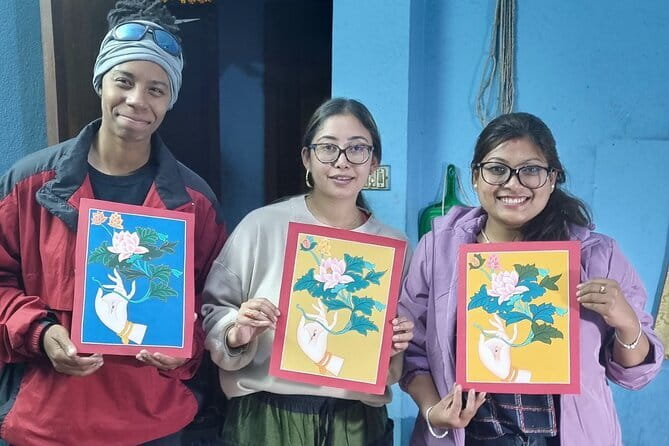
A thangka is not simply a colorful wall decoration. It is a traditional form of Buddhist art, and the value of this workshop is that you get to see how the work is made rather than guessing at the quality of a finished piece in a shop.
That distinction matters in Kathmandu. A painting sold at a street-side shop may be hand-painted, partly hand-painted, or machine-printed. You may not know what you are buying. Here, the process is in front of you. You can watch artists and apprentices at work, ask questions about the art form, and leave with a piece connected to your own time in Nepal.
I like this approach to souvenirs because it replaces a quick purchase with a slow activity. You do not just carry home an object. You understand more about the skill behind it, and you have a story to tell about the hours spent making it.
The workshop is also flexible in useful ways. You can select a pickup location, choose from three designs, and discuss the timing. The published start time is 12:45 pm, so confirm your pickup details when booking, especially if your schedule in Kathmandu is tight.
More Workshops:
- Half day cooking class in Thamel kathmandu
★ 5.0 · 607 reviews - Kathmandu: Local Women-Led Nepali Cooking & Momo Class
★ 4.9 · 360 reviews - Kathmandu: Local Lead Nepali Cooking & Momo-Making Class
★ 5.0 · 212 reviews
Arriving at the workshop around 12:45 pm
Pickup is offered, and the included vehicle is air-conditioned. That is a practical benefit in Kathmandu, where even a short ride can feel tiring after a morning of sightseeing. The experience is also near public transportation, giving you another option if you prefer to make your own way there.
The exact pickup point can be chosen, which is helpful if you are staying in a hotel or already have plans in the city. Since the activity is private, you do not need to coordinate with a large shared group. Your time is focused on the workshop rather than repeated stops to collect other people.
An English-speaking guide accompanies you and helps throughout. That matters here because the value is not only in moving a brush across the canvas. You will likely have questions about the designs, the painting process, and how to tell a hand-painted thangka from a printed one. The guide gives you a person to ask when the art feels unfamiliar.
The meeting time is listed as 12:45 pm. The session itself lasts about four to five hours, so plan for a substantial afternoon. This is not a quick craft demonstration that you squeeze between lunch and another attraction.
Choosing one of three designs
The design choice gives the workshop a personal touch. You are not handed a single pattern and told to copy it. Instead, you choose one of three options before beginning.
The available designs are not specified in detail, so you should not expect to select from an unlimited catalog. Still, three choices are enough to make the final work feel like your own. If one design immediately appeals to you, it may be worth asking the guide or artist about its level of detail before committing.
This is also the point where you should think about your available time. The class runs for four to five hours, but painting speed varies. A simple design may allow more progress during the session, while a detailed image may require more patience or unfinished work after the scheduled period.
The useful question is not simply which image you like best. Ask which design matches your skill, patience, and preferred result. If you want to focus on the relaxing act of coloring, choose accordingly. If you want to spend longer on fine lines and small details, understand that the process can extend beyond the basic class time.
Sitting beside artists with decades of practice
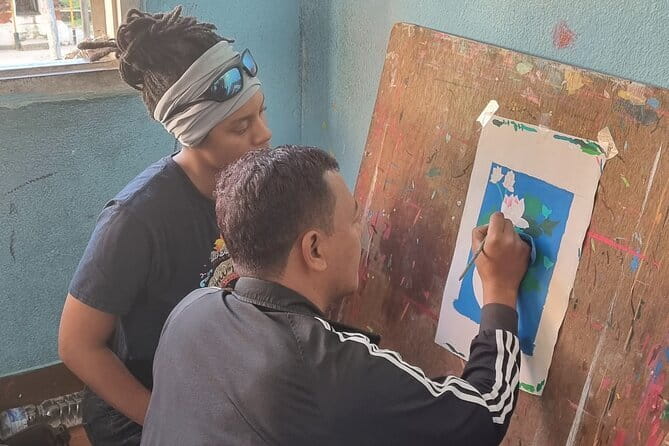
The strongest part of the experience is the instruction. You learn in a real artist workshop, alongside master artists and apprentices who paint thangkas as their craft. The artists have about three decades of experience, and the teaching is personal rather than delivered only from a distance.
One especially useful detail is that the artist sits with you throughout the process. That makes a difference when your hand slips or a color goes outside the line. Instead of treating a mistake as a disaster, the artist helps correct it. You can work at your own pace and ask for help when you need it.
This patient approach makes the class suitable even if you do not consider yourself an artist. You do not need to arrive with painting experience. The work still requires care, but you are not left alone with unfamiliar tools and a blank design.
If you already paint, adjust your expectations. One account of the experience points out that the workshop may involve more than two hours of coloring, while detailed work takes longer. An experienced painter may find the basic coloring easy and want more time for precision. Ask the instructor how much detail you can reasonably complete during the session.
A few more trips worth weighing up before you book
- Everest Base Camp Trek – 14 Days
★ 5.0 · 1,499 reviews - Private Kathmandu Sightseeing Tour | UNESCO World Heritage sites
★ 5.0 · 756 reviews - Everest Base Camp Helicopter Tour landing at Everest View Hotel
★ 5.0 · 668 reviews - Everest Base Camp Trekking
★ 5.0 · 485 reviews
What the four to five hours feel like
The workshop is best understood as a guided art session, not a fast sightseeing stop. You select a design, receive instruction, and spend most of the time painting. The artists remain available to answer questions and help you fix errors.
The slow pace is part of the value. A thangka is made through repeated, careful work, and you get a small sense of that discipline by doing it yourself. You also see the contrast between your own developing piece and the work being produced by artists with many years of practice.
Do not expect to finish a large, highly detailed painting in a few hours. The information provided says you take home the souvenir you made, but it does not specify its size or the exact amount of work completed. The safest expectation is a guided, personal piece designed for the workshop period, with the final result shaped by your pace and chosen design.
The class can be relaxing, but it is not entirely passive. You will sit and concentrate for several hours. A moderate level of physical fitness is requested, though no demanding activity is described. If you find long periods of seated work uncomfortable, keep that in mind.
A private class with room for questions
Only your group participates, which changes the feel of the afternoon. In a larger class, the instructor might have to move rapidly from person to person. Here, the artist and guide can give more direct attention to your work.
The private setup is especially useful if people in your group have different skill levels. One person can ask basic questions while another works ahead. You also have more freedom to discuss the meaning and technique behind the art without worrying about holding up a crowd.
The workshop provider is Queermandu, also known as Gay Tours Nepal. The experience is available as a private activity, and the English-speaking guide helps make the instruction accessible to people who do not know the local art vocabulary.
The private format also adds value to the price. At $72 per person, this is more expensive than buying a printed souvenir or joining a short group demonstration. But the cost includes the instruction, the private arrangement, an air-conditioned vehicle, and all fees and taxes. Most important, it includes the art you make and the time spent learning how it is produced.
Is $72 a fair price?
I see the price as reasonable if you want an activity rather than a purchase. You could spend less on a shop-bought image, but you would lose the direct teaching, the chance to ask questions, and the confidence that you watched the work being made.
The value is strongest for a private group that wants a cultural activity during an afternoon in Kathmandu. The air-conditioned vehicle and included fees keep the cost more predictable. There is no extra charge listed for the workshop itself or the included transport.
Snacks are not included. Since the class lasts four to five hours and starts at 12:45 pm, eat beforehand or plan around the session. You should not count on refreshments being part of the experience.
If you are mainly looking for a finished, highly detailed thangka, this may not be the best use of $72. A purchase from a reputable art shop could be more suitable, especially if you do not want to spend several hours painting. If you want to learn, create, and take home a personal souvenir, the price makes more sense.
What makes the souvenir different
The souvenir has value because you made it under instruction. It may not look like the work produced by a master artist, and it is not supposed to. Its appeal is the connection between the image and your time in the workshop.
You also gain a better basis for judging thangka art afterward. Seeing artists paint and hearing answers to your questions can help you recognize the difference between careful handwork and a machine-made print. That is useful if you later decide to buy another piece in Kathmandu.
The finished work is portable, but the exact size and packaging arrangements are not provided. If you are concerned about carrying it home, ask the provider about protection for the piece before the class ends. Do not assume that snacks, special packaging, or additional finishing work are included unless confirmed.
For many people, the personal story will matter more than perfect technique. Every corrected mistake becomes part of the memory. The patient teaching described in the experience is a strong reason to choose this over a quick souvenir stop.
Who will enjoy this Kathmandu workshop?
I would recommend it to you if you like making things, prefer small private activities, or want a calmer break from city sightseeing. It also suits anyone curious about Buddhist art but unsure how to approach it respectfully or understand its production.
It is a good match for:
- Couples or families wanting a shared creative activity
- Solo visitors who value one-to-one guidance
- People who want an authentic handmade souvenir
- Beginner painters who appreciate patient help
- Experienced painters who are willing to spend extra time on detail
- Anyone concerned about buying a printed image by mistake
It may be less suitable if you want a fast activity, dislike seated concentration, or expect to complete a highly detailed painting in exactly four hours. The class is practical and hands-on, but the work still takes time.
Booking and cancellation details
The experience is often reserved well ahead, with an average booking time of about 115 days in advance. That suggests you should not leave it until the last moment if the workshop is important to your Kathmandu plans.
Confirmation is received when you book. Pickup is offered, the ticket is mobile, and the activity is private. You can cancel for a full refund up to 24 hours before the start time. Cancellations or changes made less than 24 hours before the 12:45 pm start are not refunded or accepted.
Should you book the Thangka Painting Workshop?
Book it if you want to spend a meaningful afternoon learning from working artists and making a souvenir yourself. The private format, patient instruction, choice of three designs, and included transport give the $72 price real value.
I would skip it if your main goal is simply to buy a finished thangka or if you have very limited time in Kathmandu. For everyone else, this is a thoughtful way to connect with traditional art without pretending that a quick shop purchase offers the same understanding. Bring patience, expect plenty of coloring, and ask about the design’s detail before you start.
FAQ
Where does the Thangka Painting Workshop take place?
The workshop takes place in Kathmandu, Nepal.
What time does the workshop start?
The stated start time is 12:45 pm.
How long does the workshop last?
The class lasts approximately four to five hours.
Is transportation included?
Yes. An air-conditioned vehicle is included, and pickup is offered. A pickup location can be chosen.
Can I take home the painting I make?
Yes. The souvenir you create during the workshop is yours to take home.
What happens if I need to cancel?
You can receive a full refund if you cancel at least 24 hours before the experience start time. Cancellations or changes made less than 24 hours before the start are not accepted and are not refunded.
Just added around Kathmandu
- Private Shopping Tour in Kathmandu★ 5.0 · 3 reviews
- Nagarkot Sunrise With 7 UNESCO World Heritage Private Tour★ 5.0 · 3 reviews
- Mount Everest Scenic Flight 50 Minutes★ 5.0 · 3 reviews
- Kathmandu: Nightlife and Pub Crawl Tour★ 5.0 · 3 reviews
- Momo Cooking Class -The Art Of Making MoMo with Home Chef★ 5.0 · 3 reviews
- Kathmandu: Nagarkot, Bhaktapur, Doleswor & Sanga Statue Tour★ 5.0 · 3 reviews
- Makalu Base Camp Trek★ 5.0 · 3 reviews
- Kathmandu: Momo Making Class with a Local Chef★ 5.0 · 3 reviews
Workshops, compared.


Knife (Khukuri) Making Workshop- Forge of the Gurkhas
Read our review →

Nepalese Momos or Dal Bhat Cooking Class (Cook with Delight)
Read our review →
The best Private Nepali Cooking Class in Kathmandu
Read our review →
Nepalese Kitchen in Pokhara: Momos or Dal Bhat Cooking Class
Read our review →Browse the lists this tour appears in