
Reviewed · MOMO MAKING CLASSES
Kathmandu: Women-Led Cooking Class & Momo Making-Local Taste
Momos are small parcels with a big story. This $11 Kathmandu cooking class brings you into Nepali food through a market visit, hands-on preparation, and a meal you help cook yourself. I like the simple format: you shop for vegetables, spices, and meat before learning how they become familiar Nepali dishes. I also like the small group limit of eight, which should give you a fair chance to handle the ingredients rather than watch from the back.
The main thing to consider is that cooking takes patience, especially momo folding. One participant found the folding lesson frustrating when the technique did not come easily, while another found the food and welcome excellent. This is an active class, not a polished food demonstration, so you should arrive ready to try, make imperfect dumplings, and ask questions.
In This Review
- Key points to know before booking
- Why this Kathmandu food class is worth your time
- Starting at the local market
- Inside the modern Nepali kitchen
- Momo making requires a little practice
- Choosing among the three menu sets
- Menu 1: Bara, dal bhat, and Yomari
- Menu 2: Chatamari, momo, and kheer
- Menu 3: Aloo chop, thukpa, and carrot halwa
- Masala tea and the shared meal
- What the $11 price really gives you
- Timing, meeting point, and family suitability
- The small issue with chef interaction
- Should you book this Kathmandu cooking class?
- FAQ
- How much does the Kathmandu cooking class cost?
- How long does the cooking class last?
- Where does the cooking class meet?
- What language is used during the class?
- How many people can join the class?
- What age is the activity suitable for?
- What food can I learn to cook?
- What is included in the price?
- Can I cancel the booking?
Key points to know before booking
- A market visit comes first: You help find the vegetables, spices, and meat needed for the cooking session.
- Three Nepali menu sets are available: Choices include dal bhat, momo, chatamari, thukpa, Bara, Yomari, and several desserts.
- The meal is cooked by you: The chef gives step-by-step instruction, then you sit down to taste what you have prepared.
- The class is small and English-speaking: The group is limited to eight people, with instruction in English.
- Masala tea is included: You receive Nepali spiced tea during the lesson.
- It suits families with older children: The minimum age is above eight, making it a possible food activity for family trips.
Why this Kathmandu food class is worth your time
Kathmandu offers temples, mountain views, and busy streets, but food can tell you just as much about daily life. A cooking class gives you time to slow down and understand what sits behind a familiar plate of rice, lentils, curry, pickles, or dumplings.
I like that this experience begins with ingredients instead of recipes alone. You can see the raw materials before they reach the kitchen. That makes the meal feel less like a prepared tourist lunch and more like a small lesson in how Nepali households build flavor.
The class is led by local chefs, and the teaching is in English. You learn cooking methods as well as the cultural role of each dish. That matters because Nepali food is not just a list of spices. Dal bhat is a daily staple. Momo connects Nepal with the wider Himalayan food world. Bara and chatamari point toward Newari traditions from the Kathmandu Valley.
The workshop lasts two to three hours. That is long enough for a proper cooking session and shared meal, but short enough to fit around sightseeing. I would schedule it on a day when you want a break from monuments and walking. It also works well near the start of your stay, since the market and food lessons can help you understand menus for the rest of your time in Nepal.
More Cooking Classes in Kathmandu
- Half day cooking class in Thamel kathmandu
★ 5.0 · 607 reviews - Kathmandu: Local Women-Led Nepali Cooking & Momo Class
★ 4.9 · 360 reviews - Kathmandu: Local Lead Nepali Cooking & Momo-Making Class
★ 5.0 · 212 reviews
Starting at the local market
The market visit is an important part of the experience, not just a quick stop before the real class. You go out to find the vegetables, spices, and meat required for the dishes. The exact market route is not specified, so the character of this part may vary with the meeting arrangement and ingredients needed that day.
Still, the idea is valuable. You get to connect the finished meal with ordinary shopping. Fresh produce, spice mixes, lentils, rice, and meat are not abstract cooking terms once you have helped choose them.
This is also the point where you can ask useful questions. Ask which spices provide heat, which add aroma, and how the chef decides what is fresh. If you eat meat, make your preference clear before shopping. Vegetarian options are available, but the exact ingredients depend on the menu and class arrangements.
Do not expect a long guided tour of Kathmandu’s markets. The stated purpose is to buy cooking ingredients, so the market portion supports the kitchen lesson. That is a strength for anyone interested in food, but it may feel brief if you want a full market tour with extensive history and street-food tasting.
Inside the modern Nepali kitchen
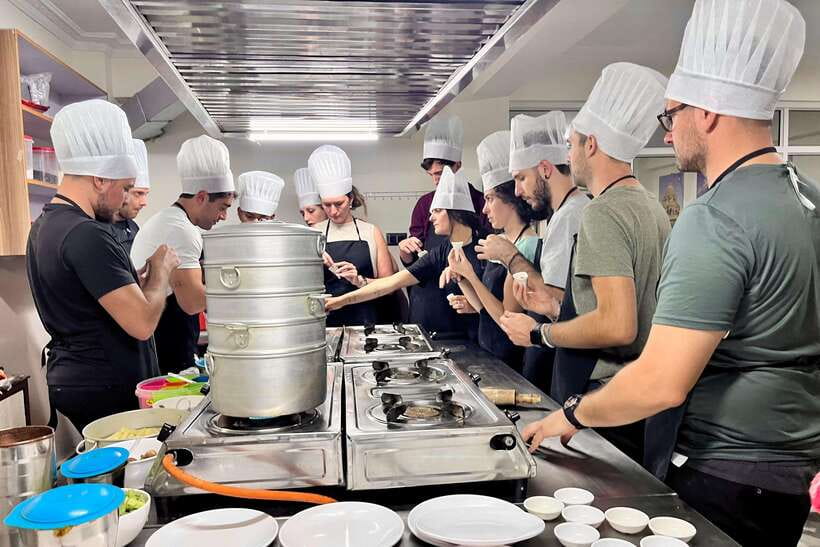
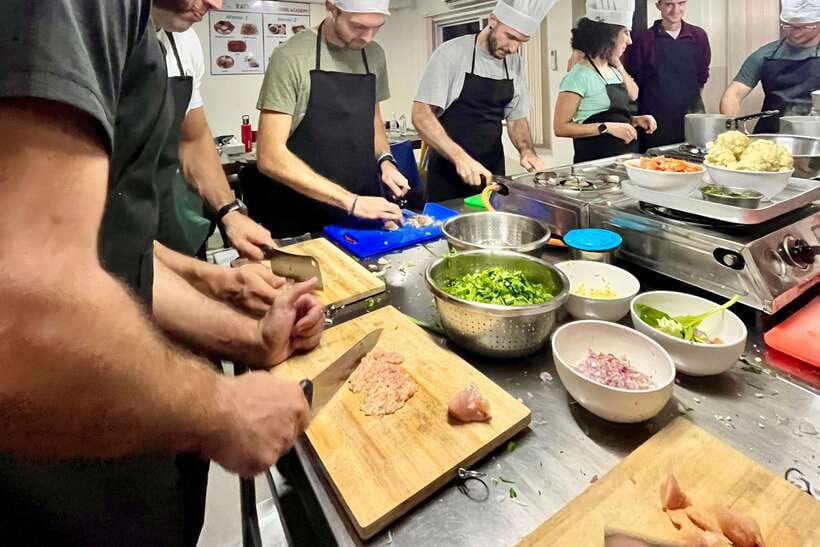
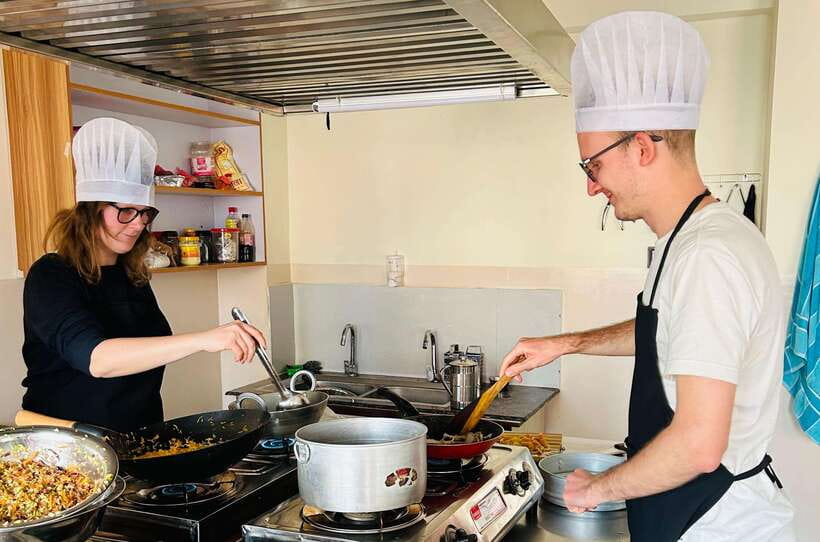
After shopping, you enter a modern Nepali kitchen and meet the chef or instructor. The class includes cooking equipment and accessories, so you do not need to bring special tools. You receive step-by-step guidance, which makes the session suitable for beginners as well as people who already cook at home.
The teaching covers the preparation of different dishes and the methods behind them. You might learn how to season a filling, work with rice flour, prepare lentils, build a curry, or shape dough. The exact sequence depends on the menu set offered for your session.
The small group size is a real advantage. With no more than eight participants, you should have more room to ask questions and take part in the work. It also creates a more social setting without making the class feel like a large demonstration.
The class has a women-led identity, which adds a useful local connection to the experience. The supplied details do not name the individual chefs, so you should not expect a particular instructor by name. What is clear is that the chef provides practical instruction and answers questions about ingredients, preparation, and spices.
Momo making requires a little practice
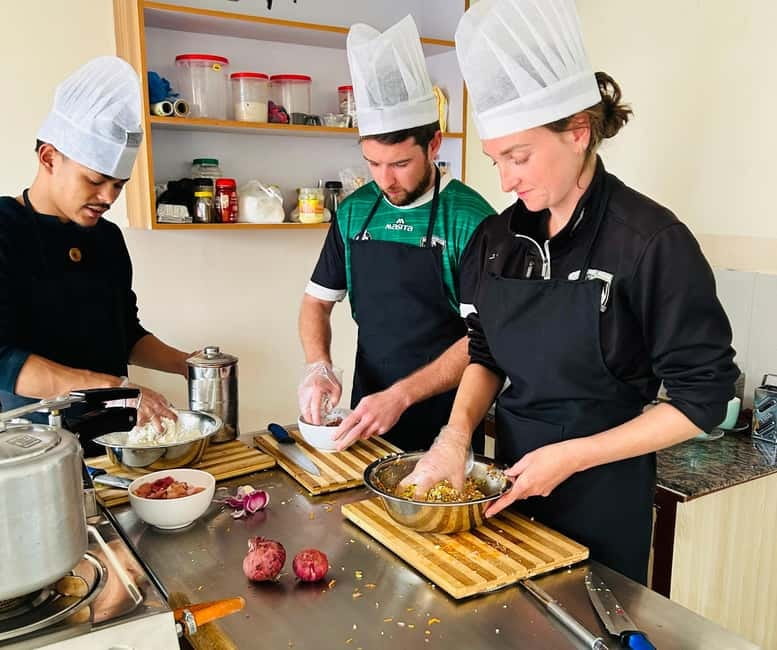
Momo is likely the most anticipated part of the class. These Nepali dumplings are made from thin dough filled with minced meat or vegetables, then seasoned and cooked. Available fillings may include chicken, buff, pork, or vegetables, depending on the class arrangement.
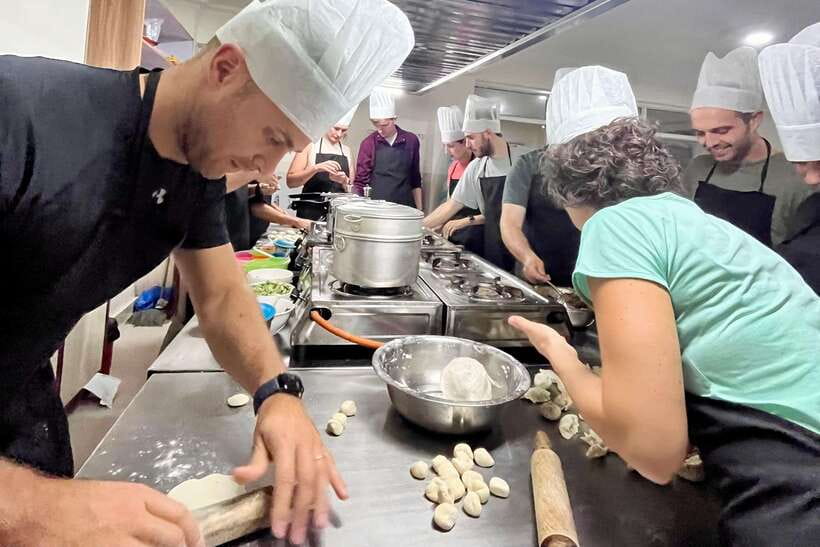
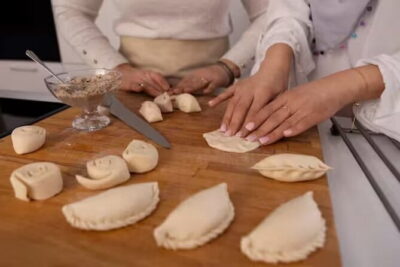
The fun is in the shaping. You roll or work with the dough, add filling, and fold the edges into a sealed parcel. The technique can look easy when someone else does it. It is less easy when your first dumpling opens up or looks more like a tiny, lopsided hat.
That is the one part of the experience where expectations need a little adjustment. One participant found the folding method hard to grasp and felt the chef seemed irritated. I would treat that as a useful warning: ask the instructor to demonstrate slowly, request another attempt, and do not worry about producing perfect restaurant shapes.
The food feedback is much more positive than the folding concern. The class has been praised for tasty food, fresh ingredients, and a friendly chef. You may even be able to make as many momos as you can eat, according to one detailed account. That makes the session especially appealing to anyone who considers dumplings a serious food group.
More Momo and Nepali Cooking Classes:
- Local Women Lead Nepali Cooking Class
★ 5.0 · 125 reviews - The best Private Nepali Cooking Class in Kathmandu
★ 5.0 · 83 reviews - Kathmandu: Traditional Momo Making Class & Pickup
★ 4.8 · 60 reviews - Traditional Nepali Momo Making Classes
★ 5.0 · 53 reviews
Choosing among the three menu sets
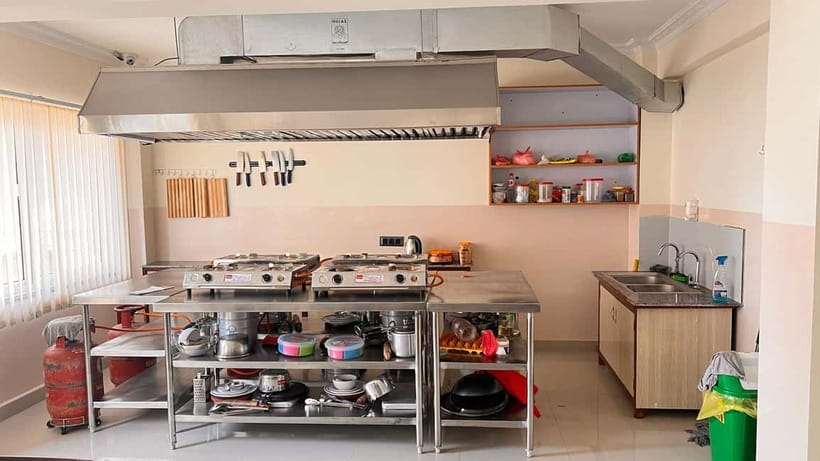
The available menus give the experience more range than a momo-only class. They also let you see different parts of Nepali and Newari cooking.
Menu 1: Bara, dal bhat, and Yomari
Bara is a Newari lentil pancake made from ground black gram batter and spices. It can be plain or topped with egg, minced meat, or vegetables. Its crisp outside and tender center make it a good introduction to lentil-based cooking.
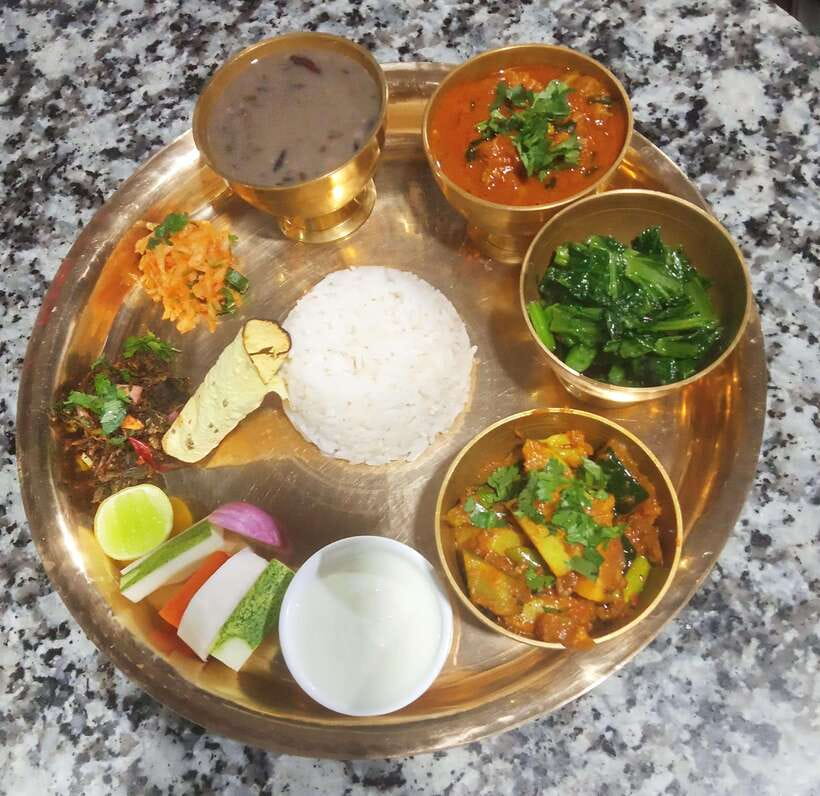
Dal bhat is the best-known everyday combination: steamed rice with lentil soup, usually joined by vegetables, curry, and pickles. It is filling, balanced, and central to Nepali home cooking. If you want the dish that most clearly explains an ordinary Nepali meal, this is the menu to favor.
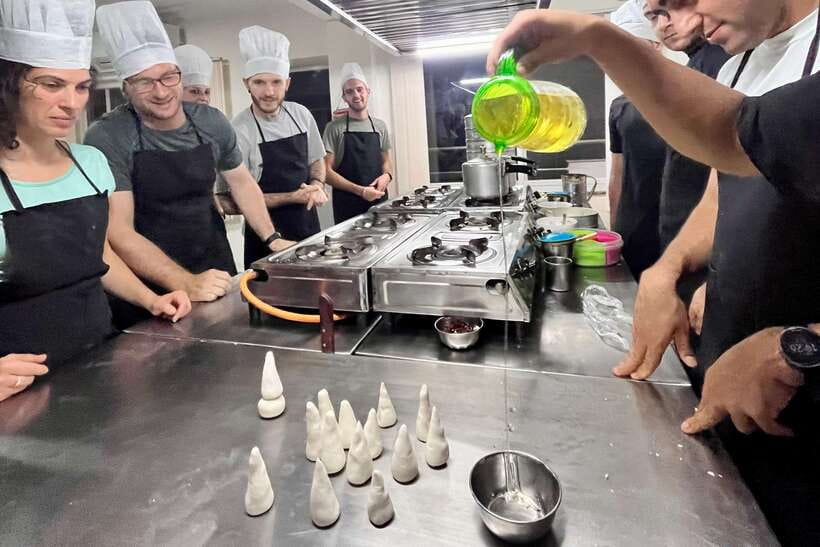
Yomari is a sweet Newari dumpling made with rice flour dough and a filling of molasses and sesame seeds. Coconut may also be used. It gives the meal a festive finish and shows that dumpling-making is not limited to savory momo.
Menu 2: Chatamari, momo, and kheer
Chatamari is often called Nepali pizza, though the comparison only goes so far. It is a rice flour crepe topped with ingredients such as egg, minced meat, vegetables, and spices. The base and toppings make it a useful lesson in Newari cooking.
Momo is the star here, and this is the menu I would choose if dumplings are your main reason for booking. You get the clearest chance to practice filling and folding, then eat the results.
Kheer is a creamy rice pudding cooked with milk, sugar, and cardamom. Nuts and raisins may be added. It is familiar enough to comfort cautious eaters, but the cardamom gives it a distinctly South Asian finish.
Menu 3: Aloo chop, thukpa, and carrot halwa
Aloo chop is a deep-fried potato snack mixed with spices. It is a practical choice for anyone who likes crisp street-food-style bites.
Thukpa is a Tibetan-Nepali noodle soup made with wheat or hand-pulled noodles, broth, vegetables, meat, and aromatic spices. Chicken, buff, or mutton may be used, with vegetarian possibilities depending on the class.
Carrot halwa is made by slowly cooking grated carrots with milk, sugar, ghee, and cardamom. Nuts and raisins may finish the dish. This menu gives you a broad spread of textures, from fried potato to soup to a soft dessert.
The information does not specify how menu choices are assigned or selected, so confirm your preferred set when booking. Also tell the provider about dietary needs before the class rather than waiting until the cooking begins.
Masala tea and the shared meal
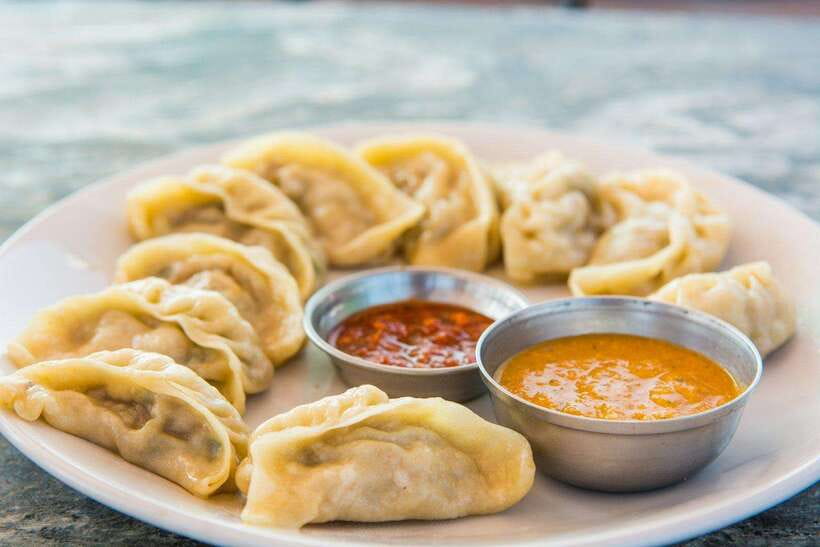
Nepali masala tea is included during the lesson. It combines black tea with aromatic spices and gives you a warm pause while the cooking continues. Since specialty and alcoholic drinks are not included, this tea is the main beverage covered by the price.
The final tasting is the reward for the work. You sit down to eat the meal prepared during the session, including the dishes and dessert from your chosen menu. That changes the tone from a lesson into a shared lunch or dinner.
I value this part because you taste your own mistakes as well as your successes. A filling may need more spice. A dumpling may be folded unevenly. A curry may turn out better than expected. Those small results make the recipes easier to remember than a standard meal served without explanation.
What the $11 price really gives you
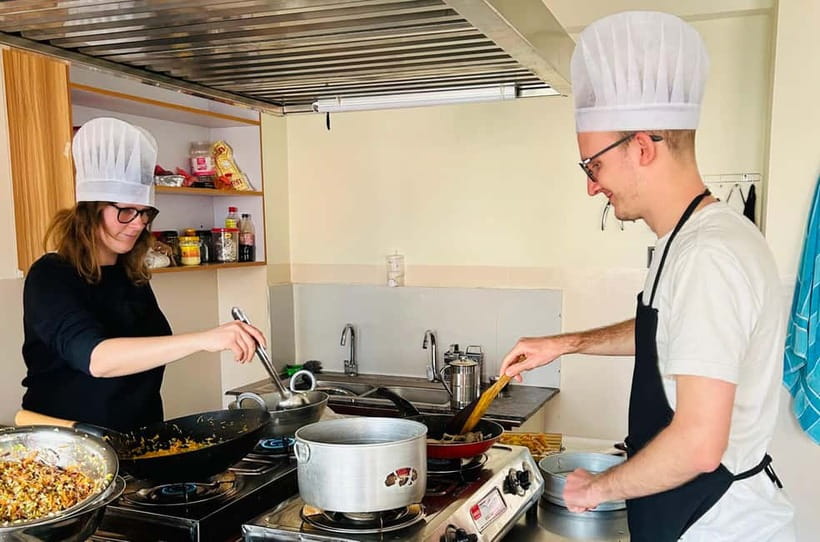
At $11 per person, this is an unusually low-cost way to spend two to three hours in Kathmandu. The price includes the chef-led lesson, market or shop tour, ingredients for the cooking activity, use of equipment, the tasting session, and masala tea.
You are not simply paying for a meal. You are paying for food, instruction, shopping, cultural context, and an activity you can repeat at home. The value is strongest if you take notes and ask about spice combinations, cooking times, and ingredient substitutions.
There are a few limits. Specialty drinks and alcohol cost extra, and professional photography or video is not included. Photos and video can be arranged for an additional fee, but your own phone or camera may be enough if you want simple memories.
The price also does not cover a private class. The group is limited to eight, which is small, but you may still share the work with other participants. For most people, that adds to the social side of the meal. If you want one-on-one instruction, ask about that before booking.
Timing, meeting point, and family suitability
The workshop is in the Bagmati Zone and is described as easy to reach from Thamel and other parts of the Kathmandu Valley. A precise street address is not provided here, so check the confirmed meeting details before setting out.
Starting times vary, and the class lasts two to three hours. Allow extra time around the session if you have a fixed temple visit, airport transfer, or long-distance bus. Cooking times can shift when a group needs more help with shaping or preparation.
The activity is suitable for people above age eight who are interested in learning new dishes. Children will need to take part carefully around kitchen equipment and hot food, though the available information does not give a separate child menu or special childcare arrangement.
I would recommend this for solo visitors, couples, families with older children, and small groups who want more than restaurant meals. It suits curious eaters and beginners best. It is less suitable if you want a fast demonstration with no hands-on work, or if you dislike repeating a technique until it works.
The small issue with chef interaction
Most of the available feedback points to a friendly welcome, tasty food, and a capable chef. One detailed experience raises a fair concern about the tone during momo folding. That does not cancel out the strong overall score of 4.8 from 15 reviews, but it is worth keeping in mind.
Cooking classes involve a little pressure when several people are learning at once. If the first fold goes wrong, ask for a slower demonstration or a fresh piece of dough. A relaxed attitude will help, but the instructor also needs to allow beginners time to learn.
I would judge the class by the overall format rather than expecting a cooking-school performance. The strongest parts are the local ingredients, the chance to prepare several dishes, and the meal at the end. The weaker point is that hands-on teaching can vary from one session to another.
Should you book this Kathmandu cooking class?
I would book it if you want an affordable, practical introduction to Nepali food and like the idea of eating a meal you helped prepare. Choose the momo menu if dumplings are your priority, the dal bhat menu if you want a classic everyday meal, and the thukpa menu if soup and street-food flavors appeal to you.
The class offers strong value at $11, includes a market visit and masala tea, and keeps the group to eight people. Go in with patience, especially during momo folding, and confirm the menu and meeting details before you pay.
Free cancellation is available up to 24 hours before the activity for a full refund, and you can reserve now and pay later. That flexibility makes this an easy addition to a Kathmandu itinerary, particularly on a day when you want food, conversation, and a break from sightseeing.
FAQ
How much does the Kathmandu cooking class cost?
The activity costs $11 per person.
How long does the cooking class last?
The class lasts between two and three hours. Starting times vary, so check availability when booking.
Where does the cooking class meet?
The workshop location is easily accessible from Thamel and other parts of the Kathmandu Valley. Confirm the exact meeting point with the booking details.
What language is used during the class?
The instructor teaches in English.
How many people can join the class?
The group is limited to eight participants.
What age is the activity suitable for?
The workshop is suitable for people above eight years old who are interested in learning new dishes.
What food can I learn to cook?
The three available menu sets include Bara, dal bhat, Yomari, chatamari, momo, kheer, aloo chop, thukpa, and carrot halwa. Vegetarian and meat options are available.
What is included in the price?
The price includes step-by-step instruction from a local chef, an ingredient shopping tour, cooking equipment, hands-on cooking, a tasting session, and Nepali masala tea.
Can I cancel the booking?
Yes. You can cancel up to 24 hours in advance for a full refund. You can also reserve the activity and pay later.
More Workshops
- Knife (Khukuri) Making Workshop- Forge of the Gurkhas
★ 5.0 · 143 reviews - Kathmandu: Local Women-Lead Nepali Cooking & Momo Class
★ 4.9 · 45 reviews - Kathmandu: Local Lead Nepali Cooking & Momo Making Class
★ 4.9 · 40 reviews - Knife Khukuri Making Workshop
★ 4.9 · 38 reviews
Just added around Kathmandu
- Private Shopping Tour in Kathmandu★ 5.0 · 3 reviews
- Nagarkot Sunrise With 7 UNESCO World Heritage Private Tour★ 5.0 · 3 reviews
- Mount Everest Scenic Flight 50 Minutes★ 5.0 · 3 reviews
- Kathmandu: Nightlife and Pub Crawl Tour★ 5.0 · 3 reviews
- Kathmandu: Nagarkot, Bhaktapur, Doleswor & Sanga Statue Tour★ 5.0 · 3 reviews
- Momo Cooking Class -The Art Of Making MoMo with Home Chef★ 5.0 · 3 reviews
- Makalu Base Camp Trek★ 5.0 · 3 reviews
- Everest Experience Trek 6 Day Hiking Adventure★ 5.0 · 3 reviews
Momo Making Classes, compared.




Nepalese Momos or Dal Bhat Cooking Class (Cook with Delight)
Read our review →
The best Private Nepali Cooking Class in Kathmandu
Read our review →
Nepalese Kitchen in Pokhara: Momos or Dal Bhat Cooking Class
Read our review →
Browse the lists this tour appears in