
Reviewed · MOMO MAKING CLASSES
Kathmandu: Local Women Lead Nepali Cooking & Momo-Making Class
Come hungry, leave with recipes. This three-hour class in Thamel gives you a practical way to understand Nepali food, starting with a local market visit and ending with a meal you helped prepare. I like the hands-on cooking, especially the chance to shape momos and prepare several traditional dishes. I also like the small maximum of eight people, which should make it easier to follow instructions and ask questions.
The main consideration is that the activity is centered on cooking rather than sightseeing. If you want a broad tour of Kathmandu, this is not it. You will also need to begin at the cooking academy unless you select the hotel pickup option, and the class ends back at that meeting point.
In This Review
- Key points about this Thamel cooking class
- Starting in Thamel with a market visit
- Learning to make momos by hand
- Preparing dal bhat and other Nepali dishes
- What the local women instructors add
- A three-hour schedule with a satisfying finish
- Is $35 good value in Kathmandu?
- Who should book this experience?
- Practical advice before you go
- Should you book this Kathmandu cooking class?
- FAQ
- How long does the Kathmandu cooking class last?
- How much does the cooking class cost?
- Where does the class begin and end?
- Is hotel pickup available?
- What food will I learn to cook?
- Are cooking equipment and ingredients included?
- What is the cancellation policy?
Key points about this Thamel cooking class
- Momos are made by hand: You learn to knead dough and prepare one of Nepal’s best-known foods.
- The class begins at a market: You help shop for important ingredients before cooking.
- The menu can be chosen: The experience allows you to select preferred dishes, according to the available options.
- Local women lead the lesson: The class connects cooking with everyday Nepali food traditions.
- The group is limited to eight: A smaller class should allow more direct help from the instructor.
- The price is $35 per person: That includes the lesson, equipment, ingredients bought for cooking, tea, and the food you prepare.
Starting in Thamel with a market visit
The class begins at Kathmandu Cooking Academy on Yapikhya Marg in Thamel. This district is a useful base for the activity because it is easy to reach by public transportation and is already a common stop for people staying in central Kathmandu.
The first part takes you to a local market or shop to buy the ingredients needed for the lesson. This is more useful than simply watching a chef produce a finished plate. You see the raw materials first, learn what goes into the dishes, and get a better sense of how Nepali meals are assembled.
The market visit also gives the class a clear sense of place. Spices, vegetables, and other staples are not presented as museum pieces. They are selected for a meal you will soon cook and eat. That simple link between shopping and cooking helps you understand why certain ingredients matter.
The shopping portion is also where you may choose from the available menu options. Previous participants particularly enjoyed being able to select what they wanted to cook. The exact choices are not listed in the supplied details, so you should ask the instructor what is available when you arrive.
One practical point: the market stop means the class is not just three hours of standing at a stove. Some of the time is spent walking, selecting ingredients, and getting organized. Wear comfortable shoes and expect a hands-on morning or afternoon rather than a formal restaurant demonstration.
More Cooking Classes in Kathmandu
- Half day cooking class in Thamel kathmandu
★ 5.0 · 607 reviews - Kathmandu: Local Women-Led Nepali Cooking & Momo Class
★ 4.9 · 360 reviews - Kathmandu: Local Lead Nepali Cooking & Momo-Making Class
★ 5.0 · 212 reviews
Learning to make momos by hand
For many people, the main reason to book this class is the momo lesson. These filled dumplings are among Nepal’s most familiar foods, and making them yourself gives you a useful skill to take home.
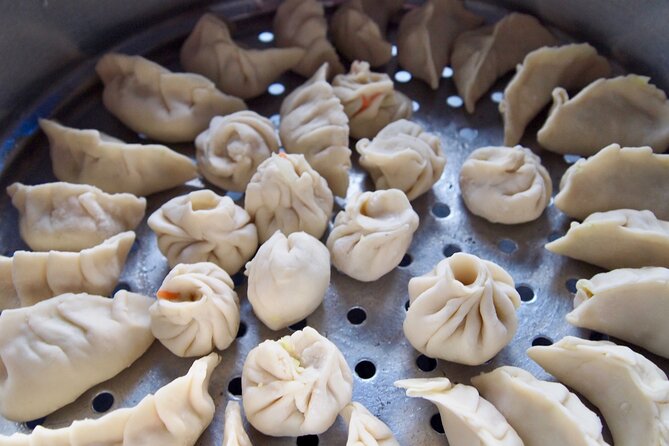
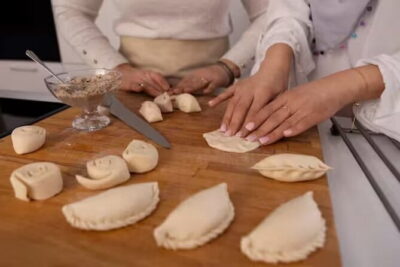
You are shown how to prepare and knead the dough, then work with the filling and shape the dumplings. The supplied information specifically highlights learning to knead the dough for momos, so this is not simply a demonstration where a chef does the important work for you.
Momo-making takes patience. The dough must be workable, the filling needs to be portioned, and the finished dumplings must be shaped carefully enough to hold together. That makes this a good activity for people who enjoy learning through their hands. It is also forgiving in the best way: slightly uneven dumplings still taste good.
The class uses cooking equipment and accessories, so you do not need to bring anything beyond yourself. Step-by-step instruction is provided by an experienced chef and instructor. With no more than eight people, you should have a better chance of seeing the technique clearly and getting help when your first few momos look less tidy than the instructor’s.
The final reward is tasting what you made. The meal is not an afterthought. You prepare the food, sit down, and enjoy it as part of the class. That gives the momo lesson a satisfying finish, especially if you are planning to try the recipe again at home.
Preparing dal bhat and other Nepali dishes
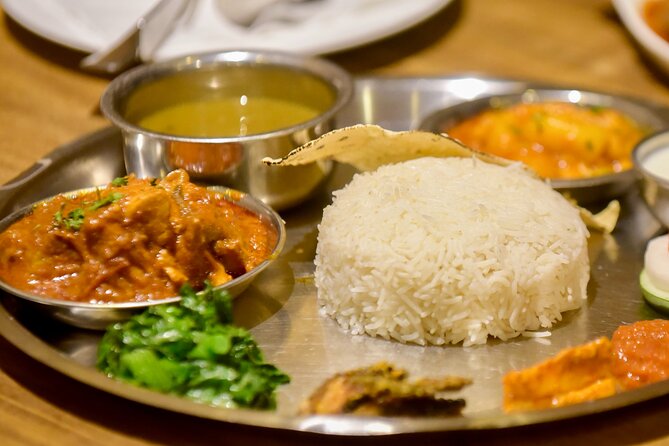
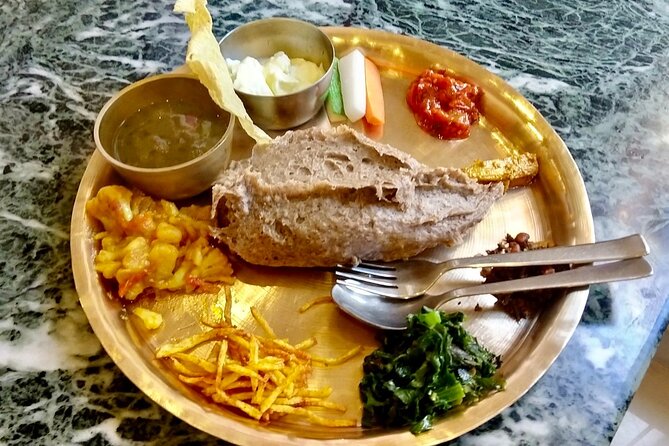
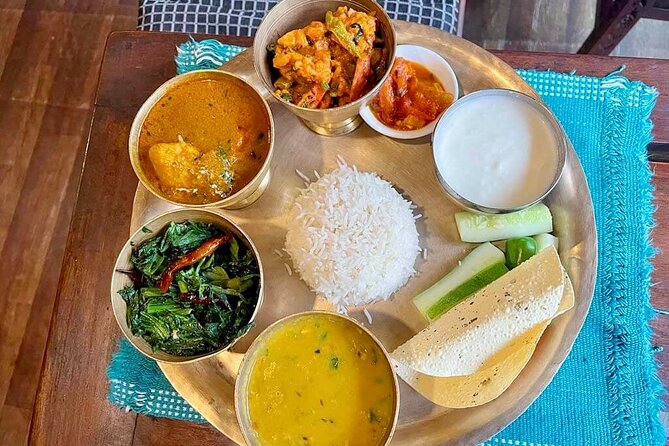
The menu can include dal bhat, one of Nepal’s most familiar meal combinations. It generally refers to lentil soup served with rice and accompanying items, though the exact preparation in this class is not specified.
Learning this dish matters because it shows you a basic structure of Nepali home cooking rather than focusing only on a snack. Momos are fun and memorable, but dal bhat helps place them within a wider food culture.
One participant described preparing momos, dal bhat, and carrot pudding in the same session. That gives you a useful idea of the class’s range, although the available menu may vary. The ability to choose dishes is part of the appeal, so confirm the options before the cooking begins if there is something specific you want to make.
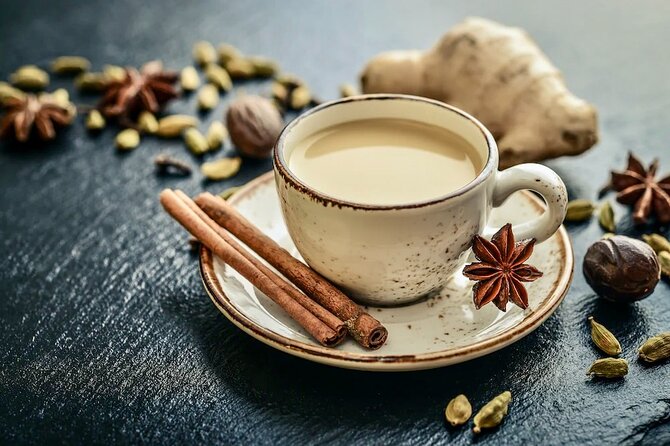
Nepali masala tea is also prepared during the lesson. Including tea makes the experience feel more complete, since you are learning about a drink as well as the main meal. It also breaks up the cooking and gives you another chance to work with spices.
The food is praised for being both enjoyable and filling, but you should keep your expectations practical. This is a teaching kitchen, not a fine-dining restaurant. The pleasure comes from taking part, learning the method, and eating a meal connected to your own effort.
What the local women instructors add
The experience is led by local women, which gives the class a personal connection to Nepali cooking traditions. The supplied details do not provide the instructors’ names, so I cannot identify them individually. Their role is still important: they guide the process, explain the steps, and help turn ingredients into familiar local dishes.
The strongest praise for the class centers on clear instruction. The cooking is presented in a way that makes the recipes understandable, even if you have little experience with Nepali food. That matters because dishes such as momos can look simple until you try to prepare them yourself.
You also get a chance to ask about ingredients and methods as you cook. A market visit followed by a lesson gives the instructors room to explain not only what to do, but why a particular ingredient has been selected.
The social side is another benefit. The class can bring together people from different countries, and the shared work gives everyone an easy way to talk. You do not need to be an expert cook or an outgoing person to join in. Folding dumplings and preparing a meal create natural conversation.
Still, the group setting may not suit someone seeking a private lesson. The maximum is eight people, not one-to-one instruction. That is a small group by tour standards, but the amount of individual attention can still depend on the pace and mix of the group.
More Momo and Nepali Cooking Classes:
- Local Women Lead Nepali Cooking Class
★ 5.0 · 125 reviews - The best Private Nepali Cooking Class in Kathmandu
★ 5.0 · 83 reviews - Kathmandu: Traditional Momo Making Class & Pickup
★ 4.8 · 60 reviews - Traditional Nepali Momo Making Classes
★ 5.0 · 53 reviews
A three-hour schedule with a satisfying finish
The activity lasts about three hours. That is long enough to include the market visit, ingredient preparation, cooking, tea, and tasting without taking up a full day in Kathmandu.
A likely flow is:
- Meet at the cooking academy in Thamel, unless you have selected hotel pickup.
- Visit a market or shop to buy the ingredients.
- Select dishes from the available menu.
- Prepare the ingredients and learn the cooking techniques.
- Make momos and other Nepali dishes.
- Prepare Nepali masala tea.
- Sit down to taste the meal you cooked.
- Return to the cooking academy, where the activity ends.
The exact order may vary, but the structure is clear. This is a practical class with a beginning, middle, and meal at the end. You are not rushed through a string of unrelated demonstrations.
Hotel pickup and drop-off are available if you select that option. If you do not, plan to reach Kathmandu Cooking Academy at Yapikhya Marg. The meeting point is near public transportation, which helps if you are not staying within walking distance of Thamel.
Because the class ends back at the starting point, you can easily continue exploring Thamel afterward. This makes the timing convenient for a half-day plan. You could pair it with shopping, a café stop, or another nearby activity, though you should leave enough time for the meal and any delays.
Is $35 good value in Kathmandu?
At $35 per person, this class offers solid value if you want more than a meal. The price covers the cooking instruction, the market or shop tour, use of equipment, ingredients for the dishes, Nepali masala tea, and the tasting session.
You are paying for several connected parts:
- A local food introduction
- A guided shopping stop
- Hands-on instruction
- The use of cooking tools
- A meal you help prepare
- Tea and a social setting
- Optional hotel transportation
The value is strongest for people who enjoy participation. If you simply want to eat momos, a restaurant will cost less. If you want to understand how the food is made and leave with techniques you can repeat, the class makes better sense.
The small group also supports the price. A maximum of eight people should create a more personal lesson than a large cooking show. The available rating information is exceptionally positive, with 17 reviews and a 100 percent recommendation rate, though you should still remember that cooking classes appeal most to people who enjoy this type of activity.
Specialty or alcoholic drinks are not included. Tips are also not included, so keep those costs separate. The supplied information does not mention recipe handouts, so ask if written recipes are provided if that is important to you.
Who should book this experience?
I would recommend the class to people who want a calmer, more social activity in Kathmandu. It works well for couples, families, friends, and solo visitors who enjoy food and do not mind sharing a kitchen with a small group.
It is especially suitable if you want to:
- Learn how Nepali dishes are prepared
- Make momos from dough rather than simply order them
- Visit a local market with a clear purpose
- Meet people from different countries
- Enjoy a meal connected to your own work
- Spend roughly half a day in Thamel
Families may appreciate the tactile nature of the activity, though the supplied details do not state a minimum age. If you are booking for children, confirm age requirements directly with the provider.
The class is less suitable if you have very limited time and want to see Kathmandu’s major monuments. It also may not be ideal if you dislike group activities, cooking, or eating food you have prepared in a teaching kitchen.
Dietary information is not provided. If you have allergies, follow a restricted diet, or need a particular menu, contact the provider before booking rather than waiting until the class begins.
Practical advice before you go
Choose the pickup option if finding a new address in Kathmandu feels stressful. Otherwise, the academy is the start and finish point, and it is near public transportation.
Wear clothes and shoes that are comfortable for cooking and walking. You will be handling dough, ingredients, and cooking equipment, so dress for activity rather than for a formal meal.
Arrive ready to participate. The best part of the class is not watching the instructor make perfect momos. It is trying the steps yourself, including the parts that take a few attempts.
If you have a preferred dish, ask about menu choices at the start. The experience allows menu selection, and the available options may determine what you shop for and prepare.
The booking pattern suggests reserving ahead. It is booked an average of 17 days in advance, so last-minute space cannot be assumed, particularly if your dates in Kathmandu are fixed.
Free cancellation is available when you cancel at least 24 hours before the start time. Cancellations within 24 hours are not refunded, and changes inside that period are not accepted.
Should you book this Kathmandu cooking class?
Book it if you want a friendly, practical introduction to Nepali food and like the idea of making your own momos. The market visit, small group, local women instructors, and shared meal give the three-hour session more substance than a standard cooking demonstration.
I especially like the way the class connects shopping, preparation, cooking, and eating. You see the ingredients, work with them, and then taste the result. At $35, that is a fair deal for a hands-on cultural activity in Thamel.
Skip it if your priority is monuments, mountain views, or a private culinary lesson. For everyone else, this is a useful way to spend half a day in Kathmandu, with a plate of homemade Nepali food waiting at the end.
FAQ
How long does the Kathmandu cooking class last?
The activity lasts approximately three hours.
How much does the cooking class cost?
The listed price is $35 per person.
Where does the class begin and end?
It begins at Kathmandu Cooking Academy on Yapikhya Marg in Kathmandu 44600, Nepal. The activity ends back at the meeting point.
Is hotel pickup available?
Yes. Hotel pickup and drop-off are available if you select that option when booking.
What food will I learn to cook?
The class includes hands-on preparation of different Nepali meals and Nepali masala tea. Momo-making and dal bhat are included among the described dishes, and carrot pudding has also been prepared during a class. Menu choices may be available.
Are cooking equipment and ingredients included?
Cooking equipment and accessories are provided. The class also includes a market or shop tour to buy the important ingredients for cooking.
What is the cancellation policy?
You can cancel at least 24 hours before the experience start time for a full refund. Cancellations and changes made less than 24 hours before the start time are not accepted for a refund.
More Workshops
- Knife (Khukuri) Making Workshop- Forge of the Gurkhas
★ 5.0 · 143 reviews - Kathmandu: Local Women-Lead Nepali Cooking & Momo Class
★ 4.9 · 45 reviews - Kathmandu: Local Lead Nepali Cooking & Momo Making Class
★ 4.9 · 40 reviews - Knife Khukuri Making Workshop
★ 4.9 · 38 reviews
Just added around Kathmandu
- Private Shopping Tour in Kathmandu★ 5.0 · 3 reviews
- Nagarkot Sunrise With 7 UNESCO World Heritage Private Tour★ 5.0 · 3 reviews
- Kathmandu: Nightlife and Pub Crawl Tour★ 5.0 · 3 reviews
- Mount Everest Scenic Flight 50 Minutes★ 5.0 · 3 reviews
- Momo Cooking Class -The Art Of Making MoMo with Home Chef★ 5.0 · 3 reviews
- Kathmandu: Nagarkot, Bhaktapur, Doleswor & Sanga Statue Tour★ 5.0 · 3 reviews
- Makalu Base Camp Trek★ 5.0 · 3 reviews
- Kathmandu: Momo Making Class with a Local Chef★ 5.0 · 3 reviews
Momo Making Classes, compared.




Nepalese Momos or Dal Bhat Cooking Class (Cook with Delight)
Read our review →
The best Private Nepali Cooking Class in Kathmandu
Read our review →
Nepalese Kitchen in Pokhara: Momos or Dal Bhat Cooking Class
Read our review →
Browse the lists this tour appears in